NCD mcqs part2
 Call Kai
 Learn
Learn Practice Test
 Spaced Repetition
 Match
Match Flashcards
 Knowt Play
1/156

There's no tags or description
Looks like no tags are added yet.
Name | Mastery | Learn | Test | Matching | Spaced | Call with Kai | Chat |
|---|
No analytics yet
Send a link to your students to track their progress
157 Terms
Patient on lisinopril and Hydrochlorothiazide he came with cramps and sodium was Low (126) so what you will do?
A-Remove lisinopril and supplement with sodium
B-Remove thiazide and add loop diuretics
D-Remove thiazide and use CCB
B-Remove thiazide and add loop diuretics
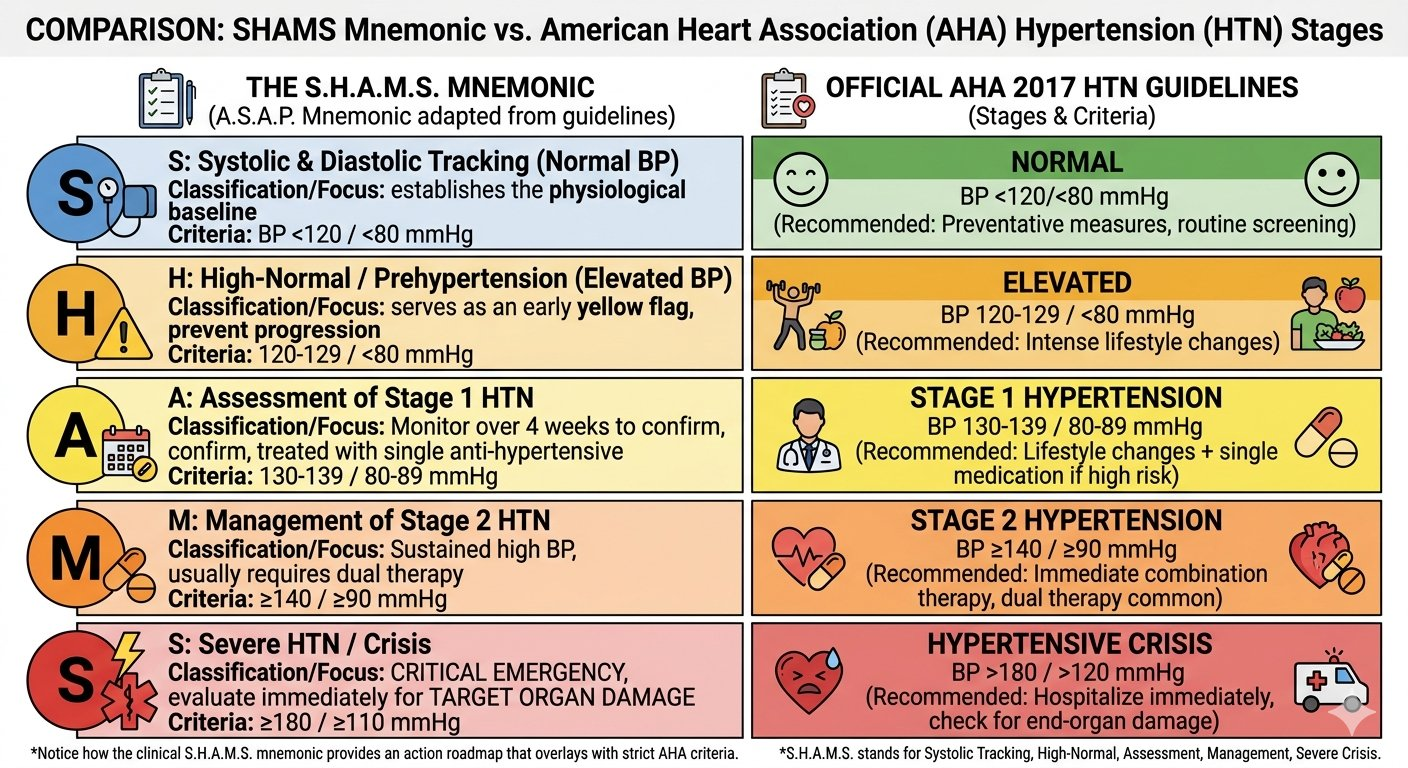
Case of pt with hypertension in 2 separate visits,
125/85 second visit 130/80, which stage?
A-Stage 1
B-Stage 2
C-Pre HTN
Case of pt with BP 160/92, which stage? according to American guideline
A-pre
B-stage 1
C-stage 2
A-Stage 1
C-stage 2
Screening for hypertension:
A) Two BP measurements 15 mins apart
B) Two BP measurements 5 mins apart
About BP evaluation ...
A. Home reading ...
B. BP Mean of two Measurement, 5 mins after
clinic entry
C. BP Mean of two Measurement, 15 mins after
clinic entry
B) Two BP measurements 5 mins apart
C. BP Mean of two Measurement, 5 mins after clinic entry
Woman was diagnosed with hypertension 3 weeks ago. She was started on amlodipine. Now she presents with dizziness when standing up. Her blood pressure is 117/78 mmHg. What is the most appropriate next step?
A. Increase the dose of amlodipine
B. Switch to valsartan
C. Reassure and continue amlodipine
D. Perform ambulatory blood pressure monitoring (ABPM)
C. Reassure and continue amlodipine
Female, HTN newly diagnosed start on Amlodipine 5mg OD since 3 weeks complaining of dizziness, especially during praying when standing BP was 117/78 ( it was normal) What to do:
A) Change to ARBs
B) Change to ACEI
C) 24-hours Ambulatory monitoring
D) referral to cardiologist
C) 24-hours Ambulatory monitoring
HTN pt with MI and Heart failure associated with
SOB, what best management for him:
A. Beta blockers
B. CCB
C. Thiazide
D. Alpha blockers
One pt need to (refill/ refer) ? to specialist regarding to hypertension ?
A. Essential htn
B. ESRD
C. Resistant htn
C. Resistant htn
Despite lifestyle changes a 37 yrs still has HTN stage 1 she has no medical concerns and no abnormalities on physical examination or initial laboratory evaluation. which of the following meds is the best first line monotherapy?
A. thiazide diuretic
B. ACE inhibitor
C. ARB
D. calcium channel blocker
A. thiazide diuretic
• Uncomplicated HTN:
Pick an ACEi, ARB, CCB, or Thiazide.
• HTN + Diabetes or CKD:
MUST pick an ACEi or ARB (they protect the kidneys from protein loss).
• HTN + Post-Heart Attack / Heart Failure:
MUST pick a Beta-blocker + ACEi/ARB.
• HTN + Black/African descent:
Pick a CCB or Thiazide (ACEi/ARBs don’t work as well in this population as monotherapy).
Scenario about patient with renal failure due to
poly-cystic kidney disease, what is the target BP?
a. 130/80
b. 135/85
c. 140/90
d. 150/90
a. 130/80
A primary care doctor has been unsuccessfully
treating his hypertensive patient for several years
with diet and exercise. The last three readings
have been 152/100, 148/108, and 157/104. Which
stage of hypertension is this patient classified as
having?
A. Normal
B. Prehypertension
C. Stage one hypertension
D. Stage two hypertension
E. Stage three hypertension
D. Stage two hypertension
Case of CHF , uncontrolled HTN, admitted to the
Hospital, c/o shortness of breath and heart failure
symptoms, in examination he have bilateral basal
lung crepitation, with CXR showing fluid around
the lung (not sure) what medication will improve
mortality?
A. ARBs + beta blockers
B. Aspirin and heparin
C. Statin
A. ARBs + beta blockers
58-year-old man (LDL-C 145 mg/dL, no diabetes, no ASCVD) is re-evaluated using the PREVENT-ASCVD calculator, which returns a 10-year risk of 6.5%. His eGFR is normal and there are no high-risk features. A clinician-patient discussion takes place. What is the most appropriate recommendation?
A. No statin; reassess in 10 years
B. Coronary artery calcium scoring before any decision
C. Moderate-intensity statin therapy
D. High-intensity statin + ezetimibe
E. Icosapent ethyl only
C. Moderate-intensity statin therapy
If it were ≥190 mg/dL, a high-intensity statin would be automatically required regardless of his risk score
Between 5% to <10% is formally classified as Intermediate Risk
45 year old male smoker and high cholesterol with increased CVD risk what does USPSTF recommend giving him?
A. Low dose statin
B. Aspirin
A. Low dose statin
Man 58 yrs with hypertension on medications, cholesterol 200, no DM non-smoker, what is ASCVD risk?
A-5-7.5%
B-7.5%-10%
C-10-15%
D-20%
C-10-15%
Count how many of the “big 3” heavily-weighted factors are present:
1. Age ≥55–60
2. Male sex
3. Treated (not just diagnosed) hypertension
• All 3 present + no smoking/DM → lean toward the upper half of intermediate (10–15%)
• Only 1–2 of these present → lean toward the lower half of intermediate (7.5–10%)
• Smoking or diabetes added on top → likely pushes into High risk (≥20%) territory entirely, not just “upper intermediate”
Most contributing factor to ASCVD risk?
A-LDL 155,
B-high TG,
C-BMI 29,
D-diabetes mellitus
D-diabetes mellitus
Physician is affected after his friend suddenly dies of cardiac cause after playing sports, He wants to start an ECG screening program to screen every player before sports. What will make the optimum condition for the screening program to be effective?
A. ECG available at 2ndary hospitals
B. Cardiomyopathy is rare
C. ECG requires rare expertise to read
D. Treatment is available
D. Treatment is available
A 28-year-old man develops severe chest pain and palpitations after using cocaine and then exercising. Which complication is he at greatest immediate risk for?
A. Respiratory depression
B. Myocardial infarction or malignant arrhythmia
C. Severe constipation
D. Pinpoint pupilsE. Hypothermia
B. Myocardial infarction or malignant arrhythmia
ECG screening recommendations in a 37-39 years old male with no risk factors as i recall :
1- annual screening with ecg
2- exercising ecg
no screening for ECG
A 26-year-old previously healthy woman presents for a routine health checkup. She has no symptoms and takes no medications. Her only significant history is a family history of dyslipidemia. Physical examination is unremarkable. Fasting lipid profile:
• Total cholesterol: 16 mmol/L (~618 mg/dL)
• LDL cholesterol: 10 mmol/L (~386 mg/dL)
• HDL cholesterol: 3 mmol/L (~116 mg/dL)
Which of the following is the most appropriate next step in management?
A. Calculate her 10-year ASCVD risk score before
deciding on therapy
B. Initiate high-intensity statin therapy targeting
50%
LDL-C reduction
C. Reassure her and repeat the lipid profile in 5
years
D. Begin ezetimibe monotherapy
B. Initiate high-intensity statin therapy targeting
50%
Initiate high-intensity statin therapy targeting ≥50% LDL-C reduction
Start high-intensity statin therapy (Because LDL is more than 190 mg/dl)
A 40-year-old female patient., (ASCVD) risk to be 4.5%. Her low-density lipoprotein (LDL) cholesterol is 165 mg/dL, high-density lipoprotein (HDL) cholesterol is 48 mg/dL, and triglycerides are 193 mg/dL. Given this information, what do you recommend as treatment for her dyslipidemia?
a. Lifestyle modifications such as diet and physical
activity
b. Treatment with a low-intensity statin
c. Treatment with a moderate-intensity statin
d. Treatment with a high-intensity statin
a. Lifestyle modifications such as diet and physical
activity
You have been caring for a 36-year-old man, and identified that he meets criteria for therapeutic lifestyle changes (TLC) to improve his lipid profile. After 4 months of adhering to your recommendations, his LDL is still higher than goal. Which of the following drug classes should be initiated?
a. A statin
b. A bile acid sequestrant
c. Nicotinic acid
a. A statin
You have performed a screening lipid profile on an otherwise healthy man. His results indicate elevated triglycerides, a low HDL, a high LDL, an elevated total cholesterol, and an elevated very-low-density lipoprotein (VLDL). You would like to rescreen him in the fasting state. Which of the following laboratory values is likely to decrease in the fasting state?
a. Serum triglycerides
b. HDL
c. LDL
d. Total cholesterol
a. Serum triglycerides
You are treating a patient with dyslipidemia and clinical ASCVD. She has elevated total cholesterol, LDL-C, and triglycerides. Her HDL is low. Which of the following changes will have the greatest effect on mortality?
a. Increasing HDL
b. Decreasing LDL-C
c. Decreasing triglycerides
b. Decreasing LDL-C
You are caring for a 26-year-old man with dyslipidemia and a family history of early coronary arterial disease. Laboratory analysis reveals a low HDL. Which of the following interventions, if adopted by the patient, would raise his HDL levels to the greatest extent?
a. Eat oat bran
b. Lose weight
c. Start exercising
d. Quit smoking
c. Start exercising
A scenario with lab test and the BMI 28, low HDL, high LDL, High cholesterol, high triglycerides. What will improve with the regular physical activity?
a) the body weights
b) Cholesterol
c) HDL
d) LDL
a) the body weights
54-year-old white male patient with T2DM, hypertension, and dyslipidemia. He does not have any clinical ASCVD, but his father died from a MI at the age of 56. His 10-year ASCVD risk is calculated at 11.2%. What treatment recommendation do you suggest for his dyslipidemia?
a. Lifestyle modifications such as diet and physical
activity
b. Treatment with a low-intensity statin
c. Treatment with a moderate-intensity statin
d. Treatment with a high-intensity statin
d. Treatment with a high-intensity statin
The typical dyslipidemia in metabolic syndrome
is:
a. Increased HDL, Decreased TG, Normal LDL
b. Increased TG, Decreased HDL, Normal LDL
c. Increased LDL, Decreased HDL, Normal TG
b. Increased TG, Decreased HDL, Normal LDL
A man underwent investigations his lab is shown
below:
Hb1Ac 9% ?
LDL. High
Triglycerides High
What is the best intervention:
A) Lifestyle
B) Lifestyle+ metformin
C) Lifestyle +metformin+ lipid statins
C) Lifestyle +metformin+ lipid statins
Women's dyslipidemia screening, according to
USPTF, had never ordered lipid profile i think she
is 43 and had no risk?
Now
Wait till she is 45
Should've done it by 40
Wait till she is 45
36 years male want to do screening for hyperlipidemia after his brother had hypercholesterolemia while he is not obese?
A. Screen at 40 according to USPTF
B. Screen all male above 20
C. Screen him because he has risk
D. No screening
C. Screen him because he has risk
A 55-year-old man with type 2 diabetes for 6 years presents for follow-up. Meds: Metformin 1000 mg twice daily, Sitagliptin 100 mg daily, Glipizide 10 mg daily. BP in clinic: 132/86 mmHg (pre-hypertension). BMI: 31 kg/m². Labs: HbA1c 9.5%, Creatinine normal (eGFR >60 mL/min/1.73 m²). What is the best next step in management?
A. Increase metformin to 1500 mg/day
B. Start insulin therapy
C. Switch DPP-4 inhibitor to a different oral agent
D. Continue same regimen and recheck A1c in 3
months
B. Start insulin therapy
How to assess distal symmetric neuropathy in dm2 ?
A-Deep tendon reflex
B-Ankle brachial index
A-Deep tendon reflex
Monofilament is more accurate
Diabetic pt. CO foot ulcer which test to assess recurrent or sometimes like that.
a. monofilament test
b. ankle-brachial index test
c. Capillary refill
a. monofilament test
question was assessing risk of recurrent diabetic foot ulcer due to neuropathy
DM2 with 3 years not controlled with proteinuria,
GFR is 50 (low), SPB >160 and retinopathy. What is the possible complication:
a) Macro
b) Micro
c) Neuropathy
b) Micro
Nondiabetic patient with no risk factors except
that she has BMI 34, to protect her from DM2,
what is the appropriate weight reduction target:
• 12%?
• 10%
• 5%
• 2%
5%
if BMI is 25-35 > reduce 5-10%
if more than 35> 15-20%
Father with DM + HTN and recurrent hypoglycemia. HbA1c target?
A.6.5
B.<7
C.<8
D.<9
C.<8
adult >A1C<7
low risk >A1C<6.5
short life expectancy > A1C 8%
Poorly controlled DM and HTN for 2-4 years, regardless of medication, BMI 30. Management?
a. Refer to the bariatric surgery department
b. Add strict exercise and diet advice
a. Refer to the bariatric surgery department
Indication for surgery are:
1\ BMI > 40
2\ MBI 35-39.9 with any comorbidity even if controlled 3\ BMI
30-34.9 with one uncontrolled
comorbidity
A 45-year-old male with Type 2 DM, HTN, BMI 30,
BP 150/100, HbA1c 9.5%, Total cholesterol 380,
LDL 200, TG 320. Most appropriate step to manage
weight?
A. Encourage physical activity
B. Advise low energy-dense foods
C. Strictly supervise on very-low-calorie diets
D. Refer to surgery service
D. Refer to surgery service
A 35-year-old male presents for a routine health check-up. His weight is 88 kg, and his height is 160 cm. Based on his body mass index (BMI), how should his weight status be classified?
A. Underweight
B. Normal weight
C. Overweight
D. Obese
D. Obese
An 8-year-old child with BMI 25 at the 96th percentile. How is this weight categorized?
A. Underweight
B. Healthy weight
C. Overweight
D. Obese
D. Obese
A 50-year-old woman has:
BMI = 29 kg/m²BP = 120/80
No family history of cardiovascular disease
Total cholesterol = 200HDL = 35LDL = 100
This patient is at highest risk for developing which
condition?
A. Stroke
B. Coronary artery disease
C. Non-insulin-dependent diabetes
D. Pulmonary embolism
C. Non-insulin-dependent diabetes
Best method do diagnose diabetes in children?
- HBA1C
-Fasting glucose
-glucose tolerance test
- HBA1C
Review of the timeliness of high risk screening for diabetes addresses which focus?
A. Outcome of care
B. Process of care
C. Structure of care
D. Administrative procedure
B. Process of care
Man with type 2 dm poorly controlled, admittedly not coherent with diet or medication his fbs and h1ac is really bad , his opd is only given app every 5-6 months. What is the best intervention by American diabetes guidelines?
-Team care intervention
-International something intervention
Prevention?
A) physical activity
B) warm compress
- Team care intervention
- A) physical activity
59 years old female post menopause has a risks of multiple cancers. Dr advise her to start medication for prevention breast cancer:
A - Tamoxifen
B - Raloxifene
B - Raloxifene
Premenopausal high-risk woman → Tamoxifen
Postmenopausal high-risk woman → Raloxifene
36 year old female patient they calculate the breast cancer risk and it was high so what chemoprophylaxis is suitable for here?
a. Tamoxifen
b. Raloxifene
c. Aromatse inhibitor
a. Tamoxifen
(tamoxifen is the only medication indicated for PREmenopausal women for breast cancer risk reduction)
Postmenopausal:
→ Need bone protection? Raloxifene
→ History/risk of VTE? Aromatase inhibitor
Annual breast self-examinations to screen for
breast cancer:
a. Increase the number of breast biopsies performed.
b. Reduce all-cause mortality in women.
c. Reduce mortality due to breast cancer in
women.
d. Reduce the use of mammography
a. Increase the number of breast biopsies performed.
A preventive medicine physician is discussing cancer screening with a female patient. No family history of breast cancer, not at increased risk. According to USPSTF, at what age should she start routine mammograms?
a. 30 years
b. 35 years
c. 40 years
d. 45 years
e. 50 years
c. 40 years
30 y/o female her mother diagnosed with breast
cancer at 62 and asking about screening:
A. Biannually at age 40
B. Now
Biannually at age 40
saudi guideline >40-69
Case about women (age in 40s but not sure) came to clinic, she doesn't have risk factor, she hears that screening started from age 40 what is the right statement:
A. BRCA1/BRCA2 is recommended in this age
B. USPSTF recommended screening in 40
C. USPSTF self-examination
D. Saudi expert panel suggests screening from
40-49
B. USPSTF recommended screening in 40
Breast cancer screening by mammogram 45 years not sure but age is eligible interval for screening after the first negative result didn't mention USPSTF or saudi
A - annual
B - biennial
C - every 4 years
B - biennial
A breast cancer case teacher, who died and the school requested a preventive service to came to school. What is the best to do?
a) Educate them about the screening age, risk factors, and about mammography
b) Teach them how to perform breast self-examination
c) Perform an ultrasound to all the student
d) Perform mammogram to the students
a) Educate them about the screening age, risk factors, and about mammography
Case of woman who went through mammogram screening, ductal carcinoma in sito with no pathological evidence of invasive cancer, what is the bias of screening here?
A. Self-selection
B. Over diagnosis
C. Lead time
B. Over diagnosis
Mammogram is better than MRI for screening of
small calcification of?
A. Invasive
B. Non invasive
C. Inflammation
B. Non invasive
A 30-year-old female came to preventive medicine clinic. Her mother was diagnosed with breast cancer at age 45 and her maternal auntie at 50when to screen her for breast cancer?
A. now
B. after 5 y
C. after 10 y
D. after 20 y
A. now
61 years old female came to for routine health check up she did Pap smear three years ago and the result is negative now she concerned about cervical cancer. She has no risk when to repeat the Pap smear test :
-Now
-After three years
-No need
-Now
35 female nothing significant, just wants to increase the time interval between cervical cancer screening. What to do?
A. Pap every 3 years
B. HPV alone every 5 years
C. Co-test (Pap and HPV) every 5 years
D. Stop all screening
B. HPV alone every 5 years
A 30-year-old G3P3 female had a subtotal hysterectomy 2 years ago with preservation of the cervix. Her last pap smear was negative. Which of the following is correct concerning screening for cervical cancer in this patient?
A. No screening is required after subtotal hysterectomy.
B. The patient should undergo screening with pap
smear every 3 years.
C. The patient should undergo HPV testing and
pap smear every 3 years.
D. The patient should undergo annual pap smear.
B. The patient should undergo screening with pap smear every 3 years.
A 31-year-old woman, compliant with cervical cancer screening since age 21 with normal cytology every time. Last pap smear 12 months ago. When to repeat?
A. Repeat pelvic exam and cervical cytology now
B. Repeat pelvic exam and cervical cytology after 2
years
C. Start screening for HPV now and repeat cervical
cytology after 2 years
D. No need to screen this lady for cervical cancer
anymore
B. Repeat pelvic exam and cervical cytology after 2
years
A 52-year-old woman presents for preventive care. She had a total hysterectomy 4 years prior for benign disease. All of her Pap smears have been normal in the past and she has been in a monogamous sexual relationship for the past 20 years. Which of the following is the most appropriate recommendation?
A. A Pap smear every 3 years until the age of 65
years.
B. A Pap smear every year until the age of 65 years.
C. Annual Pap smears if she gets a new sexual
partner, otherwise Pap smears are not needed.
D. Further Pap smears are not indicated.
D. Further Pap smears are not indicated.
At what age is it no longer recommended that women with a cervix and uterus, without risk factors for cervical cancer, stop receiving Pap smears?
A. 60
B. 65
C. 70
D. 75
E. 80
B. 65
An 83-year-old male with hypertension, type 2 diabetes mellitus, and hyperlipidemia presents as a new patient. Family history is significant for his mother's death from colorectal cancer at age 60. Examination is unremarkable. Which of the following screening tests for colorectal cancer is recommended now?
A. Flexible sigmoidoscopy.
B. Fecal occult blood testing.
C. Fecal DNA testing.
D. No screening test is recommended now
D. No screening test is recommended now
61 years old medically free did FIT DNA 3 years ago and it was negative When to do the next screening:
- now
- after 3 years
- after 5 years
- after 10 years .
- now
screening 50-75>FIT/FOBT
every year, stool DNA test FIT>
every 1-3 years
35y patient with Ulcerative colitis diagnosed 12
years ago. His father dies from colon cancer at age 62 when to do his screening:
A- Colonoscopy now and every 1-3 year
B- colonscopy short interval
C- colonscopy with FIT test every 5 years
A- Colonoscopy now and every 1-3 year
30 years adomatous with 2 history brothers and father die from CRC, when you will screening.
similar Q: Pt want to screen about colon cancer young age and his father and brother did colectomy in 25 years not sure about age what you should do.
A-Colonoscopy now
B-Sigmoidoscopy after 5 years
C-FITD-Screening now with Sigmoidoscopy yearly
at 40
E-or screen immediately colonoscopy yearly.
A-Colonoscopy now
38-year-old man. Maternal grandmother diagnosed with colorectal cancer at age 47. When should he be screened?
A. Screen the patient now
B. Screen at age 40
C. Screen at age 50
D. Refer to surgery services
C. Screen at age 50
Pt with increased risk of colorectal cancer negative digital rectal examination what is the diagnostic screenings
A. Colonoscopy
B. sigmoidoscopy
A. Colonoscopy
38-year-old man. Maternal grandmother diagnosed with colorectal cancer at age 47. When should he be screened?
A. Screen the patient now
B. Screen at age 40
C. Screen at age 50
D. Refer to surgery services
C. Screen at age 50
42 years man come to clinic after his brother diagnosed with colorectal cancer at age 69 when he should start screening?
A. At age 40
B. At age 50
C. At age 35
D. At age 30
A. At age 40
FIT DNA screening test for colorectal cancer of patient at 70 years old?
A. Every 1
B. Every 3 years
C. Every 10 years
D. No screening
B. Every 3 years
A 52-year-old male 33 pack-year history of tobacco use. Family history is significant for hypertension and coronary artery disease in his father and older brother; his mother, alive at age 80, has a history of endometrial carcinoma. He wants to know about screening for lung cancer. Which of the following statements is correct?
A. He does not fit screening criteria, but potential
benefits in his case outweigh potential harms.
B. He meets screening criteria because he still
smokes.
C. The risks of harm, including false positives and
radiation exposure, outweigh the potential benefits of screening in his case.
B. He meets screening criteria because he still
smokes.
patient started smoking 40 cigarettes per day
since he was 38 years old, now 52, and stopped
two years back, what lung cancer screening
should be done according to USPTF?
a) Annual low dose CT scan
b) Annual medium dose CT scan
c) Monthly chest x-ray
d) No need for screening now
a) Annual low dose CT scan
patient started smoking 40 cigarettes per day
since he was 38 years old, now 52, and stopped
two years back, what lung cancer screening
should be done according to USPTF?
a) Annual low dose CT scan
b) Annual medium dose CT scan
c) Monthly chest x-ray
d) No need for screening now
a) Annual low dose CT scan
A 61-year-old male, smoked 60 cigarettes/day since age 40, abstinent for 2 years. (Pack-years: 3 packs/day × ~22 years = ~66 pack-years) Most appropriate response?
A. Screen with high-dose CT annually till age 80
B. Screen with low-dose CT annually till age 80
C. Screen with low-dose CT annually for 13 years if abstinent
D. Screening is not recommended
B. Screen with low-dose CT annually till age 80
A 51-year-old male, smoked cigarettes daily since
age 40, abstinent for 2 years. Most appropriate
response?
A. Screen with high-dose CT annually till age 80
B. Screen with low-dose CT annually till age 80
C. Screen with low-dose CT annually for 13 years if
abstinent
D. Tell him that screening is not recommended at
this time
D. Tell him that screening is not recommended at this time
A 40-year-old female presents for an annual pap test. mother had a hysterectomy at age 36 for "fibroid tumors." Today, the patient complains of feeling bloated and tired. She notes her periods have been heavier over the past 6 months and have occurred at longer intervals. . Which of the following explains the recommendation of the United States Preventive Services Task Force (USPSTF) for screening this patient for ovarian cancer?
A. The USPSTF does not recommend screening for
ovarian cancer in asymptomatic women.
B. The USPSTF recommends screening for ovarian
cancer in women who report symptoms consistent
with this condition.
C. The USPSTF recommends screening for ovarian cancer by CA-125 antigen at annual visits in
asymptomatic women ages 30-50.
A. The USPSTF does not recommend screening for ovarian cancer in asymptomatic women.
Scenario about 22-year-old lady asking about screening for skin cancer (melanoma), I think they mentioned family history of skin cancer and she has concern about that. What is the appropriate action?
a. Genetic screening
b. visual skin examination by a clinician to screen
for skin cancer
c. counseling about minimizing exposure to ultraviolet (UV)
c. counseling about minimizing exposure to ultraviolet (UV)
A 60-year-old female presents for an annual health maintenance examination. Which of the following is the most appropriate recommendation for this patient with regard to ovarian cancer screening?
A. Pelvic ultrasound
B. Transvaginal ultrasound
C. CAl25 marker assay
D. No screening recommended
D. No screening recommended
A 19-year-old male was reading about testicular
cancer and would like to be screened. What does
the US Preventive Services Task Force (USPSTF)
recommend?
A. Screen with a clinical exam
B. Do not screen
C. Refer to urologist
D. Screen with self-exam
B. Do not screen
A 62-year-old woman presented to the ER with complaints of constipation. She underwent a barium enema the same day and, immediately afterward, had a DEXA scan (without waiting the recommended interval). The DEXA results show a T-score of .9 in the lumbar spine and -2.6 in the hip.
A. Repeat the DEXA scan in one week and then
start bisphosphonate therapy
B. Repeat the DEXA scan after four weeks and
consider treatment based on the new results
C. Start calcium and vitamin D supplementation
only and recheck in a year
D. Start bisphosphonate therapy now without repeating the DEXA scan
A. Repeat the DEXA scan in one week and then start bisphosphonate therapy
A 66-year-old woman with 10-year fracture risk
of 20% and T-score of -2.6 at femoral neck. Most
appropriate management?
A. Start Bisphosphonate therapy
B. Repeat bone mineral density
C. Start Vitamin D and Calcium
D. Refer for lateral thoracolumbar radiography
A. Start Bisphosphonate therapy
A 65-year-old woman presents to your office for treatment after being told by her OBGYN that her dual-energy X-ray absorptiometry (DXA) Scan score was 2.61. What is the name of the ailment that the patient is seeking treatment for?
A. Cervical intraepithelial neoplasia
B. Fibrocystic breasts
C. Menopause
D. Osteopenia
E. Osteoporosis
E. Osteoporosis
Which type of fracture is most commonly experienced in patients with osteoporosis?
A. Carpal
B. Hip (femur)
C. Rib
D. Tarsal
E. Vertebra
E. Vertebra
74-year-old lady had menopause when she was
51 years, had 5 pregnancies, what to do for her in
the prevention clinic?
70-year old woman, not smoking, and did a
colonoscopy 10 years ago and was normal. Her
menopause was at age of 51. What screening test
would you do:
a) DEXA scan
b) Pap smear
c) Mammogram
d) Colonoscopy
A healthy 76 year old. Who only has a history of
smoking for a few years in her 40s and has never
smoked since. What is your recommendation for
her?
A. Pap smear
B. Double x ray densitometry
C. Mammogram
D. Ultrasound for AAA
a) DEXA scan
B. Double x ray densitometry
≥65 Woman = DEXA.
Pap usually stops after 65.
Mammogram until 74.
Colorectal screening until 75, then individualize.
- 70 years old depends on the grade in: colorectal cancer A, breast cancer B and Dexa grade B
65 y/o woman with osteoporosis, risk of fracture 20% you begin vit D and Calcium, ultimate goal of treatment is:
Reduce risk of fracture
56-y woman with vasculitis, on prednisolone for
4 months, no prior fractures. Regarding bone
health?
a. Fracture-risk assessment / DEXA now
b. Wait 4 months
c. Wait 1 year
d. Wait 9 years
a. Fracture-risk assessment / DEXA now
A 59-year-old postmenopausal woman, smoker 1 pack/day, with a history of wrist fracture one year ago, muscle and back pain, a family history of her mother sustaining a hip fracture after a fall, and low calcium intake in her diet. What is the most important step to do for her?
A. X-ray of vertebra (lateral view)
B. Prescribe bisphosphonate
C. DEXA scan
D. Measure serum calcium and 25-hydroxy vitamin
C. DEXA scan
Female diagnosed with bulimia nervosa what is the best method of treatment:
a- Exposure CBT
b- Enhanced CBT
c- Dialectical DBT
A 19-year-old woman is admitted for treatment of anorexia nervosa. She is rigid about food rules, weighs herself multiple times daily, and shows extreme anxiety around meals. The psychiatrist recommends a form of cognitive-behavioral therapy specifically designed for eating disorders. Which of the following is the most appropriate therapy for this patient?
A. Cognitive Behavioral Therapy
Enhanced CBT-E
B. Dialectical Behavior Therapy DBT
C. Conditioning Behavioral Therapy CBT
b- Enhanced CBT
A. Cognitive Behavioral Therapy Enhanced CBT-E
Young Female had recently become concerned about her body, no history of induced vomiting or laxative use, her wight was decreased more than the previous visit (BMI : 17.5)
A-Anorexia nervosa
B-Bulimia nervosa
C-Body dysmorphic syndrome
A-Anorexia nervosa
A 38-year-old female came to your office complaining of difficulty falling asleep and keeping sleep, with morning awakening and not feeling fresh when wake up, she is not taking any medication, no other medical or past history, physical examination is unremarkable. That is the best management?
A. melatonin
B. CBT
B. CBT
Boy sleep 2 AM in school days and weekends, in weekends he wakes up late so his fine but in schooldays he had to wake up early and therefore had issues (lazy, sleepy, doesn't focus during class..etc)
A-Narcolepsy
B-Insomnia of adolescent
C-Delayed sleep phase syndrome
C-Delayed sleep phase syndrome
A man has angry issues and troubles in work he had been on drugs, no hallucinations or occupied thoughts, when he was young he had history of theft and fighting regularly with children What type of personality:
A-Schizoid
B-Antisocial
C-Paranoid
D-Borderline
B-Antisocial
A 12-year-old boy is brought to the clinic by his parents due to concerns about his behavior. He spends most of his free time playing video games. His parents report that he has become increasingly aggressive and his academic performance has declined, with consistently low grades at school.. What is the diagnosis?
Internet gaming disorder
Women have child age of (9m-2y don't remember
but older than 6m) was well and now started to
feel frustrated/or anxious about the baby (I think
in terms of his safety and feeding requirements)
and no history of mood disturbances (i remember
that anxiety was lasted more than 6 months):
A-Baby blues
B-Postpartum depression
C-Anxiety of motherhood
D-Or something like that
E-Generalized anxiety disorder
E-Generalized anxiety disorder
The actions taken by an ill person for the purpose of getting will. e.g. compliance to medication times, follow up visits, and treatment plan. which of the following category of health-related behavior can these actions be considered?
A. Illness behavior
B. Healthy behavior
C. Sick - role behavior
Patient is asking for sick leave, because of some
job responsibility this is
A. Sick role.
B. Illness.
C. Disease.
C. Sick - role behavior
A. Sick role.
Boy with a history of unstable relationships, impulsive behavior, recurrent self-harm.. Which of the following is the most likely diagnosis?
a. Paranoid personality disorder
b. Borderline personality disorder
b. Borderline personality disorder
A 37 year old pregnant lady is complaining of insomnia and guilt towards her 5 month old baby. What will you do for her?
A. Prescribe ant-depressant
B. Prescribe sleeping pills
C. Psychotherapy
D. Psychiatry referral
C. Psychotherapy
56- A lady in her 20s lost her father I think who was very close to her and is complaining of Hypervigilant and insomnia. And recurrence if the same situation as in flash backs I think What is the initial diagnosis?
A. PTSD
B. Depression
C. Anxiety
D. schizophrenia
A. PTSD
An 80-year-old patient was brought to the emergency room by his son. The son mentioned that his father has been experiencing a fever for the past three days and is exhibiting symptoms of sudden forgetfulness and difficulty concentrating. However, the patient's performance on a mini cognitive test is normal. What is the most likely diagnosis for this patient?
A-Delirium
B-Depression
C-Alzheimer's disease
D-Anxiety
A-Delirium
Students with their teacher got lost on cave for 10 days later they found them , What to do to assess mental health or something?
a-Provide them with safety and their basic needs
b-Give their family thier needs
c-PTSD (post-traumatic stress)
- follow up Q: 10 adolescents stocked in mine for 10 days, what appropriate next step in regard to mental health:
A- Foster resilience and coping..
a-Provide them with safety and their basic needs
A- Foster resilience and coping...