anthropology final exam
 Studied by 0 people
 Call Kai
 Learn
Learn Practice Test
 Spaced Repetition
 Match
Match Flashcards
 Knowt Play
1/30

There's no tags or description
Looks like no tags are added yet.
Name | Mastery | Learn | Test | Matching | Spaced |
|---|
No study sessions yet.
31 Terms
fossil
mineralized remains or traces of animals, plants and other organisms
Fossil record
totality of all fossils
paleoanthropology
study of ancient humans based on fossil evidence, tools, and other signs of habitation
ideal conditions of fossilization
encased in lava, volcanic ash, tar or tree resin. Freezing or dry, arid conditions
date of last common ancestor of humans between chimp and humans
(6-7 MYA)
Facultative bipedalism
capable of walking or running on two legs under exceptional circumstances (obligatorily quadrapedal)
foramen magnum
“big hole” located on the inferior region of skull.
Illium
blade part of pelvis
how has placement of the foramen magnum changed with bipedalism
anterior (homo sapiens) and posterior (pan traglodytes)
how has the vertebrae changed with bipedalism
s-shaped (bipedal) and c-shaped (quad)
how has pelvis changed with bipedalism
short and bowl like (bipedal) and narrow/elongated (quad)
how is the fossil record biased
the conditions required for a fossil are very specific, inaccurate representation of all organisms that have lived on earth.
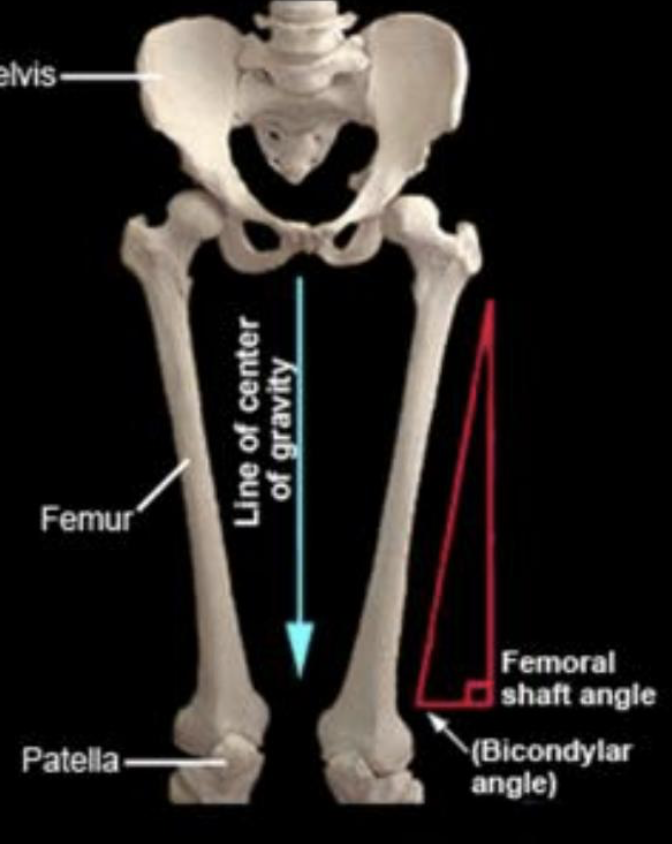
center of gravity
point at which entire mass of body weight is concentrated.
bicondylar angle
angle seen in bipedals. lower femur
feet in bipedals vs. quad
bipedals: arch, smaller hallux (big toe) and in line with other toes
quads: no arch, bigger hallux and divergent from other toes
Energetic efficiency model
bipeds evolved because being on two feet conserved energy.
how did the weather in africa change during late Miocene/early Pliocene?
became dryer and cooler. breakup of tropical forests
sahelanthropus tchandensis
6-7 MYA, Toros-menalla (2001), small face, small brain, intermediate foramen magnum, orthognatic, supraorbital torus
supraorbital torus
brow ridge
based on this class, which is earliest hominin
sahlenthropus tchadensis
aridpithecus ramidus
4.4 MYA, Found in Ethiopia (1992-1994), woodland environment, small brain, reduced canines, anterior foramen magnum
aridpithecus ramindus skeleton
reduced canine, anterior foramen magnum, arm not weight bearing, lower limbs had climbing adaptations (divergent hallux, grasping toe)
endocast
cast of inside of cranium
gracile
lightly built
robust
heavily built
megadontia
massive teeth
sagittal crest
bony ridge running along the top midline of the skull in some mammals, providing a large surface for strong chewing (temporalis) muscles
fallback foods
foods that other animals don’t want; not nutritionally dense
core
heavy butchering and fracturing bones
flakes
use-wear analysis: wood, meat, & grass
edentulous
without teeth