Texas Driving Permit Test
 Call Kai
 Learn
Learn Practice Test
 Spaced Repetition
 Match
Match Flashcards
 Knowt Play
1/149

There's no tags or description
Looks like no tags are added yet.
Name | Mastery | Learn | Test | Matching | Spaced | Call with Kai | Chat |
|---|
No analytics yet
Send a link to your students to track their progress
150 Terms
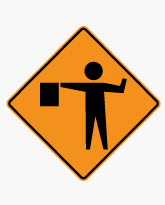
Flag Person Ahead
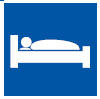
Lodging is Available
If another vehicle is passing you on the left hand side of the road, allow the other vehicle to pass safely, and
A. pull your vehicle to the right edge of the road.
B. pull your vehicle to the left lane of the road.
C. do not increase your speed.
D. increase your speed to follow the vehicle.
C
Before backing up your vehicle, you should look to the front, sides, and rear, and continue to look ___________ while backing.
A. into the side mirrors.
B. to the rear.
C. to the front.
D. to the sides
B
Which of the following is true about safety belts?
A. Only the driver and front seat passengers must wear their safety belts.
B. The driver and every passenger must wear their safety belt.
C. Safety belts are optional in Texas.
D. Only the driver must wear a safety belt.
B
If a tire suddenly goes flat while driving, you must
A. try to move to the left side of the road.
B. try to increase the speed to control your vehicle.
C. hold the steering wheel tightly and keep the vehicle straight.
D. try to stop your vehicle on the road.
C
You are driving along a divided highway and you see a school bus parked with its red signals flashing on the other side of the highway. Are you required to stop?
A. No, but you should proceed with caution
B. Yes, you must stop until the bus has started moving again
C. Yes you must stop, but you can then proceed when you deem it to be safe
D. No, but you are required to slow down to 10 mph as you pass
A
A single solid white line across a road at an intersection means that a motorist must _________ for a traffic signal or sign.
A. stop after the line
B. stop behind the line
C. cross the line
D. slow down after crossing the line
B
The law of Texas requires that _________ in a passenger vehicle must wear seat belts all the time.
A. the driver and every passenger
B. the driver and rear seat passengers
C. the driver and front seat passengers
D. the rear seat passengers
A
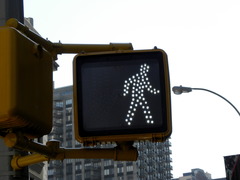
Pedestrians can enter crosswalk
Sharp Turn sign
______line(s) mean that passing is not allowed in either direction.
A. A broken yellow
B. A broken white
C. One broken and one solid yellow
D. Solid double yellow
D
Which of the following statements is NOT true about blind spots?
A. Larger vehicles have smaller blind spots.
B. You have two blind-spot areas to the left and right back sides of your car.
C. Don't drive in another driver's blind spot.
D. The best way to compensate for blind spots is to turn and glance over either shoulder.
A
Talking on a cell phone while driving increases your chances of being in a crash by
A. three times.
B. some other factor.
C. two times.
D. as much as four times.
D
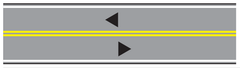
Double solid yellow line - Do not cross
It is against the law to make a left turn at a red light EXCEPT
A. from a one-way street to another one-way street.
B. from a one-way street to a two-way street.
C. from a two-way street to a two-way street.
D. from a two-way street to a one-way street.
A
Handicapped crossing

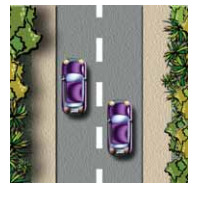
Broken white line - passing allowed
Which of the following is not a safe situation for passing?
A. When pavement markings are broken white lines
B. When moving through an intersection
C. When the vehicle ahead is moving below the safe speed
D. When pavement markings are broken yellow lines
B
When two vehicles meet on a steep mountain road where neither can pass, which vehicle has the right-of-way?
A. The vehicle traveling uphill
B. The vehicle traveling downhill
C. Both vehicles
D. The vehicle that comes first
A
An alternate route is 1000 feet ahead

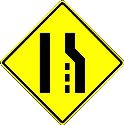
End of right lane
When you approach a railroad crossing, you must stop your vehicle _________ from the nearest rail, if you see an approaching train.
A. within 30 feet but not less than 15 feet
B. within 25 feet but not less than 5 feet
C. within 40 feet but not less than 5 feet
D. within 50 feet but not less than 15 feet
D
A driver who wants to enter a highway from a private road
A. can take a sharp turn and enter the highway while blowing the horn.
B. must switch on the flashing lights of the vehicle and enter the highway.
C. can enter the highway without signaling.
D. must stop and yield to the vehicles on the highway.
D
If you approach a person (who is about to cross the road) walking with a white cane, or a white cane tipped with red, you must
A. use your horn.
B. go slow.
C. stop.
D. take a detour.
C
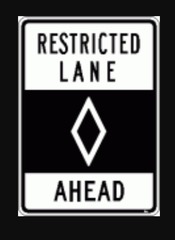
Restricted Lane Ahead - Lane is reserved for certain purposes or certain vehicles
What should a Texas driver do when stopped by a police officer?
A. turn on his or her hazard lights
B. turn the engine off
move his or her vehicle to the C. right edge of the road
D. all of these answers are correct
D
Which of the following could contribute to a DWI conviction in the state of Texas?
A. Inhalants
B. Marijuana
C. Over-the-counter medications
D. All of the above
D
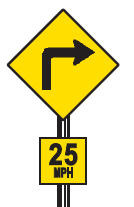
Safe speed indication for a curve ahead to the right.

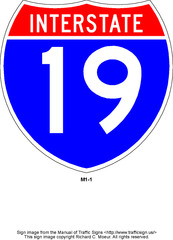
Interstate highway number
When making a left turn at an intersection or into an alley or driveway, you must yield the right-of-way to
A. all traffic behind your vehicle.
B. all traffic coming from the opposite direction.
C. all traffic coming from the same direction.
D. all traffic to the right of your vehicle.
B
A third or subsequent DWI conviction could result in a penitentiary sentence of up to
A. 90 days
B. 5 years
C. 1 year
D. 10 years
D
If you are approaching an intersection and see a steady yellow light, you must
A. come to an immediate stop
B. proceed from the left side with caution
C. increase your speed
D. continue with the same speed
A
If you approach a roundabout, always enter to the _______ of the central island.
A. left
B. corner
C. right
D. center
C
When you reach an uncontrolled intersection at the same time with another vehicle, you must
A. yield the right-of-way to vehicles on your left
B. slow down and proceed with caution
C. stop and wait for the green light
D. yield the right-of-way to vehicles on your right
D
When a truck is trying to pass your vehicle, you can help the truck driver by
A. reducing your speed and driving in a no-zone
B. keeping to the near side of your lane and reducing your speed slightly
C. increasing your speed
D. keeping to the far side of your lane and reducing your speed slightly
D
Passing on left is permitted when the way ahead is clear
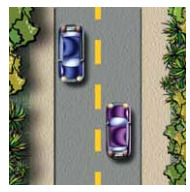
When following another vehicle at a speed over 30 mph, you must maintain at least __________ following distance under ideal road conditions, to avoid a collision.\
A. four seconds
B. six seconds
C. five seconds
D. ten seconds
A
On multilane roads, the _________ lane is intended to be used for passing slower vehicles.
A. center
B. rightmost
C. leftmost
D. shoulder
C
When the yellow lights are flashing, all drivers approaching ________must obey the posted speed limit of 20 mph.
A. a school zone
B. an expressway
C. a construction zone
D. a railroad crossing
A
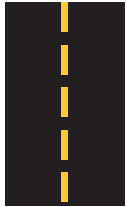
Passing is allowed
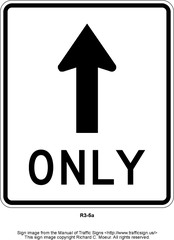
Must drive straight through the intersection.
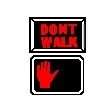
Do not walk.
If a broken yellow line is on your side of the center dash stripe, then
A. you may not cross the line.
B. you may cross the line to pass other vehicles.
C. you may cross the line only if the other side has a broken line.
D. none of the above apply.
B
Which of the following actions escalates road rage?
A. Tailgating
B. Blowing the horn
C. Forcing a car off the road
D. All of the above
D
Which of the following will help a driver sober up after consuming alcohol?
A. Drinking coffee
B. Taking a cold shower
C. Exercising
D. None of the above
D
In order to avoid last-minute braking or the need to turn suddenly, you should
A. use the three-second rule.
B. use the one-second rule.
C. look ten seconds ahead on the road.
D. look two seconds ahead on the road.
C
A Texas driver could lose his or her driving privileges for up to ___ upon his or her first DWI conviction.
A. 30 days
B. 1 year
C. 6 months
D. 90 days
B
Which of the following statements is true about driving on highways?
A. Fast-moving vehicles must enter the highway through the deceleration lane.
B. Slow-moving vehicles should use the right lane, and fast-moving vehicles should use the left lane.
C. Slow-moving vehicles should use the left lane, and fast-moving vehicles should use the right lane.
D. Fast-moving vehicles should overtake slower vehicles from the right.
B
_________ are designed to allow vehicles to slow down and leave the expressways.
A. Acceleration lanes
B. Turnpikes
C. Roundabouts
D. Exit ramps
D
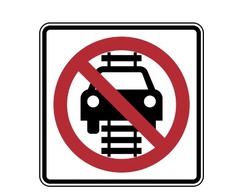
You must not drive on the railroad tracks.
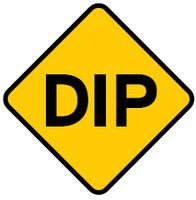
There is a low place in the road.
Recommended speed for this corner is 35 mph.

Who is required to wear seat belts regardless of their position in the vehicle?
A. the driver and all passengers
B. passengers under 18
C. only the driver
D. passengers under 16 only if occupying the front seat
A
You must use your headlights beginning one-half hour after sunset and ending
A. one hour before sunrise
B. one-half hour before sunrise
C. two hours before sunrise
D. one and a half hour before sunrise
B
Potential Texas drivers who are under the age of ____ must have their instruction permit or driver's license applications signed by a parent, guardian, or, if neither are available, a responsible employer.
A. 21
B. 15
C. 18
D. 16
C
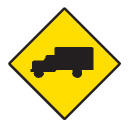
trucks entering highway
Motorists are required to allow a minimum safe distance of ____ when passing a bicycle traveling in the same direction.
A. 10 feet
B. 7 feet
C. 5 feet
D. 3 feet
D
Drivers entering a main road from a driveway, alley, or roadside should
A. yield to vehicles already on the main road.
B. not make a right turn.
C. reduce their speed and enter the main road.
D. enter the main road with an increased speed.
A
You may not pass another vehicle except
A. when there is a school bus on the same roadway with flashing lights.
B. when you are within 100 feet of a railroad crossing.
C. when your lane is separated by a broken yellow line.
D. on the right shoulder of the highway.
C
A steady yellow traffic light at an intersection indicates that drivers need to
A. turn back.
B. take a detour to the left.
C. increase their speed.
D. stop unless they are already in the intersection.
D
Which of the following road rules about turning is NOT correct?
A. When making a right turn, avoid swinging wide to the left.
B. When making turns, go from one lane to the other as directly as possible without crossing lane lines.
C. When making a left turn, avoid cutting the corner sharply.
D. Where there are no signs to control turning, you must turn into the lane farthest from the one you came from.
D
Which of the following can be considered a legal parking zone?
A. A crosswalk or sidewalk
B. Within 30 feet of a stop sign, yield sign or traffic signal
C. A bridge or overpass or in a tunnel or underpass
D. The curb or edge of the public road
D
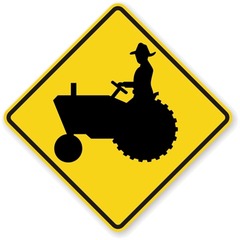
farm machinery may be crossing the road
When you reach a marked or unmarked crossing, you must yield and watch for
A. trucks.
B. pedestrians.
C. heavy vehicles.
D. slow-moving vehicles.
B
What is the legal BAC limit in the state of Texas for drivers who are under the age of twenty-one?
A. 0.05%
B. 0.08%
C. 0.00%
D. 0.02%
C
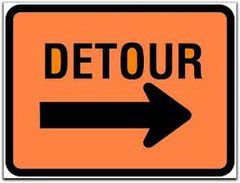
Shows alternate routs during road closures and construction.
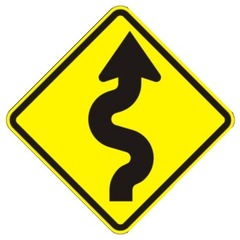
Winding road
You must use __________ to avoid reflection when driving at night in heavy fog.
A. high headlight beams
B. low headlight beams
C. flashing lights
D. parking lights
B
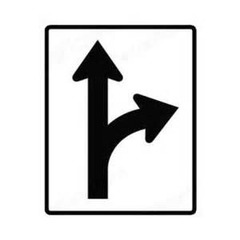
Driver may go straight or turn right
When there are two solid yellow lines in the center, passing is
A. permitted in both directions.
B. permitted in one direction.
C. not permitted in either direction.
D. permitted for heavy vehicles.
C
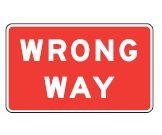
Wrong way
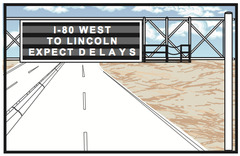
Dynamic message sign
Conviction of an open container law violation will result in a fine of up to ___ in the state of Texas.
A. $100
B. $1,000
C. $500
D. $1,500
C
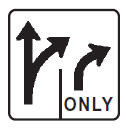
Traffic in the right lane must turn right, and traffic in the second lane should go straight or turn right.
The allowable blood alcohol concentration (BAC) for drivers over 21 years of age is
A. below 0.09%
B. below 0.12%
C. below 0.1%
D. below 0.08%
D
If you wish to enter an expressway or freeway, you must _________ before merging with the traffic.
A. reduce your speed
B. move to the right-hand lane
C. move to the acceleration lane
D. move to the deceleration lane
C
Rain, snow, and ice impair your ability to see ahead, so you must _________ to stop your vehicle safely.
A. increase your following distance
B. increase the brightness of your headlights
C. change lanes frequently
D. increase your speed
A
Three cars arrive at an intersection at the same time with a pedestrian crossing in front of the vehicle on the far right. Who has the right of way?
Pedestrian and car going same direction.
Headrests should be adjusted so that the head restraint contacts the back of the head. This prevents
A. body injuries in a head-on collision.
B. accidents from behind.
C. neck injuries if you are hit from behind.
D. tightening of the seat belt during accidents.
C
To prevent drowsiness in continuous driving on an interstate road, drivers must
A. keep shifting their eyes.
B. use stimulants.
C. talk on a cell phone.
D. change lanes frequently.
A
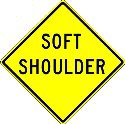
Warns drivers that they should not leave the pavement.
You arrive at a railroad crossing. The crossing has flashing red lights and a signal bell. You can see that a train is approaching. Which of the following is true?
A. You must stop at least 15ft away from the tracks, but no further than 50ft from the tracks if traffic is permitting
B. You can proceed if there is no train approaching as soon as the gate starts to rise
C. You can cross when a train is approaching if there is no gate lowered, the train is moving slowly, and you can finish crossing at least 15 seconds before the train arrives
D. None of the above
A
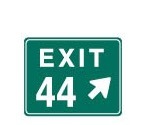
Exit Number
If you have vehicle troubles at night, you must use _______ to avoid an accident.
A. higher gears first and then lower gears
B. high beam lights first and then low beam lights
C. all four flashing turn signals simultaneously
D. hand signals and high beam lights simultaneously
C
Shared center lanes that are marked on each side by a solid yellow and dashed yellow lines are reserved for _______ and can be used by vehicles traveling in either direction.
A. making left turns
B. passing
C. making right turns
D. making U-turns
A
A sign with a bicycle on it with a big red NO circle around it means:
A. Only bicyclists are allowed to use this road.
B. Bicyclists must not use this road.
C. Vehicles are not allowed to pass bicyclists.
D. This is a no-passing zone for bicyclists.
B
The eye test for the driver's license evaluates
A. peripheral vision.
B. acuity.
C. depth and color perception.
D. all of the above.
D
Are you allowed to turn right at a red signal?
A. Yes, but only after coming to a stop and yielding to traffic
B. No, you can never turn right at a red light
C. Yes, but only if a sign permits you to do so
D. Yes, this is a 'protected' turn so you will have right of way
A
You have parked next to the curb facing up hill. Which way should you point your front wheels to stop your car from rolling if your brakes should fail?
A. Keep your wheels straight
B. It makes no difference
C. Steer towards the curb
D. Steer away from the curb
D
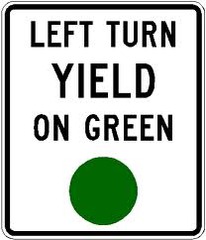
Left turn allowed on green.
The best way to handle a curve is to
A. slow down before entering the curve.
B. stay on your side of the road and drive as far to the left as possible.
C. begin to turn the vehicle just prior to the curve and quickly increase your speed.
D. gradually increase your speed before entering the curve.
A
The maximum suspension period for a second DWI conviction is
A. 2 years
B. 1 year
C. 180 days
D. 5 years
A
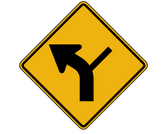
Main road curves to the left
Warning signs are used along the roadways to
A. control and regulate traffic.
B. provide information about directions, distances, and available services.
C. indicate potentially hazardous conditions ahead.
D. indicate points of interest and geographical information
C
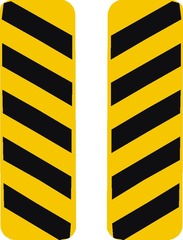
Object marker in the roadway
If a DWI occurs while a passenger under the age of fifteen is in the vehicle, a TX driver could be subject to an additional fine of up to ____.
A. $1,000
B. $10,000
C. $15,000
D. $5,000
B
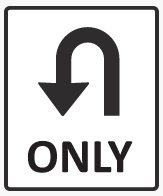
Vehicles must make a U-turn from the specified lane
Drivers must maintain a constant speed when passing and reentering the lane in front of trucks or buses, since trucks and buses require
A. less room to maneuver.
B. less time to stop.
C. shorter distances to slow down than cars.
D. longer distances to slow down than cars.
D
If you find yourself in a skid while driving, you must
A. ease your foot off the gas and carefully steer in the direction you want the front of the car to go.
B. ease your foot off the gas and carefully steer in the opposite direction you want the front of the car to go.
C. apply brakes immediately and carefully steer in the opposite direction you want the front of the car to go.
D. apply brakes immediately and carefully steer in the direction you want the front of the car to go.
A