Lab final exam - Section 1: lab safety
 Studied by 0 people
 Call Kai
 Learn
Learn Practice Test
 Spaced Repetition
 Match
Match Flashcards
 Knowt Play
1/49

There's no tags or description
Looks like no tags are added yet.
Name | Mastery | Learn | Test | Matching | Spaced |
|---|
No study sessions yet.
50 Terms
Fire on a person
Fire blanket
Chemicals on clothes
Safety shower
Cuts or minor burns
First aid kit
Large fire on benchtop
Fire extinguisher
Chemicals in eyes
Eyewash station
Under what conditions should a student inform the instructor of a lab injury
The instructor must be informed of all laboratory injuries
What is the best equipment to extinguish a large fire on the floor?
Fire extinguisher
What is the best equipment to extinguish a small benchtop fire?
Overturned beaker
What is the best equipment to extinguish a clothing fire?
Fire blanke
What is the main precaution to take if a Gas Cylinder sign is present in the lab?
Visually check that the gas cylinder is restrained but keep a safe distance from it.

identify this safety sign
exit
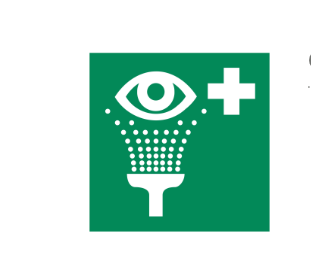
identify this safety sign
eyewash station
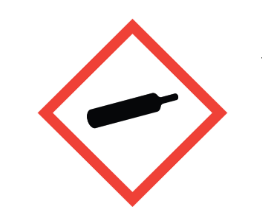
identify this safety sign
gas cylinder

identify this safety sign
NFPA diamond
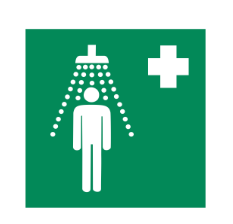
identify this safety sign
Safety shower
Which types of signs are used to convey information about chemical storage?
Hazard signs (e.g., Flammable, Oxidizer, Corrosive)
NFPA diamond
Gas Cylinder sign
What is the first step for response to an emergency situation?
Remain calm and quiet, gather information, and assess the situation.
Identify the step that is not recommended when responding to an emergency.
Gather your belongings
What information is needed in order to be prepared for an emergency?
Contact info for emergency personnel
Location of phone and first aid
understanding emergency procedure
A student removes a chemical sample from a reagent bottle to be used in an experiment. What should be done with any excess chemical remaining from this sample after the experiment is complete?
Check and see if anyone else can use the chemical. If not, discard in the proper waste container.
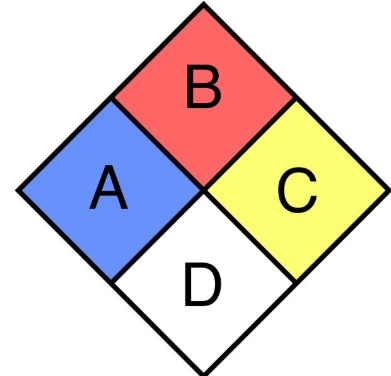
What is A
Health
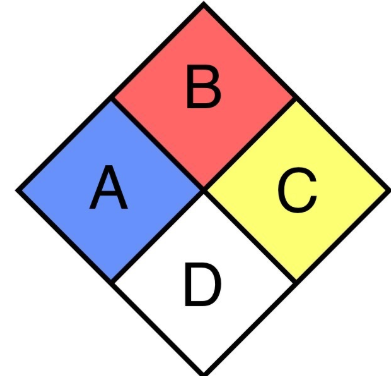
What is B
Flammability

What is C
Reactivity
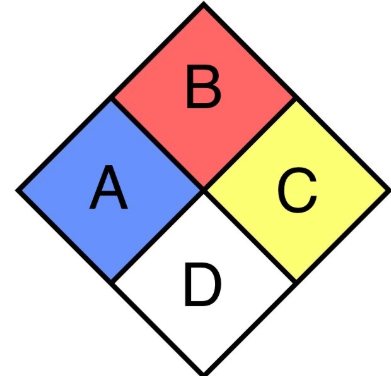
What is D
Special Hazards
In general, which characteristics are necessary for a location to be suitable for chemical storage?
Dark
Dry
Cool
What are the correct steps for cleaning up a liquid spill in the lab?
Surround the area with absorbent pads, then cover the spill.
Scoop up the material and place it in a plastic bag.
Place the bagged waste in a solid waste container.
Wipe down the area with detergent and water.
Most laboratory chemical spills are cleaned up in a similar manner, but acid and base spills require an extra step. What is this extra step?
Neutralize the spill before cleaning it up.
How should spill cleaning materials be discarded?
Seal in a labeled plastic bag, then place in the solid waste container.
Which SDS sections contain the following types of information?
Incompatibility or reactivity with other chemicals → Handling and Storage
Recommended PPE → Exposure Controls / Personal Protection
Possible dangers and health effects → Hazards Identification
Chemical name and formula → Identification
Recommendations for accidental exposure → First Aid Measures
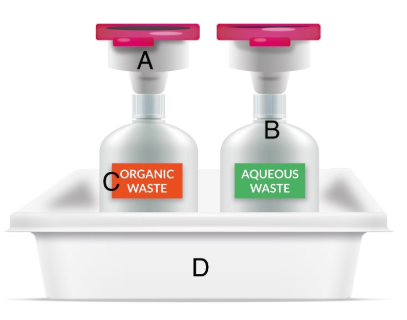
A
funnel
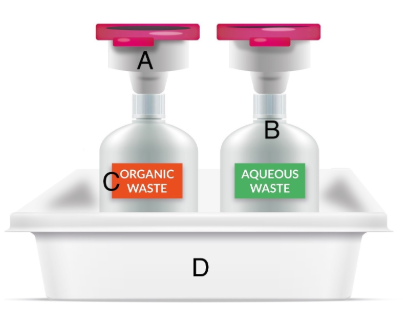
B
Primary Container
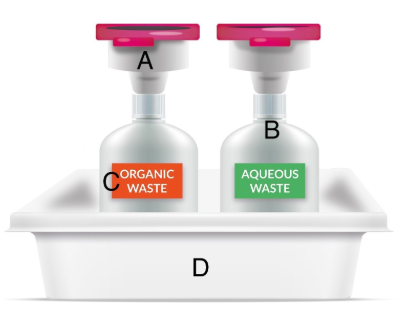
C
Waste label
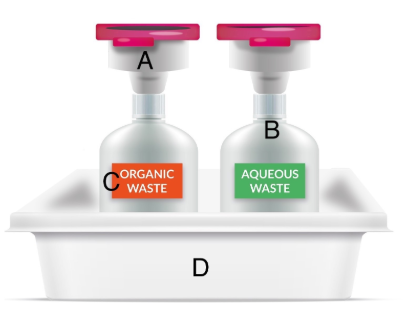
D
Secondary Container
Determine where to dispose….
Determine where to dispose of….syringe tips
Sharps container
Determine where to dispose of…. titrant solution
Nalgene bottle
Determine where to dispose of….broken flask
Box lined with puncture resistant bag
Determine where to dispose of….unused solid reagent
Solid waste container
NOT a good source of information about the hazards that affect waste disposal in a chemistry lab?
Your Lab partner
What information does not need to be included on a chemical waste label?
A description of the experiment the chemicals were used for
What are the best practices for safely handling waste in the lab?
Always wear appropriate personal protective equipment
Check labels or instructions before any disposals
When should you start a new chemical waste container in the lab?
When the contents of the current container are a couple inches below the brim of the container

How should you handle items that may dangle into the workspace during lab?
Long necklaces → Remove
Loose bracelets → Remove
Long hair → Tie back or secure
Long earrings → Remove
Flowy sleeves → Tie back or secure
What should you do every time before you leave the lab?
wash your hands
remove your gloves
remove your lab-coat, if you are wearing one
What PPE will you be using in a general chemistry lab?
Goggles
lab coat
gloves
Determine when to put on disposable gloves for work in the lab.
Before handling any glassware or chemicals for the experiment
Determine the safest option in the lab if you need your vision to be corrected.
Wear corrective glasses or lenses under your safety goggles for the whole experiment, but always check with your TA or Instructor for your school's policy
Determine when you should remove your goggles in the lab room.
When everyone in the room is done handling any chemicals or glassware
What is the correct way to smell a chemical
wafting