Irish Artists
 Note
Note Call Kai
 Learn
Learn Practice Test
 Spaced Repetition
 Match
Match Flashcards
 Knowt Play
1/146

There's no tags or description
Looks like no tags are added yet.
Name | Mastery | Learn | Test | Matching | Spaced | Call with Kai | Chat |
|---|
No analytics yet
Send a link to your students to track their progress
147 Terms
Where was Francais Bacon Born
Dublin
How was Bacon's relationship with his parents?
Very Poor because he was raised by the family nanny and was whipped by his father for dressing feminine
What did Francis Bacon do a lot of in his childhood? How did this make him feel?
Bacon moved bewtween London and Dublin, often feeling isolated and rejected due to his sexuality.
What did Francis Bacon do in his 20s
Took part in petty theft, Couldn't keep a job, Was involved in the homosexual underworld, Moved back to London to work in interior design

What is this painting called/ What is the backstory (Bacon)
Crucifixion (1993)- Not received well- May be based on catholic upbringing and political violence- explores themes of faith and suffering.
What did Bacon's early success look like?
In 1944 he deveolped his unique style and painted the Furies and Painting.
Three Furies painting

(Bacon)
Based on the Emunides or Furies / To be displayed at the base of a crucifixtion / Based on the quote "the reek of human blood smiles out of me.
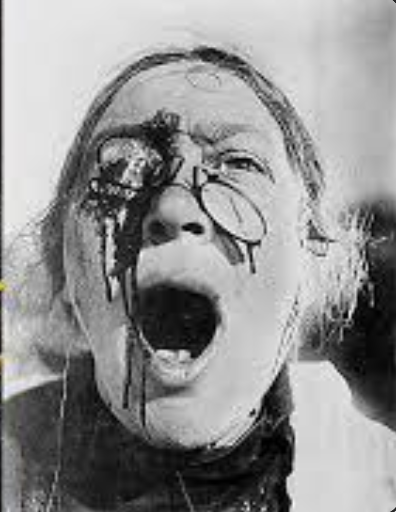
What is the lore behind this picture (Bacon)
A screaming nurse from a movie that Bacon was obssed with (had this picture hung everywhere) / Made a pope painting
""

“Painting" (Bacon)
Originally intended to show a chimpanzee in long grass
Attempted to paint over with bird and prey landing in a field
Considers his “most unconscious” work
What series took place in the late 40ds? (Bacon
The head series
Head VI

Bacon
Screaming pope in a glass cage / Modeled on Portrait of Innocent X / Part of larger series depicting isolated figures
What was happening in the 1960's and 1970's (Bacon
Screaming pope series show similar motifs but with full figures
Inspo
1960s-1970s
Was mostly in abusive relationships
Now with Dyer who is much younger than him and not a great guy
Work moved to mostly portraits of friends
Mostly of Dyer
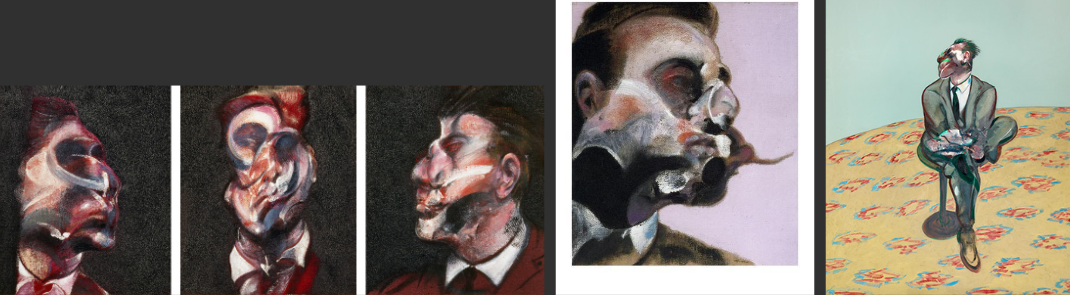
What was happening in 1971 (Bacon)
Bacon’s career peaked - “Greatest Living Painter”
Dyer is a huge pain at this point
Alcoholic, needy, in a downward spiral
May sucicide attempts
Dyer overdoses 2 days before Bacon is told
From here death haunted is work
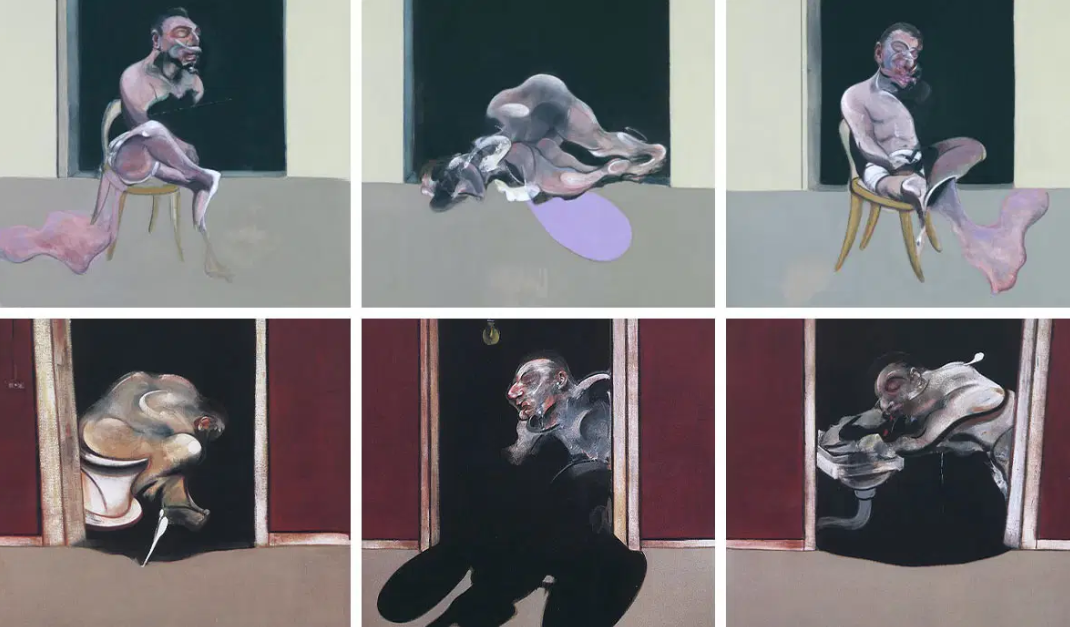
Black Triptych
Black Triphtych
Shows the moments before, during, and after Dyer’s suicide
Not always shown linerly
Each shows a comatose man near a toilet
Dyer is followed by a black winged creature or raw blobs of dying flesh
Act as pointers to the the tragedy of the scene
Manifestations of Bacon’s guilt
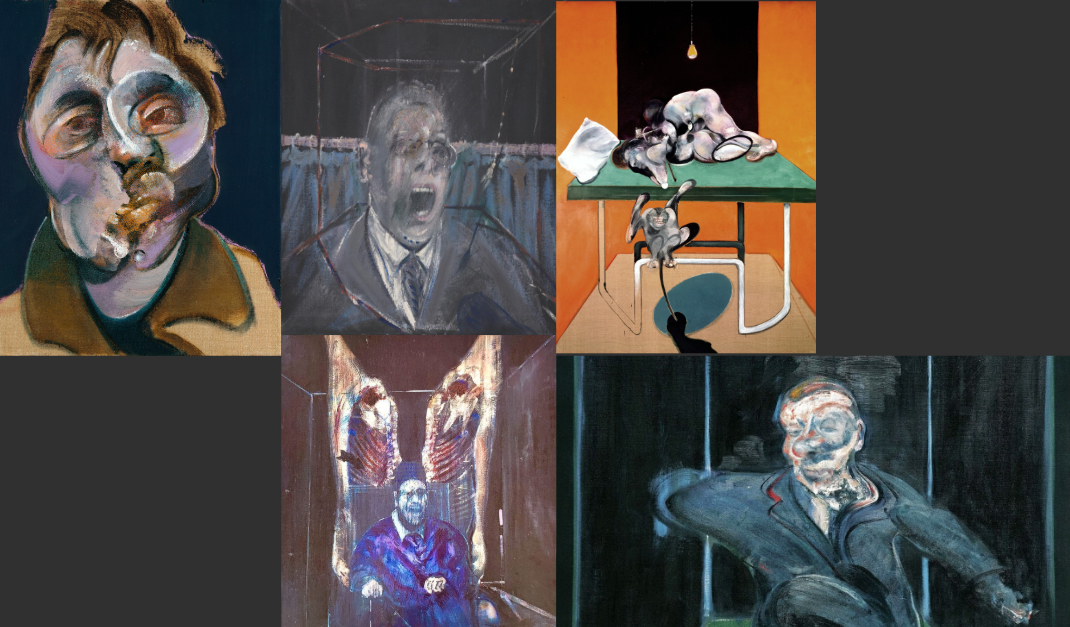
Who most likely painted these?
Francis Bacon (1909-1992)
Where was Maine Jellet born?
Dublin (moved to Paris in 1921)
Who was Maine Jellet taught by?
William Orpen at the Metroplis school of art at age 11
What did the 1920's look like for Maine Jellet?
Moved to Paris in 1921
Encountered cubism and abstract art
Color and rhythm inspired her to stay in France
1923 exhibited cubist paintings - received a hostile response
At the Dublin Painted’s exhibition
What was Maine Jellets religious stand point?
Deeply committed christian
What are Maine Jellets abstracts built on? How did she add the the modernism movement?
A central eye or heart in the middle
Important figure in Irish Art History
An early proponent of abstract art and modernism movemen
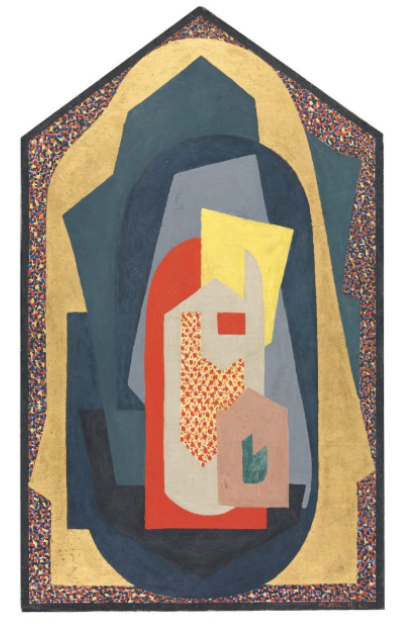
Who painted this / What is it called / What is it based on /
Maine Jellet / Decoration / Based on Madonna and Child
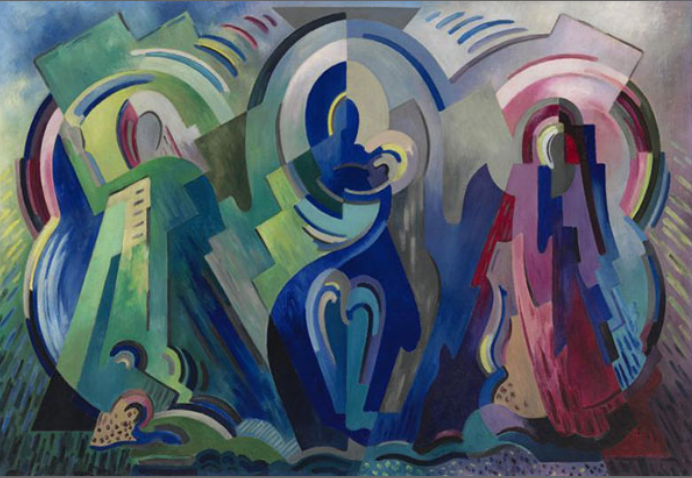
What is this painting called and who painted it
Virgen of Eire / Maine Jellet
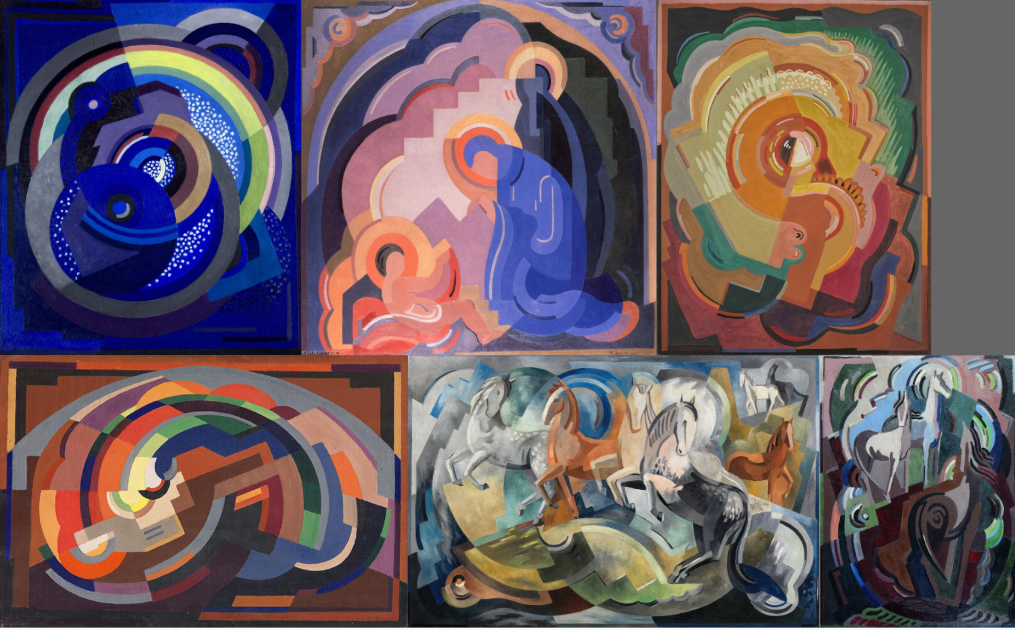
Who most likeley painted these?
When did Paul Henery live?
1876-1958
Where was Paul Henery born?
Belfast Ireland
Where did Paul Henery move to through out the years?
Studied art at Royal Belfast Academical Institution
Then switched to Belfast school of Artnefore going to Paris
Married a painter and moved back to Ireland
Moved to Achill Island
Here he learned to capture the peculiar interplay of light and landscape of West of Ireland
Move to Dublin
Who was the most renowned Irish Arist in the 20s and 30s?
Paul Henery
Who's use of color was affected by red- green colorblindess
Paul Henery (Lost all sight in 1945)
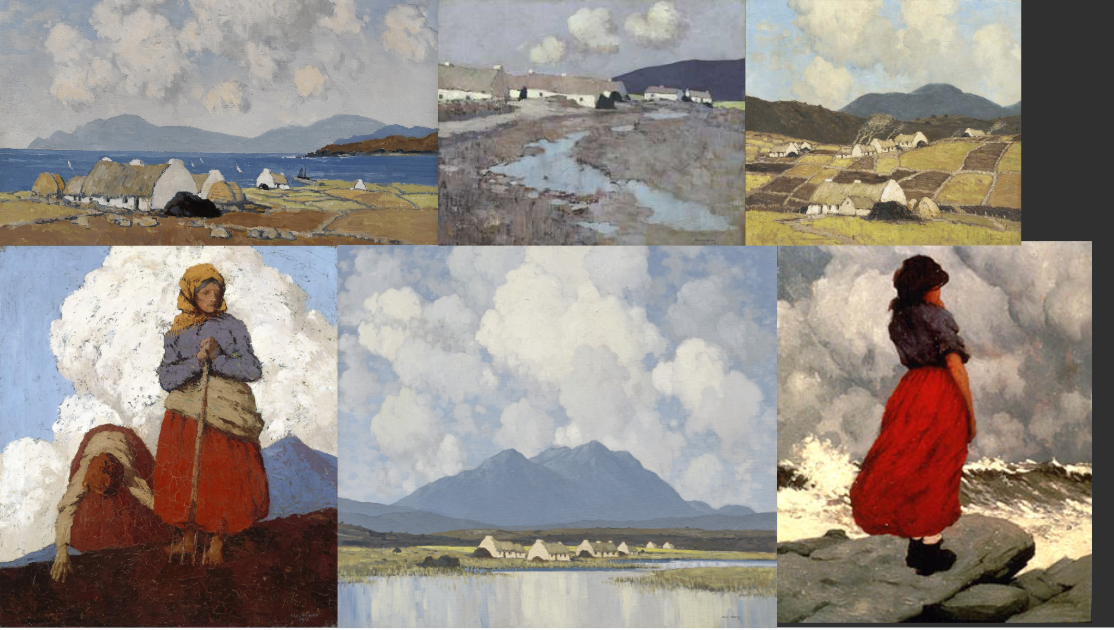
Who most likely painted these?
Paul Henery
What did Sean Keating study before receiving a scholarship from William Orpen?
He studied drawing.
Where did Sean Keating go to study art after receiving a scholarship?
He studied at the Metropolitan School of Art.
What award did Sean Keating win for his painting?
He won an award for his painting titled 'The Reconciliation'.
What role did Sean Keating take on while working with William Orpen?
He worked as Orpen’s studio assistant in London.
What significant event did Sean Keating return to Ireland to document?
He returned to document the Irish Civil War.
How is Sean Keating described as a painter?
He is described as an intellectual painter.
What did Sean Keating consciously aim to explore in his paintings?
He consciously set out to explore the visual identity of the Irish Nation.
How are Sean Keating's paintings characterized in terms of realism?
His paintings show very idealized realism.
What did Sean Keating feel was his mission as an artist?
He felt that his mission was to define what nationhood meant in his paintings.
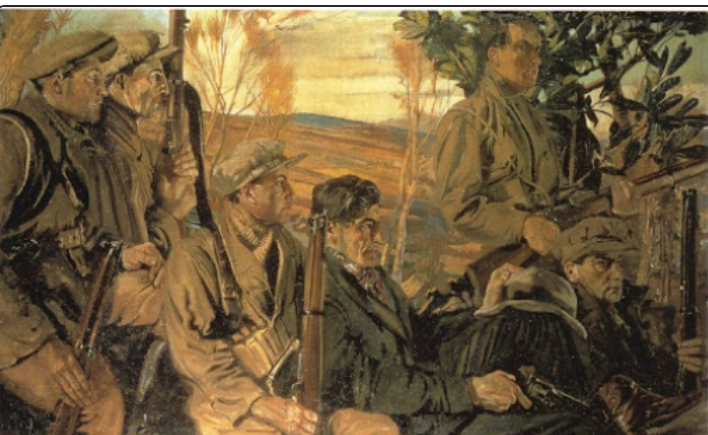
Backstory behind this painting?
Painted in a time of uncertainty
Shows the members of the North Cork Brigade
Staged in a studio after the war ended
Based on concept of the Greek frieze
Depicted heroic figure ready for battle
hows IRA members waiting to ambush British military
Ambush is imminent but based on their posture these men are not concerned for their safety but instead for the principle
Neutral tones create and earthy wholesome attachment to the land
Made as heroes but doesn’t show the grime and pain of war
Shows the idealism
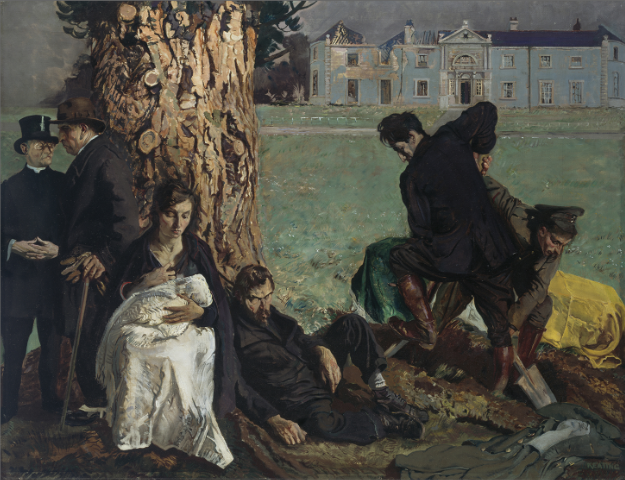
Backstory behind this painting (why was this painted?)
Painted during the Irish Civil War
Addressed social and political matters affecting Ireland
Communicates his suspicions of clerical, political, and business elite
Clergyman and Finely Dressed Man (An Allegory)
Represents a conversation about values and perspectives in Irish society, with the finely dressed man turned away, indicating disconnection from broader issues.
Young Mother (An Allegory)
Symbolizes the 'Mother of Ireland,' representing care for the nation's future.
Nursing Baby (An Allegory)
Represents future generations and the hope for a prosperous Ireland.
Slumped Man (An Allegory)
A self-portrait of Sean Keating, reflecting personal disillusionment amid national turmoil.
Soldiers in Allegory (An Allegory)
Symbolize the conflicting forces in the Irish Civil War, with Free State and Anti-Treaty Forces facing opposite directions while burying a coffin with a flag.
Human and Material Cost of Civil War (An Allegory)
The allegory highlights the sacrifices made during the Irish Civil War, underlining the heavy toll on society.
Divisive Nature of Conflict (An Allegory)
The allegory points to the deep divisions created by the civil war and the lasting consequences for the nation.
Idealism vs. Indifference (An Allegory)
The shift from the idealism of the independence struggle to a state of indifference and personal interests is a central theme of the allegory.
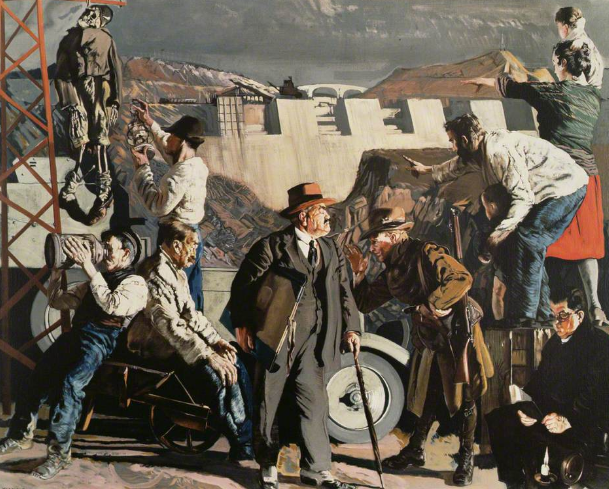
Backstory/ symbolism
Construction of hydroelectric dam at Ardnacrusha
Includes figures who represent different aspects Keating saw as the Ireland of the day
Metaphor for Ireland moving to modernity
Night’s Candles Are Burnt Out
A painting by Sean Keating that reflects disappointment with post-treaty Ireland, showcasing various themes including hope, disillusionment, and societal critique.
Top right segment of Night’s Candles Are Burnt Out
Features Keating with his wife and sons pointing to Ireland’s future, symbolizing hope for progress.
Left side of Night’s Candles Are Burnt Out
Depicts Keating inspecting a hanging skeleton, reminiscent of the Great Famine, symbolizing loss and suffering.
Bottom right segment of Night’s Candles Are Burnt Out
Shows a priest reading by candlelight, representing Keating's attitude toward the church and its role in society.
Critique of post-treaty Ireland in Night’s Candles Are Burnt Out
Disappointment with the government and church depicted as being in cahoots, reflecting societal disillusionment.
Middle segment featuring the Gombeen man (A nights candles are burnt out)
Represents a politician or businessman profiting off the struggles of others, highlighting corruption and exploitation in society.
Reflection of Ireland in Night’s Candles Are Burnt Out
Captures a country on the brink of change, questioning its direction and the influences of power structures.
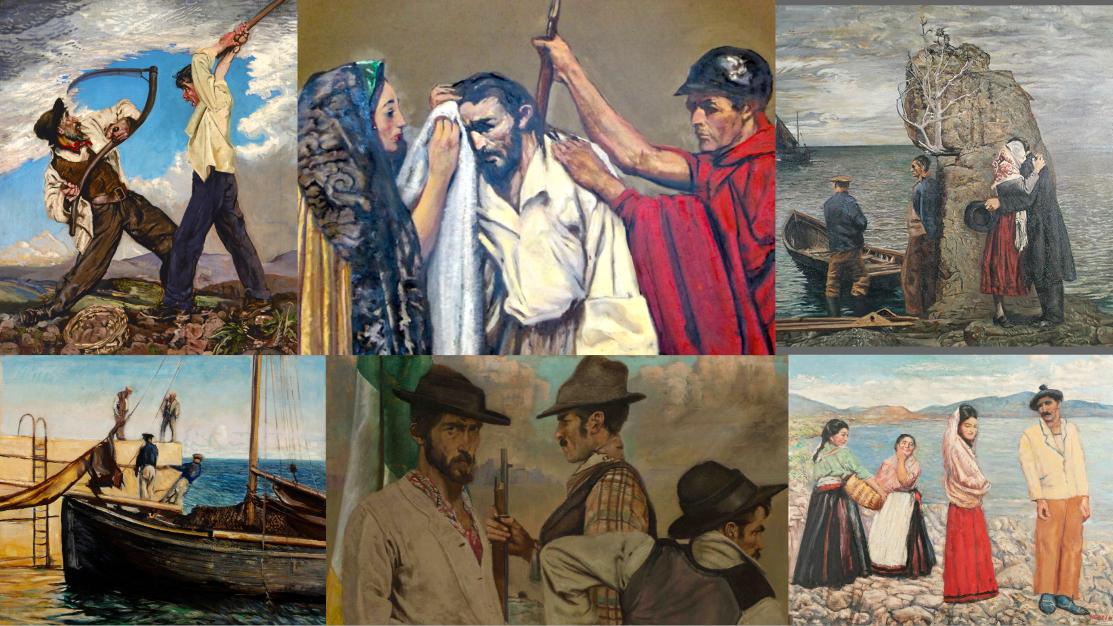
Who most likley painted these?
Sean Keating (1889-1977)
Who was John Lavery
Irish painter known for portraits and official war art, including paintings of Queen Victoria and Michael Collins.
Early life of John Lavery (where did he live)
Born in Belfast, John Lavery moved to Scotland as a child.
Art education of John Lavery
Attended Glasgow School of Art and the Académie Julian in Paris.
Who was commissioned to paint for Queen Victoria?
In 1888, Lavery was commissioned to paint the state visit of Queen Victoria.
Where was Lavery's career launch?
Lavery launched his career as a society painter and later moved to London.
Who was an Official Artist of WWI
John Lavery was appointed as an official artist of WWI, similar to William Orpen.
How idd John Lavery's car crash incident affect him?
A serious car crash during a bombing raid prevented him from fulfilling his role and going to the Western Front.
What subjects of war did John Lavery Paint?
Mainly painted aeroplanes and airships during his time as a war artist.
Who was knighted after the war?
After the war, Lavery was knighted for his contributions to war art.
What year was John Lavery elected into the Royal Academy?
Elected to the Royal Academy in 1921.
What years did John Lavery compeat in the Olympic Art competitions?
Participated in the Olympic Art Competitions in 1924, 1928, and 1932.
Irish Wars Involvement of John Lavery?
Tangentially involved in the Irish Wars, allowing use of his London home for negotiations.
What painting did Lavery paint after the assassination of Micheal Collins?
Lavery painted 'Love of Ireland' after the assassination of Michael Collins.
What was Lavery‘s role in Irish Independence
Lavery was a leading figure in the struggle for Irish independence.
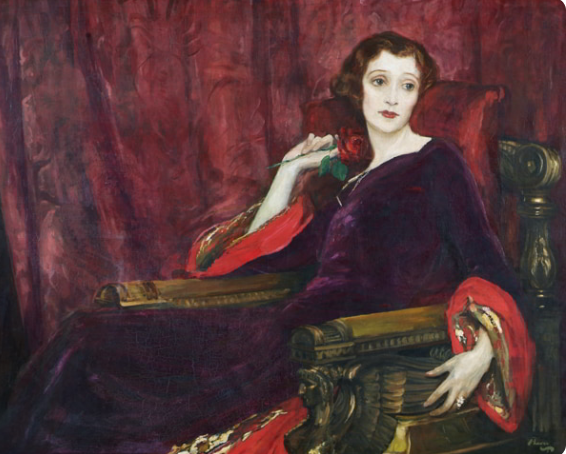
Backstory behind this painting?
Red Rose / John Lavery / Painting of his wife Hazel Lavery / Lady Lavery became an icon in Irish art / Her face ended up on bank notes
Who most likley painted these
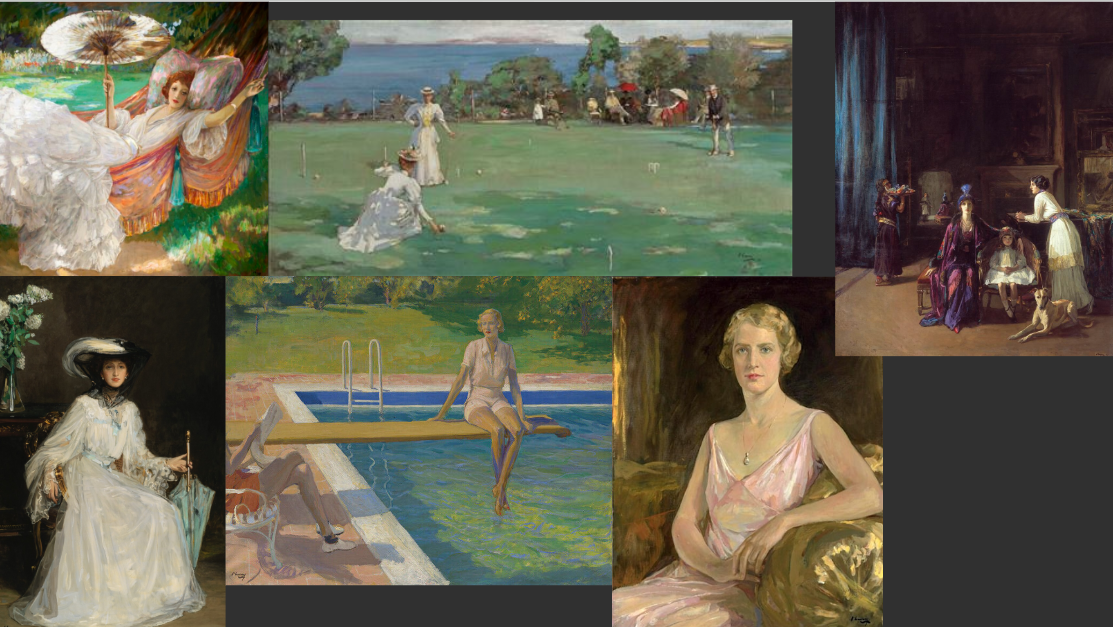
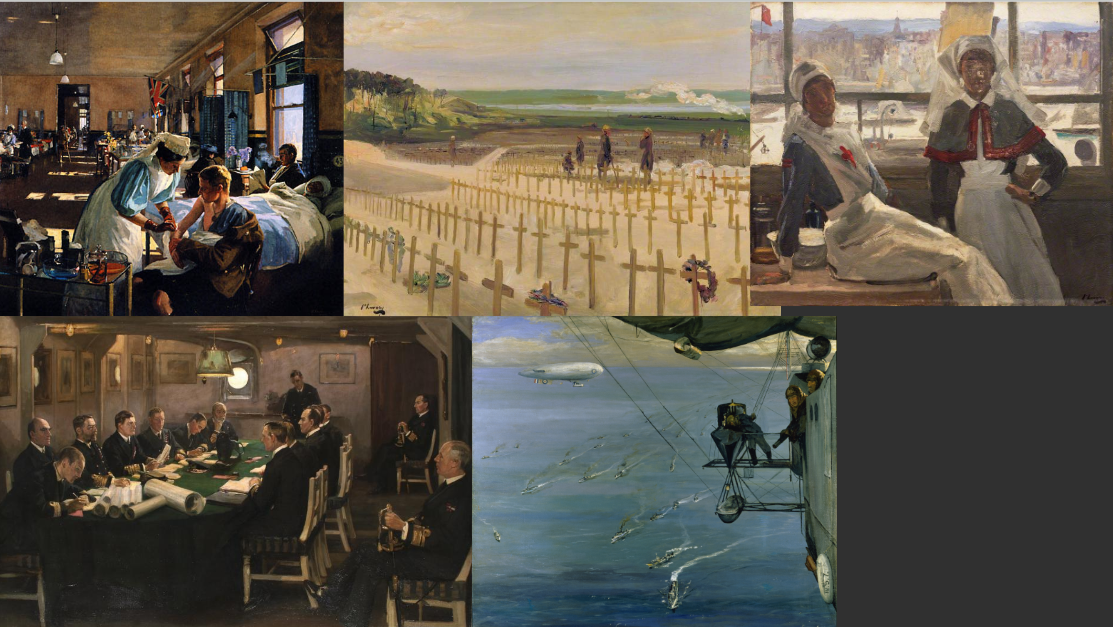
John Lavery
What was Louis LeBrocguy known for?
Ghostly Figures
Where was Louis LeBrocquy born?
Dublin.
What profession did Louis LeBrocquy's sister pursue?
She became a sculptor.
Did Louis LeBrocqy attend school for art?
No, he did not go to school for art.
What subject did Louis LeBrocquy study?
Chemistry.
What is Louis LeBrocquy widely acclaimed for?
Evocative portrait heads of literary figures and fellow artists.
Later Life of Louis LeBrocquy
In his later years, LeBrocquy focused on creating paintings that attracted international attention, especially his 'Tinker' subjects and 'Grey period' family paintings.
Art Market Achievement of Louis LeBrocquy
He is among the few Irish and British painters whose artwork has fetched prices over £1 million.
Cover Designs by Louis LeBrocquy
LeBrocquy designed covers for notable works such as 'Lark in the Morning' and 'The Rising of the Moon'.