maternal, prenatal, and perinatal infections
 Call Kai
 Learn
Learn Practice Test
 Spaced Repetition
 Match
Match Flashcards
 Knowt Play
1/72

There's no tags or description
Looks like no tags are added yet.
Name | Mastery | Learn | Test | Matching | Spaced | Call with Kai | Chat |
|---|
No analytics yet
Send a link to your students to track their progress
73 Terms
Which maternal antibodies cross the placenta and give passive immunity to the fetus? And why these ones specifically?
IgG - it's a small, Jimmer compared to other antibodies and it's stable to survive the journeyed through placental tissue
During which gestational age does the fetus become immunologically competent?
14th week
List 4 types of maternal, diseases that can the mother can develop?
UTI
Amnionitis
Endometritis
Wound infection
Which complication of infection in pregnancy can arise? (4)
Spontaneous abortion
Perinatal death
Abnormal growth
Fetal anomalies like chorioretinitis, hydrocephaly/ microcephaly, cerebral calcifications
Which virus is commonly responsible for microcephaly?
Zika virus
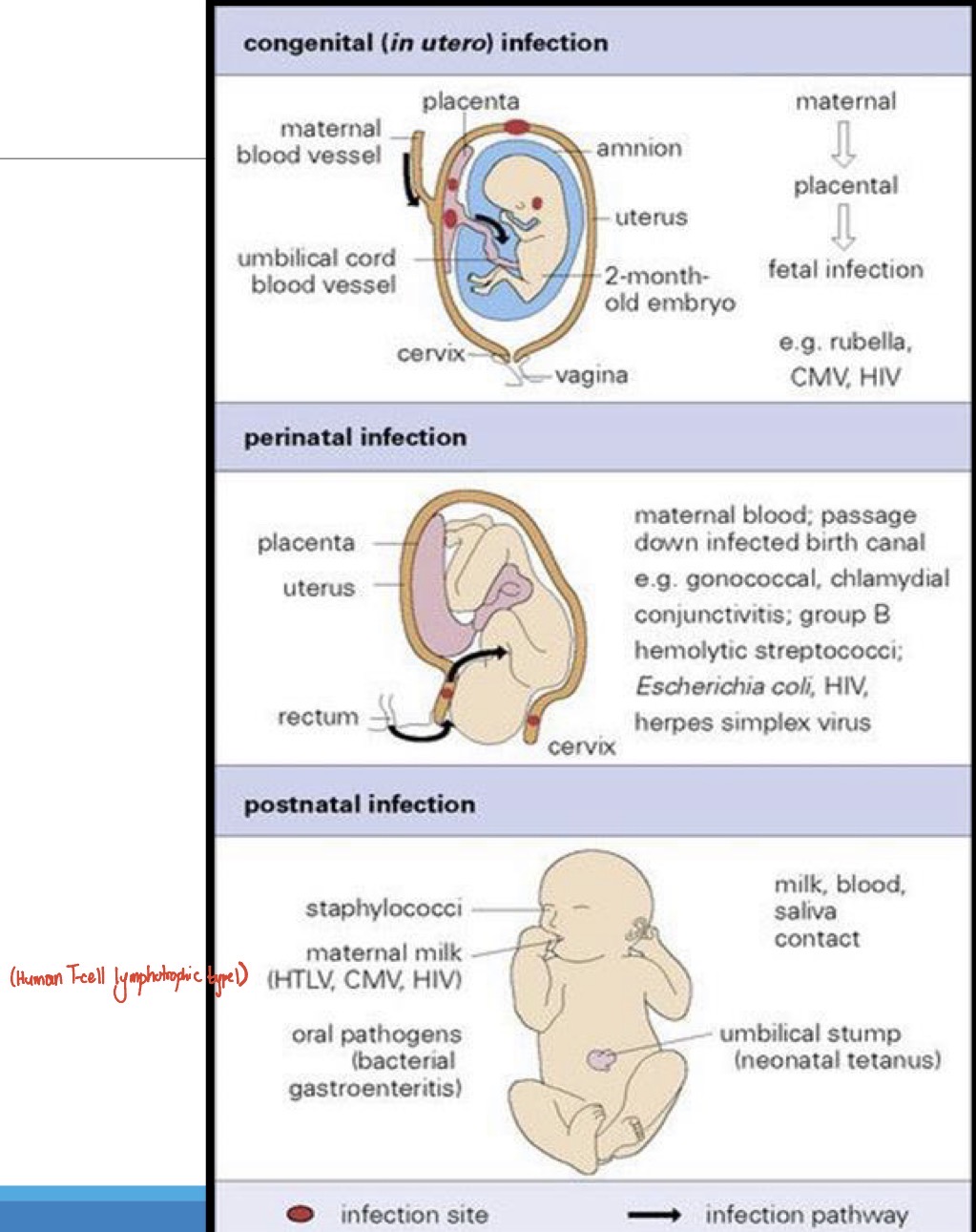
What are the modes of transmission? (6)
Transplacental (bloodstream > placenta> baby)
Iatrogenic (assited instruments / amniocentesis)
Ascending (vaginal colonisation)
Perinatal (infections in the birth canal as baby comes out)
Breast milk (usually contracted from mother when in the wards)
Nosocomial (hospital acquired infections)
How does a transplacental infection spread?
Infection spread haemotogenously via the placenta
What does a transplacental infection follow?
Acute / reactivation of maternal infection
What type of microbes can be spread transplacentally? (3)
Blood borne viruses (HIV, Hep)
Bacteria
Parasites (malaria)
What are the consequences of fetal infection via transplacental infection?(3)
Preterm labour
Growth restriction
Developmental delays
Where does ascending infections come from?
Vaginal flora that are polymicrobial & with low pathogenicity (Lactobacilli makes up 90-95%, procured lactic acid)
Which microbes commonly invade the vaginal flora? (6)
Enterococci
Staphylococci
Streptococci
Coliforms (gut microbes)
Ureaplasma (urinary & genital tract - normal)
Mycoplasma (urinary& genital tract & respiratory tract - STI)
Define perinatal infection
Infection acquired around the time of delivery through contact with infective lesions / blood from colonisation or infection in the birth canal

What are some risk factors for neonatal infections? (8)
Difficult pregnancy
Prematurity
Prolonged rupture of membranes
Traumatic births
Post-partum infections related to poor hygiene
Intensive care environment
Indwelling devices like central venous lines / catheters)
Broad spectrum antibiotics (infested fungal infections)
Define asymptomatic bacteriuria
The isolation of bacteria in an appropriately collected urine sample from a person without any signs and symptoms of UTI
Why is screening and treatment of bacteriuria in pregnancy important? (2)
Risk of progression to severe UTI
Possible harm to the fetus
What percentage of women are carriers of Group B Streptococci?
25%
What percentage of babies born will be colonised? (from rectovaginal area)
50%
What percentage of babies will have Group B strep infection?
1-2 %
Early infection of Group B Streptococci leads to which condition and during which days?
Pneumonia > days 0-6
Late infection of Group B Streptococci leads to which condition and during which days?
Meningitis > days 6- 89~92 days (3 months)
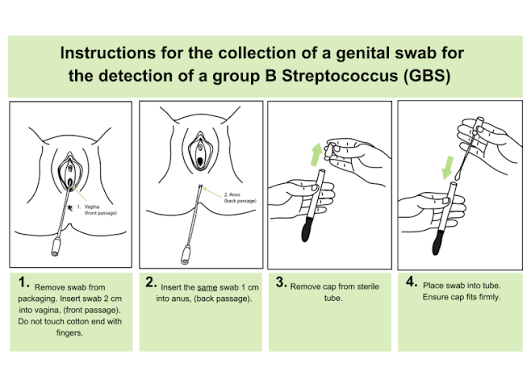
How do you get a specimen to test for Group B Streptococci? When should this be done?
Take 1 sterile swap and insert it 2cm into the vaginal and then use the same swab and insert it 1 cm into the anus.
At 35-37 weeks
Which virulence factors that assist the GBS travel from the vagina into the uterus? (5)
Polysaccharide capsule > blocks phagocytosis
C5a peptide > inactivates C5a complement neutrophil chemoattractant
Surface pili > promotes attachment
CAMP factor > enhances lytic activity
Hyaluronate lyase > break down hosts hyaluronic acid to promote tissue spread
Which specimens can be taken for Group B Streptococci? (3)
Blood
CSF
Urine
What is the gram stain results for Group B Streptococci ?
Gram positive cocci in chains
What is the gram stain results for Group B Streptococci ?
Gram positive cocci in chains
What is the treatment for the mother with Group B Streptococci?
Penicillin / Ampicillin (IV if she stays in the wards) every 4 hours until delivery then for 21 days (start when mother is in labour)
Which risk-factors should penicillin be given to? (5)
Previously delivered infant with GSB
GBS bacteriuria during pregnancy
Delivery less than 37 weeks gestation
Duration of rupture of membrane longer than 18 hours
Intrapartum temperature < 38C
What is the future of maternal immunisation against GBS infection?
Vaccines that target the capsular polysaccharide of the organism + pili based vaccines
Which organism is found in many food contaminated like milk, cheese, raw, vegetables & meat?
Listeria monocytogenes
What is the route of transmission for Listeria monocytogenes? (2)
Ingestion of contaminated foods
Vertical
What is the clinical manifestation of Listeria monocytogenes? (3)
Bacteraemia
CNS infection
Neonatal infection
What are the early and late onset conditions of Listeria monocytogenes in neonates?
Early onset: Granulomatosis infantisepticum
Late onset: Bacterial meningitis
What is the treatment of Listeria monocyotgenes? (2)
Ampicillin + Aminoglycoside (gentamicin)
What is the general prevention for Listeria monocytogenes?
Always wash raw vegetables & thoroughly cook vegetables and meat
What is the prevention of Listeria monocytogenes in pregnancy and immunocompromised?(2)
Avoid soft cheeses
Left over / ready to eat food like hot dogs should be throughly heated prior to consumption
What is the causative agent of gonorrhoea?
Neisseria gonorrhoeae
What can gonorrhoea cause? (80% asymptomatic) (5)
Premature rupture of membrane
Preterm labour
Chorioamnionitis
Endometritis
Gonococcal ophthalmia neonatorum (40%)
Which treatment do you give to the mother to prevent neonatal infection?
Ceftriaxone
What are the prophylaxis in neonates with potential gonorrhoeal infections? (2)
Erythromycin ophthalmic ointment (0.5%) to both eyes within an hour of birth
Chloramphenicol
What is a complication of untreated gonorrhoea in the neonate?
Corneal ulcers leading to blindness
What is a clinical sign of opthalmia neonatorum?
Thick, purulent discharge in the eyes

Which specimen do you use to treat N. gonorrhoeae?
Eye swab
How do you diagnose N. gonorrhoeae? (3)
Gram negative cocci on microscopy
Culture on selective media
Or PCR of swab for chylamydia trachomatis(CT) and neisseria gonorrhoeae (NG) combined lab testing
What is the treatment of N. gonorrhoea in neonates?
Ceftriaxone 25-50 mg/ kg IV x 1 dose
What can chlamydia cause? (6)
Preterm labour
PROM
Chorioamnionitis
Endometritis
Conjunctivitis (18-50%)
Pneumonia (18%)
What is chlamydia treated with ?
Azithromycin
How do we diagnose chlamydia?
PCR
Clinical sign of chlamydia?
Thinner, less purulent discharge
What is the causative agent of syphilis?
Treponema pallidum
When does syphilis begin to infect a baby transplacentally? And the second time?
From 15th week
At birth
What are the screening tests for syphilis?
VDRL (Venereal Disease Research Lab test)
RPR (Rapid plasma reagin)
Is a mother tests positive for syphilis during the screening what are the diagnostic tests to confirm ? (2)
TPI
FTA-Abs
How do we treat syphilis?
High dose penicillin
What is the early / late syphilis time cut off?
Early is less than 2 years
Late is more than 2 years
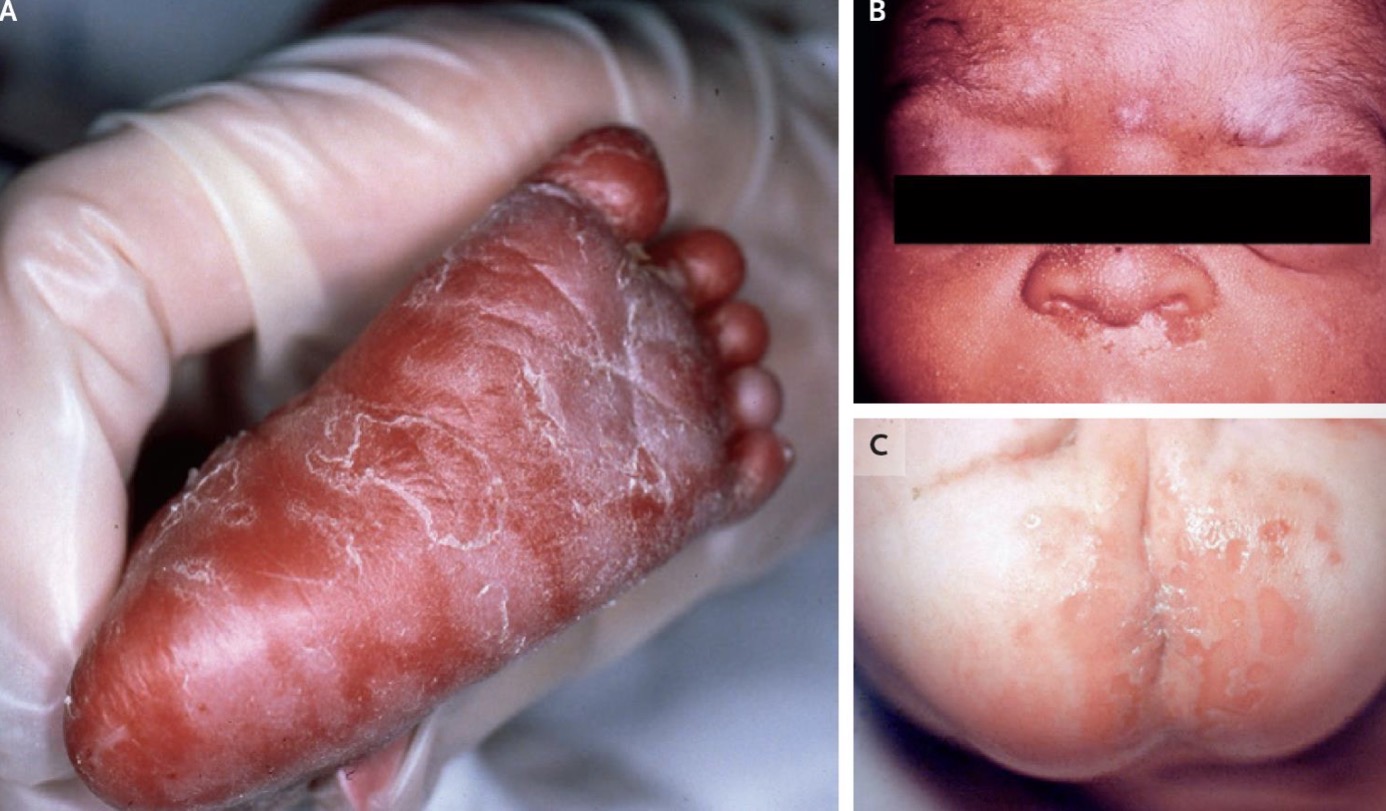
What are the early manifestations of syphilis? (8)
Osteochondritis
Snuffles
Rash > on palms and soles also
Anaemia
Jaundice
Neurological signs
Lymphadenopathy
Mucous patches

What is a clinical manifestation of a severe form congenital syphilis?
Desquamation of hands and feet
What are the clinical late manifestations of syphilis? (8)
Frontal bossing
Short maxillas & protruding mandibles
Saddle nose
Interstitial keratitis
8th nerve deafness
Mulberry molars, Hutchinson’s incisors
Saber shins
Flaring scapulas

When should testing of syphilis be done? (2)
Early in pregnancy and preferably again at delivery
What tests should we do in the infant to confirm status of syphilis? (2)
Venous VDRL / RPR for all infests of infected women
What is the treatment for syphilis?
Penicillin IV 10-21 days for suspected cases
What is the preventative medication for syphilis in infected mothers?
Benzathine penicillin IM once weekly for 3 weeks (in each buttocks)
What is the causative agent of toxoplasmosis?
Toxoplasma Gondii (Protozoa)
What does toxoplasmosis cause? (3)
Chorioretinitis
Encephalitis
Neonatal Jaundice
What diagnostic tool is used to confirm toxoplasmosis? (2)
Serology or PCR
What is the treatment for toxoplasmosis? (2)
Sulfonamides & Pyrimethamine
What are the manifestations of congenital toxoplasmosis? (4)
Hydrocephalus
Chorioretinits
Cirrhosis of the liver / hepatomegaly
Enlargement of the spleen

What are the preventative measures to avoid congenital toxoplasmosis? (4)
Avoid contact car feces (cleaning sandbox)
Wash hands with soap + water after outdoor activities
Wash utensils that touch raw meat throughly with soap and hot water
Cook all meats throughly
What is a GIT emergency in preterm infants, with surgery often indicated and baby with a very low birth weight are at the most risk?
Necrotising enterocolitis

What are the gastrointestinal presentations of necrotising enterocolitis? (7)
Feeding intolerance
Abdominal distention
Abdominal tenderness
Emesis
Gross blood in stool
Abdominal mass
Erythema of abdominal wall
What are the systemic presentations of necrotising enterocolitis? (7)
Lethargy
Apnea / respiratory distress
Temperature instability
Hypotension
Acidosis
Glucose instability
Positive blood cultures
What is the treatment for necrotising enterocolitis? If suspected / proven perforation?
Stop enteral feeds
Nasogastric decompression > low intermittent suction
Antibiotics > Ampicillin/ gentamicin or vancomycin/ cefotoxime
Clindamycin