Module 3: Structure and Function of the Plasma Membran
 Call Kai
 Learn
Learn Practice Test
 Spaced Repetition
 Match
Match Flashcards
 Knowt Play
1/64

There's no tags or description
Looks like no tags are added yet.
Name | Mastery | Learn | Test | Matching | Spaced | Call with Kai | Chat |
|---|
No analytics yet
Send a link to your students to track their progress
65 Terms
membrane
the outer border of all cells and organelles, it helps
manage what enters and exits the cell
helps receive external signals
help initiate cellular responses
helps cells bind and attach to surfaces and other cells
fluid mosaic model
fluid: there is a fluid filling in the cells and it is dynamic
mosaic: the membrane is made up of many molecules like lipids, phospholipids, cholesterol, proteins, and carbs
the components of the membrane can change based on the environment of the membrane
phospholipids in a cell membrane
amphipathic lipid molecules that compose the bulk of the membrane
The hydrophillic head is made of a glycerol molecule and a phosphate group (polar)
The hydrophobic tail is made of 2 fatty acid chains

phospholipid bilayer
hydrophobic fatty acids face each other in the interior, hydrophillic phosphate groups face the aqueous environment outside the cell

glycoprotein
protein with carb attached

glycolipid
lipid with carb attached
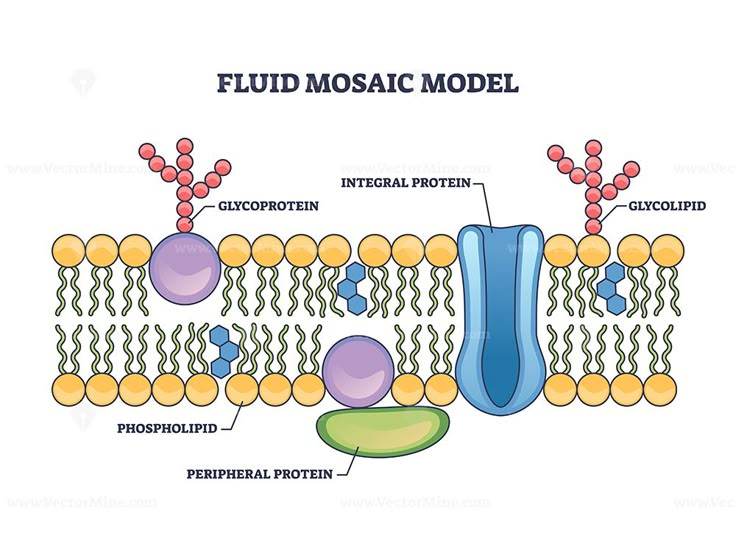
peripheral membrane proteins
attached to only the surface of the membrane

anchored membrane protein
attached to the membrane because of an associate with another protein or lipid

integral membrane protein
built into the membrane

transmembrane proteins
span the entire membrane

integral proteins structure
they need to have one or more regions that are hydrophobic (ade of hydrophobic amino acids) and others that are hydrophillic
shape of the bilayer
they are asymmetric
interior proteins
anchor fiber of the cytoskeleton to the membrane
exterior proteins
bind to the extracellular matrix
glycoproteins
they bind to substances the cell needs to import
3rd major component of membranes
Carbs, they are always located on the outside part of the cell membrane
protein: glycoprotein
lipid: glycolipid
and has a function in cell to cell recognition
CD4 receptors
glycoproteins that are compatible with proteins on the surface of HIV, HIV has surface proteins and carbs disguise it as self
how the length of fatty acids affect membrane fluidity
If shorter=more fluidity
If longer=more rigid
This is because the longer the fatty acids are the more likely they are to tangle, making the phospholipids unable to move
How the saturation of fatty acid tails affect membrane fluidity
unsaturated=more fluid
saturated=more rigid
This is because unsaturated fatty acids are bent and therefore don’t pack as tightly
how temperature affects membrane fluidity
higher temp=more fluid
lower temp=more rigid
This is because molecular movement speeds up at high temperatures, but it can’t be to warm or the membrane will fall apart
how do membranes adjust themselves regarding fatty acids
if it is to warm cells will add phospholipids with longer and saturated fatty acids to maintain the rigid nature. If it is to cold cells will add phospholipids with shorter and unsaturated fatty acids to increase fluidity
how do membranes adjust themselves regarding cholesterol
In hot temperatures it helps the membrane be less fluid by filling in the gaps between fatty acids, when it is cold the cholesterol helps the fatty acids not pack to tightly
the plasma membrane is selectively permeable
not all substances can cross, small nonpolar molecules (gasses) can pass directly through the membrane
can small uncharged polar molecules pass through the membrane?
they can but not as easily as nonpolar molecules because they will have a tough time getting over the hydrophobic region of the membrane
can large polar molecules pass through the membrane?
they do not travel through membranes because of their size
can small ions pass through the membrane?
no, because they carry full charges that cannot pass through the center of the bilayer
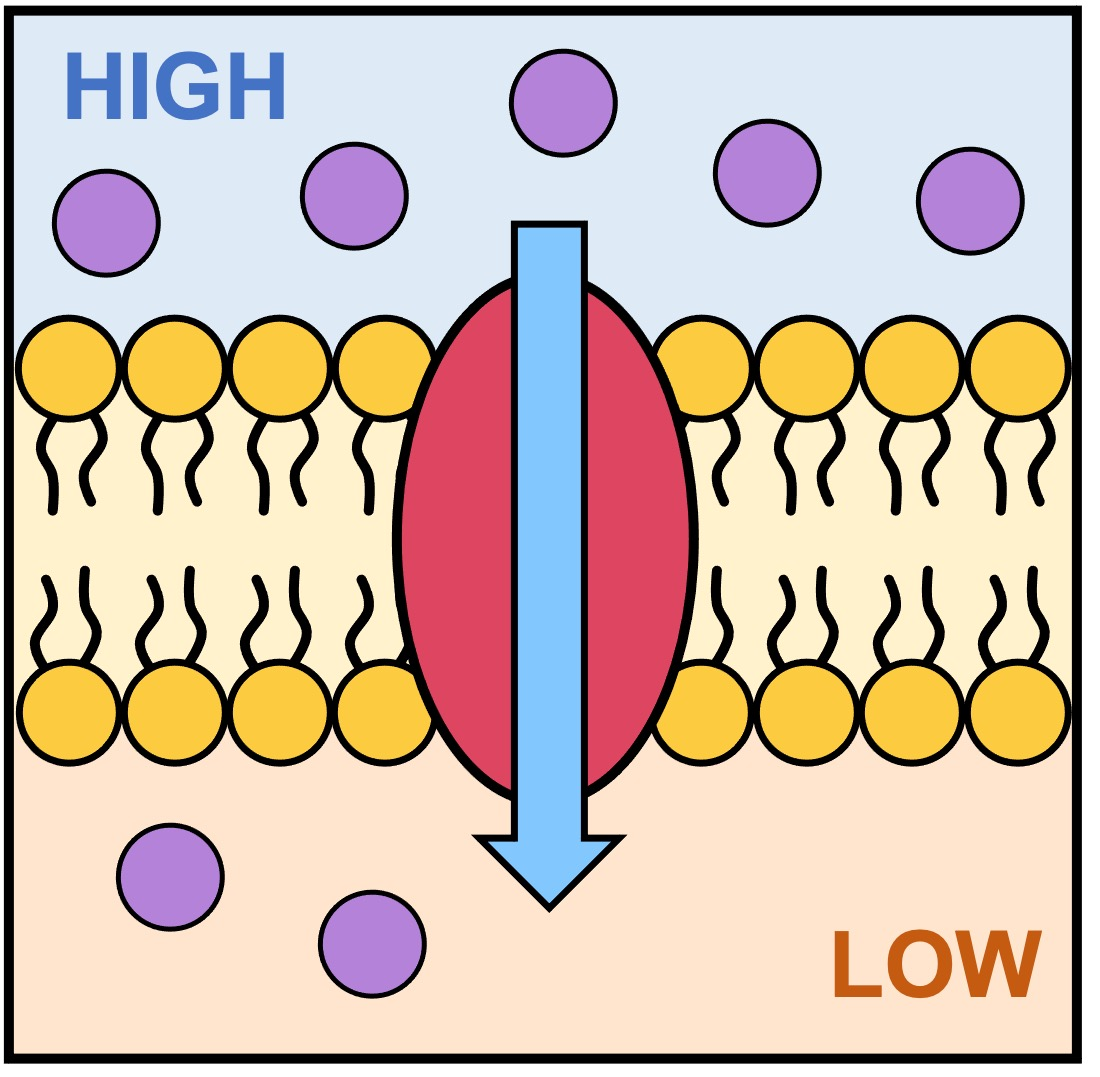
passive transport
molecules move in response to a concentration gradient from an area of high concentration to area of low concentration
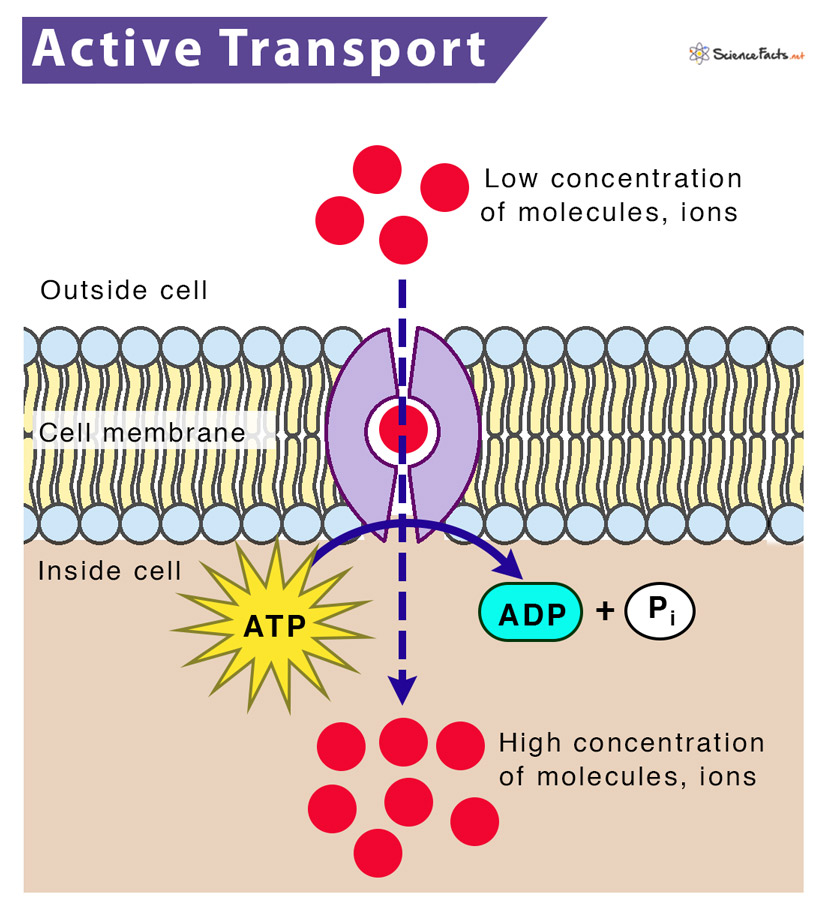
active transport
requires ATP to go against a concentration gradient
bulk transport
a type of active transport that allows movement of very large or abundant things across a membrane
simple diffusion
the movement of high concentration to low concentration, until the concentration is equal across a space/membrane (equilibrium)
what molecules go through simple diffusion
small nonpolar molecules (lipid hormones, O2, CO2)
why does simple diffusion happen
this happens because when there are a lot of molecules they are more likely to bump into eachother making them want to go in the free space
diffusion rate
how quickly a molecule will go through diffusion
how the concentration gradient affects diffusion rate
greater difference faster diffusion
how the mass of the molecules affects diffusion rate
smaller molecules diffuse quicker
how the temperature affects diffusion rate
molecules move faster when temperatures are higher
how the solvent density affects diffusion rate
dehydration increases density of cytoplasm = reduced diffusion rates
how the solubility affects diffusion rate
more nonpolar (lipid soluable) materials diffuse faster
how the surface area affects diffusion rate
increased surface area speeds up diffusion rates
how the distance travelled affects diffusion rate
the greater the distance, the slower the rates; important factor affecting upper limit of cell size
how the pressure affects diffusion rate
higher pressure = faster diffusion rates
what molecules go through facilitated diffusion
polar molecules/ions
integral transmembrane proteins
channel proteins
carrier proteins
channel proteins
small and cylindrical in shape, the top, bottom and linear core are composed of hydrophillic Amino Acids attracting ions/polar molecules
some are open all the time while others are gated, only opening when a signal is received like aquaporins with allow water to travel through the membranes
muscle cells have gated ion channells which allow muscle contractions when opened

carrier proteins
are bigger and bulkier than channel proteins, and are only open on one side. The protein binds to that substance, changes the shape of it and carries it to the other side, the side that is open may change based on the concentration gradient

glucose transport protein
if we eat we will have a lot of glucose in our blood, the GLUTS move the glucose out of our bloodstream into our cells
osmosis
diffusion of water across a membrane
when does osmosis happen
when solute concentration is uneven and the solute can’t dissolve because it is to large and too charged
how does water move
it moves from an area of high H2O concentration to low H2O concentration, water is moving from area of low solute [] to high solute []
tonicity
how an extracellular solution can change the volume of a cell by affecting osmosis (how the solute [] outside of the cell affect the volume of fluid inside the cell by affecting osmosis)
osmolarity
describes the total solute [] of a solution
hypertonic extracellular solution
higher osmolarity outside the cell/solute concentration is higher outside the cell
hypotonic extracellular solution
higher osmolarity inside the cell/solute concentration is less outside the cell
isotonic extracellular solution
solute concentration/osmolarity is the same inside and out
what happens when a cell is in a hypotonic solution
water is going to move into the cell to dilute down that concentration, but ore water comes into the cell causing it so swell up/potentially burst (lysed
what happens when a cell is in a hypertonic solution
the concentration of solute is higher outside of the cell and water will move out of the cell causing it to shrivel up
what happens when the cell is in an isotonic solution
the concentrations inside and outside the cell are equal. This means equal amounts of H2O are moving in/out of the cell, Animal cells function best when extracellular fluids are isotonic
organisms with cell walls…
prefer hypotonic extracellular solutions, this happens because plant cells cant rupture because of the cell wall, the pressure against the cell wall (turgor pressure) is critical to organismal growth and function, a hypertonic solution causes plasmolysis (the plasma membrane detaches from the cell wall)
primary active transport
uses ATP; uses a membrane protein
secondary active transport
uses energy from a gradient (ATP used indirectly)/Always uses a membrane protein
uniporter pump
carry one type of molecule/ion either in or out of the cell

symporter pump
carries 2 different types of molecules or ions in the same direction either both into or out of the cell
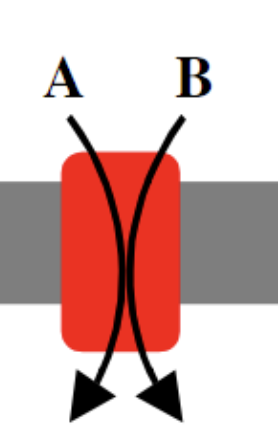
antiporter pump
carries 2 different types of molecules or ions in different directions; one will be moving into the cell while the other is moving out

electrochemical (charge) gradients
when the solute that is imbalanced is an ion, When there is an imbalance of charge and solute concentration across the cell membrane.
what happens when ions move across