lab 9 aldol reaction
 Call Kai
 Learn
Learn Practice Test
 Spaced Repetition
 Match
Match Flashcards
 Knowt Play
1/11

There's no tags or description
Looks like no tags are added yet.
Name | Mastery | Learn | Test | Matching | Spaced | Call with Kai | Chat |
|---|
No analytics yet
Send a link to your students to track their progress
12 Terms
purpose
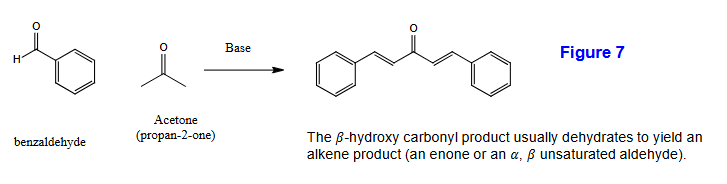
perform an aldol reaction b/t benzaldehyde and acetone, then the product will be purified by recrystallization and melting point
Aldol condensation
addition of enolate of one carbonyl group to the other carbonyl group of another
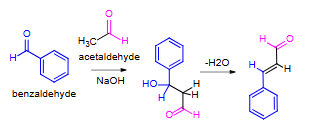
aldol reaction carried out at high temperatures under basic reaction conditions
the aldol can lose the H2O from the alpha and beta carbons and form a,b-unsaturated carbonyl compound
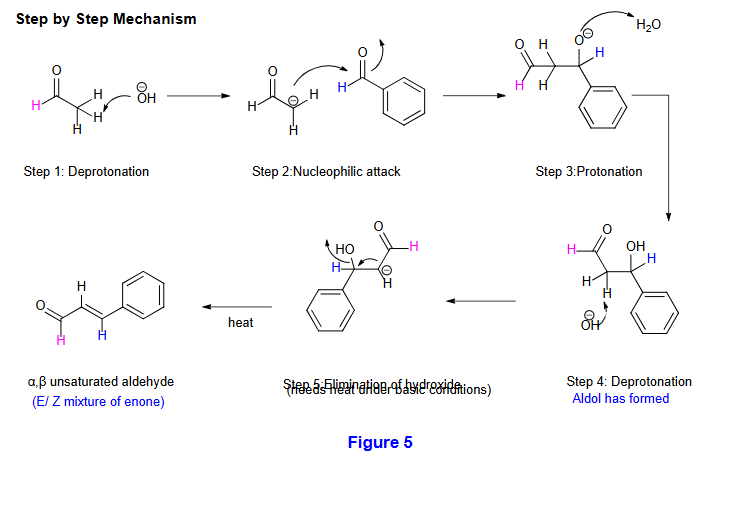
base catalyzed mechanism
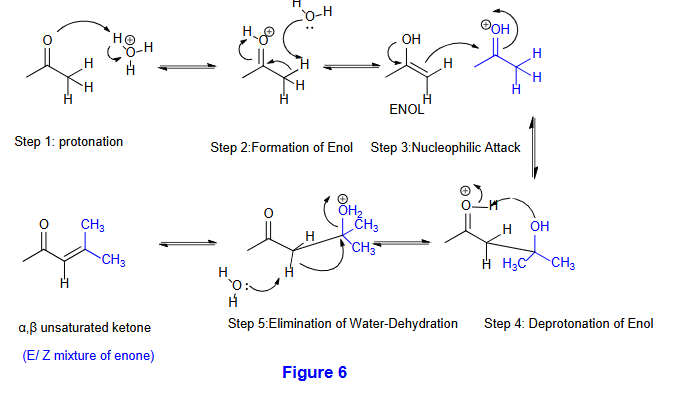
acid catalyzed mechanism
chemical reaction
chemicals used
benzaldehyde, acetone, ethanol, and sodium hydroxide
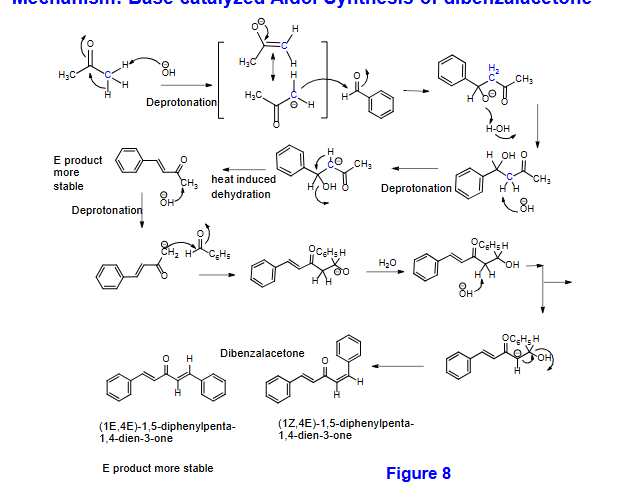
first step (base catalyzed)
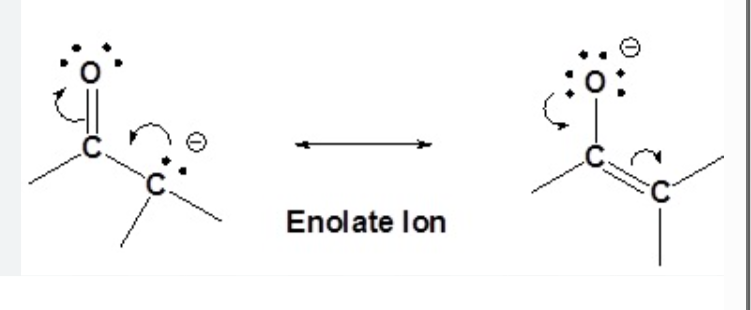
aldehyde or ketone deprotonated to form enolate
second step
enolate attacks the carbonyl group to form a tetrahedral alkoxide
third step
B-alkoxide ketone undergoes an acid-base reaction with the removal of the remaining acidic alpha hydrogen and then loss of -oh to give an enone product
base catalyzed aldol synthesis of dibenzalacetone
techniques
ice water bath with stirrer and vacuum filtration using buchner funnel, and TLC