4120 bcmb Test 2
 Call Kai
 Learn
Learn Practice Test
 Spaced Repetition
 Match
Match Flashcards
 Knowt Play
1/97

There's no tags or description
Looks like no tags are added yet.
Name | Mastery | Learn | Test | Matching | Spaced | Call with Kai | Chat |
|---|
No analytics yet
Send a link to your students to track their progress
98 Terms
role for lipids and carbohydrates esp at cell surface
what did the first central dogma ignore

expanded dogma
structure, biosyn, and biology of glycans and glycoconjugates
what is glycobiology
There has failed to be any living cell devoid of a dense and complex array of cell surface glycans
ubiquitous glycosylation
role fore carbohydrate in the societal interactions of cells in tissues (glycocalyx)
Predominant cellular distribution of glycans implies
glycoproteins or glycoconjugates
nearly all biologics are
a hormone responsible for stimulating the maturation or red blood cells
core protein MW: 18 kD
erthropoietin
3 N-linked glycans and at least 1 O-lined glycan, MW of secreted protein = 34 kD
Erythropoietin produced in CHO cells also carries 3 N-linked glycans and 1 O-linked glycan (AMGEN)
erythropoietin purified from human tissues carries
Erythropoietin produced in CHO cells also carries 3 N-linked glycans and 1 O-linked glycan
blockbuster drug
claimed improved quality of life
showed to have lower quality of life in cancer patients
AMGEN Epogen
increased N-linked glycosylation (basically more sites for it)
native Epo = 3 N-linked sites
AMGEN = 5 N-linked site
what enhances efficacy of erthropoietin
single sugars
typically 4-10 sugars
monosaccharides, oligosaccharides, polysaccharides
isomers
Common monosaccharides found in vertebrates are mostly structural
Glucose (D-glc), GlcNAc, D-Galactose (Gal), GalNAc, D-Mannose (Man), D-Xylose (Xyl), D-Glucuronic acid (GlcA), L-Fucose (Fuc), NeuAc
common monosaccharides (8)
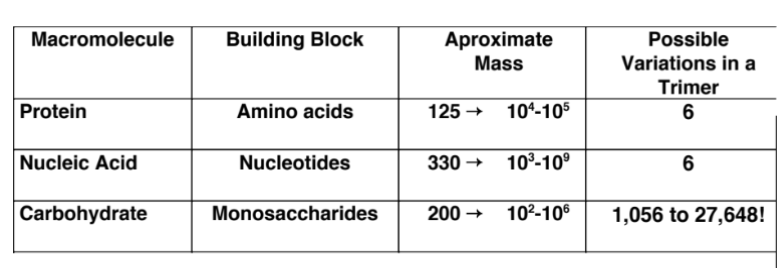
potential for high information content
what is inherent in glycan structure?
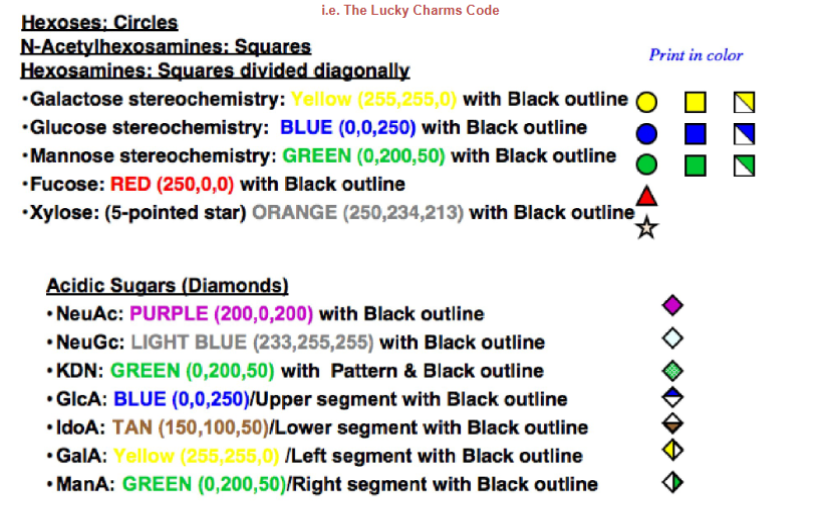
hexoses: circles
N-Acetylhexoasmines: squares
Hexosamines: squares divided diagonally
Acidic sugars: diamonds
nomenclature for glycans

Shape and electrostatics
what drives biology?
post-synthetic modifications
what are commonly built into polymers and increases structural diversity?
No
Are oligosaccharide structures encoded in DNA?
Glycosyltransferases
Glycosidases
Availability of monosaccharide and activated forms
Organelle distribution and function
Correct synthesis of carbohydrates depends on?
Glycosylation is very sensitive to subtle shifts in the environment
Consequence of there being no template for Carbohydrates?
Glycoproteins
Glycolipids
Proteoglycans
classes of glycoconjugates
protein + carbohydrate
most proteins of biological and therapeutic significance
eg. TPA, EPO, LH, Immunoglobulins
Glycoproteins
Lipid + Carbohydrate
important for tissue and cell type markers
eg. blood group antigens, tumor associated antigens
Glycolipids
complex of a protein and one or more polysaccharides
known as glycosaminoglycans (GAGs)
immense structural diversity, pleiotropic functions
proteoglycans
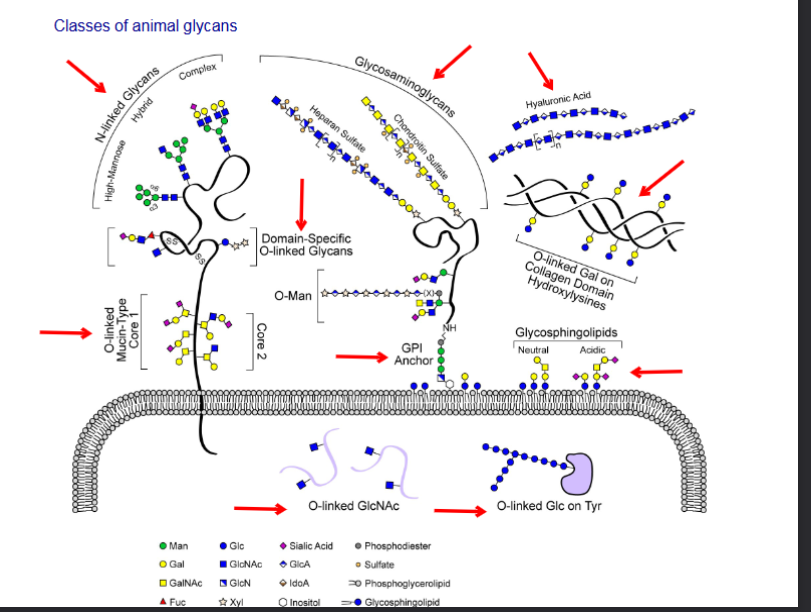
N
classes of animal glycans
Asn
Major class of N-linked glycans attach to N of which aa side chain
Dolichol
large precursor of Asn side chain glycans is built on

subsequent trimming and re-extension in ER and Golgi
what is done to generate high-mannose, hybrid, or complex glycans? And where does it occur?
hybrid/complex glycans
loss of what is embryonic lethal?
Ser/Thr
Major class of O-linked glycoproteins attach to O of which aa(s) side chain
GalNAc to Ser/Thr residues by one of 20 or so polypeptide GalNac Transferases
mucin type of o-linked glycoproteins initiated by attachment of what to what?

No, sequences enriched in S/T residues and frequently flanked by P
Other types of O-glycans include O-Man, O-Fuc, O-Glc
is consensus of O-linked strong?
Mucins
what are heavily O-glycosylated
contains tandem repeats (8-169 aa)
rich in proline, threonine, and serine (PTS domains)
Apmucin
80
glycosylation constitutes as much as __% of mass and tends to be clustered
epithelial cells that line the gastrointestinal, respiratory, and genito-urinary tracts
mucins are expressed by
protective barriers
mucins are _____ for epithelial cells
Lubrication
modulate infection
receptors for bacterial adhesins
Secreted mucins can act as decoys
Barrier against freezing
antifreeze glycoproteins
[Ala-Ala-Thr] w/ core 1 disaccharides
what do mucins provide for epithelial cells?
epithelial cancers (lung, pancreatic, ovarian, colon etc) are characterized by altered O-GalNAc glycan sialylation
Oglycans made by these cancer cells suppress immune surveillance
Palleon is targeting altered sialylation (by removing sialic acid) as a way to enhance immune cell killing of tumor cells
clinical relevance of mucin type O-glycans
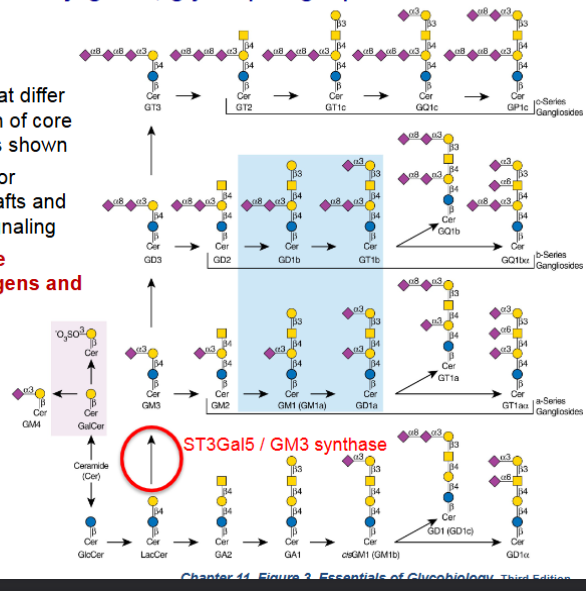
differ based on composition of core glycan
gangliosides are major components of lipid rafts and modulate receptor signaling
*Many glycolipids are receptors for pathogens and toxins
major types of glycoconjugates; glycosphingolipids
GM3 deficiency
missense mutation (E332K) in ST3GalV (GM3 Synthase) middle of S-motiff
profound intellectual disability
failure to thrive
seizure disorder
neural crest defects: midface hypoplasia, scattered dermal hyper- and hypopigmentation
salt and pepper syndrome
Gangliosides
______ are essential for normal brain function and post-natal development in humans
Allelic disorder: truncation (R232X) in ST3GalV, b/w L- and S- motiff
Old Amish Infantile Epilepsy Syndrome
GPI added sequences that share physicochemical features, but little aa identity
GPI anchors
alternative way to tether proteins at membrane (and release—how?)
what do GPI anchors provide
lipid rafts
GPI-anchored proteins are enrinched in
acylation, mannose, glucosamine, and inositol
structural variation primarily arises from
RBCs, complement-mediated lysis
GPI-linked proteins protect ___ from ___
Impaired quality of life, Thrombosis, Anemia, Smooth muscle dystonia
urine enriched in hemoglobin breakdown products (dark to light yellow/red over the day)
Paroxysmal Nocturnal Hemoglobinuria
cytokine and chemokine
initated by carbh. recog b/w leukocytes and enothelial cells
what recruits leukocytes to site of inflammmation
selectins PSGL1 VLA4: capture of leukocytes
leukocytes to site of inflammation starts with
selectin (L-selectin)
lymphocytes express their own
PNAds (peripheral node adressins): mucin-type proteins expressed on high endothelia cells
at HEV of lymph nodes
L-selectin bind to
O-linked glycans on PNAds
MECA-79 recognizes 6-sulfo sialyl Lewis X
what does antibody recognized for L-selectin on lymphocytes
O-linked glycans on PSGL-1 protein expressed on lymphocytes
P-selectin recoginzes
find targets, phagocytose, and kill via halogenation w/ hypochlorite (bleach) derived by oxidative burst
when leukocytes in cell what happens
ppp pathway provides NADP+
NADPH oxidase
Superoxide dismutase
Myeloperoxidase
what enzymes involved in leukocytes part in cells
superoxide dismutase, catalase, and other peroxidase
what enzyme provides protection against oxidative burst
complement activation
what’s another way to attack pathogens
attack mech using cirulating protein and protease precusors
Goal to get complement proteins to come together and form whats needed
complement-mediated lysis
come together to activate C3 in a protease cascade
C3 wants to be activated; cleaves itself
B, D, and P stabilize self cleaved form of C3
alternative pathway for complement lysis
Factor H: binds factor B
Factor I inhibits by cleaving C3b into inactive form
breaks on lysis
downstream complement proteins
C3 cleavage leads to
MBL: (mannose) induced by recognition of carbohydrate residues on susceptible pathogens
carbohydrate binding domains
binds yeast mannans and other polygmeric glycans
Ficolin protein: binds bacterial glycans terminated in LacNAc and other polymeric glycans
recognize patterns (kinda like TLRs)
lectin pathway
MASP (mannan Serine Protease)
mannose binding recruites
activate C3 and other complement components in similar manner to classic and alternative pathway
high-mannose glycans on C3 only recognized when cleaved to C3b
MASP proteases
secretes ficolin
tracheal epithelium
deuterostomes from shark to primate, but no protostomes have it
not for sure
why so long to evolve adaptive immunity
small box, variola virus
sir edward jenner (attacked virus by snorting it)
what virus killed 30% of infected and permantely scarred
milkmaids came in contact with cow pox but were resistant to smallpox
forced cowpox to humans via cut in skin
eventually smallpox eradicated by vaccination
what did edward jenner note
lymphocytes cullular and humoral immuner response confer long lasting protection
production of binding recognition proteins that recog limitless molc structure (antigens)
generation of naive lymphocyte precursors
mech for selecting and amplyfing recmbined clones (learning)
memory
mech for tissue surveillance
components of adaptive immunity
(b cell → plasma & memory)
(t cell → Th cell & Tc cell)
NK cell
lymphocytes →
extensive filopodia
lymphocytes generally possess very little cytoplasm but project
born in bone marrow but migrate to thymus
undergo selection before maturing in circulation, lymphatic tissues, and at site inflammation
T-lymphocytes
periphery CD8 (cytotoxic t cell)
CD4+ (helper cells)
thymus Tp →
participates in macrophage activation, promotes cellular activity, produces IFNy
T helper 1 (Th1)
promotes humoral immunity
Produces IL-4, IL-5, and IL-3
Th2 cell

born in marrow, differentiate in lymphatic tissues
become antibody producing plasma cells
B cells
25
total B-cell account for __% of circulating lymphocytes
signaling to support commitment of resources
transition from B-cell to plasma cell requires extensive
cells of innate pathway via antigen presentation and cytokine support (Dendritic and Macrophages)
T cells activated by
dendritic cell population of the dermis; professional antigen presenting cells
Langerhans cells
in liver, population of tissue resident macrophages, antigen presenting cells
Kupffer cells
b cells, t cells, dendritic and macrophages, all somatic cells
cell specific receptors relavent to adaptive immunity
immunoglobulin (somatic rearrangement)
BCR (somatic rearrangement)
cytokine and chemokine receptors (germ-line encoded)
b cell receptors
TCR
Cytokine and chemokine receptors
selectins (germ-line encoded)
t cells
TLR (germ line-encoded),
MHC (germ-line encoded),
Cytokine and chemokine receptors
dendritic cells and macrophages
MHC (germ-line encoded)
somatic cells receptors
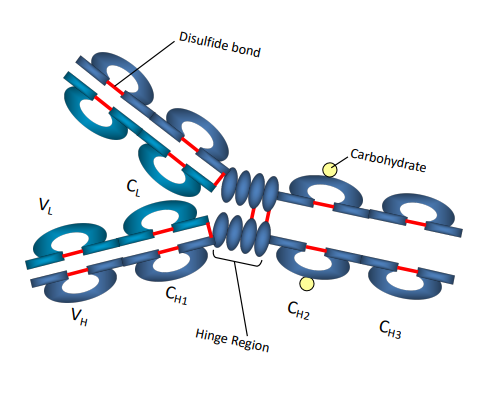
heavy and light chains
disulfide bonds (inter-chain & intrachain)
Immunoglobulin structure
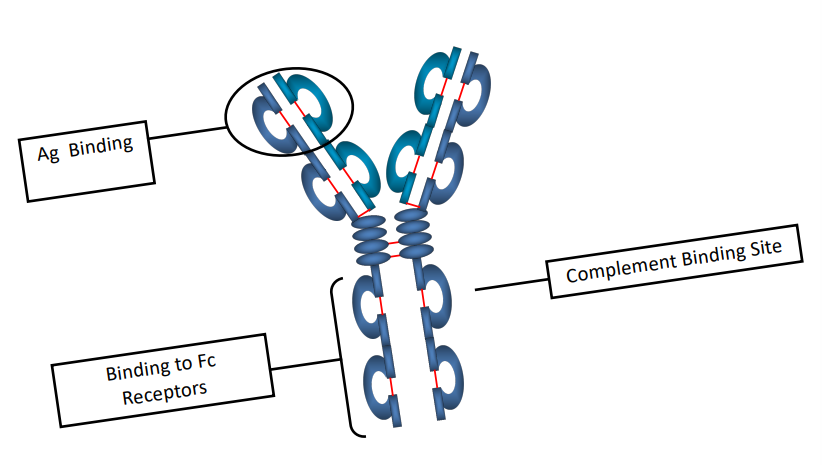
Ag binding
Binding to Fc Receptors
Complement binding site
immunoglobulin fragments (structure/function relationships)
essential for antibody function
IgG1 glycans are
MBP, leading to complement activation
under-galactosylated IgG1 is recognized by

Papain
Fab: -ag binding, valency, specificty determined by VH and VL
Fc: effector functions
immunoglobulin fragments (structure/function relationships)
IgG - Gamma (y) heavy chains
IgA - Alpha (a) heavy chains
IgM - Mu (u) heavy chains
IgD - Delta (δ) heavy chains
IgE - Epsilon (ε) heavy chains
human immunoglobulin classes

major serum Ig (systemic immunity)
major Ig in extravascular spaces
placental transfer (passive immunity for newborn)
fixes complement
binds to Fc receptors
monomer
IgG

serum monomer; secretions (sIgA) (dimer, J chian, secretory component)
2nd highest serum Ig
major secretory Ig (mucosal or local immunity)
does NOT fix complement (unless aggregated)
binds to Fc receptors on some cells
IgA

pentamer, extra domain, J chain
3rd highest serum Ig
first Ig made by fetus and B cells
B-cell receptor as monomer
fixes complement
IgM