Bio 345: Ch. 1
 Call Kai
 Learn
Learn Practice Test
 Spaced Repetition
 Match
Match Flashcards
 Knowt Play
1/16

There's no tags or description
Looks like no tags are added yet.
Name | Mastery | Learn | Test | Matching | Spaced | Call with Kai | Chat |
|---|
No analytics yet
Send a link to your students to track their progress
17 Terms
which of these phenomena can be explained using concepts devleloped by Darwin in On the Origin of Species?
successful domestrication of crop plants + animals
development of antibiotic resistance in human pathogens
similarity in skeletal structures between great apes & humans
evolutionary stability of populations with 1:1 sex ratios
fitness
relative survivial rate and reproductive success of organisms in a population
evolution
descent w/ modifications
mutation
change to a DNA sequence
phenotype
observable & measurable characteristics of organisms
descent w/ modification
passing on of traits from parent organisms to their descendants with observable changes over generations
observable approaches
to infer the phlyogeny of the lycaenid butterflies, a researcher gathers DNA sequences from many species
snout to vent length measurements an skull length measurements are compared in fossorial and arboreal lizards
manipulative approaches
pollinator visit rate is compared between flowers receiving natural light and flowers receiving no UV light
ability of E. coli to metabolize critic acid is compared between 2 sister strains containing diff quantities of citric acid
male mosquito fish are either unaltered or the gonopodium is shorten to see if the organ plays a role in female mate choice
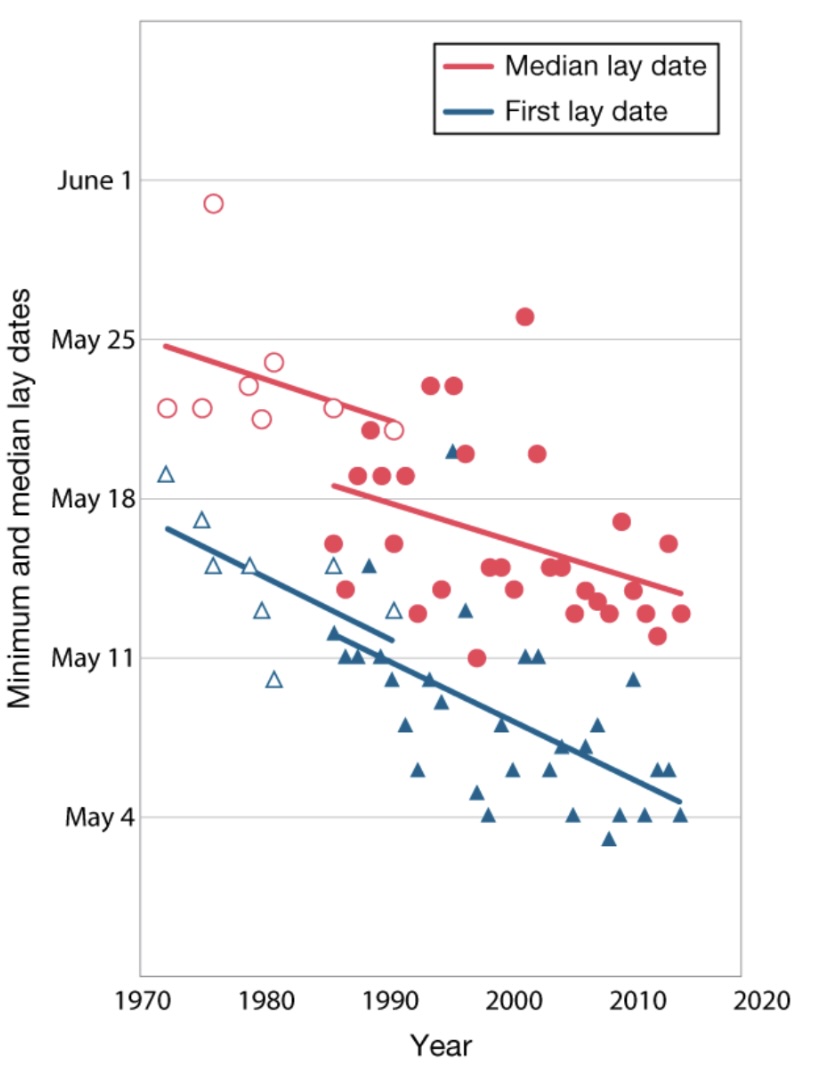
One of the effects of climate change is the dramatic shift in annual temperature, which has led many animals to change their migration patterns and thus alter the timing of reproduction when they return to their spring range. One such example is that of tree swallows. Refer to the graph below, which shows the change in egg laying dates for tree swallows.
Colder temperatures result in reduced activity of flying insects, the primary food source for tree swallows. This lack of food results in the reduced survival of hatchlings
what terms refer to humans altering plants and animals by choosing to breed individuals that have desired traits over many gen?
artificial selection
phenotype
organism’s observable, measurable, characteristics called
phylogeny
tree-like graph used to represent a hypothesis of evolutionary relationships
supports hypothesis that the great apes are most closely related to humans
similar in mode of locomotion
similar brain size & structure
similar in dentition
similar in bone structure of the hands & feet
does humans and apes have the same number of chromosomes?
no, humans have 46 chromosomes and apes have 48 chromosomes
important when directly measuring fitness of a phenotype
reproductive success of the phenotype relative to the population
relative survival rate of the phenotype