unit 3 bio
 Call Kai
 Learn
Learn Practice Test
 Spaced Repetition
 Match
Match Flashcards
 Knowt Play
1/79

There's no tags or description
Looks like no tags are added yet.
Name | Mastery | Learn | Test | Matching | Spaced | Call with Kai | Chat |
|---|
No analytics yet
Send a link to your students to track their progress
80 Terms
lophotrochozoa
all are invertebrates, bilateral, and triploblastic; type of protostome; 6 within: mollusca, platyhelminthes, syndermata, annelid, Ectoprocta, brachiopoda
platyhelminthes
acoelomates, cephalized; gastrovascular cavity; many are parasites; live in marine, freshwater, and damp terrestrial areas; use diffusion for gas exchange; have most organ systems; lack respiratory and circulatory system
how do Platyhelminthes do gas exchange and get rid of nitrogenous waste
diffusion across the body surface
planaria
free living flatworm; within locotrophozoa and platyhelminthes; contains ganglia which are dense clusters of nerve cell bodies around the eyes
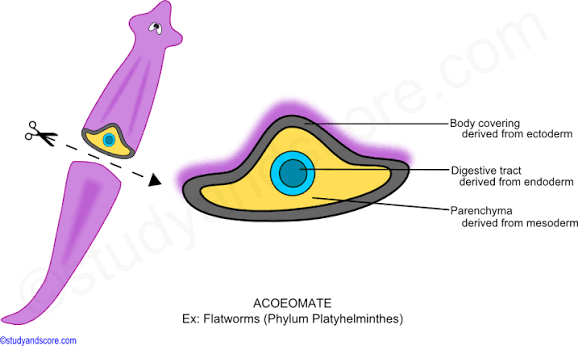
coelomates
true body; contains outer body covering from ectoderm, tissue filled region from mesoderm, and digestive tract from endoderm
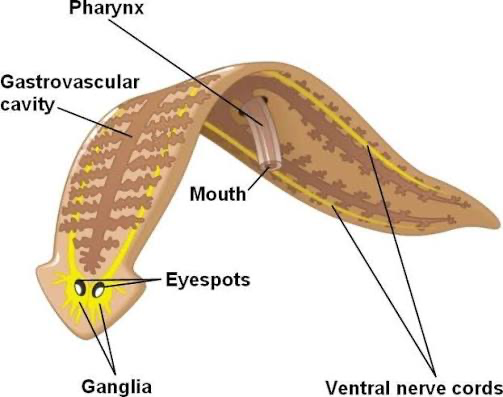
labeled (gastrovascular cavity, ventral nerve cords, pharynx, mouth, eyespots, ganglia)
done
protonephridia with flame cells
found in excretory system of platyhelminthes; removes excess water and some wastes
tapeworm
parasitic- found in undercooked infected beef, pork, or fish; absorptive; no mouth or gastrovascular cavity; platyhelminthes
life cycle of tapeworm
tania saginata and sodium are inside of feces and passed into the enviornment; cattle ingest this contaminated vegetation; embryos penetrate intestinal wall and develop in muscle of cattle; humans are infected by ingesting raw or undercooked meat with the Tania saginata or solium
syndermata
pseudocoeloms; free living, aquatic, microscopic; filter feeders; crown of cilia; alimentary canal; have jaws; parthogenesis; type of locotrophozoa
alimentary canal
digestive tube with 2 openings- mouth and anus
parthogenesis
asexual; virgin females produce more females from unfertilized eggs
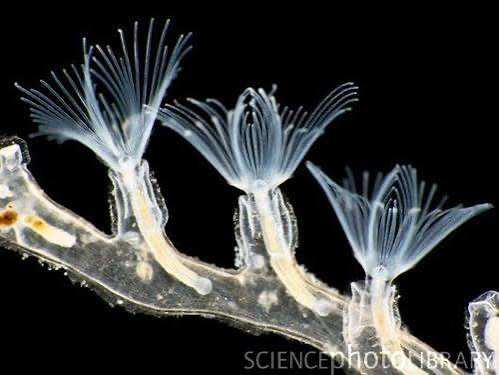
ectoprocta
true coelom, lophophorate; aquatic; lophotrocozoa; ex: creeping bryozoan
lophophorate
crown of ciliated tentacles around the mouth used for feeding; found in Ectoprocta and brachiopods
brachiopod
true coelom; lophophorate; aquatic; contains a pedicle, which allows it to anchor to hard or soft floor
mollusca
coelomate but coelom is reduced; alimentary canal; some have trochophore larvae; 3-part body: muscular foot, visceral mass, mantle; open circulatory system except for Cephalopoda; 4 major clades: polyplacophora (chiton), Gastropoda (snails and slugs), bivalvia (clams and oysters), Cephalopoda (squids, octopus); gills or simple lungs
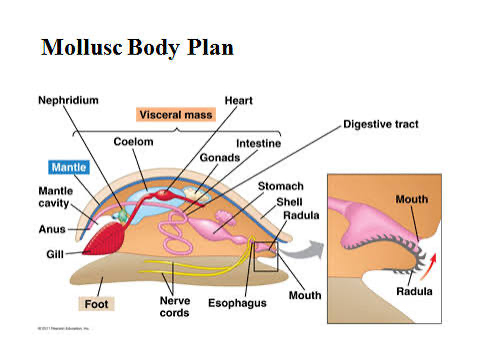
basic mollusk body plan
foot, nerve cords, visceral mass (coelom, metanephridum, heart, gonads, intestine)
why do mollusks make pearls
secrete minerals that make shells (if present) for protection; covers visceral mass
annelida
some have trochophore larval stage; segmented worms; coelomate, segmented, soft body with the coelom acting as the hydrostatic cavity; closed circulatory system; has internal organs except for respiratory tract
earthworms
annelida; few bristles; segmented; no parapodia; terrestrial or freshwater ; eat decaying matter and aerate soil
leeches
annelida; segmented; no bristles, no parapodia; parasitic or predatory; freshwater, some terrestrial; anti-coagulant keeps blood from clotting
ecdysozoa
most species-rich; covered by cuticle- ecdysis; 2 largest phyla are nematodes(pseudo) and arthropods(coelom)
ecdysozoa
all are invertebrates, bilateral, and triploblastic; type of protostome; have cuticle and undergo ecdysis (molting); 2 phyla: Nematoda and arthropoda
nematoda
pseudocoelom- no circulatory system tough but flexible cuticle; no segmentation; roundworm; some are plant and animal parasites; diffusion; ex- c elegans
trichinella spiralis
causes spiralis; nematoda parasite; given to humans by eating undercooked meat
wucheria Bancrofti
causes elephantiasis; nematoda/roundworm parasite; causes deforming body swelling
arthropoda
coelomates (very reduced); most diverse; segmented into 2-3 parts- molting for growth; jointed appendages; hard exoskeleton; have all organ systems; open circulatory system (hemolymph); gas exchange varies; 4 types: chelicerate, myriapoda, crustacean, Hexapoda
circulatory system in arthropods
open; use hemolymph in vessels and bathes tissues; doesn’t use blood pigments for carrying O2; is NOT involved in gas exchange in insects or myriapoda
aquatic arthropoda gas exchange
hemolymph is pumped through feathery gills in contact with water
terrestrial arthropoda gas exchange
use trachea and book lungs as respiratory organs; trachea takes air directly to cells for gas exchange
chelicerates
cephalothorax+abdomen ; feed using pedipalps and chelicerae; 6 total pairs of appendages: 4 walking + 1 pedipalps + 1 chelicerae ; no antenna; arachnids- spiders, scorpions, ticks & mites (parasites and vectors); arthropoda
chelicerae
claw like appendages for feeding; found in chelicerates
pedipalps
appendages for sensing, feeding, defense, reproduction; found in chelicerates
myriapod
1 pair antennae; terrestrial; chewing mandibles; millipedes (2 per segment, poison claw, carnivores) and centipedes (4 per segment, detri/herbivores); segmented; tracheal system; arthropods
crustaceans
marine and freshwater; 2 pairs of antennae; many legs; chewing mandibles; all types: predators, herbivores, scavengers, filter feeders, parasites); use circulatory system for breathing; includes lobster, shrimp, crawfish, barnacles; arthropod
hexapods
first animals to fly; successful on land; contains insects; arthropoda
insect
1 pair of antenna, compound eyes, mandibles; 3 parts: head, thorax, abdomen; 3 pairs of legs; complex organ systems; unique organ systems: Malpighian tubules in excretory, circulatory system not involved in gas exchange, tracheal system used for gas exchange; some camouflage, huge ecological impact
deuterostome
bilateral, triploblastic, invertebrates and vertebrates; coelomates; contains chordata and echinodermata
echinodermata
bilateral as larvae- pentaradial (5) as adults; deuterostome; exclusively marine; free living; endoskeleton of CaCO3; coelomate; no cephalization; unique water vascular system; can be detrivore, filter feeders, herbivores, predators
unique water vascular system in echinodermata
network of hydraulic canals branching into tube feet (in radial canals) that function in locomotion, feeding, and chemical sensations
porifera
no true tissues; filter feeders; most basal of animalia; sponges; contains choanocytes which are very similar to choanoflagellates
cnidaria
radial symmetry, diploblastic; gastrovascular cavity; not a proto or deutero stone; nematocysts; no cephalization
basic sponge body plan
osculum, ostia, spongocoel, mesohyl
pinacocyte
forms outer covering of sponge
porocyte
controls water flow through Ostia in sponge
ameobocyte
delivers nutrients to cells and differentiates into other cell types in the sponge
choanocyte
generates water current and filters food particles from water in sponge; becomes linked to amoeba
porifera structure contents
supported by spicules (made by sclerocytes) and protein fibers (made by spongocytes); ameobocytes in mesohyl form the cells that make spicules and spongin
5 characteristics present in chordates (embryos)
notochord (forms invertebral discs), dorsal hollow nerve chord (rolled ectoderm develops into central nervous system), post anal tail (locomotion), pharyngeal slits(develops into jaw or gills), endostyle(invertebrate chordates)/thyroid gland(vertebrate chordates)
cephalochordata
all key chordate features in adult; invertebrate; lancelet; basal; diffusion; aquatic; burrows and filter feeds
urochordata
larva have all chordate features but adults dont; invertebrate; tunicates; basal; sessile as adults so dont have notochord, post anal tail, dorsal nerve cord;
how many HOX genes in invertebrates?
single
vertebrate characteristics
vertebra (cartilage or bone) encloses nerve cord; 2 or more HOX genes; skull/cranium
cyclostome
chordate; hagfish and lamprey; vertebrate; incompletely developed vertebrae; only vertebrates without jaws; cartilage skull; hagfish = defensive slime; lamprey = parasite
gnathostome
chordate, vertebrate; vertebrates with hinged jaws- derived from skeletal rods; lateral line system (detect vibrations); larger forebrain for enhanced smell and sight; blatant ex- chondrichthyes
chondrichthyes
chordate, vertebrate, gnathostome; cartilage skeleton w bony teeth- no bones to reduce density; liver oils and active swimming for buoyancy; 3 types of internal fertilization; most are predatory or filter feeders; sharks, rays, skates
3 types of reproduction adaptations of chondrichthyes
all are internal fertilization; oviparous (eggs laid and hatch outside mother body- get food from yolk); viviparous (develop in uterus, get nutrients from placenta, live birth); ovoviviparous (egg in mother, fed by yolk and live birth)
osteichthyes
chordate, vertebrate, gnathostome; bony; oviparous, operculum (gill cover); swim bladder for buoyancy; ray finned and lobe finned fish
ray finned fish
thin fins with long rays; most diverse vertebrates; source of human proteins; actinopterygii
lobe finned fish
pelvic and pectoral find supported with bones and muscles; limbs in humans evolved from them; actinista and dipnoi
tetrapods
chordate, vertebrate, gnathostome; four limbs with wrists and digits; neck lets head move independently of body; absence of gills except for aquatic species; 2 types: amphibia and amniotes (reptilia, mammalia)
ancestors of tetrapods
lobe finned, lung breathing fish; tiktaalik- transitional
amphibia
chordate, vertebrate, tetrapoda; tied to freshwater; basal extant(living) tetrapod group; thin moist skin; diffusion and gulps air to fill lungs; aquatic larval stage(gills) to metamorphosis into carnivorous adult; oviparous
3 gnathostome fish lineages
cartilaginous, ray-finned (actinopterygii), lobe finned (actinista, dipnoi)
amniotic eggs (mammals and reptiles)
reproduction freed from water; must have internal fertilization; main extra embryonic membranes sustain the embryo with minimal water loss: porous egg shell (gas exchange), amnion (cushion embryo), albumen (stores water)
anapsid
0 openings in temporal fenestrae; turtles
synapsid
1 opening per side in temporal fenestrae; mammals
diapsid
2 openings per side in temporal fenestrae; reptiles and birds
reptiles
tetrapoda, amniota; scaly skin allowed them to live on land; use lungs- no respiration; negative pressure to expand lungs; snakes, legless lizards
birds
tetrapoda, amniote- archosaur; diverged from theropod dinosaurs; 7 adaptations for flight; earliest known- archaeopteryx
7 adaptations for bird flight
contour feathers provide lift for wings; hollow/pneumatization/decrease in # bones, stubby tail (flight maneuver), no teeth(beak), 4 chambered heart, negative pressure breathing, urogenital adaptations (no bladder/urethra, 1 ovary, sex organs only functional in breeding season, gizzard grinds up food)
who did mammals descend from
synapsid amniotes who had mammal traits
8 mammal characteristics/traits
3 types: marsupials, monotremes. eutherians; mammary/milk glands; hair/fur; teeth (vary in size and number); developed brain; ribcage breathing; diff digestive tract for herb/carnivores; sweating for evaporative cooling; kidneys conserve water
monotreme
lay shelled eggs (oviparous); no nipples; only echidnas and platypus; mammals
marsupial
embryo grows in uterus w placenta, born, and crawls to maternal pouch; short pregnancy; latches onto nipple; viviparous; mammal
eutherian
long pregnancy; better placenta; more developed at birth; viviparous; most diverse; mammal; contains primates
primates
part of eutherian mammals; tree-living characteristic; grasping hands/feet, flat nails; large brain, forward eyes, flat face; 3 living groups: lemur, tarsier (both arboreal), anthropoids (monkeys, apes, humans)
anthropoids
new world monkeys-spider monkey (grasping/prehensile tail, arboreal ) and old world monkeys- baboon (tails cant grasp), apes(lesser and greater), humans (both no tail); mammals-eutherian-primate;
lesser apes
smaller size, tree climbers, arboreal; hylobatidae family
greater apes
includes humans; larger body; larger brains; time on ground; belong to hominidae family; gorillas, chimpanzees, orangutans