Pilgrimage I: South and Southeast Asia
 Call Kai
 Learn
Learn Practice Test
 Spaced Repetition
 Match
Match Flashcards
 Knowt Play
1/28

There's no tags or description
Looks like no tags are added yet.
Name | Mastery | Learn | Test | Matching | Spaced | Call with Kai | Chat |
|---|
No analytics yet
Send a link to your students to track their progress
29 Terms
Architecture as Cosmic
A reflection of Cosmic Order as expressed by mandala
A reflection of cosmic scale
As expressed by cultural and religious exchange (Buddhism and Hinduism), dynastic power, and religious pilgrims
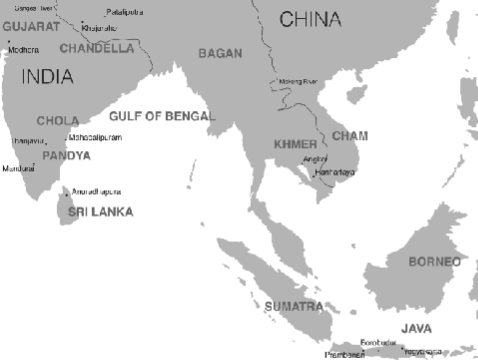
Shared features across region (Map of india and Southeast Asia), 800-1200
Political order as a reflection of the cosmos
Architecture reflects royal power as a religious imperative
architecture conceived as symbolic landscapes
Religion reflects politics
Ancient Rome
Ancient China
Ancient Egypt
Mandala
diagram of the cosmos made from overlaid geometric patterns, used as the basis for the plan of monumental religous structures in south and southeast asia
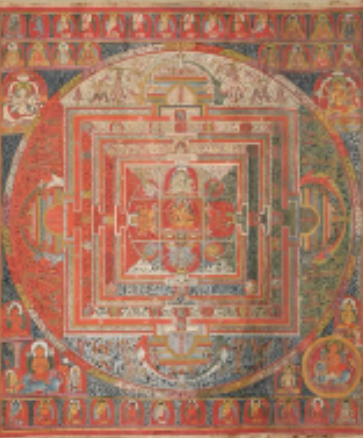
What mandala is this?
Manjuvajra mandala, Tibet, 15th century
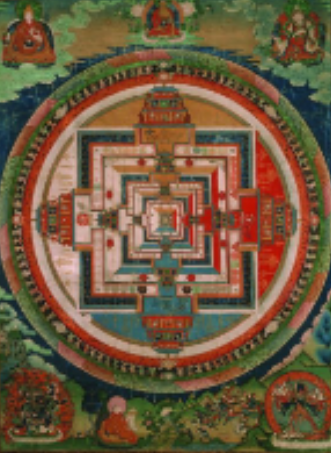
Which Mandala is this?
Mandala of Kalacakra, Tibet, 18th century
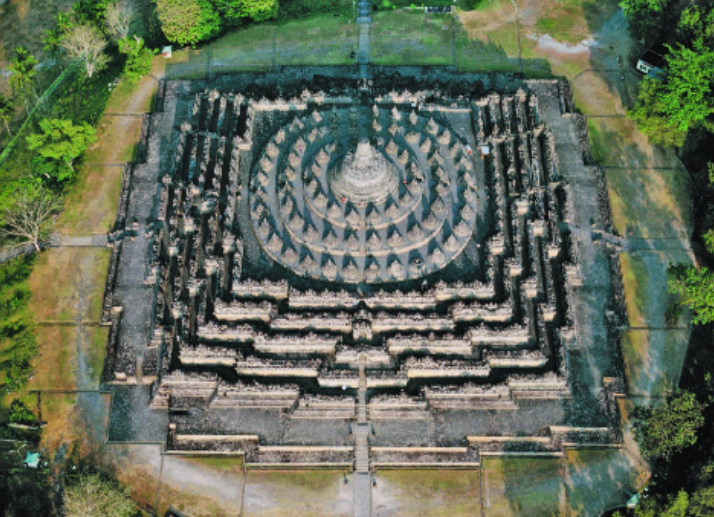
What is this?
Buddhist shrine of Borobudur, Java, Indonesia,c. 800. Sailendra Dynasty shrine
Redented
Formed like the teeth of a saw, indented
What is the mandala’s basic form? What are they employed for?
A square with four gates containing a circle with a center point. It is a concentric diagram with radial balance.
They may be employed for focusing attention, serving as a spiritual teaching tool, establishing a sacred space, and aiding meditation and trance induction
Mandalas serve as a projection along a vertical axis. as well as a plan/depiction
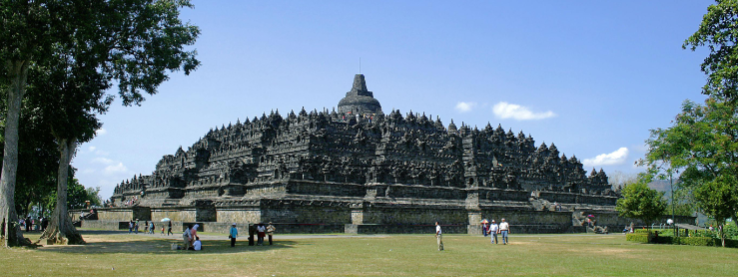
Significance of the Buddhist Shrine of Borobudur, Java, Indonesia, c. 800. Sailendra Dynasty?
The temple took on the symbolic form of Mount Meru, the center of the Vedic and Buddhist cosmos and home of the Indian gods.
Sailendra Dynasty Goal
to create a purely Buddhist priest-king realm, a paradise on earth.
Since their first king was said to have descended from a sacred mountain, they had to re-create a mountain.
Buddhist sanctuary that would also serve as the backdrop of their authority: Borobudur.
Borobudux
= Protector – Buddha – City: “royal guardians and protectors of the Buddhist faith”
Key features of Borobudur, Java, Indonesia, c. 800. Sailendra Dynasty
• Square base = 387 feet
long on each side
• Highest point = 114 feet
above ground level
• Over 2600 relief panels
and 504 Buddha statues
of various types
• Main stupa surrounded
by 72 Buddha statues
Stupas with various shapes cut out of them
Built out of dark grey volcano stone, dry-stone masonry
Corbel arch; Myans Staircase at the top of the shrine
Steep stairs: each terrace has reliefs and two layers on each side
Relief counts the stories of Buddhist past lives and his enlightenment
Mandala + Stupa
Number 8: Motif throughout the complex
Buddhist Eightfold Path
Set of eight practices for reaching enlightenment
Pradakshina
the clockwise circumambulation of pilgrims
What are the symbolism levels of each elevation? Bottom to top.
The realm of desire. The realm of form. the realm of formlessness.
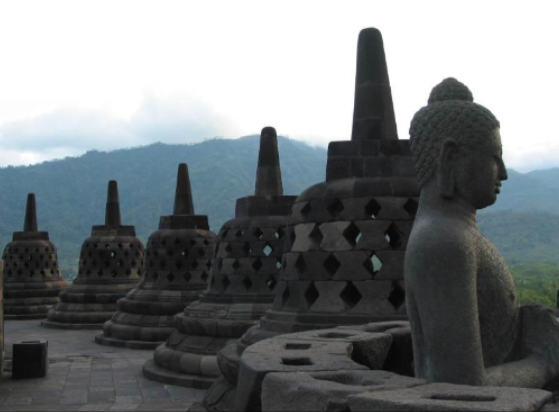
Buddhist shrine c. 800 of Borobudur, Java, Indonesia, c.800. sailendra Dynasty
view of upper terraces of the Buddhist (lotus position) monument with perforated stupas, each containing a statue of a cross-legged (lotus position) Buddha.
Khmer Dynasty of Cambodia
Khmer Dynasty influenced by both india and China. 802-1431
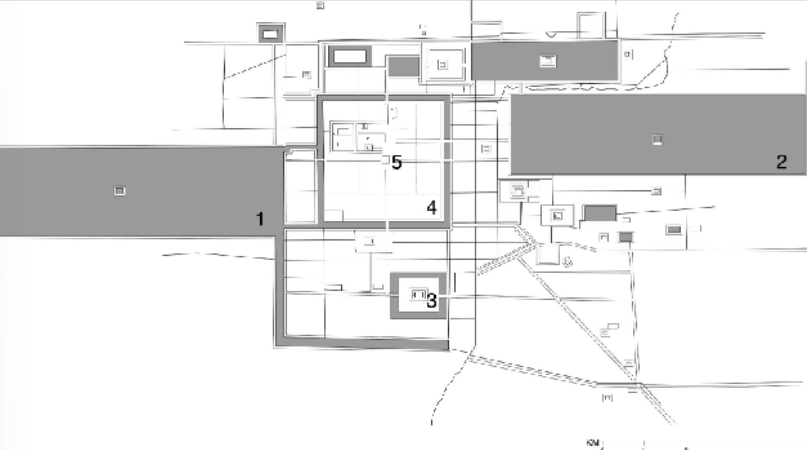
Which plan is this?
Plan of Angkor, Cambodia, 9th-13th century. Khmer Dynasty
(1) West Baray; (2) East Baray; (3) Angkor Wat; (4) Angkor Thom; (5) the Bayon
1,000,000 people
Embedded in trade with India and China
India—religious
China—mandate of heaven
Had to negotiate the flooding of their lake, similar to ancient Egypt
Complex water system
Spiritual and practical purposes
Monumental
Temples took on the form of mandalas (3)
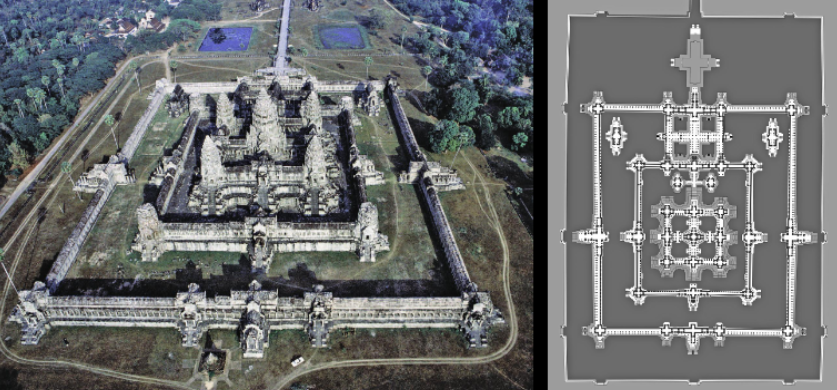
what is this?
Angkor Wat, Angkor, Cambodia, c.1150. Khmer Dynasty. Built for Suryavarman II, dedicated to the Hindu god, Vishnu.
Significance of Ankor Wat?
The complex reflects Hindu cosmology: central towers = Mount Meru; outer prakarams = mountains enclosing world; moat = oceans beyond
Walls decorated with reliefs/ life of his own imperial court
Historical and mythological scenes
Battle of conquest
A central theme: the theme of the turning of the ocean/ creation cosmology
Vishnu/ Vasuki: rotate the ocean? The ocean churned into a foam that creates life
"Library" functions as a pavilion; a ceremonial audience hall? Or ritual preparation? It’s unclear.
The site would be filled with water/monsoon season
All would have been painted
Red/gold
The temple is a large mountain
steep stairwell
Wouldn’t have been encircled by a forest, but a rice field
Representation of its wealth.
Prakaram
A walled enclosure in a hindu temple compound, similar to tenemos
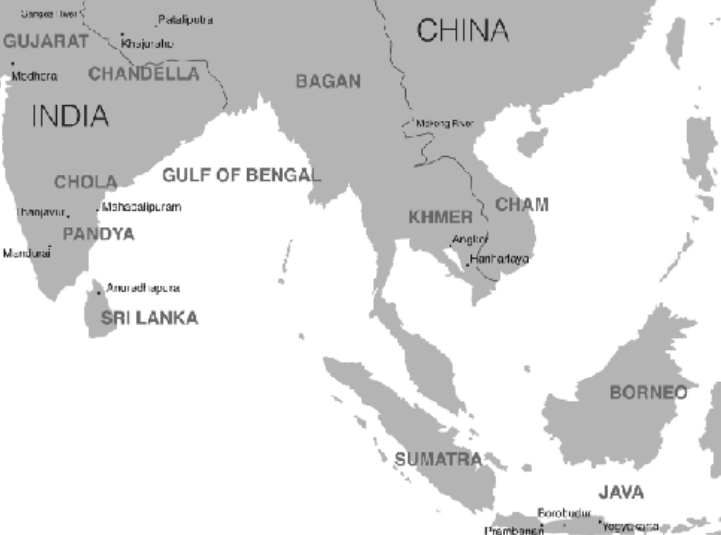
Map of india and southeast asia, 800-1200
Indian dynasties: rashtrakuta Dynasty, CHola Dynasty, Chandela Dynasty. Temples Dedicated to Hindu Gods Shiva or Vishnu
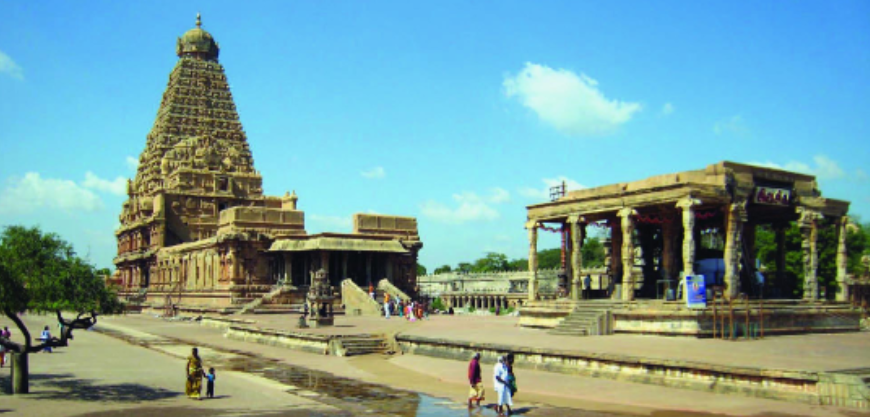
What is this?
The Temple of Brihadeesvara, Thanjavur, India, c. 1000. Chola Dynasty. Dedicated to shiva
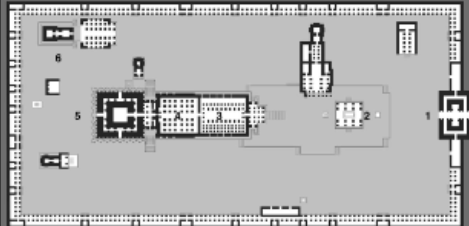
The plan of Prakaram
(1) gopura gateway;
(2) pavilion devoted to Nandi – the god Shiva’s ox;
(3) first mandapa (Term:
mandapa – hypostyle assembly halls);
(4) second mandapa;
(5) pyramid over garbha griha for lingam;
(6) Subrahmanya Temple
dedicated to shiva
Mandapa
Hypostyle assembly halls
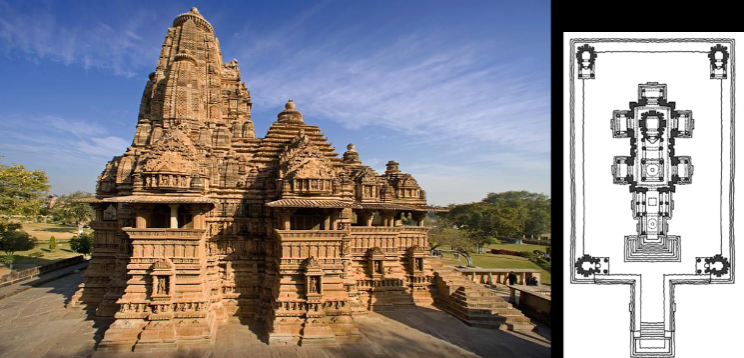
What is this?
Lakshmana Temple with plan, Khajuraho, Madhya Pradesh, India, 954. Chandela Dynasty. Dedicated to the goddess Lakshmi, wife of Vishnu.
Skikara
Pyramidal tower built over the sanctuary (garbba Griba) of a hindu temple
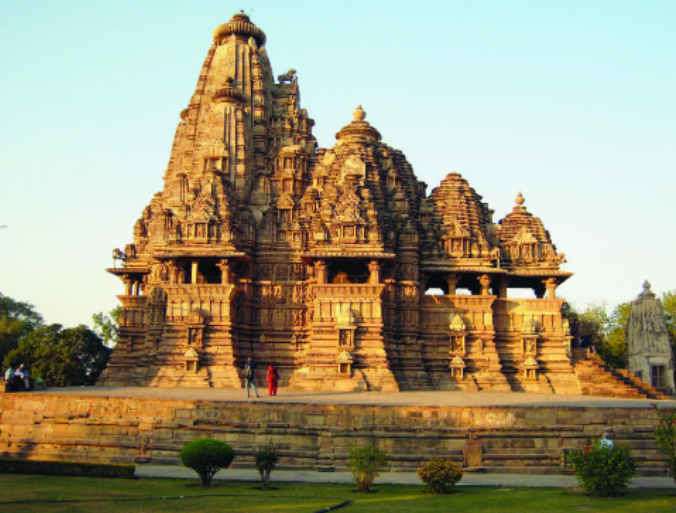
What is this?
Kandariya Mahadeva Temple, Khajuraho, India, 1020. Chandela Dynasty. Dedicated to Shiva
Key features of Pilgrimage I: South and Southeast Asia
Role of the mandala across the region
• As a diagram of the cosmos and basis for temple plans
• Political order as a reflection of the cosmos
Architecture as a reflection of royal power as a religious imperative
• Buddhist temples
• Sailendra Dynasty’s Borobudur (Java, Indonesia)
• Hindu temples
• Khmer Dynasty’s Angkor Wat (Cambodia); Chandela Dynasty temples (India)
Architecture conceived as symbolic landscapes
• Example: Borobudur as Mount Meru