Chapter 10: cell reproduction
 Call Kai
 Learn
Learn Practice Test
 Spaced Repetition
 Match
Match Flashcards
 Knowt Play
1/130

There's no tags or description
Looks like no tags are added yet.
Name | Mastery | Learn | Test | Matching | Spaced | Call with Kai | Chat |
|---|
No analytics yet
Send a link to your students to track their progress
131 Terms
What is the process of cell division in living organisms called?
Cell division
What are the two main types of reproduction in organisms?
Asexual and sexual reproduction
What type of reproduction produces genetically identical offspring?
Asexual reproduction
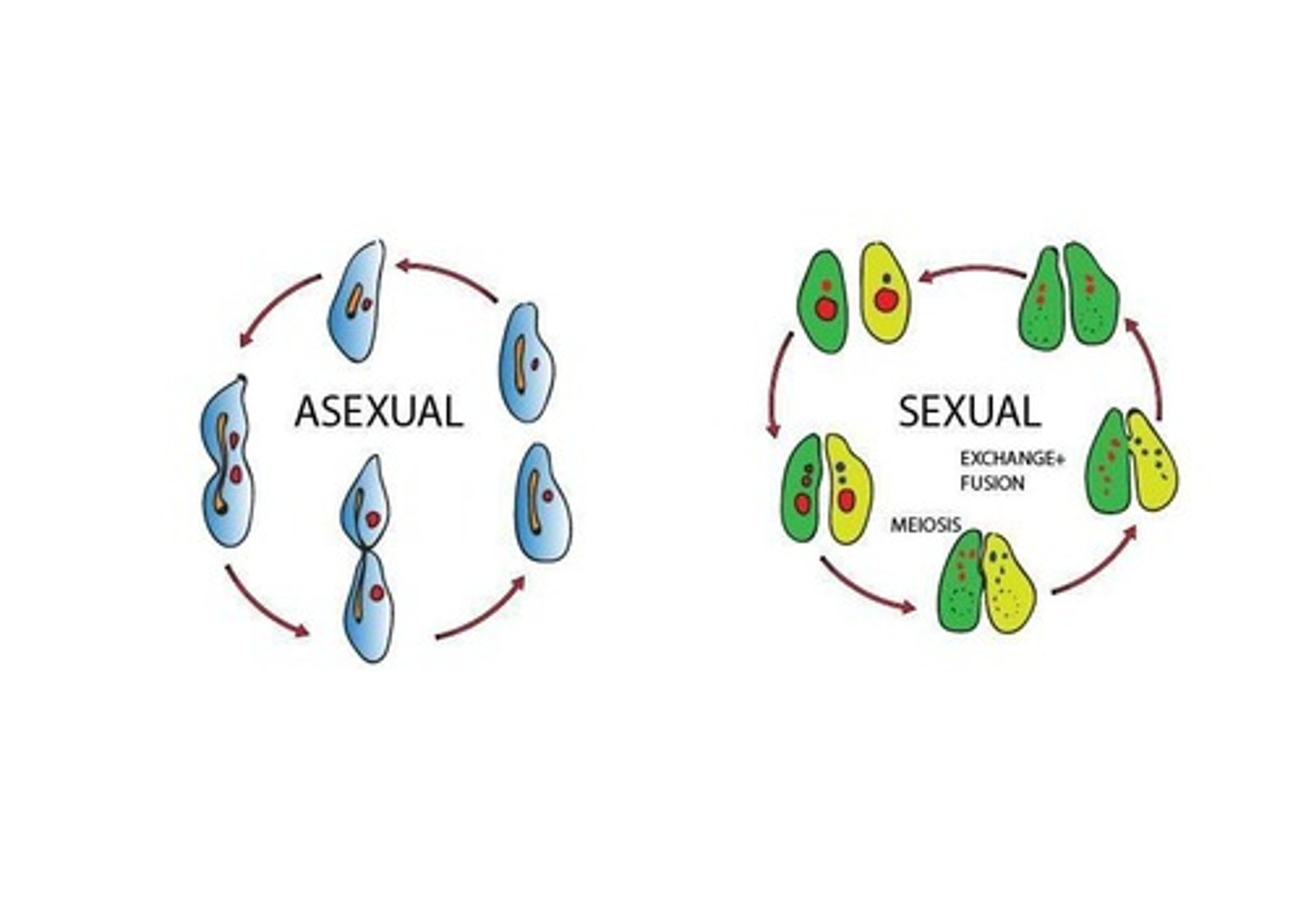
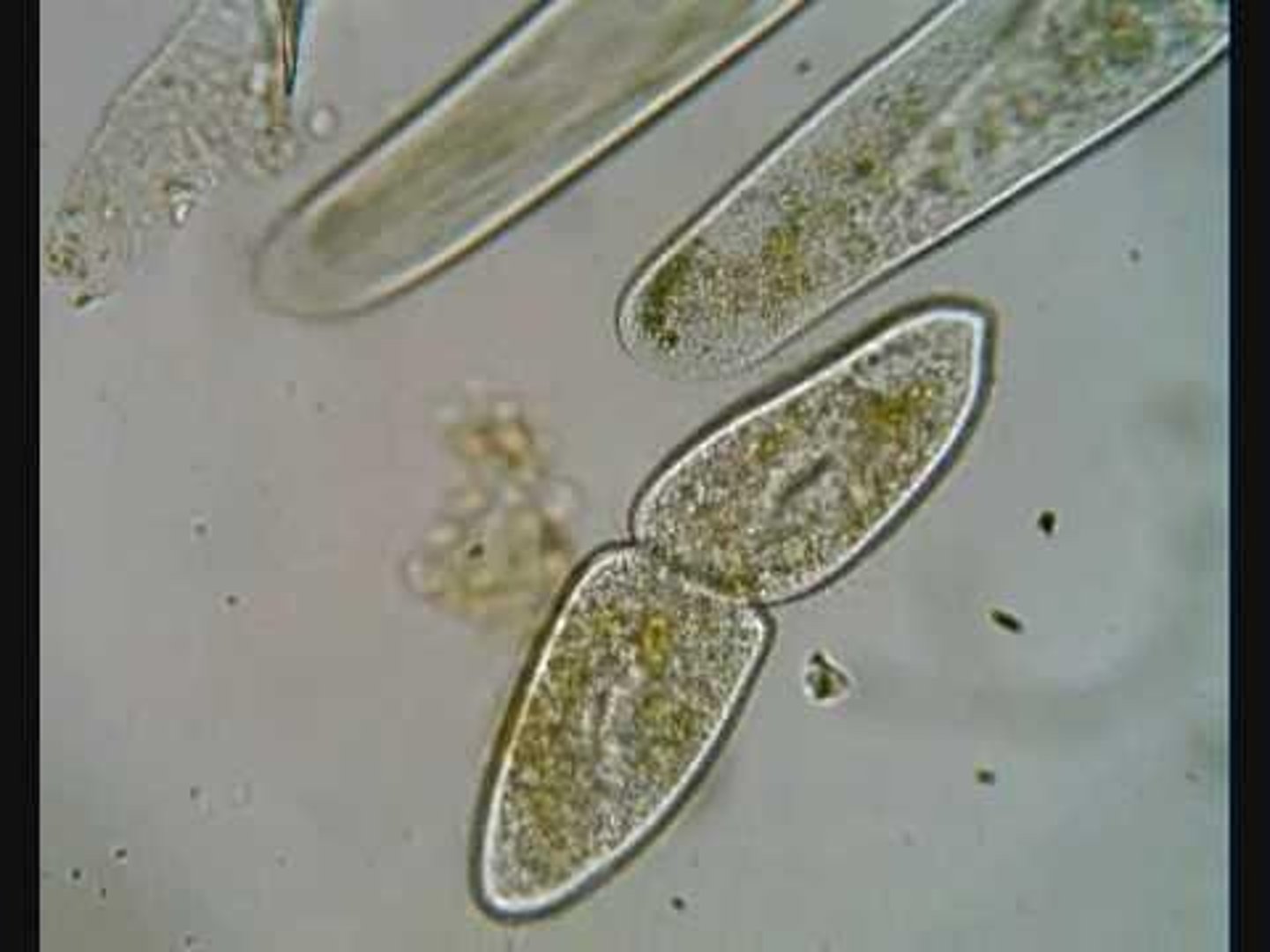
What are the mechanisms of cell division that result in two identical daughter cells?
Binary fission and mitosis
What is the form of cell division that produces four genetically unique daughter cells?
Meiosis
What does the cell theory state about the formation of cells?
Cells can only be formed by division of pre-existing cells.
What is LUCA in the context of cell biology?
The last universal common ancestor of all life on Earth.
What does cell differentiation allow in multicellular organisms?
Cells to specialize for specific functions.
What is the estimated number of cells in an adult human body?
30-40 trillion human cells.
What is cell proliferation?
The process by which a cell grows and divides to produce two daughter cells.
What are the three main reasons for cell proliferation?
Organism growth, replacement of dead cells, and tissue repair.
How do plants differ from animals in terms of growth?
Plants can grow throughout their lifespan, while animals have a defined growth phase.
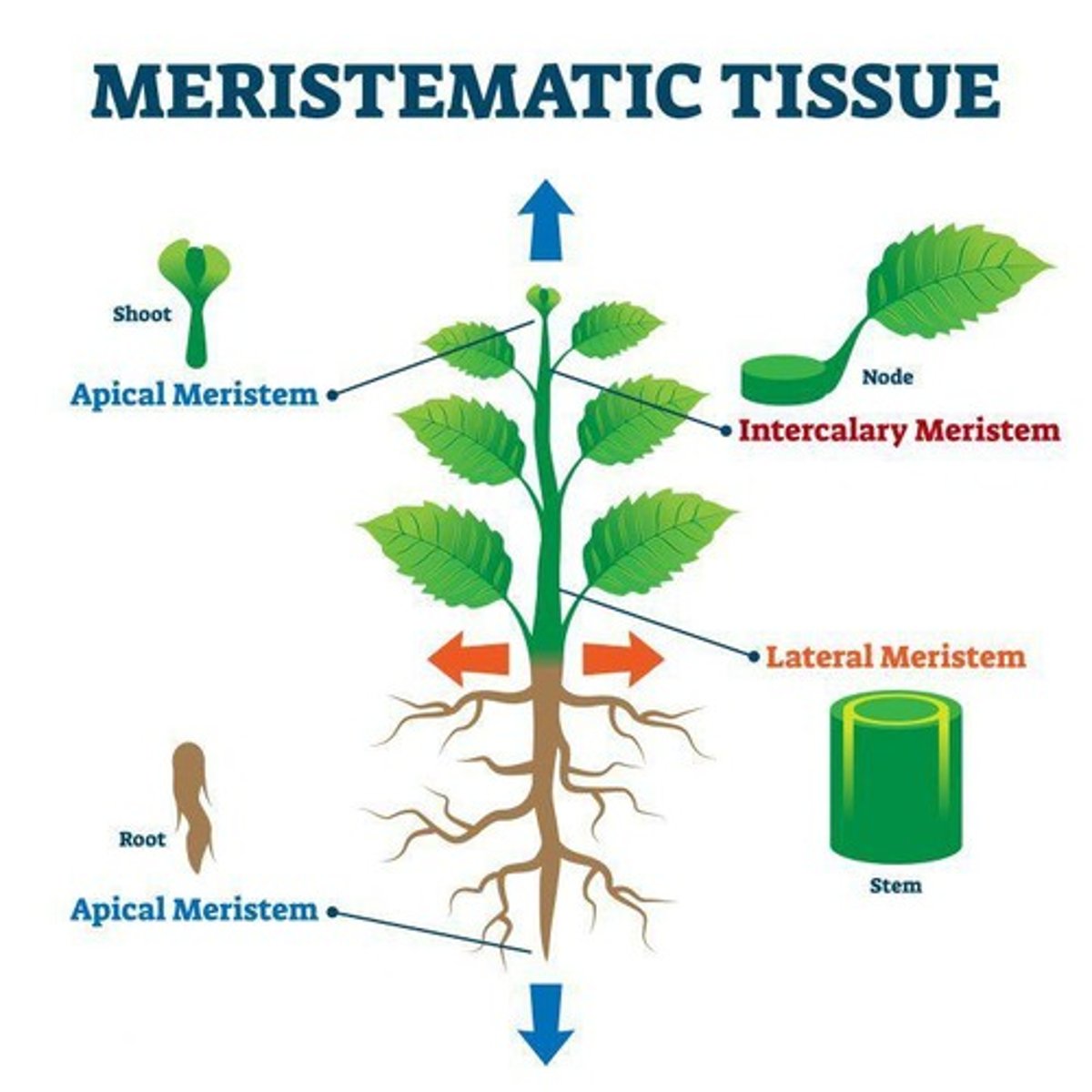
What is the role of meristem regions in plant growth?
They are regions where cell proliferation occurs, allowing for growth in roots and stems.
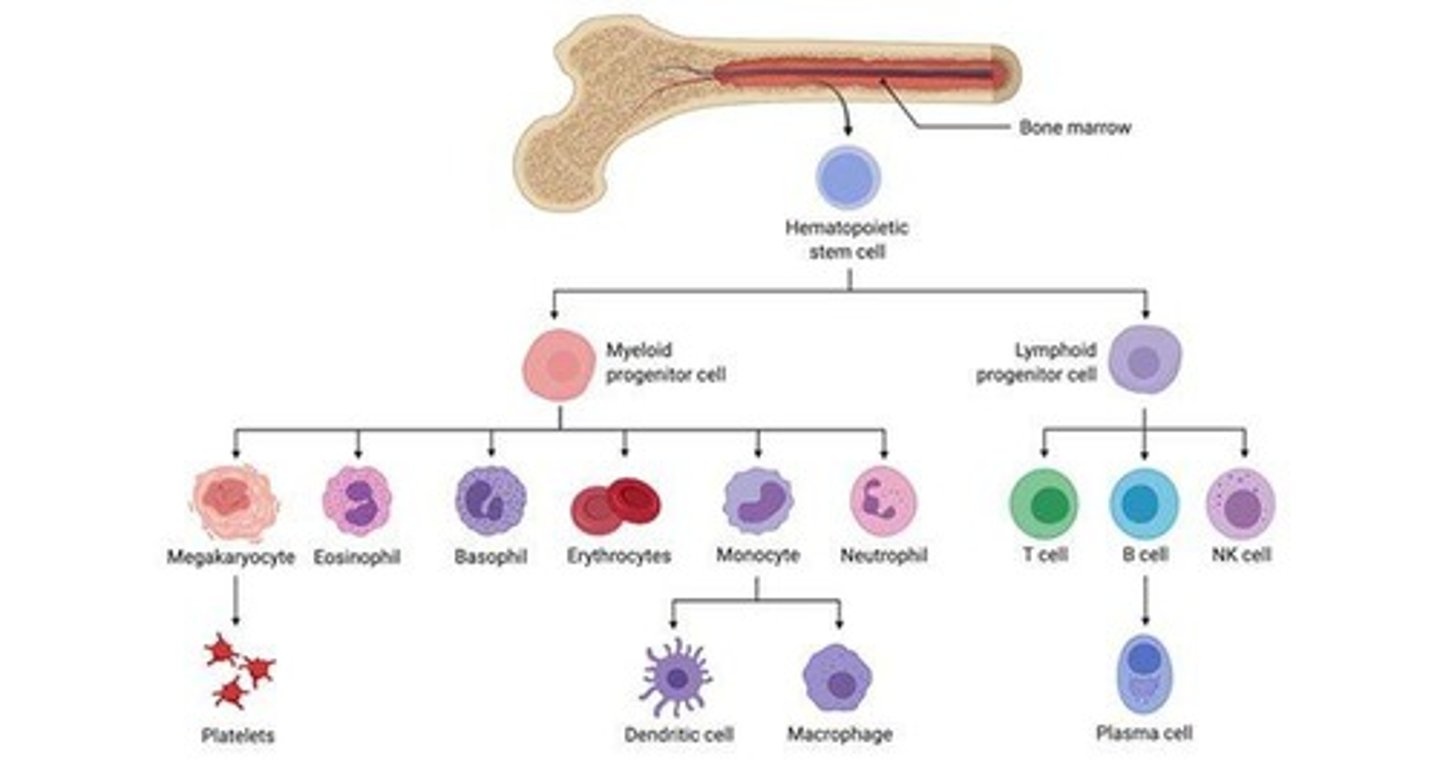
What happens to red blood cells during their formation?
They lose their nucleus, making them atypical eukaryotic cells.
What triggers skin cell proliferation during wound healing?
Basal cells in the epidermis and multipotent stem cells in hair follicles.
What are the two main phases of the eukaryotic cell cycle?
Interphase and cell division.
What are the three stages of interphase?
G1 (first gap), S (synthesis), and G2 (second gap).
What is the purpose of cyclins in the cell cycle?
They control the progression of the cell through the cell cycle.
What is the non-dividing state that some cells may enter called?
G0 phase.
What is the significance of the first cell that arose from non-living material?
It marks the origin of life on Earth.
How long ago is LUCA estimated to have lived?
Approximately 3.5 to 3.8 billion years ago.
What is the role of hematopoietic stem cells?
They produce different types of blood cells, including red blood cells.
What happens to skin cells as they move towards the surface?
They become flattened and dead due to keratin production.
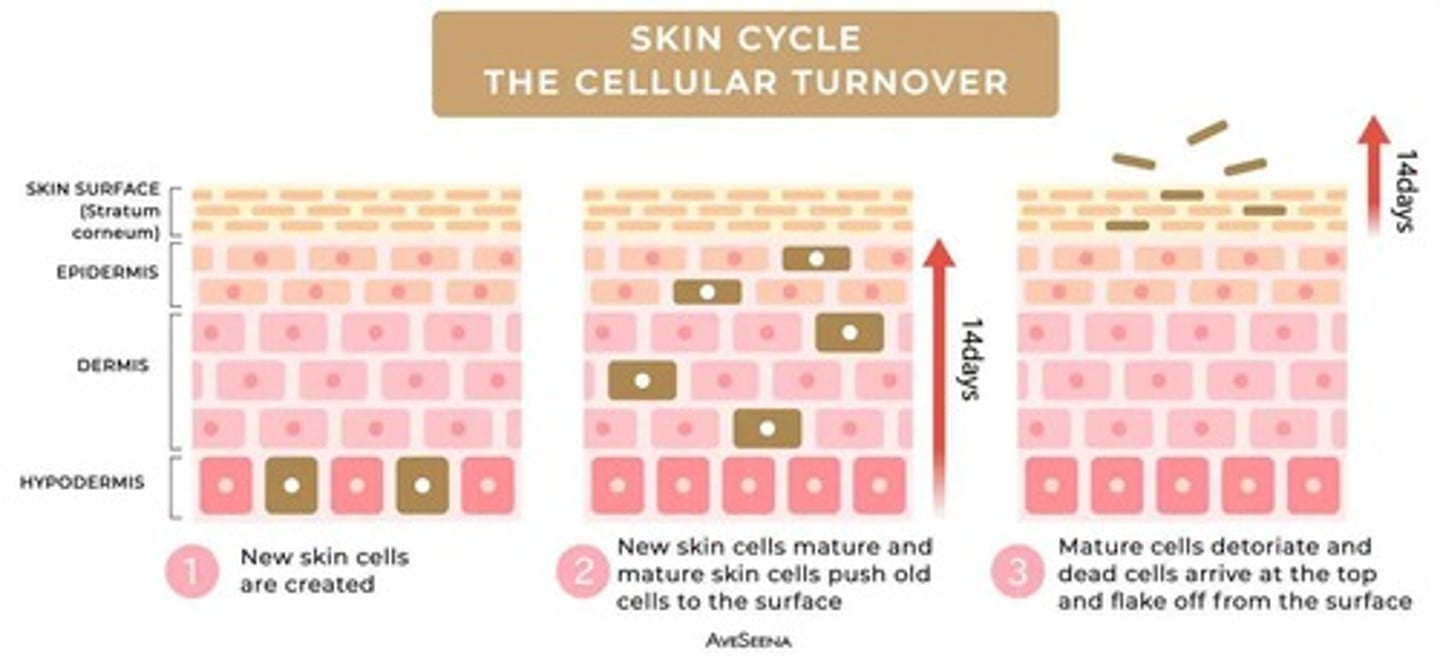
What is the process of replacing cells that die naturally called?
Cell replacement.
What is the main function of cell proliferation in tissue repair?
To replace damaged cells and restore tissue integrity.
What is the primary role of the shoot apical meristem in plants?
To create cells for elongating the stem and forming leaves and flowers.
What is the significance of the cell cycle in cell division?
It is a repeating sequence of events leading to division and production of daughter cells.
What occurs during interphase?
The cell grows, synthesizes proteins, doubles its DNA, and increases the number of organelles.
What are the three major checkpoints in the cell cycle?
G1 checkpoint, G2 checkpoint, and M checkpoint.
What is the purpose of the G1 checkpoint?
To check for errors or defects before the cell proceeds to DNA synthesis.
What is the function of the G2 phase?
To prepare the cell for division by replenishing energy and synthesizing proteins needed for division.
What is mitosis?
The division of the nucleus.
What is cytokinesis?
The division of the cytoplasm and organelles.
What happens during the S phase of interphase?
DNA replication occurs, creating two identical DNA strands.
What are sister chromatids?
Identical strands of DNA connected at the centromere after DNA replication.
What role does cohesin play in cell division?
Cohesin holds sister chromatids together until anaphase.
What is chromatin?
DNA that is loosely coiled around histone proteins, making it accessible for transcription.
What occurs during prophase of mitosis?
Replicated DNA condenses to form visible chromosomes.
What is the function of the kinetochore?
It assembles at the centromere and links sister chromatids to microtubules for movement.
How do motor proteins assist in chromosome movement?
Motor proteins pull kinetochores along microtubules toward the poles of the cell.
What is the significance of the centromere?
It adheres sister chromatids together and serves as the site for kinetochore attachment.
What happens to cohesin during anaphase?
Cohesin is removed, allowing sister chromatids to separate.
What is the role of ATP during interphase?
ATP provides energy for cellular processes such as synthesizing molecules and moving structures.
What is the exception to cellular growth during interphase?
Animal embryos undergo rapid proliferation, omitting gap phases of interphase.
What is the relationship between chromatin and DNA accessibility?
Chromatin is less tightly coiled, making DNA accessible for transcription and replication.
What happens to DNA during the cell cycle?
DNA is replicated during S phase, condensed into chromosomes during mitosis, and exists as chromatin during interphase.
What is the role of microtubules in cell division?
Microtubules form the mitotic spindle that helps separate sister chromatids during anaphase.
What is the function of RNA polymerases during G1 phase?
RNA polymerases transcribe DNA into RNA, which is then translated into proteins.
What is the purpose of cellular respiration during G1 phase?
To produce ATP needed for cellular functions.
What is the significance of the blastocyst in embryonic development?
The blastocyst consists of unspecialized stem cells that will specialize based on chemical gradients.
What is the main characteristic of cells during the early embryonic stage?
They are unspecialized and rapidly proliferate, leading to smaller individual cell sizes.
What is the role of histone proteins in DNA packaging?
Histones help wrap DNA into nucleosomes, which further coil to form chromatin.
What is the analogy used to describe the movement of chromosomes during mitosis?
Rope represents microtubules, harness represents kinetochore, and person represents chromosome.
What is the form of DNA during Interphase G1?
DNA is in the form of loosely coiled unreplicated chromatin.
What happens to DNA during Interphase G2?
DNA is replicated and consists of two sister chromatids in chromatin form.
What characterizes DNA during Metaphase?
DNA is condensed into replicated chromosomes with two sister chromatids connected at a centromere.
What occurs during Anaphase?
Sister chromatids separate, becoming individual supercoiled chromosomes.
What is the purpose of mitosis in eukaryotic cells?
Mitosis divides the nucleus to ensure each daughter cell has a nucleus with DNA.
What is the outcome of mitosis?
It results in two genetically identical nuclei.
What is meiosis?
Meiosis includes two nuclear divisions and results in four genetically diverse daughter cells with half the number of chromosomes.
What is the function of the nucleus in a eukaryotic cell?
The nucleus stores genetic material (DNA) and coordinates cell activities like growth and metabolism.
What is nucleoplasm?
The semi-fluid matrix found inside the nucleus.
What is the nuclear envelope?
A double membrane surrounding the nucleus that protects genetic material and separates it from the cytoplasm.
What are nuclear pores?
Structures that create a selective passageway for molecules to travel between the nucleus and cytoplasm.
What happens to the nucleus during cell division?
The nucleus disassembles and re-forms during prophase and telophase.
What is the role of cyclins in the cell cycle?
Cyclins regulate progression through the phases of mitosis.
What is the metaphase plate?
The region where chromosomes align equidistant from the two poles of the cell during metaphase.
What happens during telophase?
Chromosomes are grouped at each pole, the nuclear membrane reforms, and chromosomes decondense.
What are anucleate cells?
Cells that lack a nucleus and cannot synthesize proteins or maintain structure.
What is the significance of DNA replication before cell division?
It ensures that each daughter cell receives an identical set of genetic information.
What is the function of nucleoli within the nucleus?
Nucleoli synthesize ribosomes.
What is the role of histones in DNA structure?
Histones help package DNA into a compact, organized structure by forming nucleosomes.
What is the difference between mitosis and meiosis?
Mitosis results in two identical cells, while meiosis results in four genetically diverse cells.
What is the relationship between the outer nuclear membrane and the endoplasmic reticulum?
The outer nuclear membrane is continuous with the endoplasmic reticulum.
What is the role of motor proteins during anaphase?
Motor proteins pull daughter chromosomes along microtubules towards the poles of the cell.
What happens to the microtubule spindle fibers during telophase?
The microtubule spindle fibers break down and disappear.
What is the importance of the nuclear envelope?
It protects genetic material and regulates the exchange of substances between the nucleus and cytoplasm.
What are the four major phases of mitosis?
Prophase, Metaphase, Anaphase, Telophase
What happens to DNA during prophase?
Replicated DNA condenses into chromosomes.
What role does the kinetochore play in mitosis?
It attaches to the centromere of the chromatids.
What occurs during metaphase?
Chromosomes align at the metaphase plate, equidistant from the poles.
What happens during anaphase?
Cohesin is removed, separating sister chromatids into daughter chromosomes.
What is the function of motor proteins during anaphase?
They pull daughter chromosomes along microtubules towards the poles.
What occurs during telophase?
Nuclear membranes reform around daughter chromosomes, and chromosomes decondense.
How does cytokinesis differ in plant and animal cells?
Plant cells form a cell plate; animal cells form a cleavage furrow.
What is equal cytokinesis?
Cytoplasm and organelles are equally divided between daughter cells.
What is unequal cytokinesis?
Cytoplasm is divided unequally, as seen in yeast budding and oogenesis.
What is oogenesis?
The production of an egg cell, where cytoplasm is divided unevenly.
What is the significance of the mitotic index?
It is used to calculate the proportion of cells undergoing mitosis.
What happens to the nuclear membrane during prophase?
The nuclear membrane breaks apart.
What is the role of microtubules during mitosis?
They form the mitotic spindle and help move chromosomes.
What can result from uncontrolled mitosis?
Cancer can occur when mitosis happens when it shouldn't.
What is the cell cycle?
The series of events that lead to cell division and the production of daughter cells.
What characterizes interphase?
Nuclei are rounded, and DNA is in chromatin form, not yet condensed.
What happens during early prophase?
DNA begins to condense into loose chromosomes, and microtubules start to radiate.
What occurs during late prophase?
The nuclear membrane breaks down, and microtubules attach to chromosomes.
How do contractile proteins function in animal cell cytokinesis?
They form rings that pinch the cell membrane to create a cleavage furrow.
What is the outcome of cytokinesis in plant cells?
A cell plate forms, which develops into a new cell wall separating daughter cells.
What is the difference between mitosis and cytokinesis?
Mitosis is the division of the nucleus; cytokinesis is the division of the cytoplasm.
What are the three phases of the cell cycle?
Interphase, Mitosis, and Cytokinesis.