Chemistry Key Concepts: Electronegativity, Bond Types, and Organic Structures
 Call Kai
 Learn
Learn Practice Test
 Spaced Repetition
 Match
Match Flashcards
 Knowt Play
1/45

There's no tags or description
Looks like no tags are added yet.
Name | Mastery | Learn | Test | Matching | Spaced | Call with Kai | Chat |
|---|
No analytics yet
Send a link to your students to track their progress
46 Terms
3.98
electronegativity of Fluorine (F)
3.44
electronegativity of Oxygen (O)
3.16
Electronegativity of Chlorine (Cl)
3.04
Electronegativity of Nitrogen (N)
2.55
Electronegativity of Carbon (C)
2.2
Electronegativity of Hydrogen (H)
Greater than .5
how big of electronegativity diff makes bond polar
dashed wedge
wedge pointing away from you
solid wedge
wedge pointing toward you
120 degrees
bond angle of Trigonal planar
109.5 degrees
bond angle of tetrahedral
less than or equal to 109 degrees
bond angle of pyramidal
less than or equal to 109 degrees
bond angle of bent
alkyl halide
What is this
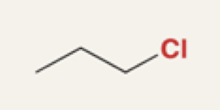
Alkene
What is this

Alkyne
What is this

Alcohol
What is this

Thiol
What is this

Sulfide
What is this

Aromatic (benzene ring)
What is this

Ketone
What is this

Aldehyde
What is this

Carboxylic acid
What is this
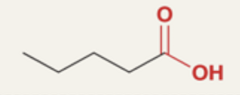
Acyl halide
What is this
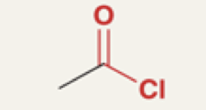
Anhydride
What is this

Ester
What is this

Amide
What is this

Amine
What is this
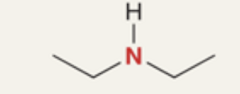
Acyclic
is this Acyclic, Cyclic, Bicyclic?

Cyclic
is this Acyclic, Cyclic, Bicyclic?

Bicyclic
is this Acyclic, Cyclic, Bicyclic?
Fischer projection (used only for Acyclic compounds)
What is this and when is it used?

Haworth projection (Used only for cyclic compounds)
What is this and when is it used?

chair conformation (used only for 6-membered rings)
What is this and when is it used?

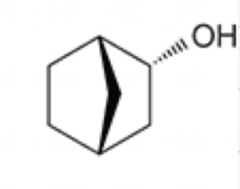
used only for Bicyclic compounds
What is this and when is it used?

Heteroatoms
Atoms aside from H and C
Aufbau principle
the lowest energy orbital is filled first
Pauli Exclusion Principle
each orbital can accommodate a maximum of 2 electrons that have opposite spins
Hund's Rule
When dealing with degenerating orbital, such as P orbitals, one electron is placed in each degenerate orbital first before electrons pair up
Valance bond theory
a bond is simply the sharing of electron density between two atoms as a result of the constructive interference of their atomic orbitals
formal charge equation

allylic lone pair

allylic carbocation

lone pair adjacent to C+

Pi bond

conjugated pi bond
