Exam 3 (Material after exam 2).
 Call Kai
 Learn
Learn Practice Test
 Spaced Repetition
 Match
Match Flashcards
 Knowt Play
1/46

There's no tags or description
Looks like no tags are added yet.
Name | Mastery | Learn | Test | Matching | Spaced | Call with Kai | Chat |
|---|
No analytics yet
Send a link to your students to track their progress
47 Terms
hominids
Great Apes
Hominins
humans
All hominins are hominids, but not all hominids are hominins
List the morphological innovations seen in hominins
7-6 MYA: evidence of bipedalism & elongated hinge limbs
3.3 MYA: tool making & specialized stones
2-1.8 MYA: increase in brain case size
1 MYA: evidence of controlled fire use
What order did innovations occur for humans
Social structure (Hominids) then Bipedalism (Hominins)
Tool Use (Australopithecines), then larger brain cases (Homo genus), Carnivory (Homo genus)
What was African continent like 8 MYA & how did it change over time?
Miocene era
lush forests
6 MYA climate change begun to cool planet → dry conditions → shift from forests to woodlands to deserts
who is hte only survivor of the adaptive radiation of hominins that occurred in Africa over the last 4-5/7 million years?
homo sapiens
Who was “Lucy” and why is she important?
Australopithecus afarensis mostly complete (40%) fossil
earliest hominin originally discovered
Omnivorous diet and semi-arboreal lifestyle
When did our ancestors become carnivores? How did this change their ecology?
1.8 MYA (Homo erectus) evidence they caught and ate animals
Carnivores have to roam more broadly to find food- H. erectus dispersed away to hunt
example of ecological opportunity
Out-of-Africa Hypothesis
Homo sapiens evolved in Africa and moved into Europe& Asia in a 2nd dispersal event
Homo erectus populations did not contribute genes to H. sapiens during the secondary contact
What are the alternative hypotheses for the origin of humans
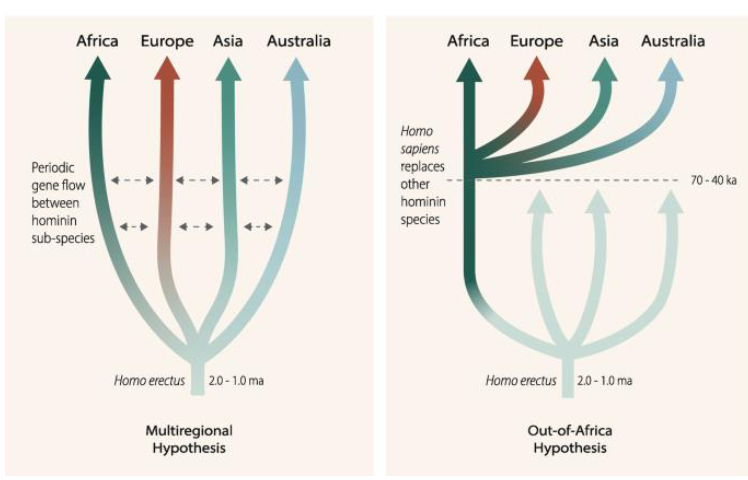
What pattern of diversity would you expect to see to support the Out-of -Africa hypothesis?
diversity greatest in Africa and decrease outward
B/c of Founder effect
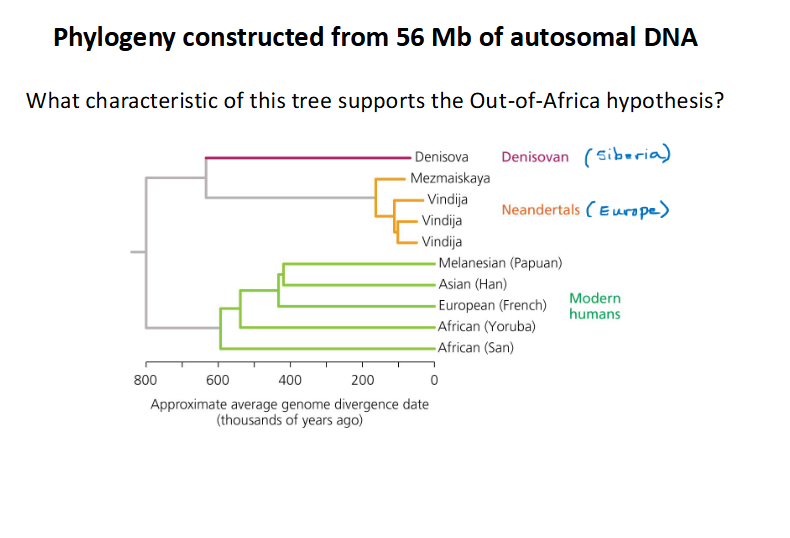
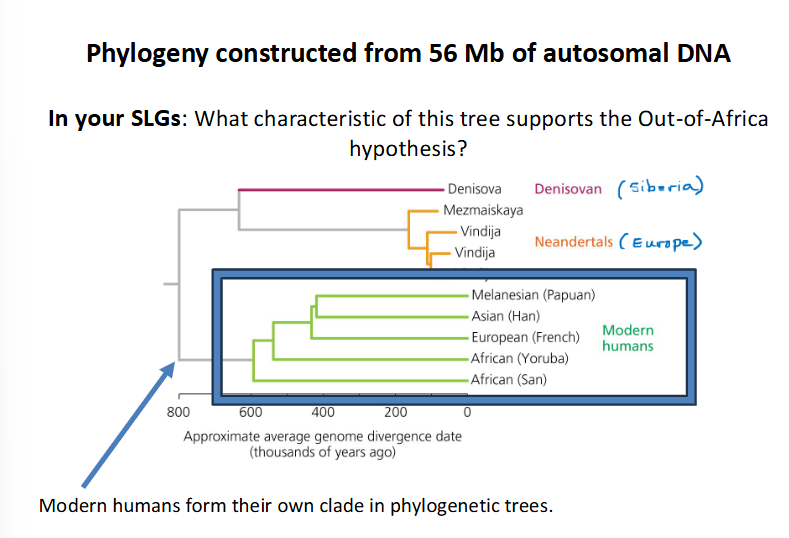
oldest originated in Africa, then spread to Europe & outward
How did neanderthal DNA change over time and what does that suggest?
% Neanderthal DNA in modern humans decreased over time in Eurasia
Decreased because natural selection against Neanderthal DNA is likely responsible for the change, but some will likely persist!
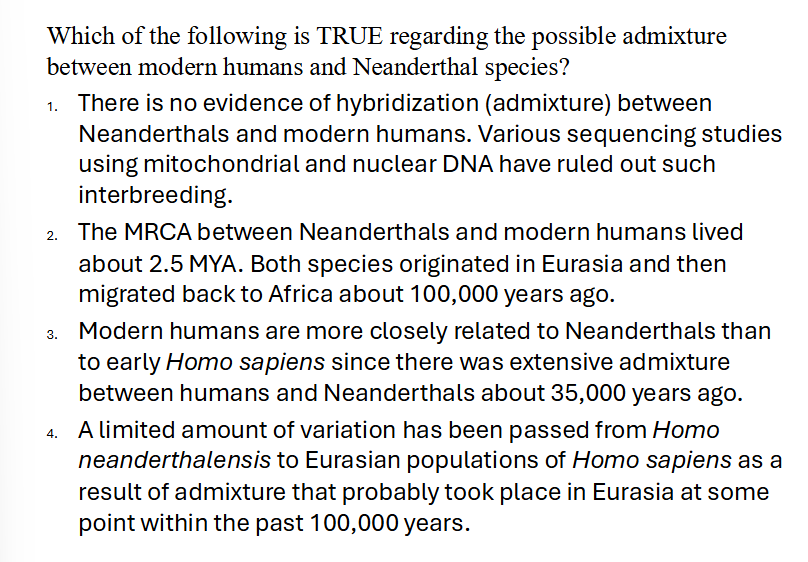
Limited variation passed from Homo neanderthalensis to Eurasian populations of Homo sapiens as a result of admixture that probably took place in Eurasia at some point within the past 100,000 yrs
Did other groups similarily interbreed with Homo sapiens?
yes, the Denisovans!
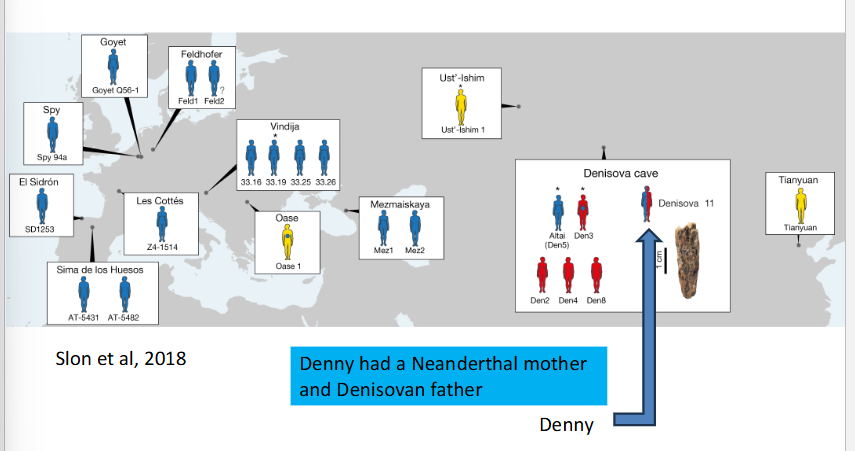
How is game theory related to reproductive success?
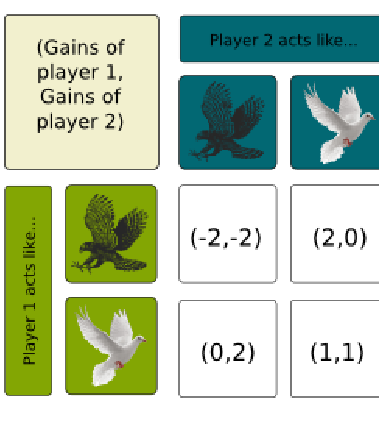
Individuals seek to maximize reproductive success so they compete
predicting how individuals respond to the competition is based on game theory
Hawk-Dove Game Theory
when hawks are common, doves are more successful
when doves are common, hawks are more successful
net result is best strategy that is less equilibrium= Nash equilibirum
Bourgeois Strategy
flexible behavior in Hawk-Dove games
behaves like a hawk when defending a resource and a dove when cheating
includes flexible individuals that’re the most fit
Conspecific (heterospecific) interactions
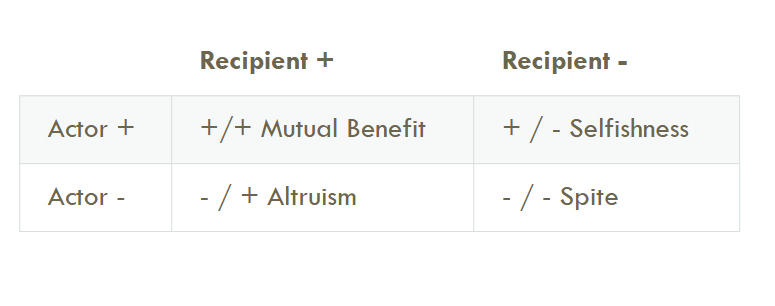
Altruism
behavior that increases anothers evolutionary fitness while decreasing the actors own
Why do organisms behave in a way that lowered their own fitness?
reciprocity- “tit for tat”
Kin selection & Hamilton’s Rule
GRoup/Multilevel Selection
Greenbeard Hypothesis
Kin Selection& Hamilton’s Rule
organism favors reproductive success of genetic relatives, even at cost of survival/reproduction
Mathematically explained by Hamilton’s rule as altruist behavior
Group/Multilevel selection
natural selection operates simultaneously @multiple levels of bio hierarchy
ex: at genes, cells, organisms, and groups
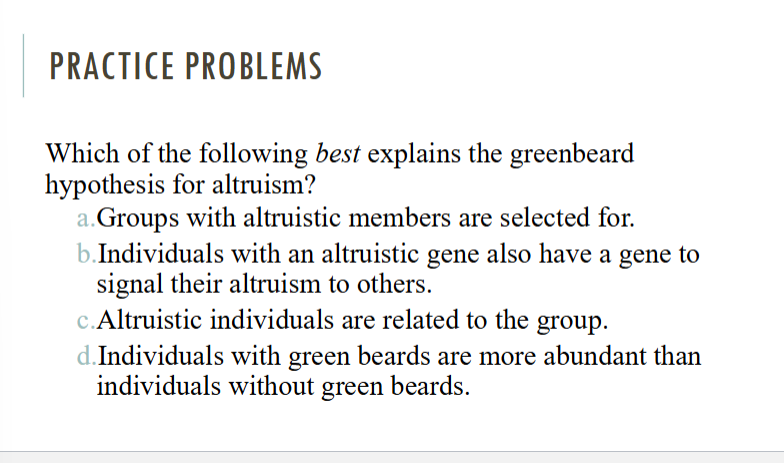
Greenbeard Hypothesis
Gene selection
never demonstrated but see “Medea” gene
how genes for altruistic behavior can evolve
b
What are the consequences of the price equation?
evolution of behavior requires communication-prisoners dilemma
elegance of price equation is in being able to explain all strategies-”honest” signals, cheating and Bourgeois strategy, altruism
Eusociality
highest level
overlapping generations
cooperative brood care
strict reproductive division of labor
When would eusociality develop?
ecological contribution-high competition for space & care
Kinselection-inbreeding:haplodiploid systems
Delayed Benefits: greater fitness by occupying natal nest
Multi-level selection: colony as reproductive unit instead of individual
Biological Species Concept
population can interbreed & produce viable offspring
Evolutionary species concept
population that shares a pattern of ancestry and descent that represents a single branch of a phylogenetic tree
Phenetic species concept
population that shares similar traits
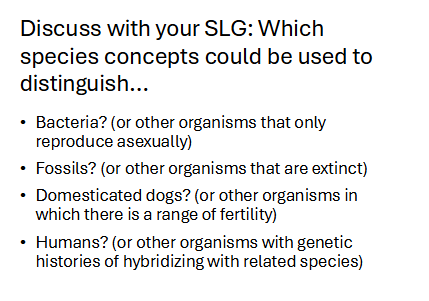
Why does it matter to define species?
B/c of politics
species can interbreed when mature
Reproductive Isolation
means to an end
no longer interbreed and produce viable offspring, thus separate forms
Types of Reproductive Isolation
Prezygotic- barriers prevent zygote from forming; ex: mechanical, behavioral, geographic, temporal
Postzygotic-barriers reduce fitness of hybrid
How can assortative mating affect populations?
cause populations to diverge
What are the types of Post-zygotic genetic barriers
Bateson-Dobzhansky-Muller Incompatibilities (BDMIs)-mutations develop in each population that are only maladaptive when they become recombined in hybrids
Ploidy Changes
Chromosomal inversions & Translocations- Haldanes rule
Do BDMIs usually occur in hybrids or parental lineages more?
Hybrids
Haldane’s rule
heterogametic sex is the one most likely to be afflicted
What are the speciation Models
Allopatric
Parapatric
Sympatric
Allopatric Speciation
populations diverge because geographic barriers prevent gene flow
Parapatric Speciation
populations diverge because of a gradient of selection
Sympatric Speciation
populations diverge despite absence of a geographic barrier
What are the changes in Hybrid Zone over time
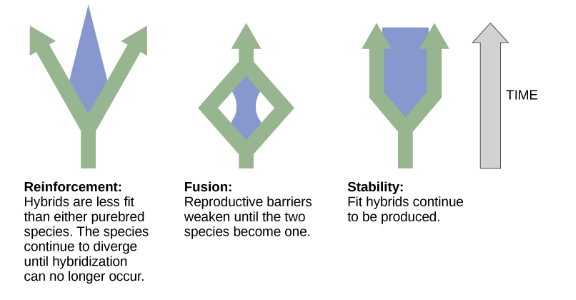
Timeline of Speciation
gradual speciation suggests that populations acquire differences slowly, ex: whales
punctuated speciation suggests populations diverge rapidly, cannot observe many transitions in form, ex: bats
Both are likely true!
Abiogenesis
natural process by which life arises from non-living matter
How does abiogenesis occur?
Non-living synthesis of simple organic molecules
Polymerization-assembly of simple organic molecules into more complex polymers
Formation of self-replicating polymers
Compartmentalization of molecules within membranes
emergence of protocells with basic metabolic functions