Theory 3
 Studied by 0 people
 Call Kai
 Learn
Learn Practice Test
 Spaced Repetition
 Match
Match Flashcards
 Knowt Play
1/47

There's no tags or description
Looks like no tags are added yet.
Name | Mastery | Learn | Test | Matching | Spaced |
|---|
No study sessions yet.
48 Terms
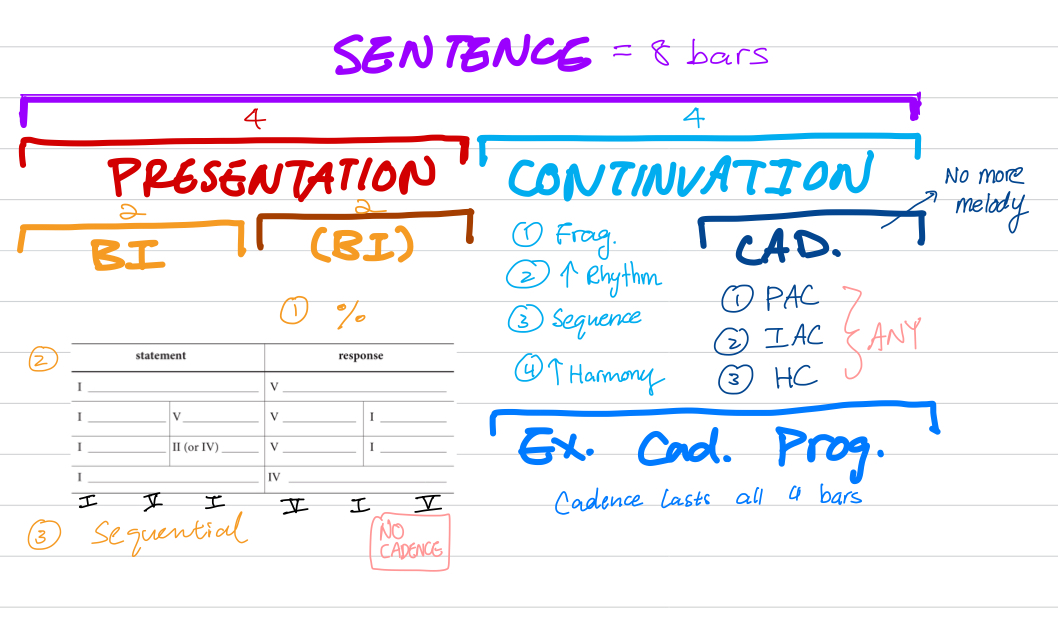
Sentence
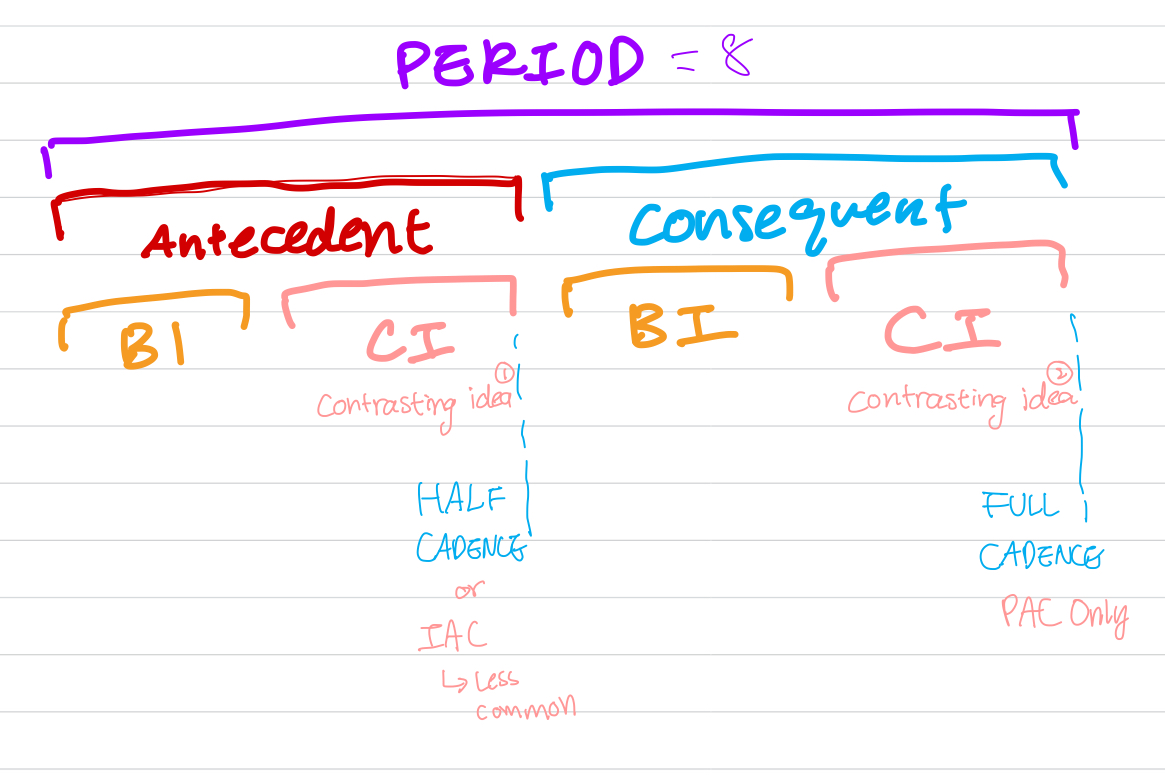
Period
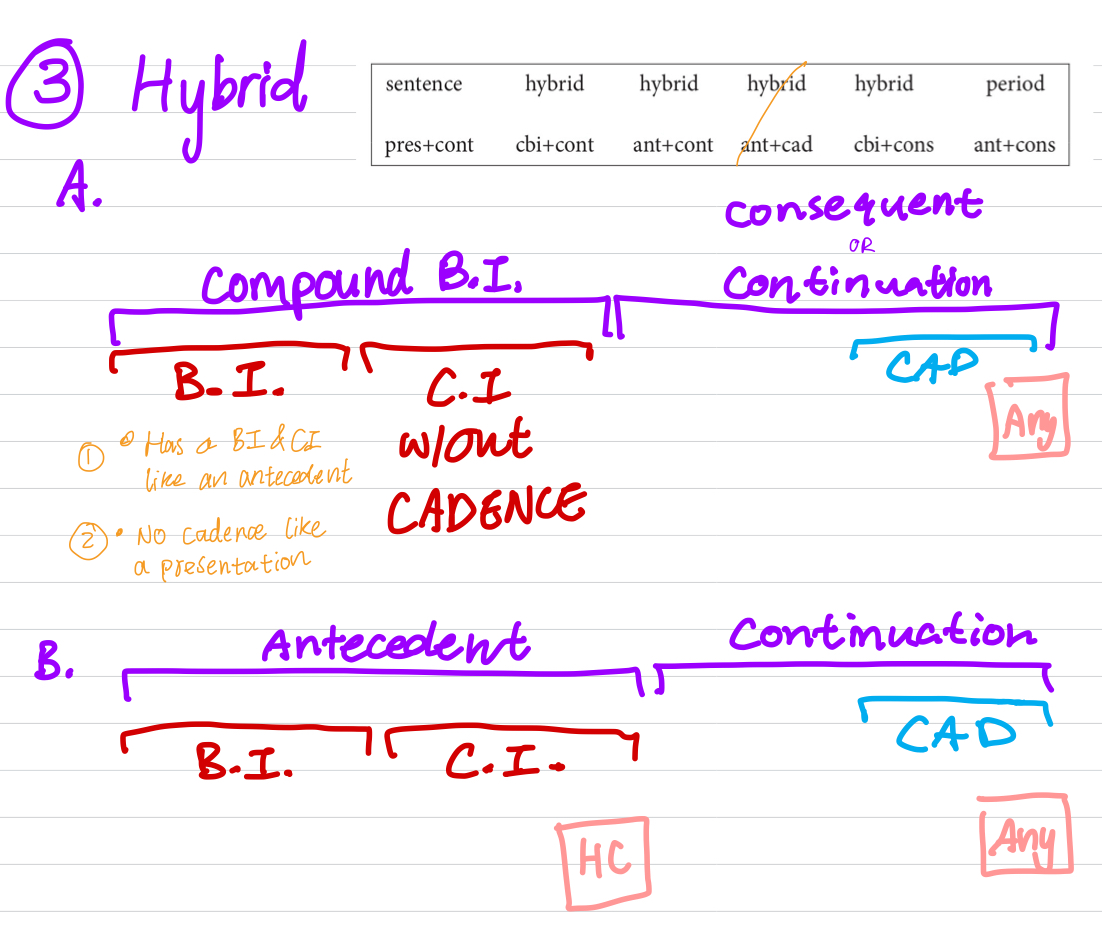
Hybrid
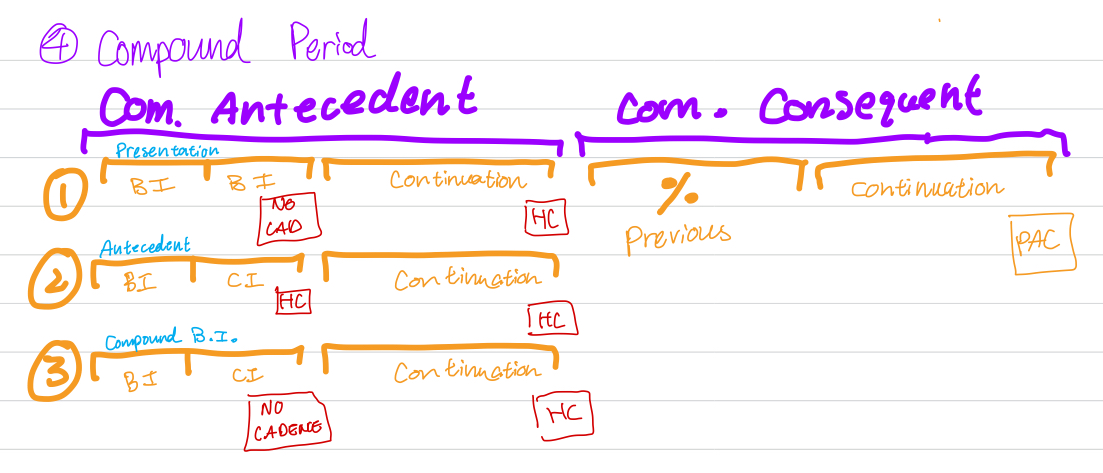
Compound Period
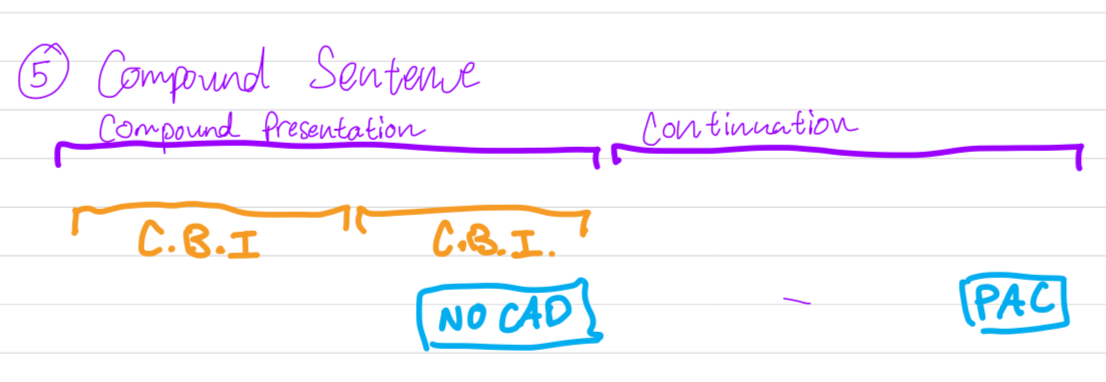
Compound Sentence
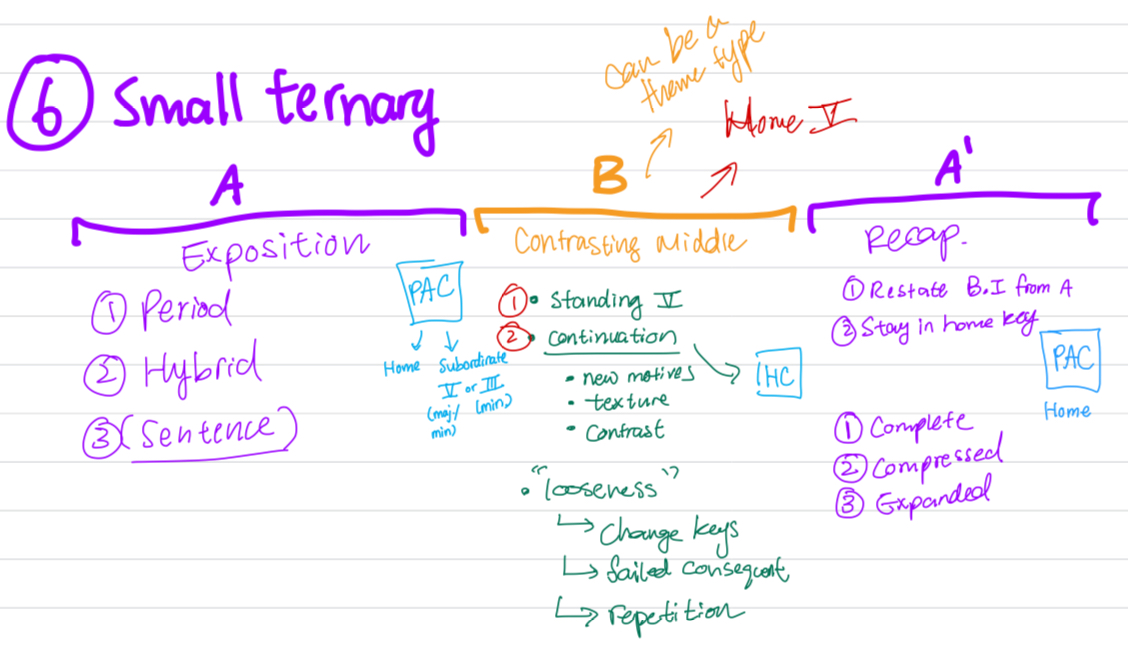
Small Ternary
Large Scale Formal Structure of a Sonata
(Slow Intro) - Identify with a tempo marking
Exposition - Almost always repeated
Development
Recapitulation
(Coda) - After the codetta (can be a transformation)
Large Scale Tonal Structure of a Sonata (Cadences)
Exposition:
Home Key
(Often) Ends with PAC = Closing
Ends with HC = Standing on dominant
TRANSITION
(Modulated) SK: HC
(Non-modulated) HK: HC
SK Theme
Ends with PAC → Codettas
(Maybe) Retransition
Development
Explores multiple tonal centres
Confirmed by a HC
Less often confirmed by a PAC
Ends with HC in HOME KEY
Recapitulation
Stays in home key
Move to subordinate ( IV ) region without a confirmed modulation occurs
PAC in HOME KEY
The exposition’s main theme ends with a HC especially in ____
Minor-mode movements
As a general rule, the exposition emphasizes what modality? What about the development?
Major modality for exposition
Minor modality for development
For major-mode sonatas, what are the development keys? For minor-mode?
Major-mode:
Minor-mode regions of VI, III and II
Minor-mode
Minor-mode regions of IV and V
For exposition, what are the subordinate keys for major mode? For minor mode?
Major: V
Minor: III (major) or V (minor)
3 Principle Thematic Functions of an Exposition (Parts + Cadence)
Main Theme
Tight: biased towards sentence
SOMETIMES: Two main themes that each end with a PAC = Main theme group
Transition
Loose form of sentence: destabilize the home key to modulate to SK
End with HC in SK → post-cadential standing on the dominant of the SK
Subordinate Theme
Loose: Extensions / expansions to DELAY and dramatize the arrival of the PAC
Multiple SK themes: each end with PAC = subordinate theme group
FINAL PAC IN SK → Closing section (series of codettas)
Retransition: leads the music back to home key for repeat
What is a closing section? What is a codetta?
If a PAC’s tonic is extended using a final tonic prolongation = codetta
Codettas = range from a single chord to a 4m phrase, repetitions of PAC, plagal extensions, short progressions, sometimes over a pedal point
MULTIPLE codettas = Closing section
A small minority of transitions in expositions are
non-modulating, ending with HC or dominant harmony in home key
How does the transition/subordinate key theme express a looser organization than the main theme?
Harmonic Instability
Asymmetrical Grouping
Standing on the dominant (repetition of the cadential phrase that appears at the end of SK)
In tight-knit sentences, it normally fuses continuation and cadential functions into ___ wheras in looser sentences it ___
tight knit: fuses continuation and cadential functions into one continuation sentence
eg. main theme
looser: gives these two parts their own distinct phrases with different melodic content and harmonic progressions
eg. subordinate key theme
Development Formal Structure
Precore
Core
Fragment into a HC
SK:HC → Standing on the dominant
I: HC → recap
What is a “core”
Found in the development section
Model around 4-8m. which is sequenced one or more times
Formal Structure of the Recapitulation
Main Theme
Returns without significant changes
Sometimes: ornamental decorations
No cadence needed to confirm the home key since there will be no change in key for the recap
Transition (harmonic difference)
Emphasizes IV to function as a PD to the home key dominant
I: HC
Subordinate Theme
Appears in tonic key
FINAL PAC IN SK → Closing section (series of codettas)
Codettas will be similar to exposition
Evaded cadences + ECP’s
Optional: Coda
Define coda
Occurs after the codetta in a recap, contains one or more coda themes (PAC phrases) to reinforce home key or compensate for unrealized ideas
Formal Structure of a Fugue
Exposition
Subject appears in ALL voices
(Episode + Middle Entry)
Episode + Final Entry
Final Cadence
Real vs Tonal Answer
Answer = subject appearing in the dominant key of the fugue
Tonal answer = Intervals are not exactly modulated
Real answer = Intervals are exactly modulated
Bridge
Occurs in fugal exposition, brief modulatory passage occuring between answer to next subject to help V→I
Episode
Section that does not contain a full statement of the fugue subject but develops the subject through fragmentation and model-sequence technique
Middle/Final Entry
Essentially just a fugal exposition but happening in the middle/final part of the fugue
Features statements of the subject in all voices
Rhythmic augmentation / diminution
Augmentation = lengthening of time values of melody notes ( dramatic effect)
Diminution = shortening of time values of melody notes (urgency)
Melodic Inversion
Moving by the same intervals in opposite direction
Stretto
Overlapping of subject entrances
Countersubject
Counterpoint that consistently accompanies the subject
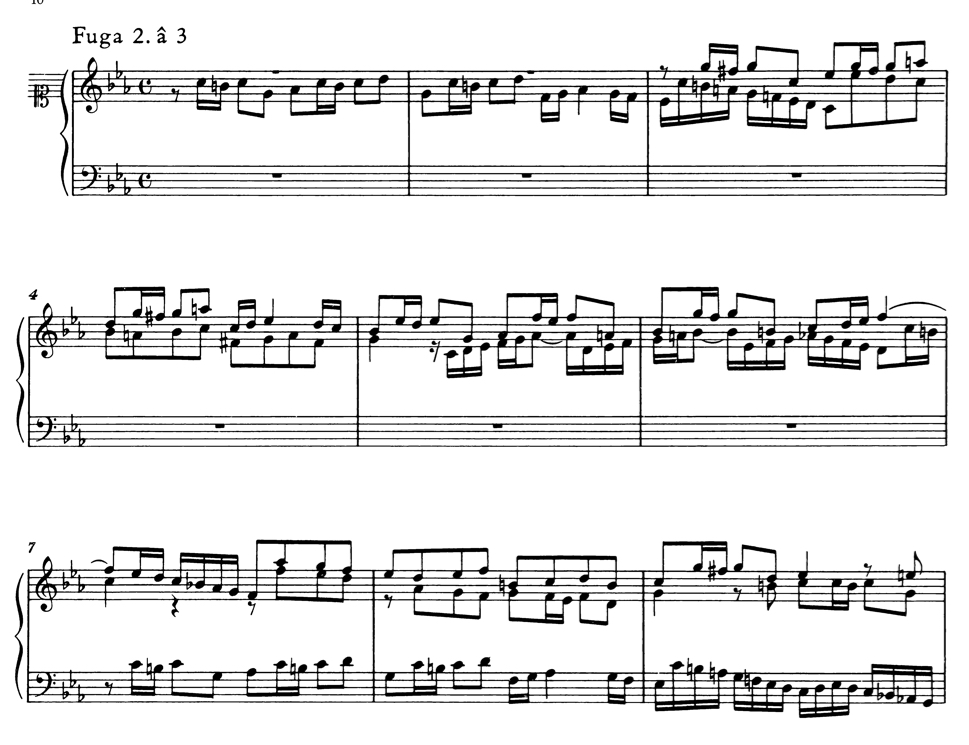
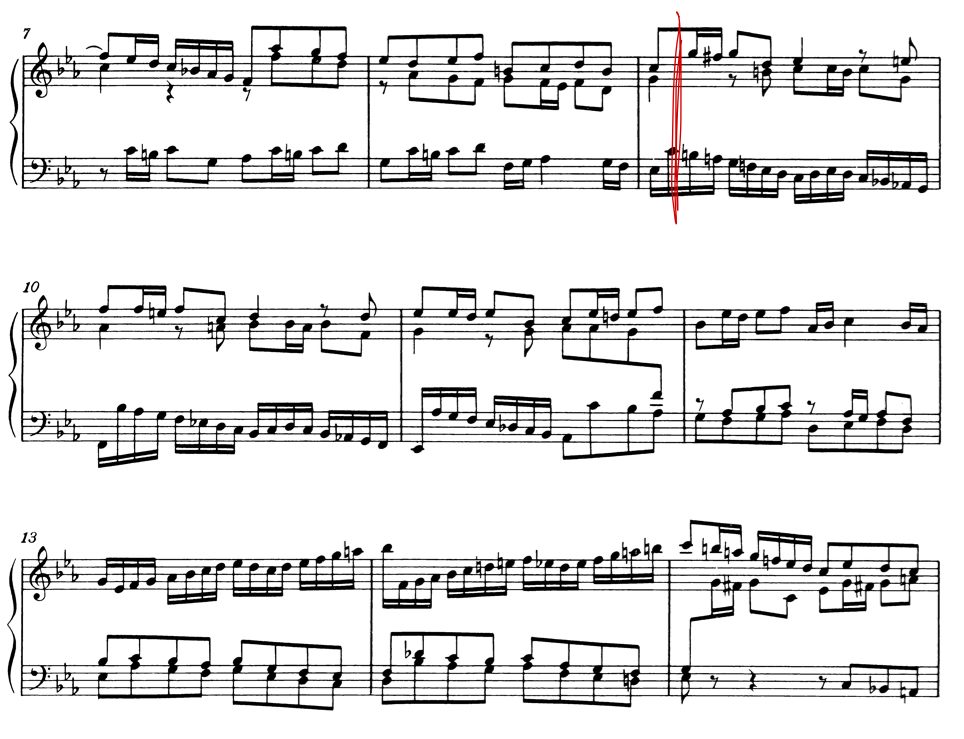
Identify this piece and the important elements:
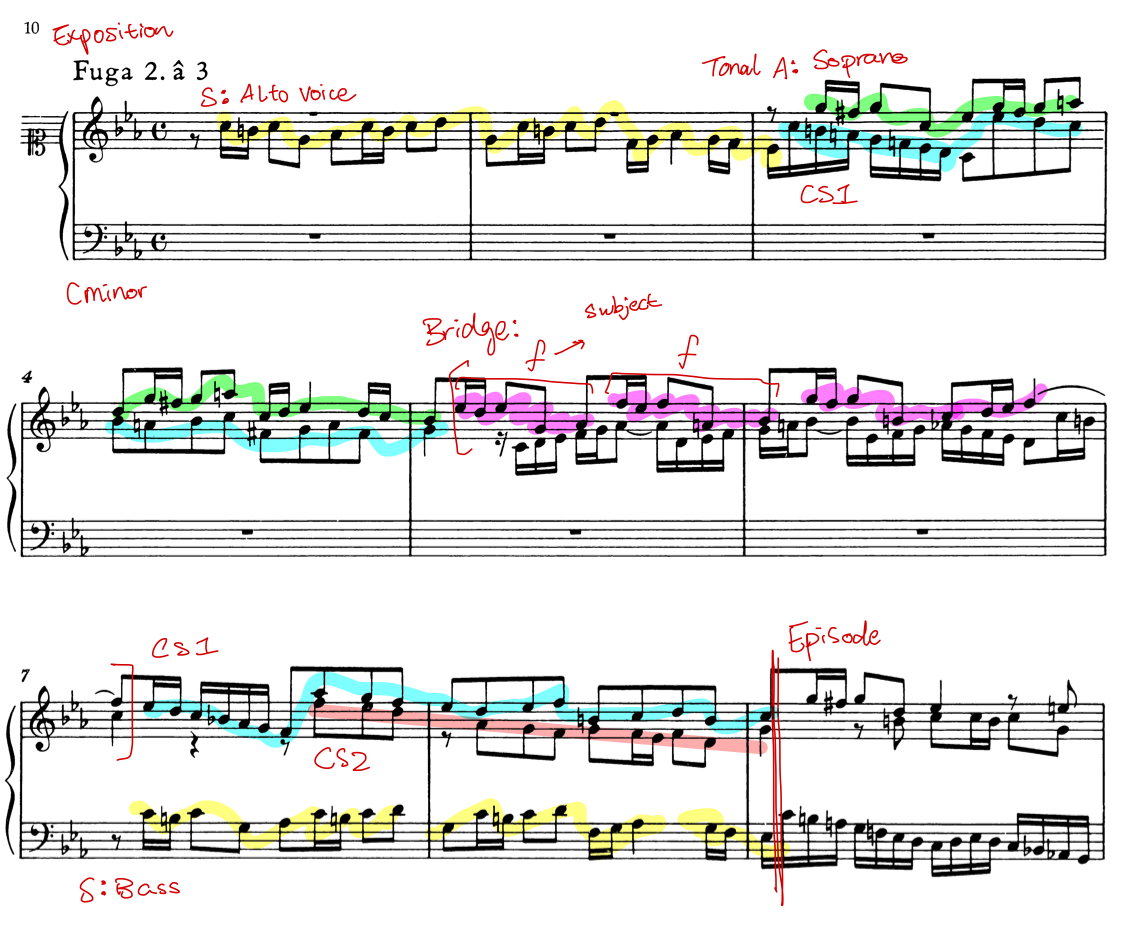
Fugue no. 2 in c minor WTC BWV 846
Fugue exposition
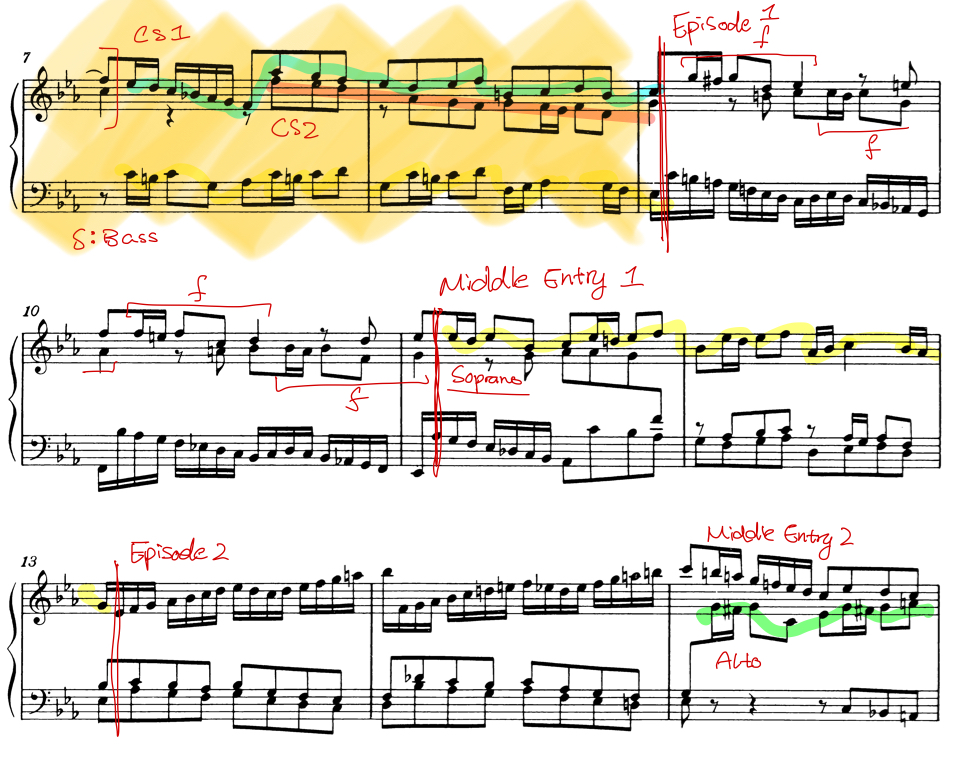
Identify this piece and the important elements:
Episode + Middle Entry
Total 3 episodes + 2 middle entries + 2 final entries (m.20) + coda (m.29)
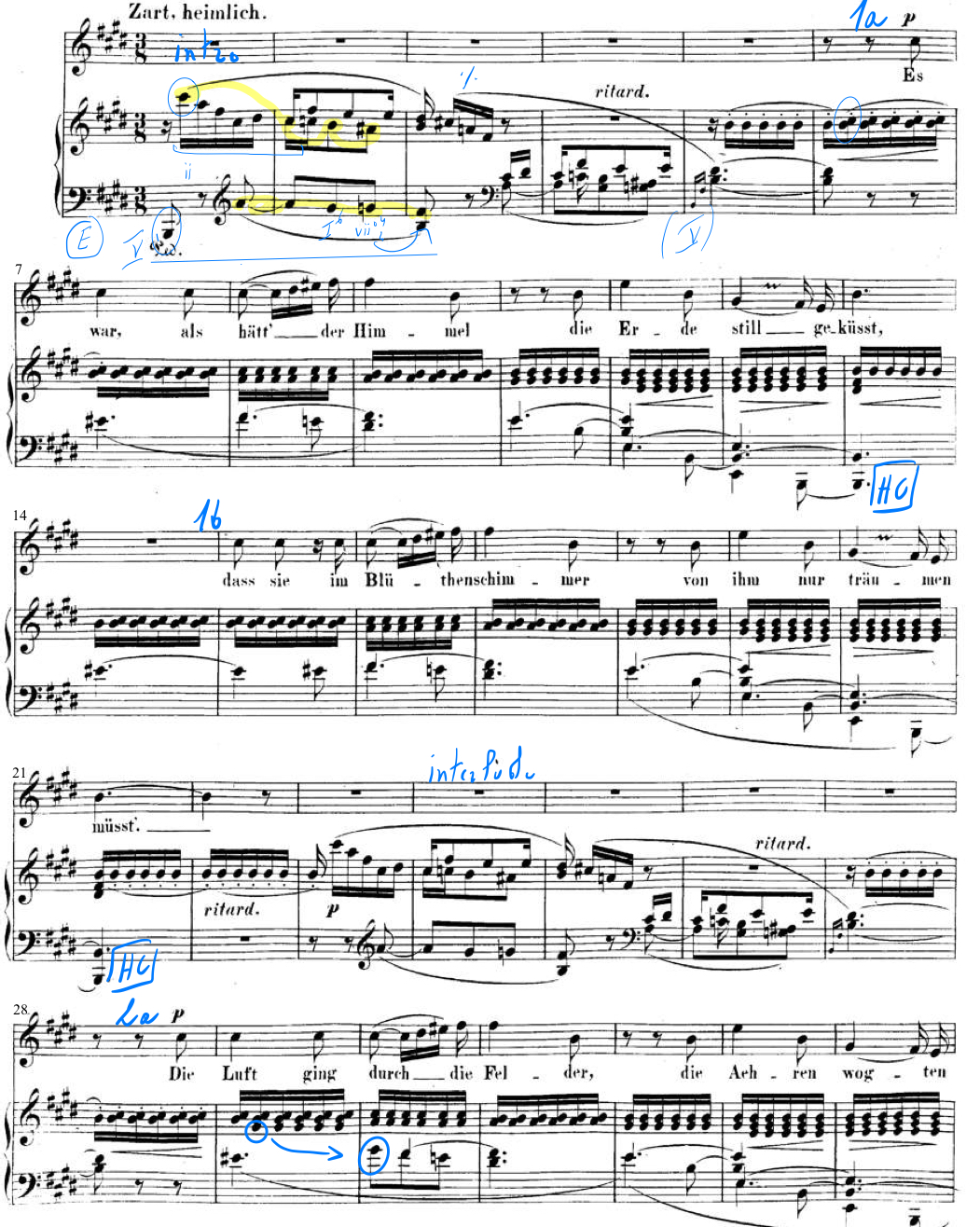
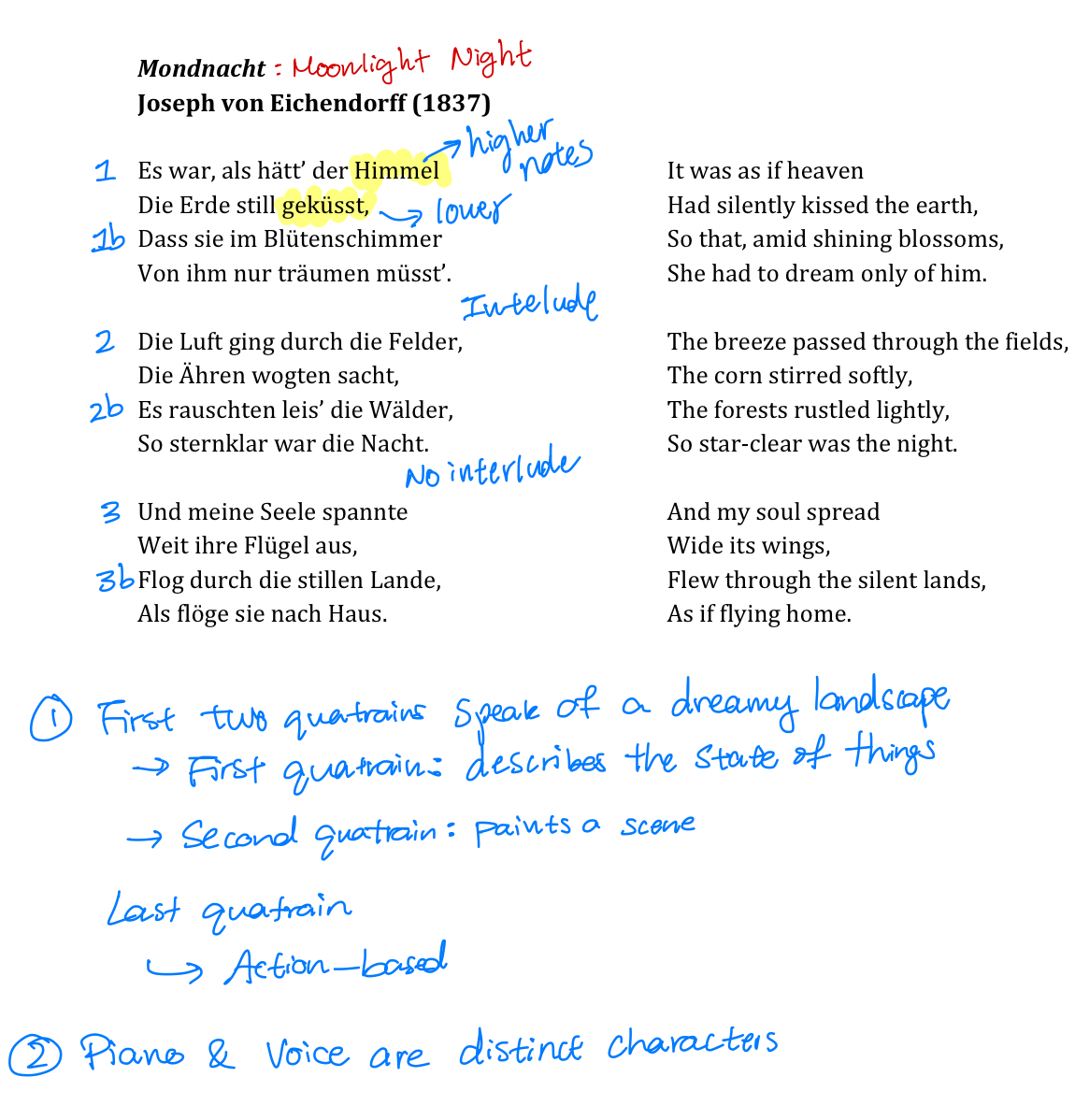
Identify this piece and the important elements:
Mondnacht by Schumann
Opening interval depicts large difference between heaven and earth
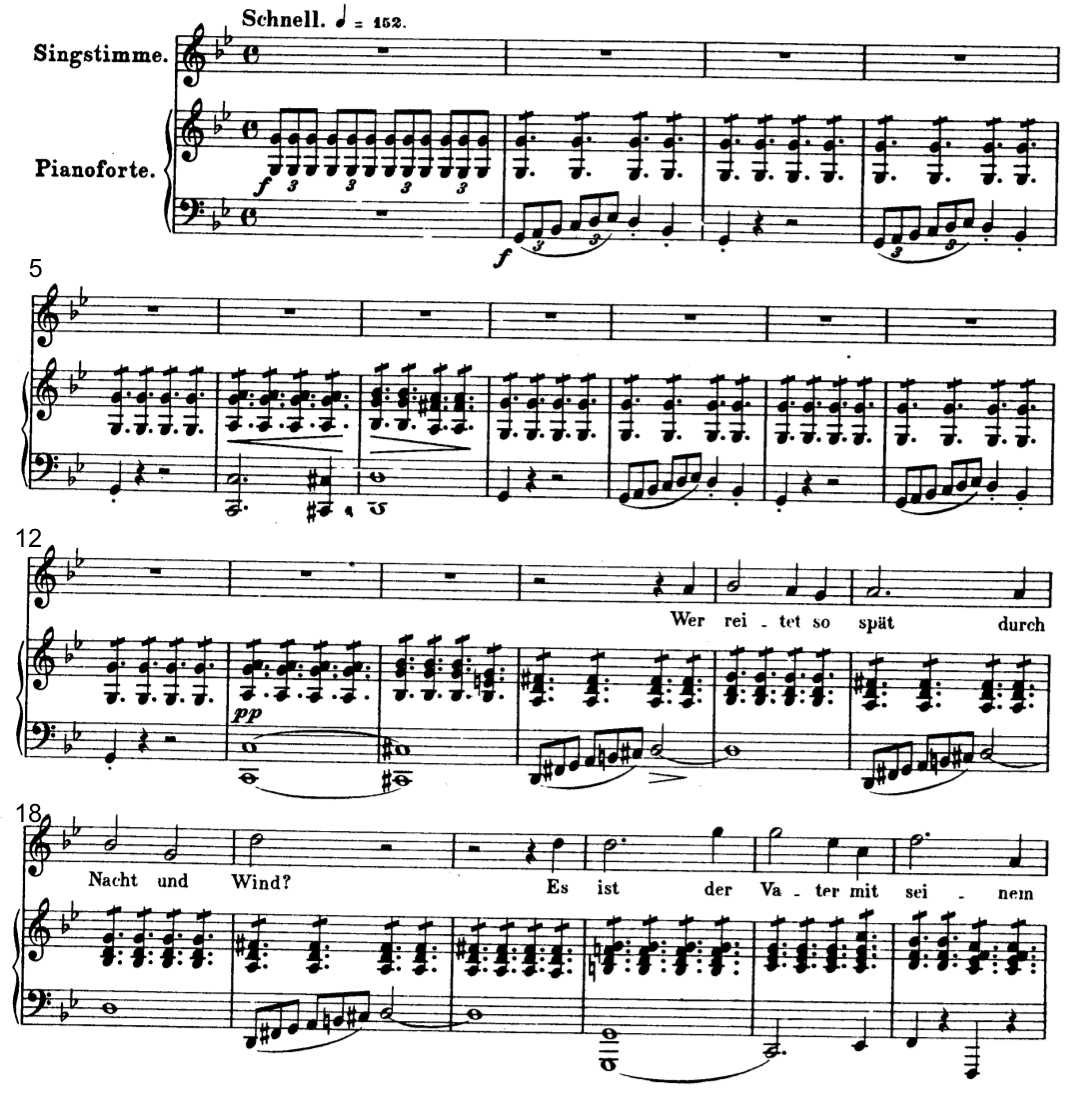
Identify this piece and the important elements:
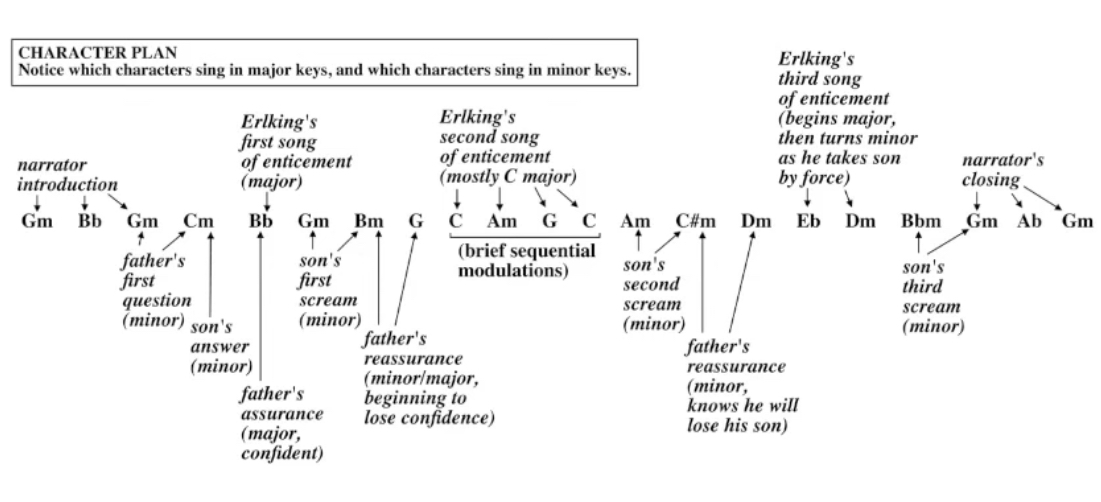
Erlkonig by Schubert
Ballad: Narrative Poem / Horror Ballad
4 characters: Narrator, elfking, father, child
Opens with the piano part depicting galloping horses
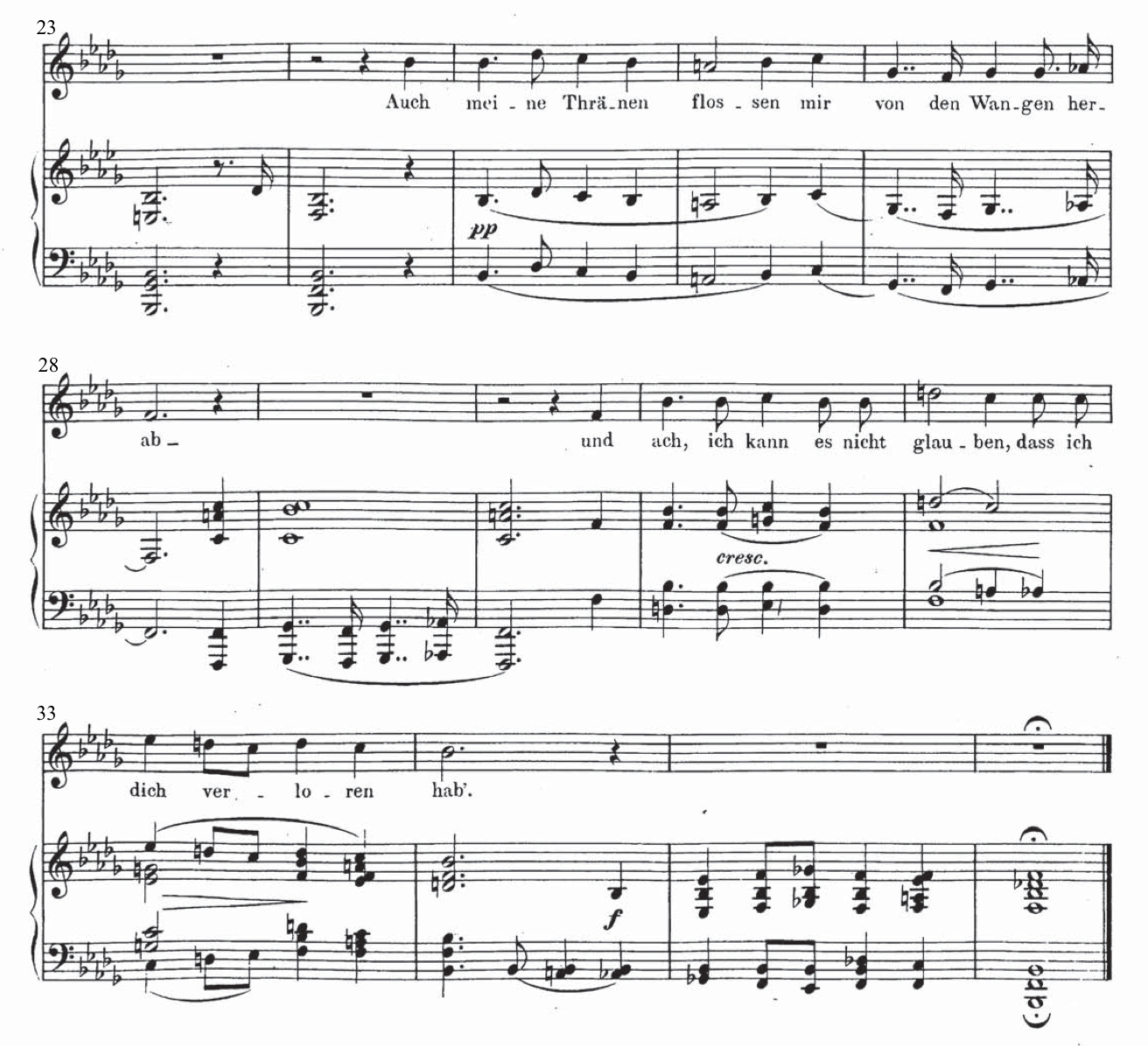
Identify this piece and the important elements:
Ihr Bild by Schubert
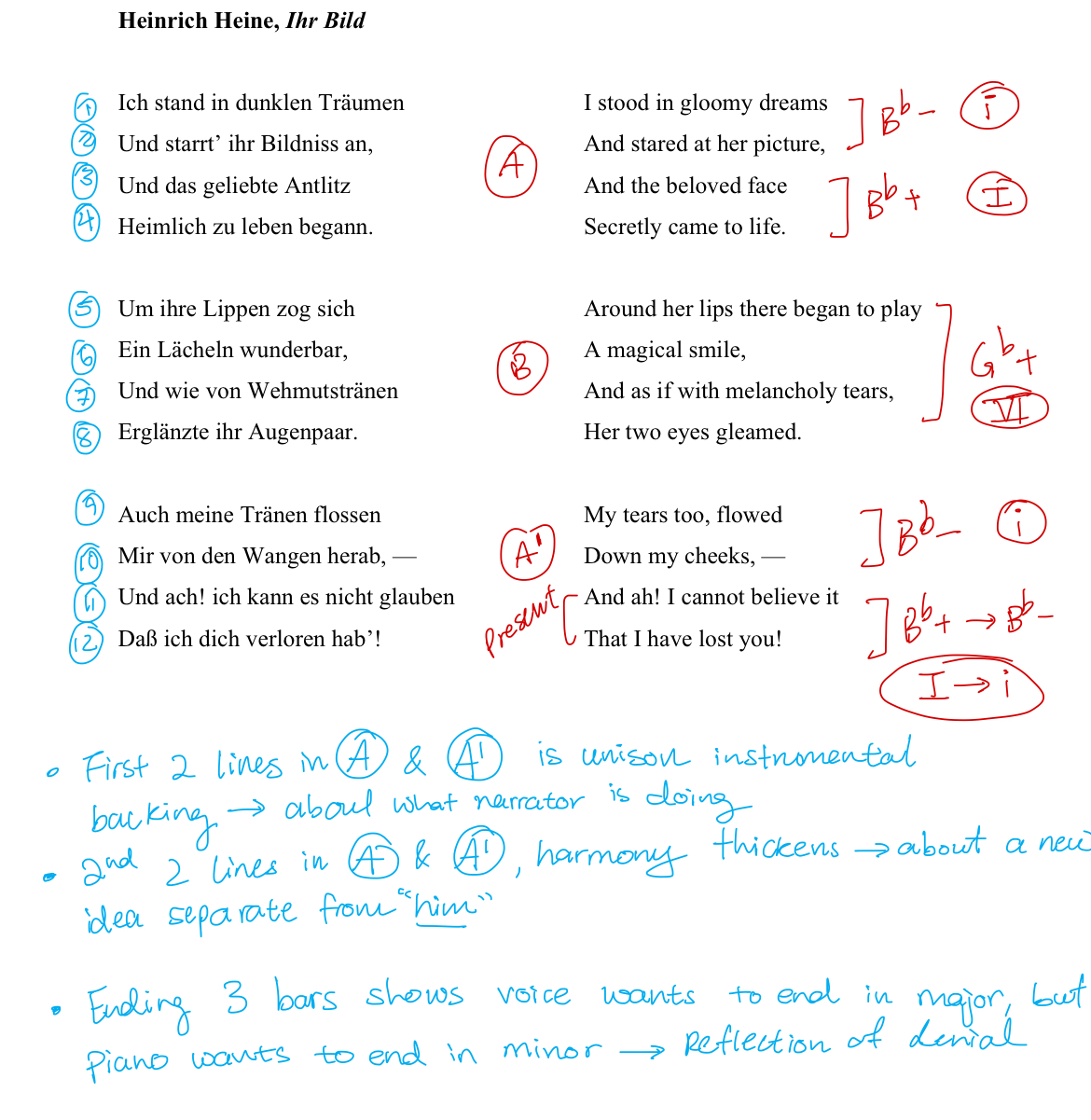
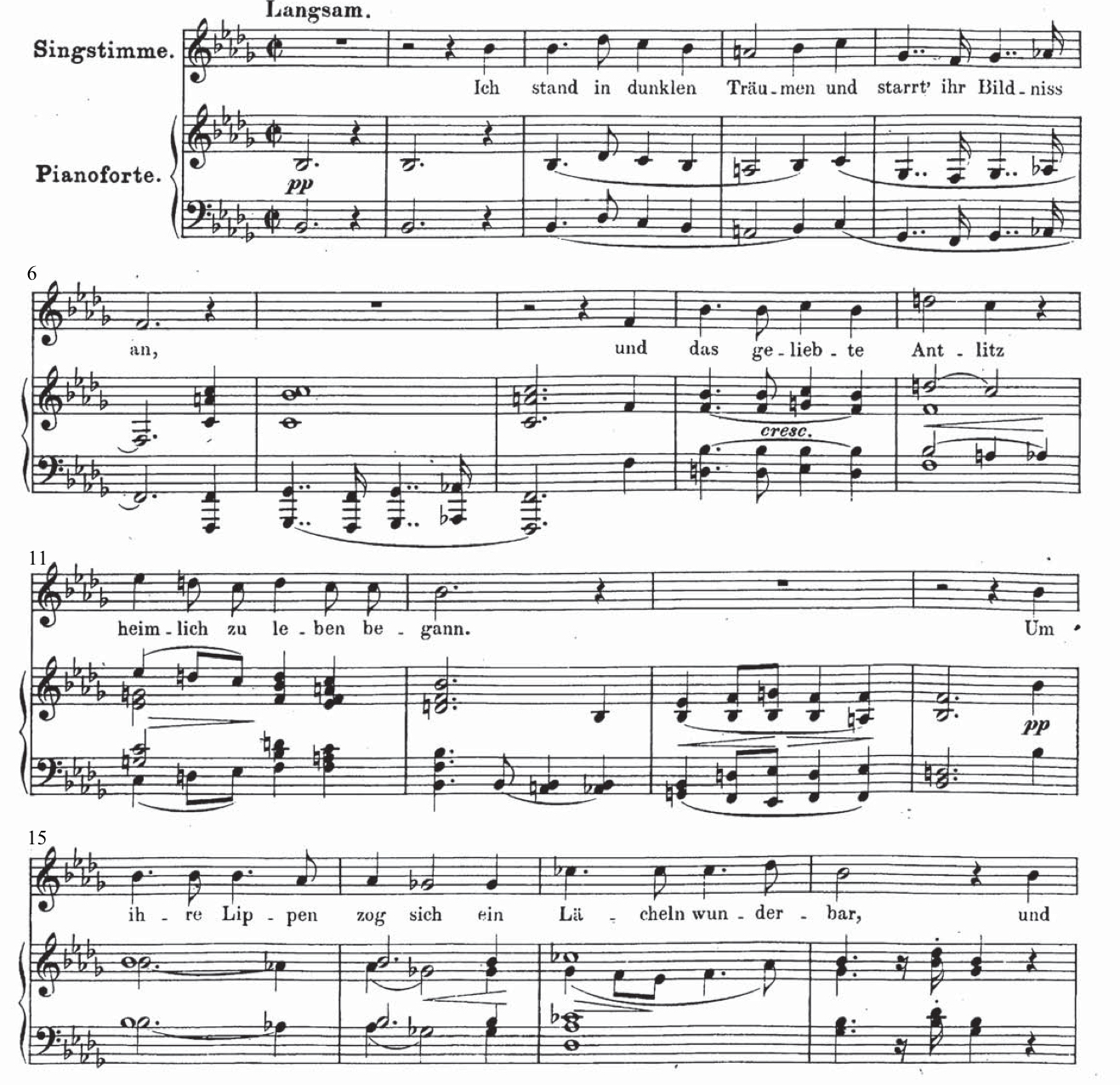
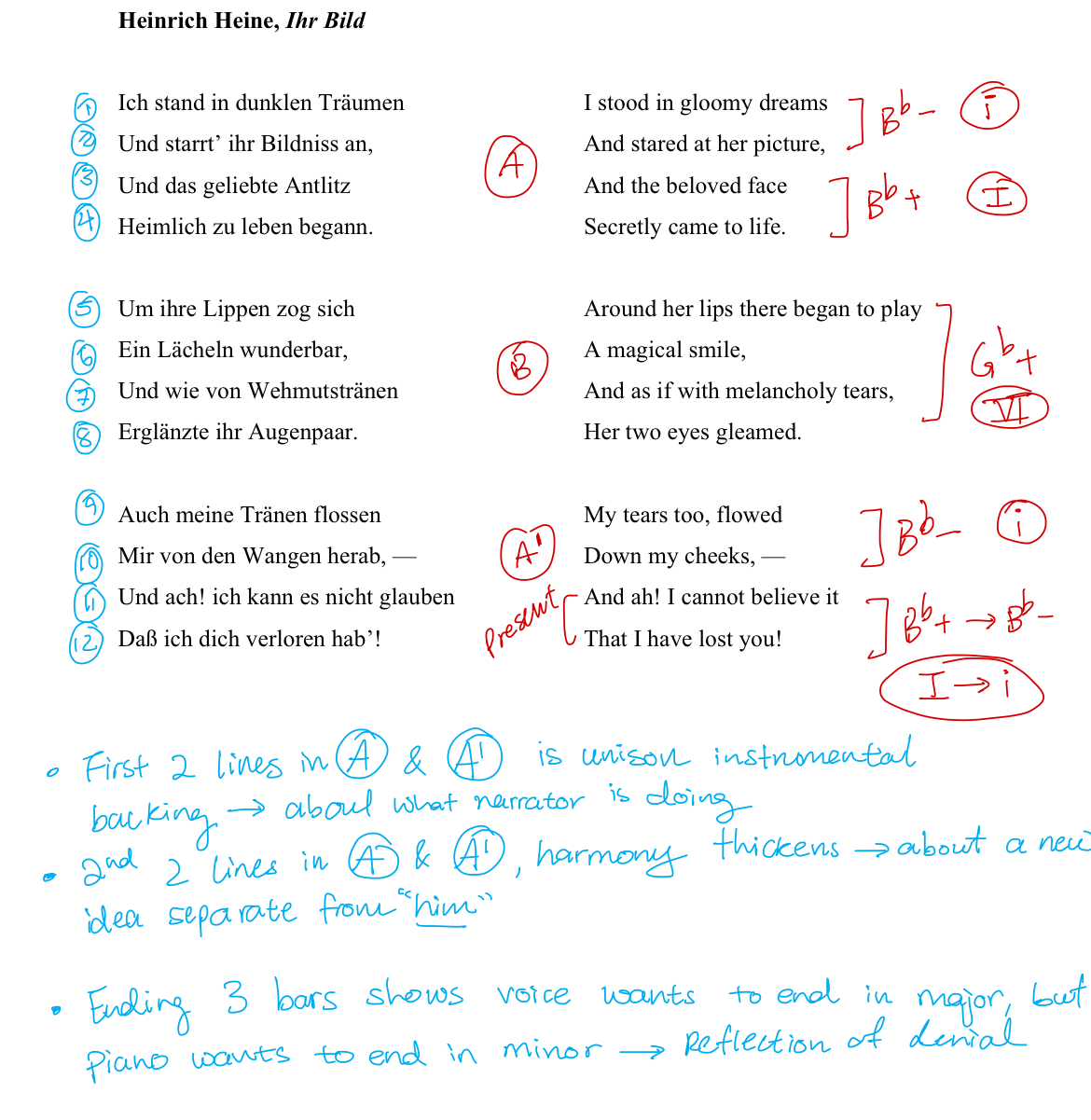
Identify this piece and the important elements:
Ihr Bild by Schubert
What is the plot of La Traviata?
La Traviata by Verdi
• 1853
Genre: Italian Opera
• La Traviata tells the tragic story of Violetta Valéry, a Parisian courtesan who falls deeply in love with a young nobleman, Alfredo Germont.
They live happily for a time, but Alfredo’s father persuades Violetta to leave him for the sake of his family’s honor.
Heartbroken and ill with tuberculosis, Violetta dies in Alfredo’s arms just after they are reunited.
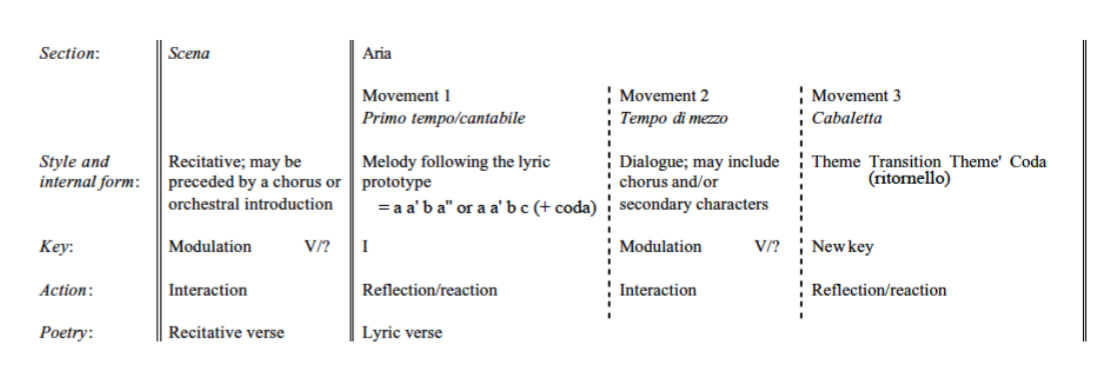
What is the standard Italian opera scene?
Introduzione: Orchestra Intro
Scena: Action/dialogue - open to modulate
Cantabile: Slow aria - ends w PAC in home key
Tempo di mezzo: Action/dialogue - open to modulate
Cabaletta: Fast aria - ends w PAC in home key
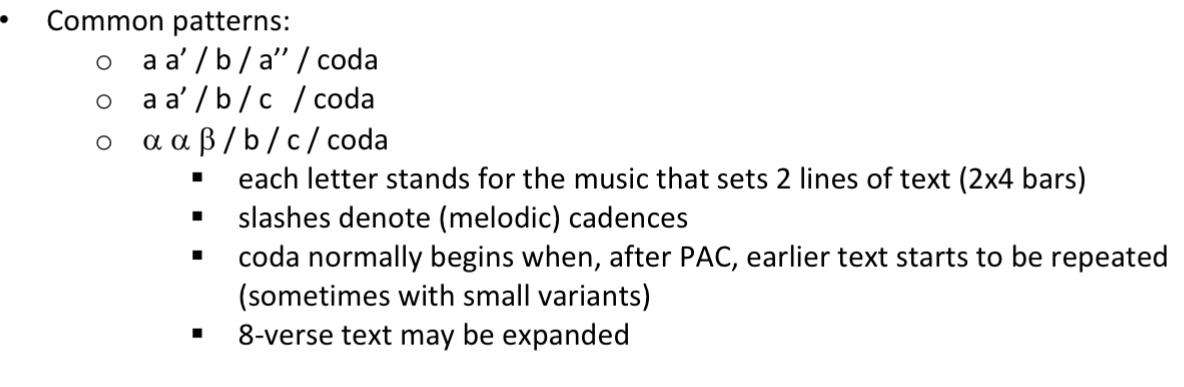
What is lyric form?
Standard way of setting 8-verse poetic text
Chromatic mediant
The parallel major or minor of the regular, diatonic mediant that can be sharped or flattened.
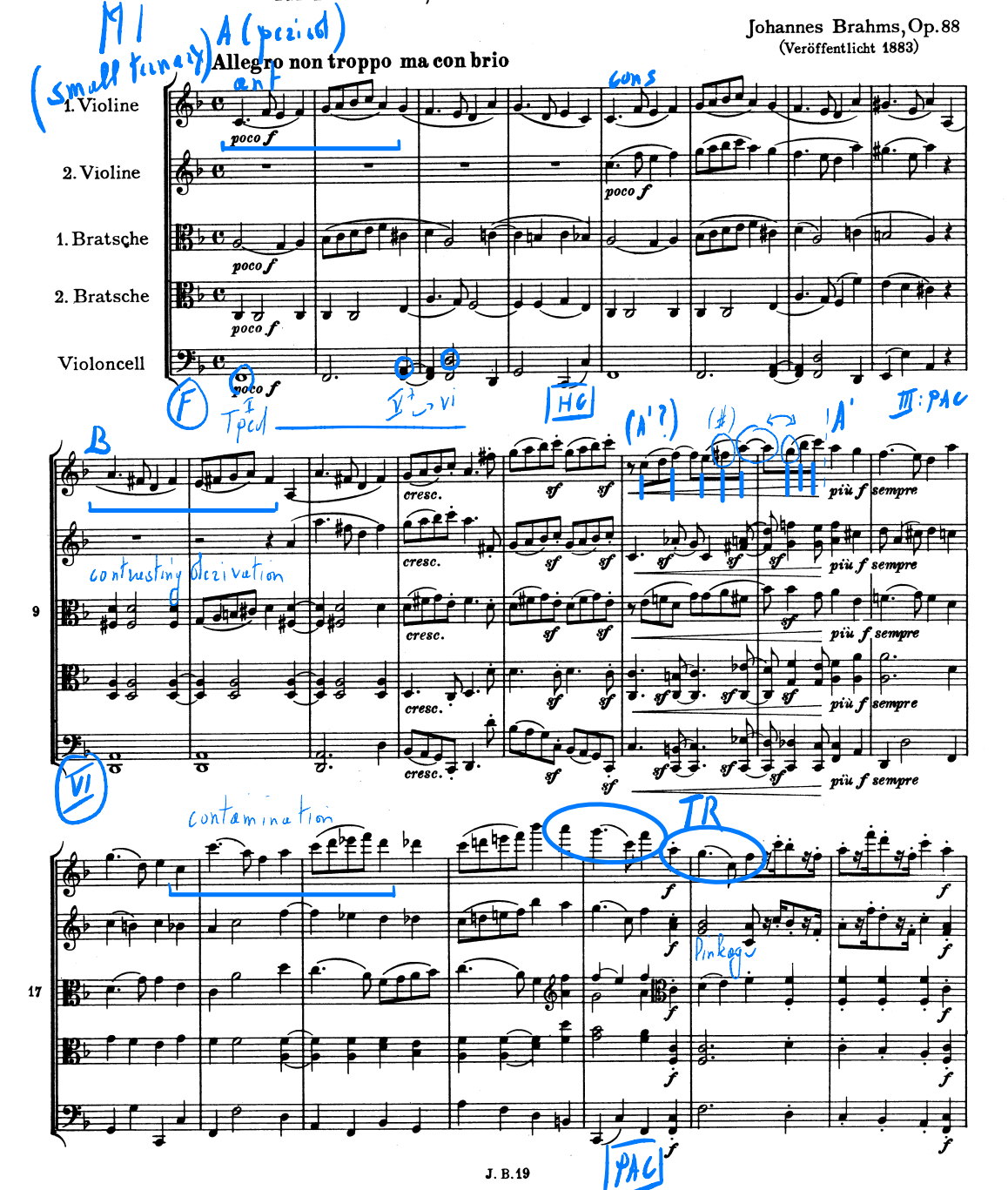
In Brahms: Begins in F Major, goes to D major (VI) then A major (III)
Contrasting derivation
Use of a motive or idea to build a section that contrasts with the section that motive or idea originates in
Brahm: Bars 9-10 taken from basic idea
Motivic Contamination
the infiltration of a section by a motive from an earlier section. Most typically, a recapitulatory section that incorporates motivic material from an earlier contrasting section.
In the Brahms, an example is bars 18–19 in the A' section, which replace the basic idea from the consequent with the variant from the beginning of the B section.
Linkage
the technique whereby an immediate repetition of the same motive is used to first end one section and then start a new one.
Brahms: end of MT in bar 21, beginning of TR in bar 22, using the exact same motive (although harmonized differently). The use of linkage can result in an obscured formal boundary.
Obscured formal boundary
the general tendency to hide boundaries between sections, so that it is unclear where exactly a new section starts.
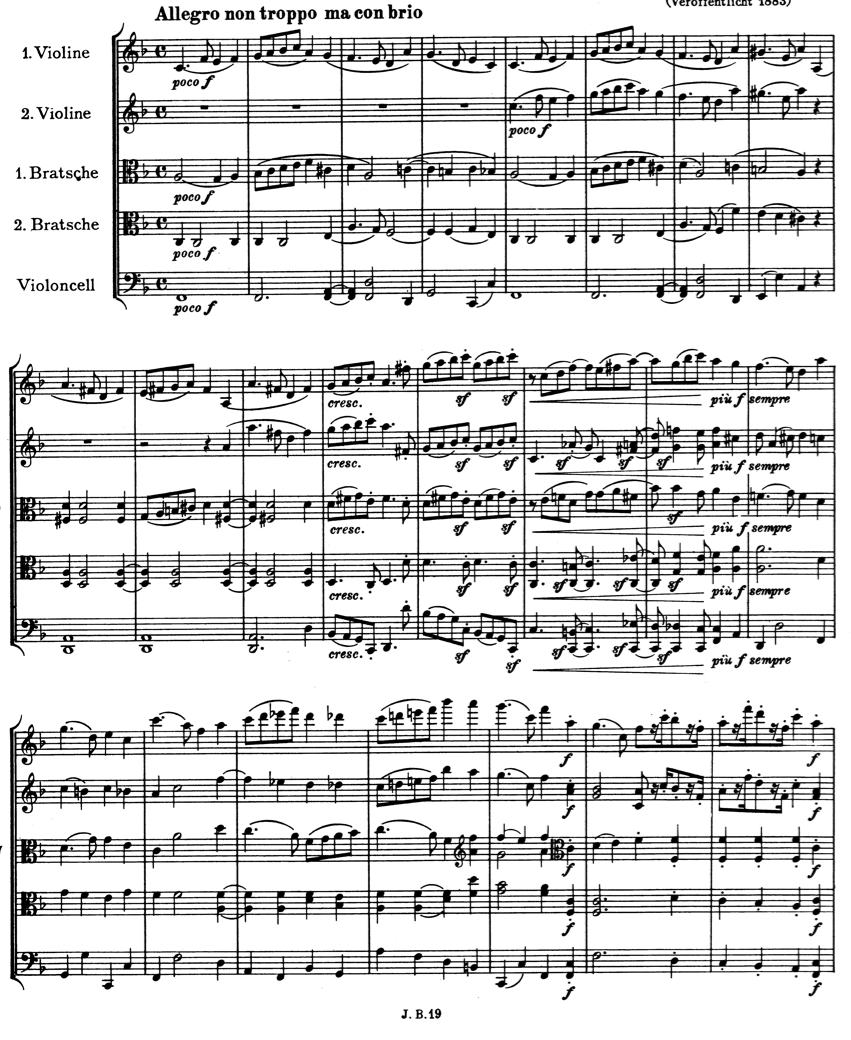
Identify this piece and the important elements:
Brahms: the first movement of the String Quintet in F major, op. 88
Small ternary: A (ends w A major PAC), B (D major), A (F major)
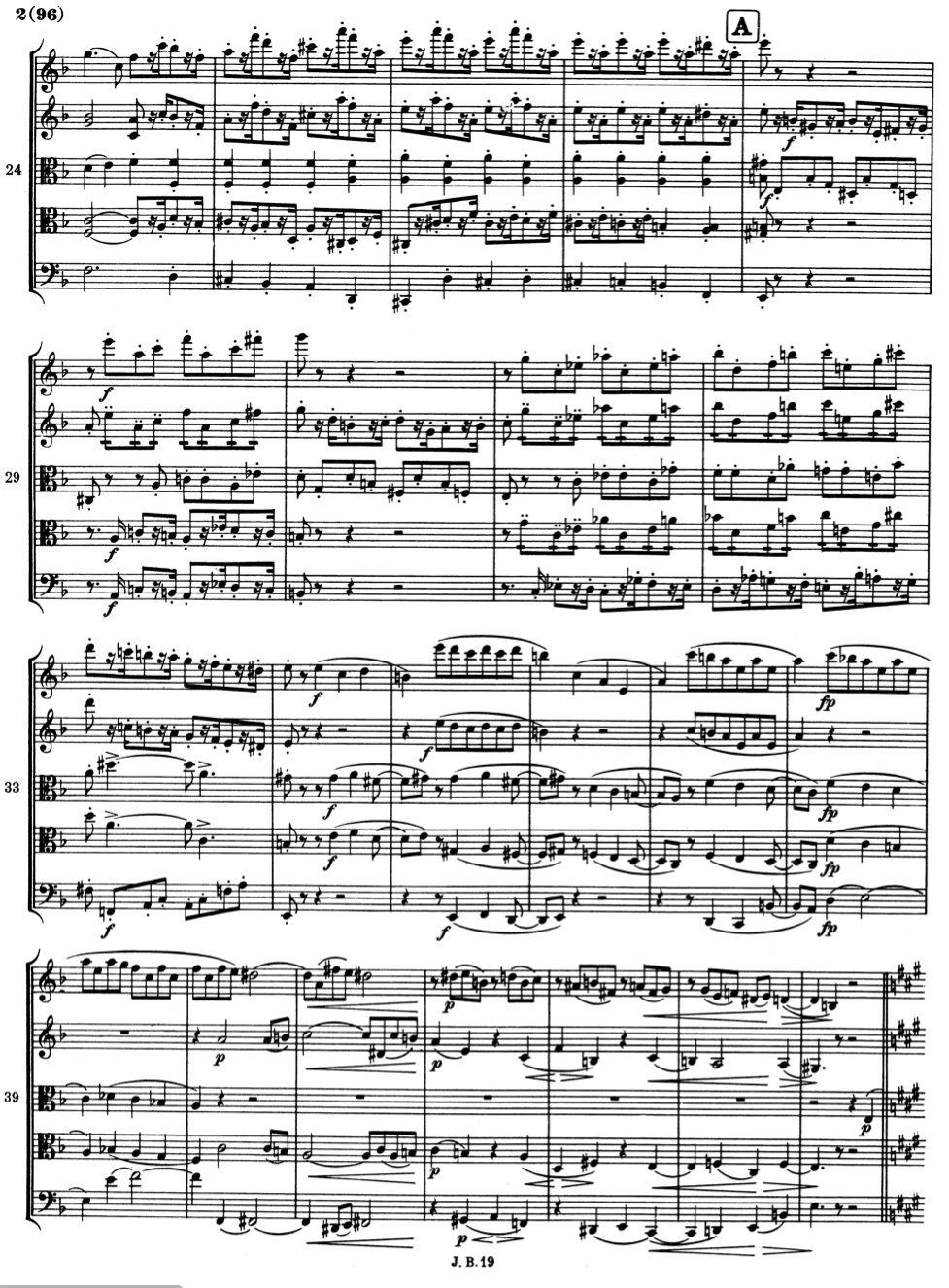
Identify this piece and the important elements:
Brahms: the first movement of the String Quintet in F major, op. 88
Transition → SK theme uses developing variation
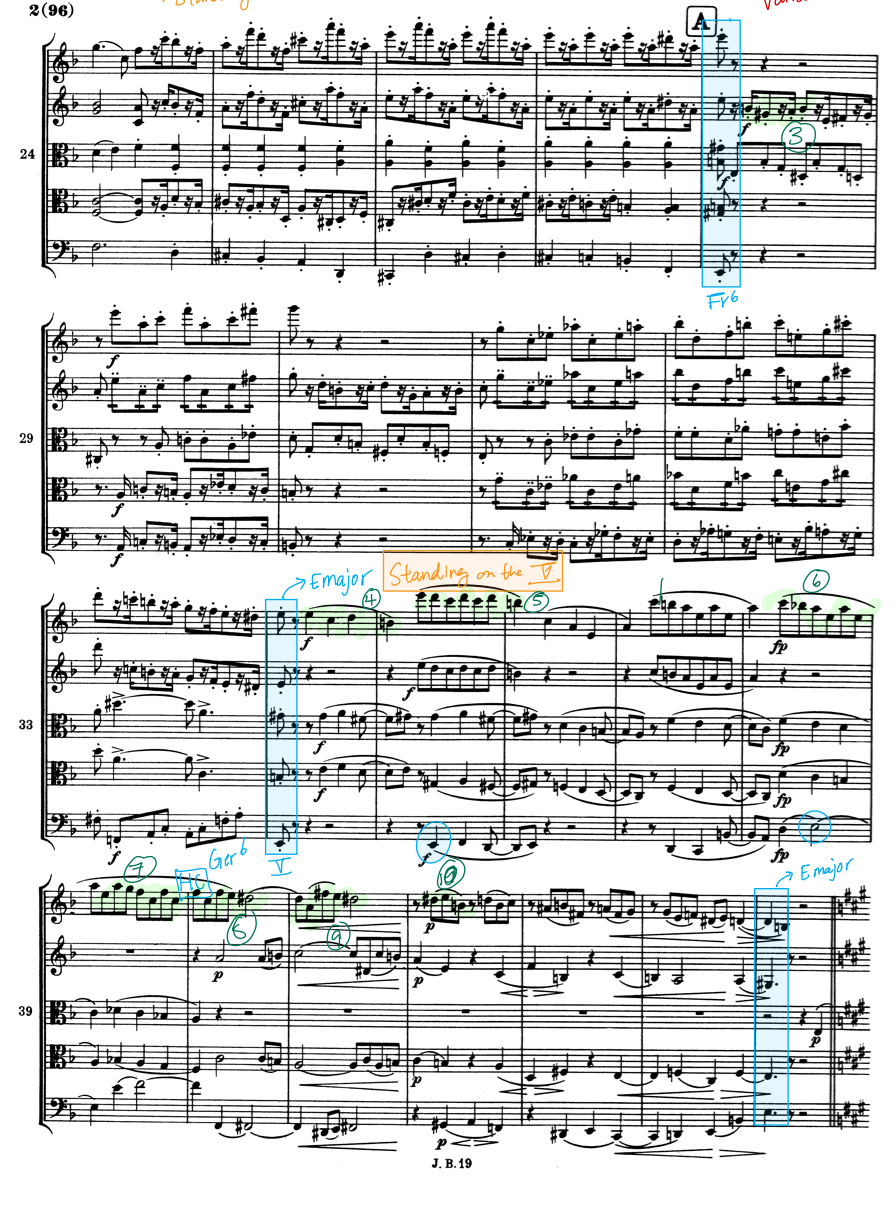
Define developing variation
technique in which the variations are produced through the development of existing material
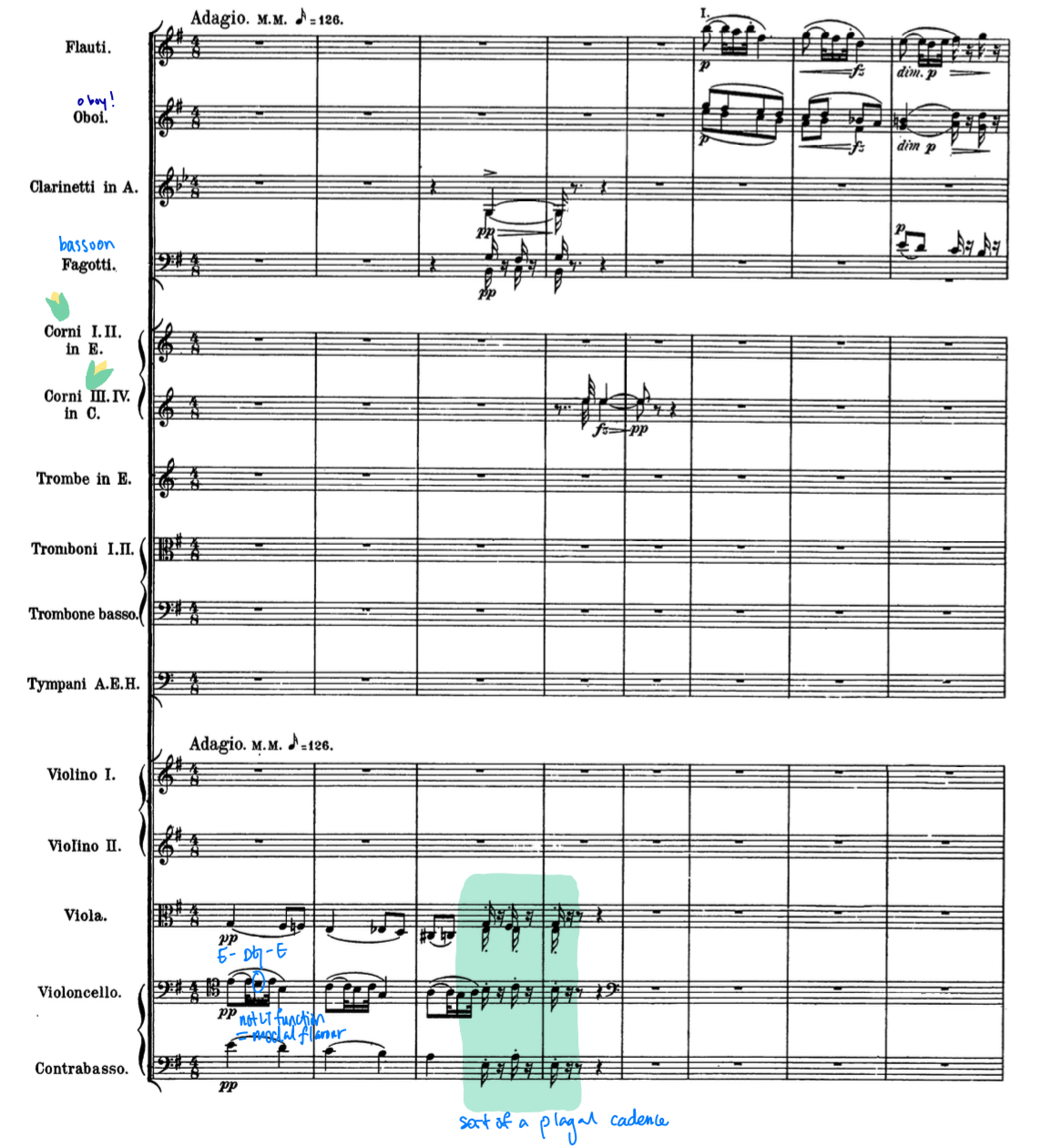
Dvorak, Symphony no. 9: Instruments and Transposition