Biology Lab Midterm
 Call Kai
 Learn
Learn Practice Test
 Spaced Repetition
 Match
Match Flashcards
 Knowt Play
1/55

There's no tags or description
Looks like no tags are added yet.
Name | Mastery | Learn | Test | Matching | Spaced | Call with Kai |
|---|
No analytics yet
Send a link to your students to track their progress
56 Terms
Hypotheses
Tentative explanations to account for observations
Independent variable (IV)
The condition, factor, or input that an experimenter manipulates to observe its effect on an outcome
Dependent variable
The outcome being measured in an experiment
Control
Any factor that is intentionally held constant throughout an experiment
Replication
The process of repeating an experiment to verify its findings
Null hypothesis (H0 )
A statement that assumes there is no relationship, effect, or difference between variables in an experiment
Alternative Hypothesis
A statement that suggests there is a difference, relationship, or effect in an experiment
Qualitative data
Non-numerical information that describes qualities, characteristics, and meanings
Quantitative data
Any information that can be counted, measured, and expressed in numerical values
Cell theory
all living things are composed of cells
cells are the basic unit of life
all cells arise from pre-existing cells
Resolving power
The capacity of an optical instrument (such as a microscope or telescope) to distinguish two closely spaced points or objects as separate entities
The human eye has the ability to distinguish between objects that are about…
100 micrometers (0.1 mm) apart
Resolution
Sharpness of an image
Ocular lens
In the eyepiece, magnification of 10x
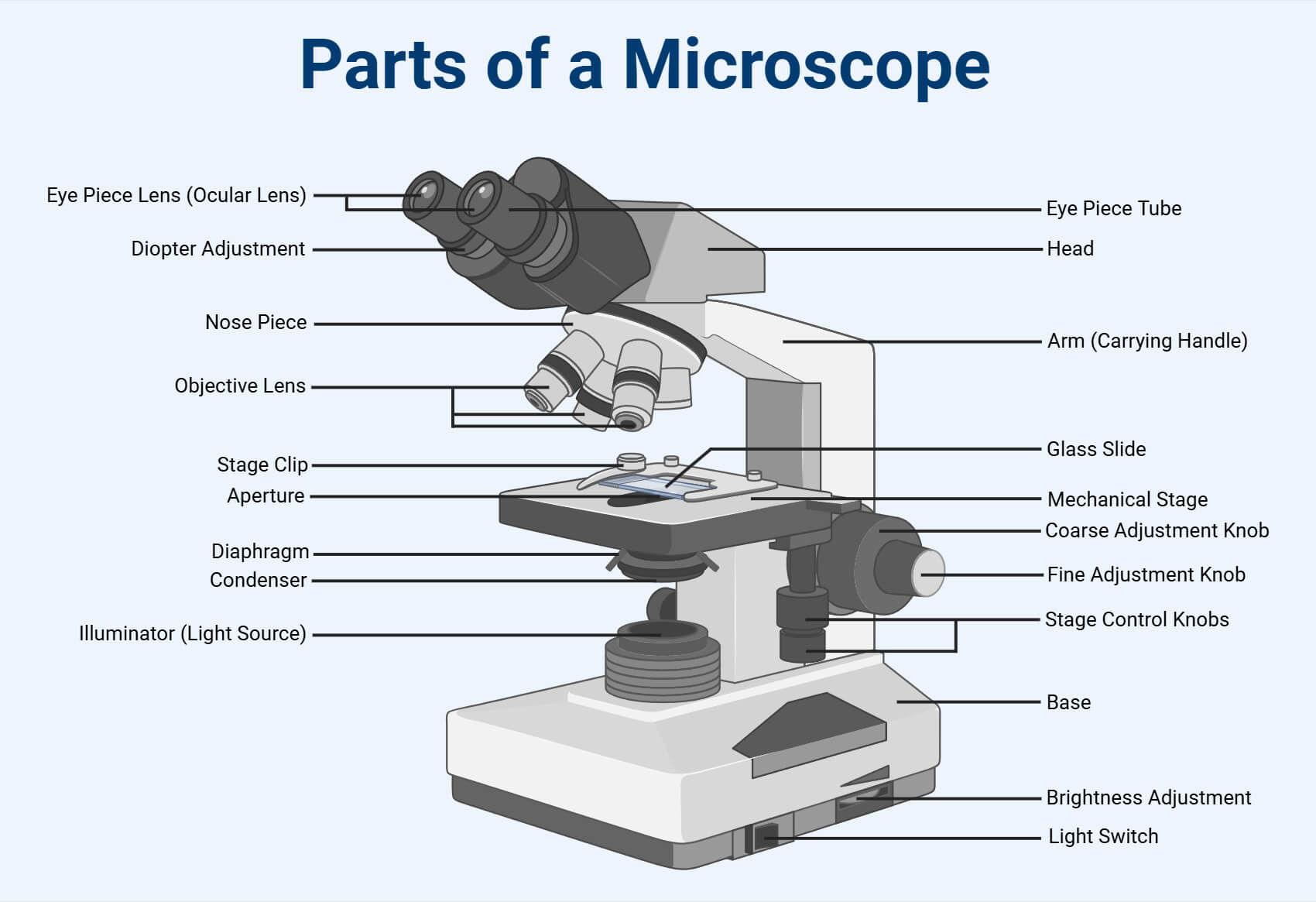
Revolving nosepiece
Holds the objective lens
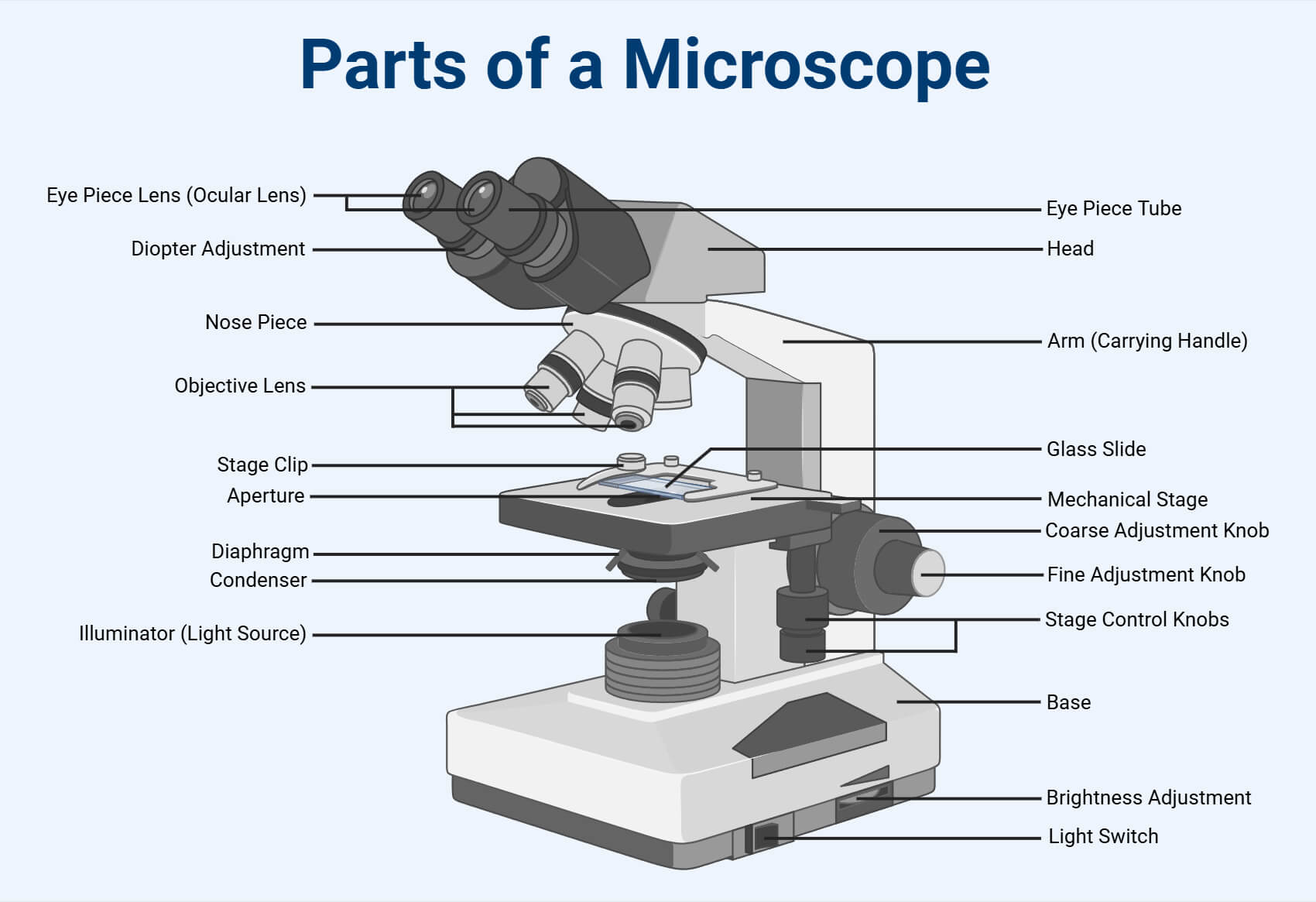
Objective lens
Screwed into the nosepiece, 4x(scanning), 10x, 40x
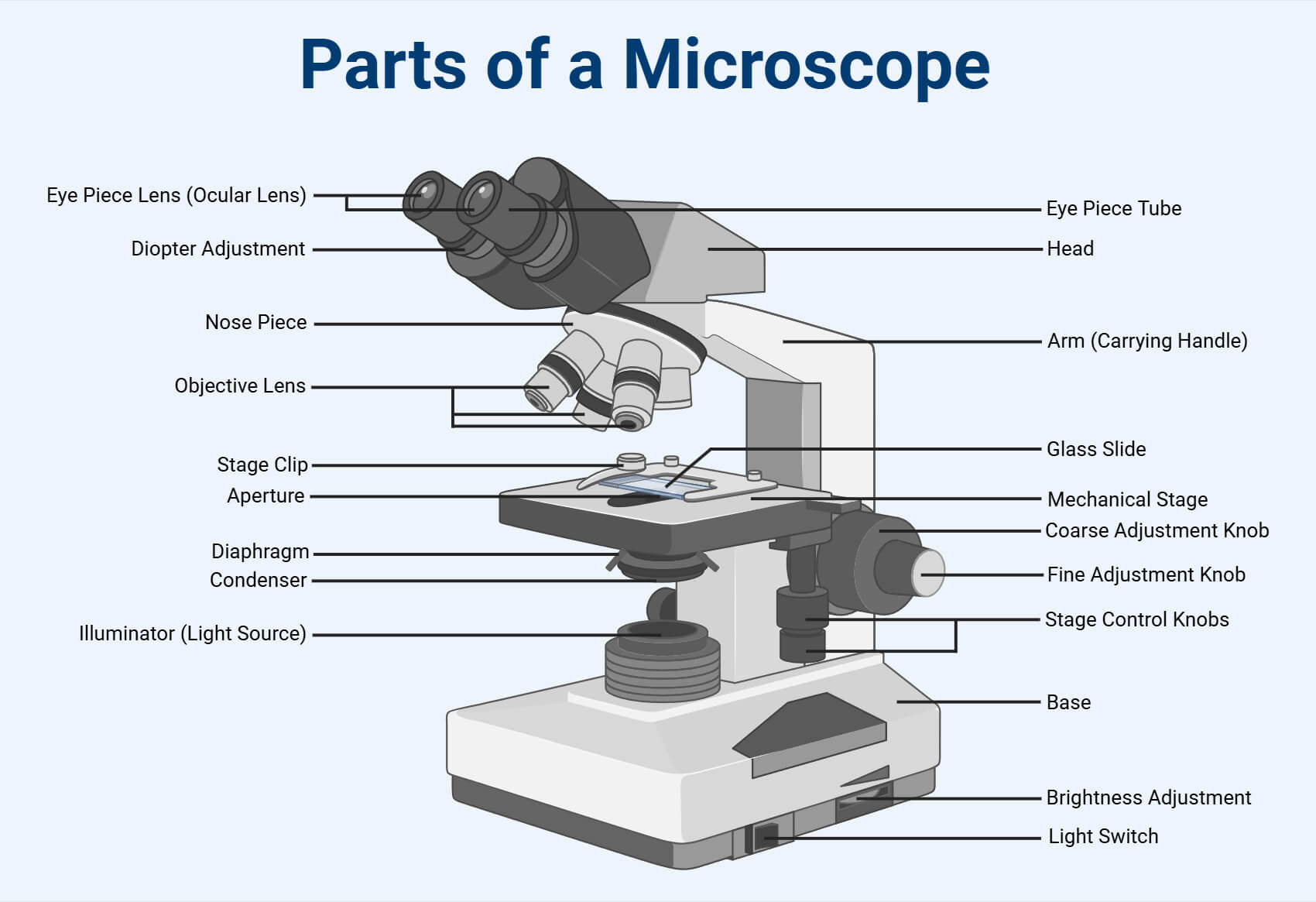
Stage
Platform onto which slides to be viewed are placed
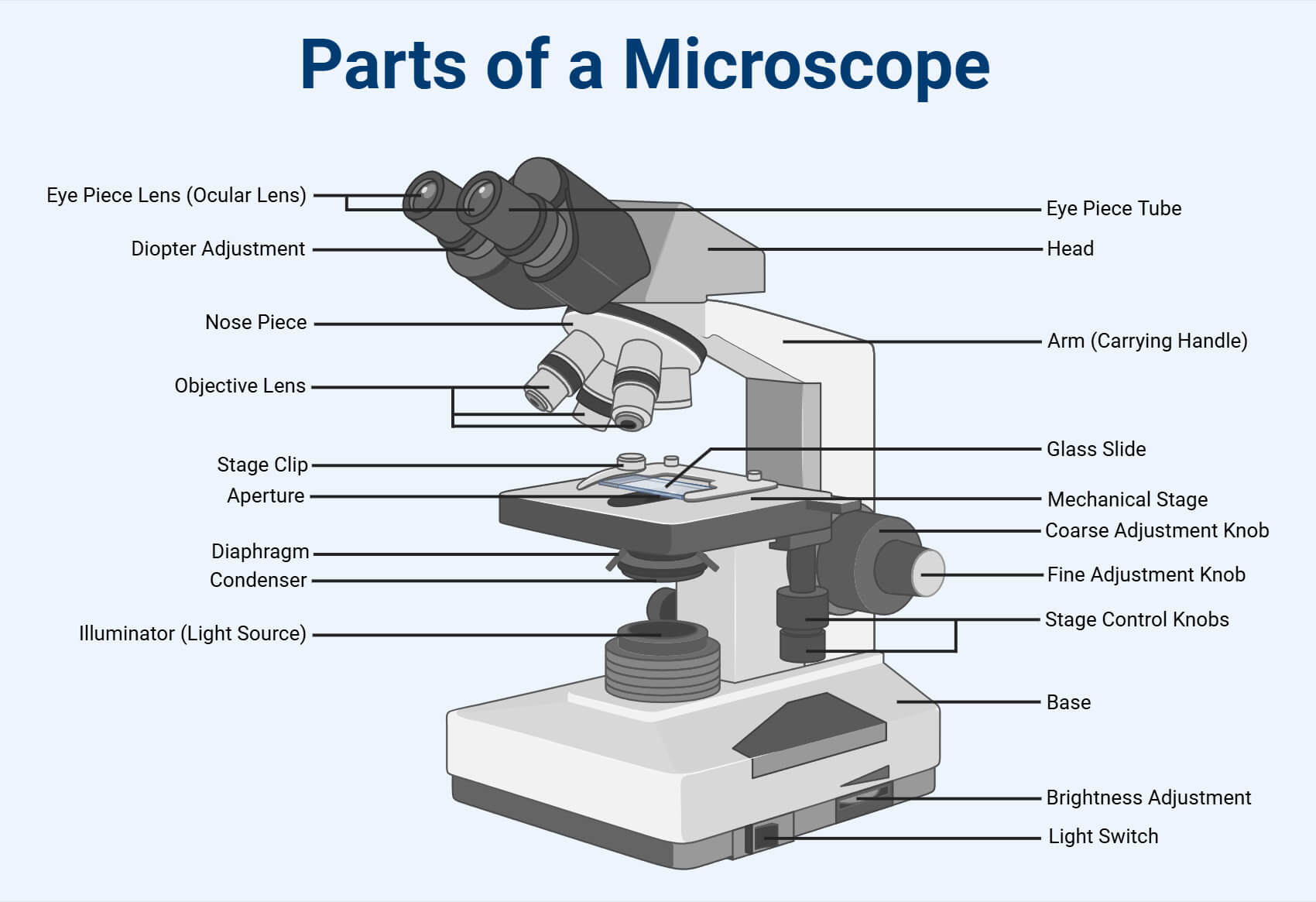
Condenser knob
Adjusts the amount of light that goes through the condenser lens
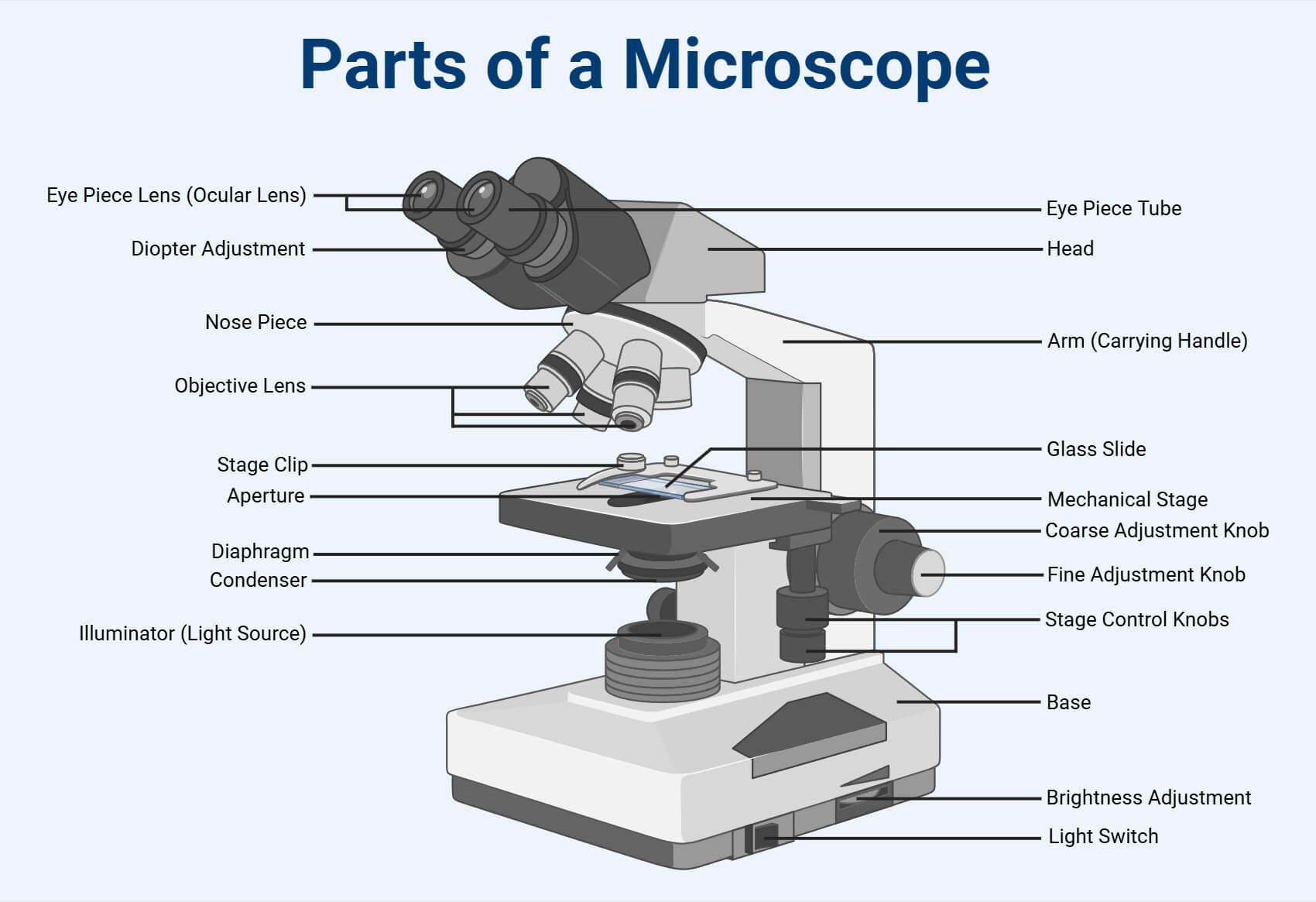
Condenser lens
Concentrates light before it reaches the specimen
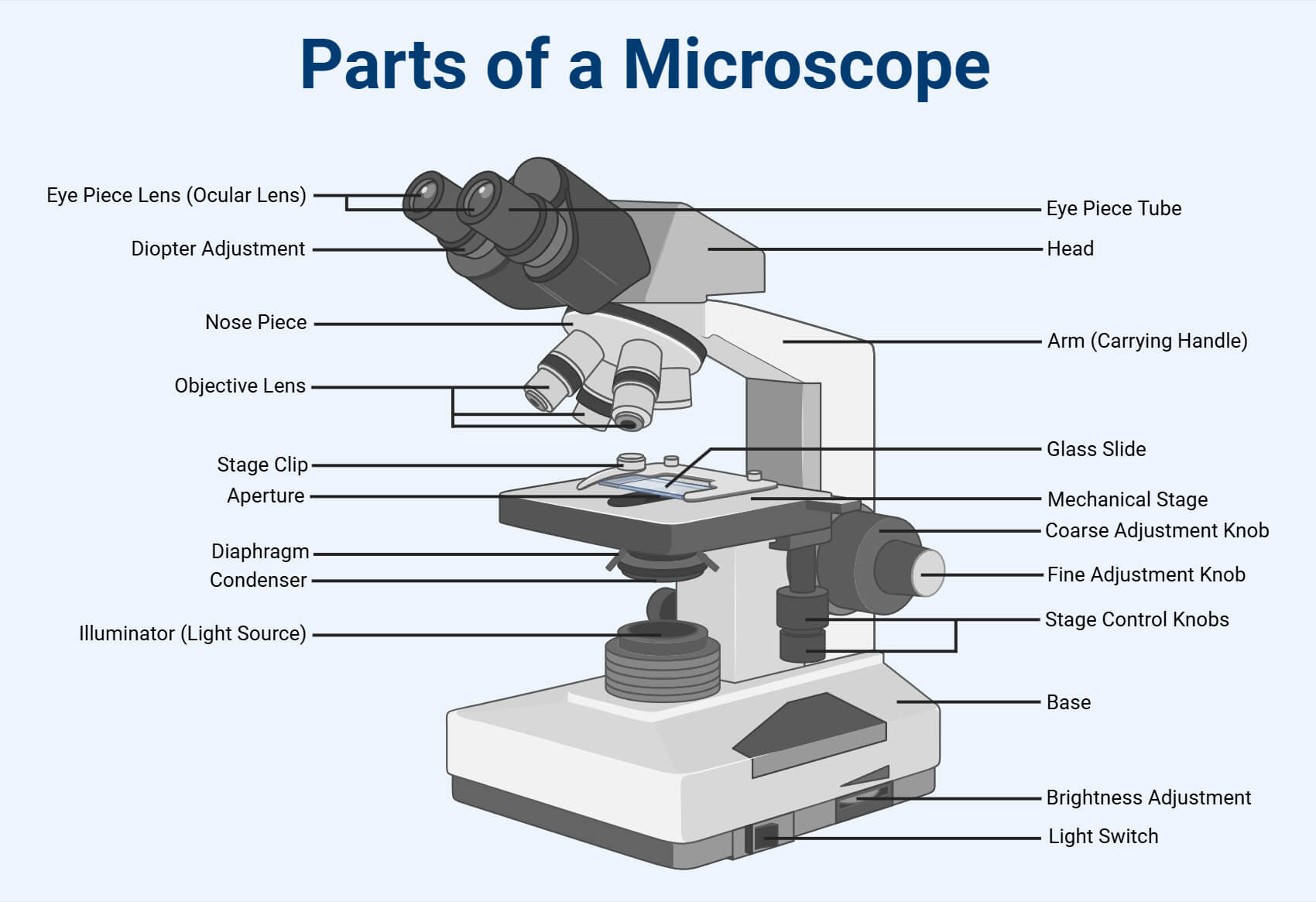
Iris diaphagram
Regulates the amount of light before it reaches a specimen
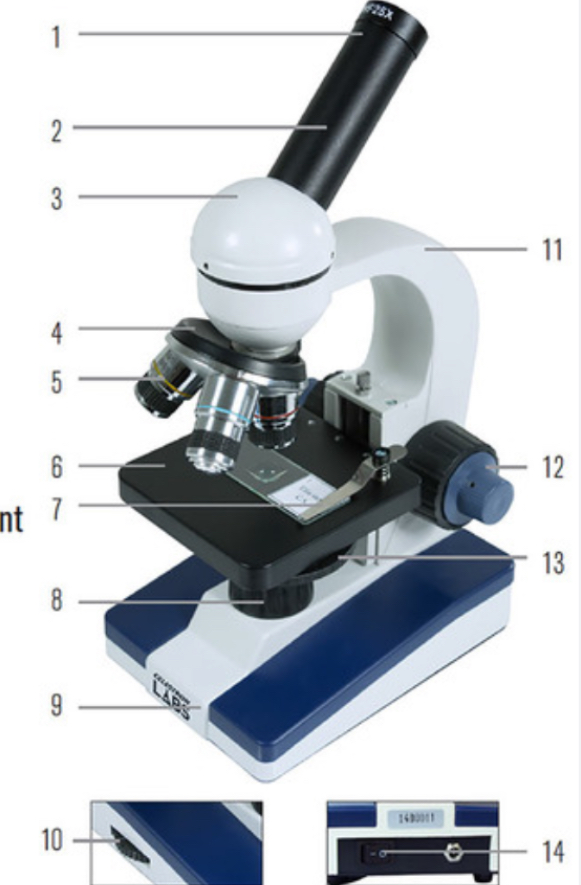
Base
Bottom of the microscope
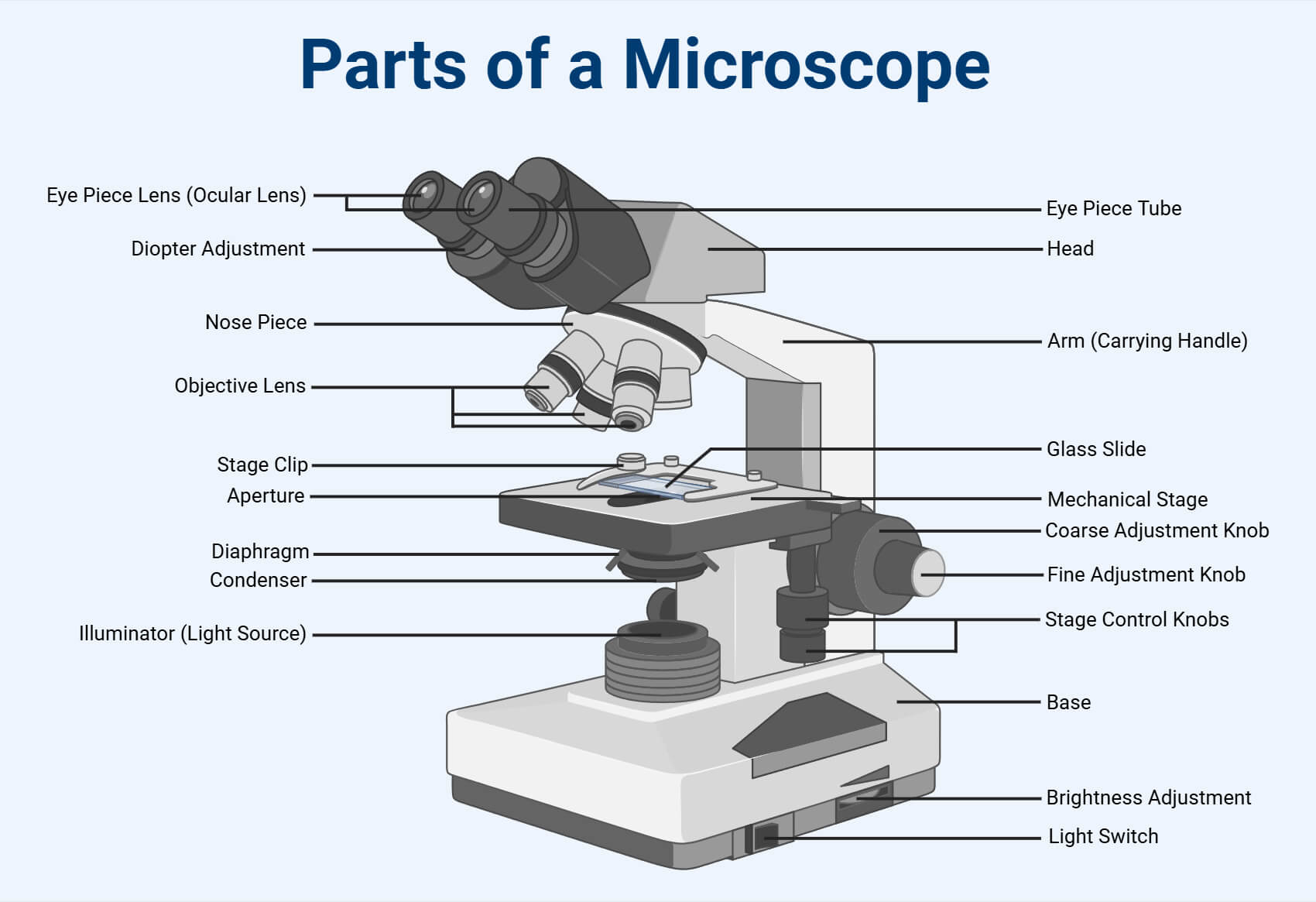
Arm
Back of the microscope, should be carried by this part
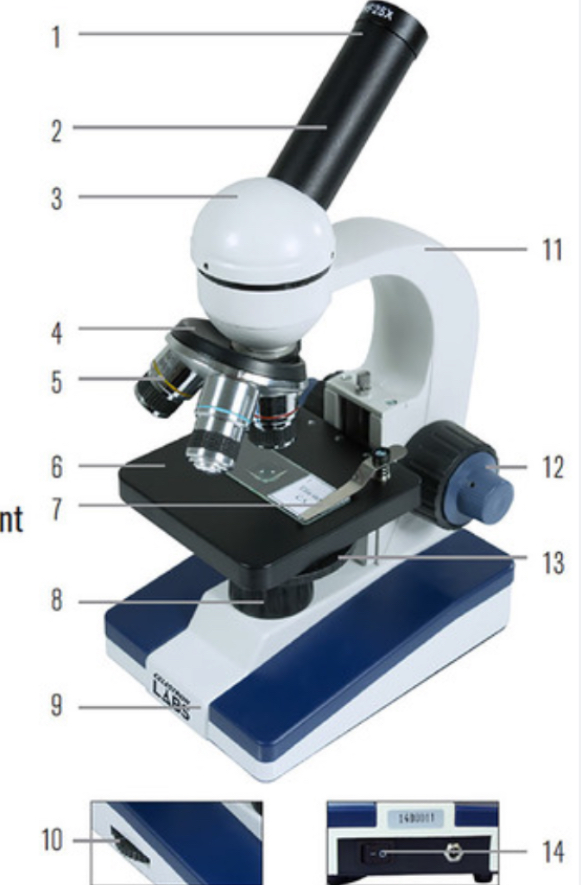
Main switch
Turns the microscope on and off
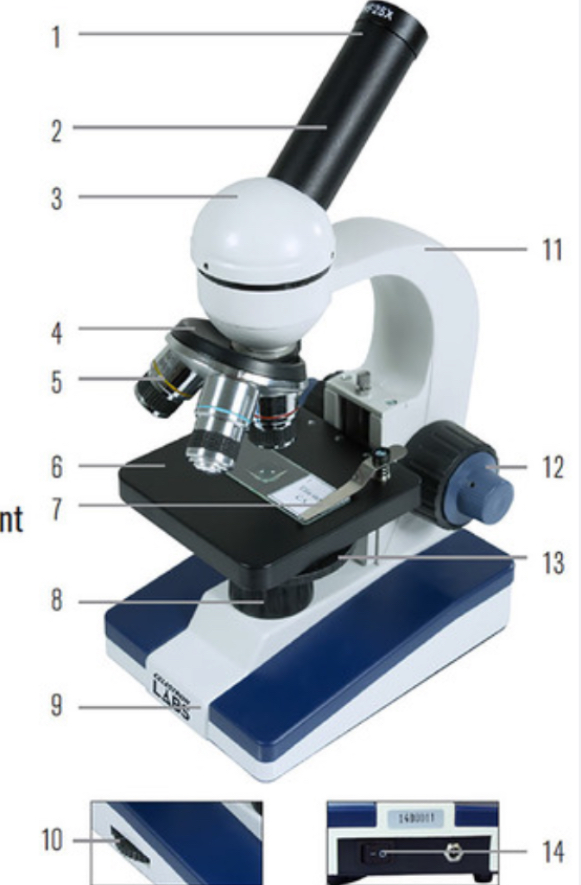
Light intensity knob
Adjusts the amount of illumination
Y-axis stage knob
Moves stage forward and backward
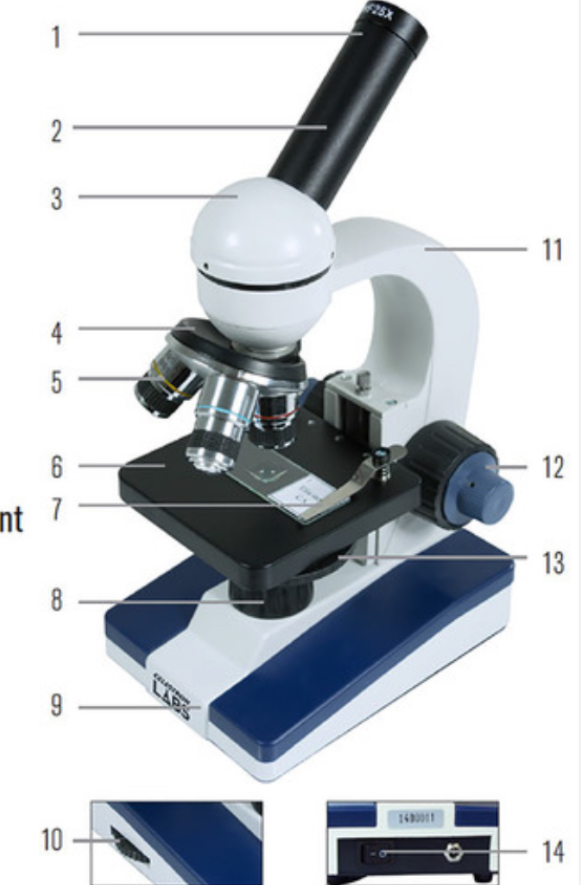
X-axis stage knob
Moves stage left and right
Coarse adjustment knob
Moves the stage up and down, should only be used with lower power lenses (4x and 10x)
Fine adjustment knob
Precisely regulates focus, should only be used with high power lens (40x)
Depth of field (DOV)
Thickness of the specimen
Field of vision (FOV)
Ruler (mm.) in the right eyepiece, used to measure specimen
All cells have…
Plasma membrane
DNA
Metabolism (can perform chemical reactions with the help of enzymes)
Prokaryotes
Does not contain a membrane-bound nucleus (bacteria and archaea)
Eukaryotes
Contain a membrane-bound nucleus (protists, fungi, and animals)
Nucleus
Contains the DNA of the cell
Organelles
Mitochondria, rough endoplasmic reticulum (rough ER), smooth endoplasmic reticulum (smooth ER), golgi apparatus
Ribosomes
Contains RNA and proteins, site of protein synthesis
Extracellular matrix
Consists of proteins and carbohydrates, outside cell membrane
Histology
Study of tissues
Epithelial tissue
Sheet-like arrangement of tightly connected cells, converts organs and linings of organs, (simple squamous, simple cuboidal, simple columnar, stratified squamous)
Muscle tissue
Involved in contraction, striated and striped, (smooth, skeletal, cardiac)
Connective tissue
Provides protection and support for the body, most abundant tissue type, (adipose, blood)
Adipose
Fat tissue
Blood Cells
Suspended in liquid plasma, cells appear as individuals under microscope, (red and white)
Brownian motion
Movement of molecules
Diffusion
Movement of molecules from an area of higher concentration to an area of lower concentration
Concentration gradient
A difference in the concentration of a substance between areas
Equilibrium
The concentration of a substance is the same in two areas
Osmosis
The movement of water across a selectively permeable membrane, type of diffusion
Solute
Molecules dissolved
Solvent
Used to dissolve solute
Solution
Combined results of solvent and solute
HYPeRTONIC
Solution outside of the cell contains a greater concentration of dissolved molecules than the inside of the cell
hypOtonic
Solution outside of the cell contains a lower concentration of dissolved molecules than the inside of the cell
Isotonic
The inside and outside of the cell have equal concentrations of dissolved molecules
Impermeable membrane
Solute cannot move across the membrane, osmosis occurs
Permeable membrane
Solute will diffuse from the inside to the outside until the two are isotonic