Child and adolescent development | Quizlet
 Call Kai
 Learn
Learn Practice Test
 Spaced Repetition
 Match
Match Flashcards
 Knowt Play
1/341

There's no tags or description
Looks like no tags are added yet.
Name | Mastery | Learn | Test | Matching | Spaced | Call with Kai | Chat |
|---|
No analytics yet
Send a link to your students to track their progress
342 Terms
development
the process of change in an organism's physical/social/emotional/cognitive state
critical period
an optimal period shortly after birth when an organism's exposure to certain stimuli or experiences produces proper development
sensitive period
a point in development when organisms are particularly responsive to specific stimuli and has behaviors that are more easily modified, but it is less fixed and irreversible than a critical period; causes learning depositions and affects learning development
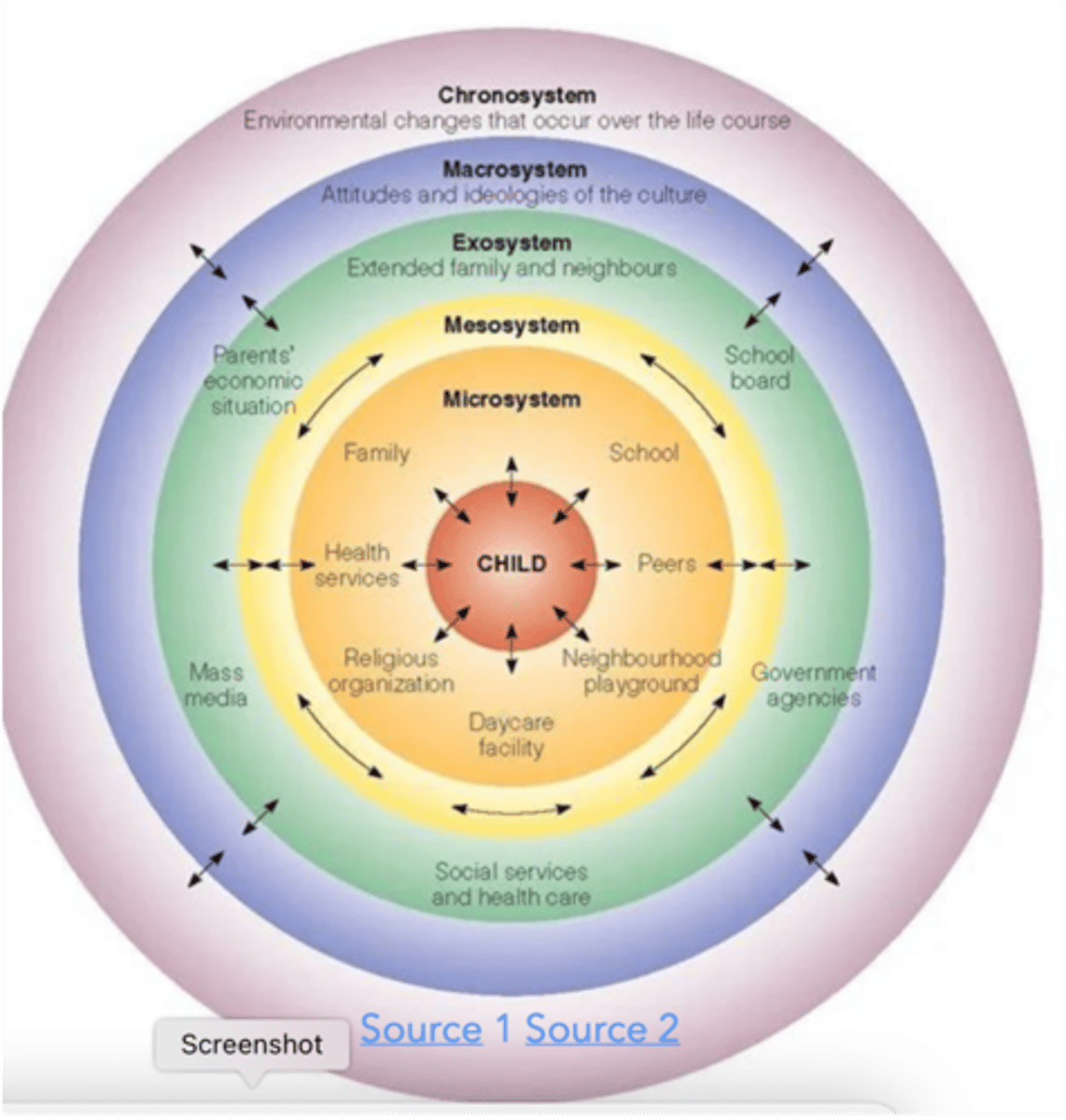
ecological model of human development
individual, microsystem, mesosystem, exosystem, macrosystem, chronosystem
evolutionary psychology
a field of psychology study focusing on adoption, reproduction, and survival
evolutionary developmental psychology
an approach that uses evolutionary psychology to understand a person's development
chromosomes
threadlike structures made of DNA molecules that contain the genes
DNA
a complex molecule containing the genetic information that makes up the chromosomes
genes
short DNA segments that carry hereditary information; each gene's activation depends on hormones/environment
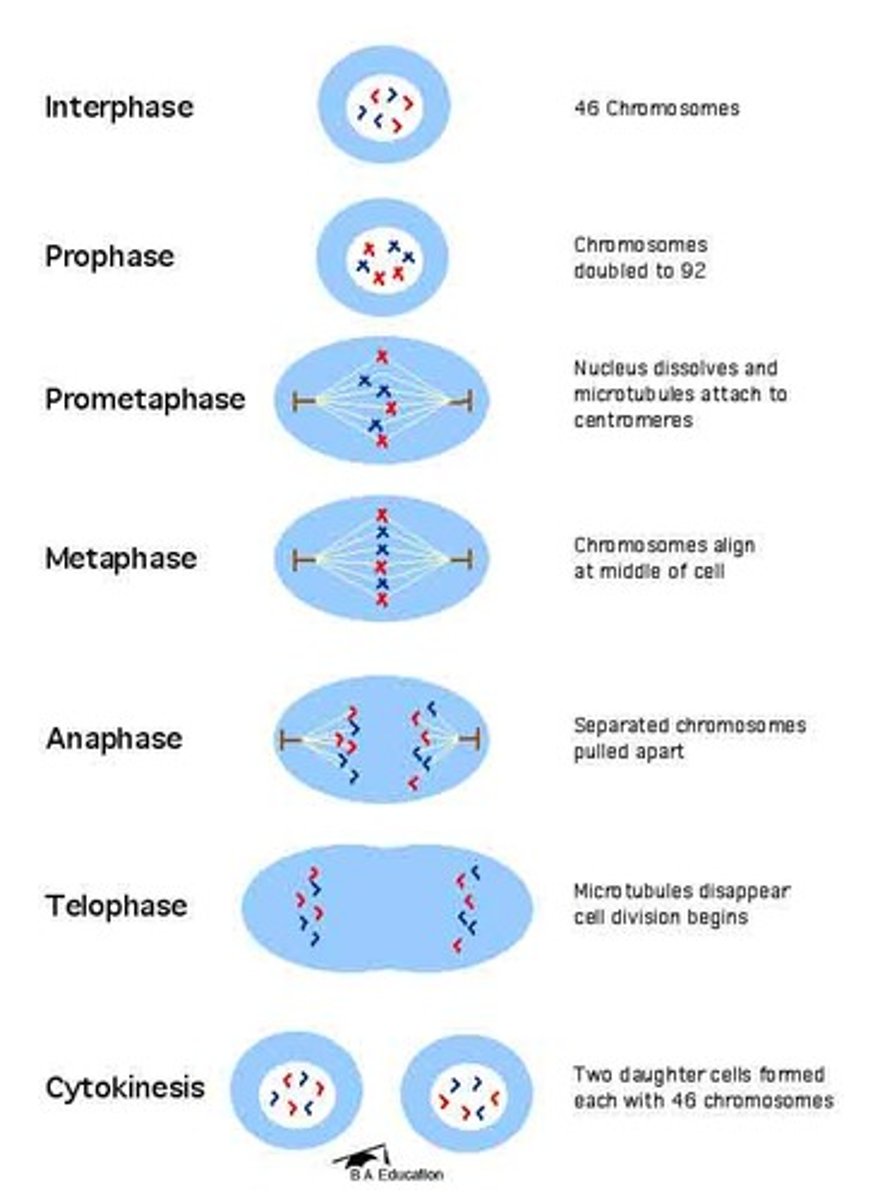
mitosis
cell division in which the nucleus divides into identical nuclei containing the same number of chromosomes (46); happens in the body cells
meiosis
a type of cell division that results in four children cells each with half the number of chromosomes of the parent cell (23), becoming eggs/sperm; happens in the sex cells
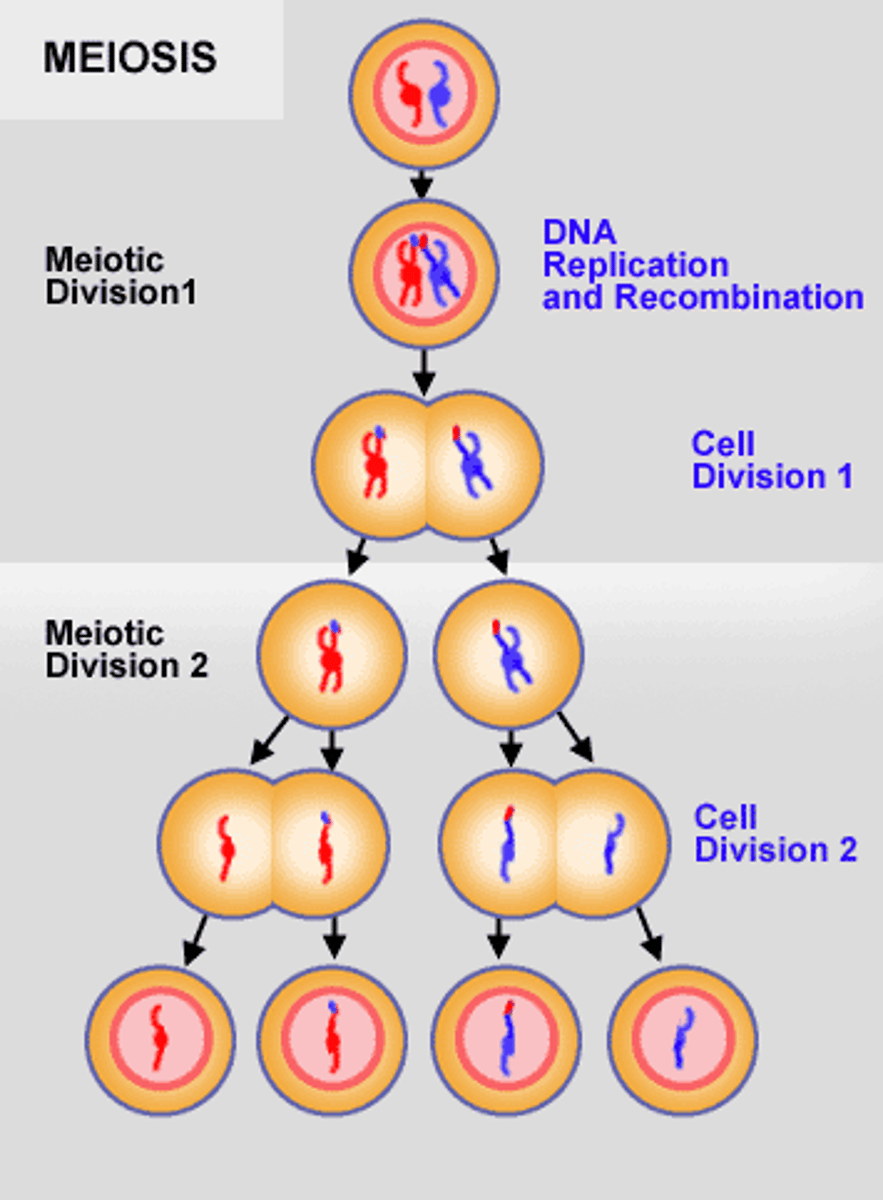
crossing-over
the process where DNA is exchanged between chromosome pairs in meiosis
independent assortment
the principle that each chromosomes pair splits independently of other pairs in meiosis
adenine
a component of nucleic acids; the base that pairs with Thymine in DNA
cytosine
a component of nucleic acids; the base that pairs with Guanine in DNA
alleles
different versions of the same gene
dominant alleles
an allele whose trait always shows up in the organism when the allele is present
recessive alleles
alleles that show their effects only when both alleles are the same; it is masked when there is a dominant alleles
co-dominant alleles
two different alleles at a locus are responsible for different phenotypes, and both alleles affect the phenotype of the heterozygote
heterozygous
organism that inherits a gene with two different alleles
homozygous
organism that inherits a gene with two alleles of the same type
fertilization
when an egg and a sperm fuse into a zygote
germinal stage
0-2 weeks: zygote; starts with egg being fertilized; ends when egg implants in the uterus; generally unaffected by teratogens
zygote
the fertilized egg; it enters a 2-week period of rapid cell division and develops into an embryo; has 23 paired chromosomes where each parent gives half
embryonic stage
2-8 weeks: embryo develops most important physiological features; most vulnerable to teratogens
gestation
pregnancy; growth process from conception to birth
embryo
the developing human organism implanted on the uterus wall; from about 2 weeks after fertilization
amniotic sac
a fluid-filled sac that cushions and protects a developing embryo and fetus in the uterus
placenta
a disc-like structure in the uterus that nourishes and maintains the fetus through the umbilical cord
umbilical cord
a tube containing the blood vessels connecting the fetus and placenta
cephalocaudal
how fetus development starts at the brain then downward to legs
proximal-distal
how fetus development starts at internal organs then outwards
miscarriage
spontaneous end of pregnancy before the baby can survive outside
foetal period
3 months - delivery: completing development of body structures & systems; first body responses (e.g. thumb sucking)
foetus
developing organism during the foetus period
age of viability
the age (about 22 weeks after conception) at which a fetus may survive outside the parent's uterus
teratogen
environmental agents, such as chemicals and viruses, that can reach the embryo or fetus during prenatal development and cause harm; more exposure can cause more harm
foetal alcohol syndrome (FAS)
a birth defect caused by alcohol abuse by the pregnant parent; can cause facial deformities, restricted intelligence and an agitated personality
risks of smoking during pregnancy
miscarriage, premature labour, birth defects, SIDS
risks of caffeine during pregnancy
miscarriage, underdevelopment, low birth weight
diethylstilbestrol (DES)
a synthetic hormone, formerly prescribed to prevent miscarriage, later found to produce cancer in offspring
thalidomide
a drug formerly prescribed to treat morning sickness; later found to cause serious fetal malformations
Rh factor incompatibility
when the pregnant parent's blood is Rh-negative and the fetus is Rh -positive; the parent's body begins to form antibodies to the foreign Rh protein which can attack the fetus' blood cells
genital herpes
a common viral infection; if fetus is exposed to it in birth canal, it can cause serious abnormalities
AIDS (acquired immune deficiency syndrome)
a viral disease; if transmitted to fetus as HIV, will weaken its immune system and cause its death
caesarean delivery
the surgical delivery of a fetus through abdominal incision
perinatal complications
difficulties surrounding the birth of a child, which can lead to developmental difficulties
perinatal risk-factors
factors that can contribute to perinatal complications.
preterm
a premature baby who still might have a birth weight appropriate to its age
low birth weight
premature baby with a weight significantly below the normal for its age
genotype
genetic makeup of an organism
phenotype
an organism's visible traits; can vary even within one genotype
congenital
present at birth
autosomal dominant
an inheritance pattern where the affected person usually has an affected parent; occurs in every generation
autosomal recessive
an inheritance pattern where the affected person has parents that are both carriers; can miss generations
X-linked dominant
an inheritance pattern where a dominant gene is carried on the X chromosome; females are more commonly affected
X-linked recessive
an inheritance pattern where it affects males much more commonly; usually in every generation
mitochondrial inheritance
an inheritance pattern where it occurs in both males and females, inherited through females only because all mitochondria of the children come from the mother
down syndrome
a condition caused by an extra chromosome; causes different appearance and difficulties with motor & mental skills
Klinefelter's syndrome
males with an extra X chromosome (XXY); causes infertility, breast enlargement, tallness, and learning difficulties
fragile X syndrome
a disorder produced by injury to a gene on the X chromosome or an atypical X chromosome; causes difficulties in cognitive/mental abilities
Turner's syndrome
females with a missing/partly detached X chromosome; causes different appearance and difficulties with math
poly-X syndrome
"superfemales"; females with extra X chromsome(s); causes intellectual disabilities
supermale syndrome
males with extra Y chromosome(s); causes tallness, more acne, and large teeth
spinabifida
a birth defect in which a developing baby's spinal cord fails to develop properly
neurofibromatosis (type 1)
multiorgan disease, where tumors evolve in our nervous system; caused by issues of Schwann cells/saltatory conduction
phenylketonuria (PKU)
an inherited disorder in which the infant lacks a liver enzyme to metabolize an amino acid and can cause intellectual disability if untreated; easily detected & treated nowadays
sickle-cell anemia
a genetic disorder that causes dysfunctional 'sickle-shaped' red blood cells; mainly affects black people
Huntington disease
hereditary disorder with brain deterioration, and difficulties with motor & psychological functions; usually not diagnosed till adulthood
behavior genetics
the study of the relative power and limits of genetic and environmental influences on behavior
twin study
a behavioral study in which researchers compare the traits of twins that are identical or fraternal
adoption study
a behavior genetic research method that involves comparison of adopted children to their adoptive and biological parents
passive genotype-environment correlations
occur because biological parents, who are genetically related to the child, provide a fitting environment for the child that matches the genotype; e.g. musician parents encourage child to engage with music
evocative genotype-environment correlations
correlations that exist when the child's genotype characteristics affect their environment to fit the genotype; e.g. adults put a child into more sports activities because she is athletically gifted
active genotype-environment correlation
correlations that exist when a child with a particular genotype creates or seeks out a particular environment that matches their genotype; e.g. a mathematically-gifted child chooses to be in more advanced math classes by themselves
shared environment experiences (SE)
siblings' common experiences; such as their parents' personalities and intellectual orientation, the family's socioeconomic status, and the neighborhood in which they live, etc.
non-shared environment experiences
siblings' different experiences, possibly such as hobbies, friends, etc.
epigenetics perspective on development
that development interchanges between heredity and environment
gene x environment (G x E) interaction
the interaction of a specific measured variation in the DNA and a specific measured aspect of the environment; e.g how environment and genes both affect height
heritability
the proportion of variation among individuals that we can attribute to genes
selective breeding experiment
a method of studying genetic influences by determining whether traits can be bred in animals through selective mating
kinship
the extent to which two individuals have genes in common
concordance rate
indicates the percentage of twin pairs or other pairs of relatives who exhibit the same attribute
heritability coefficient
a statistic that describes the proportion of the difference between people's scores that can be explained by differences in their genes

empathetic concern
a measure of the extent one can recognize & care for others' feelings
schizophrenia
a psychological disorder characterized by delusions, hallucinations, disorganized speech, and/or diminished, inappropriate emotional expression
bipolar disorder
mood disorder in one experiences both manic and depressed episodes
neurotic disorder
a psychological disorder involving irrational thinking & behavior due to stress/anxiety
canalization
when a gene restricts the development of some characteristics to just one or a few outcomes; e.g. a person having specific taste preferences despite different foods they're exposed to
range-of-reaction principle
the idea that genotype sets limits on the range of possible phenotypes that a person might display in response to different environments
emotion
one's feelings in response to experiences that are important to them
primary emotions
emotions that are present in humans and other animals; emerges in less than 6 months; e.g. joy, anger, sadness, fear, disgust
self-conscious/secondary emotions
(start 18-24m) feelings that require a sense of self; e.g. guilt, shame, embarrassment, pride
crying
the most important communication mechanism for newborns; caregivers' response to it affects attachment
basic cry
(3m) cry that starts softly and gradually becomes more intense; often heard when babies are hungry or tired
anger cry
(3m) a variation of the basic cry, with more excess air forced through the vocal cords
pain cry
(3m) cry that begins with a sudden long burst, followed by a long pause and gasping; incited by intense stimuli
smiling
critical for infants as a key social signal and their social development
reflexive smile
a smile that does not occur in response to external stimuli; happens during the month after birth, usually during sleep
social smile
a smile in response to an external stimulus, typically a face for infants; develops in 4-6 weeks