CASA 06A-6.6 Pipes and Unions
 Call Kai
 Learn
Learn Practice Test
 Spaced Repetition
 Match
Match Flashcards
 Knowt Play
1/57

There's no tags or description
Looks like no tags are added yet.
Name | Mastery | Learn | Test | Matching | Spaced | Call with Kai | Chat |
|---|
No analytics yet
Send a link to your students to track their progress
58 Terms
Where is rigid tubing typically used in aircraft?
Stationary applications with long, relatively straight runs. Systems include fuel, oil, oxygen and instrument systems.
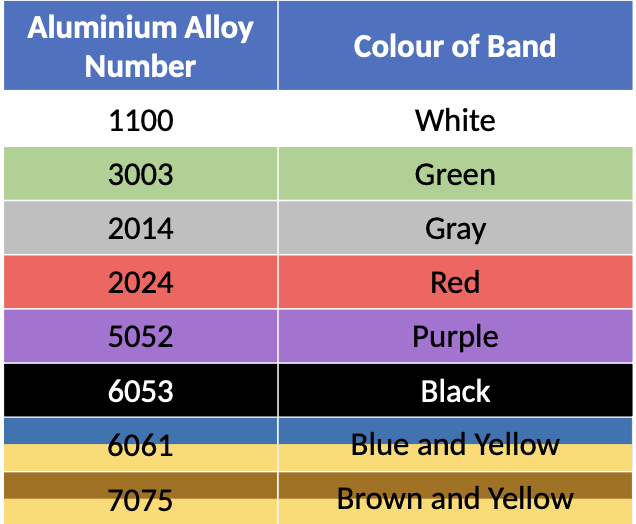
If an aluminium Alloy tube with the colour red, What is its alloy number?
2024
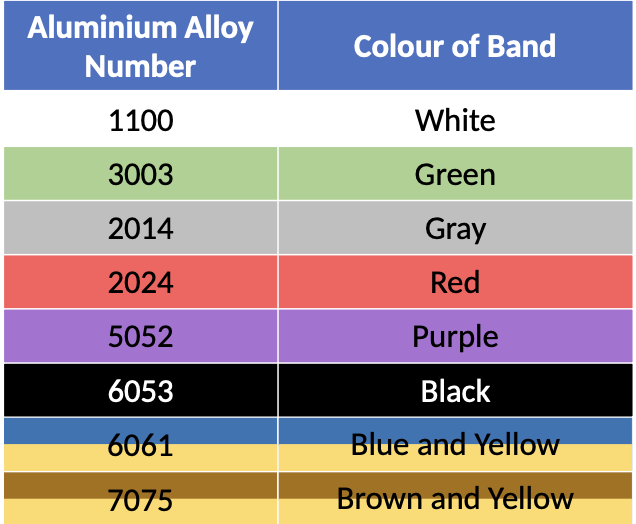
If an aluminium Alloy tube with the colour blue and yellow, What is its alloy number?
6061
Why was copper tubing replaced in aircraft fluid lines?
Vibration caused it to become hard and brittle, eventually failing. Replaced by aluminium alloy and corrosion-resistant steel.
What aluminium alloys are used for low-pressure systems (below 1000 psi)?
1100-H14 (half-hard) or 3003-H14 (half-hard).
How is the alloy designation marked on large aluminium tubes?
Stamped directly on the tube surface.
How is the alloy designation marked on small aluminium tubes?
Coloured bands no more than 10cm (4 inches) wide, painted on the ends and mid-section.
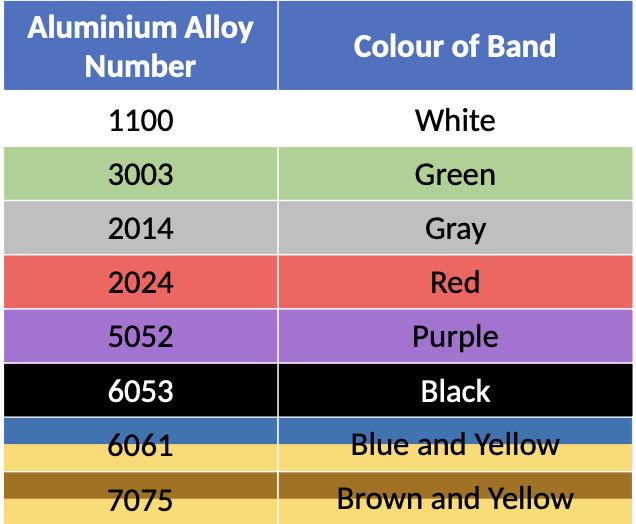
What colour band identifies each aluminium alloy?
White = 1100. Green = 3003. Gray = 2014. Red = 2024. Purple = 5052. Black = 6053. Blue and Yellow = 6061. Brown and Yellow = 7075.
How is steel tubing for aircraft normally identified?
By its part number from the aircraft manufacturer's Maintenance Manual Illustrated Parts Catalogue.
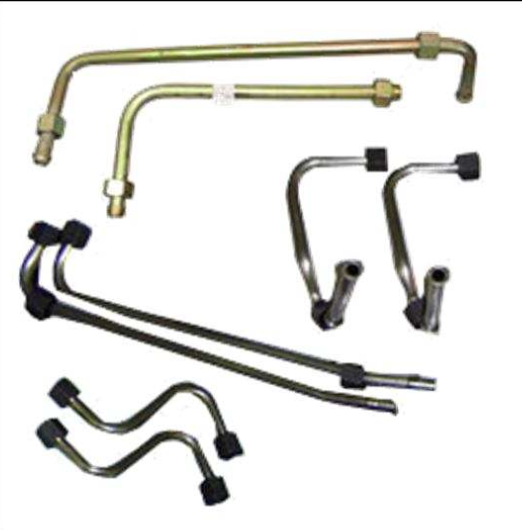
What information is typically included in steel tubing identification markings?
Manufacturer's name or trademark, SAE number, physical condition of the metal, and outside diameter.
What pressure systems use corrosion-resistant steel tubing and why?
High-pressure systems (3000 psi) such as hydraulic, pneumatic and oxygen. Also used in areas exposed to physical damage, moisture, exhaust fumes and salt air. Higher tensile strength allows thinner walls, keeping installation weight similar to thicker aluminium tubing.
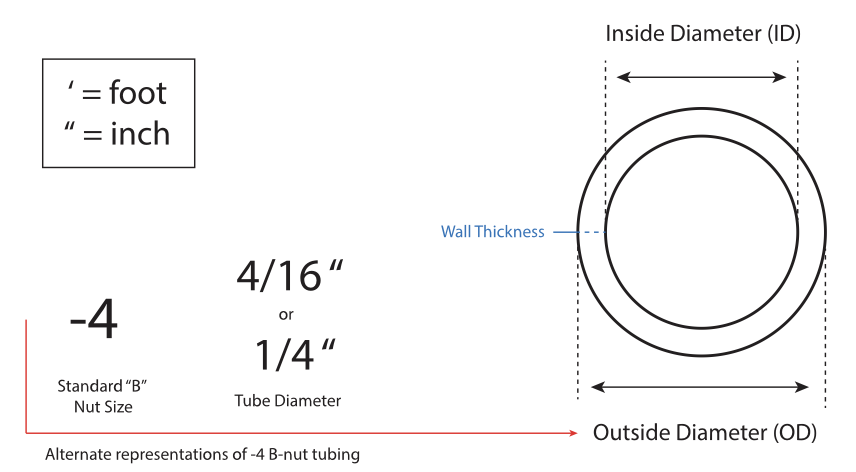
How is rigid tube size determined?
Outside diameter in increments of 1/16 inch. A -4 B-nut tube = 4/16 or 1/4 inch diameter.
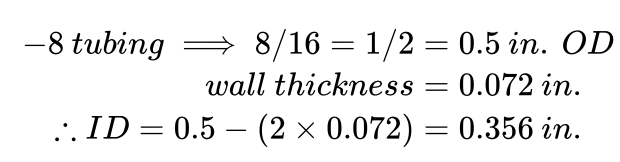
If you have a piece of -8 tubing with a wall thickness of 0.072 in. the inside diameter can be?
0.365in
How is wall thickness indicated on rigid tubing and why does it matter?
Printed on the tube in thousandths of an inch. It determines the tube's strength.
What are the two components of a flared-tube fitting?
A sleeve and a B-nut.
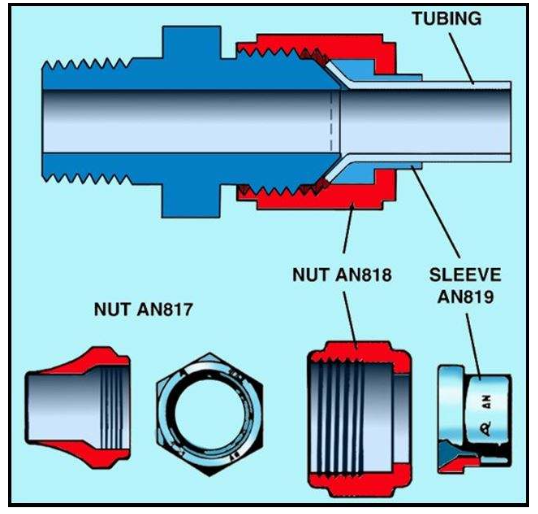
What is the purpose of the sleeve in a flared-tube fitting?
Provides added strength, supports the tube so vibration doesn't concentrate at the flare.
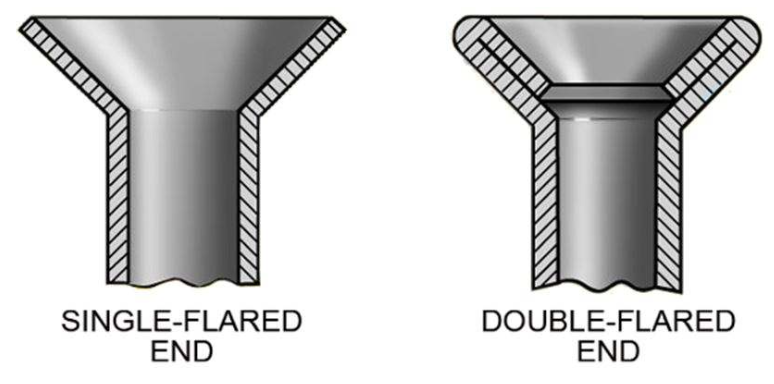
What two types of flares are used in aircraft plumbing?
Single flare and double flare.
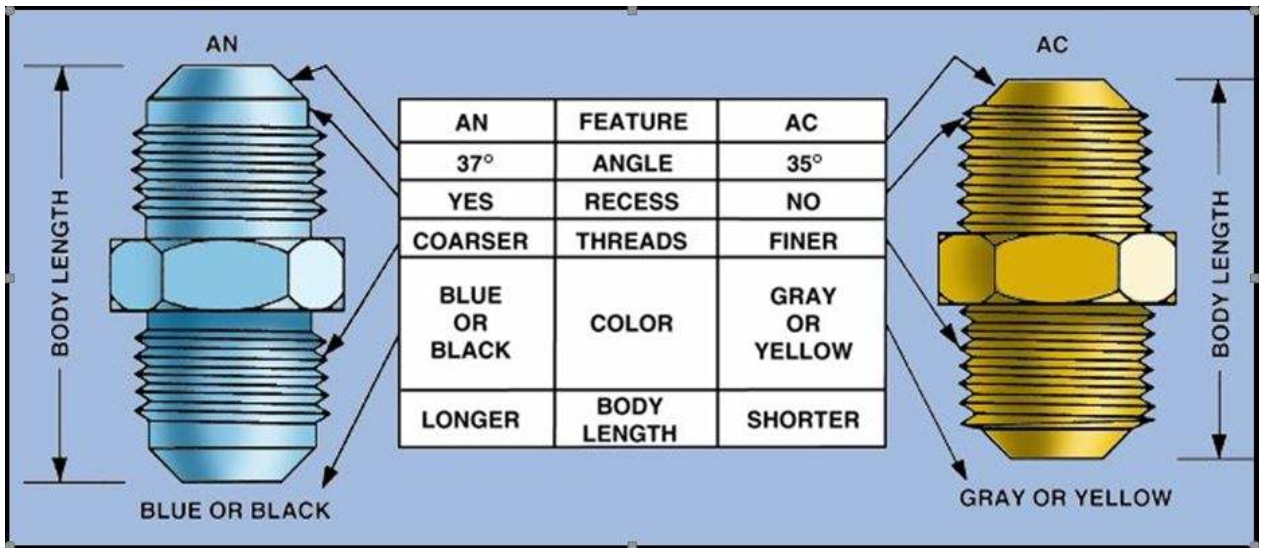
What is the key physical difference between AN and AC fittings?
AN has a shoulder between the threads and the flare cone; AC does not. AN sleeve is also noticeably longer than AC sleeve of the same size.
How are AN steel and AN aluminium fittings colour-identified?
AN steel = black. AN aluminium = blue. AN 819 aluminium bronze sleeves = cadmium plated, no colour.
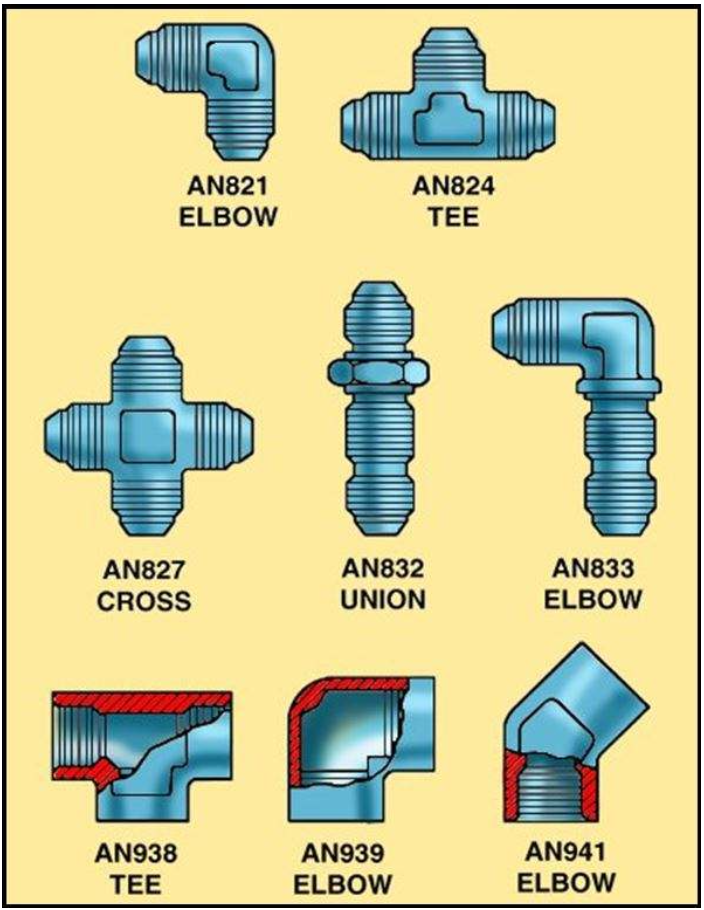
What are the common AN flared-tube fitting types and their numbers?
AN821 Elbow, AN824 Tee, AN827 Cross, AN832 Union, AN833 Elbow, AN938 Tee, AN939 Elbow, AN941 Elbow.
What is the key difference between flared and flareless fittings?
AN flared fittings have a 37° external flare and use a flared tube, sleeve and B-nut. Flareless fittings have a 24° internal bevel and use an unflared straight-cut tube.
What are the three parts of a flareless fitting?
Tube, sleeve, and nut.
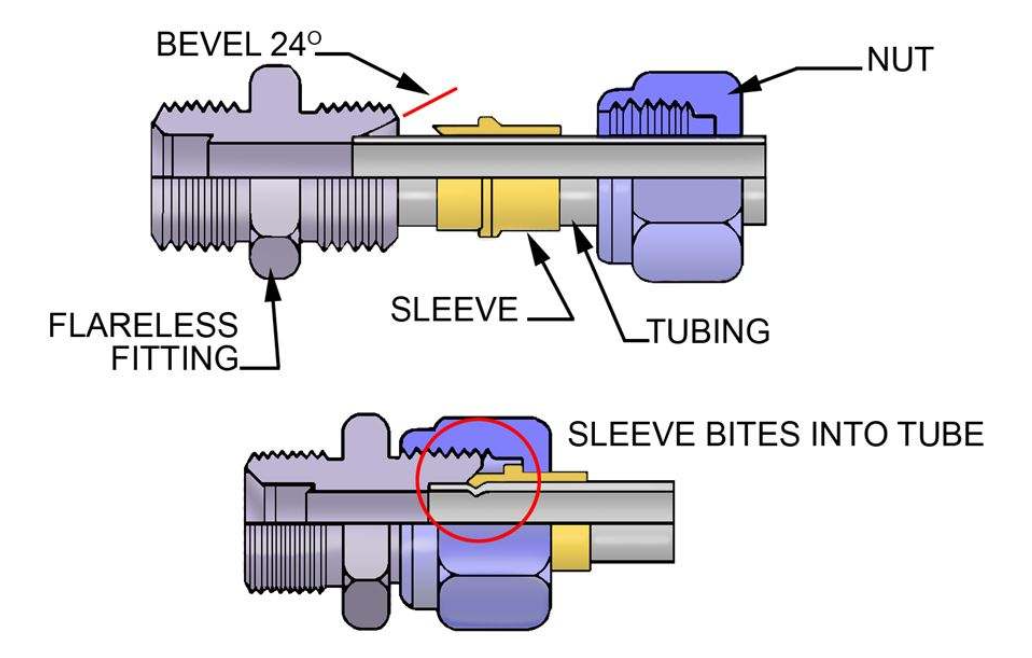
Why are MS type flareless fittings commonly used on large transport aircraft?
They can withstand high system working pressures up to 8000 psi.
How are aluminium alloy flareless fittings visually identified?
Yellow colour caused by anodising treatment.
How is the material of an MS flareless fitting identified in its code?
By a letter suffix at the end of the MS number. No letter = carbon steel. -D = aluminium alloy. -S = corrosion-resistant steel class 347.
What does each part of the code MS21900-4 mean?
MS = military specification. 21900 = design part number (adapter, flareless tube to AN flared tube). 4 = 4/16 inch fitting size.
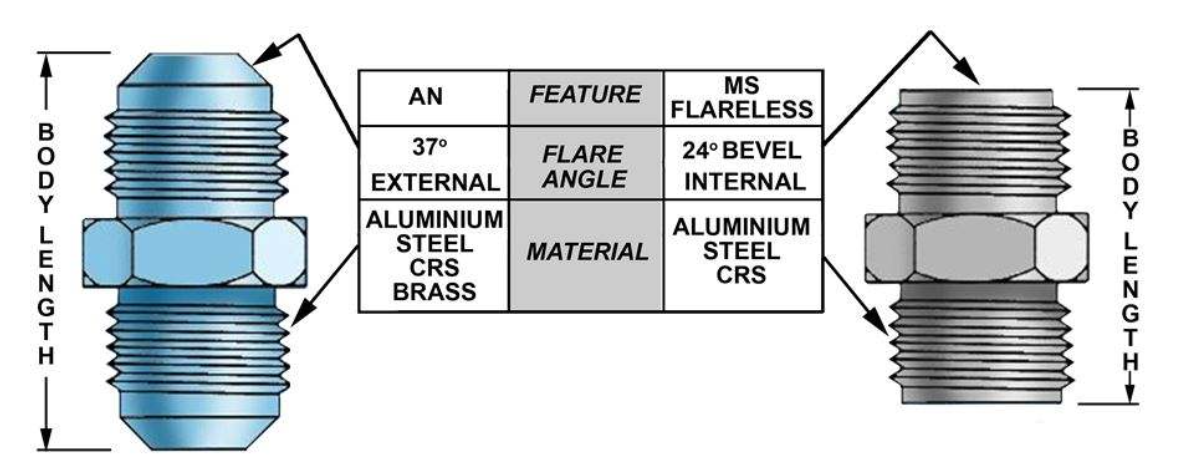
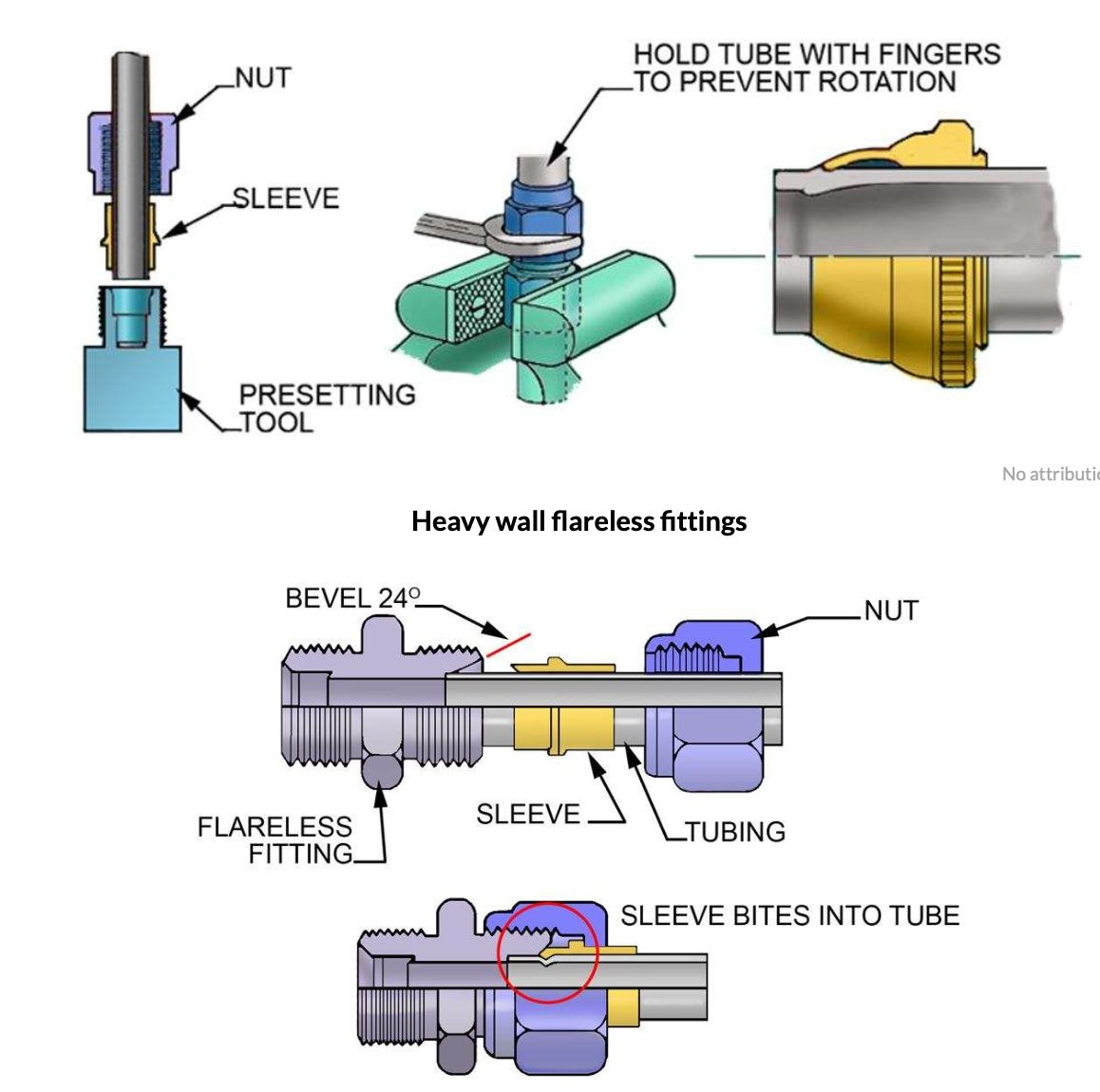
What is pre-setting in flareless fitting installation?
Applying enough pressure to the sleeve to deform it into the outside of the tube before installation, creating a leak-free seal without flaring.
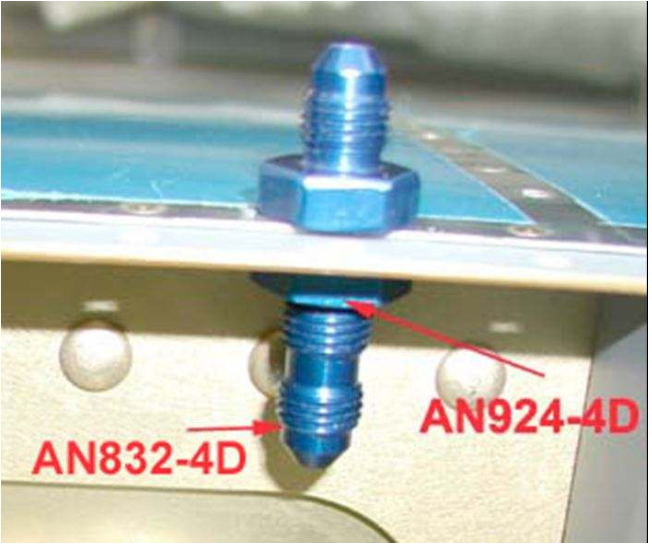
What is a bulkhead fitting used for?
To support a fluid line passing through a bulkhead. Uses straight machine threads and requires crush washers, synthetic or O-ring seals to make fluid-tight connections.
How do tapered pipe thread fittings create a seal?
By wedging tapered external male threads against tapered internal female threads. They taper 1/16 inch per inch.
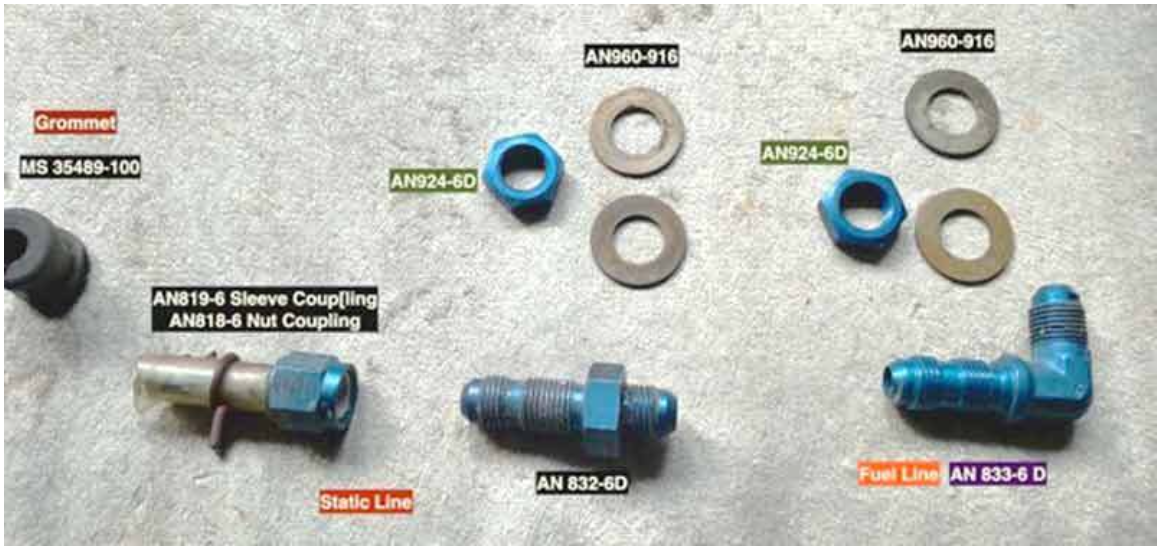
What are some common flared tube connections for fuselage feedthrough?
Static line, fuel line
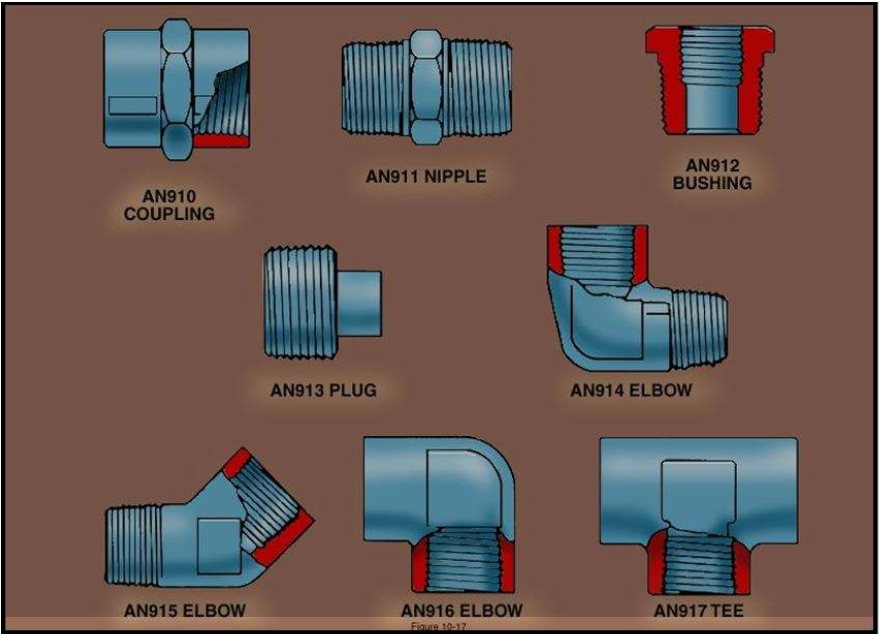
What are the tapered pipe thread fitting AN numbers?
AN910 Coupling, AN911 Nipple, AN912 Bushing, AN913 Plug, AN914/915/916 Elbow, AN917 Tee.
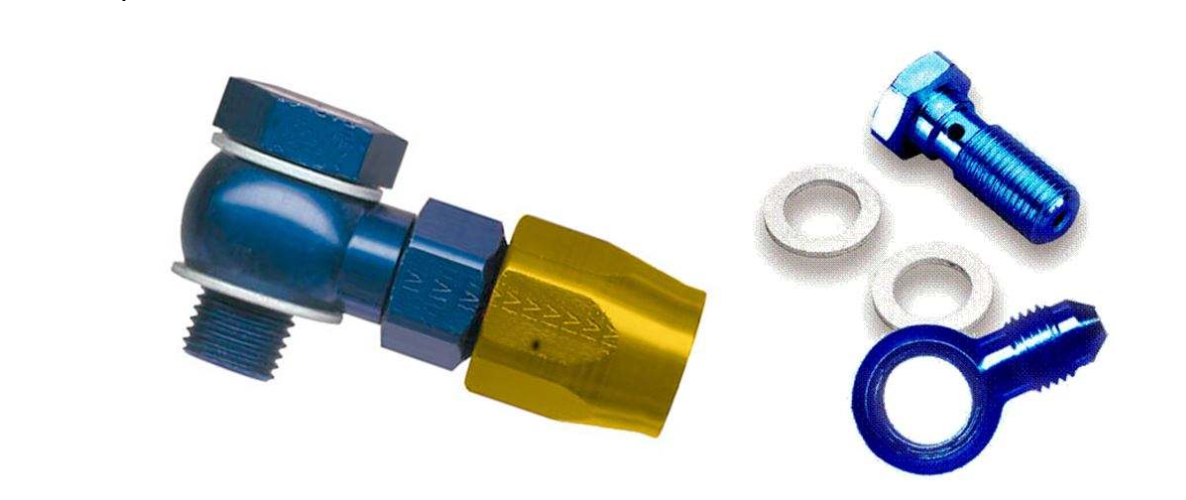
What is the advantage of a banjo fitting?
It is free to rotate before the bolt is torqued, allowing stress-free alignment of the fluid line to the component.
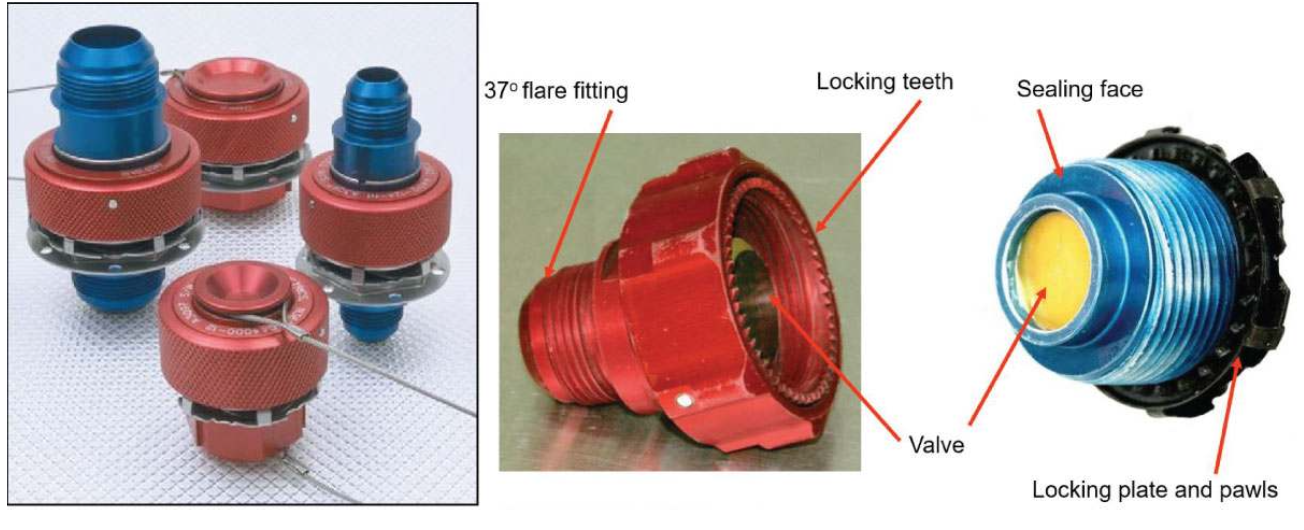
What are quick-disconnect couplings used for and how do they work?
Used on GSE for fuel, hydraulic and water/waste servicing. One-hand connect/disconnect with a built-in shutoff valve for no-spill operation. Attach via quarter-turn thread or sliding collar snap-lock.
What is beading and when is it required?
A raised ring formed on the end of a tube so a flexible rubber hose and clamp can grip it securely. Required on large-diameter low-pressure lines joined by flexible hose and hose clamps.
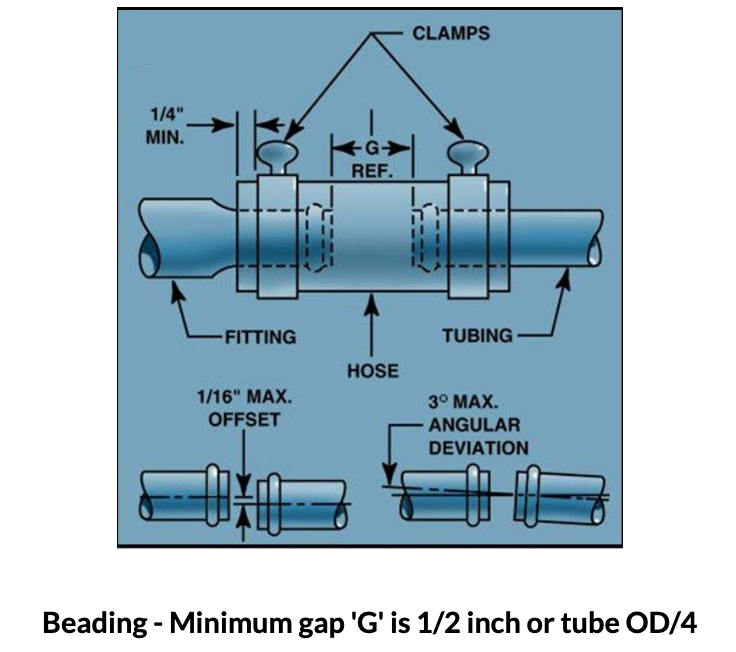
What determines whether a power header or hand beading tool is used?
The diameter and wall thickness of the tube being beaded.
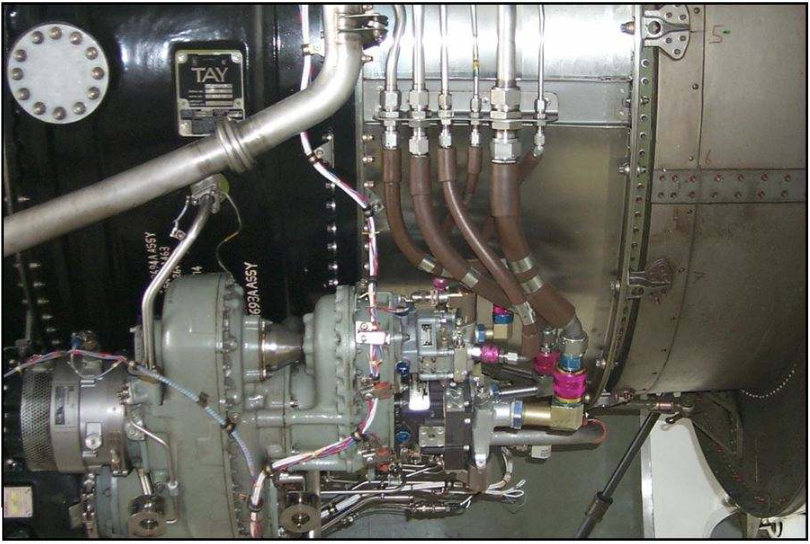
Where are flexible fluid lines used in aircraft?
Connecting moving parts to stationary parts, in areas subject to vibration, or where flexibility is needed. Also used as connectors in metal tubing systems.
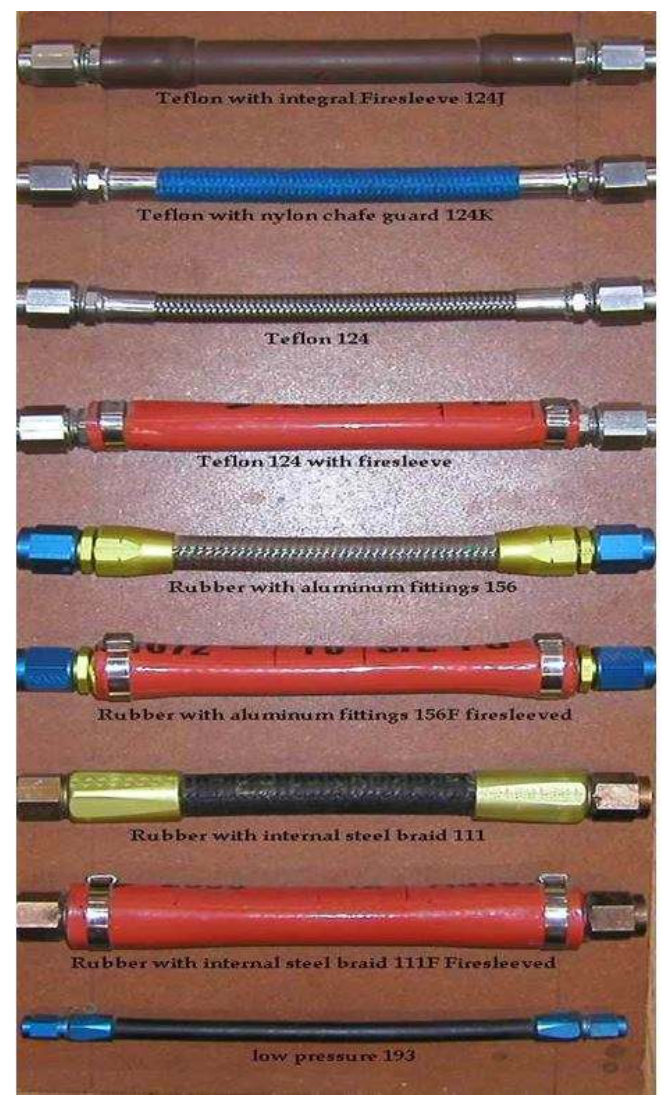
What are the three layers of flexible hose construction?
Inner liner, reinforcement layers, and outer cover.
What are the four inner liner materials used in flexible hose?
Neoprene, Buna-N, Butyl, and Teflon.
What fluid is neoprene compatible with?
Petroleum-based fluids. Abrasion resistant.
What fluid is Buna-N compatible with and how does it compare to neoprene?
Petroleum-based products. Better suited for petroleum products than neoprene.
What fluid is Butyl compatible with and what must it NOT carry?
Phosphate ester-base hydraulic fluids such as Skydrol. Must not carry petroleum products as it breaks down.
What are the key properties of Teflon as a hose liner?
Operating range -54°C to 232°C. Compatible with nearly every fluid. Wax-like surface minimises flow resistance. Less volumetric expansion than rubber. Almost limitless shelf and service life.
What are reinforcement layers made from and why are they critical?
Cotton, rayon, polyester fabric, carbon-steel wire or stainless steel wire braid. Critical because hose expands in diameter and shortens under pressure — reinforcement minimises these changes.
What is the outer cover made from and what additional purpose can it serve in high heat areas?
Rubber-impregnated fabric or stainless steel braid. In high heat areas it is designed as an integral fire-sleeve.
What is a lay line and what are its two purposes?
A yellow, red or white stripe running the length of the hose. Identifies the hose (MIL-SPEC, manufacturer, size, date). Also shows if the hose is twisted during installation — a correctly installed hose has a straight lay line.
What information is printed on flexible hose identification markings?
Type, quarter and year of manufacture, five-digit manufacturer code, MIL-SPEC number, dash number for hose size. Skydrol-compatible hose is marked 'SKYDROL'.
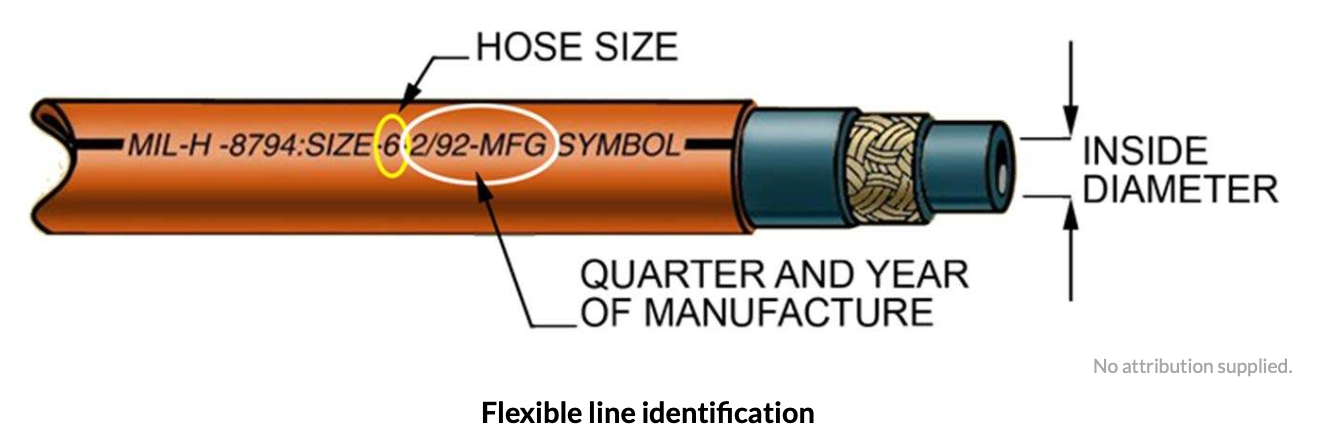
How is flexible hose size determined?
Inside diameter in increments of 1/16 inch. Example: -10 = 10/16 or 5/8 inch.
What are the three pressure classifications of flexible hose?
low-pressure, medium-pressure and high-pressure
Describe the construction of low-pressure hose.
Seamless inner tube, single layer cotton braid reinforcement, ribbed or smooth rubber outer cover. Used for air/vacuum and instrument lines.
What is the maximum pressure rating of medium-pressure hose?
Up to 3000 psi, though larger diameter hoses may be restricted to lower pressures.
How does the construction of medium-pressure hose differ when carrying Skydrol vs petroleum fluid?
Petroleum: synthetic rubber inner liner, grey-black outer braid. Skydrol: Butyl rubber inner liner, green outer braid marked 'SKYDROL'.
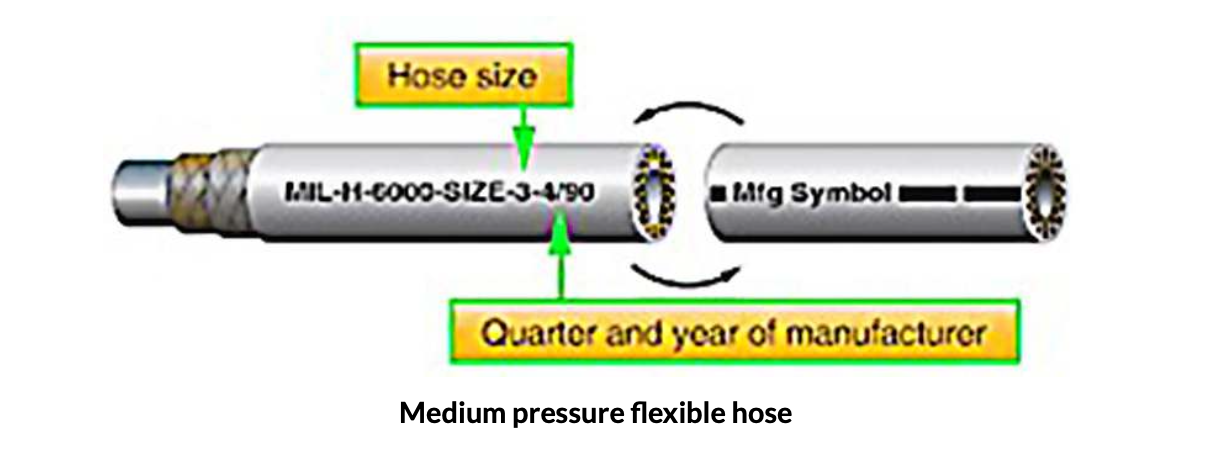
How is high-pressure hose identified visually?
Smooth outer cover. Most are black with a yellow lay line. Skydrol-rated high-pressure hose has a Butyl rubber liner and green outer cover with white lay line.
What reinforcement does high-pressure hose use?
Two or more steel wire braids around the synthetic rubber inner liner.
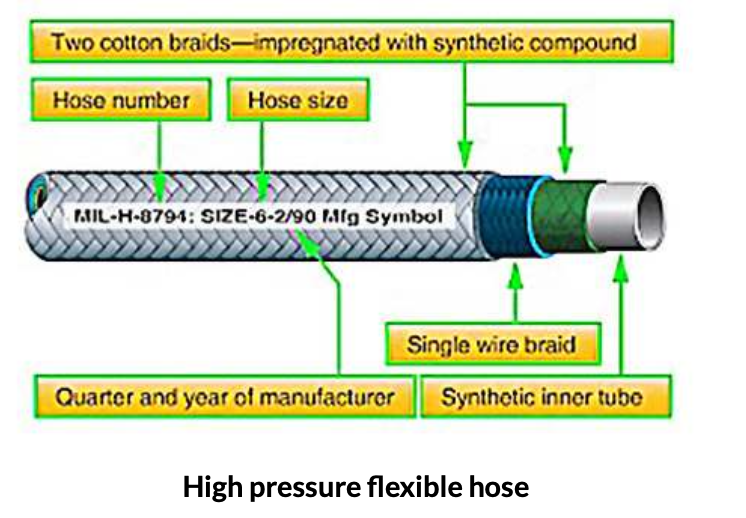
What are the two main types of flexible pipe fittings?
Swaged-end fittings and reusable fittings.
Why must swaged-end fittings be sourced from a manufacturer or specialist shop?
They are assembled on special machinery not typically found in a maintenance shop and cannot be removed or reused.
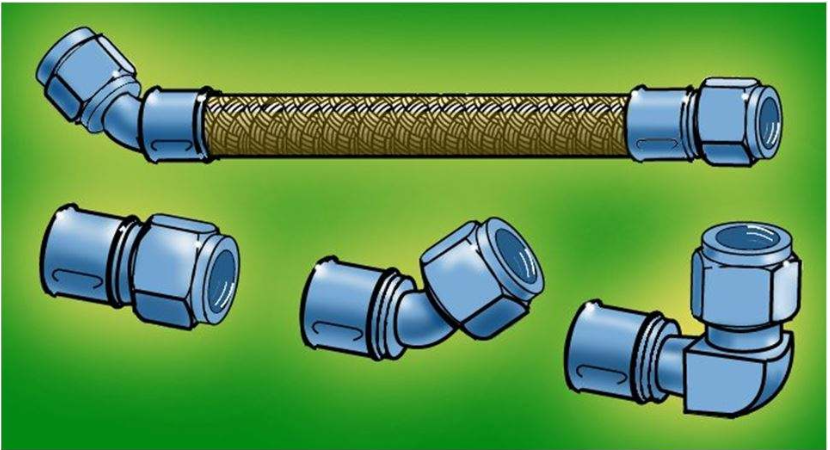
What are the three parts of a reusable fitting?
Socket, nipple, and nut
What inspection is required before reusing flexible pipe fittings?
Check sealing surface and threads for damage (cause for rejection). Check nut for cracking and wrench damage. Do not mix components from different manufacturers even if all are MIL-SPEC.
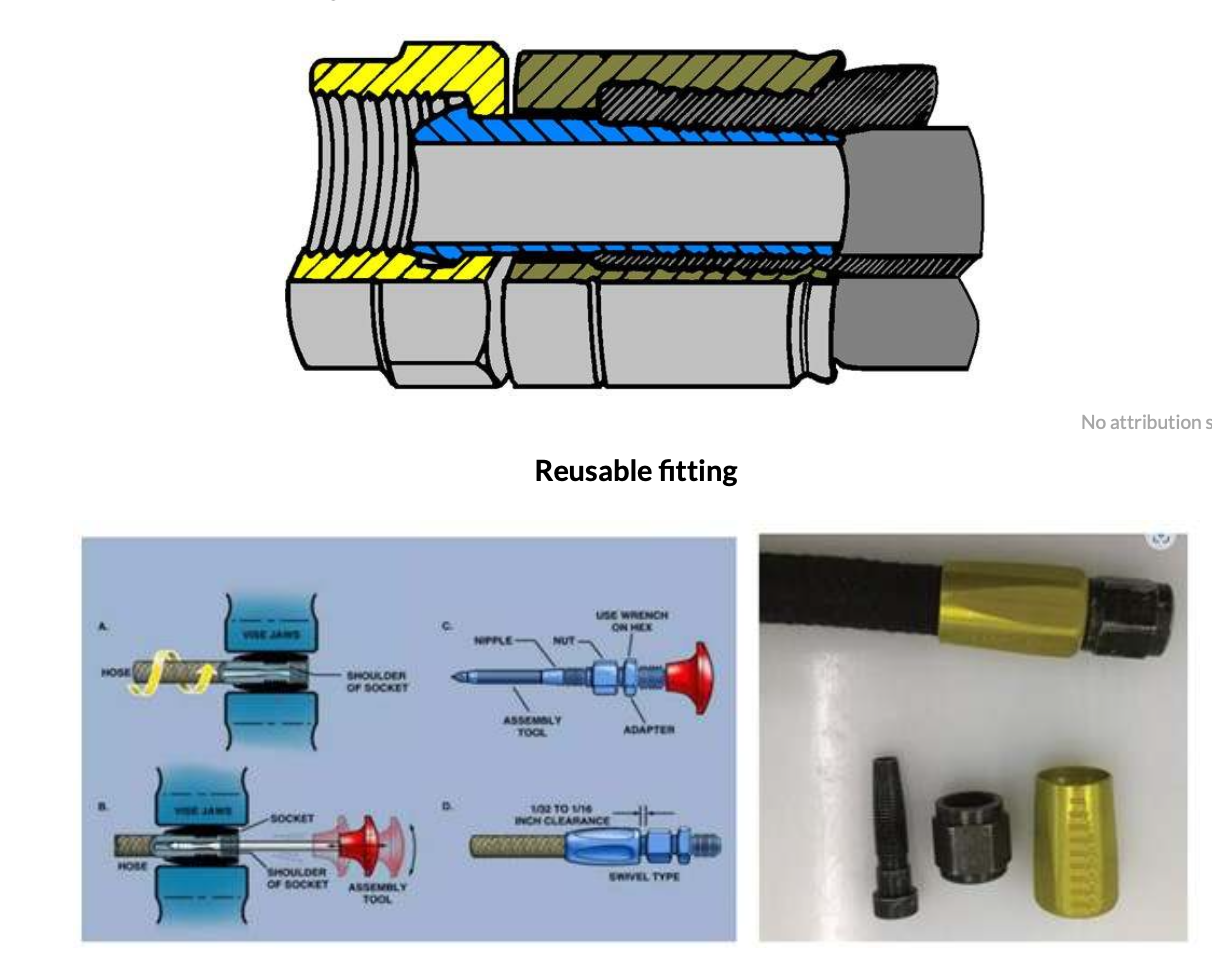
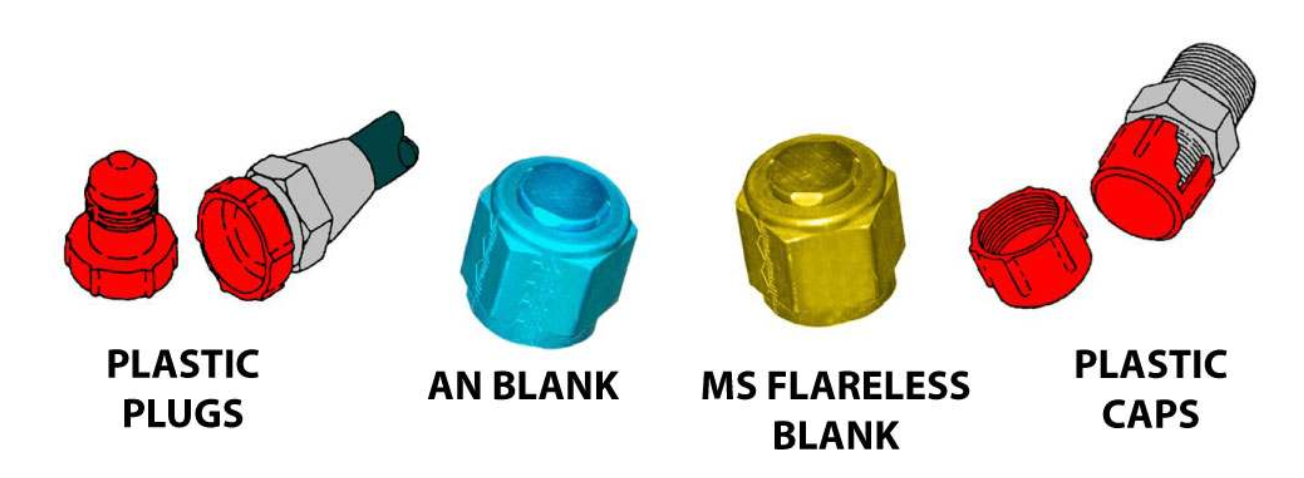
What are blanks and why are they used?
Closed fittings (plastic, metal, wood or plastic bag) fitted to open fluid line ends when disconnected. Prevents contamination entering the system and fluid leakage if the system is accidentally energised.