CDC PART 1 NP1
 Call Kai
 Learn
Learn Practice Test
 Spaced Repetition
 Match
Match Flashcards
 Knowt Play
1/49

There's no tags or description
Looks like no tags are added yet.
Name | Mastery | Learn | Test | Matching | Spaced | Call with Kai | Chat |
|---|
No analytics yet
Send a link to your students to track their progress
50 Terms
Q1: Dengue cases have been increasing in number among the community members, especially in ages 5 to 9 years old. Which of the following would you best describe as the mode of transmission for this disease?
A. Droplet spread
B. Indirect contact
C. Vector-borne
D. Fomite-borne
ANSWER: C. Vector-borne
Droplet - pneumonia
Indirect - scabies
Fomite - contaminated object
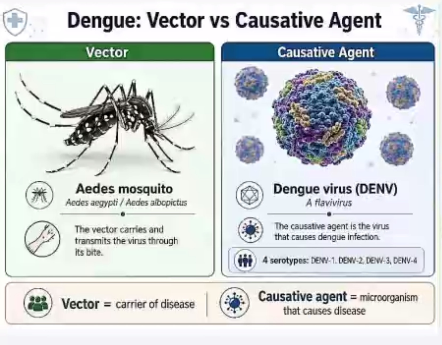
Mode of transmission: Mosquito Bite
(Aedes Aegypti - female)
Vector = carrier of the disease
Causative Agent: Dengue Virus (DENV)
- DENV 1, 2, 3, 4
Q2: You are tasked to conduct the tourniquet test for a client suspected to have been infected with dengue. Which of the following is correct in considering the result of the test to be POSITIVE?
A. Positive test is 20 or more petechiae per 1 square inch
B. Positive test is 30 or more petechiae per 1 square inch
C. Positive test is 20 or more petechiae per 1 square centimeter
D. Positive test is 25 or more petechiae per 1 square centimeter
ANSWER: A. Positive test is 20 or more petechiae per 1 square inch
Tourniquet test /= Screening Test
• Contraindicated with active bleeding and dehydration
o Not accurate
• Rumpel lead test - BP cuff midway between systolic and diastolic pressure for five minutes
• Positive: o 20 or more petechiae in a 1- inch square (2.54 cm)
Confirmatory test = ELISA
Q3: During the assessment of the client, which of the following will NOT prompt the nurse immediate referral to the physician for inpatient management?
A. Drowsiness
B. Mucosal bleeding
C. An episode of nausea and vomiting
D. Pain when palpating the abdomen
ANSWER: C. An episode of nausea and vomiting
Not all dengue patients are admitted in the hospital
Mild dengue: at home
Patient should be admitted if the pt has already the warning signs (Liver, brain, vital organs)
• Abdominal pain or tenderness
• Persistent vomiting
• Clinical fluid accumulation → Plasma leakage = capilliary permeability = pleural effusion
• Mucosal bleed
• Lethargy/restlessness
• Liver enlargement > 2 cm
• Laboratory: increase in HCT concurrent with rapid decrease in platelet count

Q4: For dengue cases with warning signs, inpatient management is necessary. During one of the endorsements, the following are statements that prompt the nurse to question the order EXCEPT?
A. Give 0.45% saline
B. Give prophylactic platelet transfusions for a low platelet count
C. Use corticosteroids routinely
D. Give pRBCs or whole blood for clinically significant bleeding
CORRECT ANSWER: D. Give pRBCs or whole blood for clinically significant bleeding
0.45% saline is hypotonic → tissue swelling
dont give platelet, with low platelet → platelet comes back
dont give cor
Q5: If dengue cases continue to rise in the community, which of the following factors contribute MOST to the increased incidence of the disease?
A. Refusal to wear long-sleeve clothing and pants when going outside
B. Failure to destroy mosquito breeding sites
C. Failure to follow-up on the positive cases who are on outpatient management
D. Refusal of the public to seek medical help
CORRECT ANSWER: B. Failure to destroy mosquito breeding sites
RATIO: ➔ Most correct to reduce the cases of dengue
A. Correct
B. Correct
C. It will only increase the mortality
Q6: A parent and her son came to the clinic complaining of rashes. The parent is observed to be anxious and restless because of the different articles she read on the internet, including meningococcemia. You are CORRECT when you differentiate the type of rashes that occurs in meningococcemia:
A. Skin lesions: (+) petechial rash with purpuric lesions and large areas of ecchymosis
B. Skin lesions: (+) papular urticaria, fluid-filled blisters that eventually form scabs
C. Skin lesions: (+) maculopapular rashes often becoming blotchy
D. None of the above, rashes do not occur in meningococcemia
CORRECT ANSWER: A. Skin lesions: (+) petechial rash with purpuric lesions and large areas of ecchymosis
B. Chicken Pox
C. Allergy
D. Not true
Meningococcemia (blood) complications:
• DIC and shock
Meningococcemia rashes:
• Fever + toxic appearance + petechiae/purpura + shock → suspect meningococcemia
• Small ruptured vessels - petechiae
• Large ruptures vessels - purpura
• Can be TRANSMITTED through DROPLETS
**Patient can have meningococcemia alone or meningitis alone or both simultaneously
Glass test: If the rash did not fade, it is non blanchable (positive for meningococcemia)

Q7: What type of precaution should be implemented for patients with positive meningococcemia?
A. Contact precautions
B. Droplet precautions
C. Airborne precautions
D. Standard precautions
CORRECT ANSWER: B. Droplet precautions
Both meningitis and meningococcemia is transmissible through droplets
Prophylactic drug: rifampicin
Q8: Upon further assessment and examination, the client complaining of rashes has been diagnosed with varicella, which of the following precautionary measures is NOT necessary if the client will be admitted to the hospital?
A. Patients should be in airborne infection isolation rooms
B. Portable high-efficiency particular air (HEPA) filters should be used in the absence of isolation rooms.
C. Health care providers should wear an N95 respirator
D. Wear a facemask within 3 to 6 feet of the patient
CORRECT ANSWER: D. Wear a facemask within 3 to 6 feet of the patient
Face mask is not enough, it is often used in droplet precautions
Chicken pox transmission:
• Airborne + contact
AIRBORNE
M - measles (rubeola)
T - Tuberculosis (not transmissible if asymptomatic/latent)
V - Varicella (+contact)
+
D - disseminated herpes zoster
• > 3 ft
• Negative pressure room (at least 6-12 air exchanges per hour)
• Door is always closed
• Health care workers/visitors should always wear N95 or respirator mask
• Transport: client should wear surgical mask
Q9: Which of the following is TRUE about the communicable period of varicella?
A. 14 to 16 days from contact with another patient with varicella
B. From 1 to 2 days before the onset of the rash to 6 days after the first crop of vesicles, when crusts have formed
C. From 1 to 2 days after crop of vesicles until when crusts have formed
D. From 2 to 5 days before the onset of the rash to 7 days after the first crop of vesicles, when crusts have formed
CORRECT ANSWER: B. From 1 to 2 days before the onset of the rash to 6 days after the first crop of vesicles. When crusts have formed
Face to downward - measles
Centrifugal rashes (body first) - chickenpox
• Flat lesions (macule) → papule → fluid-filled bluester (vesicles - most contagious) → crust (7 days - noninfectious) - in monkeypox, crust is still infectious
Q10: During the assessment of rashes for varicella cases, which of the following is NOT applicable?
A. Lesions become pustules, begin to dry, and develop a crust.
B. Macular rash that initially appears on the trunk and scalp and moves to the face and extremities
C. Lesions are contained on the trunk, scalp, face, and extremities
D. None of the above
CORRECT ANSWER: C. Lesions are contained on the trunk, scalp, face, and extremities
Lesions can occur on the genitalia and the rectal area
Q11: You are visiting a family with an unvaccinated 1-year-old son who appears to be well and healthy. The parents have not believed in vaccines due to the articles they read about serious adverse effects. Which of the following is the appropriate typology of nursing problem would you assign?
A. Presence of Wellness Condition
B. Presence of Health Threat
C. Presence of Health Deficit
D. Presence of Stress Point/Foreseeable crisis
CORRECT ANSWER: B. Presence of Health Threat
Q12: During the assessment of the current perspective of the parents towards immunization, a specific vaccine was mentioned about having mental health issues after the administration of the oral vaccine to their nephew. To explain that the vaccine is safe and the risks of adverse effects towards mental health is exceedingly low, you name the oral vaccine that was MOST likely administered as:
A. OPV
B. IPV
C. Hib
D. MMR
CORRECT ANSWER: A. OPV
B. IM
C. IM
D. Subcutaneous
Q13: When is the first dose of DPT vaccine usually given?
A. At birth
B. 6 weeks
C. 10 weeks
D. 14 weeks
CORRECT ANSWER: B. 6 weeks
6, 10, 14 weeks “POP”
DPT is now pentavalent:
• 5 in 1: DPT Hepa B, HiB (haemophilus influenza type B)
Q14: Another client asked whether a scheduled vaccine should still be given if the child has a low-grade fever. Which of the following should be done by the nurse?
A. Reschedule to another day when the fever subsides.
B. Refer to the nearest hospital for an appointment with a pediatrician
C. Administer the scheduled vaccine to the child
D. Ask the parent to bring the vaccine home and administer it once the fever subsides
CORRECT ANSWER: C. Administer the scheduled vaccine to the child
• Low to moderate grade fever → give the vaccine
• High fever (>38.5 degrees Celsius) → do not give the vaccine
Q15: You are now visiting another family with 3 children. Upon assessment of the family members, you noticed that 2-year-old Eddie has abdominal distention, delayed growth, failure to gain weight, and ribbon-like and foul-smelling stools. When brought up with the parents, they believe that their son just has simple stomach issues. Which of the following is the appropriate typology of nursing problem would you assign?
A. Presence of Wellness Condition
B. Presence of Health Threat
C. Presence of Health Deficit
D. Presence of Stress Point/Foreseeable crisis
CORRECT ANSWER: C. Presence of Health Deficit
Q16: According to the cues stated, Eddie most likely has which of the following gastrointestinal problem?
A. Hirschsprung's Disease
B. Celiac Disease
C. Lactose Intolerance
D. Hypertrophic Pyloric Stenosis
CORRECT ANSWER: A. Hirschsprung's disease
tx; swenson
B. diarrhea - gluten is not allowed
• Avoid Brow
o Barley
o Rye
o Oats
o Wheat
C. Lactose intolerant - contraindicated with lactose
D. Hypertrophic Pyloric Stenosis
• projectile vomiting
• olive shaped mass
Q17: When the parents asked whether the disease can be managed by surgery, which of the following is TRUE?
A. No surgical intervention is currently available for the disease, only diet modification and medications.
B. Surgical correction would need temporary colostomy diversions to relieve obstruction.
C. A rectal biopsy specimen shows histological evidence of the absence of ganglionic cells
D. Surgical corrections can typically be completed with a single procedure; however, some cases may require two or three stages.
CORRECT ANSWER: D. Surgical corrections can typically be completed with a single procedure; however, some cases may require two or three stages.
Swensons: A traditional pull-through surgery used to treat Hirschsprung's disease by completely removing the diseased, aganglionic (lacking nerve cells) section of the colon and rectum.
Q18: Upon further assessment of the family members, you found out that the grandfather stays with the family during the summer vacation. The grandfather was recently diagnosed with pulmonary tuberculosis and lung cancer. The physician recommended immediate hospitalization for the grandfather but the main providers are anxious about whether they can financially support the treatments. Which of the following is the appropriate typology of nursing problem would you assign?
A. Presence of Wellness Condition
B. Presence of Health Threat
C. Presence of Health Deficit
D. Presence of Stress Point/Foreseeable crisis
D. Forseeable Crisis
Q19: What is the vaccine for pulmonary tuberculosis primarily given during childhood?
A. BCG
B. HPV
C. TB
D. IPV
CORRECT ANSWER: A. BCG = TB
B. HPV - warts
D. inactivated polio vaccine
Q20: The family opted to treat the pulmonary tuberculosis first, which of the following will you NOT expect to be prescribed as first-line of drug treatment in the Philippines?
A. Isoniazid
B. Rifampicin
C. Ethionamide
D. Ethambutol
CORRECT ANSWER: C. Ethionamide
Second line tb drug
First line: RIPES
Situation: Identifying the subpopulations with common characteristics or health risks within a community helps the nurse to design tailored program interventions focused on the necessary aspects of health promotion and disease prevention.
Q21: The risk of prostate cancer increases with each decade after the age of 50 years. A huge proportion of the community's population consists of the elderly. Which of the following diagnostic tests is used to confirm prostate cancer?
A. Elevated prostate-specific antigen level
B. Biopsy of the prostate gland
C. CT scan of the prostate gland
D. Transurethral resection of the prostate
CORRECT ANSWER: B. Biopsy of the prostate gland
Q22: Which of the following assessment cues will you NOT expect from a client who is suspected to have late stage of prostate cancer?
A. Weight loss
B. Usually asymptomatic
C. Urinary obstruction
D. Bladder infections
CORRECT ANSWER: B. Usually asymptomatic
only on Early stage
Q23: In one of the programs focused on early detection of breast cancer, which of the following is the CORRECT age recommendation for women at average risk for breast cancer to begin getting ANNUAL mammograms?
A. Age 25
B. Age 40
C. Age 50
D. Age 65
CORRECT ANSWER: B. Age 40
Baseline: 35 - 39 years old (ONCE)
Annual: >40 years old
Q24: As part of the early detection program for breast cancer, you instruct the attendees on how to perform breast self-examination. When is the BEST time to perform this examination?
A. Perform every day, every month
B. Perform monthly, at the same day of each month
C. Perform regularly 7 to 10 days before menses.
D. Perform regularly 7 to 10 days after menses.
CORRECT ANSWER: D. Perform regularly 7 to 10 days after menses.
Breast Self-Examination
• 7-10 days after menstruation
o breasts are less tender
• once a month, regularly
• to detect changes or abnormalities in the breasts early
menopause: q1month same day of the month
Q25: A client asked you about the recommended post-mastectomy care to follow, which of the following will NOT be part of the health teaching?
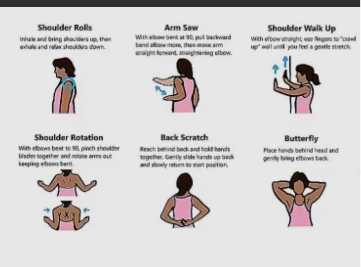
A. Avoid lifting the arms beyond the shoulders to prevent bleeding and re-opening of the wounds
B. No IVs, no injections, no blood pressure measurement, and no venipunctures should be done in the arm on the side of the mastectomy.
C. Avoid any trauma on the affected arm to decrease the risks of lymphedema
D. None of the above
CORRECT ANSWER: A. Avoid lifting the arms beyond the shoulders to prevent bleeding and reopening of the wounds
Prone to complications (due to lymph nodes removed) → infection, lymphedema
Q26: A child who has been showing the following signs came to the clinic: (+) restless and irritable, sunken eyes and skin pinch goes back slowly. When offered fluids, the child drinks eagerly. How will you classify this case according to the IMCI?
A. Green
B. Yellow
C. Red
D. Blue
CORRECT ANSWER: B. Yellow
SOME DEHYDRTATION
Restless and irritable- - yellow
Sunken eyes - pink
Skin pinch goes back slowly - yellow
Drinks eagerly - yellow
Q27: For children ages 2 months to 5 years old, which of the following is NOT included in the general danger signs the parents should watch out for?
A. Able to breastfeed
B. persistent vomiting
C. previous convulsions
D. lethargic
CORRECT ANSWER: A. Able to breastfeed
Danger sign:
• Convulsions
• Unable to breastfeed/drink
• Vomits everything
• Abnormally sleepy/lethargic/unconscious
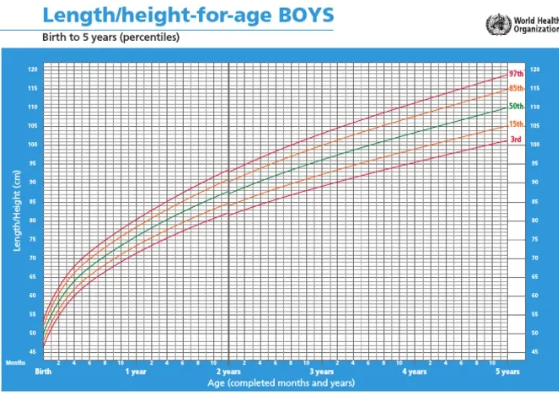
Q28: What is a reliable indicator for stunting in children?
A. weight-for-height
B. BMI
C. height-for-age
D. height-for-weight
CORRECT ANSWER: C. Height-for-Age
bmi = >10yo
Q29: What is a reliable indicator for wasting in children?
A. weight-for-height
B. BMI
C. height-for-age
D. height-for-weight
CORRECT ANSWER: A. Weight-for-Height
Q30: A pregnant patient in her third trimester has been diagnosed with HIV. To prevent prenatal transmission, which of the following management should be done?
A. Administer combination antiretroviral therapy during pregnancy and labor
B. Start antiretroviral therapy right after birth of the child, for both mother and child
C. Administer combination antiretroviral therapy during labor only, to avoid teratogenic effects to the child
D. None of the above
CORRECT ANSWER: A. Administer combination antiretroviral therapy during pregnancy and labor
Section 4: Community Health Concepts & COPAR
Situation: As a community nurse, you are expected to plan and implement health programs, provide direct nursing care, monitor health status, manage nursing services, organize the community, and coordinate care across healthcare professions.
Q31: Which of the following contributes to global warming?
A. Usage of electric cars
B. Residential leaf burning
C. Carpooling
D. Use reusable products
CORRECT ANSWER: B. Residential leaf burning
Reuse, Reduce, Recycle
Q32: Based on the previous question, which Sustainable Development Goal (SDG) focuses on the mitigation of global warming?
A. SDG 12
B. SDG 13
C. SDG 6
D. SDG 15
CORRECT ANSWER: B. SDG 13
A. SDG 12 resp consumption
C. SDG 6 water
D. SDG 15 life on land
Q33: Which of the following determines the OVERALL health of a community?
A. Infant mortality rate
B. Infant morbidity rate
C. Crude birth rate
D. Crude death rate
CORRECT ANSWER: A. Infant Mortality Rate
IMR = Number of deaths of infants under 1 year of age/ total number of live births in a given year x 1,000
Swaroop's index and Infant Mortality Rate - measures the overall wellbeing of the community
Q34: The following are the pillars of primary health care, except which of the following?
A. Active communication
B. Training of non-professional workers, such as hilots, in barangay
C. Use of appropriate technology
D. Coordination of intra and inter-sectoral linkages
CORRECT ANSWER: B. Training of non-professional workers, such as hilots, in barangay
4 AIUS
Active communication
intra and inter-sectoral linkages
Use of appropriate technology
MISSING
SUPPORT MECHANISM MADE AVAILABLE
Q35: What is the MAIN framework in nursing practice and the means by which nurses work with client-partners to enhance wellness or address the health needs of clients or the community?
A. Primary health care
B. Public health nursing
C. Community health nursing
D. Nursing process
CORRECT ANSWER: D. Nursing Process
Q36: A case of meningococcal meningitis has been recorded in your community, your team immediately conducted community-level prevention interventions to avoid further spread of the bacterial infection. Which of the following is the PRIORITY action?
A. Conduct rapid contact tracing of suspected and confirmed individuals
B. Administer vaccination to at-risk groups
C. Administer chemoprophylaxis to all community members
D. All of the above
CORRECT ANSWER: A. Conduct rapid contact tracing of suspected and confirmed individuals
Isolate
contact tracing
Index case - to diagnose and screen and stop the spread of the disease
Q37: Based on your answer on the previous question, this action can be classified as what level of prevention?
A. Primary level
B. Secondary level
C. Tertiary level
D. None of the above
CORRECT ANSWER: B. Secondary Level
Contact tracing
Q38: You are assigned to prepare for a Community Organization Participatory Action Research (COPAR) to be initiated in the barangay you are assigned to. While arranging the activities, which of the following will you expect to be included in the pre-entry phase?
A. Preliminary social investigation
B. Courtesy call
C. Immersion
D. Self-awareness leadership training
CORRECT ANSWER: A. Preliminary social investigation (pre entry specific)
B. Entry/pre-entry phase
C. Entry (imbibe the life of the community)
D. Entry
Q39: What is the GOAL of conducting a COPAR in the community?
A. To achieve community health development
B. To establish the ground of the organization
C. To establish health promotion and illness prevention programs
D. To help the community achieve optimum level of functioning
CORRECT ANSWER: A. To achieve community health development
B. goal: of entry
C. Ottawa Charter
D. Goal: CHN (OLAF)
‘‘ ANG TONDO GAGAWIN KONG MAKATI”
Q40: Which of the following focuses on the sustenance in COPAR?
A. Developing short-term goals for each quarter of the year
B. Preparation of education and training of secondary barangay health workers and officers to succeed the current BHWs and officers
C. Mobilization of the action plans planned for the second half of the year.
D. Election of BHWs and officers
CORRECT ANSWER: B. Preparation of education and training of secondary barangay health workers and officers to succeed the current BHWs and officers
A. Medium and long term dapat
B. Action
C. Action and organizing
'‘LALONG TUMATAGAL LALONG TUMITIBAY’
Q41: Based on the Philippine Code of Sanitation, how many meters away from any source of water supply should septic tanks be built?
A. Under the buildings, within 25 meters away from any water supply
B. Not under any buildings, within 25 meters away from any water supply
C. Under the buildings, within 15 meters away from any water supply
D. Not under any buildings, within 15 meters away from any water supply
CORRECT ANSWER: B. Not under any buildings, withing 25 meters away from any water supply
PD 856
Section 75: It shall not be constructed under any building and withing 25 metes from any source of water supply
Q42: Special precautions are implemented for hospitalized patients given high doses of radioactive isotope for therapy, which of the following will you NOT expect to be practiced?
A. Toilet facilities are separate from those used by "non-radioactive" patients.
B. Radioactive patients should be instructed to use the same toilet bowl at all times.
C. Patients are instructed flush at least three times after its use.
D. None of the above
CORRECT ANSWER: D. None of the above
all of those intervention pasok sa unsealed
Q43: When doing home visits, the public health nurse uses the bag technique to abide by the following principles EXCEPT:
A. Minimize or prevent the spread of infection
B. Saves time and effort in performing the nursing procedures
C. Identifies the individual as a public health nurse
D. Shows the effectiveness of the total care given to an individual
CORRECT ANSWER: C. Identifies the individual as a public health nurse
Q44: Which of the following practices does NOT abide by the milk code protocols at the hospital?
A. Free samples of regulated and approved infant formula and feeding bottles are given
B. Displays of infant formula, posters, and gifts branded with milk company logos are prohibited
C. Promotional devices with milk company logos are avoided
D. No discount coupons, premiums, special sales or gifts for infant formula shall be available in the facility
CORRECT ANSWER: A. Free samples of regulated and approved infant formula and feeding bottles are given
breastmilk at wala nang iba
Q45: To avoid diarrheal diseases, having access to safe water supply sources is crucial for the community. Which of the following describes the system with a source, a reservoir, a piped distributor network and household taps, suited for densely populated urban areas?
A. Level I
B. Level II
C. Level III
D. Point Source
CORRECT ANSWER: C. Level III
ABC
I II III
C= ciudad
Q46: Which of the following questions will you NOT expect to be answered after reading an abstract?
A. What were the research questions?
B. What were the major related literature used as basis?
C. What methods were used to address those questions?
D. What were the findings?
CORRECT ANSWER: B. What were the major related literature used as basis?
Q47: When a researcher would want to summarize the magnitude and direction of a relationship between two variables, which of the following statistical tests would you expect to be used?
A. ANOVA
B. t-test
C. Pearson's r
D. Chi-squared
CORRECT ANSWER: C. Pearson's r
Pearson's r
- Calculates the strength and power of two variables
A. ANOVA → ≥3
B. t-test → 2 variable
C. Pearson's r
D. Chi-squared
Q48: Based on the answer on the previous question, which of the following is true about the variables involved?
A. Independent variable: Nominal; Dependent variable: Continuous
B. Independent variable: Continuous; Dependent variable: Continuous
C. Independent variable: Ordinal; Dependent variable: Continuous
D. Independent variable: Continuous; Dependent variable: Nominal
CORRECT ANSWER: B. Independent variable: continuous; Dependent variable: continuous
characteristic of pearson r
Q49: Researchers can make two types of error, what type of error is shown in this scenario: If the researchers decided that online support effectively promoted breastfeeding when, in fact, group differences were merely due to sampling error. The researchers rejected the null hypothesis that is, in fact, true.
A. Type I error
B. Type II error
C. Type A error
D. Type B error
CORRECT ANSWER: A. Type I error
False positive error - A
Q50: What value is the standard criterion for statistical significance?
A. 0.05
B. 0.50
C. 0.005
D. 5.0
CORRECT ANSWER: A. 0.05