Urinary System: Functions, Structures, and Regulation
 Call Kai
 Learn
Learn Practice Test
 Spaced Repetition
 Match
Match Flashcards
 Knowt Play
1/21

There's no tags or description
Looks like no tags are added yet.
Name | Mastery | Learn | Test | Matching | Spaced | Call with Kai | Chat |
|---|
No analytics yet
Send a link to your students to track their progress
22 Terms
What is the primary function of the urinary system?
The urinary system is the major excretory system of the body.
What are the main functions of the urinary system?
Excretion of metabolic wastes, regulation of blood volume and pressure, regulation of acid-base balance, regulation of red blood cell synthesis, regulation of blood solute concentration, and regulation of Vitamin D synthesis.
What metabolic waste product is formed from protein catabolism?
Urea
What metabolic waste product is formed from hemoglobin catabolism?
Uric acid
What metabolic waste product is associated with muscle metabolism?
Creatinine
Which ions are regulated by the urinary system?
Sodium, Potassium, Calcium, Chloride, and Phosphate.
How do kidneys maintain water-salt balance?
By adjusting water volume in response to blood salt concentration.
What is the normal blood pH range?
7.35 - 7.45
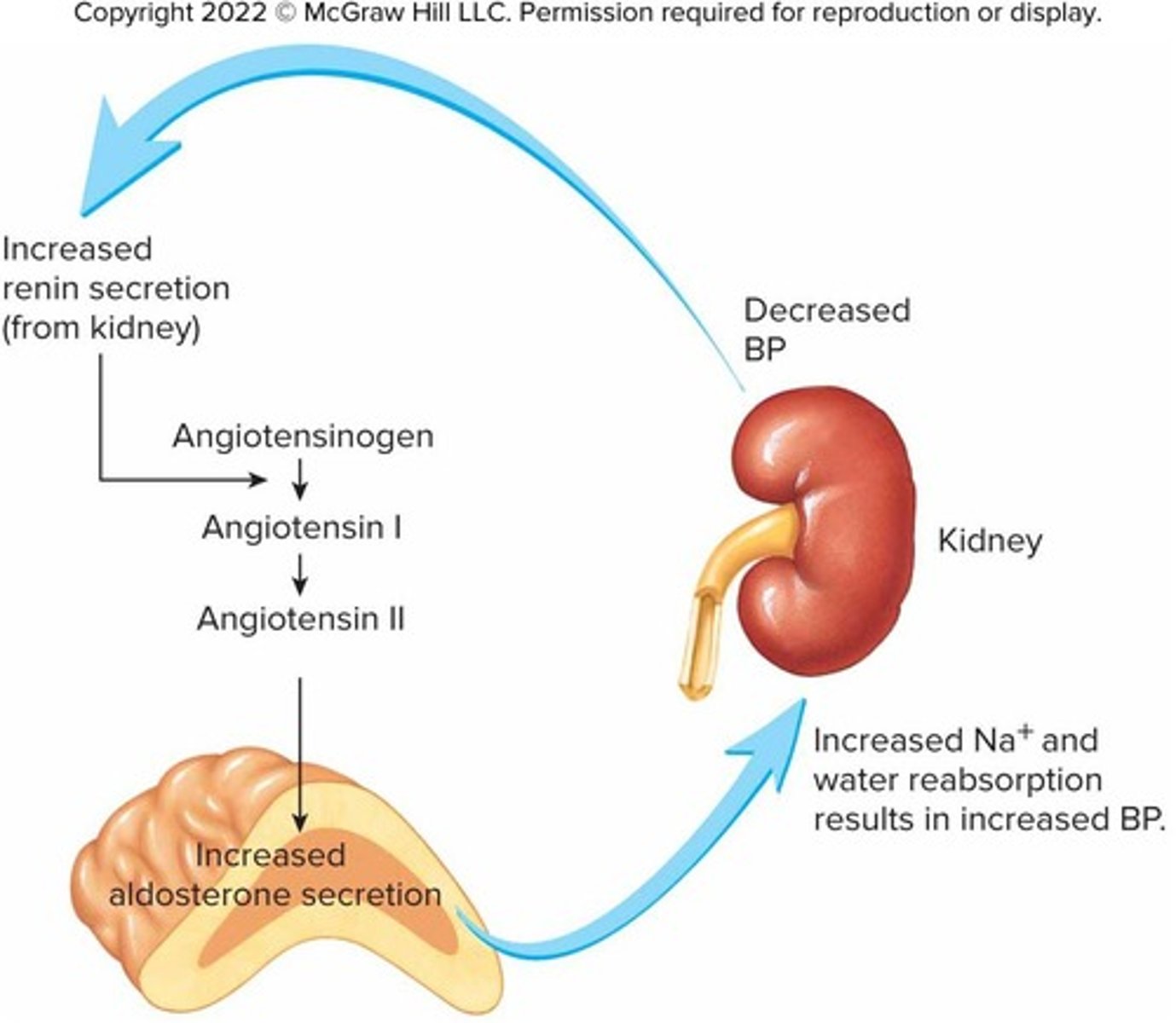
What hormone triggers the release of aldosterone?
Renin
What is the functional unit of the kidney?
The nephron
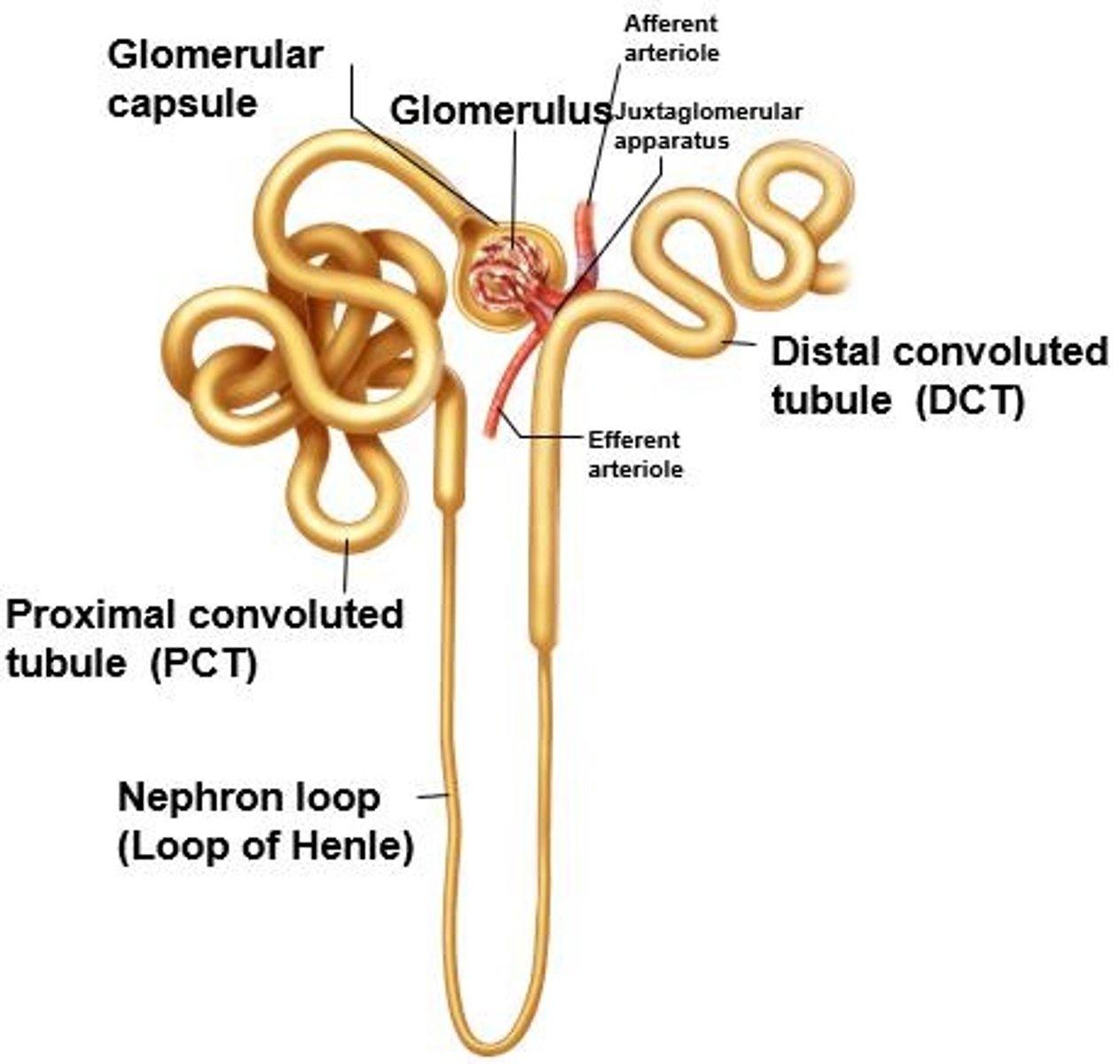
What are the main components of a nephron?
Renal corpuscle, proximal convoluted tubule, loop of Henle, distal convoluted tubule, and collecting duct.
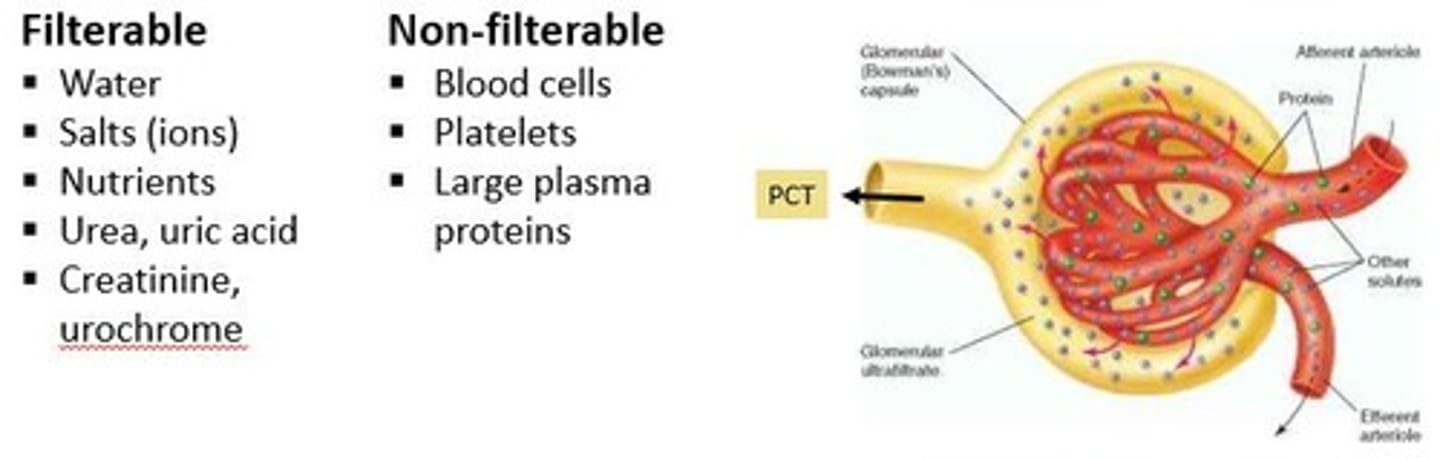
What is glomerular filtration?
The process where blood is filtered in the glomerulus and forms filtrate in Bowman's capsule.
What is tubular reabsorption?
The process by which solutes and water are removed from tubular fluid and returned to the blood.
What is tubular secretion?
The transfer of materials from peritubular capillary blood to renal tubular fluid.
What is the composition of urine?
95% water, metabolic wastes, and trace electrolytes; does not include glucose, blood cells, or plasma proteins.
What triggers the renin-angiotensin-aldosterone system (RAAS)?
A decrease in blood pressure.
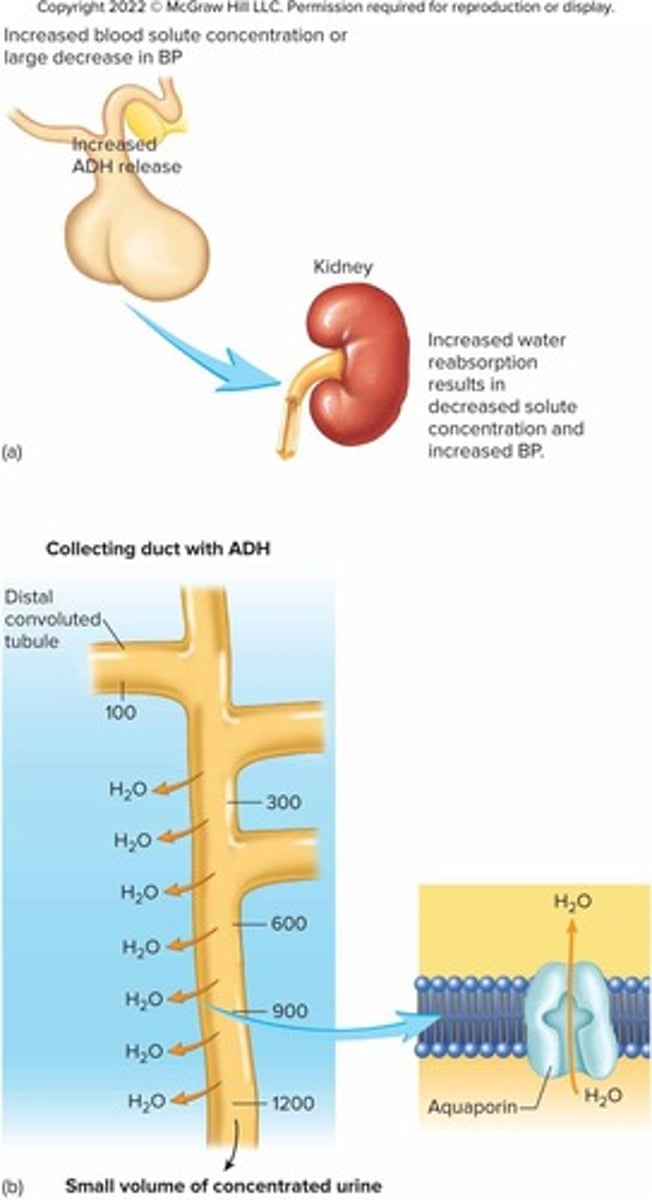
What is the role of antidiuretic hormone (ADH)?
To increase water absorption in the kidneys and raise blood pressure.
What is the main function of the urinary bladder?
To store urine.
What are the three layers of the bladder?
Mucosa, muscularis (detrusor muscle), and serous (visceral peritoneum).
What are the two sphincters of the urethra?
Internal urethral sphincter (smooth muscle) and external urethral sphincter (skeletal muscle).
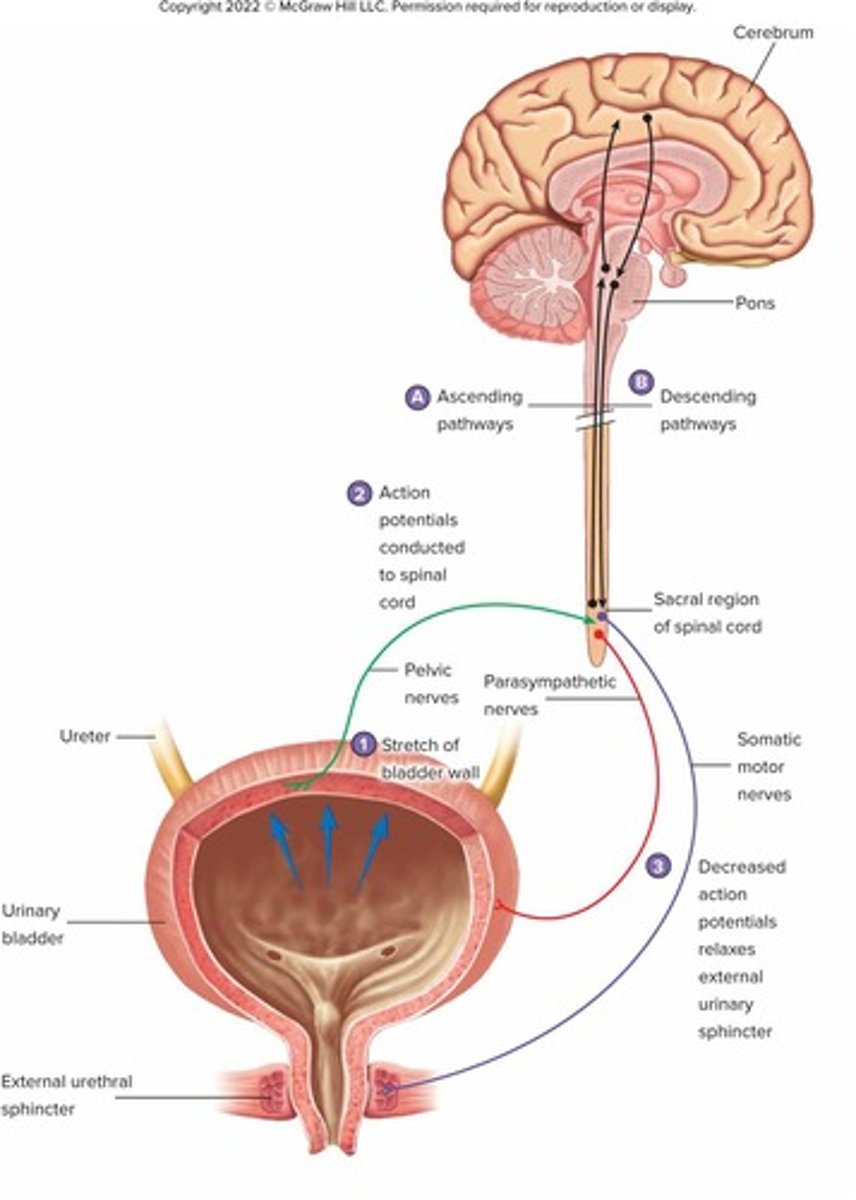
What activates the micturition reflex?
Stretching of the urinary bladder wall.
What happens during the micturition reflex?
Action potentials are conducted from the bladder to the spinal cord, causing bladder contraction and relaxation of the external urethral sphincter.