nocardia, actinomyces, dermatophilus pt. 1
 Call Kai
 Learn
Learn Practice Test
 Spaced Repetition
 Match
Match Flashcards
 Knowt Play
1/74

There's no tags or description
Looks like no tags are added yet.
Name | Mastery | Learn | Test | Matching | Spaced | Call with Kai |
|---|
No analytics yet
Send a link to your students to track their progress
75 Terms
Nocardia
Strict aerobe
Catalase positive CP
Partially acid-fast (MZN-positive)
Non-motile
Spore forming (conidia)
Oxidative
Actinomyces
anaerobic or capnophilic
Mostly catalase negative CN
Few catalase negative
Non-acid-fast
Non-motile
Non-spore forming
Fermentative
Capnophilic (carboxyphilic)
Means that carbon dioxide is required for maximum growth
Dermatophilus
Aerobic or capnophilic
Catalase positive CP
Non-acid-fast
Motile (zoospores)
Spore forming (zoospores)
Weakly fermentative
Trueperella pyogenes
Previous Name - Aecanobacterium (Actinomyces) pyogenes
Present Name -
Actinobaculum suis
Previous Name - Actinomyces suis
Present Name -
Nocardia otitidiscaviarum
Previous Name - Nocardia caviae
Present Name -
Nocardia
Streptomyces
Soil microorganisms
Actinomyces
Trueperella
Actinobaculum (except A. hordevulneris)
present on mucus membranes of the host animal (oral cavity or nasopharynx)
Dermatophilus congolensis
only species in the genus
Maintain itself in small foci of infection on a carrier animal or within scab particles of dust
Can survice in scab material for up to 3 years
Actinomyces species
Infection tend to be endogenous
Cause pyogranulomatous reactions in animal tissues
Specific virulence factors of species of vet importance have not been identified
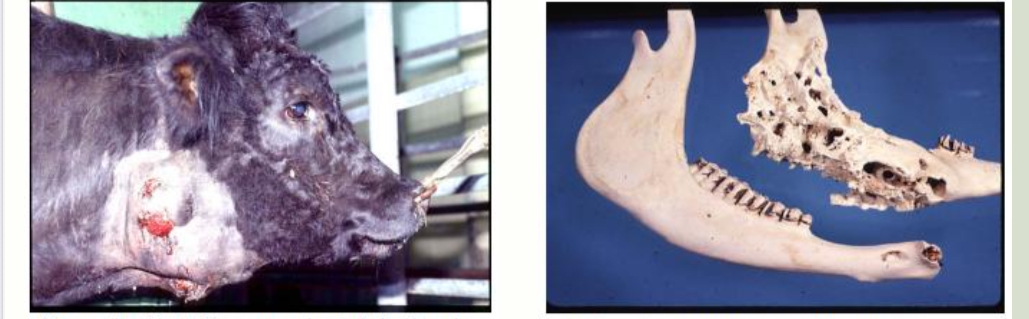
Actinomyces bovis
Gains access to alveolar region of the jaw in cattle from the oral cavity
Through trauma from mucosa
Initiates a rarefying osteomyelitis and soft tissue reaction “lumpy jaw”
periosteal new bone formation in response to infection
Fibrosis
Har, immovable, painless mass
May develop draining tracts
Actinomyces bovis
mandibular lesions most common in
Granulomatous lesions in the mammary glands
A. bovis have been isolated from sows with ____
Teeth
A. bovis becomes painful if it involves ____
causes reluctance to eat
Debridement and antimicrobials (penicillin)
A. bovis is treated with ____ & precent the disease by ensuring access to high quality feed
A. bovis
A. bovis
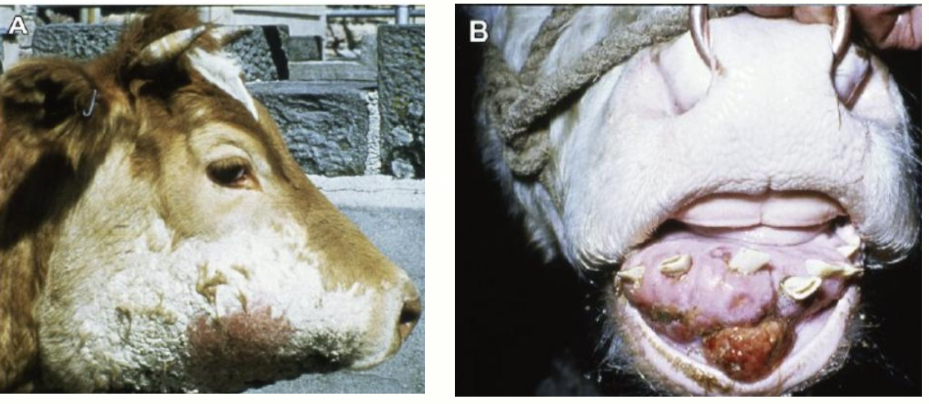
A. hyovoginalis
associated with
Abortions in sows
Purulent discharge in sows
Infections in various sites in pigs and sheep
Actinomyces viscosus
Causes clinical syndrome in dogs
Indistinguishable from that initiated by Nocardia species
Localized granulomatous lesion in skin & subcutis (antinomycotic mycetoma
Pyothorac with granulomas in thoracic tissue
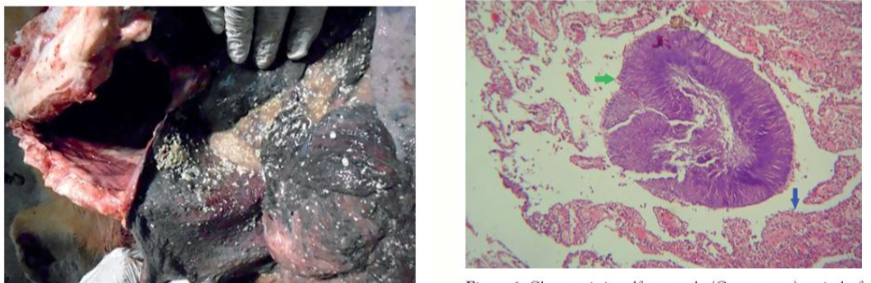
Actinomyces viscosus
Two syndromes can occur (either separate or together):
results from a cutaneous wound
Responds well to treatment
Localized granulomatous lesion in skin and subcutis (actinomycotic mycetoma)
Pyothorax with granulomas in thoracic tissue
May or may not extend to abdominal cavity
Often a large accumulation of sanguinopurulent pleural fluid containing soft white granules about 1mm in diamete
A. viscosus
Actinobaculum suis
commensals of the urogenital tract
Cause of UTI
typically afebrile
Hematuria and pyuria
May be found dead - acute rnal failure
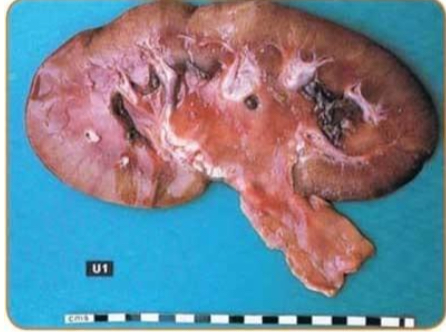
Actinobaculum suis Clinical signs
ascending infection of the kidney
An important reason for kidneys to be rejected at slaughter
Actinobaculum suis
progression to pyelonephritis
Penicillim
Actinobaculum suis - treatment
antimicrobials - _____
high hygiene
Ensuring sufficient access to water
Actinobaculum suis - treatment
management
Actinobaculum suis
Trueperella pyogenes
Associated with wide variety of suppurative infections
Often component of polymicrobial infections
Often associated with Fusobacterium necrophorum
Spreading via septic emboli is a common theme
Laryngeal abscesses in calves
Liver abscesses in cattle
Component of bovine respiratory disease
Arthritis, osteomyelitis and subcutaneous abscesses in pigs
Trueperella pyogenes
opportunistic, there is no “classical presentation”
Highly fermentable diet
Truperlla pyogenes
Liver abscesses in cattle exemplifies role of septic emboli in pathogenesis
1. Cattle fed _____
lactic acidosis
Truperlla pyogenes
Liver abscesses in cattle exemplifies role of septic emboli in pathogenesis
rumenitis results from ______
Portal venous system
Truperlla pyogenes
Liver abscesses in cattle exemplifies role of septic emboli in pathogenesis
translocation of rumen microbes into _____
Can get abscessation of caudal vena cava
right side of heart and into the lungs
Truperlla pyogenes
Liver abscesses in cattle exemplifies role of septic emboli in pathogenesis
Septic emboli spread through venous system to ____
Capillary beds
Truperlla pyogenes
Liver abscesses in cattle exemplifies role of septic emboli in pathogenesis
Bacteria gets stuck in _____ and set up secondary sites of infection
Trueperella pyogenes
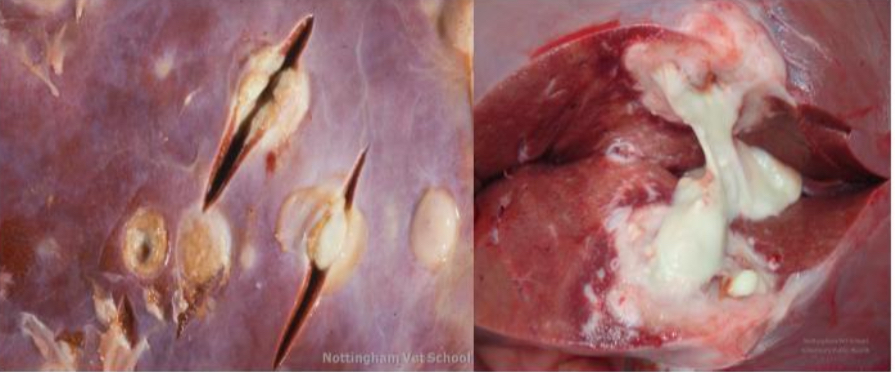
Pyolysin
Trueperella pyogenes
hemolytic exotoxin (most significant)
Cytolyctic for neutrophils and macrophages
Neuraminidases and Extracellular matrix-binding proteins
Trueperella pyogenes
facilitates adhesion to host tissue
fimbriae
Proteases
Trueperella pyogenes
other virulence factors
Biofilms
Trueperella pyogenes
Exact role of these factors in disease production has not been definitively established
Nocardia species
Difficult to identify using phenotypic methods
Many species have been reclassified
Pathogenic nocardiae can survive within phagocytic vacuoles by preventing phagolysosome formation.
Due to surface lipids
Nocardia species
Cause suppurative and pyogranulomatous reactions in immunocompromised hosts or animals that have been exposed to large doses of the bacterium
Mycobacteria
Nocardia species have a cell wall similar to ____
Superoxide dismutases and catalases
Nocardia species
Important in resistance to phagocytosis
Cell lipids
Nocardia species
May provoke the characterisitic granulomatous reaction
Exudates are sanguinopurulent
Nocardia species
Can sometimes contain soft granules consisting of bacteria, neutrophils and debris
Lack the microstructure of the sulphur granules produced by some of the Actinomyces specie
Dermatophilus congolensis
Causes skin infections than can affect many animal species
Condition commonly seen in cattle, sheep, goats and horses
Characterized by formation of thick crusts which come away easily with a tuft of hair, leaving a moist, depressed area with bleeding points from capillaries.
alkaline cermadisae
Protease
Dermatophilus congolensis virulence favors
Lesions occur along the backs of the animal
Dermatophilus congolensis
Periods of high rainfall
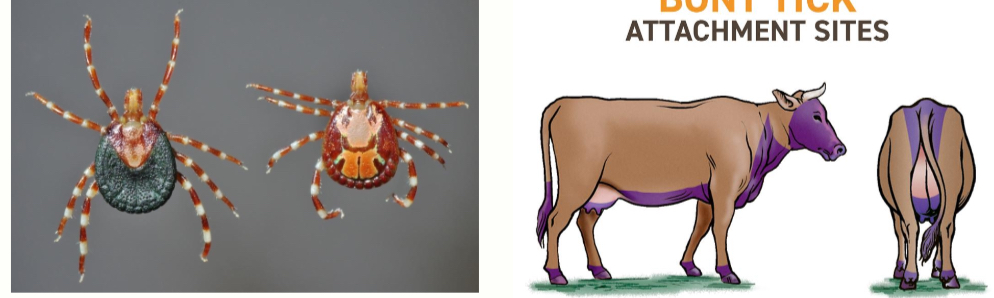
Lesions are present in the predilection sites of the ticks:
dewlap,
axillae,
udder,
scrotum, and
escutcheon
Dermatophilus congolensis
In case of heavy infestations with Amblyomma ticks
Lesions are on the muzzle, head and lower limbs
Dermatophilus congolensis
In dry season when feed is scarce (in tropical regions)
Due to animals foraging in thorn-covered shrub
Dermatophilus congolensis
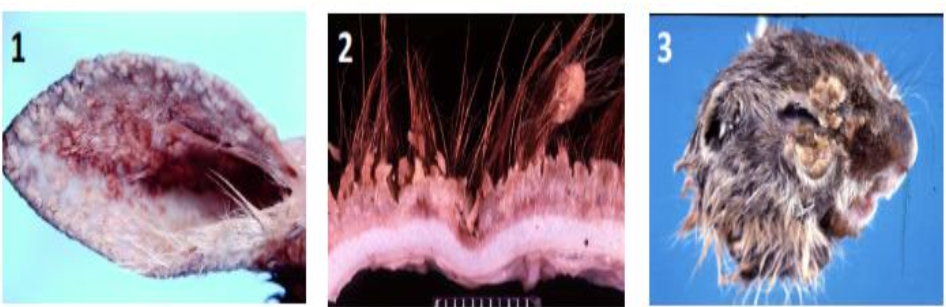
Dermatophilus congolensis
Dermatophilosis
Crusting lesions seen with
Occurs on the back
Dermatophilus congolensis
horses
Rain scald
Dew poisoning
Dermatophilus congolensis
Horses
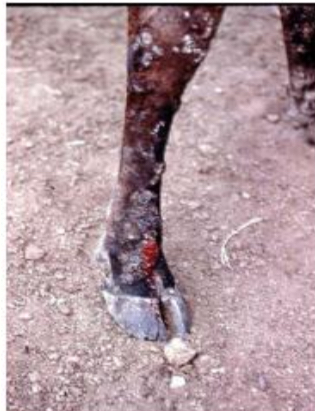
occurs on lower extremities when horses are kept on wet pasture
Lumpy wool / Mycotic dermatitis
Dermatophilus congolensis
Sheep
When on skin
Strawberry footrot
Dermatophilus congolensis
sheep
On distal extremities
D. congolensis
Transverse, horizontal, vertical septa
D. congolensis - developmental cycle
____ form in the immature filaments dividing them into coccal zoospores
Polar flagella
D. congolensis - developmental cycle
when mature, zoospores are motile by ____ and are infective
They can initiate infection in macerated or traumatized skim of the host animal.
Topical disinfectants
Antimicrobials (depending on animal species)
D. congolensis - Treatment
remove from wet environment
Discard crusts, source of infection for other animals
D. congolensis - Management
pus
Exudates
Aspirates
Tissue
Scrapings
Actinomyces - Specimen Collection
______ collected from the walls of abscesses
A volume of fluid or pus should be collected wnd submitted
Thin sections of granulomas in 10% formalin are useful for histpathology
exudates
Aspirates
Mastitic milk samples
Tissues from granulomas
Thin ssections from granulomas in 10% formalin for histopathology
Nocardia - Specimen Collectiom
For dermatophilus congolensis
Specimen collection
tuft of hair that is plucked from the lesiom usually detaches with scab material adhering to it.
Sulphur granules
A. bovis and A. viscosus
best specimens for direct examinatiom
yellowish sulphur granules
Pus or exudate is placed in a Petri dish and washed carefully with a little distilled water to expose the:
______ of A. bovis
softer greyish-white
Pus or exudate is placed in a Petri dish and washed carefully with a little distilled water to expose the:
_____ granules of A. viscosus
10% KOH
A. bovis and A. viscosus granule is placed on a slide in a drop of
Club colonies or rosettes
A. Bovis
Bacterial colonies form in the tissues with “clubs” of mineralized calcium phosphate forming around them to create microscopic _____
Phosphatase activity
Club formwtion is the result pf
Gram-positive, branching filaments
A. bovis and A. viscosus
If smears are made from granules and stained with Gram stain:
_____ can be observed
Occasionally, short filaments or pleomorphic diphtheroidal forms may predominate