Lecture 7: Abiotic stress tolerance
 Call Kai
 Learn
Learn Practice Test
 Spaced Repetition
 Match
Match Flashcards
 Knowt Play
1/44

There's no tags or description
Looks like no tags are added yet.
Name | Mastery | Learn | Test | Matching | Spaced | Call with Kai | Chat |
|---|
No analytics yet
Send a link to your students to track their progress
45 Terms
what are insects refugees? (not this lecture- relevant to bt crops)
designated areas or habitats, typically non-transgenic (non-Bt) crops or natural vegetation, designed to protect insects from pesticides and maintain susceptible populations. Their primary goal in agriculture is to slow the evolution of insecticide resistance in pest populations by providing a safe haven for them to mate with non-resistant counterparts.
Agricultural Refuges (Bt Crops): Mandatory in many regions for farmers using Bt technology, these refuges consist of 20% or more of a crop field planted with non-Bt seeds. This allows Bt-susceptible insects to survive and mate with any potentially resistant insects from the Bt area, preventing the spread of resistance
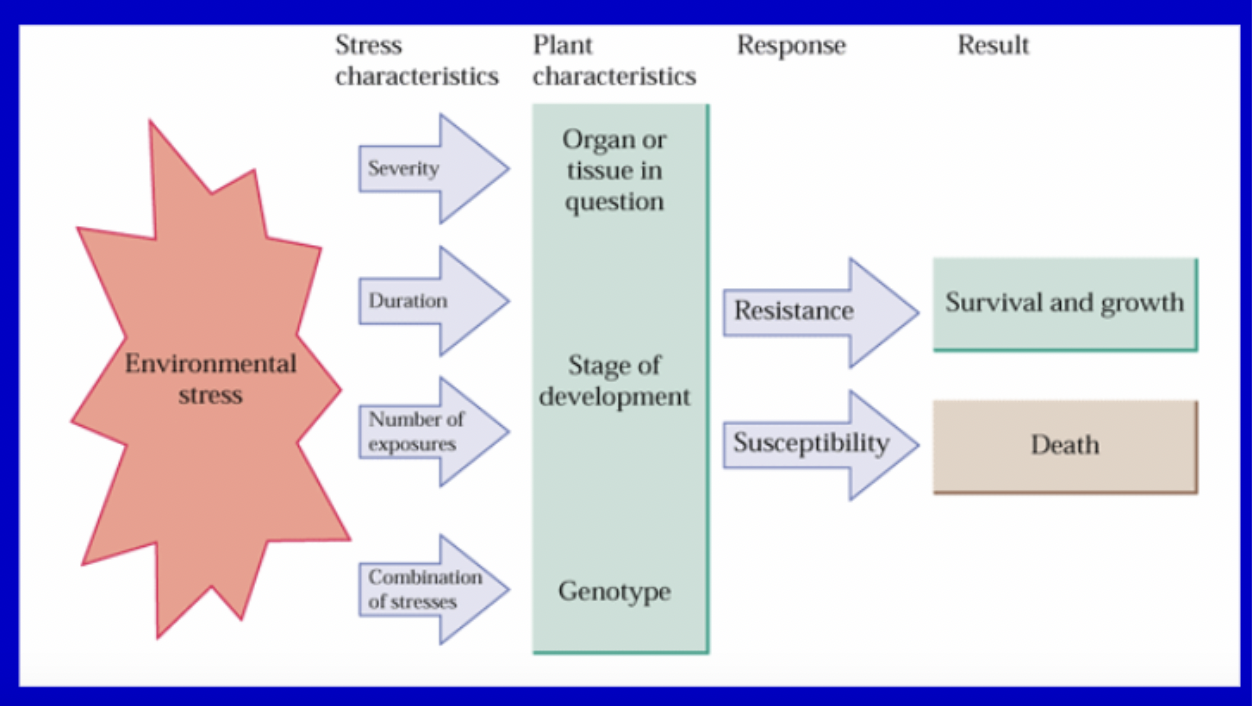
what factors influence plant responses to stress?
various factors such as: what type of stress it is exposed to (the characteristics of the stress) as well as the characteristics of the plant eg what organ/tissue the stress affect, the stage of development the plant is in and the genotype of the plant
all these factors contribute to what the response will be in the plant- which ultimately lead to either resistance (and survival) or susceptibility (and death).
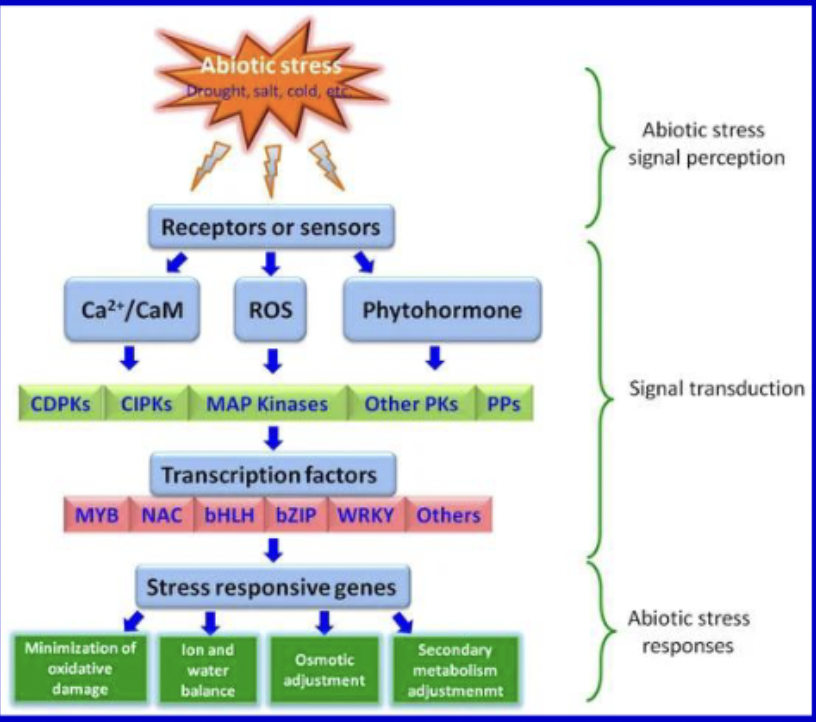
how does transcription factors influence plant responses to stress? Explain how the abiotic stress is sensed, processed and leads to response
The abiotic stress is sensed by receptors/sensors on the plant cell wall- the activation of the receptors lead to the synthesis of early signal molecules (such as Ca2+/CaM, ROS and abscicic acid)- these molecules in turn lead to the activation of a range of other reactions inside the cell (the effect of the signal is amplified through signal transduction)- ultimately lead to transcription factors being affected and regulating gene expression- activation of the plants defence system (the transcription and expression of defence proteins are turned on by the transcription factors, through signal transduction, initiated by the synthesis of certain signal molecules through activation of sensors/receptors activitation).
Short: Abiotic stress is sensed by receptors and lead to signal transduction och activation of transcription factors that lead to a change in gene expression (either supression or enhancement). Transcription factors can bind to a range of different genes.
what are gene expressions that can be altered in response to stress?
Stress responsive genes that can be affected by abiotic stress include those involved in:
- Minimization of oxidative damage
- Ion and water balance
- Osmotic adjustment
- Secondary metabolism adjustment
explain what stress influence plants, what is the difference in gene expression, how does it influence productivity and agriculture
Plants must cope with many types of stress: both Abiotic stresses (non-living) and Biotic (living)
Environmental stresses cause significant losses in plant production- Increasing stress resistance and tolerance of plants is of great importance for agriculture
There are big differences in the gene expressions when plants are exposed to abiotic stress vs when they are not.
What resistance that is favourable in the plant depend on the environment eg plant species in temperate climates need resistance/adaptations to cold and winter periods.
why is adaptation to stress so important in plants? give one very significant adaptation
Plants cannot escape stresses as do animals- they are Sessile (immobile). Which mean that they have to cope with fluctuating environmental conditions throughout their life:
- hence the adaptations to stress is very important
- one adaptation for instance is the ability to generate new tissue from all cells- regeneration of lost plant parts is important for survival.
how common is GMO plantages in the major crops?
82% of the global Soybean production is GMO crops. 30% of Maize, 68% of cotton, 25% of canola/rapeseed of the global production are GMO crops.
what are the two major GM crop adaptations?
1. IR or Bt: Insect resistance e.g. using Bt protein. In e.g. maize, cotton, soybean, eggplant, potato.
2. HT: Herbicide tolerance. In e.g. maize, cotton, soybean, rapeseed, potato, alfalfa, sugar-beet.
—> or stacked: HT-Bt: Both insect resistance and herbicide tolerance. In e.g. maize and cotton.
what are some less common GM crop adaptations
- VR: Virus resistance. In e.g. papaya, squash, tomato, sweet pepper.
- Modified metabolic pathways, e.g. purple carnation, low ligning alfalfa
Why is it so difficult to breed for abiotic stress tolerance?
Earlier the mechanism has been quite unknown and multiple genes are often involved (multigenetic responses) therefore it has been difficult to favour abiotic stress resistance in crops.
- Some of the genes involved in abiotic stress tolerance have a wide array of vital functions- hence if altered the expression of other vital functions will be affected as well
- The plant response to abiotic stress is most often multigenic and involve a great amount of genes and hence interact with a big range of different pathways—> altering those genes can be deadly to the plant (impact vital functions/pathways)
With AI- we can better predict what bases should be modified in transformations
What are three responses to stress in plants
- Escape: Ephemeral (short-lived) plants e.g. desert plants
- Avoidance: Reduce impact of stress, e.g. Cacti (Fleshy leaves to store water), Pine needles (Reduce water loss)
- Tolerance: Adapt or acclimate to new growth condition
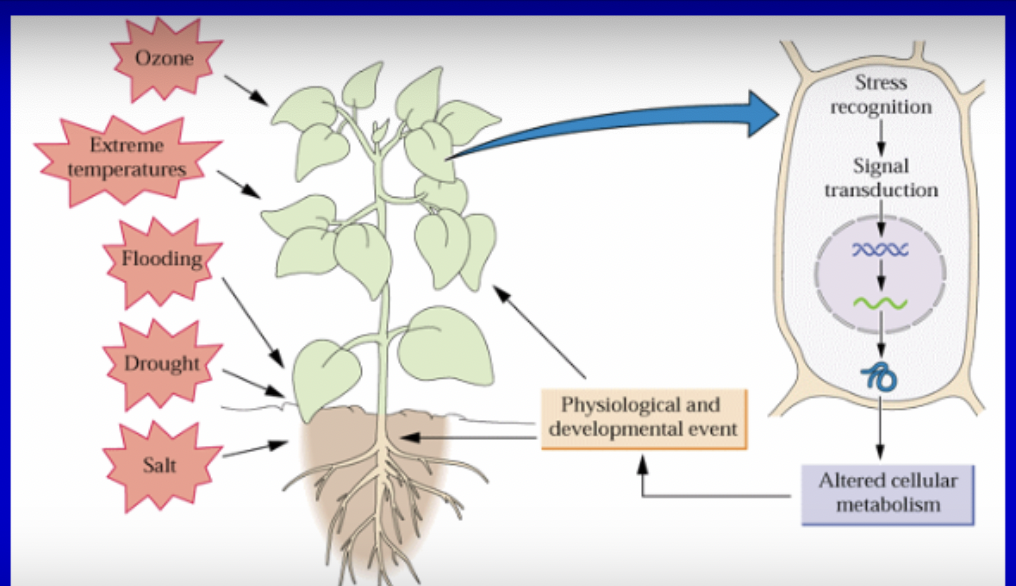
can stress be recognised on the cellular level? how?
Most stresses are recognized at the cellular level:
- Alters physiological or developmental characteristics of the plant: by Initiating a signal transduction pathway (activated by the recognition of the stress) which in turn lead to changes in gene expression, protein synthesis, altering the metabolic pathways and other cellular processes= response
what is water stress in plants, why is it a growing problem? what two types are there mainly
may be growing issue due to global warming- affect infrastructure as well as farmland productivity.
Water stress can occur in plants by either too much or too little water availability
- Excess water (flooding)
- Water deficit (drought, desiccation) (similar effect during salt and osmotic stress)
explain water stress, in terms of water potential, what are the risks?
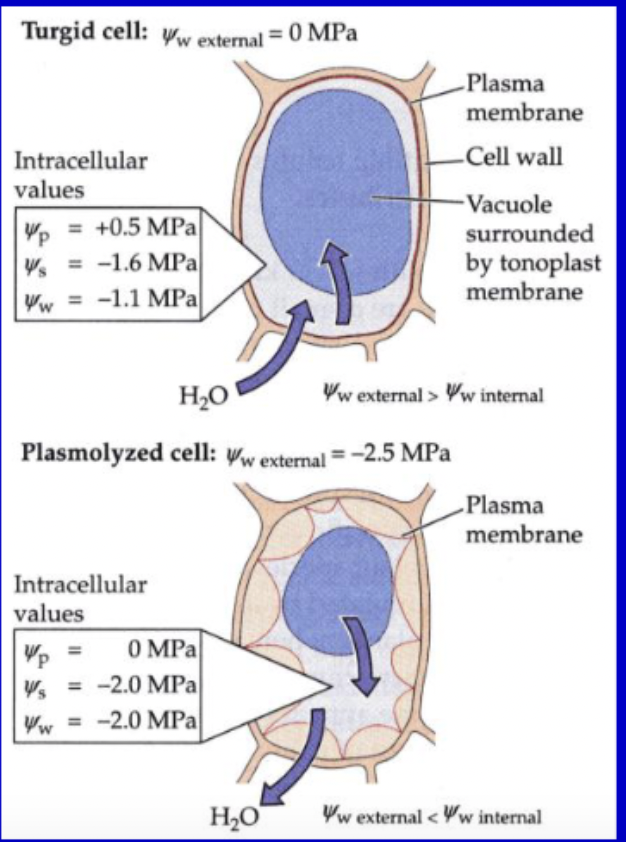
- Too little water —> cell walls shrinking and killing plant,- plasmolysis
- too much water —> lack of oxygen accessible
- Water potential- water always travel toward the lower water potential.
- Typically the pressure from water inside the plant cell is high, making the cell turgid
- Water potential is dependent on the pressure (physical pressure of water on the cell= turgor) and solute concentration (amount of solutes in water)
Plasmolysis= When external water potential is lower than the internal- leads to water loss from cell= Plasmolysis (plasma membrane collapses)-
water leave the cell due to lower water potential on the outside if the cell
- Severe plasmolysis = lethal (membrane damage)
- Can be caused by drought (low external water) or Salinity (high external solute concentration)
how can plasmolysis be prevented by the plant? 2 ways
Reduce water loss from the plant by:
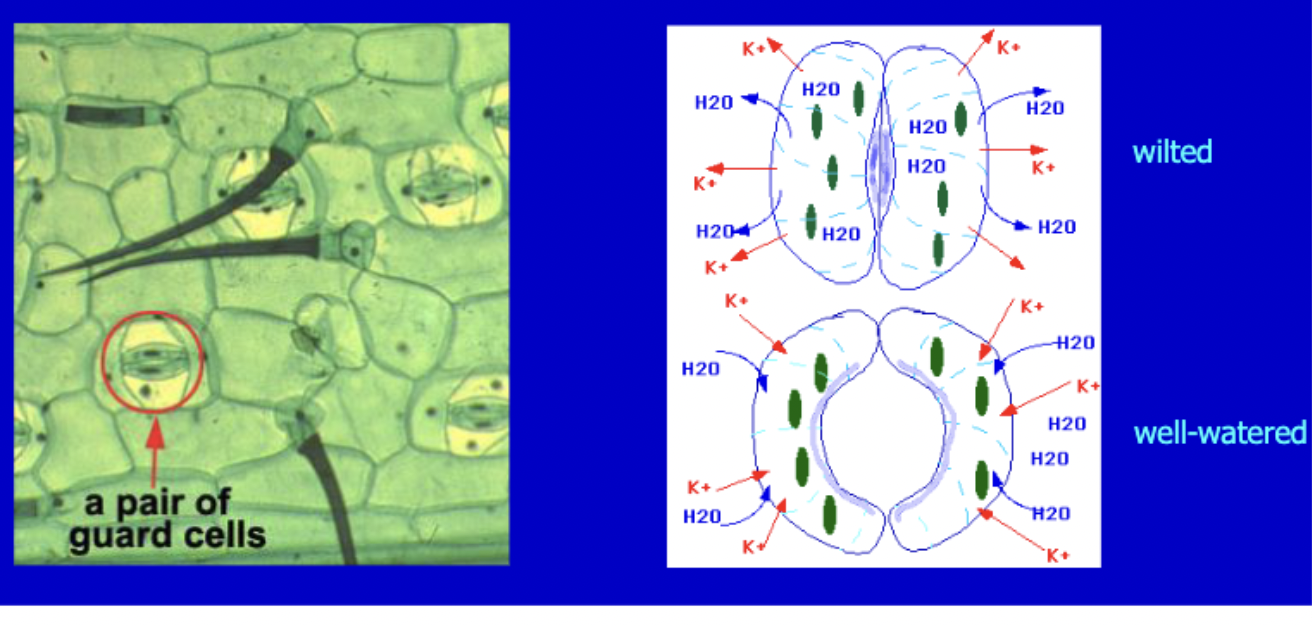
- Stomatal closure: water deficiency stimulate ABA synthesis and induce stomatal closure, which reduces water loss from the leaves via transpiration
- Osmotic adjustment: active accumulation of solutes inside the cell leading to a decreased water potential and water travelling into the cell from the outside- allowing for the cels to remain turgid. This only work during moderate water stress, but is prefered since it enable the stomata to remain open which in turn enable a continued uptake of CO2 and hence photosynthesis to occur.
explain stomatal closure, what two ways are there?
Stomatal closure: the stomata can close in order to preserve water- however this also inhibit the release of CO2 and uptake of O2 from the surrounding- halting photosynthesis?
- Guard cells (the “walls” of the stomata) will close during droughts by either:
Hydropassive closure (excess water loss from guard cells) or
Hydroactive closure (metabolically active process –involves ABA)
what solutes are involved in osmotic adjustment?
- Proline (amino acid)
- Sorbitol (sugar alcohol)
- Glycine betaine (trimethyl glycine)
—> Plants vary in their ability to synthesize these osmolytes
what is the problem with salt stress, what are the two main tolerance mechanisms?
Salt stress big problem in modern agriculture due to excessive irrigation which lead to increased salinity in the soils- killing the crops
Salt stress: High salt concentrations cause two main problems in plants: 1. Ion toxicity & 2. Water stress.
Main tolerance mechanisms are:
- osmotic adjustment
- salt exclusion (mainly NaCl): salt-tolerance mechanism in plants, particularly halophytes
explain osmotic adjustment
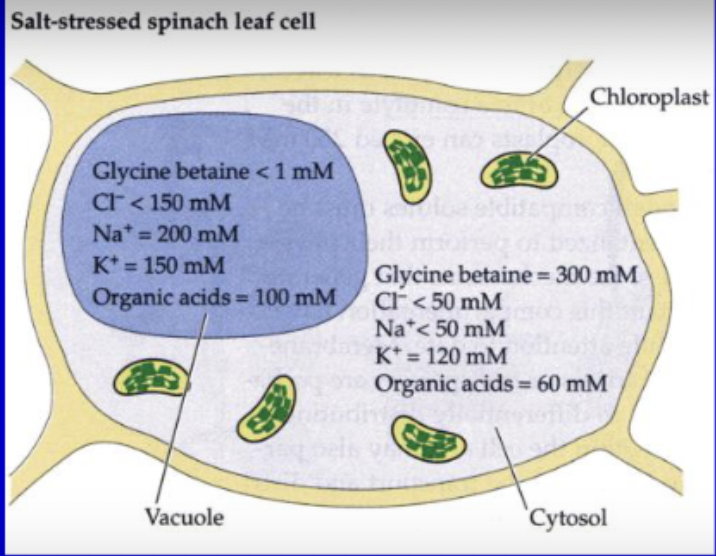
Accumulation and redistribution of solutes inside cell during salt stress, both by:
- Increased solute concentration of certain compound which reduces the water loss due to high external salt concentration since it lowers water potential
- Salt that already has accumulated in the cell can also be used a sort of osmotic adjuster by transporting it inside the vacuole and storing it there- hence lowering the water potential inside the cell at the same time as protecting the methabolically active parts of the cell (cytosol and chloroplasts) from the toxic salt molecules (especially Na+ that can harm important enzymes)= mainly a mechanism common to halophytes
explain salt exclusion
the process by which plants prevent salt from reaching or damaging sensitive compartments — either by blocking it at the roots, secreting it from leaves, or isolating it in the vacuole.
- Common tolerance mechanism in halophytes
- Salt can be excluded through the roots (not absorbed into plant cell) e.g. Mangroves
- Salt can be excreted from the leaves (removed from plant cell) through Salt glands (salt crystallizes on leaf surface)
- Salt can be excreted within the cells (removed to avoid toxicity)- eg inside the Vacuole (Na+ stored to avoid toxicity)
what are halophytes, why could they be useful
Halophytes like high salinities- if these genes can be identified and understood- maybe those genes can be transferred to other salinity sensitive plants and hence increase tolerance.
name future challanges when it comes to osmotic stress
Future challenges of Increased soil salinity, drought, and cold temperatures are major agricultural problems globally—> all osmotic stresses. Contributing factors include:
- Extensive cropping / animal grazing
- Human over-population
- Changing global climate
- Wrong irrigation
—> Cause of increasingly severe health, economic and social problems worldwide.
how can plant models be used to gain knowledge in salt tolerance/resistance to osmotic stress
- Take advantage of already tolerant systems- halophytes e.g. resurrection plants
- Examine tolerant parts of a normal plant such as seeds (can tolerate scarce conditions and “resurrect”)
- Analyze drought tolerant mutants from various plants
- Taking advantage of genetic model systems
give one example of a Transgenic improvements that can be engineered inside plants to make them more tolerant to osmotic stress?
include eg:
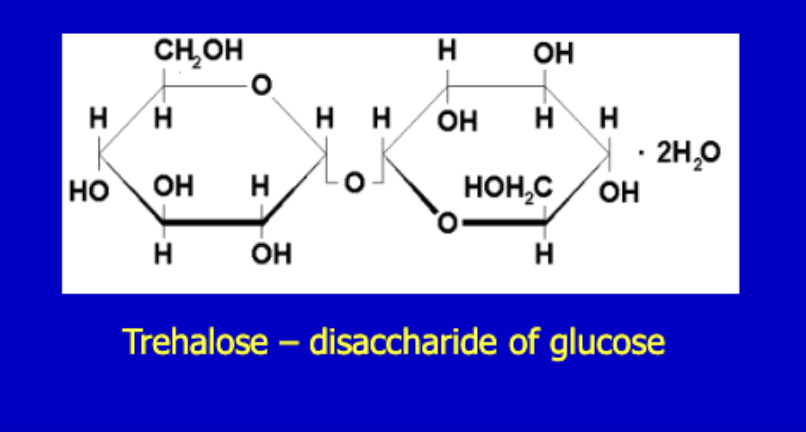
increasing the synthesis of specific sugars and sugar alcohols inside the plant cells eg trehalose ( a disaccharide of glucose) which help protect cells during drought, salinity and cold temperatures by acting as osmoprotectants and stabilising certain enzymes
name one potential transformation to accquire Drought/salt tolerance in plant, explain why briefly
transforming genes that encode for trehalose synthesis.
Trehalose – disaccharide of glucose:
- Well known to protect enzymes, proteins and membranes during desiccation in bacteria, yeast and invertebrates
- Most plants do not naturally produce trehalose
what is Desiccation
= extreme moisture loss
what are resurrection plants, how do they work?
Resurrection plants- can completely dry out and then resurrect when hydrated again- very high drought tolerance- thanks to the synthesis of trehalose:
- Most plant species do not naturally synthesize trehalose but Resurrection plants do!
- Often found in deserts and other extremely arid habitats
- Able to completely dry out but recover within hours of rewetting
- Biochemical mechanism remains unknown but trehalose is often involved
explain the trehalose synthesis
Requires two separate enzymes 1) TPS (Trehalose-P synthase) and 2) TPP (Trehalose-P phosphataseand):
- UDP-glucose & glucose-6-phosphate are the substrates in the trehalose synthesis: both molecules are already present in the cytosol (part of the sucrose biosynthesis pathway)—> trehalose synthesis can occur if the enzymes TPS and TPP are present in addition to the already present substrates!

how can trehalose be engineered in non salt tolerant plants ?
By adding genes responsible for trehalose synthesis (encoding the enzymes) you can incurr drought tolerance: this has been done succesfully- improved tolerance. However for commercialisation- may not be realistic today
Other approaches to salinity tolerance (other then trehalose) involve salt reallocation or exclusion- explain this- what is the purpose of this and how is it achieved?
- Purpose: minimize salt concentration in the cytoplasm to protect sensitive enzymes and metabolic pathways (Na+ can replace K+ as co- enzyme which can be negative)
- This can be accomplished by enhancing salt transport, either from the Cytoplasm into the Vacuole, or from the Cytoplasm to the Apoplast (the “empty” space between the plant cells)
what are the two key Na+/H+ antiporters in the plant cell membrane? why are they relevant
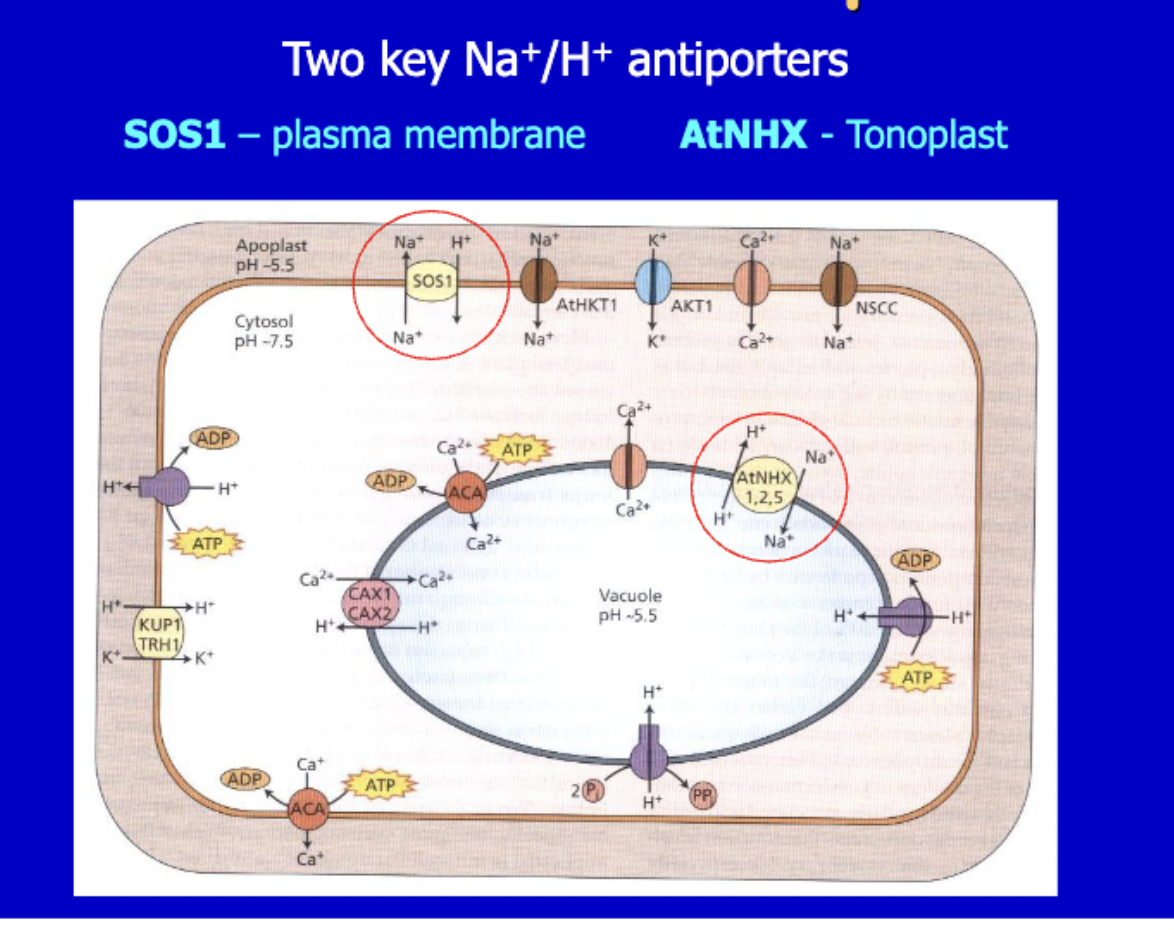
- in the plasma membrane: SOS1: pumps out sodium Na+ in exhange for H+
- In the tonoplast (the membrane around the vacuole): atNHX: pumps sodium Na+ into the vacuole in exhange for H+.
- If these transporters are overproduced (ie many transporters present in each cell) the plant get an improved salinity tolerance- since its ability to regulate and relocate the toxic Na+ ions improve
—> useful in salt reallocation or exclusion- to reduce salt conc in the cytoplasm
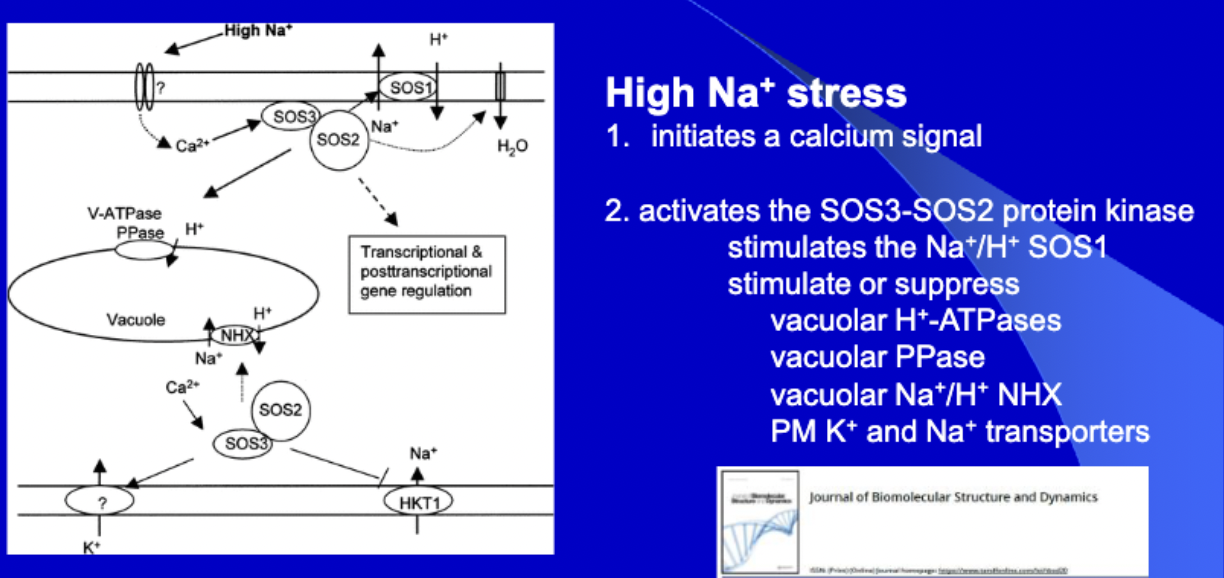
explain how Regulation of harmful salt ions (Na+ and K+) inside the cell through the SOS pathway occur- what is the SOS pathway? purpose?
- Goal: maintain salt homoestasis- protect the cell from high conc of Na+ and K+ that can easily become harmful
- High Na+ stress initiate a calcium (Ca2+) signal inside the cell which activate a protein kinase complex (SOS3-SOS2) which in turn regulate a range of transporters in the cell (through phosphorylation)- most importantly SOS1 (pumping Na+ out of the cell via plasma membrane) and NHX (pumping Na+ into the vacuole via tonoplast). The pathway also regulate H+-ATPase (bla) which maintain the proton gradient needed to drive the antiporters.
- SOS pathway= the plant's emergency response system for dealing with Na⁺ toxicity — it senses the problem, signals a response, and activates the machinery to either expel or safely store the excess sodium (Na+)
is it true that Plants plants show a wide range of sensitivities to different temperatures both high and low?
yes
what are the two main categories of cold stress?
1. Chilling stress ➢ low, non-freezing temperatures (0-15°C) (common for plants native to warm habitats)
2. Freezing stress ➢ sub-zero temperatures (common for trees & shrubs in alpine / sub arctic regions)
what is cold acclimation
plants can acclimate to colder temperatures if exposure is gradual: In that way plants can acquire resistance to freezing temperatures after being first exposed to chilling temperature (above 0°C)
name the processed that are involved in cold acclimation in plants
involves multiple simultaneous responses which include: (OBS gick ej igenom alls på föreläsn)
- Gene regulation — increased transcription of cold-response genes, increased mRNA stability, and down-regulation of certain genes
- Reduced water content — water is removed from cells to prevent ice crystal formation
- Osmotic regulation — accumulation of sugars and proline to lower water potential and protect cells
- Increased antioxidants — to combat oxidative stress that cold temperatures can cause
- Alterations in energy balance — metabolic adjustments to cope with reduced enzyme activity in the cold
- Membrane modification — changes in fatty acid saturation and lipid composition to maintain membrane fluidity at low temperatures
- Reorganization and stabilization of the cytoskeleton — structural adjustments to prevent cell damage
- Alterations in hormone balance
- Reduced growth — energy is redirected away from growth toward stress protection
what is freezing stress? how does in influence the plant, how can freezing tolerant plants handle the stress?
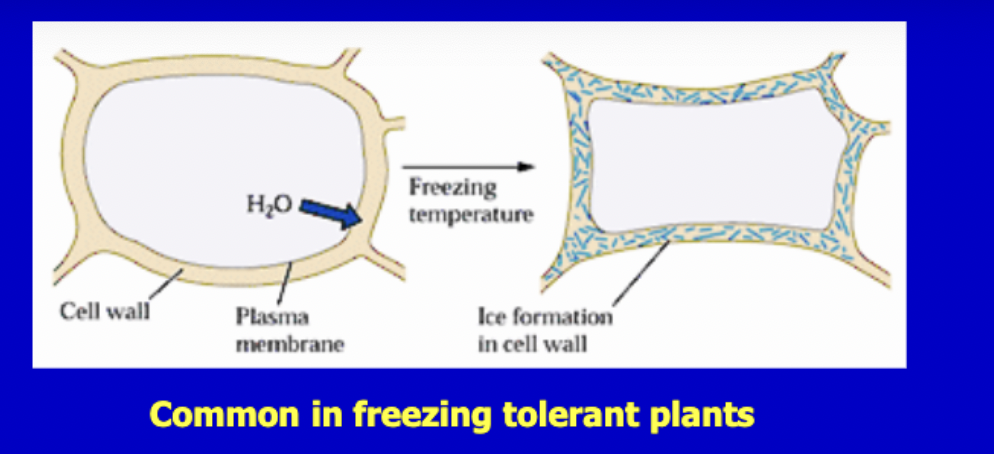
- Most freezing injury in plants caused by ice formation
- Ice formation in cytoplasm is lethal!
- Freezing resistance mechanisms: during slow freezing, water moves across plasma membrane from cytoplasm into cell wall and intercellular spaces: Common in freezing tolerant plants
- Mechanisms that confer freezing tolerance in plant cells remain unclear but involves stabilization of membranes, Accumulation of sugars (sucrose) and other osmolytes (proline)as well as Synthesis of cold-shock proteins (including anti-freeze proteins)
what are anti freeze proteins (AFPs)- and how do they protect the cells from freezing damage?
proteins that bind to small ice crystals, inhibiting their growth, and preventing ice recrystallization
- Reducing freezing temperatures within cells
- Reducing ice crystal formation within cells
- Protecting cell membranes
Different types of native AFPs occur in many plant species: normally low abundant, and many commercial crops lack AFPs altogether
how can freezing tolerance be engineered in plants?
Freezing tolerance has been transformed into plants successfully: genes encoding for AFPs from fish where transformed into plant
- however the actual freezing tolerance that the transformation gave was limited
briefly summarise how stress is sensed and responded to
When a stress (eg drought, cold or salt) hits the plant, receptors detect it and trigger secondary messengers (eg calcium, ROS, and hormones)- These activate kinases, which then activate transcription factors, which finally switch on the stress responsive genes which lead to a response such as osmotic adjustment, altered ion balance, etc.
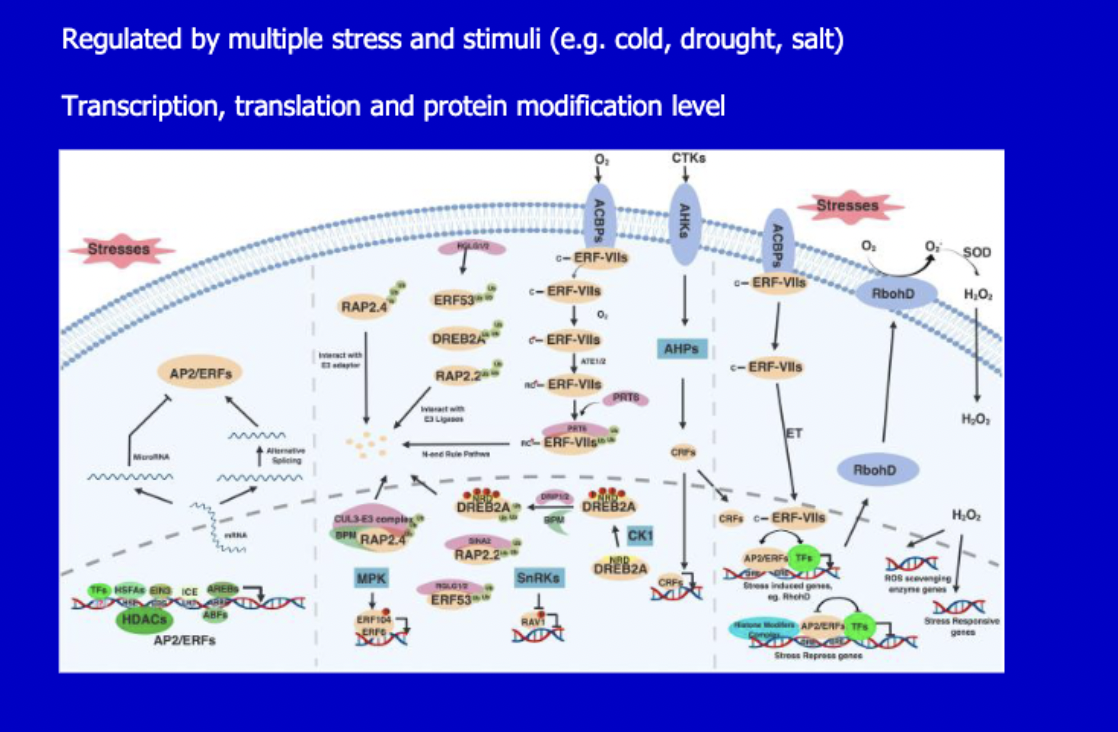
one specific and important transcription factor family is AP2/ERF, explain why?
- Under normal conditions, these transcription factors are actually kept suppressed — silenced by microRNAs (which become degraded by ubiquitin ligases) — because if they were always active they'd interfere with normal plant development
- Under stress conditions, that suppression is lifted- the AP2/ERFs transcription factors move into the nucleus, bind to DNA and either activate or repress stress responsive genes as needed
- The activation of the transcription factors can in turn lead to the production of H₂O₂ (a signal molecule), which then further amplifies the stress response by activating more protective genes
- stress response genes aren't just switched on directly — there's a whole signalling cascade from perception → kinases → transcription factors → gene expression, with multiple layers of regulation along the way.
what is a big barrier in CRISPR cas9 and agricultural biotech
CRISPR-Cas9 system is protected by patents- makes it expensive and legally complicated for smaller companies to use commercially. This is a significant barrier in agricultural biotech- inhibit progress and usability.
what is OpenCRISPR
OpenCRISPR- New CAS via AI: cannot claim patent and much more affordable to use freely:
- OpenCRISPR= a newer development where AI was used to design novel Cas proteins from scratch. Because these proteins are AI-generated and not derived from naturally occurring bacterial systems, they fall outside existing patents — making them freely available and much more affordable to use. This is seen as a potential game-changer for smaller companies and researchers.
is it true that Providers/companies are available in order to help understand which genes should be turned on/off in order for the aimed characteristic to be obtained from the transformation.
yes
name one potential improvement possible with biotech that has to do with rubisco
Rubisco is the enzyme responsible for fixing CO₂ in photosynthesis, but it has a well-known flaw — it can accidentally bind O₂ instead of CO₂, leading to a wasteful process called photorespiration. This essentially means the plant expends energy without producing useful sugars. If crops could be engineered so that Rubisco more reliably binds CO₂, photosynthetic efficiency would increase, resources would be used more productively, and crop yields could improve significantly.--> one potential in biotech