Cellular Adaptation, Injury, and Fluid/Electrolyte Balance in Nursing
 Call Kai
 Learn
Learn Practice Test
 Spaced Repetition
 Match
Match Flashcards
 Knowt Play
1/77

There's no tags or description
Looks like no tags are added yet.
Name | Mastery | Learn | Test | Matching | Spaced | Call with Kai | Chat |
|---|
No analytics yet
Send a link to your students to track their progress
78 Terms
What is cellular adaptation?
The process by which cells adjust to stress to maintain homeostasis.
What are the two types of cellular adaptation?
Physiologic and pathologic.
What is atrophy?
A decrease in cell size due to factors like aging, disuse, or insufficient blood supply.

What causes pathologic atrophy?
Reduced workload, blood supply, nutrition, or hormonal/neural stimulation.
What is hypertrophy?
An increase in cell size, often due to increased demand or hormonal stimulation.

What is hyperplasia?
An increase in the number of cells through mitosis, stimulated by growth factors and hormones.

What is metaplasia?
The reversible replacement of one mature cell type with another, often due to chronic irritation.

What is dysplasia?
Abnormal cell size, shape, and organization that may be reversible if the stimulus is removed.

What is the most common cause of cellular injury?
Hypoxia, which is insufficient oxygen to cells.

What is ischemia?
Reduced blood supply to tissues, leading to hypoxia.
What is ischemia-reperfusion injury?
Additional injury caused by restoring blood flow and oxygen to ischemic tissue.

What are free radicals?
Unstable molecules with unpaired electrons that can cause cellular damage.

What is oxidative stress?
An excess of reactive species and/or inadequate antioxidant defenses leading to cell injury.
What are some sources of free radicals?
Redox reactions, UV light, drugs, ischemia-reperfusion, and aging.
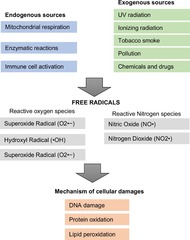
What is the role of antioxidants?
To neutralize free radicals and terminate chain reactions that cause cellular damage.
What happens during the hypermetabolic response after a major burn?
Increased heart rate, metabolic rate, core temperature, and muscle wasting.
What are the effects of major burns on fluid balance?
Increased capillary permeability leads to fluid loss and hypovolemia.
What is the significance of the first 24-72 hours after a major burn?
Critical period for fluid resuscitation due to hypovolemia and altered cellular metabolism.
What is the impact of severe burns on immunity?
Prolonged inflammatory response can lead to immunosuppression.
What is the difference between physiologic and pathologic hypertrophy?
Physiologic hypertrophy preserves normal structure and function, while pathologic hypertrophy may lead to dysfunction.
What is the clinical paradox of reperfusion injury?
Restoring blood flow is essential to salvage ischemic tissue but can cause additional injury.
What is anoxia?
The complete absence of oxygen due to obstruction.
What is the relationship between hypoxia and ATP production?
Decreased oxygen leads to decreased ATP production, affecting cellular functions.
What are the nuclear changes that indicate irreversible cell injury?
Nuclear fragmentation and membrane disruption.
What is the role of stem cell reprogramming in metaplasia?
It allows for the replacement of one cell type with another that may better tolerate adverse conditions.
What is the significance of dysplasia in tissue pathology?
It indicates abnormal cellular changes that may precede cancer but is not cancer itself.
What are the effects of oxidative stress on cellular components?
Damage to lipids, proteins, and DNA, leading to impaired cellular function.

What is the importance of early nutrition in burn recovery?
It supports metabolic demands and aids in wound healing during the hypermetabolic state.
What is the primary goal of burn management?
To restore homeostasis and limit ongoing cellular injury.
What are the key components of fluid and electrolyte resuscitation in burn management?
Fluid and electrolyte resuscitation, early nutrition, wound excision and grafting, infection prevention, thermoregulation, ventilatory support, aggressive pain management, and rehabilitation.
What are the two levels at which cell injury can manifest?
Biologic manifestations and clinical manifestations.
What is necrosis?
Pathologic cell death characterized by cell swelling, membrane rupture, and inflammation.
What is apoptosis?
Regulated/programmed cell death that involves controlled cellular breakdown with minimal inflammation.
What are common causes of necrosis?
Ischemia/hypoxia, microbial toxins, chemicals, physical injury, and release of destructive enzymes.
What happens during necrosis?
Cellular and organelle swelling, plasma membrane rupture, leakage of intracellular contents, and an inflammatory response.
What is coagulative necrosis?
Necrosis characterized by protein denaturation and firm, preserved tissue architecture, commonly seen in infarction.
What is liquefactive necrosis?
Necrosis where tissue becomes soft and liquid, often associated with brain ischemia and bacterial infections.
What is caseous necrosis?
A combination of coagulative and liquefactive necrosis that has a cheese-like appearance, commonly associated with tuberculosis.
What is fatty necrosis?
Necrosis involving fat destruction and saponification, typically seen in pancreatitis.
What is gangrene?
Extensive tissue death usually due to severe ischemia, which can be dry, wet, or gas gangrene.
What characterizes dry gangrene?
Primarily coagulative necrosis resulting in dry, shriveled, brown/black tissue.
What characterizes wet gangrene?
Ischemia combined with bacterial infection leading to liquefactive necrosis and swollen, foul-smelling tissue.
What is gas gangrene?
A type of gangrene caused by Clostridium infection, characterized by gas production within tissue.
What are reactive oxygen species?
Chemically reactive molecules containing oxygen that can cause cellular injury.
What is the role of albumin in fluid movement?
Albumin provides plasma oncotic pressure and normally remains intravascular.
What are the four forces that determine fluid movement across capillary membranes?
Capillary hydrostatic pressure, capillary oncotic pressure, interstitial hydrostatic pressure, and interstitial oncotic pressure.
What is the difference between filtration and reabsorption in fluid movement?
Filtration is the movement of fluid out of the capillary, while reabsorption is the return of fluid into the capillary.
What is the significance of apoptosis in normal physiology?
It maintains tissue homeostasis by removing unnecessary or aged cells.
What can result from too little apoptosis?
It can contribute to cancer and autoimmunity.
What can result from excessive apoptosis?
It can lead to neurodegenerative diseases and tissue loss.
What drives water movement between intracellular fluid (ICF) and extracellular fluid (ECF)?
Osmosis
What is the major determinant of ECF osmolality?
Sodium
What is edema?
Excessive fluid accumulation in the interstitial space
What are the manifestations of edema?
Localized or generalized, pitting/dependent edema, lymphedema, anasarca, and effusions
What is the normal range for serum sodium levels?
135-145 mEq/L
What is the primary regulator of sodium and water balance?
Kidneys and hormones
What hormone promotes sodium retention?
Aldosterone
What is the role of ADH (vasopressin) in water balance?
Increases renal water reabsorption and stimulates thirst
What happens during hyponatremia?
Decrease in ECF sodium concentration leading to water influx into cells and potential cell swelling
What is the consequence of hypernatremia?
Increase in ECF sodium concentration leading to water moving out of cells and cell shrinkage
What is the normal range for serum potassium levels?
3.5 to 5.0 mEq/L
What are common causes of hypokalemia?
GI losses, diuretics, insulin, alkalosis
What are common causes of hyperkalemia?
Renal failure, acidosis, insulin deficiency, cell injury
What are the ECG changes associated with hypokalemia?
Flattened T waves, ST depression, prominent U waves
What are the ECG changes associated with hyperkalemia?
Tall, peaked T waves, PR prolongation, widened QRS
What is the normal range for total serum calcium levels?
Approximately 8.8 to 10.5 mg/dL
What are the key regulators of calcium balance?
PTH, Vitamin D, and Calcitonin
What is the primary problem in metabolic acidosis?
Low HCO₃⁻
What is the primary problem in metabolic alkalosis?
High HCO₃⁻
What is the primary change in respiratory acidosis?
High PaCO₂ due to hypoventilation
What is the primary change in respiratory alkalosis?
Low PaCO₂ due to hyperventilation
What is the significance of the RAAS system?
Restores blood volume and blood pressure through sodium and water retention
What is the effect of acidosis on potassium levels?
H⁺ moves into cells, causing K⁺ to shift into ECF, leading to hyperkalemia
What is the effect of alkalosis on potassium levels?
H⁺ moves out of cells, causing K⁺ to shift into cells, leading to hypokalemia
What are Chvostek and Trousseau signs indicative of?
Hypocalcemia
What is the primary mechanism for compensation in metabolic acidosis?
Hyperventilation to decrease PaCO₂
What is the primary mechanism for compensation in respiratory acidosis?
Kidneys retain HCO₃⁻
What is the role of chemical buffers in maintaining pH?
They neutralize excess acids or bases to stabilize pH