Ear, Hearing, and Balance
 Call Kai
 Learn
Learn Practice Test
 Spaced Repetition
 Match
Match Flashcards
 Knowt Play
1/34

Earn XP
Description and Tags
Lecture:5/5
Name | Mastery | Learn | Test | Matching | Spaced | Call with Kai | Chat |
|---|
No analytics yet
Send a link to your students to track their progress
35 Terms

Ear, Hearing & Balance
I. External Ear
What is the auricle (pinna)?
What is the function of the auricle?
The visible portion of the ear
It funnels sound into the external acoustic meatus
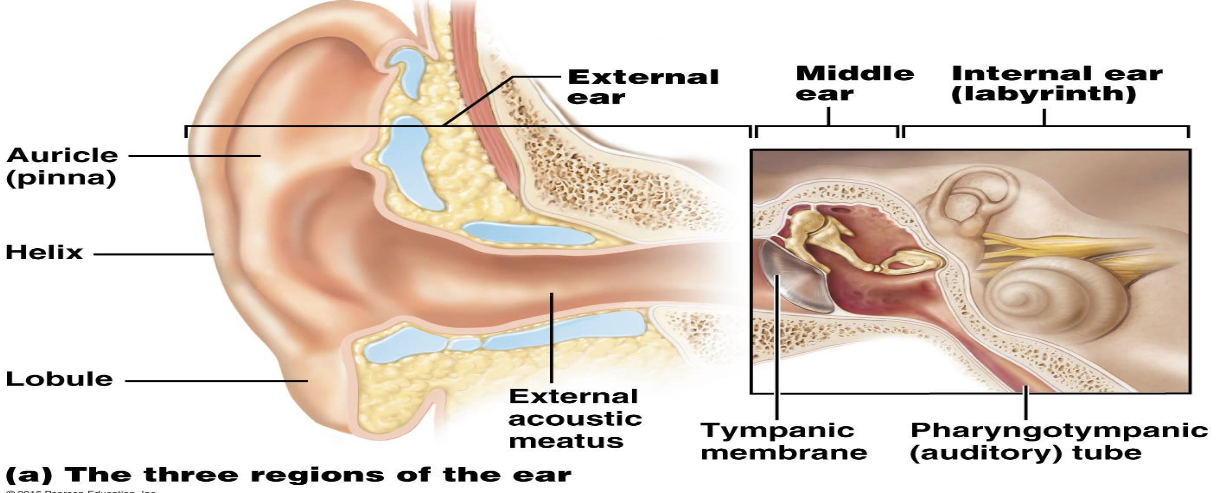
What is the external acoustic meatus?
What glands line the external acoustic meatus?
A tube that extends from the auricle to the eardrum, or tympanic membrane.
Ceruminous glands

II. Middle Ear
What is the middle ear also called?
What flanks the middle ear laterally?
What flanks the middle ear medially?
The tympanic cavity
The tympanic membrane
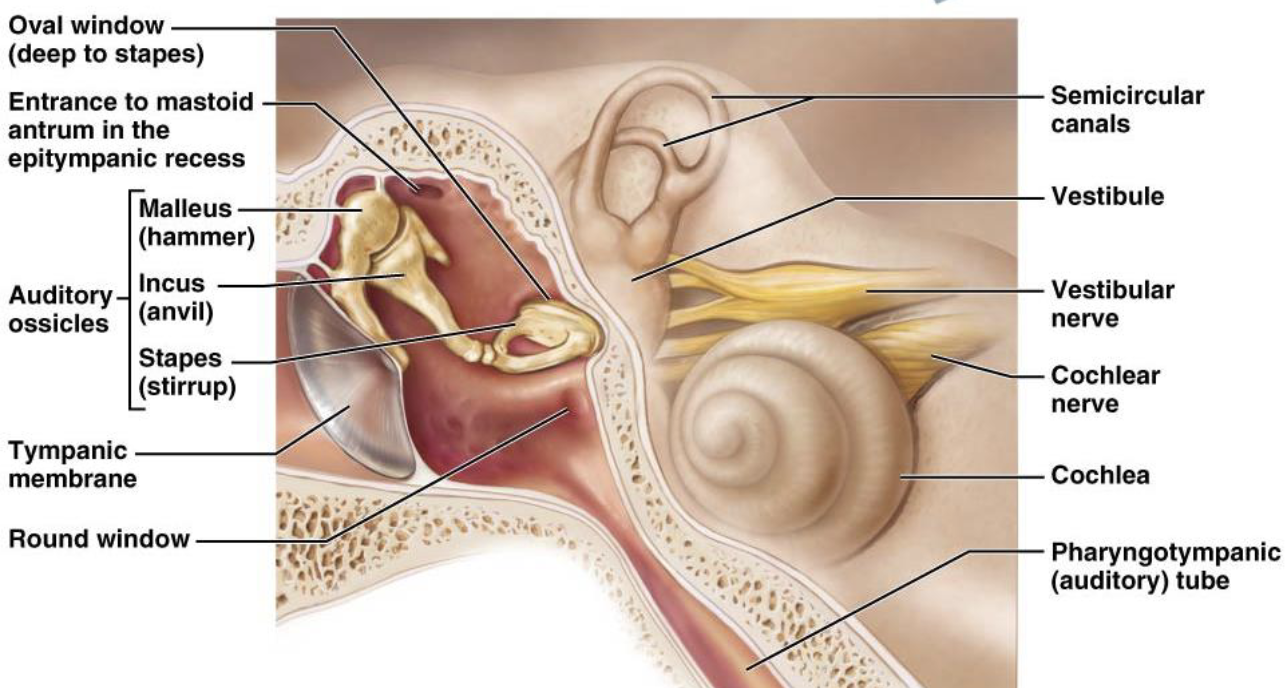
A bony wall with two openings: the oval window and round window

Auditory Ossicles
What are the three auditory ossicles?
What is the malleus also called?
What is the malleus attached to?
What is the incus also called?
Malleus, incus, and stapes
The hammer
The tympanic membrane
The anvil

Where is the incus located?
What is the stapes also called?
Where does the stapes fit?
Between the malleus and stapes
The stirrup
Into the oval window

Two Primary Roles
What is the first primary role of the auditory ossicles?
What is the second primary role of the auditory ossicles?
They amplify vibrations
They transfer vibrations from the tympanic membrane to the oval window

What is a third role of the auditory ossicles involving muscles?
The tensor tympani and stapedius muscles contract in response to loud sounds, providing protection
III. Pharyngotympanic Tube
What connects the middle ear to the nasopharynx?
What is the pharyngotympanic tube continuous with?
What may result from an ascending infection through the pharyngotympanic tube?
The pharyngotympanic tube
The lining of the pharynx
Otitis media

What is one function of the pharyngotympanic tube?
What actions can cause the pharyngotympanic tube to open?
What sensation can occur when pressure is equalized through the pharyngotympanic tube?
It opens to maintain equal pressure with the environment
Yawning and swallowing
The ears may "pop”
IV. Protective Muscles
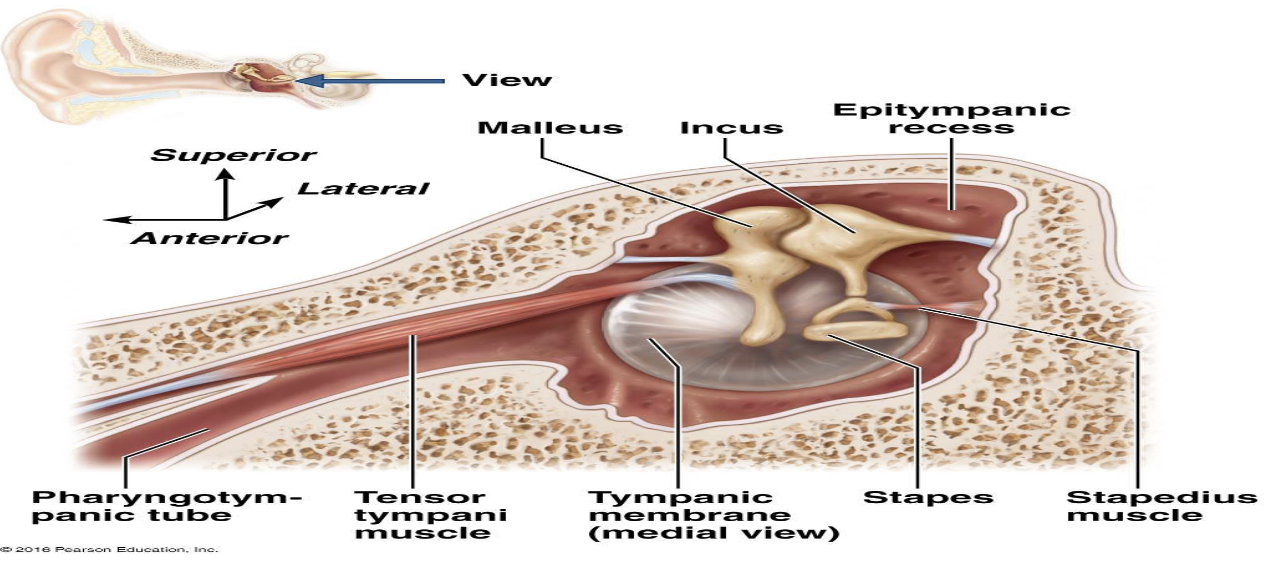
What are the two protective muscles of the middle ear?
When do the tensor tympani and stapedius muscles contract?
Tensor tympani and stapedius
In response to loud sounds

V. Internal Ear — Labyrinth
Bony Labyrinth
What is the bony labyrinth filled with?
What is perilymph continuous with?
What are the three regions of the bony labyrinth?
Perilymph
CSF
Vestibule, semicircular canals, and cochlea


Membranous Labyrinth
Where is the membranous labyrinth located?
What does the membranous labyrinth do?
What is the membranous labyrinth filled with?
Inside the bony labyrinth
It follows the contours of the bony labyrinth
Endolymph

VI. Vestibule & Equilibrium
Where is the vestibule located?
What two smaller sacs are found in the vestibule?
Where is the saccule located?
Where is the utricle located?
Between the cochlea and semicircular canals
The saccule and utricle
Near the cochlea
Near the semicircular canal
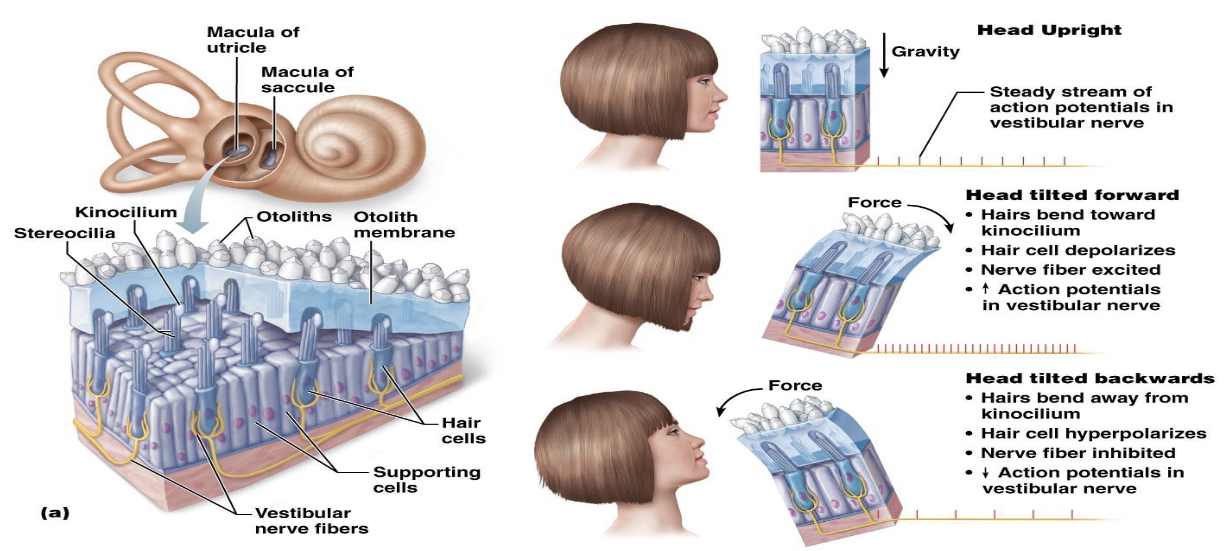
What equilibrium receptors are found in the saccule and utricle?
What do the maculae respond to?
What type of movement does the saccule's macula respond to?
What type of movement does the utricle's macula respond to?
Maculae
Gravity and head position
Forward and back tilting
Side-to-side movement
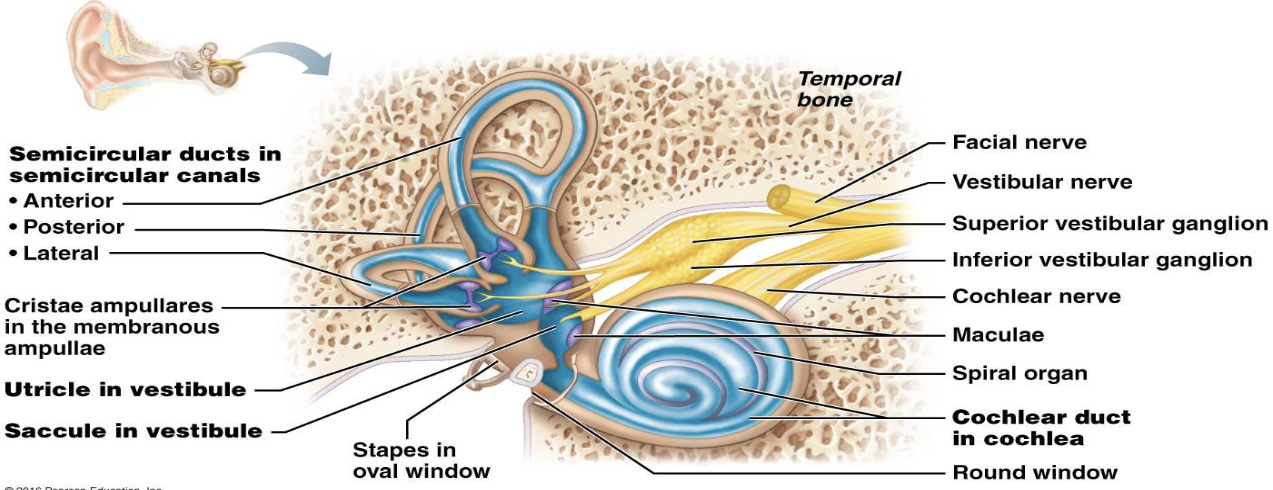
VII. Semicircular Canals
How many planes do the semicircular canals have?
What is the swelling at one end of each semicircular canal called?
What does each ampulla contain?
Three: anterior, posterior, and lateral
An ampulla
A crista ampullaris

What do the crista ampullares respond to?
What happens to the endolymph during rotational movement of the head?
What bends in response to the movement of the endolymph?
Angular movements of the head
The endolymph moves
The cupula
VIII. Macula vs. Crista Ampullaris
Where are maculae located?
What do maculae detect?
In the saccule and utricle
Gravity and head position
How are maculae activated according to the lecture?
They respond to movements such as side-to-side movement and forward/back tilting
Where are crista ampullares located?
What do crista ampullares detect?
In the ampullae of the semicircular canals
Angular movements of the head
How are crista ampullares activated?
Rotational movement of the head causes movement of the endolymph, which causes the cupula to bend
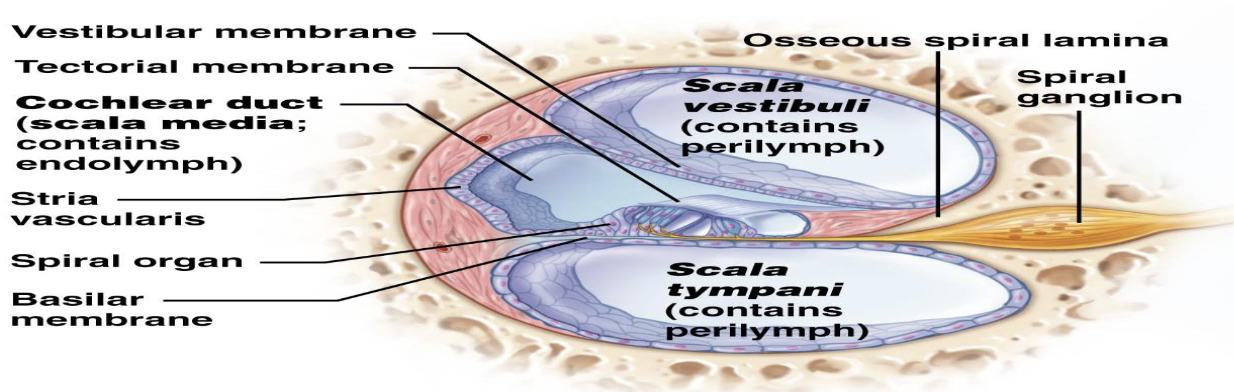
IX. Cochlea
What is the cochlea?
What are the three chambers of the cochlea?
A spiral structure containing three separate parallel chambers
Scala vestibuli
scala media
scala tympani

Scala Vestibuli
What does the scala vestibuli contain?
What is the scala vestibuli continuous with?
Perilymph
The vestibule
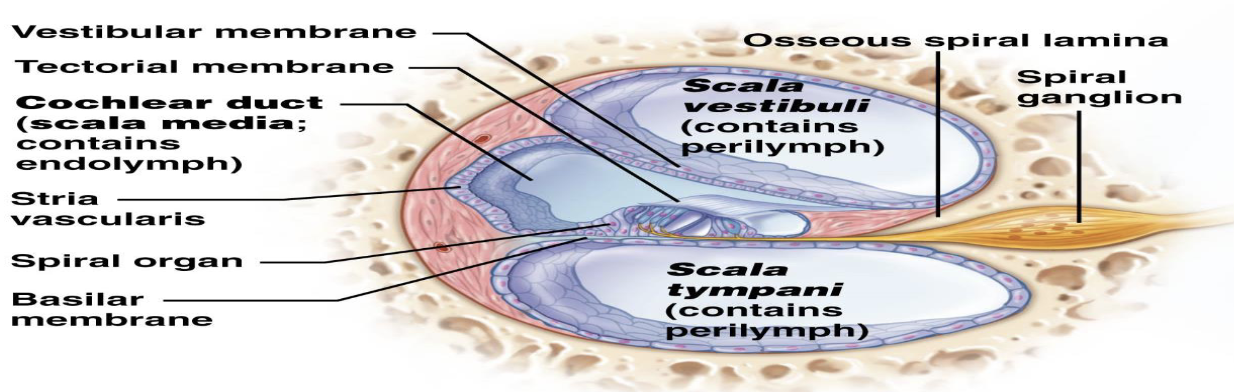
Scala Media
What is another name for the scala media?
What does the scala media contain?
Cochlear duct
The spiral organ and endolymph

Scala Tympani
What does the scala tympani contain?
What are the scala vestibuli and scala tympani continuous with?
What is the helicotrema?
Perilymph
They are continuous, running from the oval window to the round window
A U-turn

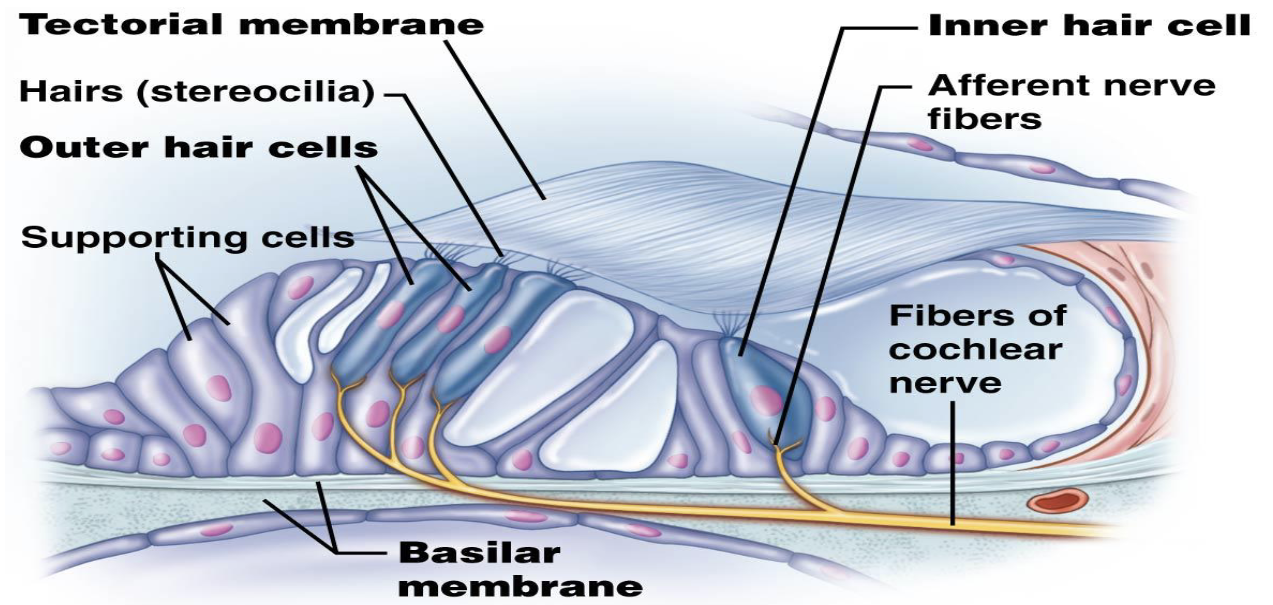
X. Spiral Organ & Hearing
What does the spiral organ contain?
Where are the cochlear hair cells located?
Rows of cochlear hair cells with stereocilia
Between the basilar and tectorial membranes
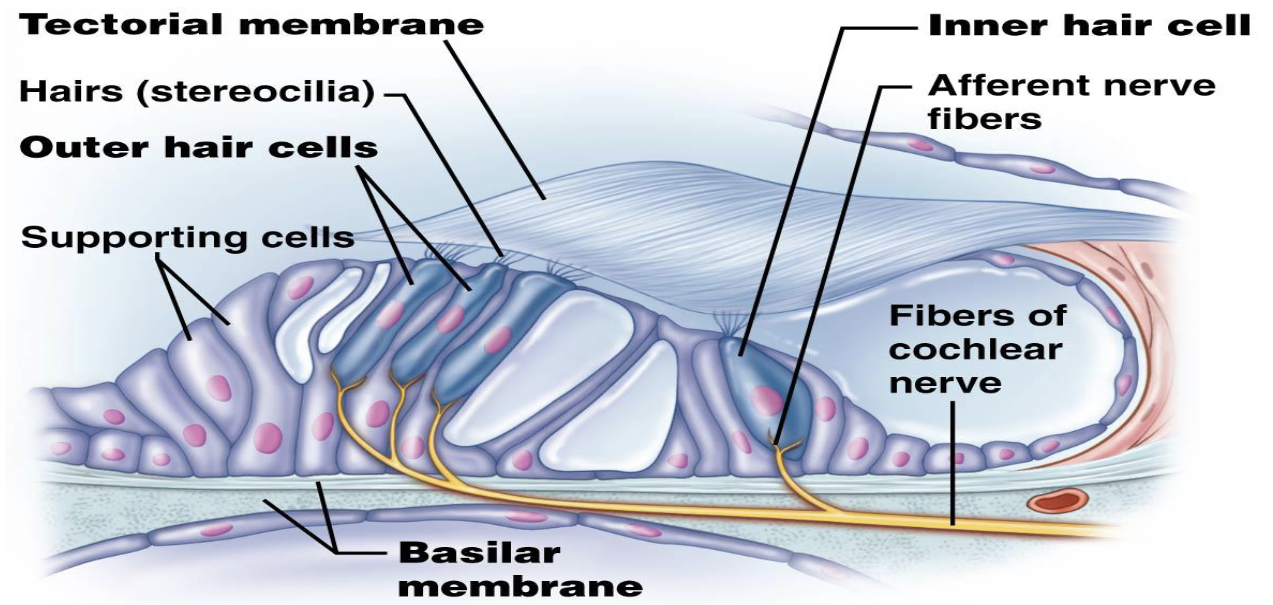
What are the cochlear hair cells attached to?
What coils around the base of the hair cells?
What nerve is formed by the cochlear nerve fibers?
Both the basilar and tectorial membranes
Cochlear nerve fibers
The vestibulocochlear nerve
XI. Basilar Membrane & Pitch
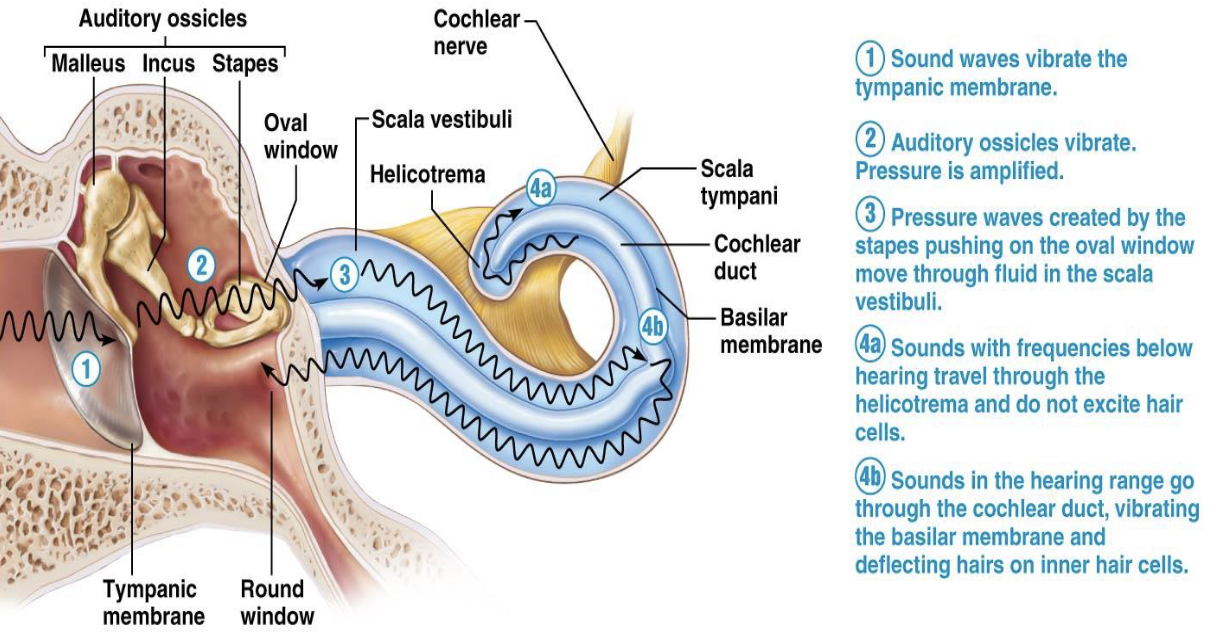
What happens to the basilar membrane when suprathreshold sounds occur?
Where does the basilar membrane respond to high-pitch frequencies?
A pressure wave causes the basilar membrane to vibrate
Near the oval window

Where does the basilar membrane respond to low-pitch frequencies?
What happens when the hair cells bend?
Near the helicotrema
Ion channels open and action potentials are generated
XII. Hearing — Sound Transmission
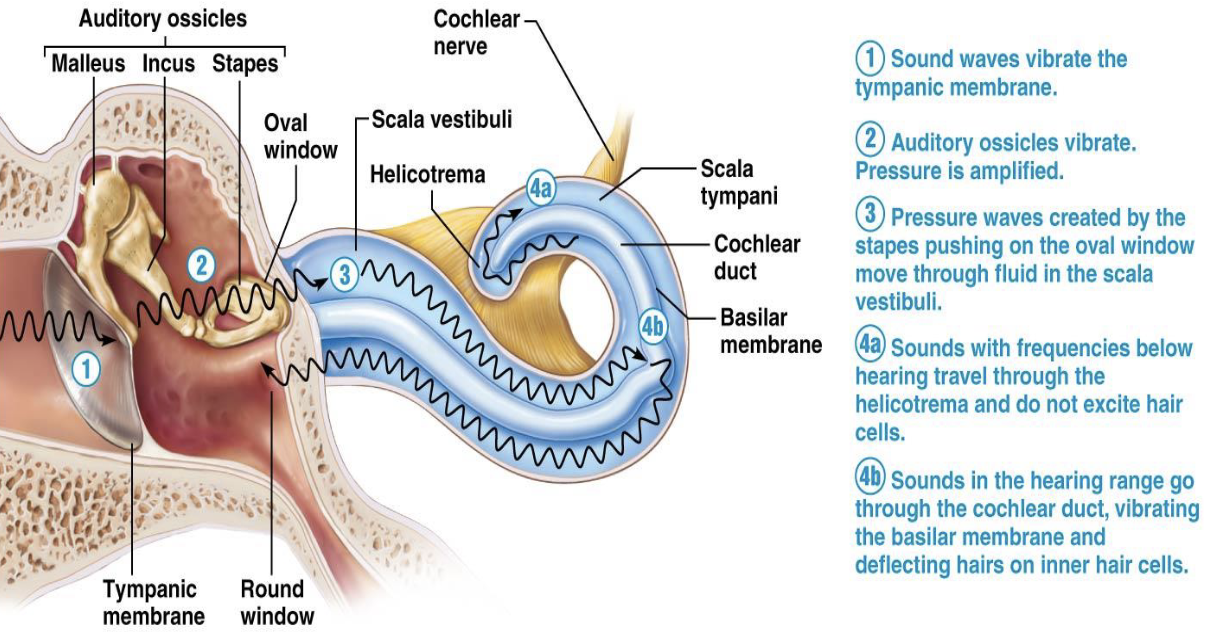
What happens to the tympanic membrane when it receives sound?
What do the auditory ossicles do with the vibrations?
It vibrates at the same intensity as the sound it receives
They amplify and transfer the vibrations from the tympanic membrane to the oval window
What happens when the stapes vibrates?
It creates a pressure wave in the perilymph of the scala vestibuli

What is the sequence of sound transmission from the external ear to the bending of stereocilia?
Sound wave → auricle → external acoustic meatus → tympanic membrane → malleus → incus → stapes → oval window → pressure wave in perilymph → basilar membrane vibrates → hair cells bend → stereocilia bend → ion channels open → action potentials generated
Short version to memorize:
Auricle → Meatus → Tympanic membrane → Malleus → Incus → Stapes → Oval window → Cochlea → Basilar membrane → Hair cells/stereocilia
XIV. Auditory Pathway
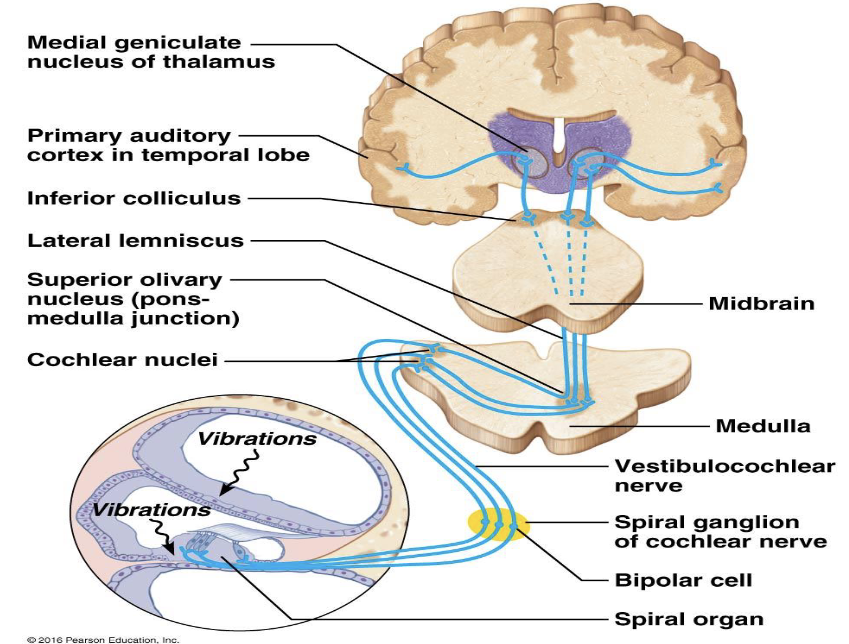
Where are sound signals processed?
In the primary auditory cortex of the temporal lobe

XV. Disorders — Deafness
Conductive Deafness
What is conductive deafness associated with?
Problems with sound conduction, including impacted ear wax, hole/tear eardrum, and otosclerosis (abnormal) of the ossicles

Sensorineural Deafness
What can cause sensorineural deafness?
Loss of hair cells/stereocilia, degeneration of the cochlear nerve, stroke, or tumors of the auditory cortex