Anatomy and Physiology of Synovial Joints, Connective Tissues, and Muscular Function
 Call Kai
 Learn
Learn Practice Test
 Spaced Repetition
 Match
Match Flashcards
 Knowt Play
1/59

There's no tags or description
Looks like no tags are added yet.
Name | Mastery | Learn | Test | Matching | Spaced | Call with Kai | Chat |
|---|
No analytics yet
Send a link to your students to track their progress
60 Terms
SAID principle
Specific Adaptations to Imposed Demands
synovial joint components (all)
joint cavity, fibrous capsule, synovial membrane, hyaline cartilage, synovial fluid film, ligaments
some synovial joint components
bursa, fat pad, articular disk, accessory ligaments
synovial layer
produces hyaluronic acid
cartilage cell type
chondroblast/cyte
tendon cell type
tenoblast/cyte
bone cell type
osteoblast/cyte
mechanotransduction
The process by which the body converts mechanical loading into cellular responses
Extracellular matrix
proteins and water
fibrillar: collagen and elastin
interfibrillar: water, PGs, GAGs
collagen type I
resists tensile stress, found in all/most CT
collagen type II
resists compressive stress, found in cartilage and nuclei of IV discs
Elastin
found in tissues that require more deformation and elasticity
ligament component
type I collagen w/ varying elastin, fibroblasts
ligament structure
fibrils arranged in line with the applied tensile forces, not uniform, resist multiple angles of pull
What does the collagen/elastin ratio in a ligament depend on?
whether the ligament has a mobility or stability role
entheses
attachment site of ligament to bone
ligament nutrition
blood supply
tendon components
fibroblasts, tenoblasts/cytes; type I collagen
tendon structure
fibers are uniform and in the direction of tensile loading
collagen cross-linking
cross-linking resists slipping, combines fibers of collagen
tendon insertion
increased type II collagen closer to bone
myotendinous junction
interdigitation between collagen and muscle cells
tendon nutrition
blood supply, requires tensile loading to stay healthy
hyaline cartilage component
chondroblast/cyte, 90-95% type II collagen, PGs, GAGs
hyaline cartilage nutrition
avascular, relies on diffusion of synovial fluid
fibrocartilage composition
type II collagen, relies on diffusion
bone composition
type I collagen, hydroxyapatite crystals
cancellous bone
spongy inner layer/trabeculae
cortical bone
outer layer; thin, dense, compact
periosteum
fibrous outer layer covering bone
wolffs law
bone modeling consistent with the stress it's exposed to
bone maintenance
nutrition via circulatory system, osteoblast/clast activity
load
any force applied to a tissue
deformation
the result of an applied force
stiffness
resistance to deformation
compliance
ease of deformation
tendonitis
repeated microfailure (plastic region)
tendon rupture
single bout of excessive loading that results in macrofailure
ligament instability
repetitive sub-maximal loading into late elastic region of curve without sufficient recovery before the next
ligament sprain
a bout of loading into the plastic region
ligament rupture
single bout of excessive loading that resuls in macrofailure
creep
force is sustained while length changes over time
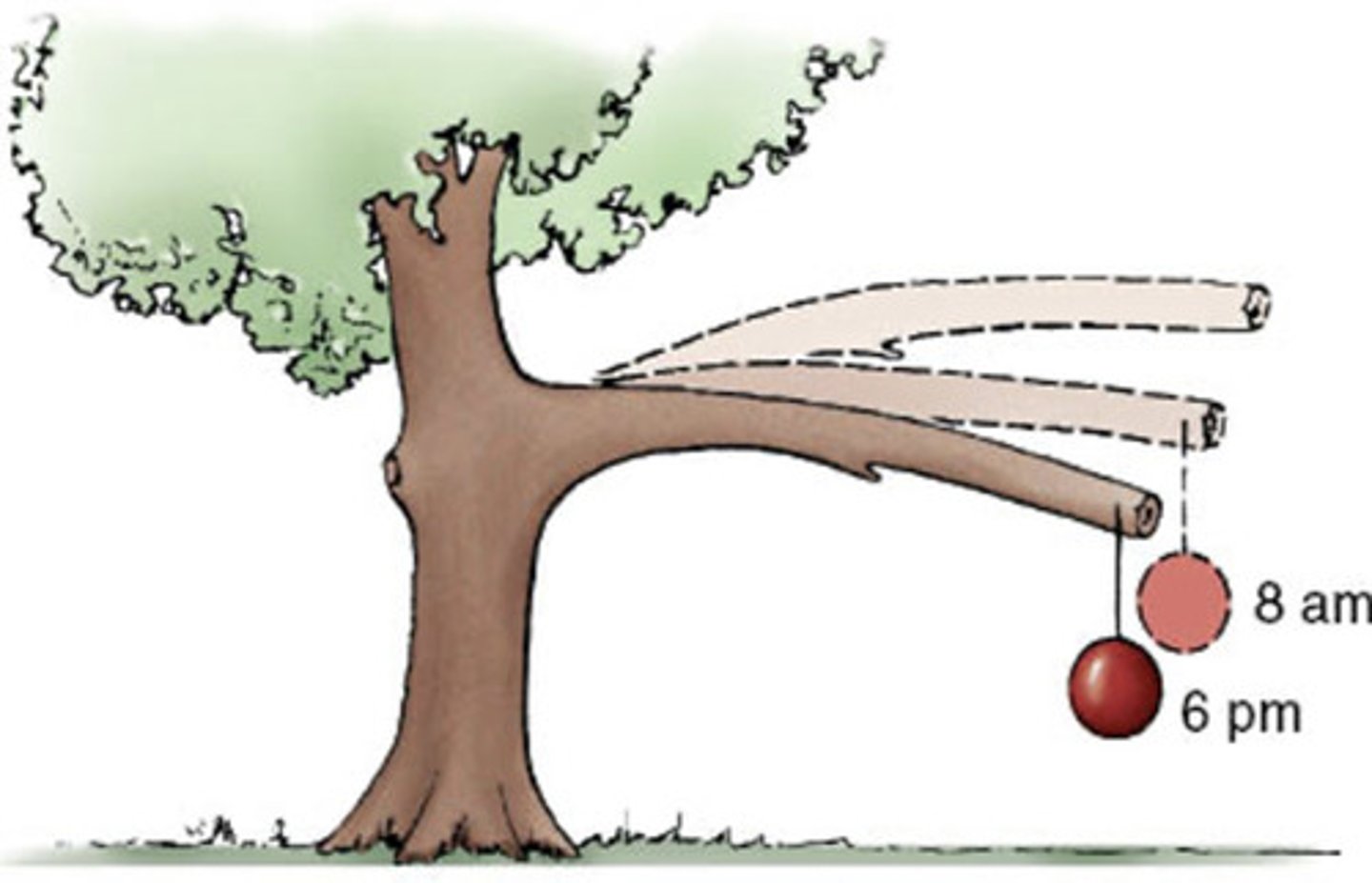
stress-relaxation
The force to maintain a certain strain decreases over time
strain rate sensitivity
stiffness is increased when loaded rapidly (hopping on toes vs calf stretch)
Role of skeletal muscle
1. produce movement of a bony lever
2. stabilize joint segments
3. respiration
4. produce body heat
actin
-thin filament
-binding site for myosin head
-troponin and tropomyosin
myosin
-thick filament
-head region
determinants of active tension
number of muscle fibers, size of muscle fibers, number of myofibrils in parallel
motor unit
an alpha motor neuron and all the muscle fibers it innervates
Large Motor Unit
large axon, many fibers (type II), recruited in forceful contractions
Small Motor Unit
small axon, fewer fibers (type I), recruited for fine motor
size principle
first choice is to recruit small motor units (save energy)
type 1 (slow oxidative) fibers
small, red, capillarity dense, high myoglobin content, slow speed, slow fatigue
type 2x (fast glycolytic) fibers
large, white, capillarity sparse, low myoglobin, fast speed, fast fatigue
active insufficiency
inability for a muscle to produce sufficient torque to shorten fully across all of the joints it crosses
passive insufficiency
inability for a 2 joint muscle to be stretched maximally across both joints it crosses
fusiform properties
good ROM, fewer long fibers
pennate properties
good force production, more short fibers
muscle spindle
sensitive to quick stretches (refelxes)
golgi tendon organ
the stretch of golgi tendon organ causes reflex inhibition