DAT ORGO - Substitution and elimination
 Call Kai
 Learn
Learn Practice Test
 Spaced Repetition
 Match
Match Flashcards
 Knowt Play
1/44

There's no tags or description
Looks like no tags are added yet.
Name | Mastery | Learn | Test | Matching | Spaced | Call with Kai |
|---|
No analytics yet
Send a link to your students to track their progress
45 Terms
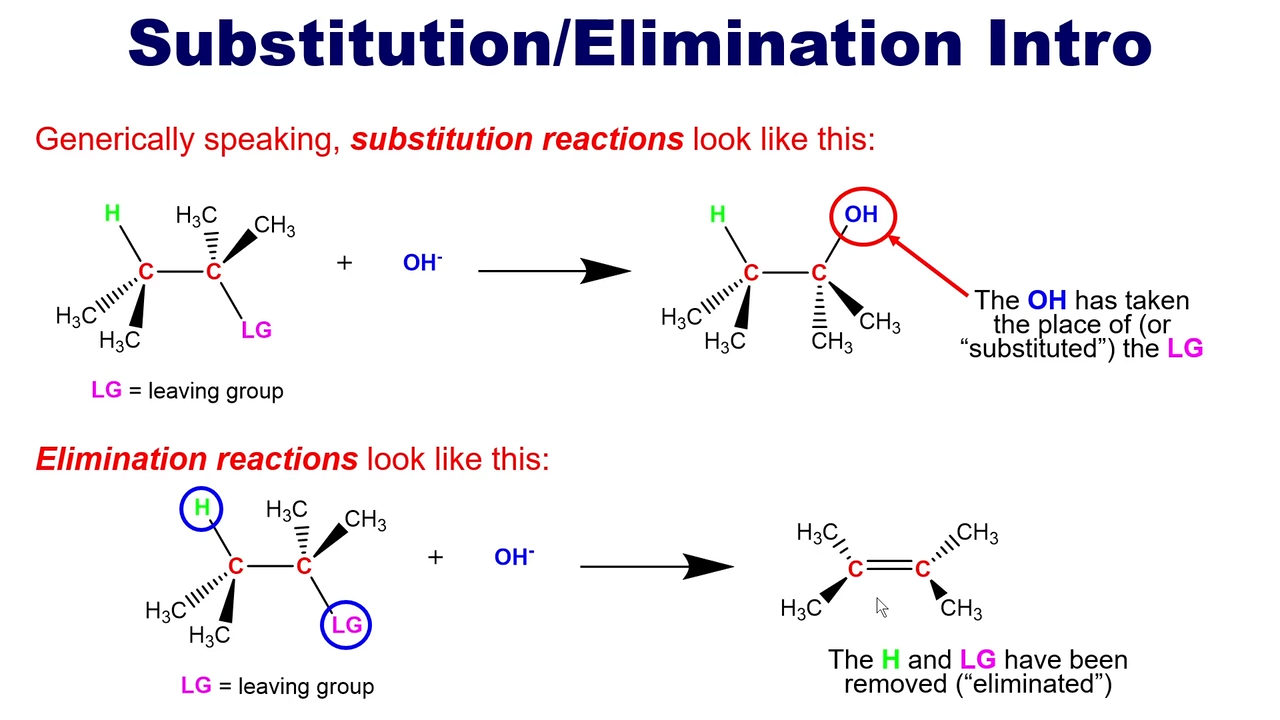
Substitution reactions - general formula
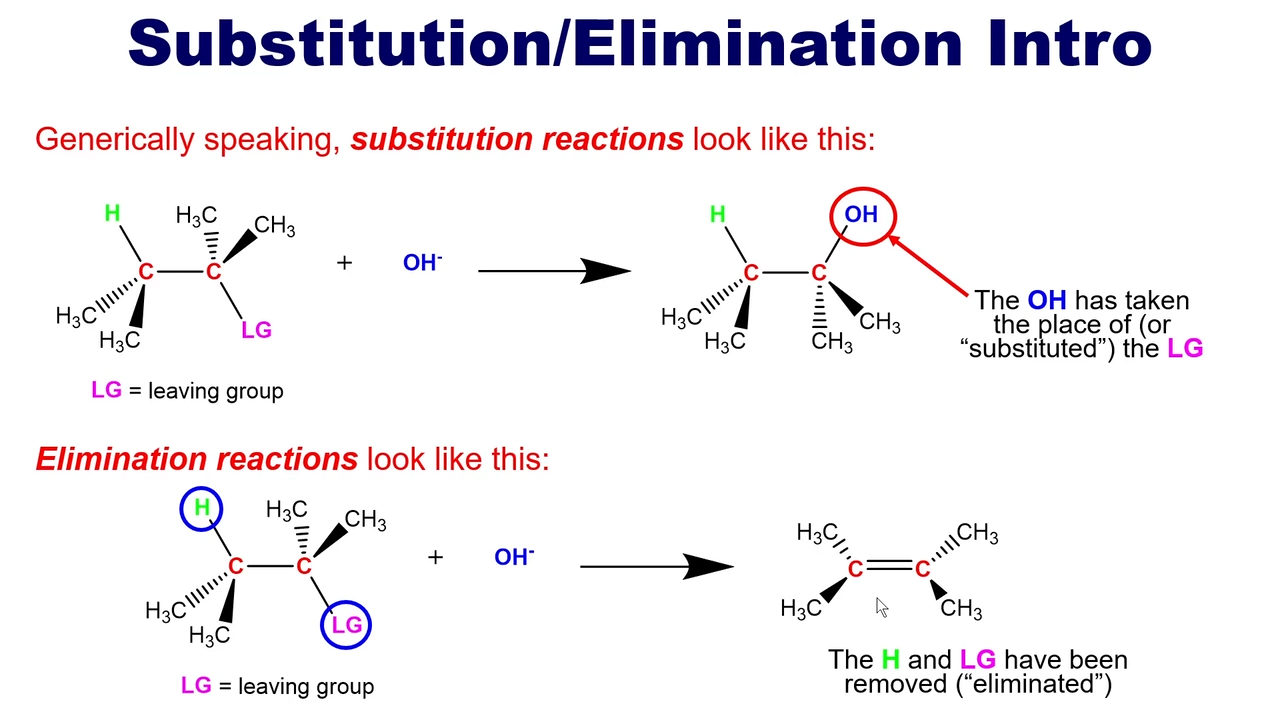
elimination reactions - general formula
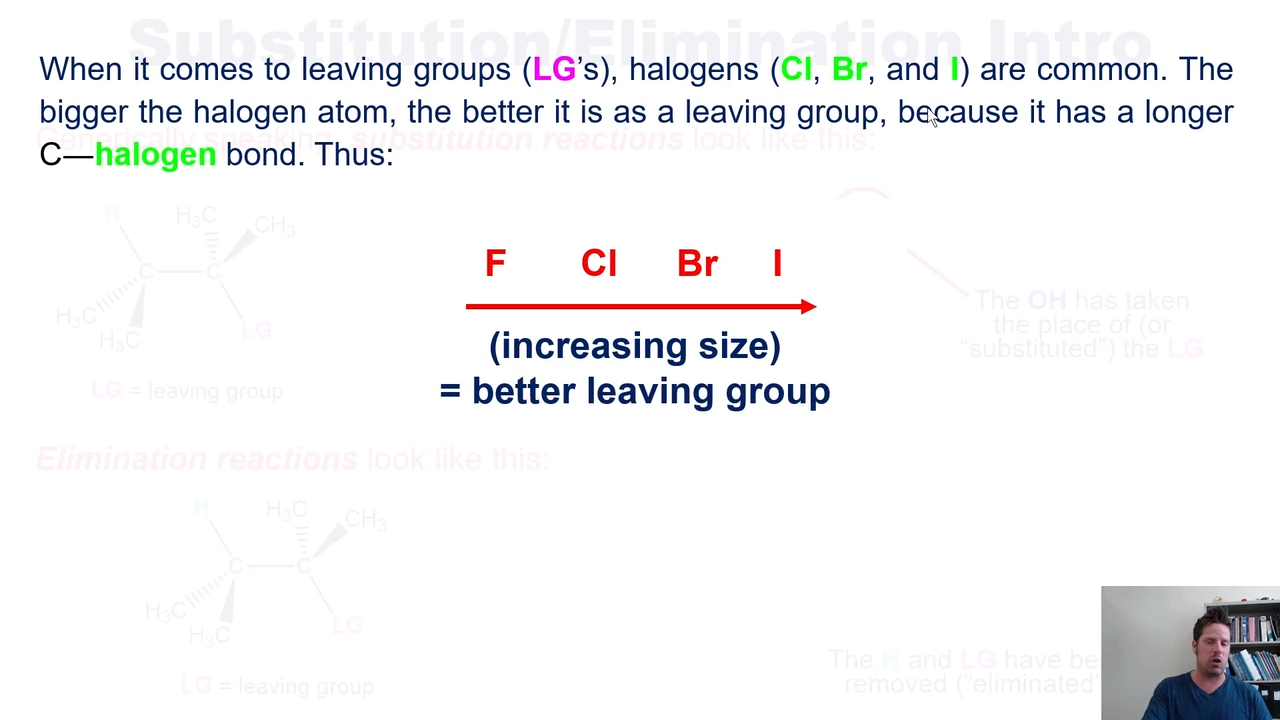
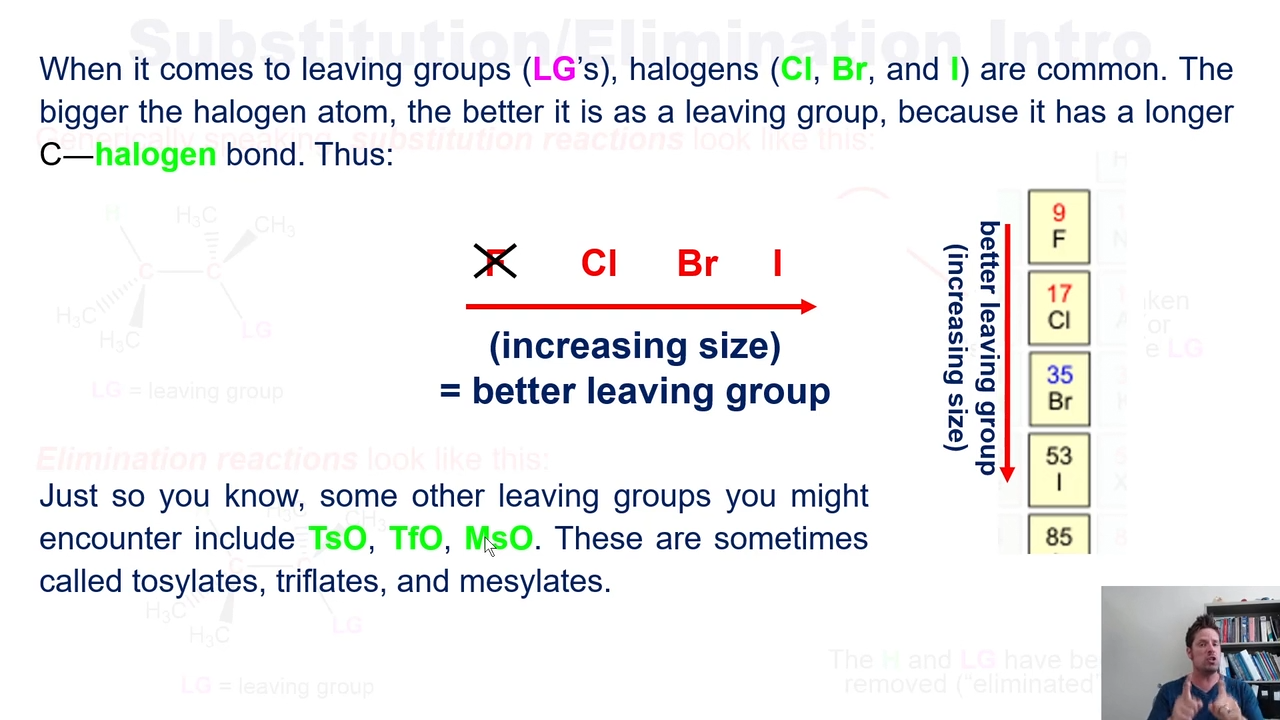
What is the most common leaving group and what is the trend?
halogens, the bigger the size, the better the leaving group
Other good leaving groups other than halogens
TsO TfO, MsO
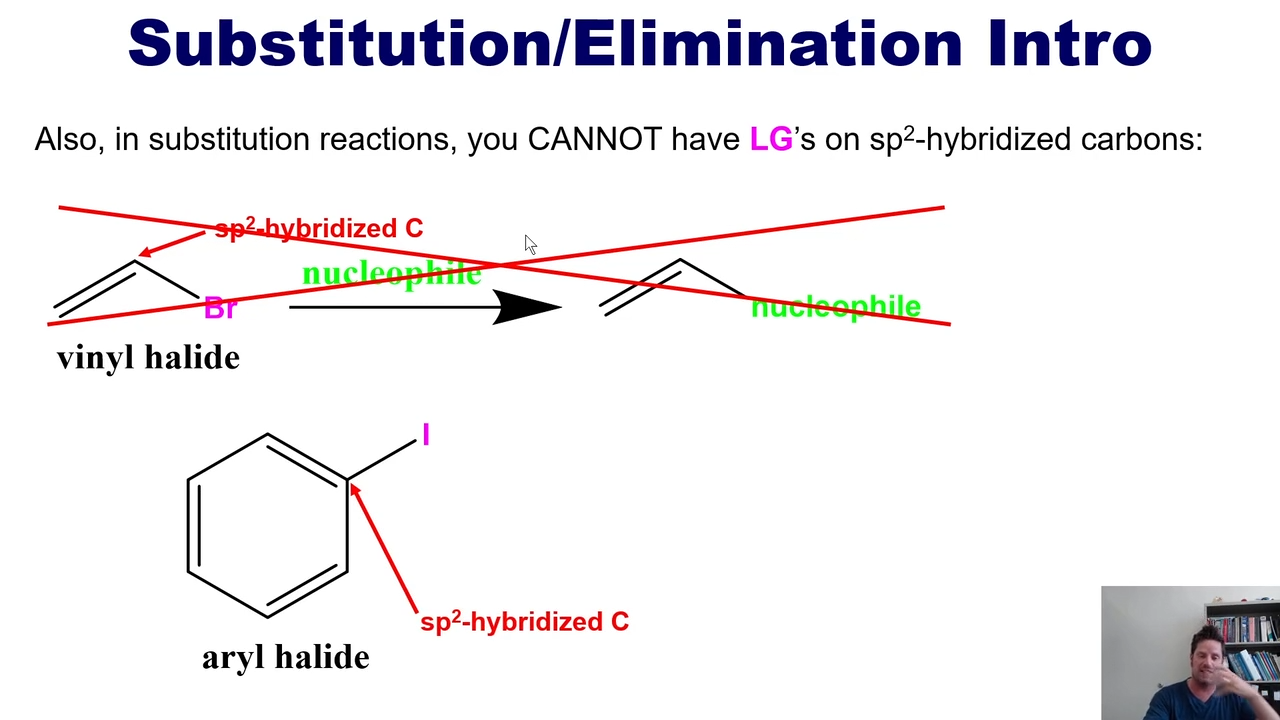
What cant Leaving groups be attached to?
SP2 hybridized carbons
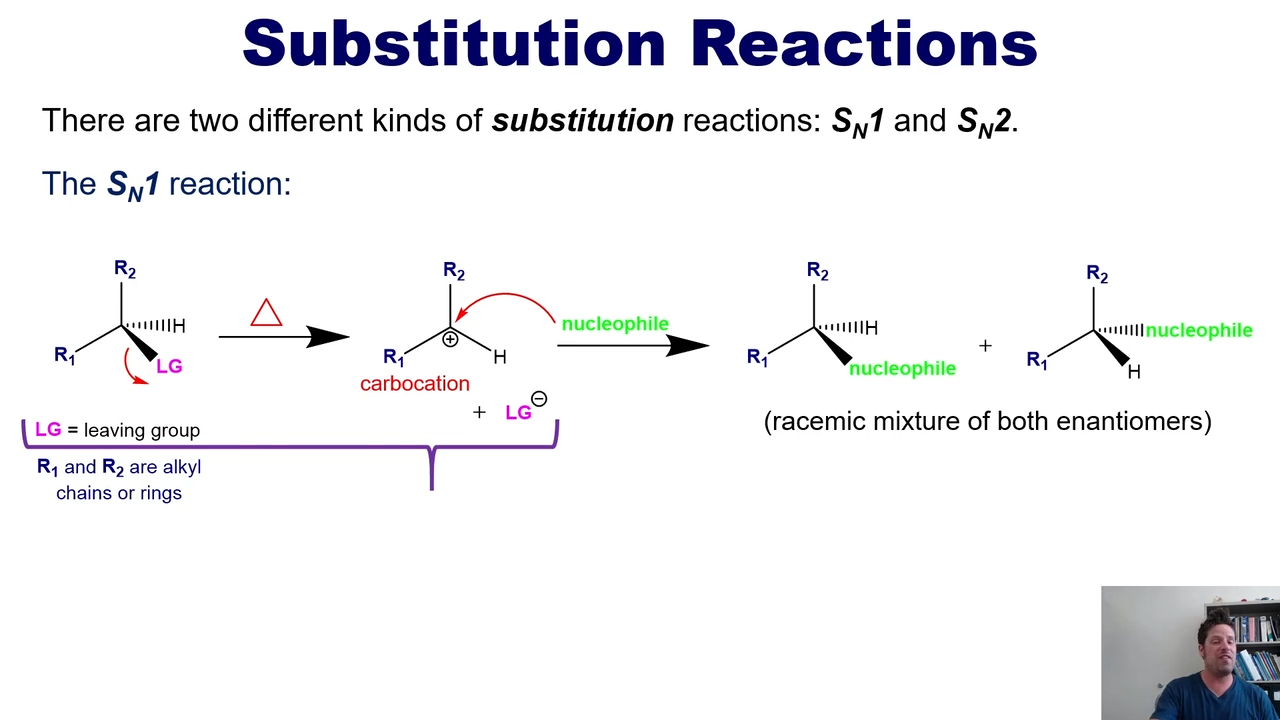
Sn1 reaction
Heat is the rate determining step!
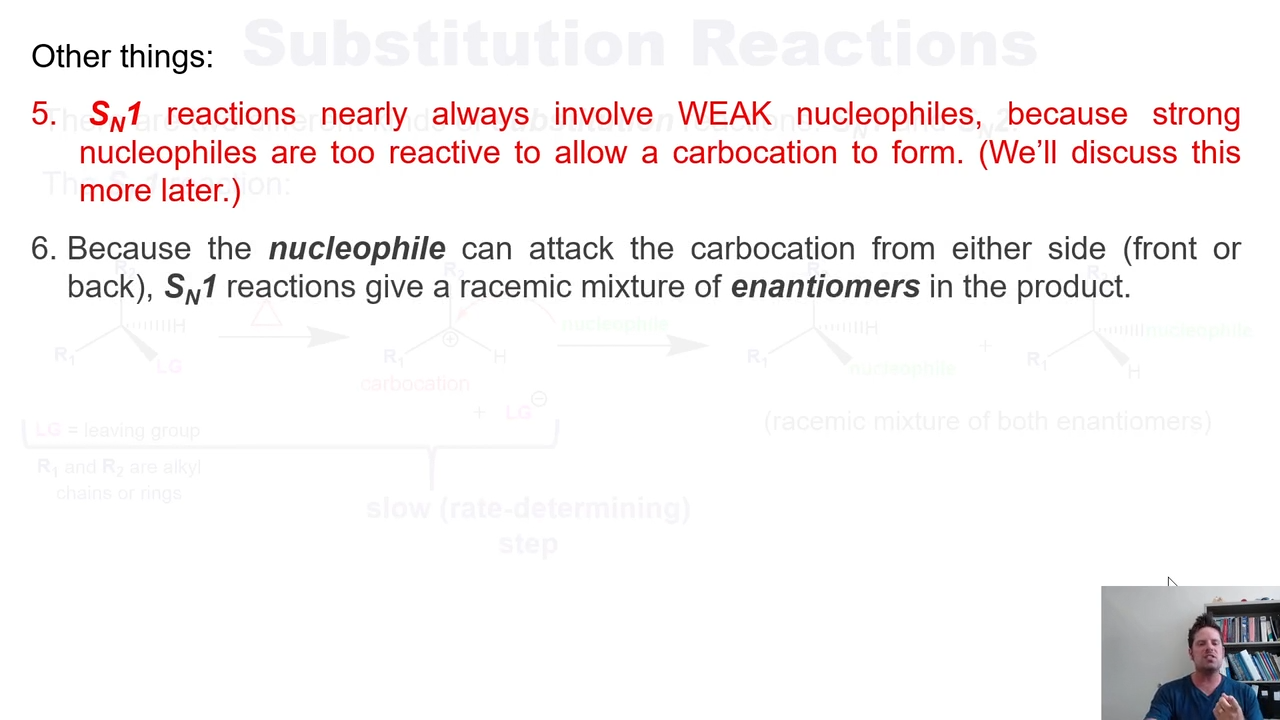
Forms a racemic mix of the two enantiomers
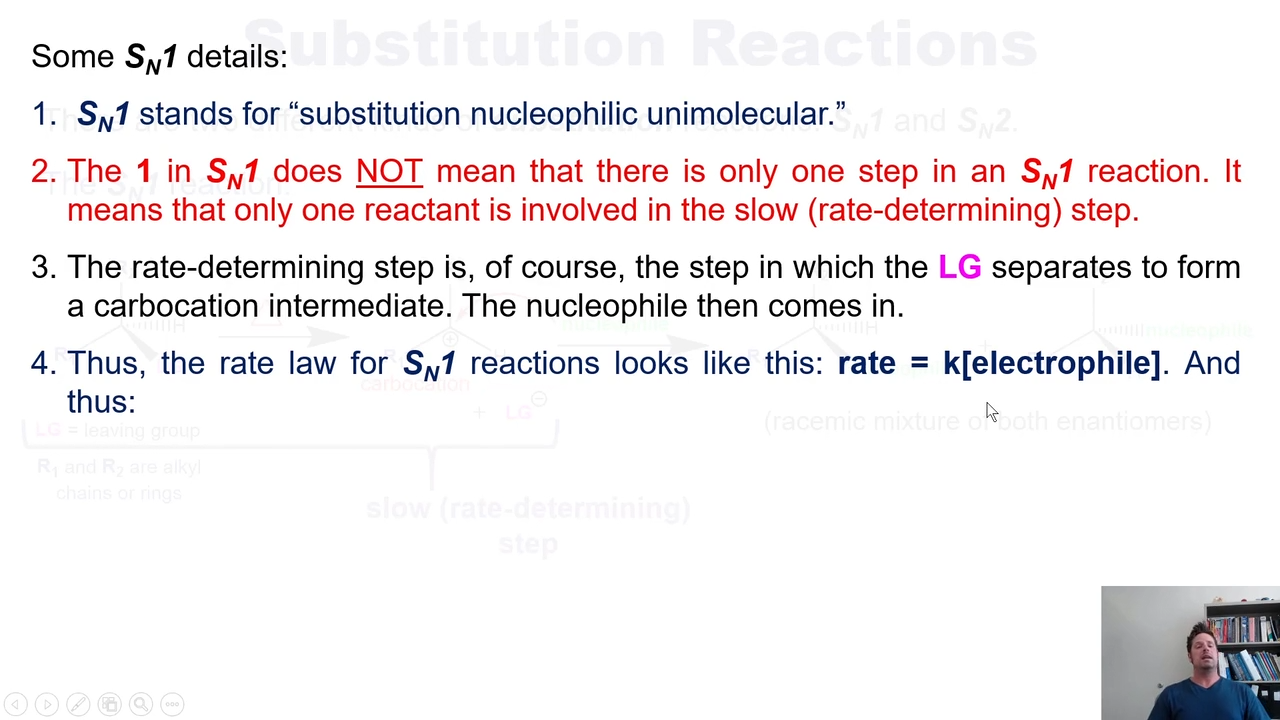
Whats the rate law for Sn1 reactions
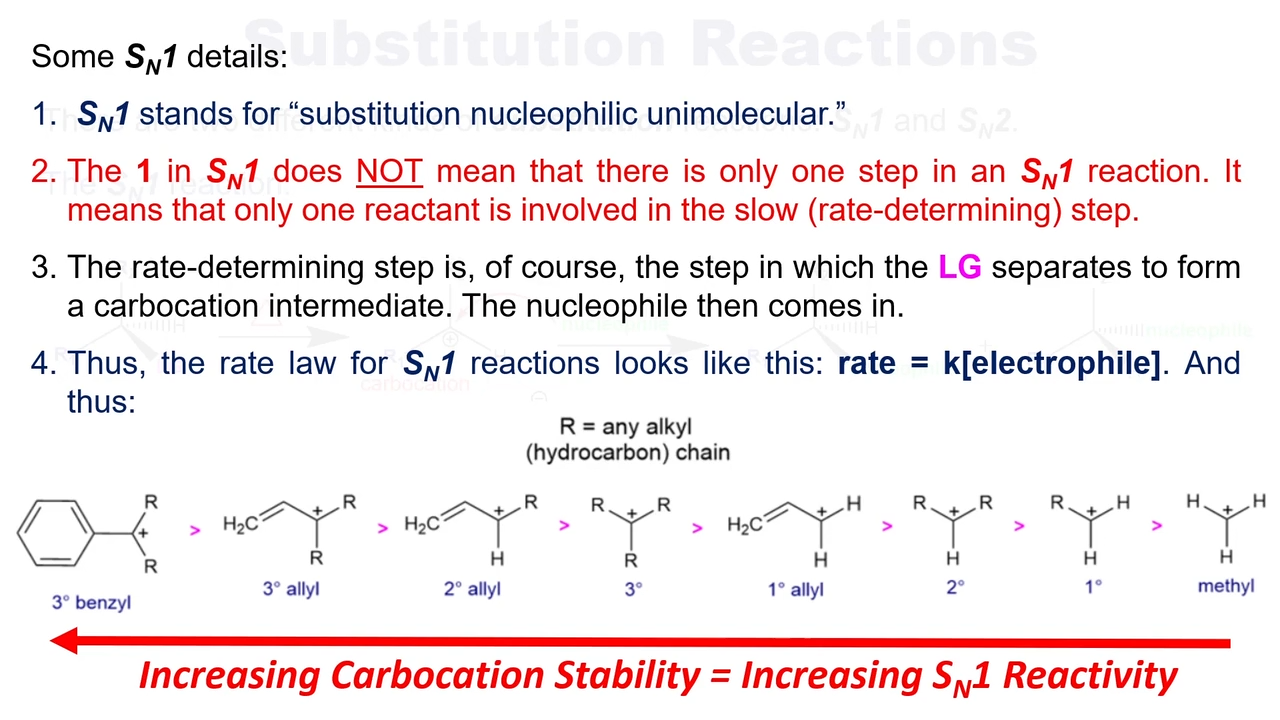
it looks like rate=k(electrophile)
What will make something more reactive towards an Sn1 reaction
increasing carbocation stability
What strength electrophile do SN1 reactions need
a weak one, because strong ones will just do it themselves instead of waiting for heat
Can SN1 reactions undergo rearangements
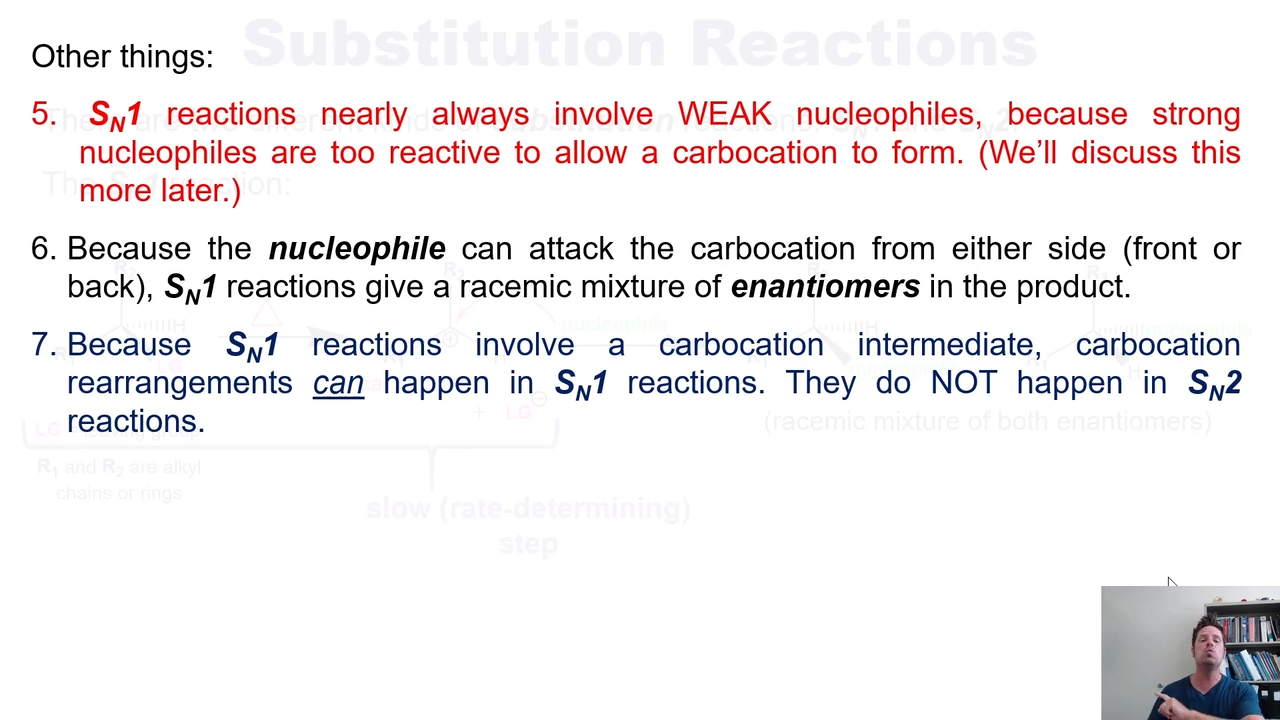
yes, due to carbocation intermediate
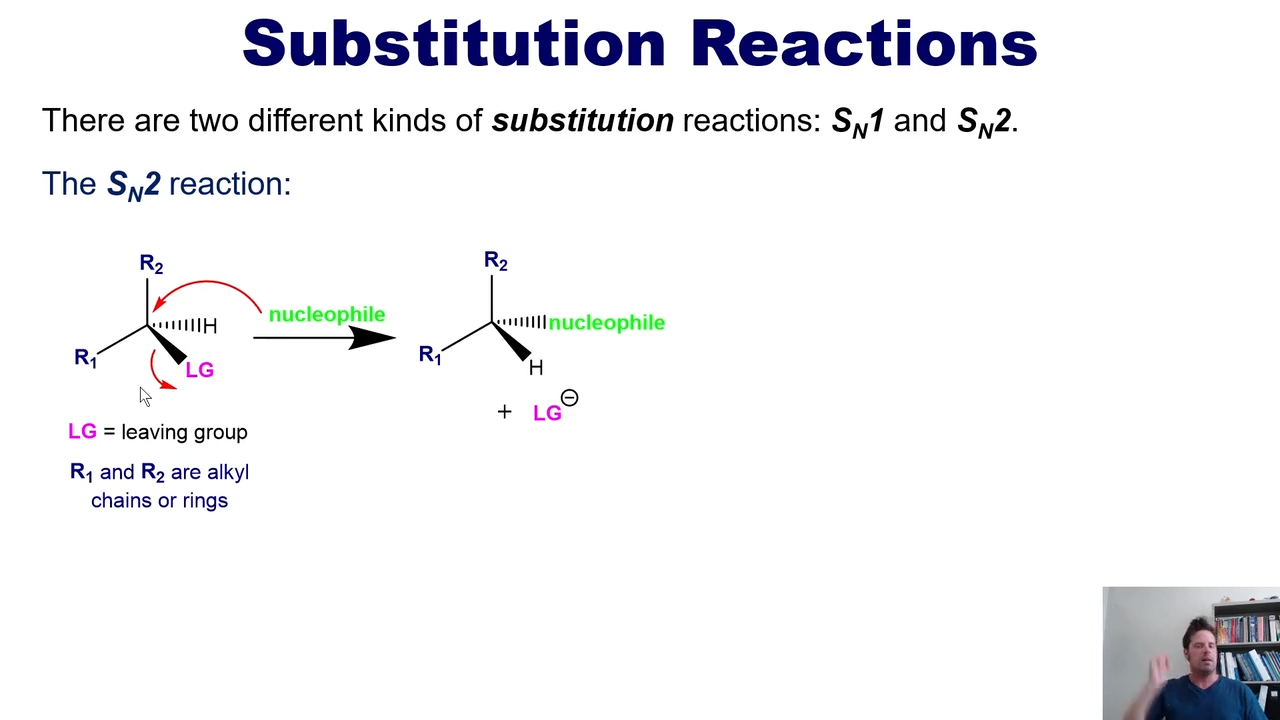
SN2 reaction
What are the kinetics of an SN2 reaction
The rate determining step is the first one, following second rate kinetics, dependent on both the electrophile and the nucleophile
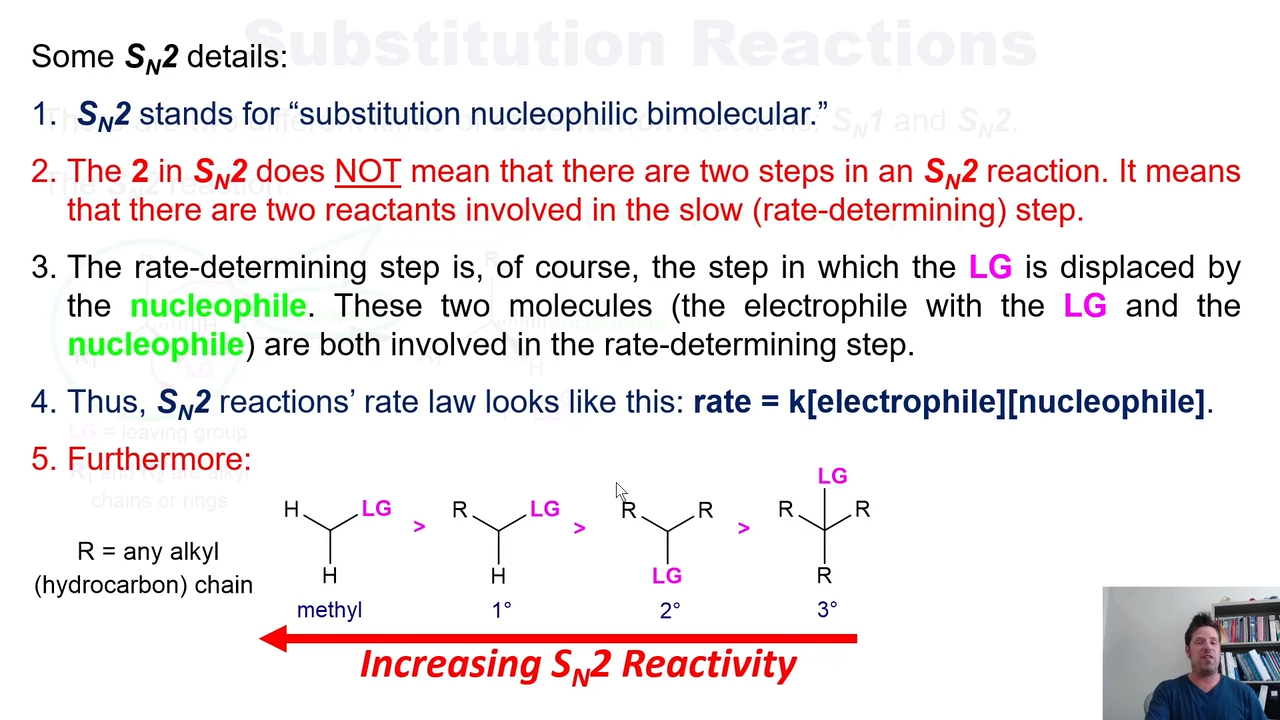
SN2 reactivity trend
The more substituted the leaving group, the more likely it is not to happen
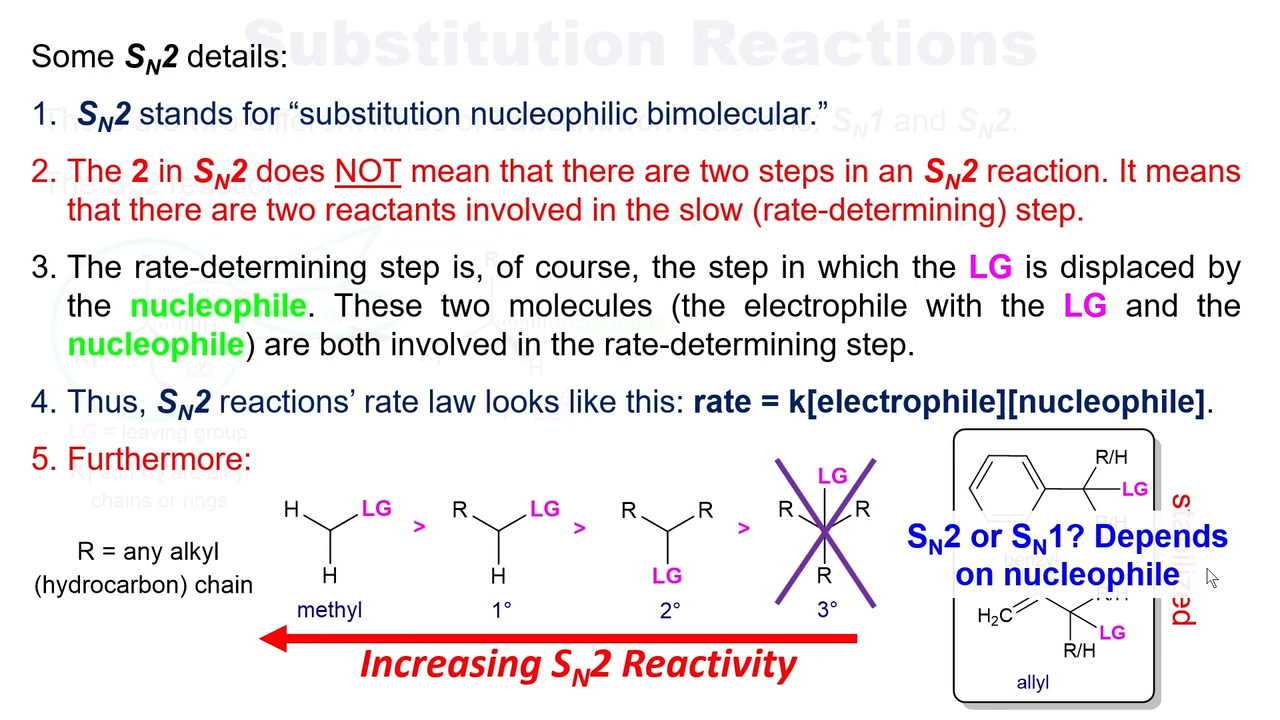
SN2 stereoselectivity
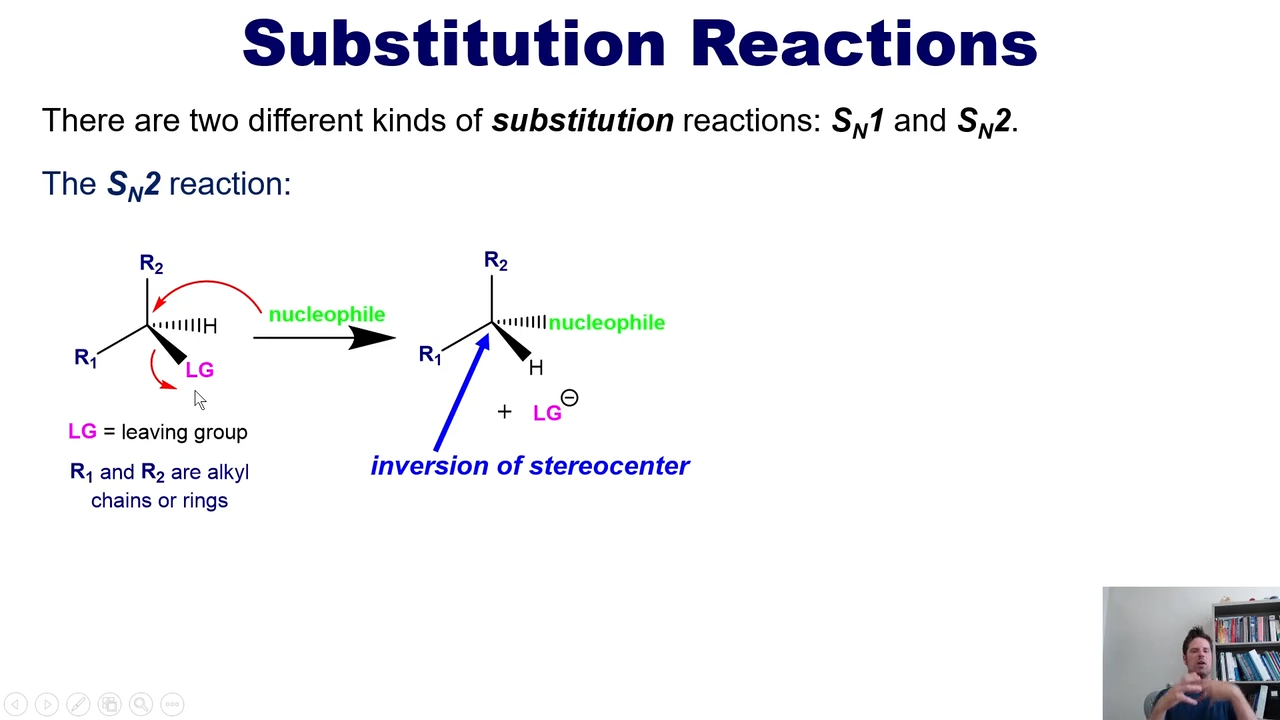
the nucleophile will always attack opposite to the leaving group
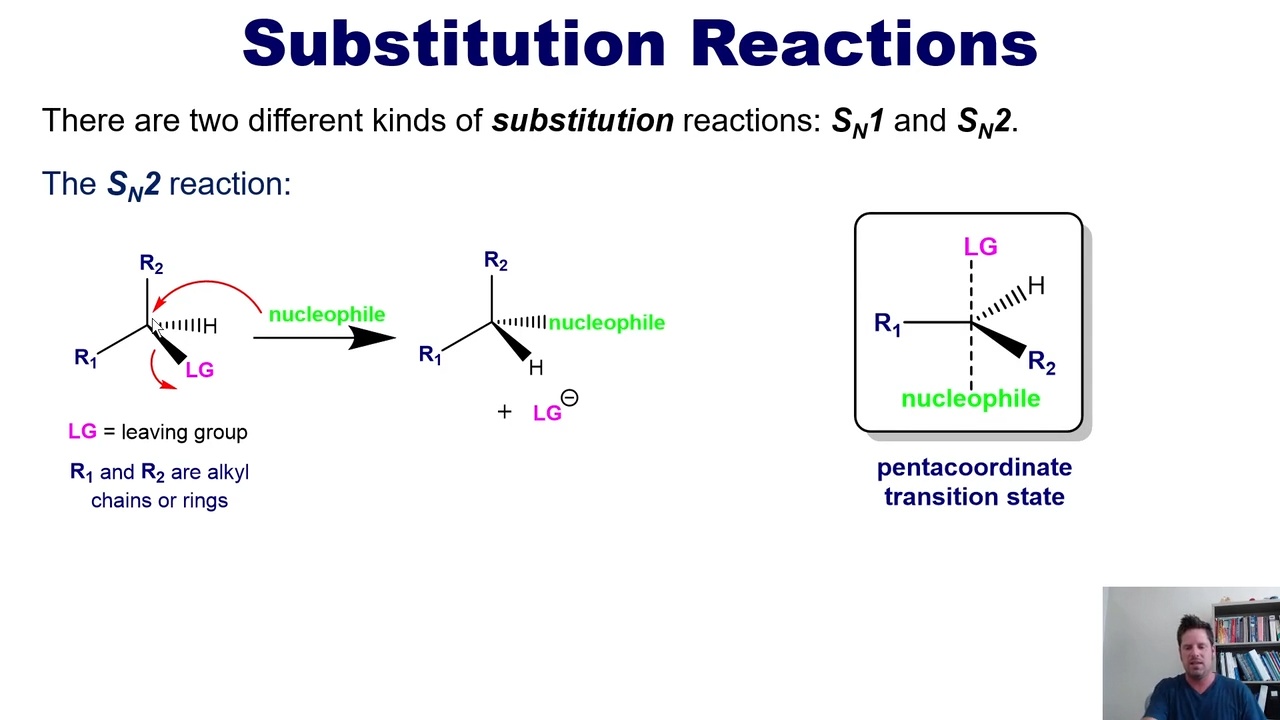
What happen in an SN2 reaction for a split second
The molecule is sp2 hybridized
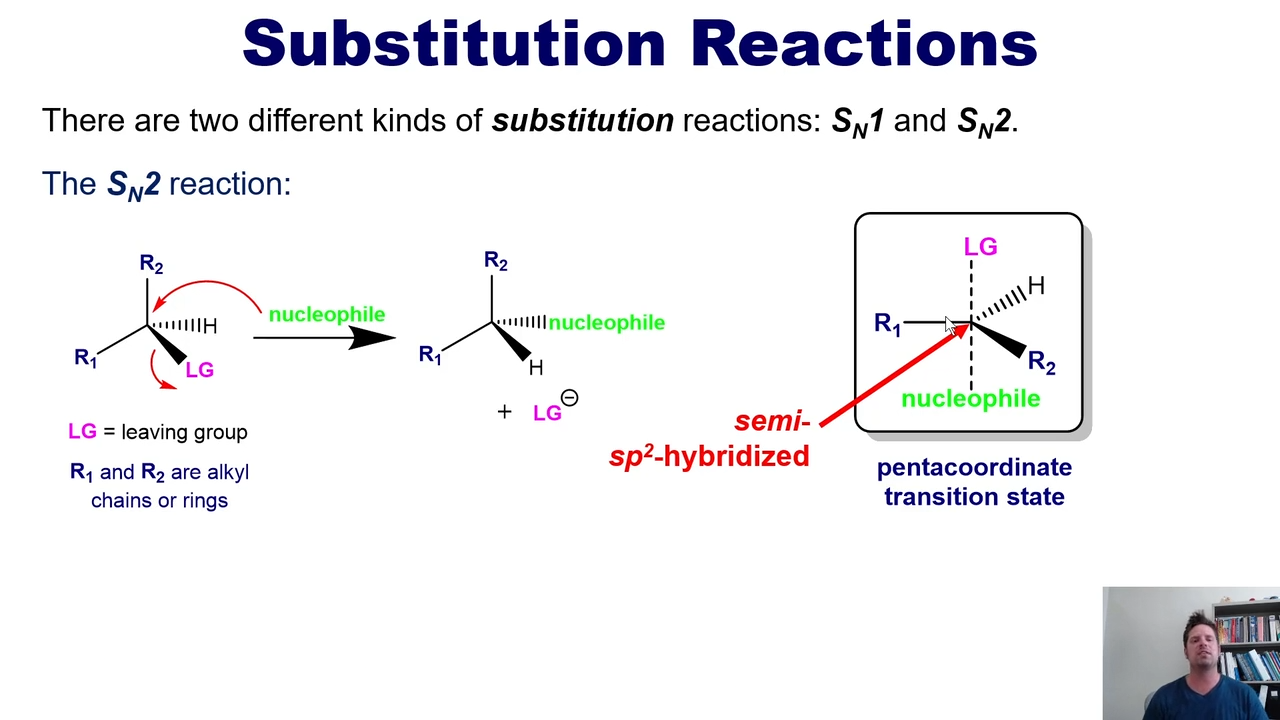
What strength does the nucleophile need to be for an SN2 reaction
Strong
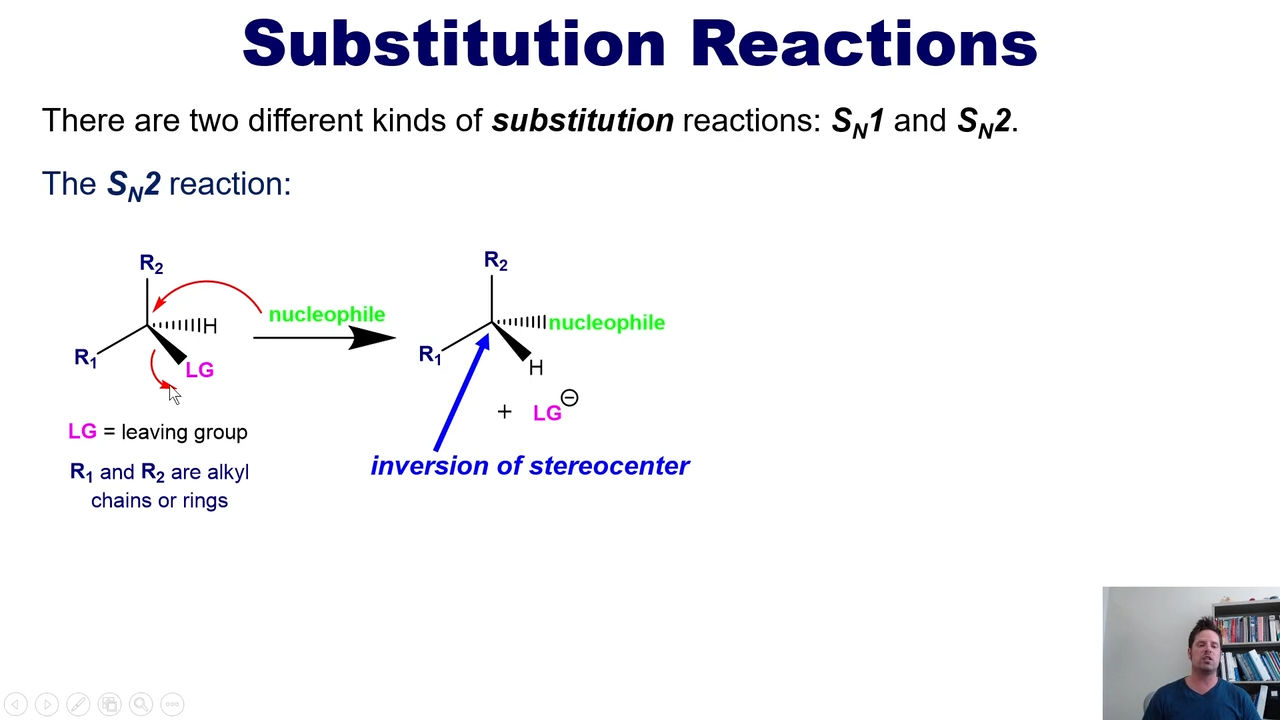
What happens to the stereochemistry in an SN2 reaction
It inverts
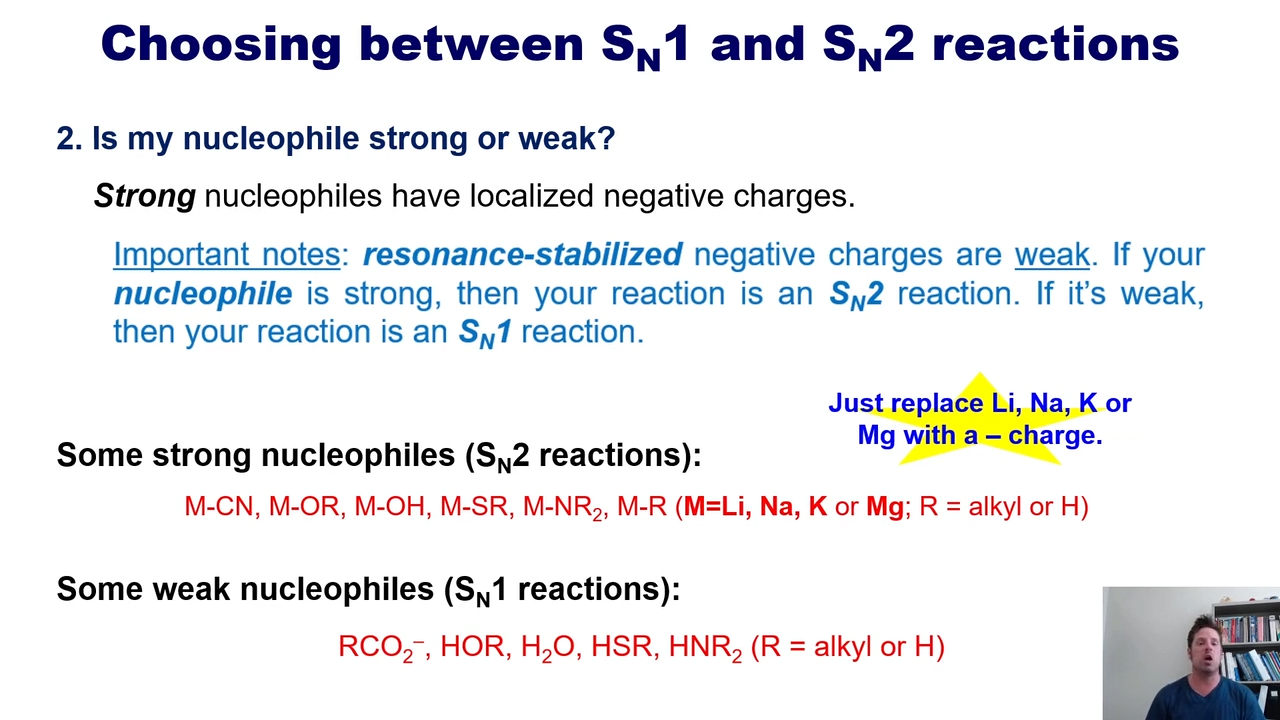
How to choose between SN1 and SN2 reactions
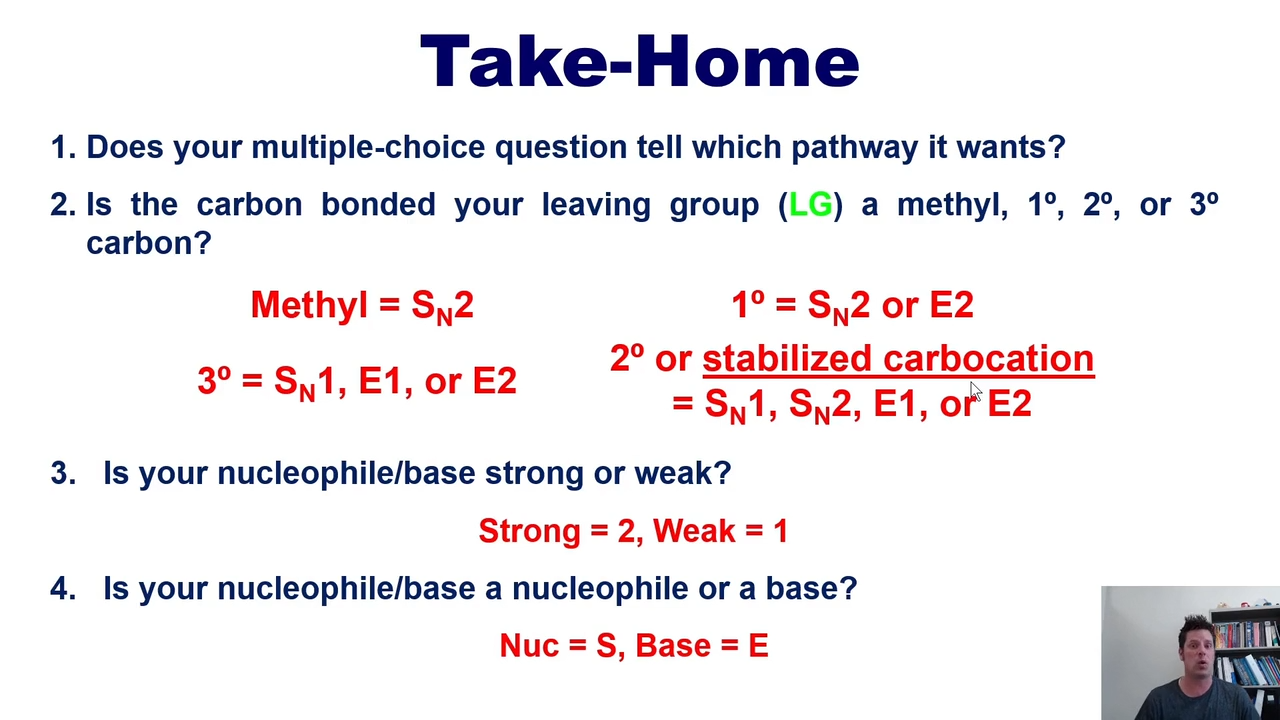
what the leaving group is attached to, if its attached to a 3 prime carbon, it is SN1 if it is attached to a 1’ carbon, its SN2, if 2’, it could be either
Strong nucleophile (SN2) (metals with NOF), weak nucleophile (SN1)(no metal or resonance stabilization)
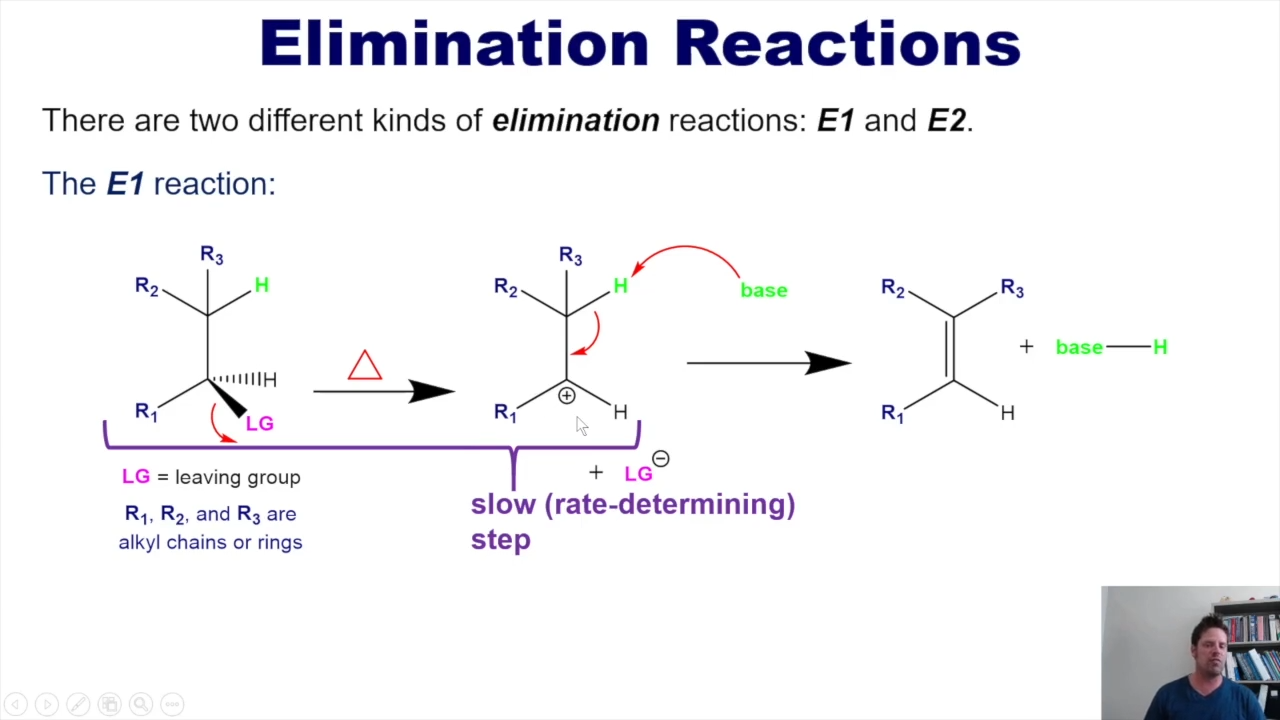
E1 reactions
much like SN2, heat is the rate determining step
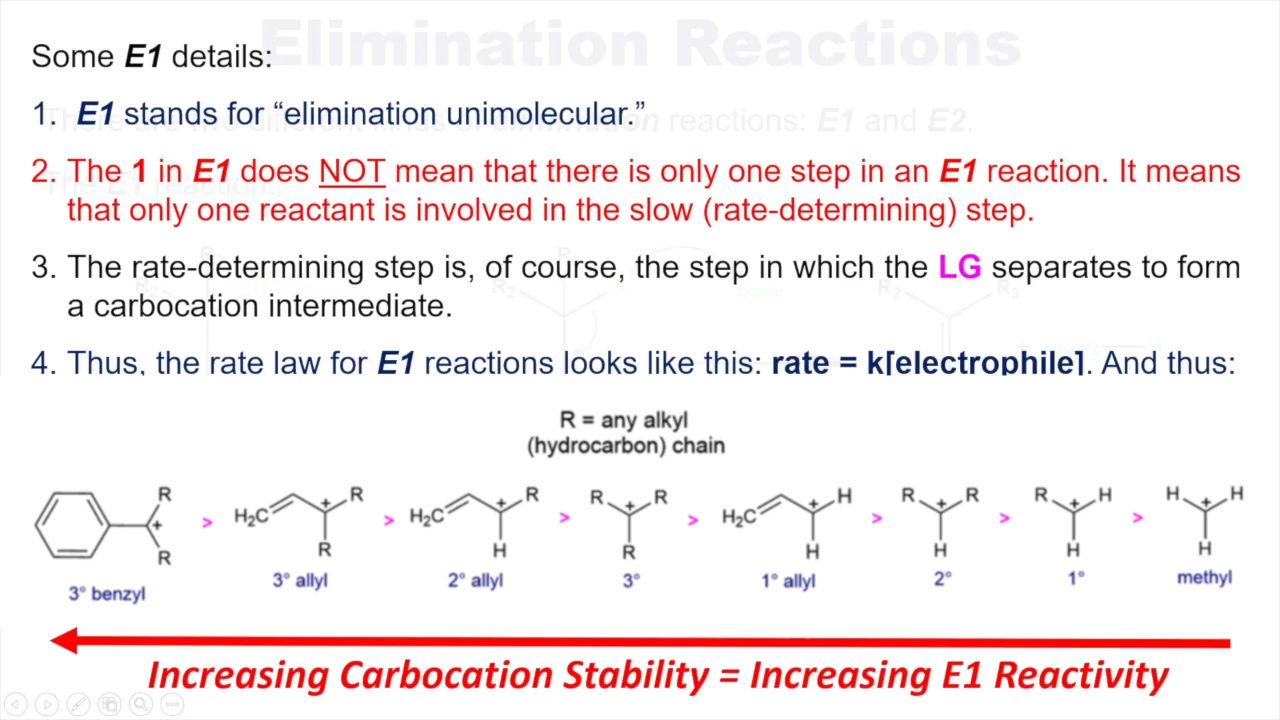
E1 carbocation stability
Increasing carbocation stability leads to increasing E1 reactivity
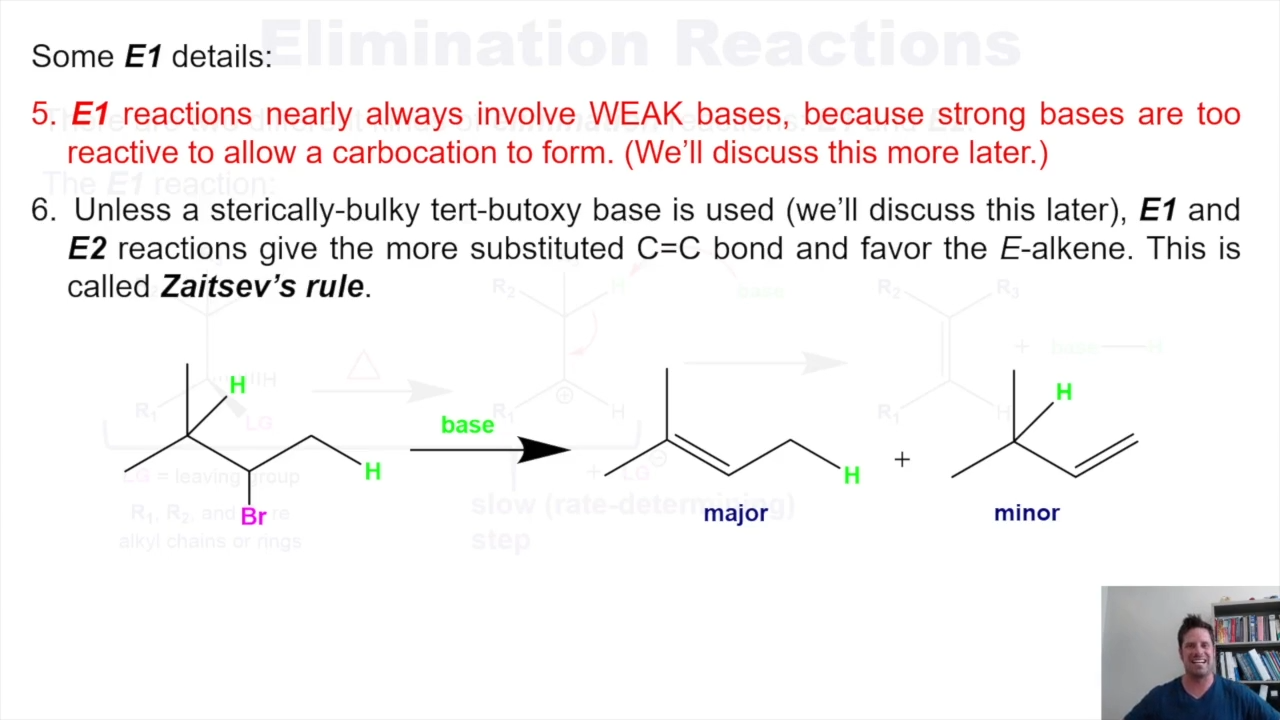
Zatsiev rule
E1 and E2 reactions favor the more substituted C=C bond
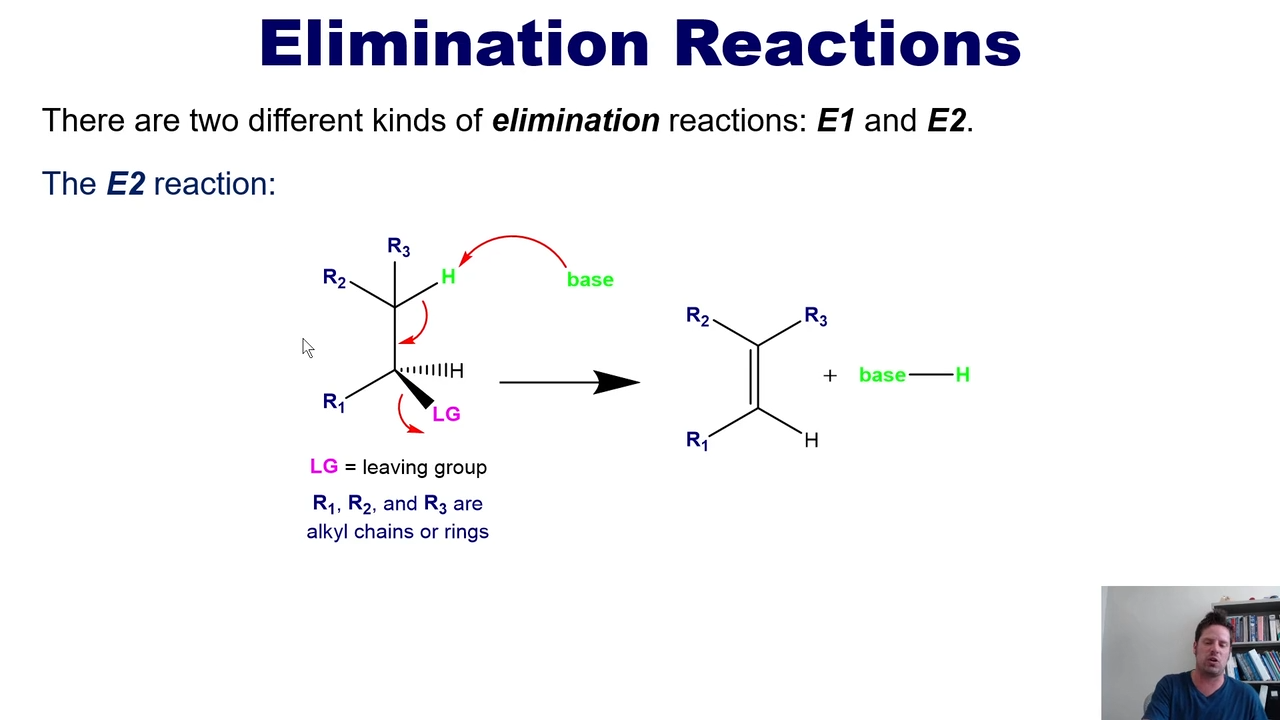
E2 reactions
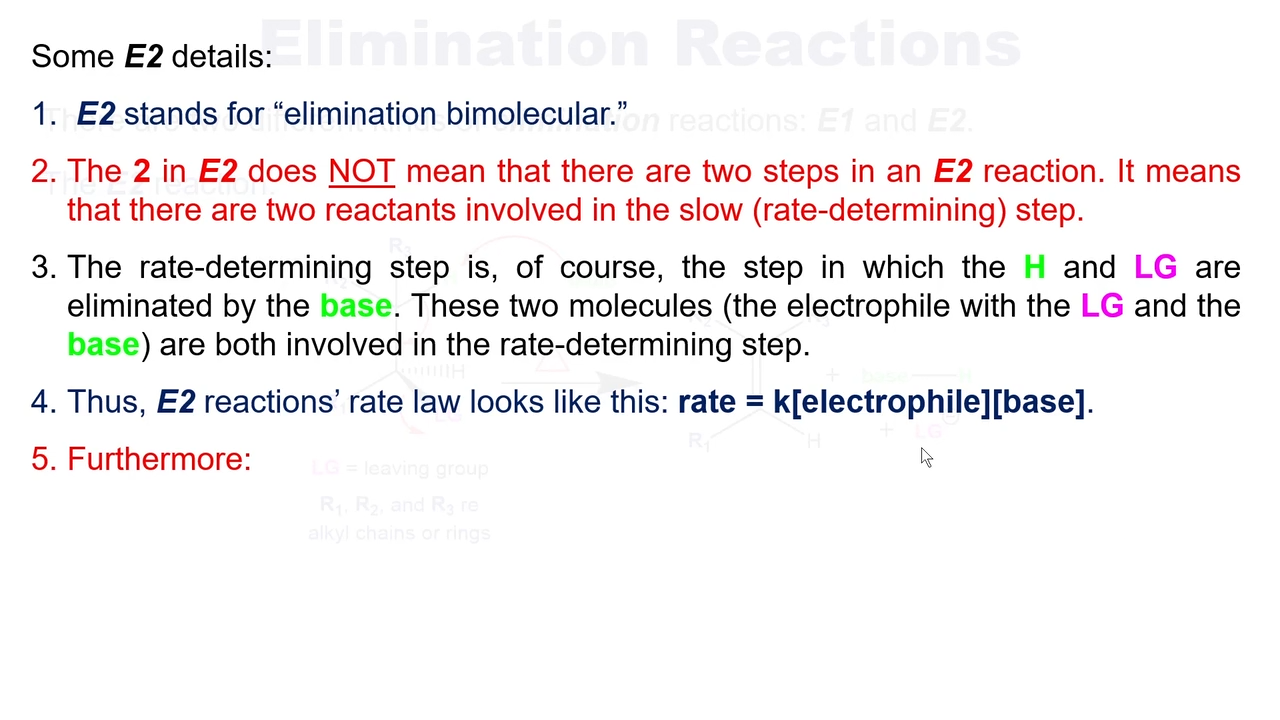
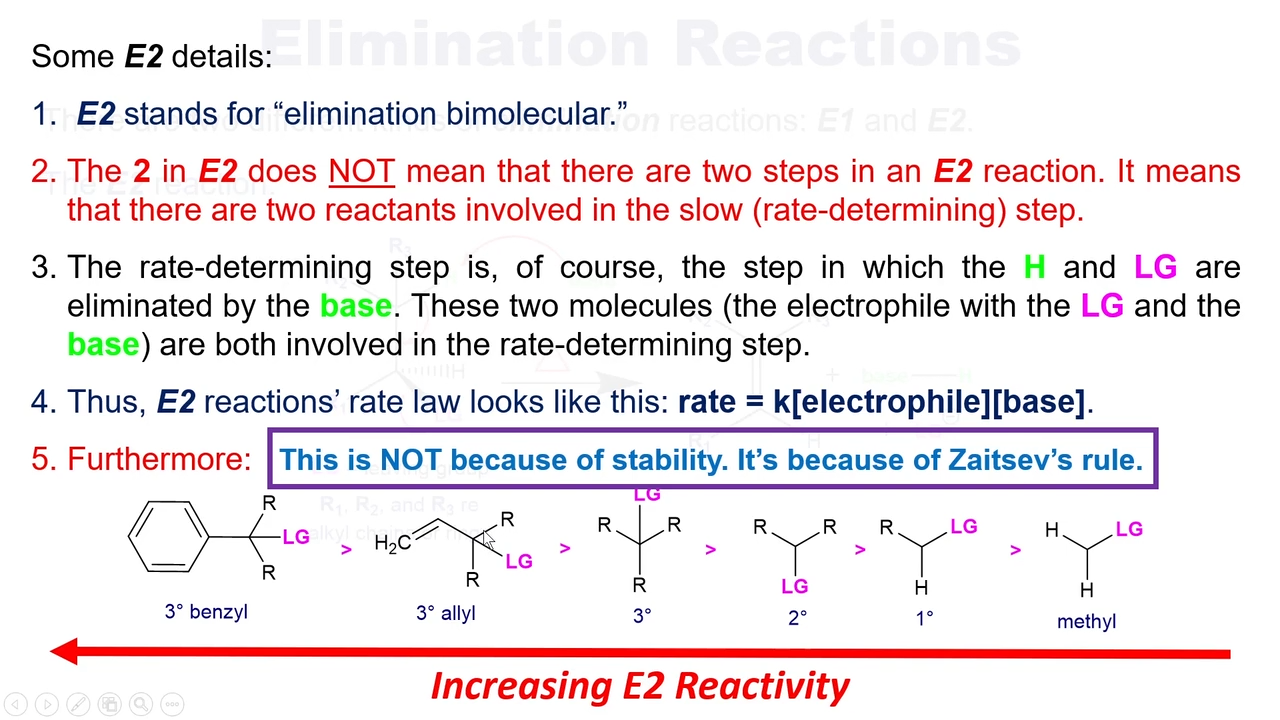
E2 Kinetics
Rate=K(electrophile)(base)
E2 stability
More substitued, more reactions
due to zatsiev’s rule
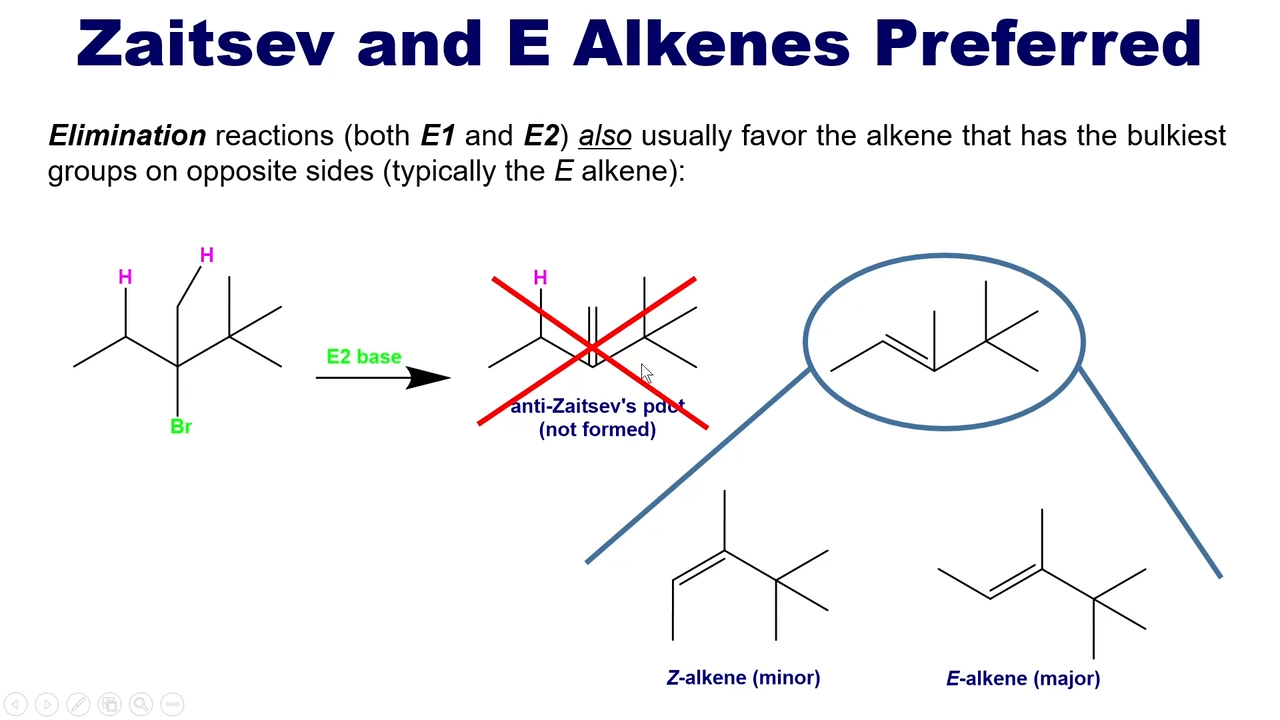
What alkenes are favored during E reactions
E alkenes
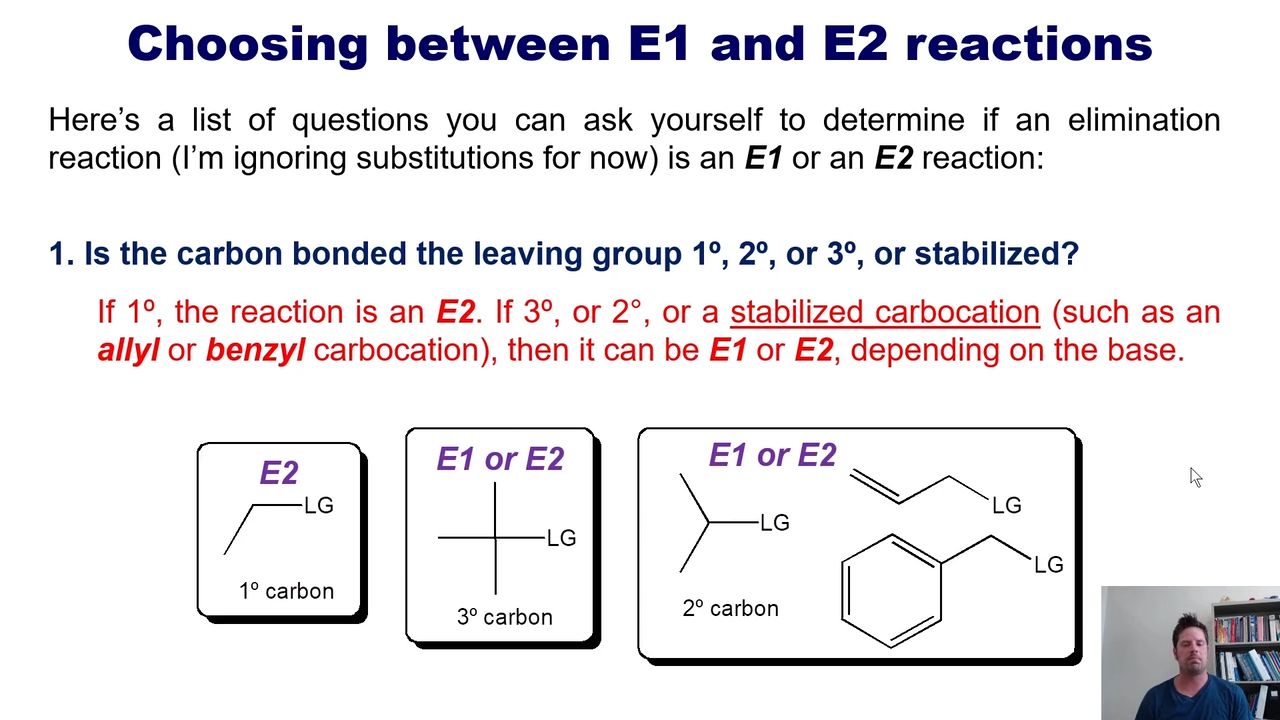
How to choose between E1 or E2
primary- E2
All the rest - E1 or E2
Strong base - E2 , Weak base E1
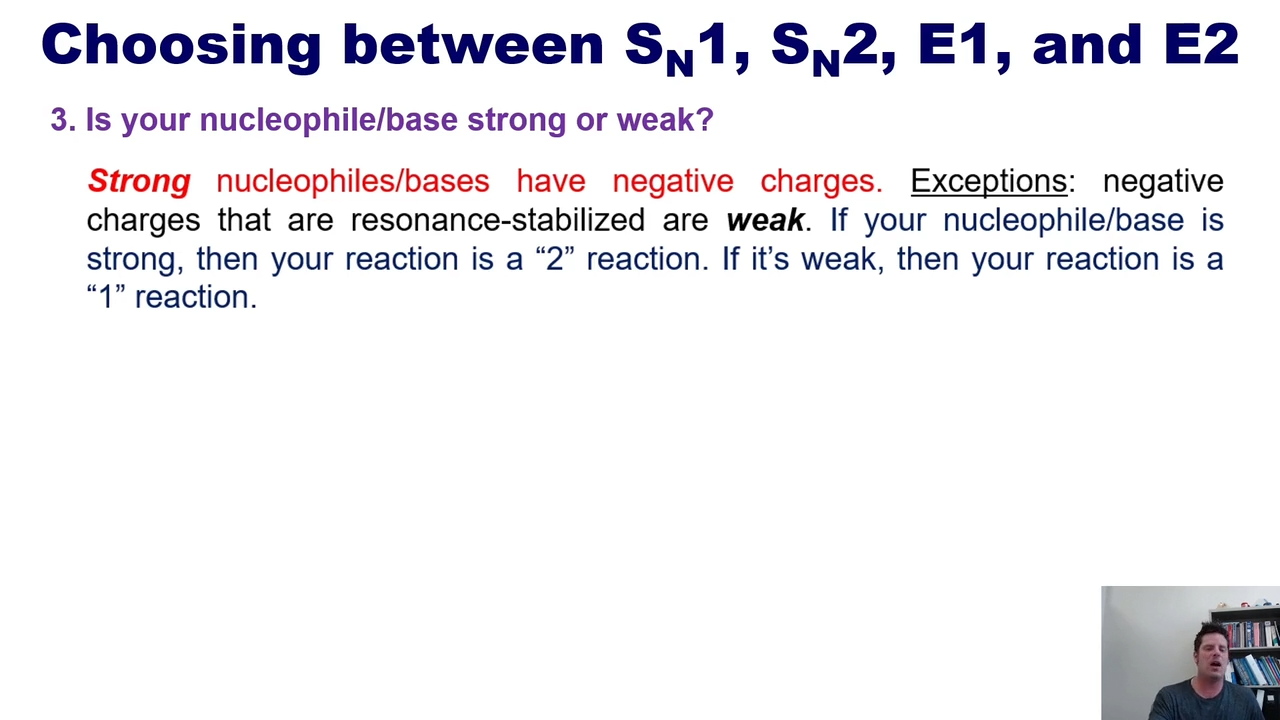
What happens if your nucleophile /base is weak?
then it is a weak reaction
Base size when determining SN1, SN2, E1 and E2
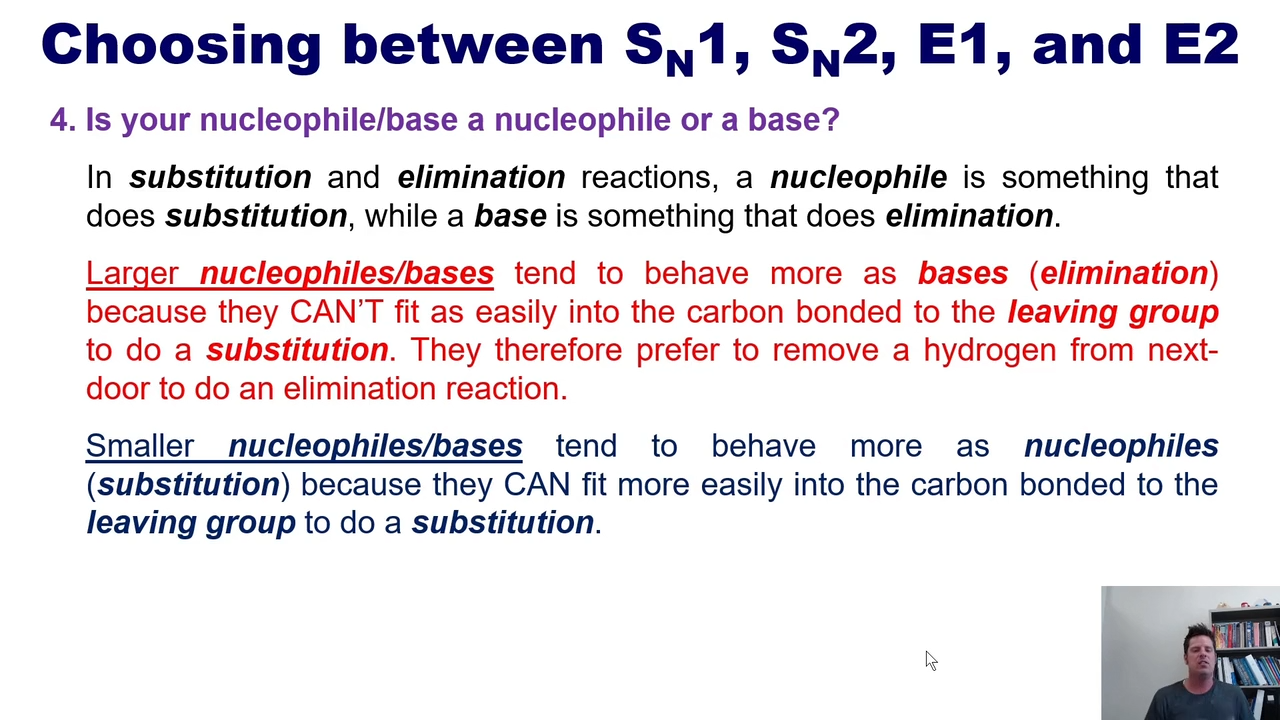
larger nucleophiles/bases act more as bases as they are too large
smaller nucleophiles/bases act more as nucleophiles as they can fit
What counts as a “large” nucleophile/base
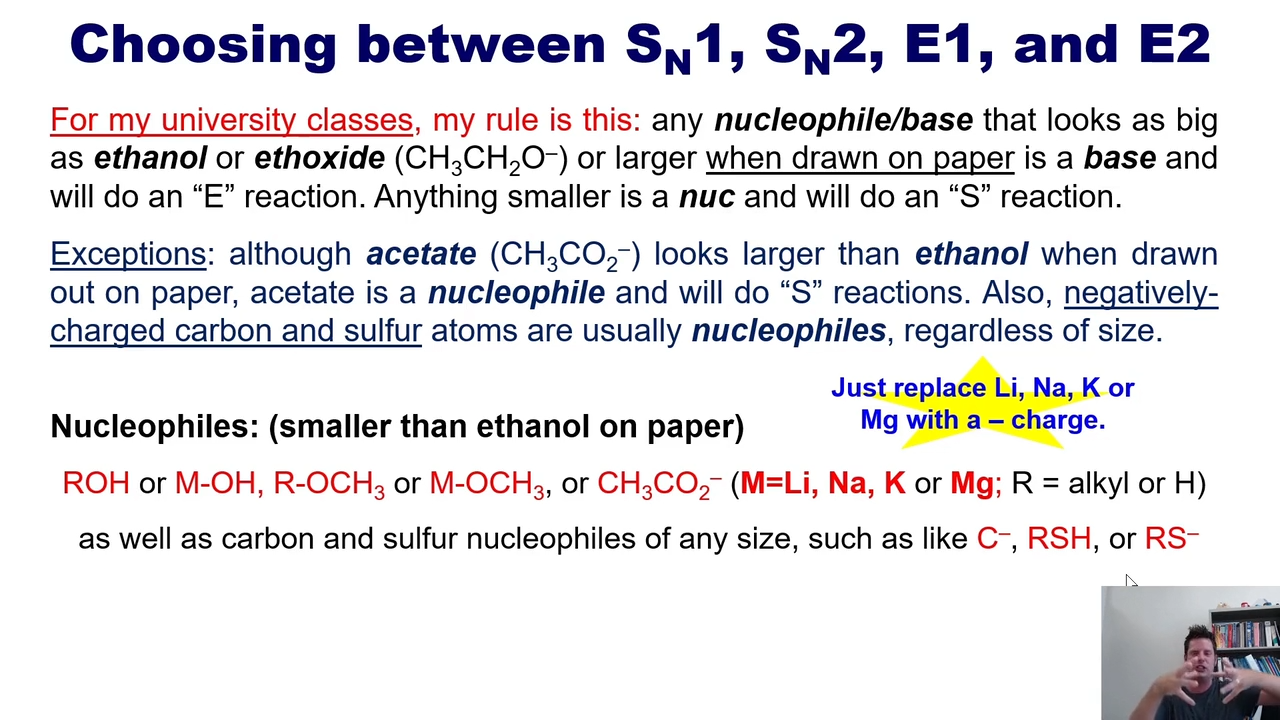
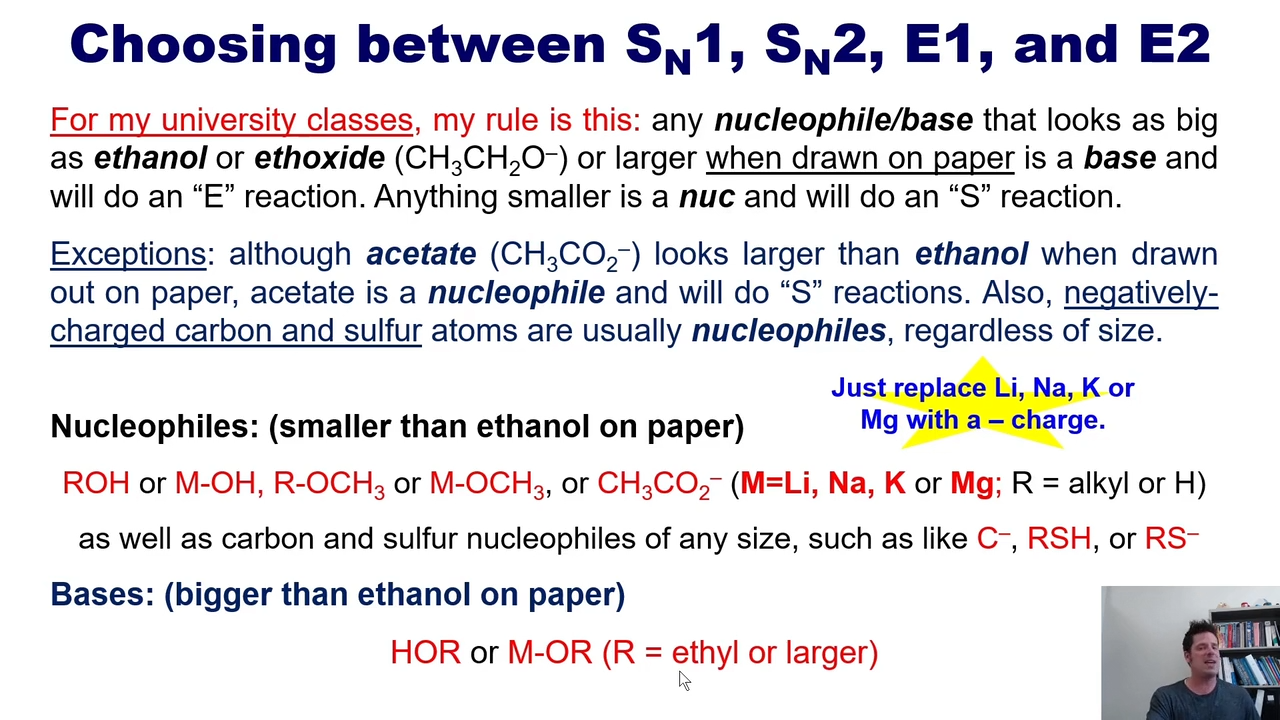
anything bigger than ethanol
What counts as a “small” nucleophile/base
Negativley charged carbon and sulfur
acetate
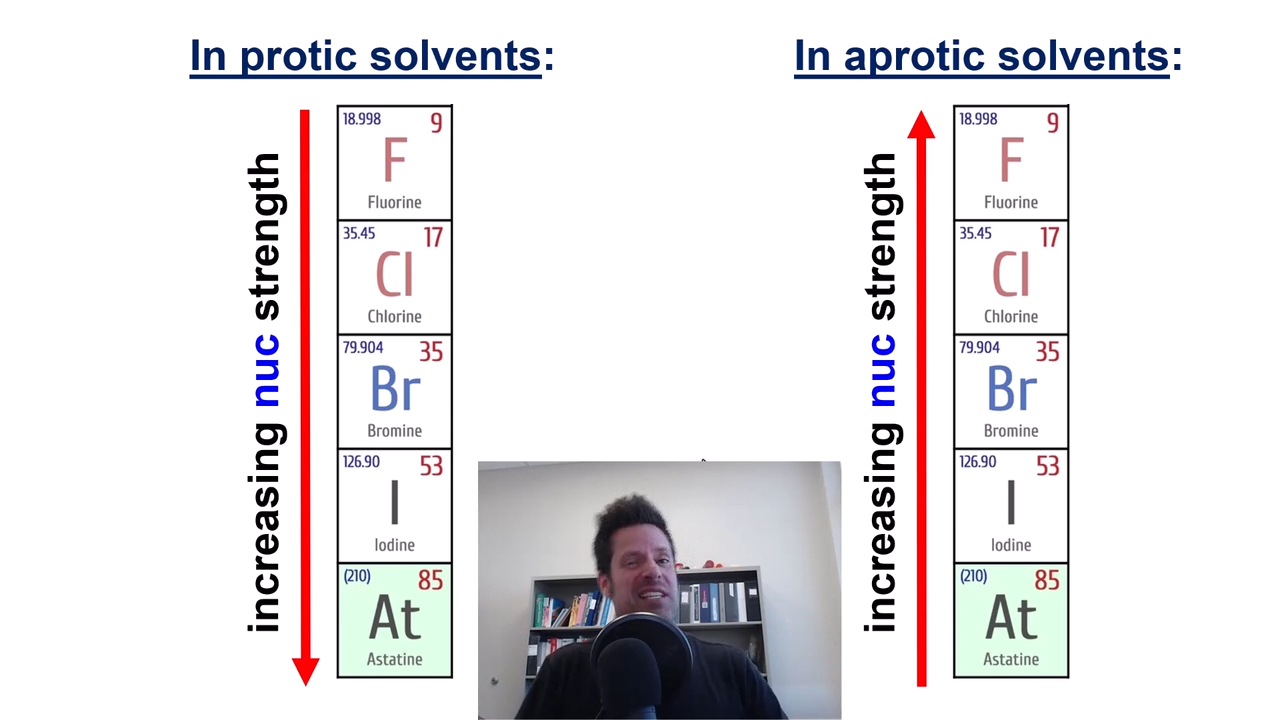
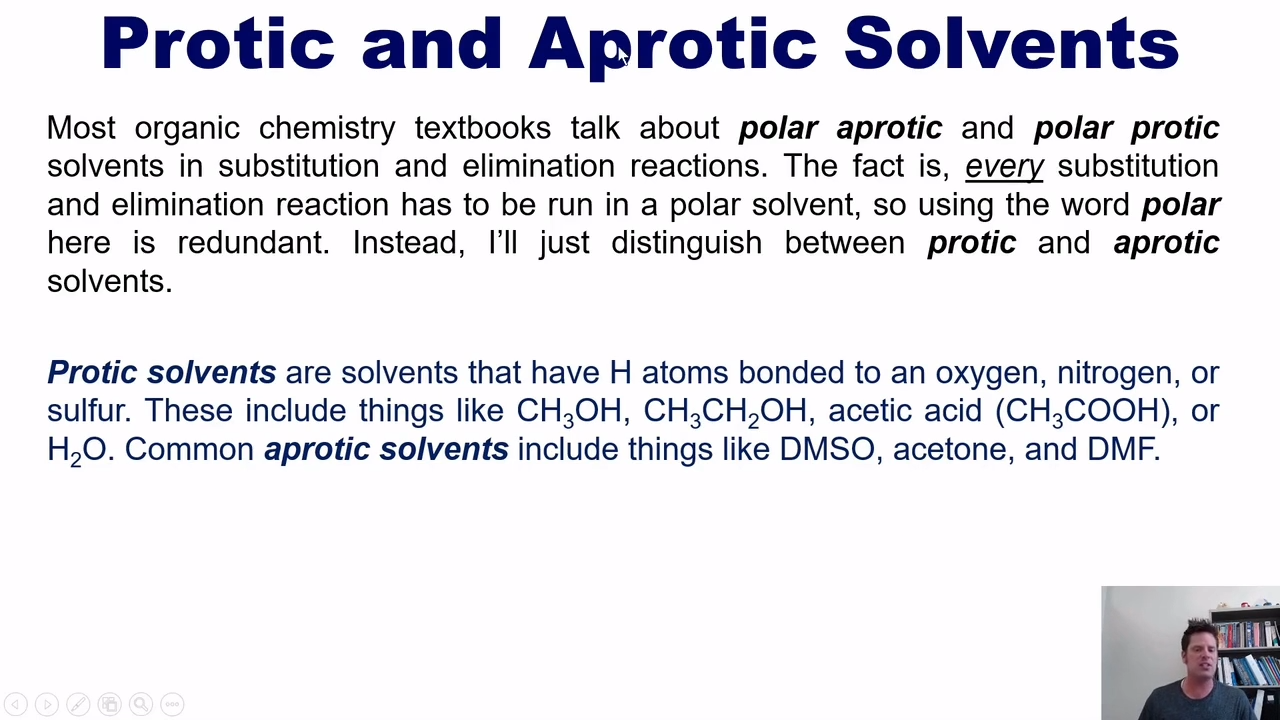
protic solvents
solvents with H atoms bonded to oxygen, nitrogen, or sulfur NOS
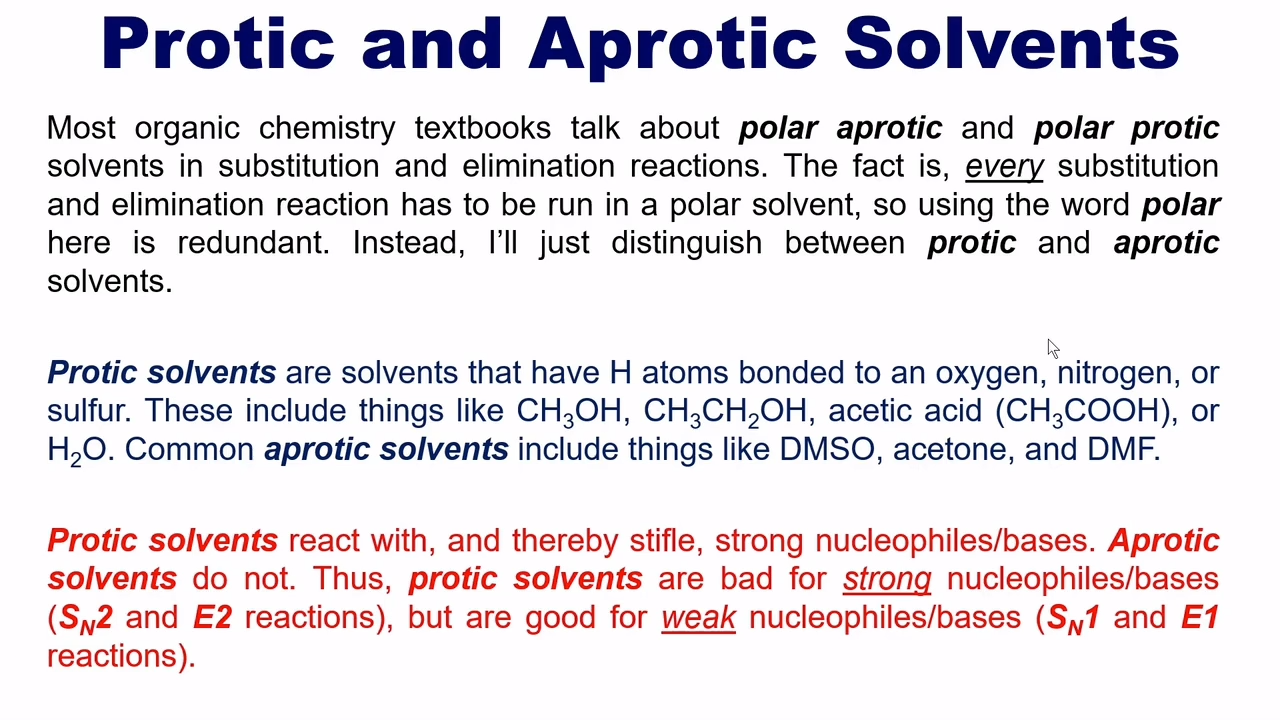
What do protic solvents do
they stifle strong nucleophiles/bases, which is good for SN1/E1, E2 does ok though
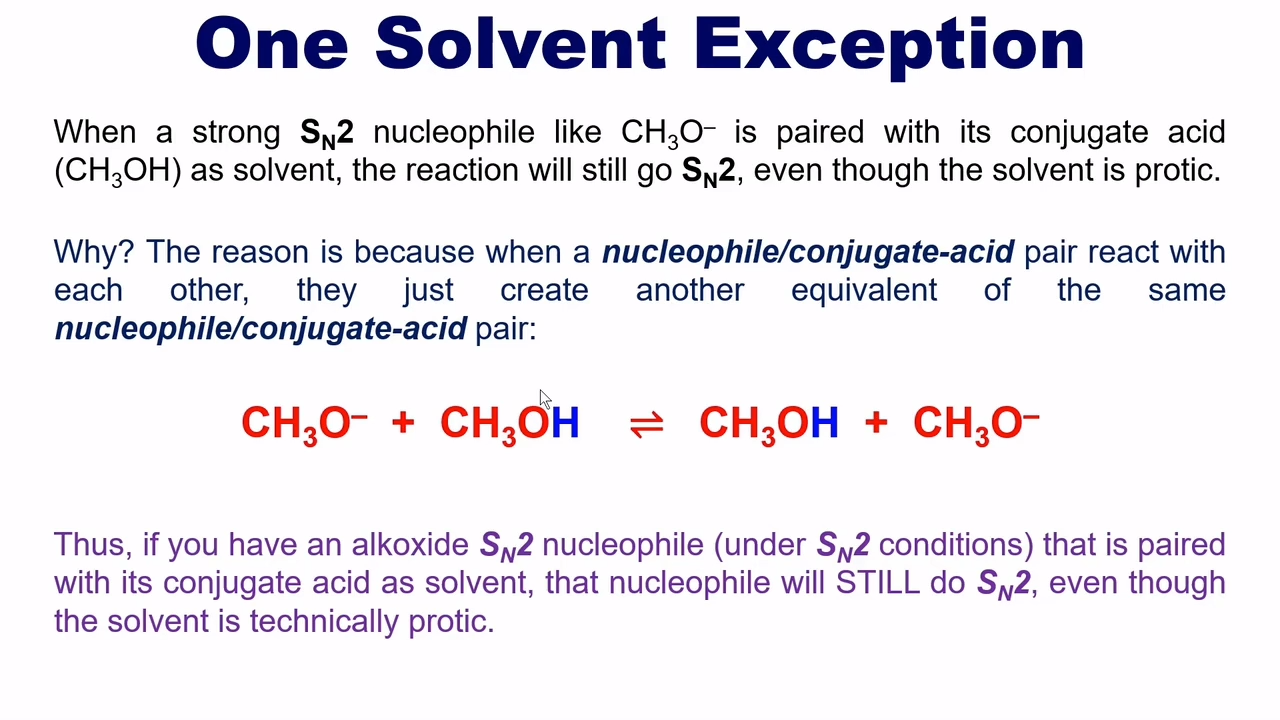
What Happens when an Sn2 nucleophile is paired with its conjugate acid
it still undergoes SN2
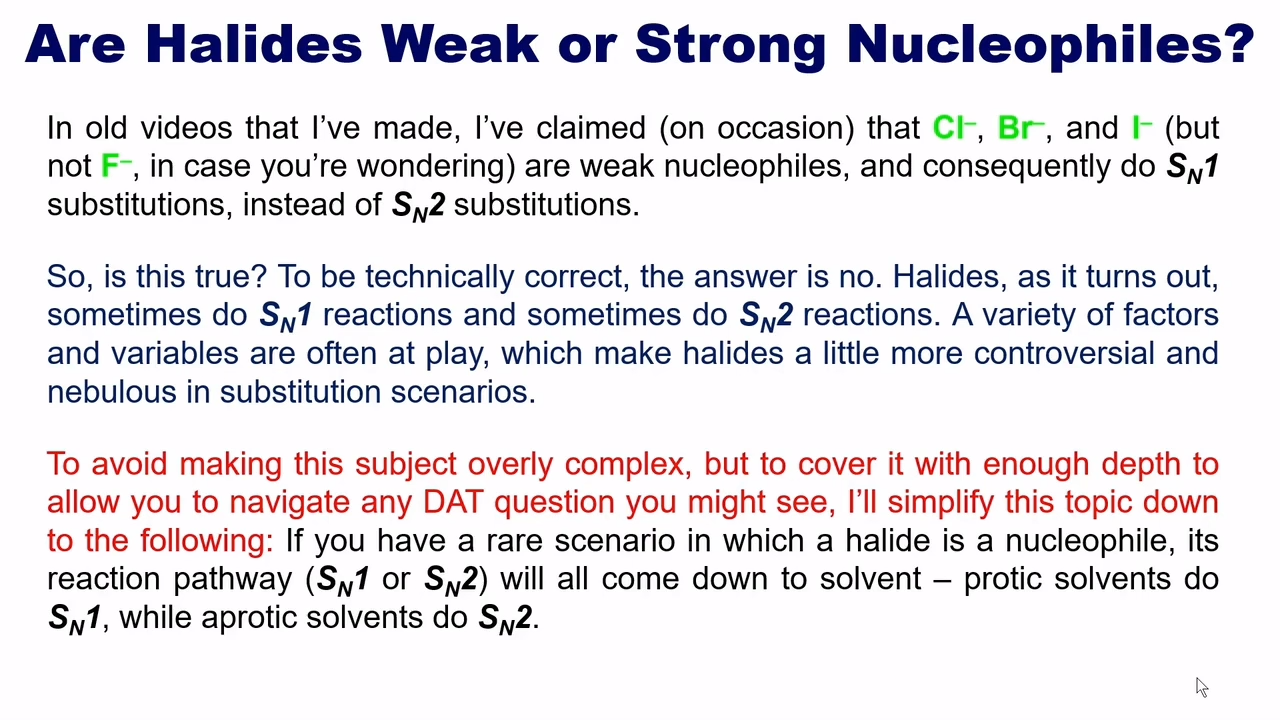
What happens if you have a halide nucleophile
protic/aprotic solvents will have a strong factor in whether or not it is a SN1/SN2
Protic - SN1
Aprotic - SN2
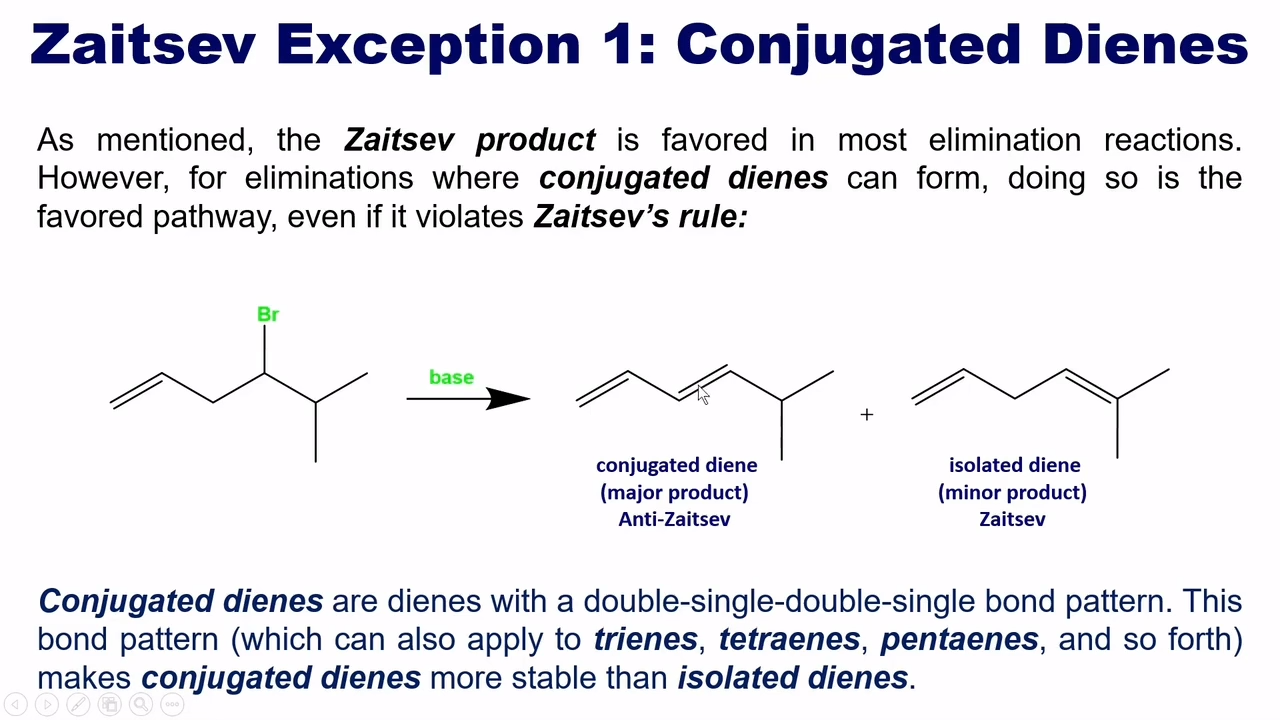
Zaitsev exception 1
Conjugated dienes will always be more favorable
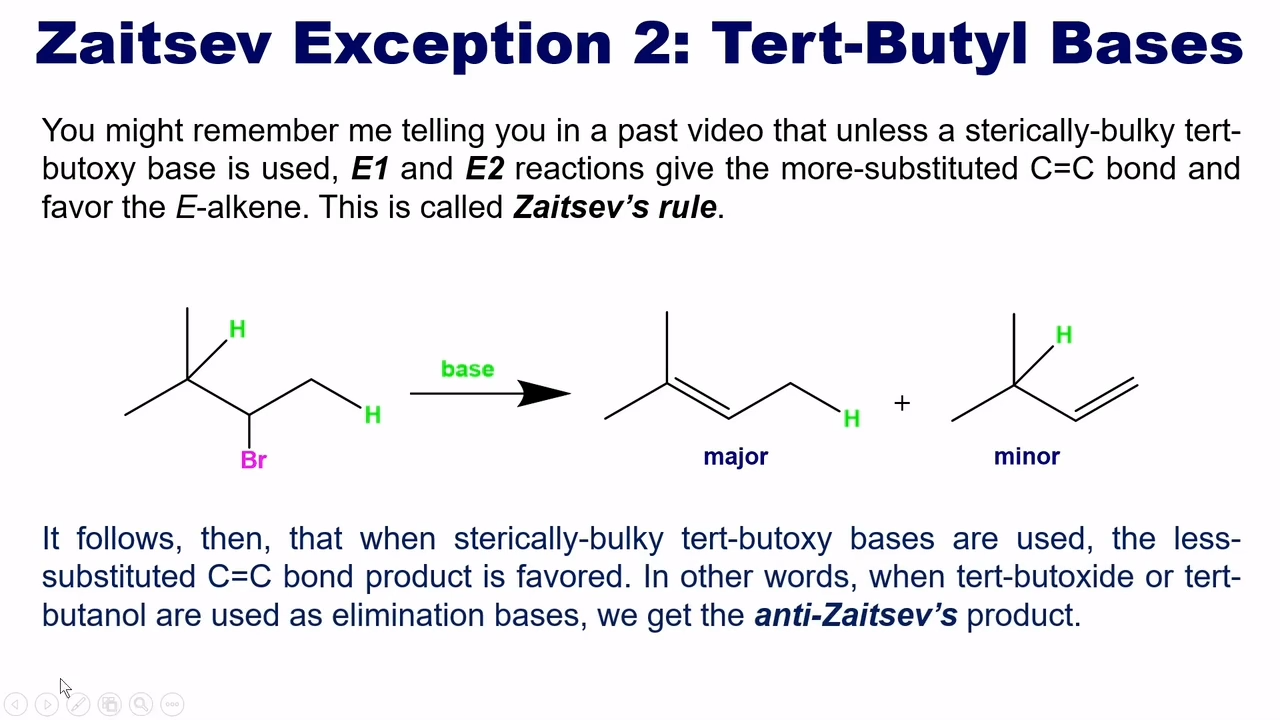
Zatsiev exception 2
Tert butyls will favor the less subtituted C=C bond
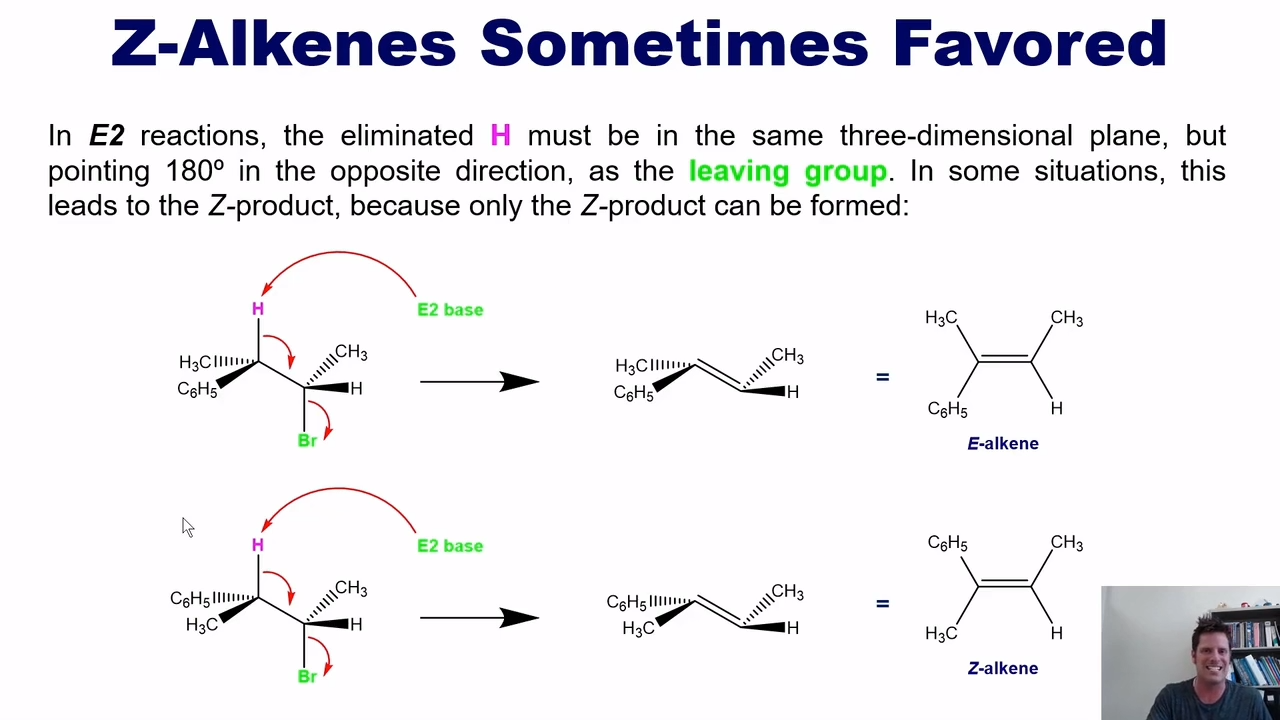
Why are z products sometimes favored in SN2 reaction
Due to preset stereochemistry and the fact that the hydrogen and LG need to be opposite
CYCLOHEXANE AS WELL
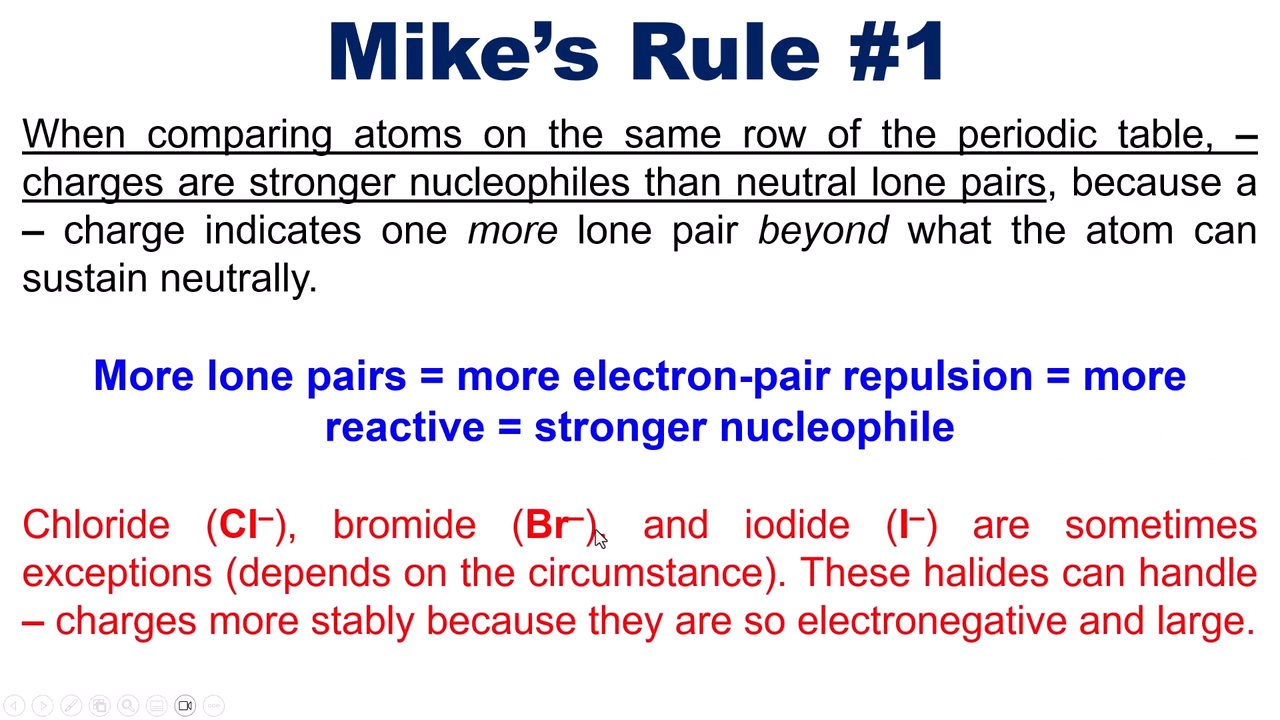
What does more negative charge mean
more nucleophilicity
What does more resonance mean
less nucleophilicity
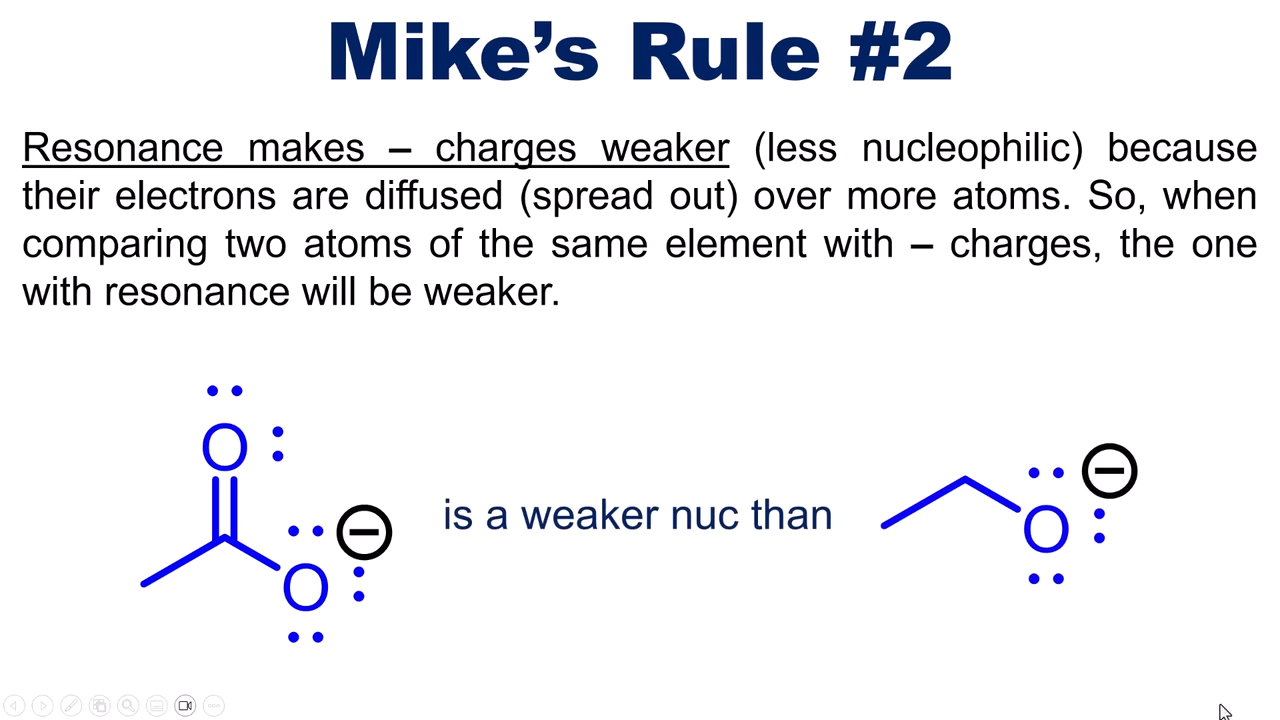
What trend on the periodic table is nucleophilicity
less electronegative = less able to handle a negative charge, hence increasing nucleophillicity
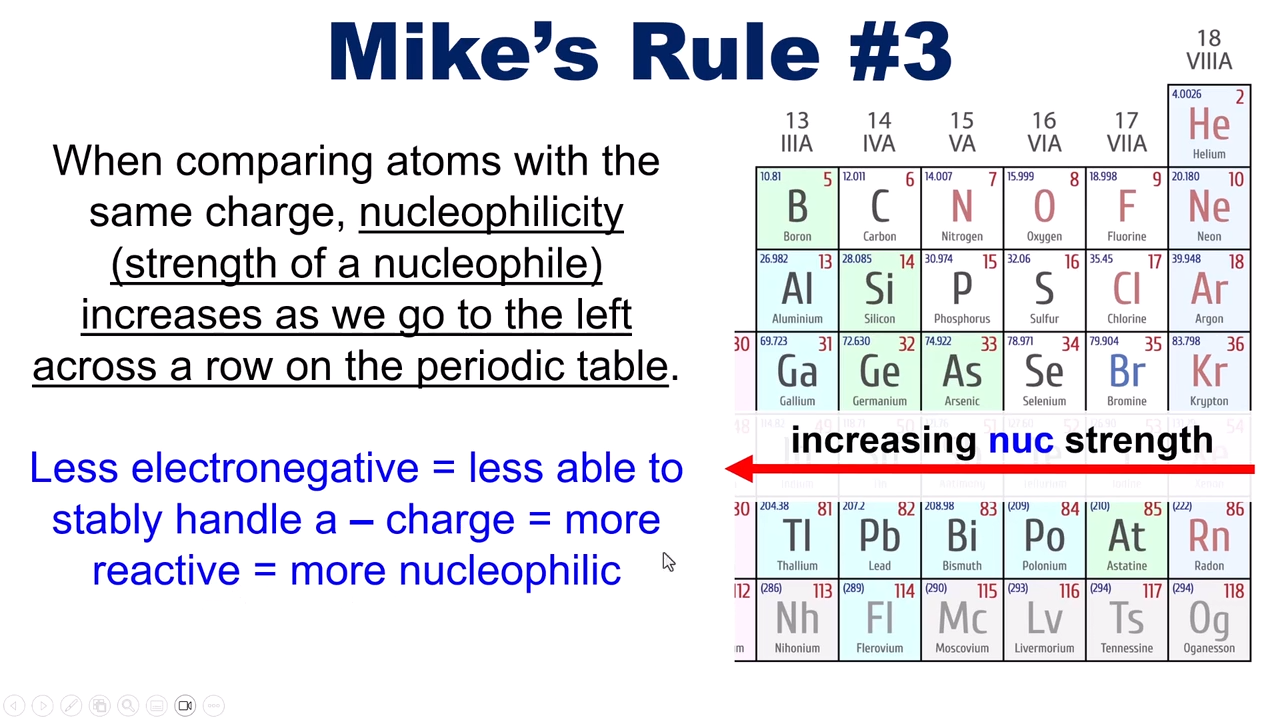
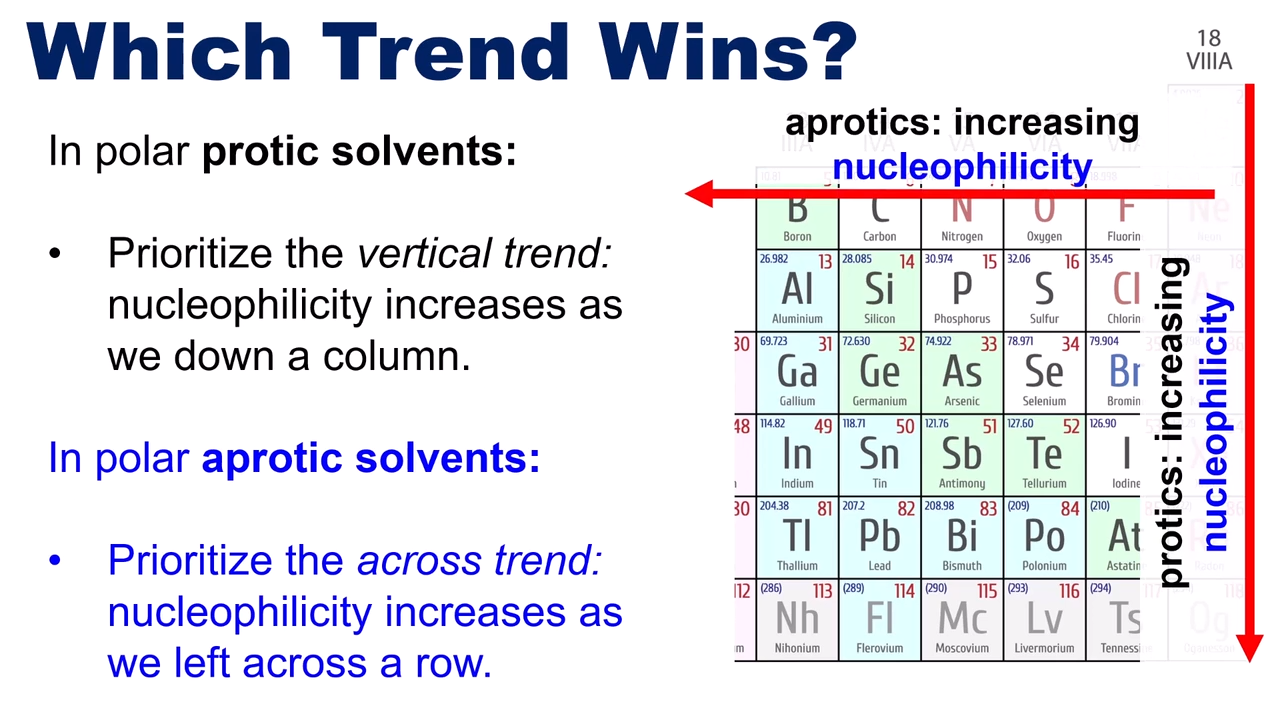
in protic solvents, how does nucleophilicity increase
down a column
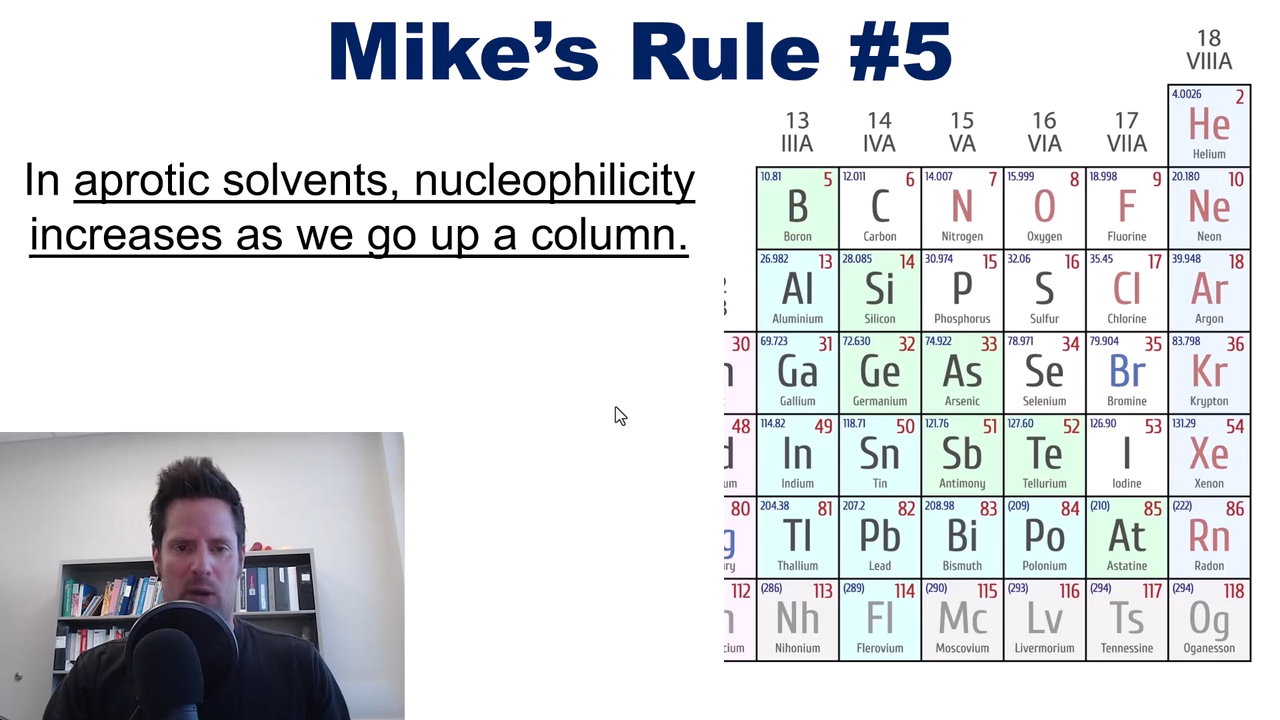
in aprotic solvents, how does nucleophilicity increase
up a column
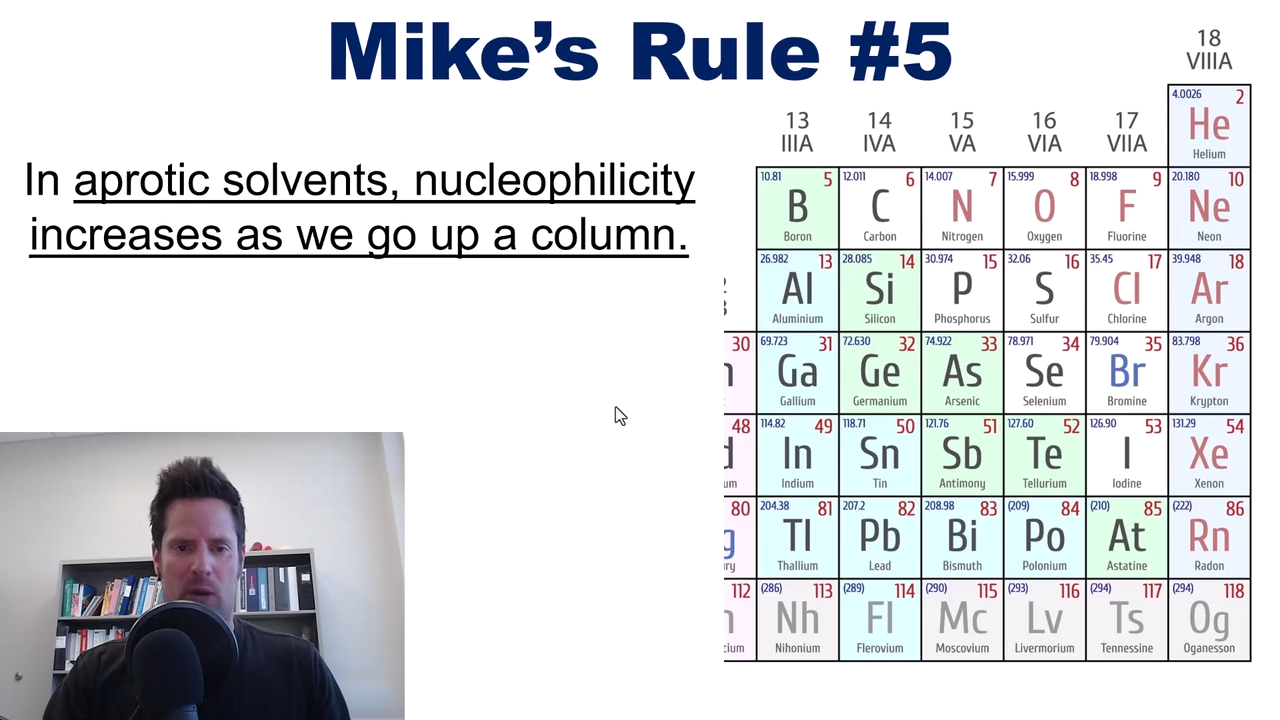
Which trend wins?
in aprotic: left to right
in protic: top to bottom
neutral halogens trend
really weak nucleophiles