3. Pursuits - Eye Movements & Binocular Vision Summer 2026
 Call Kai
 Learn
Learn Practice Test
 Spaced Repetition
 Match
Match Flashcards
 Knowt Play
1/25

There's no tags or description
Looks like no tags are added yet.
Name | Mastery | Learn | Test | Matching | Spaced | Call with Kai | Chat |
|---|
No analytics yet
Send a link to your students to track their progress
26 Terms
What is a pursuit?
-Gaze-shifting eye movements
-Slow, conjugate tracking eye movement in response to a moving stimulus
What is the primary stimulus for a pursuit?
target velocity
What is the goal of a pursuit?
-Match the eye velocity with the target velocity
-Stabilize the object of interest on the retina
-To create a constant oculocentric direction (β)
A ______ is our stimulus to generate or adjust a pursuit eye movement
non-zero rate of change of β
What is the goal of a pursuit?
to adjust eye velocity (rate of change of ocular direction -- α) so that β is constant
What is the latency period for a pursuit?
100 +/- 5msec
Pursuit velocity will closely match what?
target velocity up to 60-70º/sec
Above 60-70º/sec, pursuits are usually (slower/faster) than target velocity
slower
Pursuits can keep up with targets moving up to _______º/sec in some instances
100-150
(Vertical/horizontal) pursuits are more accurate than (Vertical/horizontal) pursuits
horizontal; vertical
If eyes are BEHIND the target, this may trigger a saccadic eye movement called a ________
catch up saccade
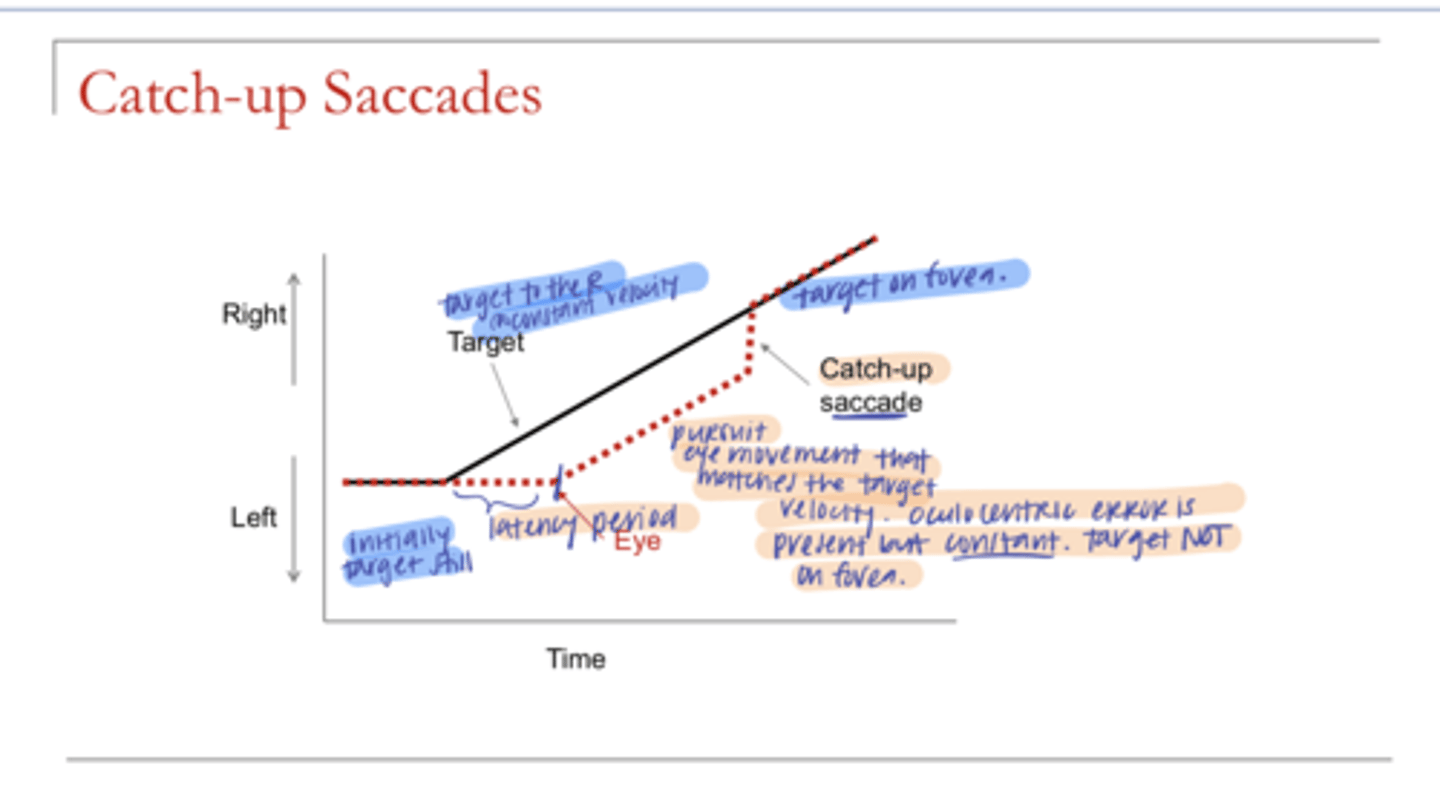
Catch-Up Saccade Diagram (Pic)
Catch-Up Saccade Diagram (Pic)
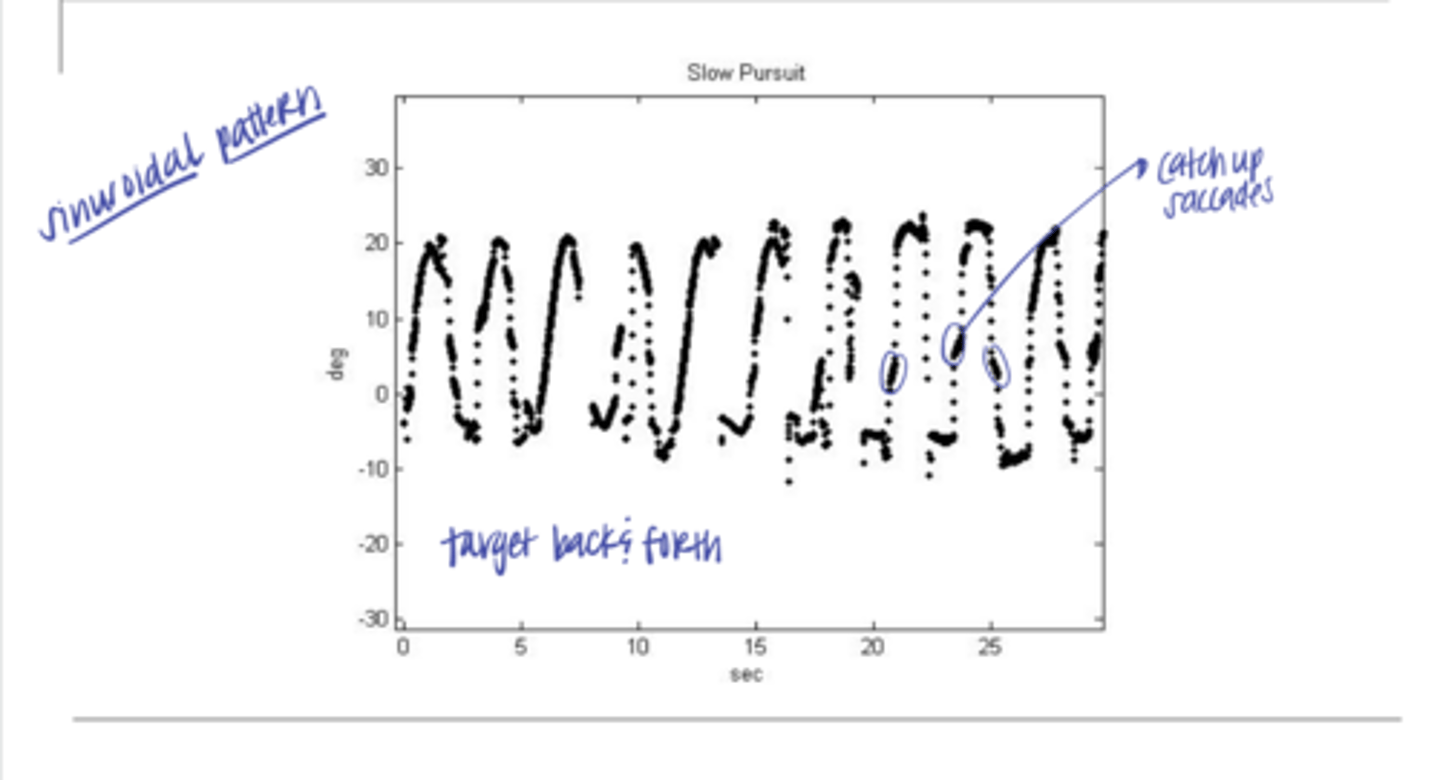
Catch-Up Saccade Diagram (Pic)
Catch-Up Saccade Diagram (Pic)
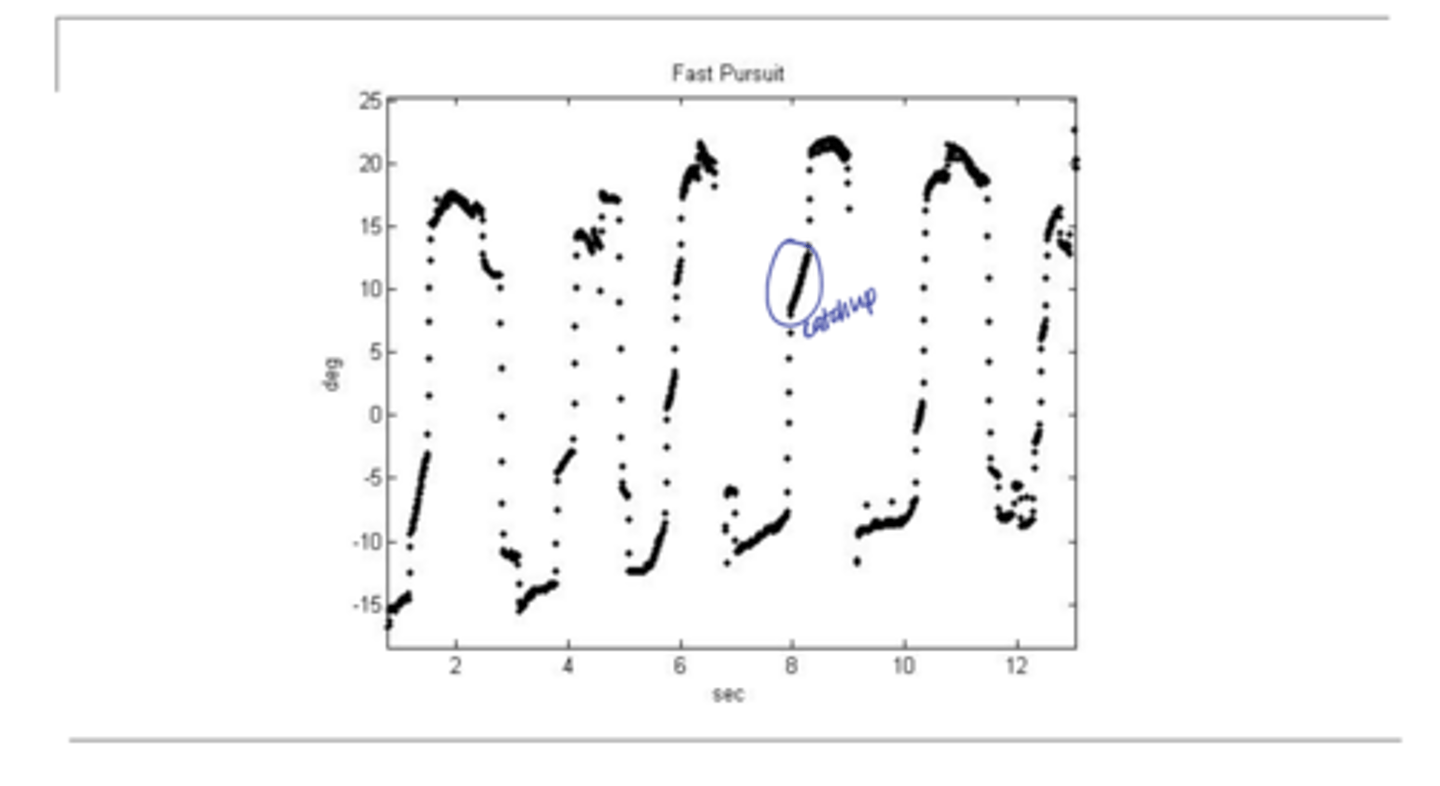
Catch-Up Saccade Diagram (Pic)
Catch-Up Saccade Diagram (Pic)
Performance of pursuits (increases/decreases) with age
decreases
What increases as we age?
error correcting or catch up saccades
Knowledge of the target allows _______ as to its future behavior
educated guesses
What happens to pursuits when patients can make educated guesses about future target behavior?
patients can track objects more accurately
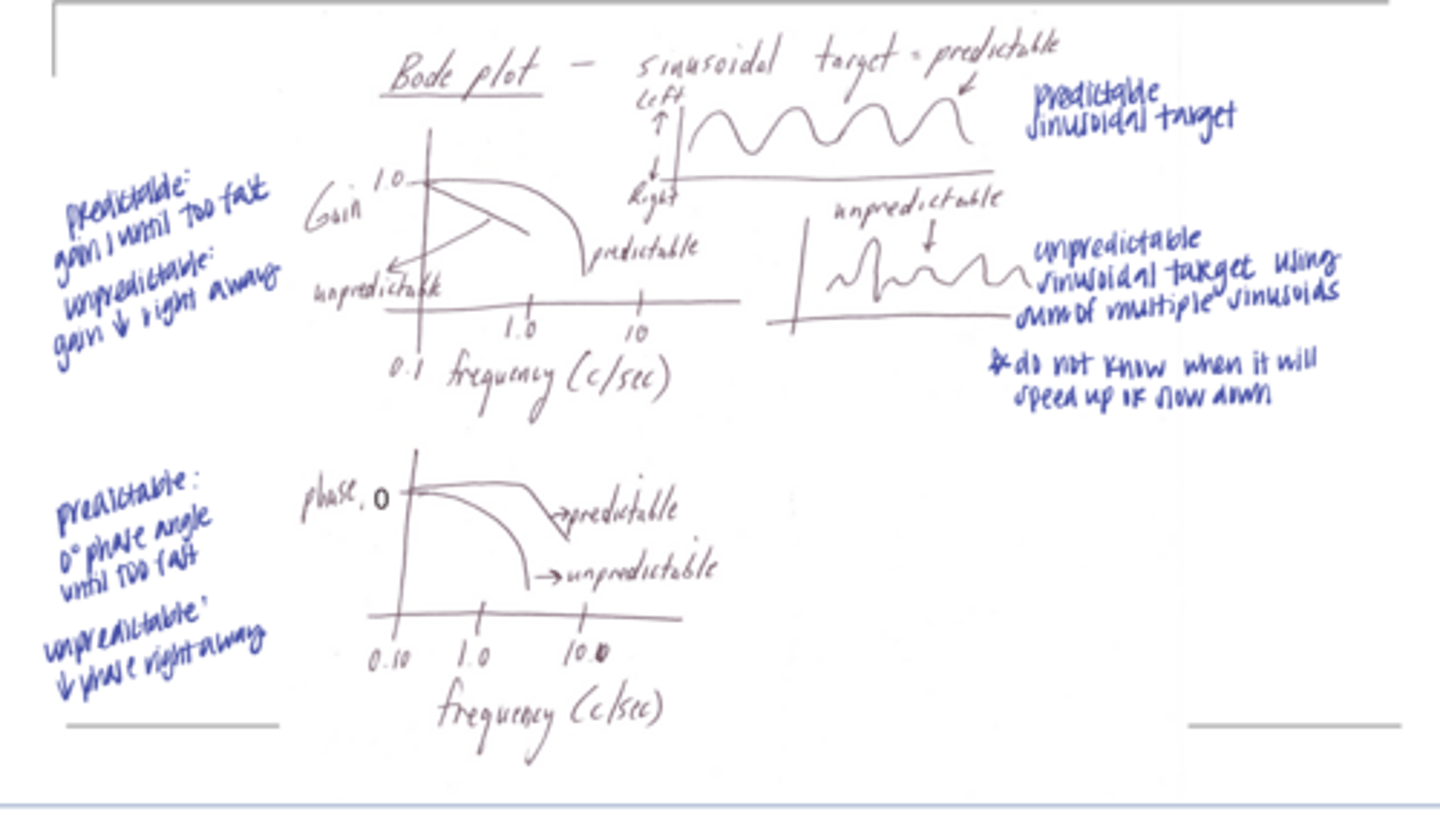
What does the Bode Analysis for Pursuits contain?
2 plots (just like for VOR)
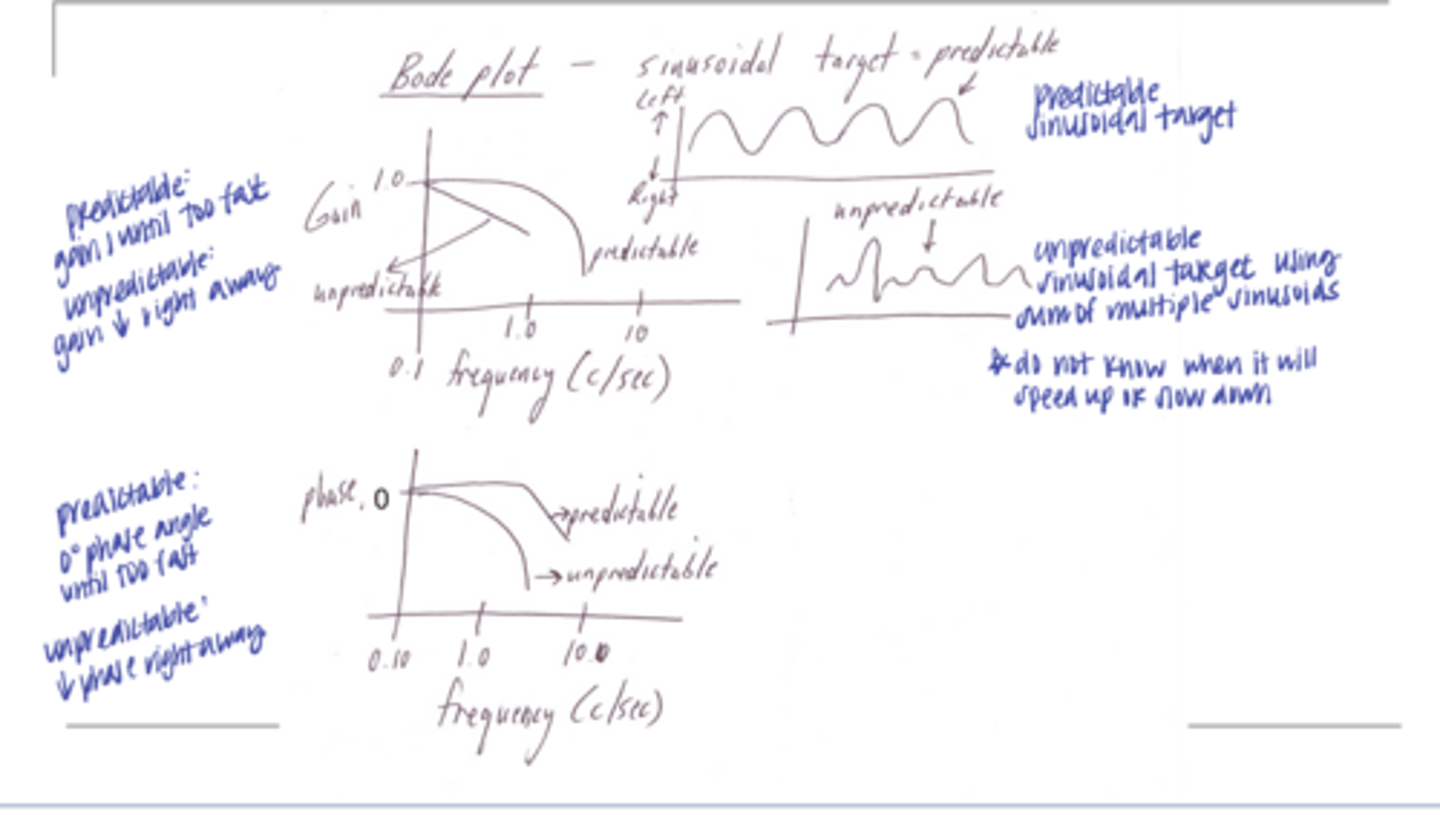
What are the 2 Bode plots that describe Pursuits?
-Gain vs frequency
-Phase vs Frequency
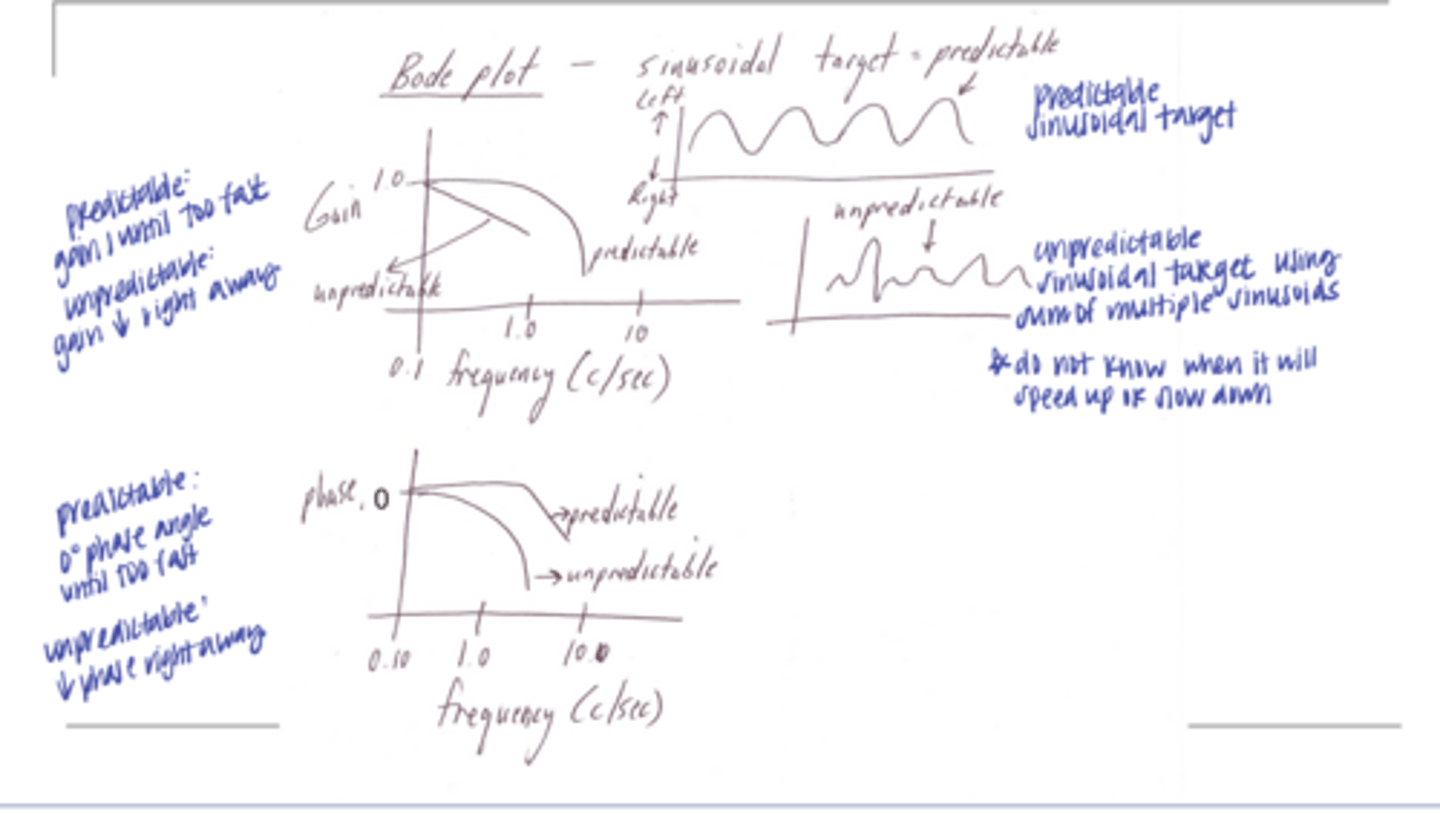
What is the ideal phase of pursuits?
0º
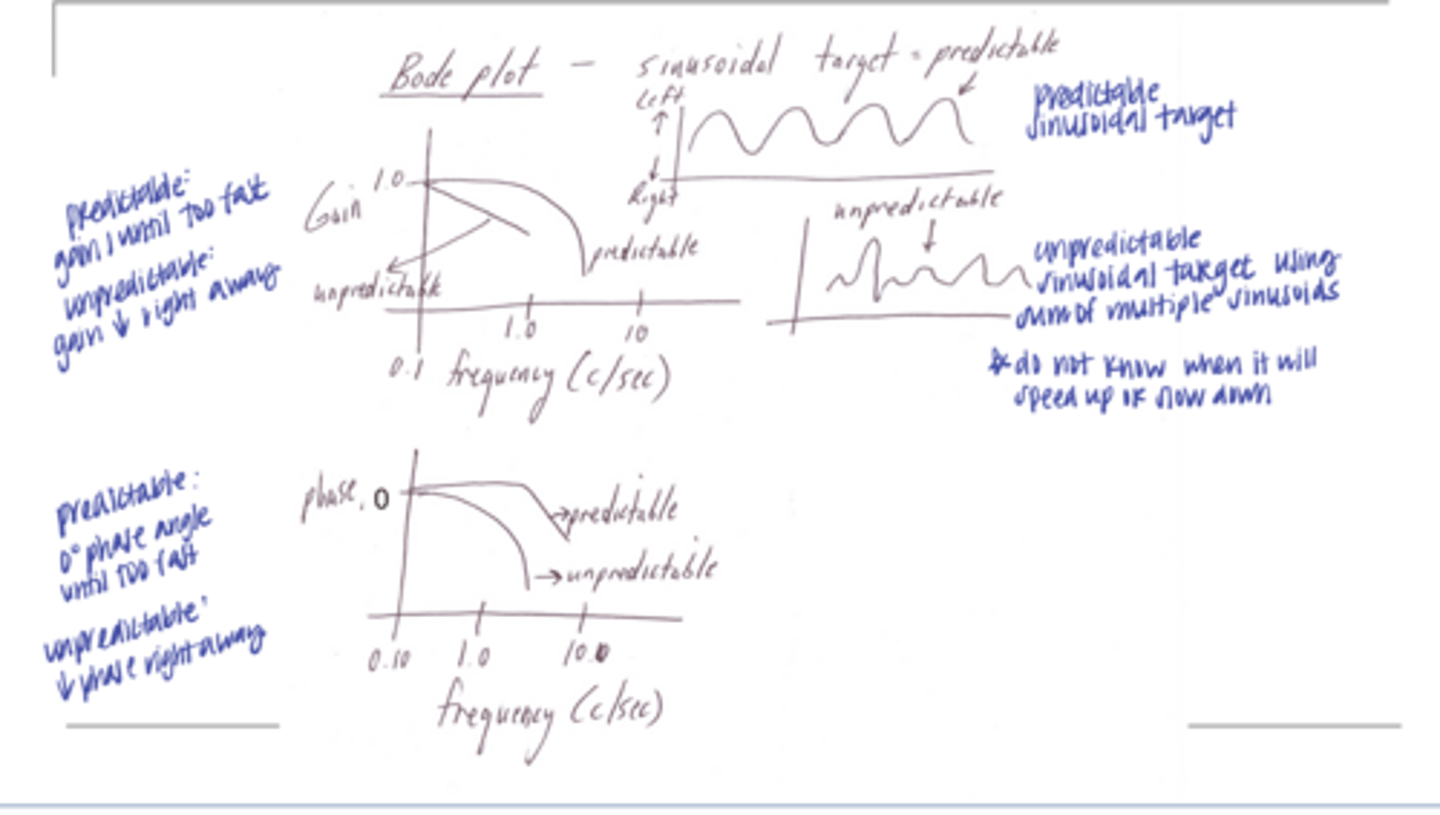
Bode Plots (Pic)
Bode Plots (Pic)
Are we able to train pursuits?
Several studies show that is it possible to train pursuits. After 7.5 min subjects learned to track an odd target movement. Included 3 Pirate baseball platers who had much lower initial tracking errors than other subjects; however after training, all subjects plateau at some final error score
How do drugs affect pursuits?
Barbiturates can eliminate smooth pursuits but leave saccadic intact. To follow a target, patients have to make a series of saccadic movements
You can only pursue a baseball until about ______
10 ft
When measuring VA with a moving target, what eye movement is utilized?
pursuits -- in an attempt to stabilize the retinal image and thus provide better resolution