ANAPHY (MUSCULAR SYSTEM)
 Call Kai
 Learn
Learn Practice Test
 Spaced Repetition
 Match
Match Flashcards
 Knowt Play
1/83

Earn XP
Description and Tags
KILL MEEEEEEEEEEEE ; for Physiology of Muscles Contraction and Relaxation watch this video: https://www.youtube.com/watch?v=BVcgO4p88AA
Name | Mastery | Learn | Test | Matching | Spaced | Call with Kai | Chat |
|---|
No analytics yet
Send a link to your students to track their progress
84 Terms
Muscle Systems 3 Main Responsibilities
movement, form & shape (maintains posture), maintains body temperature
Why muscles contract
movement of microfilaments
Skeletal Muscle (Location)
wall of the pharynx and esophagus + attached by tendons to bones
Skeletal Muscle (Structure)
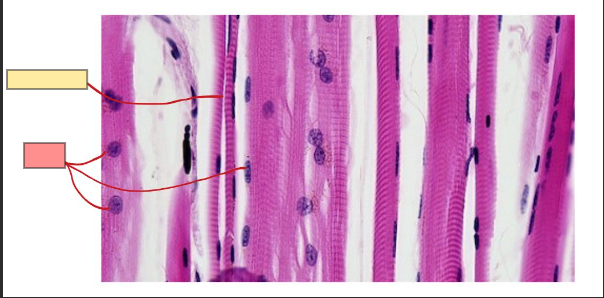
muscle fiber and nuclei
Muscle Fiber
long, cylindrical, & multinucleated
contains alternating light and dark striations
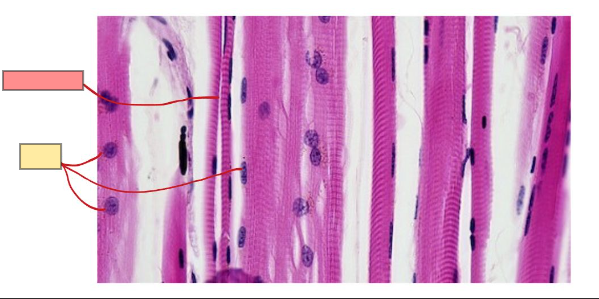
Nuclei
located at the edge of fiber
Skeletal Muscle (Function)
contractions which:
occur voluntarily
may be rapid and forceful
stabilizes the joints
Smooth Muscle (Location)
walls of tubular structures and hollow organs
Smooth Muscle (Structure)
long and spindle shaped, no striatrons
Smooth Muscle (Function)
contractions which:
occur involuntarily
rythmic and slow
Cardiac Muscle (Location)
Muscle found in the heart
Cardiac Muscle (Structure)
short, branching fibers with a centrally located nucleus
striations not distinct
Cardiac Muscle (Function)
contractions which:
occur involuntarily
rythmic and automatic
Epimysium
dense connective tissue that surrounds the entire muscle tissue
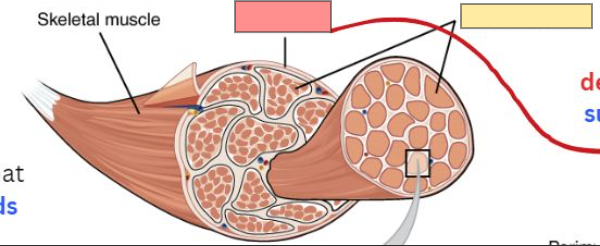
Muscle fascicle
band of connective tissue that envelops, separates, or binds muscles
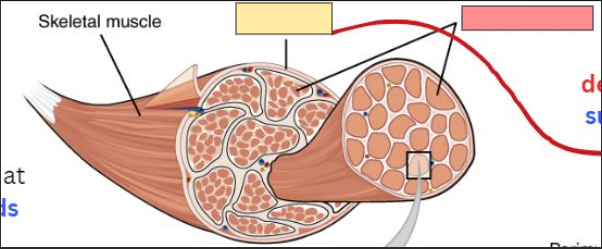
Perimysium
connective tissue that surrounds each bundle of muscle fibers
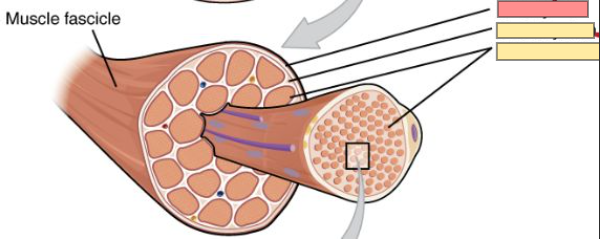
Endomysium
delicate network of connective that surrounds individual muscle fibers
contains the vessels and nerves that supply the muscle fibers
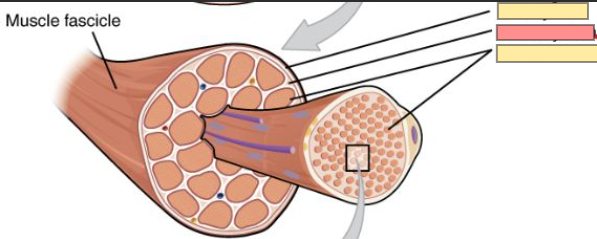
Muscle fiber
each muscle cell is known as __
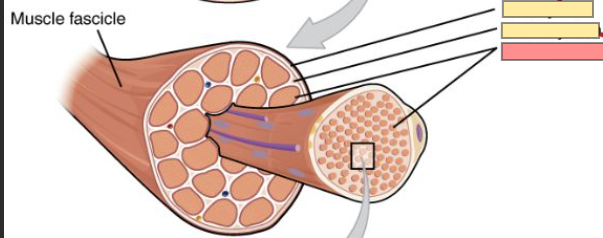
Sarcolemma
the cell membrane
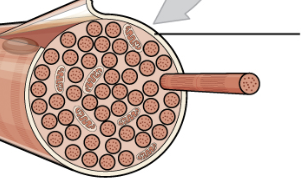
Myofibril
a basic rod-like organelle of a muscle cell
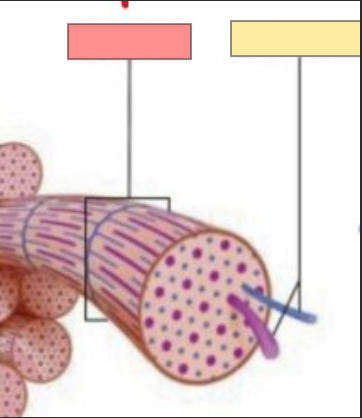
Filaments
a long thread comprised of protein subunits
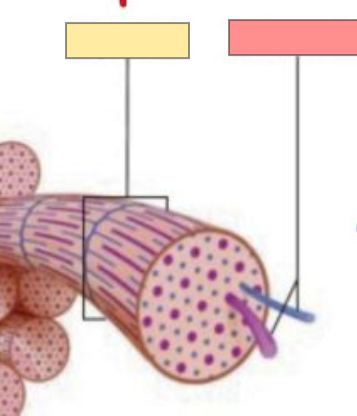
Striations (Bands)
organization of actin and myosin filaments that produces __
Sacromeres
the thick (myosin) and the thin (actin) filaments that are organized into structural units
Contractility
ability of the muscle to contract and generate force when stimulated by a nerve
Excitability/Irritablity
ability of the muscle to respond to certain stimuli by producing electric signals called action potential (impulse)
Extensibility
ability of the muscle to be stretched
Elasticity
ability of the muscle fibers to return to their normal length after being shortened or stretched
Flexor
decrease angle at a joint
Extensor
increase angle at a joint
Abductor
move bone away from midline
Adductor
move bone toward midline
Levator
produce upward movement
Depressor
produce downward movement
Supinator
turn palm upward/anterior
Pronator
turn palm downward/posterior
Muscles of Expression
these muscles lie within the layers of superficial fascia
these muscles move the skin rather than the joint
Frontalis
surprise
raises eyebrow
wrinkles forehead
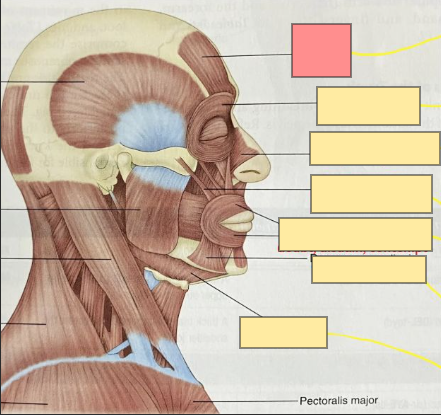
Orbicularis oculi
sadness
closes the eyelid
tightens the skin on the forehead
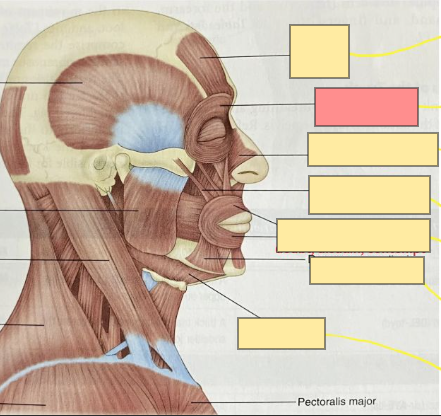
Nasalis
muscles of the nose
closes & opens the nasal openings
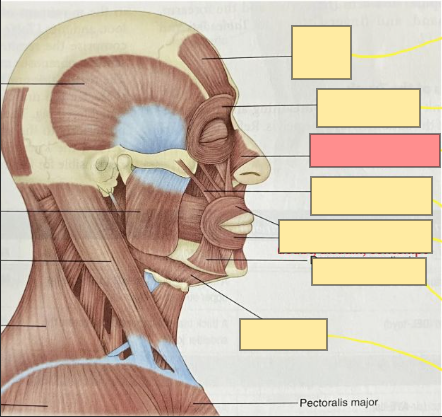
Zygomaticus major
laughing or smiling
raises corner of the mouth
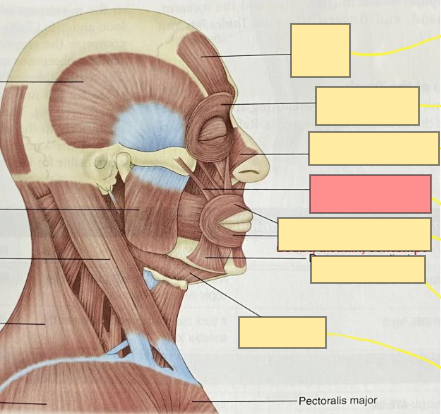
Orbicularis oris
kissing, puckering
compresses and closes the lips
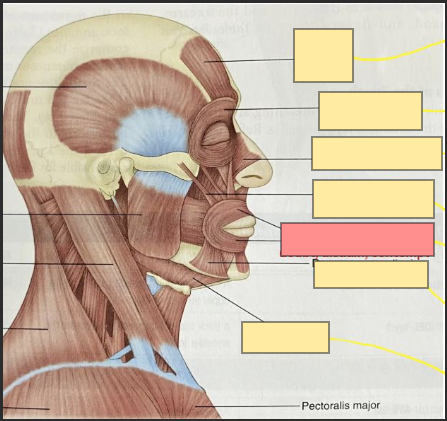
Depressor anguli oris
doubt, disdain, contempt, frowning
depresses corner of the lip
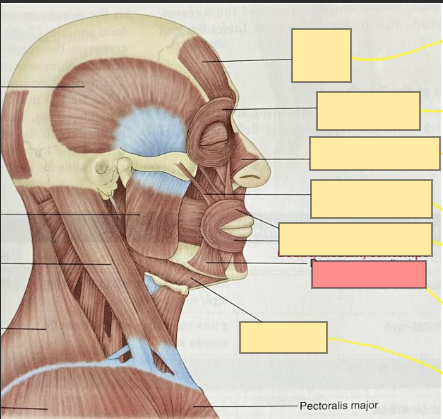
Platysma (cut)
horror
draws corners of mouth downward and backward
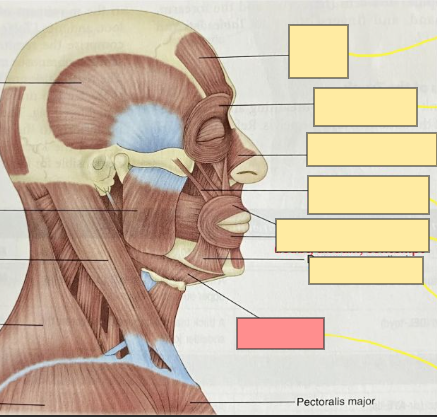
Muscles of mastication
muscles that move the mandible
attached to the skull and bone
Temporalis
raises the jaw
closes the mouth
draws the jaw backward
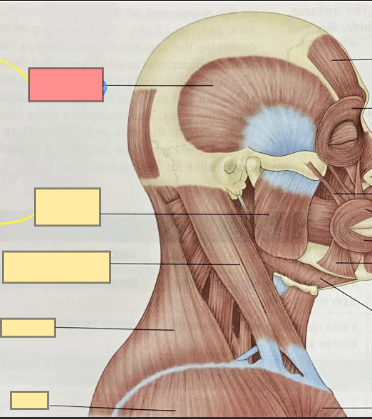
Masseter
closes the jaw
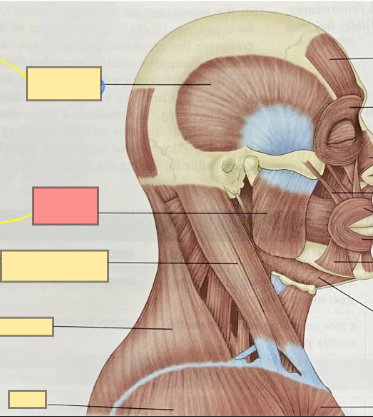
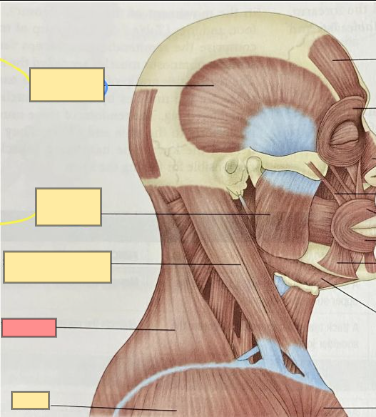
Sternocleidomastoid
flexes head
rotates the head opposite side from muscle
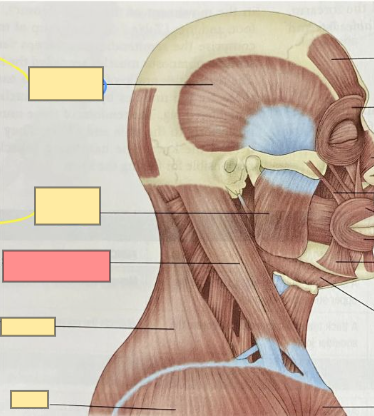
Trapezius
moves the shoulder
extends the head
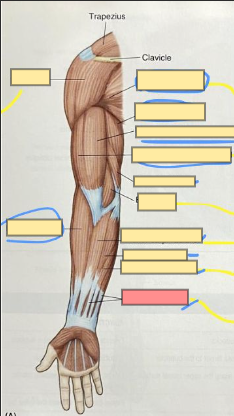
Muscles of upper extremities
help move the scapula, humerus, wrist, hand, and fingers
Anterior compartment muscles
originates on the humerus insert on to the carpals, metacarpals, and phalanges
flexor muscles
Posterior ccompartment muscles
arise on the humerus and insert on the metacarpals and phalanges
extensor muscles
Deltoid
covers the shoulder joint
abducts the upper arm
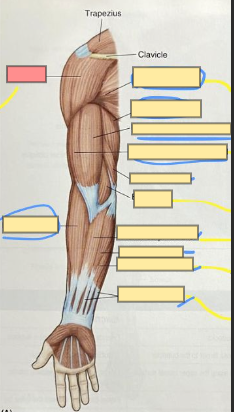
Pectoralis major
anterior part of the chest
flexes the upper arm and helps abduct the upper arm
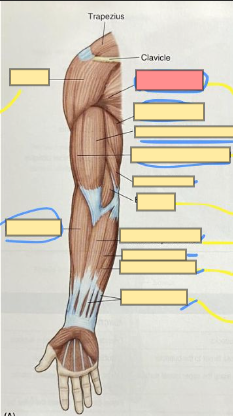
Triceps brachii
posterior arm to ulna
extends the lower arm
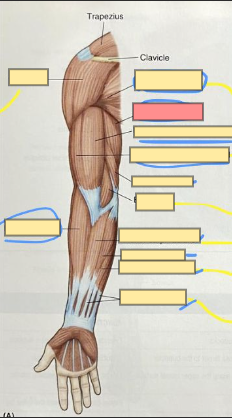
Biceps brachii—short head
flexes the lower arm
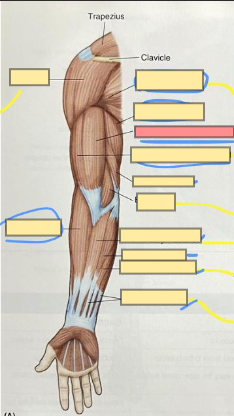
Biceps brachii—long head
flexes the lower arm
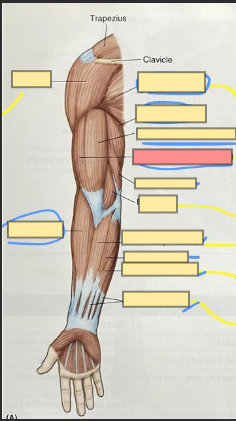
Pronator teres
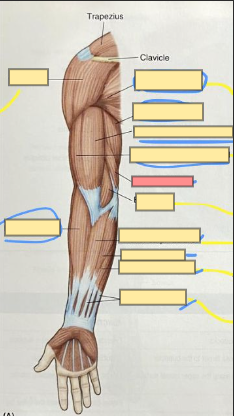
Brachialis
primary flexor of the elbow
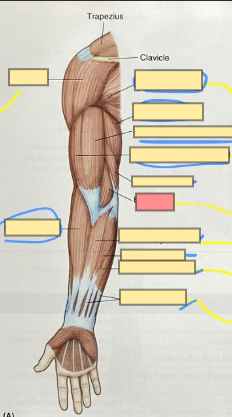
Brachioradialis
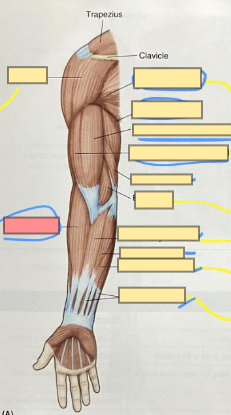
Flexor carpi radialis (Superficial)
moves the hand
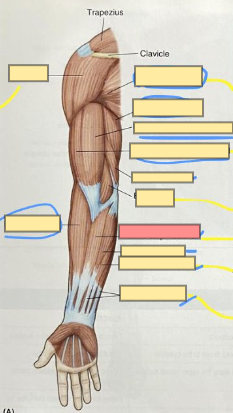
Palmaris longus (Superficial)
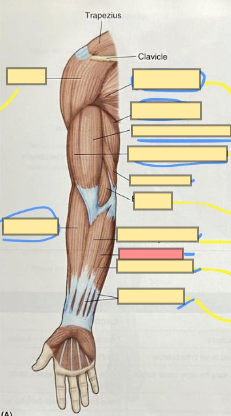
Flexor carpi ulnaris (Superficial)
moves the hand
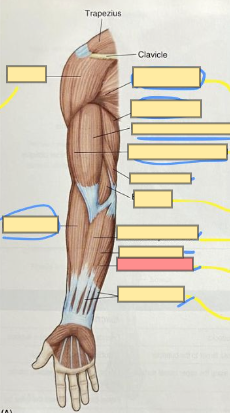
Flexor digitorum (Superficial)
moves the fingers
Internal abdominal oblique
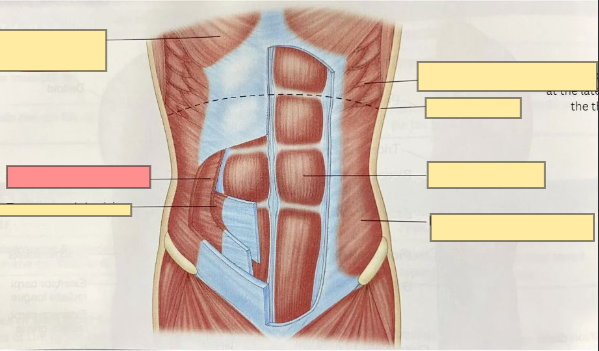
Transverse abdominis
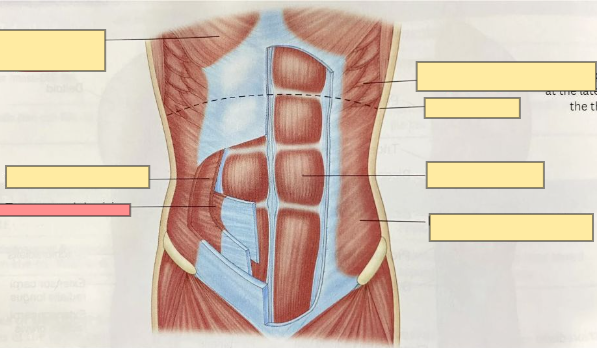
Serratus anterior
fan shaped muscle at the lateral wall of the thorax
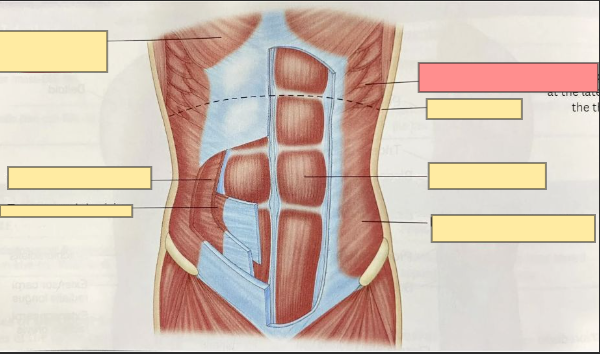
Diaphragm
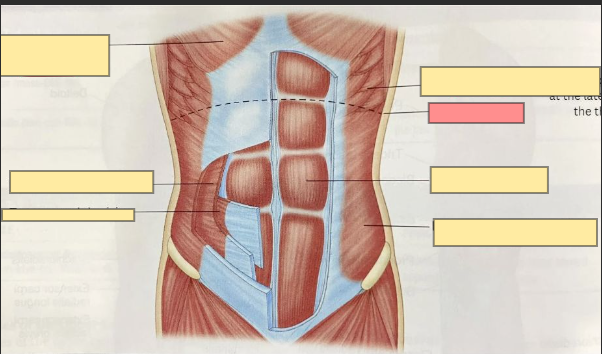
Rectus abdominis
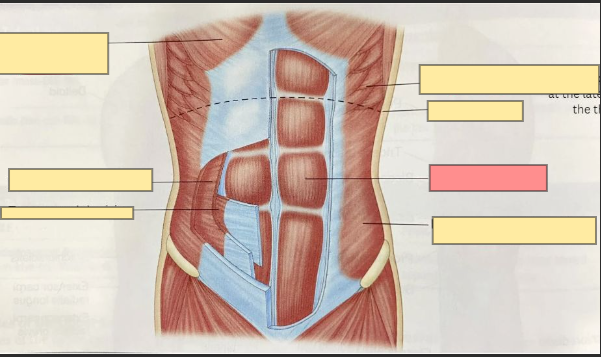
External abdominal oblique
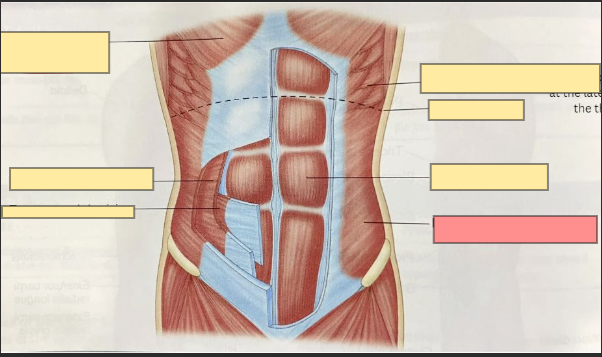
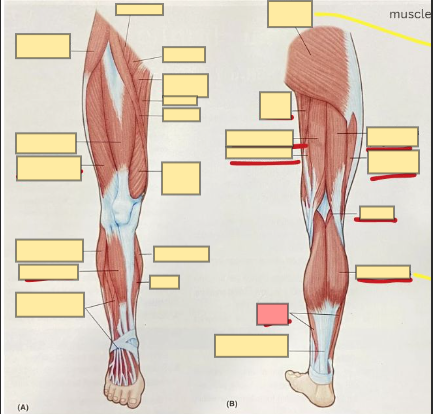
Adductor longus
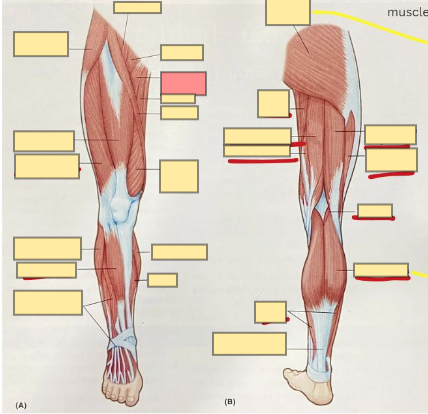
Rectus femoris
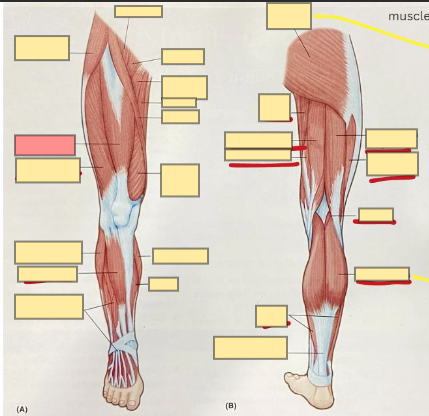
Vastus lateralis
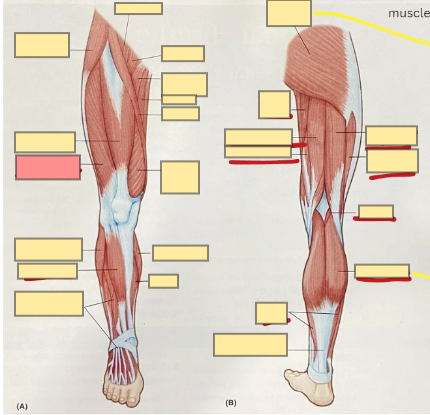
Vastus medialis
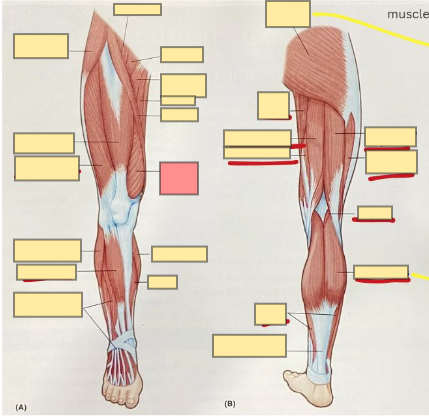
Peroneus longus
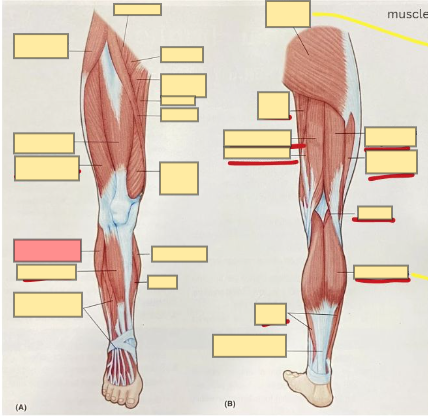
Tibialis anterior
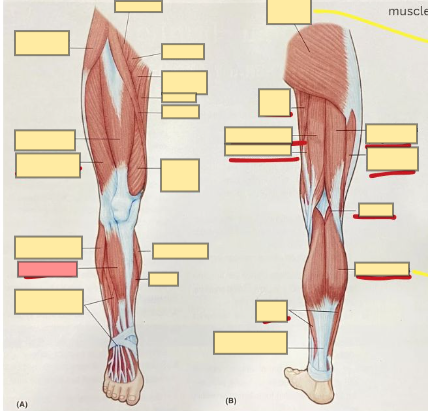
Gluteus maximus
muscle forms the buttocks; extends femur and rotates it outward
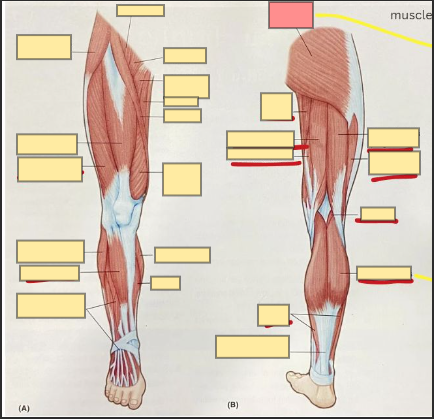
Adductor magnus
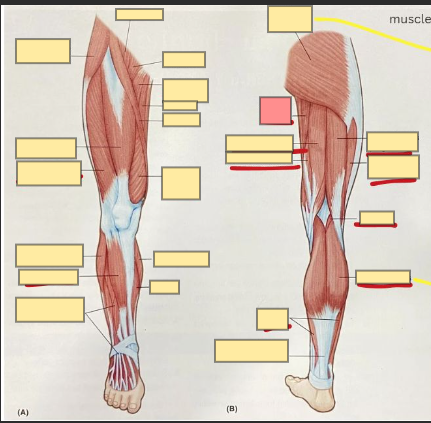
Semitendinosus
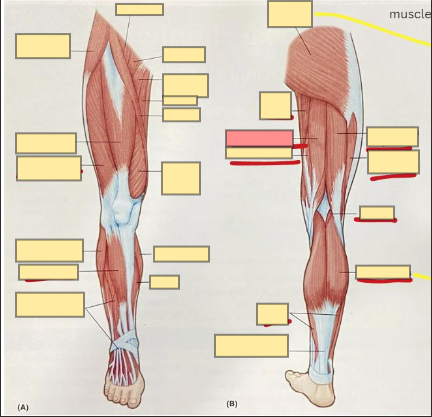
Biceps femoris (long head)
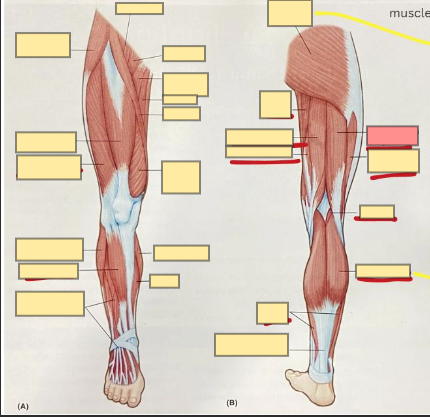
Biceps femoris (short head)
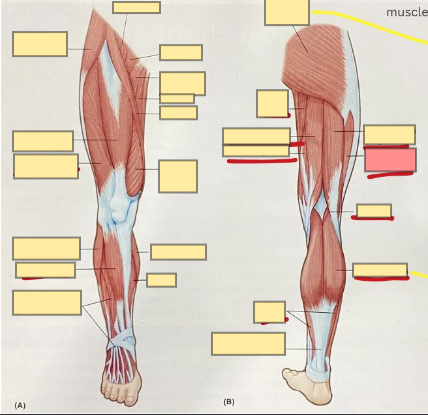
Semimembranosus
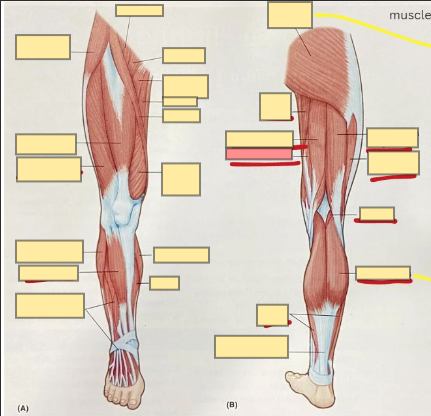
Plantaris
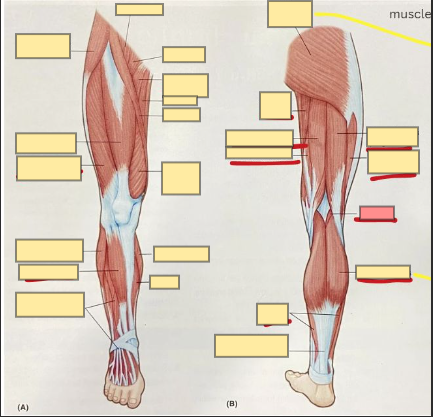
Gastrocnemius
calf muscle; points toes and flexes the lower leg
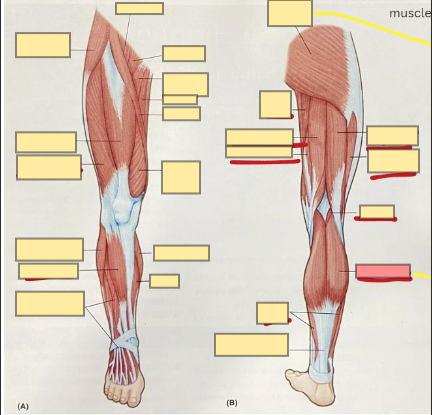
Soleus