Chem 242 Unknown
 Call Kai
 Learn
Learn Practice Test
 Spaced Repetition
 Match
Match Flashcards
 Knowt Play
1/54

There's no tags or description
Looks like no tags are added yet.
Name | Mastery | Learn | Test | Matching | Spaced | Call with Kai | Chat |
|---|
No analytics yet
Send a link to your students to track their progress
55 Terms
State 2 general properties of a good derivative.
easy to form
solid
easy to crystallize
What is positive in the Cerium IV test? Include false positives
Alcohols (red)
Phenols (brown/green) precipitate
False: Aromatic amines (oxidized into a color)
What is positive in the Ferric Chloride test?
Phenol (blue/red/purple/green in part 1)
Ester (red-brown in part 2)
What is positive in the Tollen’s Test? Include false positives
Aldehyde (silver mirror precipitate)
Benzylic alcohols (easier to oxidize than normal alcohols)
What is positive in the Nitrous Acid test? Include false positives.
Primary alkyl amines (immediate N2 gas)
Primary aryl amines (N2 gas when warmed)
Secondary amines (yellow nitroso compound)
False: ketones and phenols
What is positive in the Oxime Test? Include false positives. What is helpful about the Oxime Test?
Aldehydes (precipitate)
Ketones (precipitate)
False: allylic/benzylic alcohols (can oxidize to the corresponding aldehyde first)
Helpful: rules out carboxylic acids and esters
Aldehyde NMR peak
peak around 9-10 ppm
Ketone NMR peak
no peaks above 9 ppm
Carboxylic Acid NMR peak
broad peak above 10ppm
How does the oxime test compare with the oxime derivative?
The oxime derivative is on a larger scale to make it easier to isolate the precipitate
Why were we not concerned about the exact stoichiometry when setting up the cerium test?
We are looking for a color change, and that only requires a small amount of material to react.
It’s not clear whether your liquid unknown has dissolved in water or is floating on top. What could you do to resolve this ambiguity?
Add another drop of liquid and watch for it to float or sink
WebMO: Why is it critical to use the exact same level of theory and basis set for both a geometry optimization and the following NMR calculation?
The geometry is only valid at that specific level of theory, so the followup results will be inaccurate.
You want to calculate the energy for the methyl carbanion, CH3-. You draw methane, clean it up, and then delete 1 H. You then submit the geometry optimization job. What will go wrong?
WebMO will run the job as a neutral compound (a radical) rather than an ion
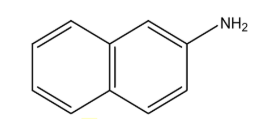
Soluble in:
H2O
HCl
NaOH
NaHCO3
(-)
(+)
(-)
(-)
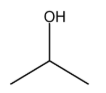
Soluble in:
H2O
HCl
NaOH
NaHCO3
(+)
(+)
(+)
(+)
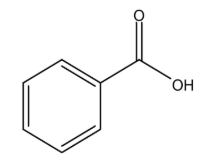
Soluble in:
H2O
HCl
NaOH
NaHCO3
(-)
(-)
(+)
(+)
We can use the molecular ion region to determine the number of C, N, Cl, and Br atoms. But how do we determine the number of H and O atoms?
Figure out how much mass is missing and come up with a formula that is chemically reasonable
State two reasons why a particular entry in the derivative tables might be blank.
The derivative reaction doesn’t work
The derivative isn’t stable
The derivative is a liquid
Why were all of the amines on the unknowns list primary or secondary rather than tertiary?
A tertiary amine is already “full”, so it won’t give positive test results and derivatives
A tertiary amine has no NH bonds, so it won’t show any diagnostic peaks in the IR
Why is the oxime test positive for aldehydes and ketones, but negative for esters and carboxylic acids?
Aldehyde/ketone do addition reactions with amines to form imines, while esters/carboxylic acids do substitutions with amines to form amides
How does the nitrous acid test distinguish between primary arylamines vs secondary arylamines?
Primary amines will form diazonium ions and release nitrogen gas while secondary amines will stop at the nitroso compound and change colors
Some of the chemical tests give similar information to what can be determined using NMR or IR spectroscopy. What could we look for in NMR or IR to give us the following information:
1 – is this compound an aldehyde or a ketone? (comparable to the Tollens test)
2 – is there an OH of some sort present? (comparable to the cerium test)
Tollens – NMR, aldehyde has peak around 9 ppm, while ketone doesn’t.
IR – aldehyde has peak around 2700 cm-1 while ketone doesn’t
Cerium – NMR – look for broad singlet peak; IR – look for broad peak around 3200 cm-1
The cerium test shows a color change with either alcohols or phenols. What is causing that color change?
The cerium is forming a complex with the oxygen
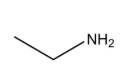
Soluble in:
H2O
HCl
NaOH
NaHCO3
(+)
(+)
(+)
(+)
If your compound is soluble in pure water, why is it not necessary to test any of the other aqueous solutions?
It will automatically be soluble in any aqueous solution
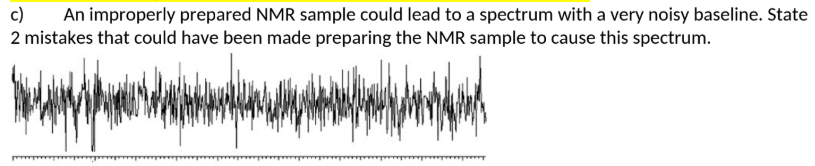
The solution was too dilute
The volume of solvent was too low
The compound wasn’t soluble in the NMR solvent
The solution wasn’t mixed well
It wasn’t a coincidence that many of the derivatives contained nitrobenzene groups. Why was that?
The nitrobenzene group makes the compound more likely to form crystals
A particular chemical test is positive if a precipitate forms. You run the test and it turns cloudy. State 1 reason why the cloudiness could indicate a positive result, and 1 reason why it could indicate a negative result. What should you do next to resolve that ambiguity?
Positive – there is a change happening
Negative – it isn’t actually a precipitate
Next step – either check against the control, or try another test that addresses that functional group
In the camphor lab, WebMO got the NMR shifts for the CHs very accurate. But WebMO was inaccurate for the OHs. Why did WebMO get the OH chemical shifts wrong?
WebMO doesn’t take into account hydrogen bonding which is important for alcohols
Why is it counterproductive to use the clean up function in between a geometry optimization and an NMR calculation?
That reverts back to the original cleaned up structure, which negates the optimization job
Why was it much more efficient to use the cleanup function before starting a geometry optimization?
It cuts down the amount of work WebMO needs to do to generate an optimized structure, which cuts
down on time
Ester synthesis: Step 3 had a greater safety concern than either steps 1 or 2. What is the primary hazard for this step? Be specific about why that component is a hazard.
The isopentyl nitrite is a vasodilator / lowers blood pressure
Is benzyne aromatic, nonaromatic, or antiaromatic? Explain your answer.
Aromatic. Only 1 of the pi bonds in the alkyne counts, so there are 6 pi electrons total in the ring
Ester synthesis step 1: Why was there a significant change in color as the product was produced?
The product has a different level of conjugation compared to the reactant
Why was it recommended that you dissolve the KOH in ethanol the day before you were going to use it?
It’s very sluggish to dissolve the KOH pellet in ethanol
What is the purpose of a reflux condenser, as opposed to just heating the reaction in an open flask?
To make sure the solvent doesn’t fully evaporate during the reaction time
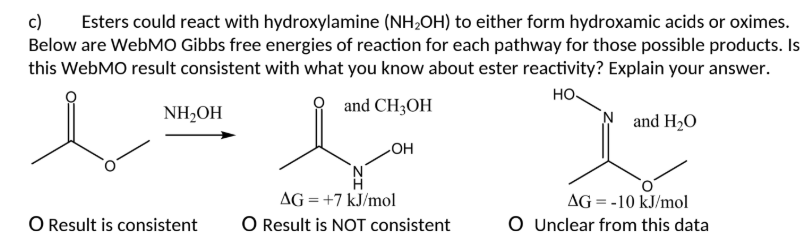
Result is NOT consistent. Esters form hydroxamic acids rather than oximes, so the hydroxamic acid should have been the more stable product
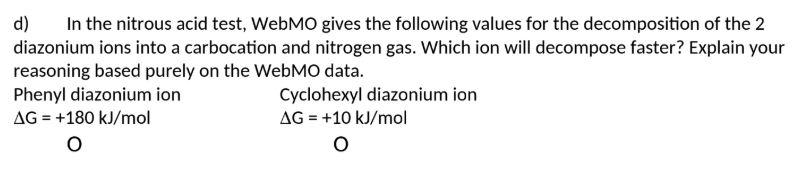
The cyclohexyl diazonium ion has a smaller barrier to decomposing, so it happens faster.
You are trying to optimize the structure of methane, but accidentally add a 5th hydrogen atom. What will WebMO do when you submit this job?
Ignore the octet rule and optimize the complex that has 1 C, 5Hs, and 9 valence electrons
Why is it important to use the “generate bonds” feature after running a geometry optimization of an intermediate such as a carbocation?
To confirm that the optimized is the correct structure rather than a rearrangement such as a cation shift.
From the IR, you are confident that your compound has an OH group. How can you use the cerium and ferric tests to distinguish between alcohols, phenols, and carboxylic acids?
Alcohol – positive cerium only
Phenol – both tests positive
Carboxylic acid – both tests negative
Why was there a special waste container for the Tollens test? Be specific about the hazard.
The Tollens reagent can decompose into more hazardous/explosive materials, so needs to be isolated.
Why is it not a problem if the unknown is only partially soluble in the solvent for the cerium or ferric tests?
We are looking for a color change, and that only requires a small amount of material to react.
Why is the nitrous acid test NOT useful for tertiary amines?
They are too crowded to react to form a nitroso compound
From the IR, you are confident that there is a C=O and no OH. How can the Tollens and oxime tests distinguish whether you have an aldehyde, ketone, or ester?
Aldehyde – both tests positive
Ketone – only oxime test positive
Ester– both tests negative
From your chemical tests, you are confident that you either have a primary amine, alcohol, or carboxylic acid. How could you use NMR to determine which you have?
Primary amine – broad peak with integration 2 below 5 ppm
Alcohol – broad peak with integration 1 below 5 ppm
Carboxylic acid – broad peak with integration 1 above 10 ppm
Why is there no correlation between the relative boiling point of the amine vs the relative melting point of the acetamide derivative?
They are different functional groups, so there’s no reason to expect similar physical properties
State 1 advantage and 1 disadvantage to performing a recrystallization on the
tetraphenylcyclopentadienone.
Advantage – it would make the product more pure
Disadvantage – it costs time or reduces yield
Why did we use a drying tube in this experiment? Your answer must explain the chemistry reason for the drying tube, rather than just stating what the drying tube physically did.
To remove water to pull the equilibrium
State TWO ways that the MS would distinguish between camphor and borneol
1 – they have different MW
2 – they have different fragmentation patterns
Why was the NMR region above 5 ppm NOT useful for distinguishing whether the major product was borneol or isoborneol?
Neither compound would have any peaks there.
Some of you ran the reaction at room temperature, others boiled the solvent. There was no difference in the borneol : isoborneol ratio between the 2 groups. Why not?
The reaction was under kinetic control at either temperature, so they had the same selectivity.
You used nitrous acid in the azo dye lab in Chem 241 and isopentyl nitrite in this synthesis. What was the role of these reagents, and why did we use different ones in each experiment?
They converted the primary amine into a diazonium ion.
We choose a nitrite reagent that is soluble in those conditions.
Could NMR spectroscopy be used to determine whether tetraphenylnaphthalene was made from tetraphenylcyclopentadienone? Explain your answer.
No it couldn’t. Both compounds would only have a bunch of benzene Hs.