Anatomy and Physiology Unit 1
 Call Kai
 Learn
Learn Practice Test
 Spaced Repetition
 Match
Match Flashcards
 Knowt Play
1/83

There's no tags or description
Looks like no tags are added yet.
Name | Mastery | Learn | Test | Matching | Spaced | Call with Kai | Chat |
|---|
No analytics yet
Send a link to your students to track their progress
84 Terms
anatomy
the study of the structure of an organism
physiology
the study of how that organism’s body functions
cell
smallest unit of all living things
tissue
collection of similar cells with a common function
organ
made of two or more types of tissues
organ system
group of organs working toward a common goal
organism
highest level of structural organization for an individual
skeletal system
provides support and protection, gives the body shape; (bones, ligaments, cartilage, joints)
nervous system
detects impulses from the senses and is the control center; (brain, spinal cord, senses, nerves)
circulatory system
transports nutrients and gases around the body; (heart, blood vessels, blood)
respiratory system
exchanges gases like oxygen and carbon dioxide; (lungs, sinuses, diaphragm)
digestive system
breaks down and absorbs food; (mouth, esophagus, stomach, intestines, liver, gallbladder)
muscular system
provides movement for all parts of the body; (skeletal and smooth muscles)
integumentary system
protects the body, regulates temperature, and prevents water loss; (skin, hair, and nails)
lymphatic system
fights infection and provides fluid for all cells; (spleen, thymus gland, lymphatic vessels, lymph nodes)
excretory system
removes waste from the blood; (kidneys, bladder, ureters, urethra)
endocrine system
secretes hormones; (glands: hypothalamus, pineal, pituitary, thyroid, parathyroids, thymus, adrenals, pancreas, ovaries, and testes)
reproductive system
produces cells used in reproduction; (ovaries, uterus, testes, prostate gland)
Maintaining Boundaries
let substances in and keep others out (ex: skin protects, absorbs, and keeps in water, while preventing pathogen entry)
Movement
internal movement and ability to move through surroundings
Responsiveness
sensing and reacting to changes in environment
Digestion
breaking down and absorbing nutrients
Metabolism
building larger molecules from small ones (anabolism) and breaking down larger molecules into smaller ones (catabolism)
Excretion
removal of wastes (ex: urine, sweat)
Reproduction
production of offspring
Growth
increase in cell size or overall body size
Survival Needs
Nutrients (digestion and metabolism), Oxygen (heart and lungs), Normal Body Temperature (skin, blood, and muscles), Water (allows molecules to move through the body), Normal Atmospheric Temperature (provides appropriate gas exchange between lungs and environment)
anatomical position
body is straight with feet slightly apart and thumbs pointed away from the body
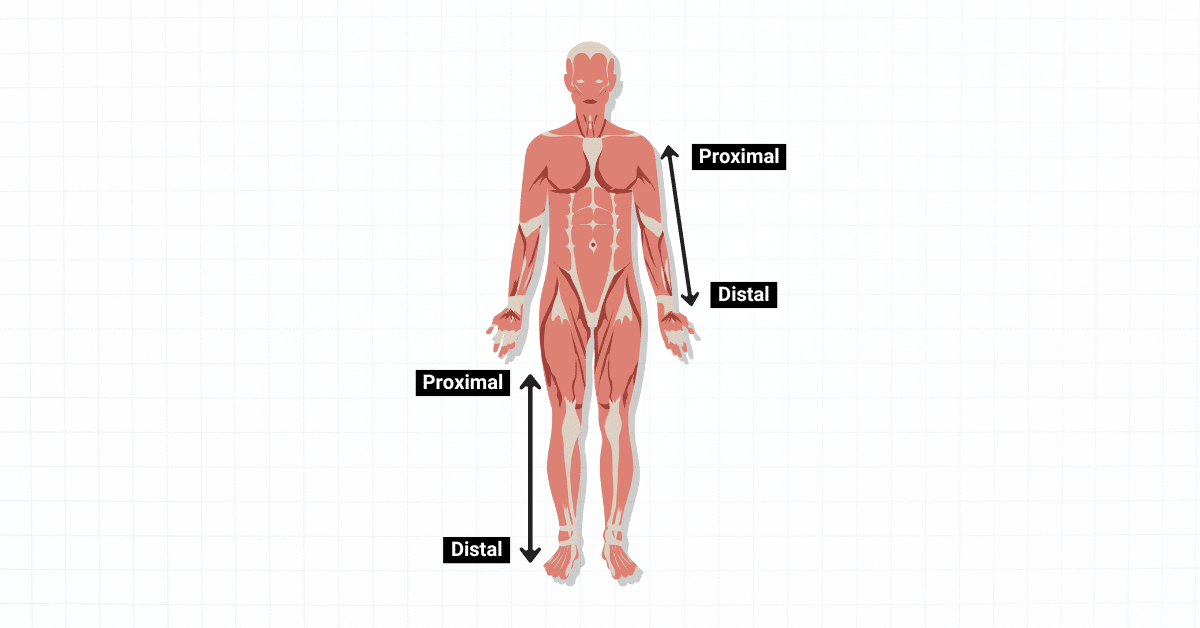
proximal
closer to the center of the body (or trunk), or closer to the point where a limb attaches

distal
away from center of the body (or trunk), or farther from the point where a limb attaches
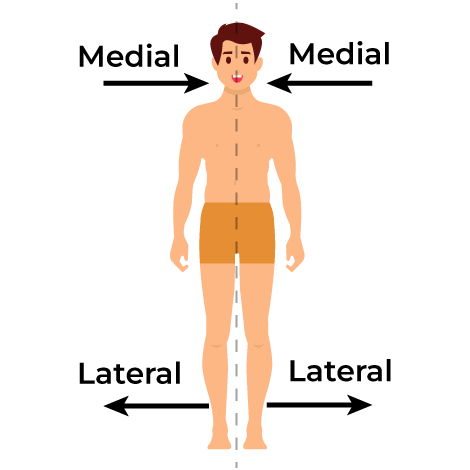
lateral
away from midline of the body
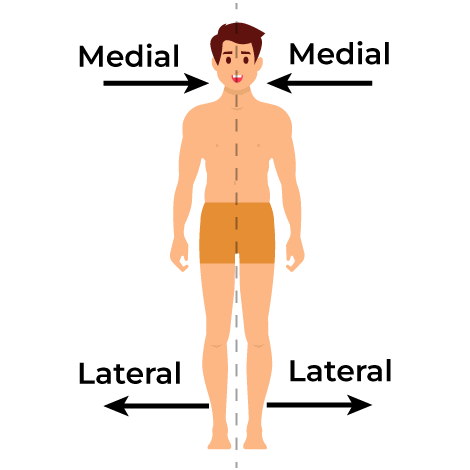
medial
towards the midline of the body
superior
located above or toward the head of the body
inferior
located below or closer to the feet of the body
anterior
towards the front of the body

posterior
towards the back of the body

deep
more internal or away from the surface of the body
superficial
towards the surface
abdominal
Which of the body cavities contains the stomach and intestines?
transverse plane
splits the top and bottom half of the body
frontal (coronal) plane
splits the front and back half of the body
Medial (midsagittal) plane
splits the left and right sides of the body
lateral
The right shoulder is ______ to the sternum?
superior
The cranial cavity is _____ to the thoracic cavity?
organ
Groups of different tissues working together to perform a particular job
proximal
Your elbow is _____ to your wrist?
superior/inferior
The transverse plane separates the body into
tissue
Groups of similar types of cells that work together to carry out a specific task
pelvic
Which of the body cavities contain the bladder and reproductive organs?
thoracic
Which of the body cavities contains the lungs and heart?
spinal
Which of the body cavities is a long, continuous cavity located on the back of the body?
inferior
The pelvic cavity is ____ to the abdominal cavity?
contains the thoracic and abdominopelvic cavities and is located towards the front of the body
The ventral body cavity contains which two other cavities and is located where?
distal
Your phalanges (finger bones) are ____ to your wrist?
cranial
Which of the body cavities contains the brain?
frontal (coronal) plane
Which plane divides the body into anterior and posterior?
superficial
Your calf muscle is ______ to your tibia (shin bone)?
organ system
Groups of different organs working together to complete a series of tasks
deep
Your heart is ____ to sternum (breast bone)?
medial
Your pericardial cavity is ____ to your pleural cavity?
body cavities
spaces within the body that contain and protect vital organs
lateral
Your thumb is _____ to your pinky?
posterior
Your spinal cavity is ____ to your thoracic cavity?
cardiac muscle cell, muscle tissue, heart, cardiovascular system, giraffe
Put the following levels of organization in order from smallest (1) to largest (5): heart, cardiac muscle cell, giraffe, cardiovascular system, muscle tissue
lymphatic/immune
Which system of the body is responsible for protecting you from infection and recycling cellular fluids?
Maintaining Boundaries
Your little sister fell and scraped her knee. What necessary function of life has been affected?
thoracic
What body cavity are the heart and lungs found in?
dorsal body cavity
encloses the brain and spinal cord; it is located on the posterior (back) side of the body (think dorsal fin)
meninges
membranes that protect the brain and spinal cord
visceral organs
consist of the thoracic and abdominopelvic cavity and are protected by the ventral body cavity
serosa
a double-layered membrane that lines the ventral body cavities
visceral serosa
inner layer of the serosa
parietal serosa
outer layer of the serosa
serous fluid
fluid between the parietal and visceral serosa layers
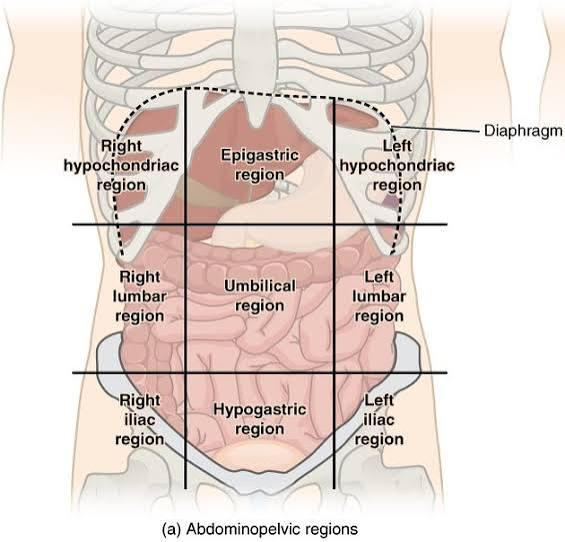
hypochondriac regions
the right and left of the top third section of the abdominal cavity

epigastric region
the tip middle section of the abdominal cavity

lumbar regions
the right and left side of the middle third section of the abdominal cavity
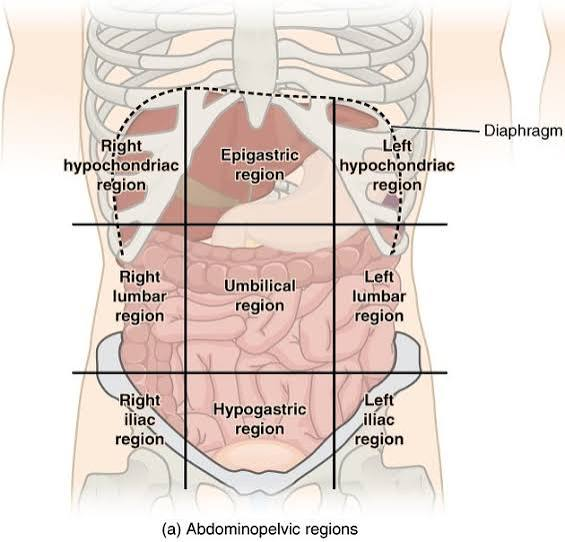
umbilical region
the very middle section of the abdominal cavity

iliac regions
the right and left sides of the bottom the abdominal cavity
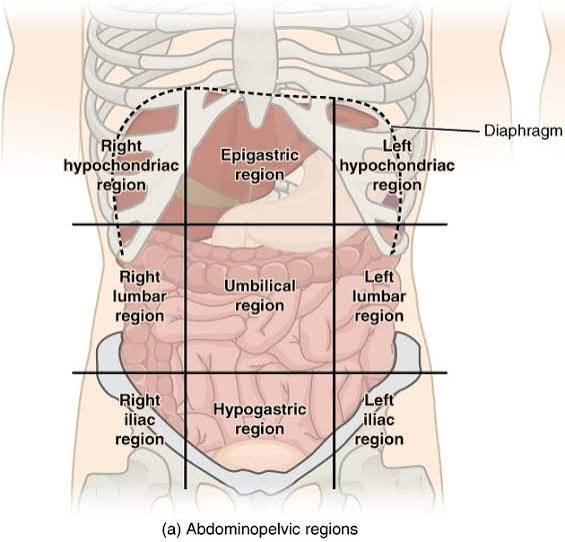
hypogastric region
the middle section of the bottom third of the abdominal cavity