Bio211 Final
 Call Kai
 Learn
Learn Practice Test
 Spaced Repetition
 Match
Match Flashcards
 Knowt Play
1/122

There's no tags or description
Looks like no tags are added yet.
Name | Mastery | Learn | Test | Matching | Spaced | Call with Kai | Chat |
|---|
No analytics yet
Send a link to your students to track their progress
123 Terms
pollination
movement of male microgametophytes to female gametophyte, which is encased in the carpel
Pharyngeal slits (part of Deuterostomes)
Commonly used for feeding and gas exchange
lophophore
sessile adult structures (cilia tentacles) for filter feeding
trochophore
free swimming larvae that have ciliated bands for movement and feeding
how have flowers evolved to lure potential pollinators
offering them a reward of nectar
evolution of plants and pollinators in response to each other is an example of
coevolution
fungi are…(phylogeny)
unikonts (only have one flagellum on the posterior end)
sister taxon to the nuclearids
When did fungi originate
~ 460 MYA
key features of fungi
nutrition
lifecycles
structure
absorptive heterotrophs (all fungi)
organism absorbs small organic compounds from the environment and use them for energy and carbon
decomposers (fungi nutrition)
break down dead organic matter (animal flesh, fruit, plants) and absorb the products
parasites or pathogens (fungi nutrition)
usually absorb small organic molecules from the cells of living hosts
mutualists (fungi nutrition)
absorb small organic molecules from a living host, but also do something positive for the host (lichens)
Chitin (fungi structure)
component of fungal cell walls
is what creates hardness and allowed for there to be evidence of fungi mya
multicellular fungi (common)
made up of many tubular filaments called hyphae. together a mass of hyphae makes up the mycelium or fungal body
septate hypha
allow nuclei to move from cell to cell (multiple tubes)
separate each nucleus with walls (septa)
coenocytic hypha
branching filaments that make up the body of the fungus (mycelium)
lack internal cross walls (separation) known as septa
allows nutrients to flow freely (continuous)
asexual reproduction (fungi) (fission or budding)
mycelium breaks into several parts and grow or produce spores through sporangia or sporophores
sexual reproduction (fungi)
involve plasmogamy > karyogamy > meiosis > spores
must be compatible haploid hyphae
plasmogamy (fungi sexual reproduction)
process of 2 haploid fungi fuse plasma membranes into 1 but nuclei are independent (NUCLI DO NOT FUSE)
heterokaryon (fungi sexual reproduction)
state of a cell containing multiple nuclei with a single cytoplasm
karyogamy (fungi sexual reproduction)
when the nuclei fuse together to form diploid cells
haustoria
hyphal structure developed by parasitic plants and fungi to penetrate host tissue and absorb nutrients
parasitic/harmful
endophytic fungi
live in the above ground parts of the plant, they are abundant in plants in all terrestrial environments, all plants seem to have this
produce chemicals that defend the plant from grazers, pathogens, & other env stresses
lichens (part of mutualistic fungi)
fungus + cyanobacterium/algae
can survive in harsh environments
sexual and asexual reproduction (soredia)
lichen reproduction
can reproduce sexually by fragmentation or by producing soredia (a few photosynthetic cells bound by fungal hyphae (asexually))
Ascomycetes and basidiomycetes (fungal taxa)
have a septate hyphae (allows for the movement of cytoplasm and nutrients)
have a dikaryon stage
Animals are… (phylogenetic context)
unikonts (or more specifically opisthokonts)
the single flagellum is always located at the posterior end of the cell
Sister taxa: choanoflagellates
Choanoflagellates
one flagellum, surrounded by a ring of microvilli that creates a water current to filter bacteria
closest relative to animals
Cadherins
found in protists and animals
Explains colonies in choanoflagellates
Allows cells to stick to other cells (stickiness!)
Hox genes
Involved in the genes encoding for the way your body forms
control patterning of the embryo along the anterior-posterior axis
determine the identity of body regions
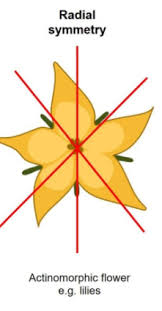
Radial symmetry
Many planes of symmetry
sessile and diploblastic
Bilateral symmetry
One plane of mirror-image halves
more active and triploblastic
Associated with cephalization: sensory organs

Radial cleavage
All divisions are parallel or perpendicular
intermediate growth: all cells have the info to form the whole body/organism
Spiral cleavage
Division is off parallel
determinate growth: cells are predetermined to become a specific body part
Gastrulation
when a single-layered blastula reorganizes into a three-layered structure called the gastrula
gives rise to all tissues and organs
ectoderm, mesoderm, endoderm
Ectoderm
Outer layer of tissue formed in gastrulation
mesoderm
middle layer of tissue formed in gastrulation
endoderm
inner layer of tissue in formed in gastrulation
blastopore(part of animals)
the first opening that forms during gastrulation
determines whether the mouth or anus forms first
protosomes
mouth forms first
deuterostomes
mouth forms second
diploblastic animals
develop from two embryonic germ layers (ectoderm and endoderm)
radial symmetry and simpler body plans
triploblastic animals
posses three embryonic germ layers (ectoderm, mesoderm. & endoderm)
bilateral symmetry and enable complex organs and tissues
blastocoel
fluid-filled cavity that forms inside an embryo during the early blastula stage of development
body cavity classifications
how triploblastic animals are classified by how their internal organs are housed with relative to the mesoderm
acoelomate
pseudocoelomate
coelomate
determine the structure of internal spaces and organs
acoelomate
lack fluid filled cavity between gut and ectoderm
pseudocoelomate
posses a false cavity and is not lined by the mesodermal tissue
coelomates
have a fluid filled cavity and have the most complex organ system
direct development
zygote > embryo > juvenile > adult
indirect development
zygote > embryo > larva > juvenile > adult
unitary organisms
forms a single distinct individual with determinate development
humans, birds, insects
colonial organism
forms genetically identical connected modules that function independently
corals, sponges
how far metazoans date back
770 MYA
(represent a group of multicellular eukaryotes)
how far eumetazoans date back
680 MYA
(have true tissues)
how far bilateria dates back
670 MYA
Consists of deuterostomia which consists of lophotrochozoas and ecdysozoa
consists of protostomes
eumetazoans
porifera
ctenophora
cnidaria
Porifera (sponges) (non bilaterian)
No symmetry, no true tissues or stomach (simplest body structure)
have an epidermis (outer layer of cells) & an choanocytes (inner layer of cells)
have spicules and spongin (for structure)
Mesohyl
Layer of cells between the epidermis and choanocytes in sponges
contain spicules and spongin fibers
Eumetazoans
Have true tissues and either radial and bilateral symmetry
when animals began to fossilize
Cnidaria (jellies)
2 body types polyp (sessile, living on the bottom) and medusa (mobile, swimming in the water)
The layer in between the ectoderm(epidermis) and the endoderm(gastrodermis) is the mesoglea
Most common kind of Cnidaria
Nematocyst
(Most are predators)
Cnidaria life cycle
planula larvae stage
alternate between mobile and sessile
2 major clades of Cnidarians
Medusazoans (medusa life cycle) and anthozoans (polyp life cycle) (corals)
Ctenophora (comb jellies)
Swim using fused cilia (ctenes) arranged in comb rows running from oral and aboral ends
have a complete gut
3 clades of bilateria
Lophotrochoazoans (protostomes)
Ecdysozoa (protostomes)
Deuterostomes
lophotrochozoans
protostome animals that are either lophophore or trochophore
Platyhelminthes (part of lophotrochozoans)
Unitary and acoelomate
predaorial/parasitic (trematodes)
Flat and stretched out
Syndermata (part of lophotrochozoans)
Tiny, unitary and pseudocoelomate
can slow down metabolism in bad conditions (cryptobiotic)
Ectoprocts (part of lophotrochozoans)
Colonial and coelomate
use a lophophore for suspension feeding and gas exchange
Brachiopods (part of lophotrochozoans)
Unitary and coelomate
use lophophore
Mollusca (part of lophotrochozoans)
Unitary and coelomate
have 3 body regions
mantle cavity and radula
Mantle cavity (part of molluscs)
A space lined by mantle continuous with the air or water outside the body; gills are held in this space
part of molluscs
Radula (part of molluscs)
A ribbon of teeth that is used to scrape food
Mollusca body regions
foot (crawling or swimming)
Visceral mass (internal organs & complete gut)
Mantle (tissue that covers the dorsal surface)
Annelids (part of lophotrochozoans)
Unitary and coelomate
complete guts
First taxon of segmented animals (for better movement control and catching food)
Ecdysozoans
covered with an extracellular layers called the cuticle (used for protection and skeletal support
Have to molt (shed) (ecdysis) the cuticle periodically
Nematodes (part of ecdysozoans)
non segmented, cylindrical bodies
Complete gut/digestive system
Plant/animal parasites
Arthropods (part of ecdysozoans)
have a pair of jointed appendages
Hemolymph: have blood flowing through open space between tissues and organs (open circulatory system)
Insects (largest group of animals)
head, thorax, abdomen
Tracheae: deliver oxygen by diffusion
Incomplete/complete metamorphosis
Incomplete metamorphosis
Molts and looks the same
Complete metamorphosis
Molts and looks different from larva stage as an adult
Deuterostomes (part of bilateria)
radial cleavage, indeterminate development (cells are not pre-destined), and coelom
Deuterostomes clades
Echinoderms
Hemichordates
Chordates
(All coelomate)
Hemichordates (worm like!)
Have a proboscis, collar, and trunk
pharyngeal slits and softbodied
echinoderms (seastars!)
Bilateral symmetry as larvae and radial symmetry as adults
water vascular system
five part symmetry
Water vascular system
Water system of tubes that go into each arm that operate tube feed that control pressure for movement
in echinoderms (seastars)
Chordate characteristics
1) a notocord
2) dorsal, hollow nerve cord
3) pharyngeal slits
4) postal-anal tail
Cephalochordates
lancelets
Suspension feeding
Buried in sand and head region stays above ground
Urochordates
Have features that are only found in the larvae stage
Tunicates (sea squirts)
Vertebrates
Have a backbone, anterior cranium (skull), and brain
have hox genes
How jaws evolved
From gill slits and mutations over time, a hole in the skull developed behind the eyes that allowed for more muscle and stronger jaw
anapsid > diapsid (temporal openings)
Gnathosomes characteristics
jaws (allows for a more diverse diet)
Enlarged forebrain (better for smell)
Lateral line system
Tetrapods
Gnathostomes that have limbs
Had more support and propulsion
Neck, ribs, and fused girdles
water > land
Amphibians
Can be on land and water (frogs and salamanders)
inhabit damp habitats (swamps and rain forests)
lay eggs
thin skin