L13 Peptide synthesis
 Call Kai
 Learn
Learn Practice Test
 Spaced Repetition
 Match
Match Flashcards
 Knowt Play
1/16

There's no tags or description
Looks like no tags are added yet.
Name | Mastery | Learn | Test | Matching | Spaced | Call with Kai | Chat |
|---|
No analytics yet
Send a link to your students to track their progress
17 Terms
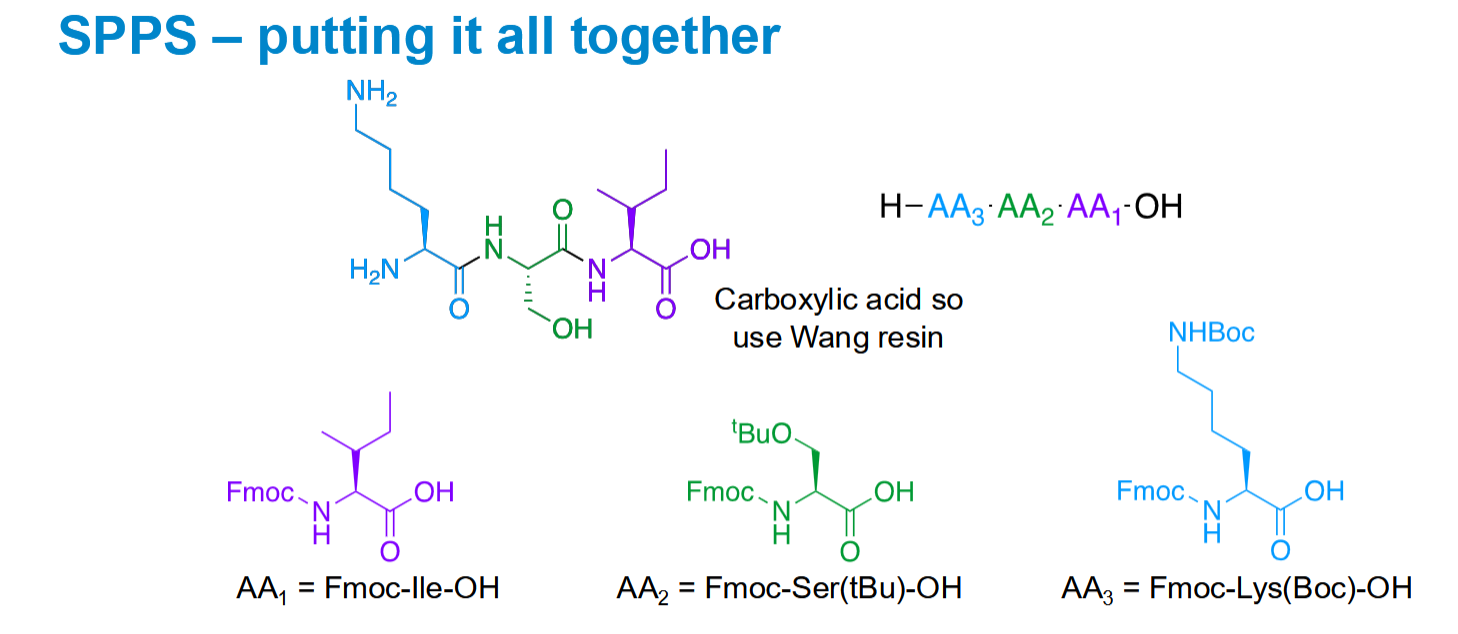
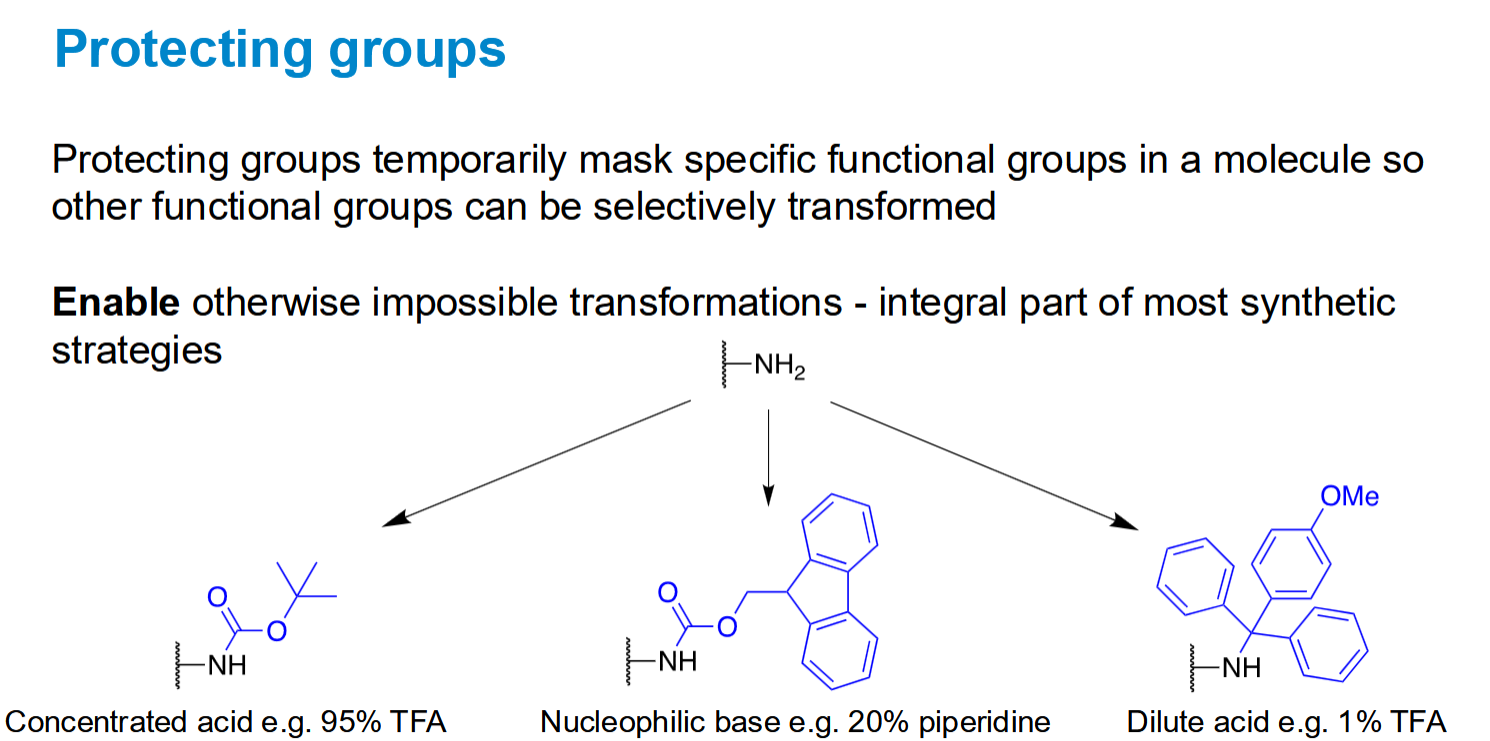
Some protecting groups for NH2
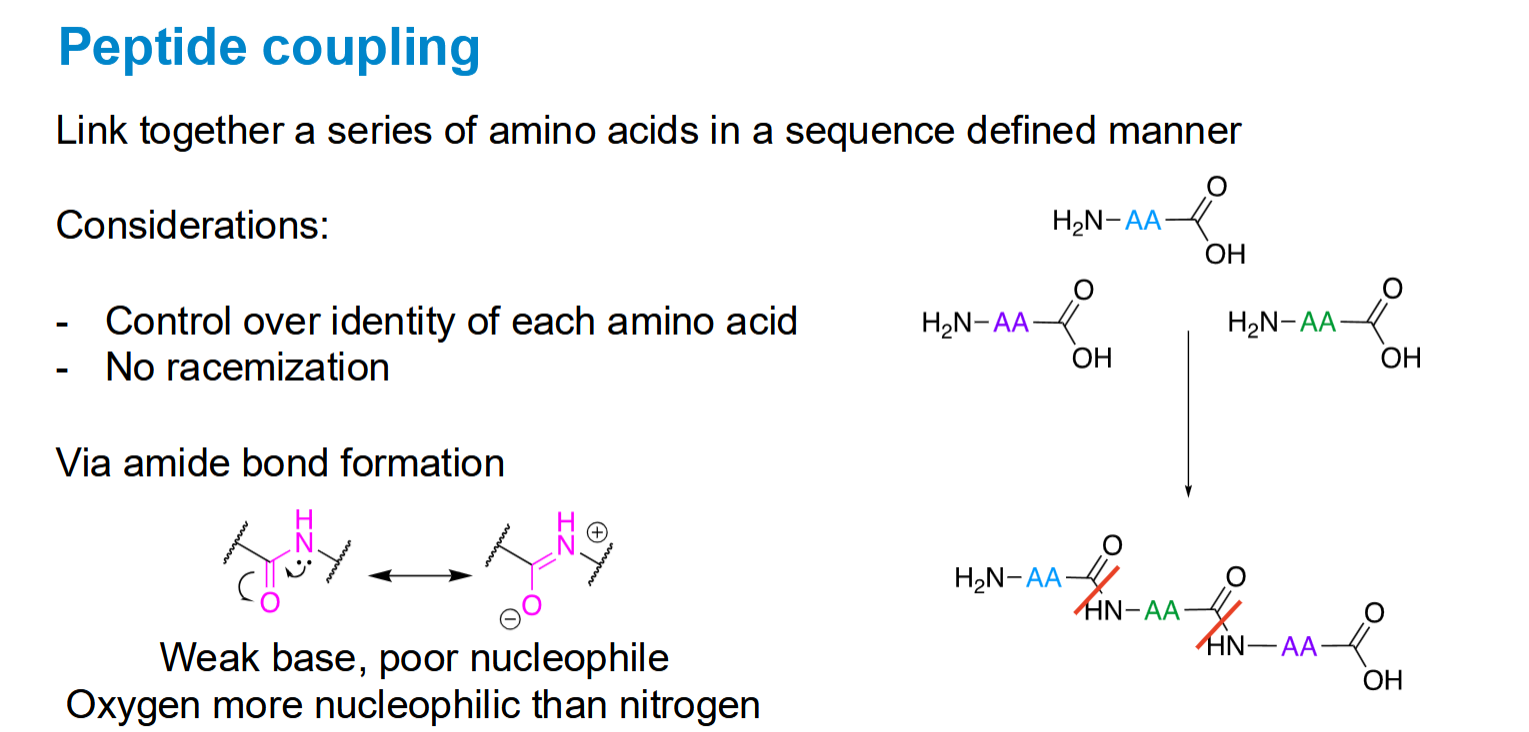
What is peptide coupling
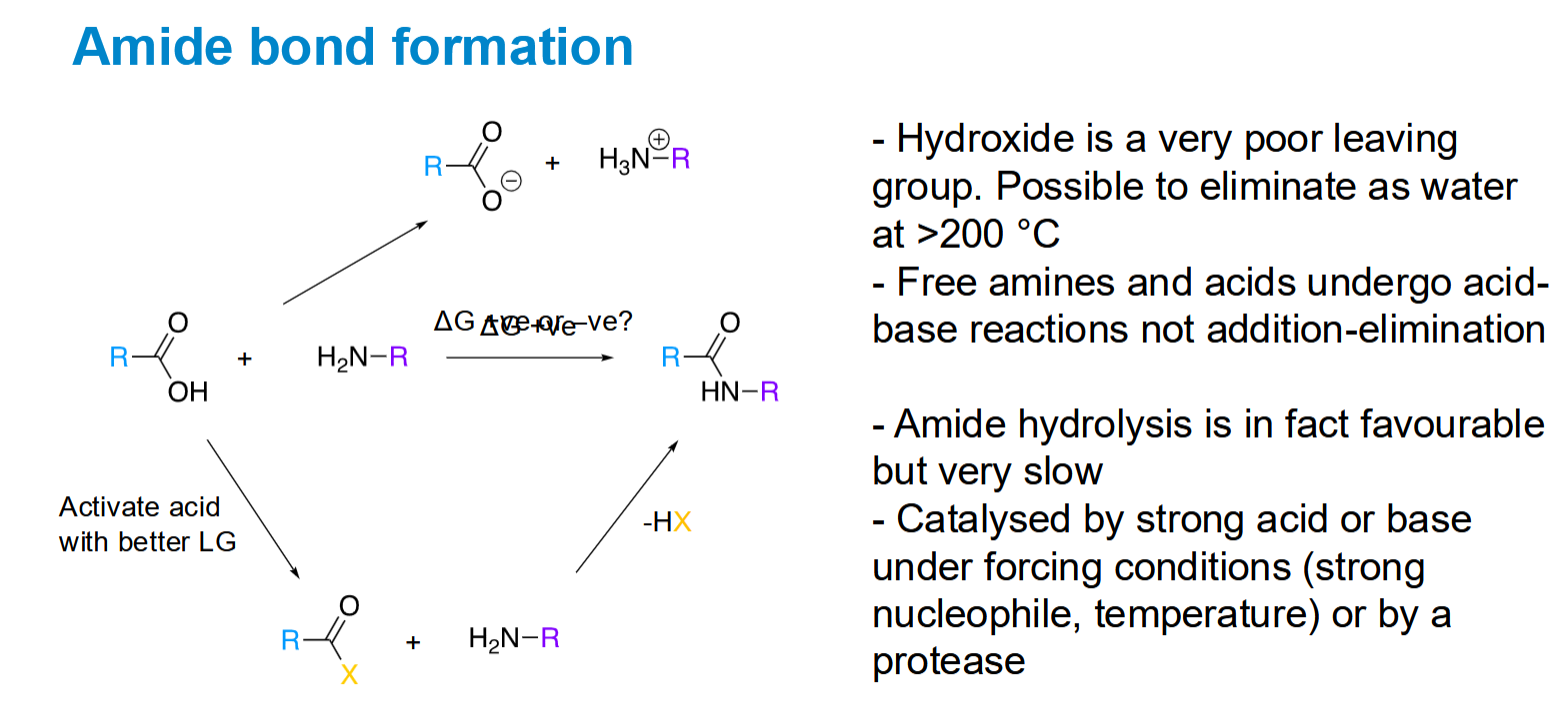
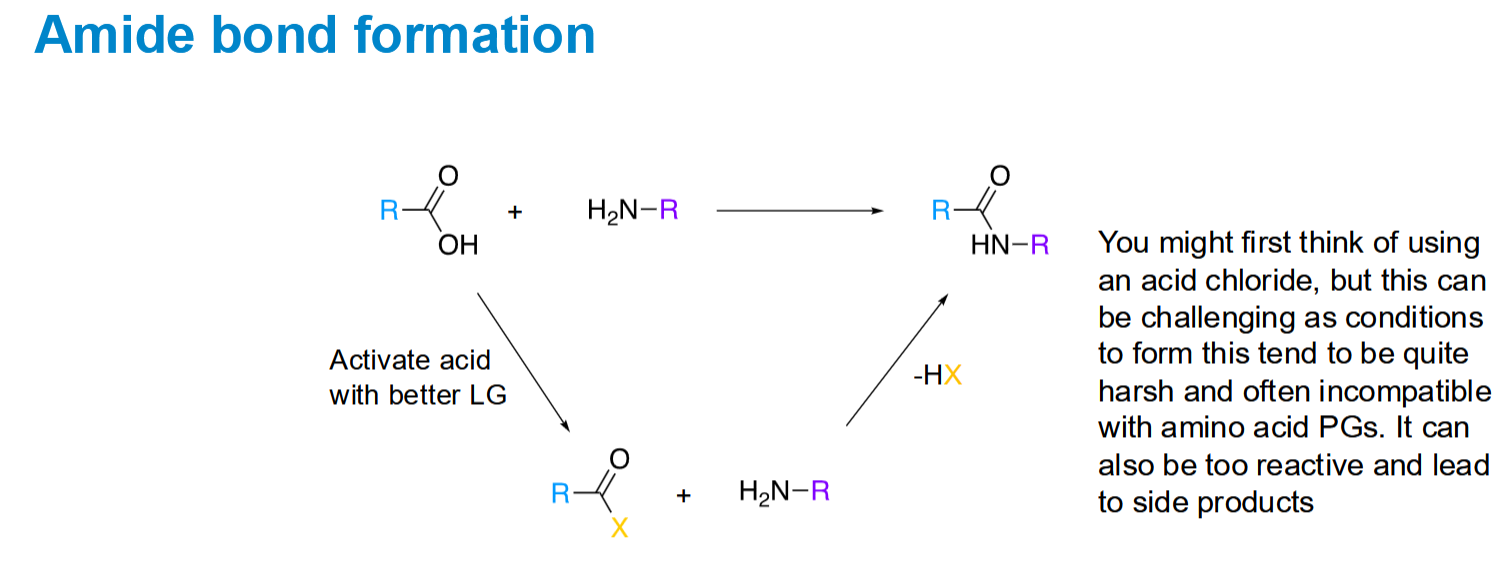
The issue with amide bond formation using carboxylic acids and amines (and the solution)
A simple acid-base exchange is all that will happen unless we add a better leaving group
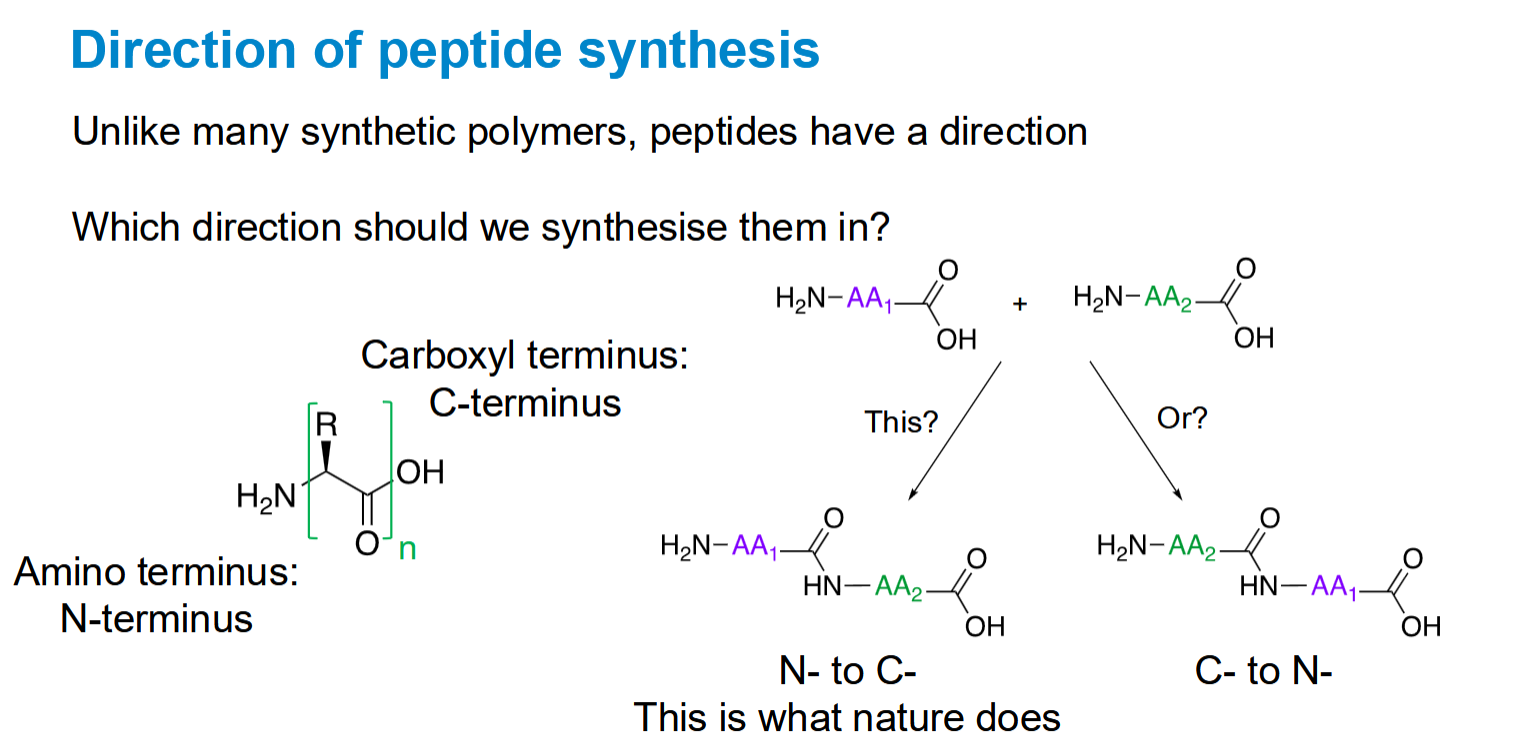
Which direction are peptides synthesised in in nature and synthetically
synthetically is C- to N-
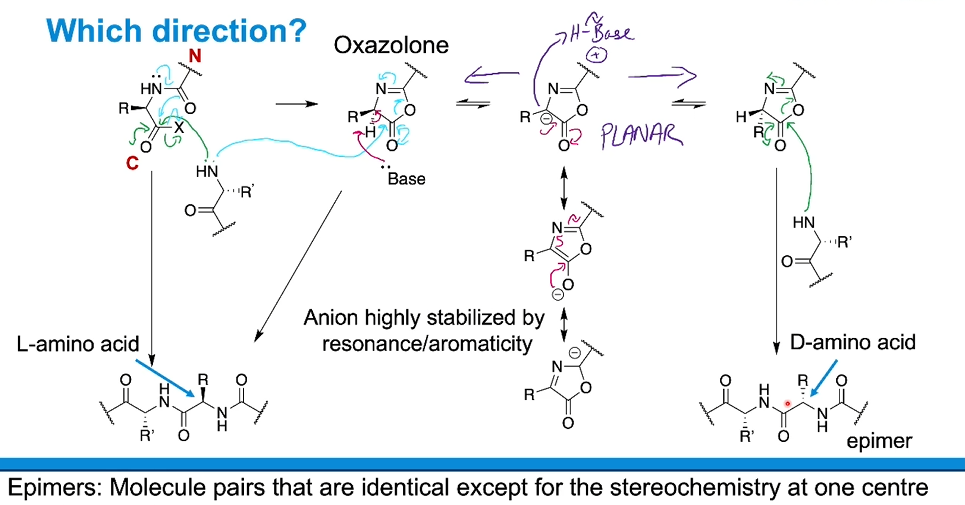
An issue with peptide synthesis
The formation of axazolone causes an issue if base reacts with it instead of an amine. The proton can be removed from either face fo the ring, resulting tin the inversion of the stereocentre on the amino acid added. (D-amino acid) This potentially has big implications for 3D shape.
We call this epimerisation where epimer pairs are identical aside from inversion at one stereocentre
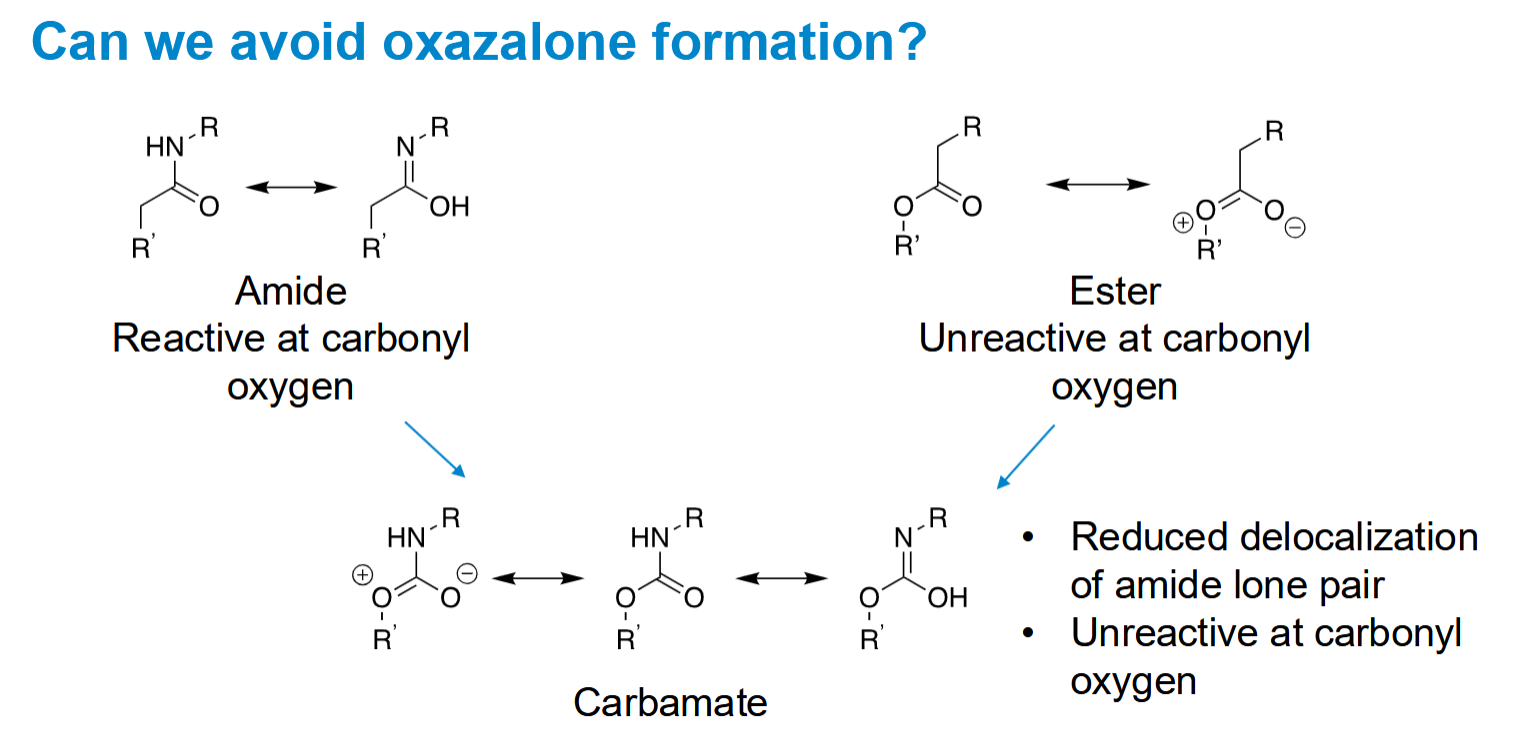
Avoiding oxazalone formation
We need to reduce the delocalisation of the nitrogen lone pair so the carbonyl oxygen is unreactive
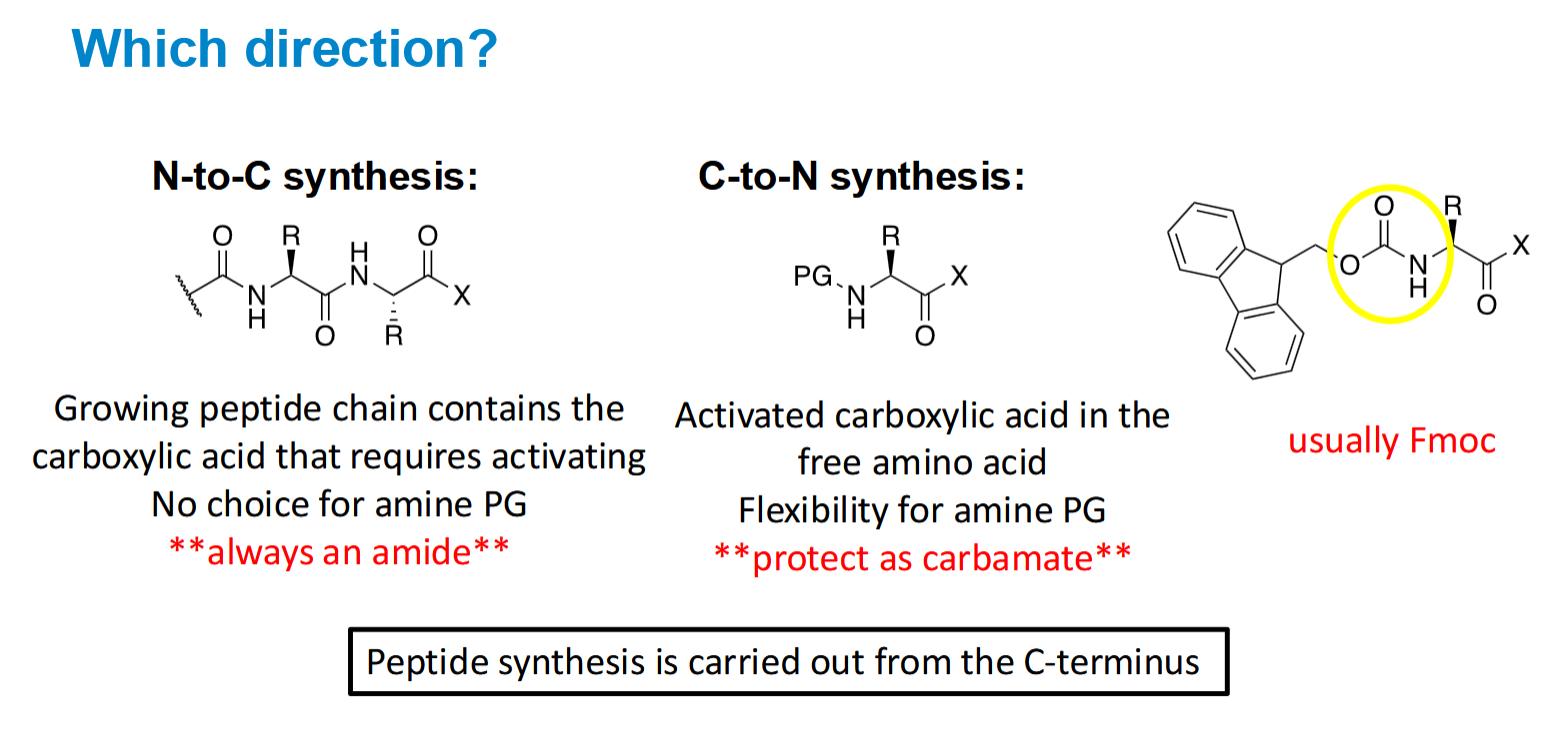
How does this tie into the choice for C-to-N synthesis
C-to-N allows you to protect the amine group
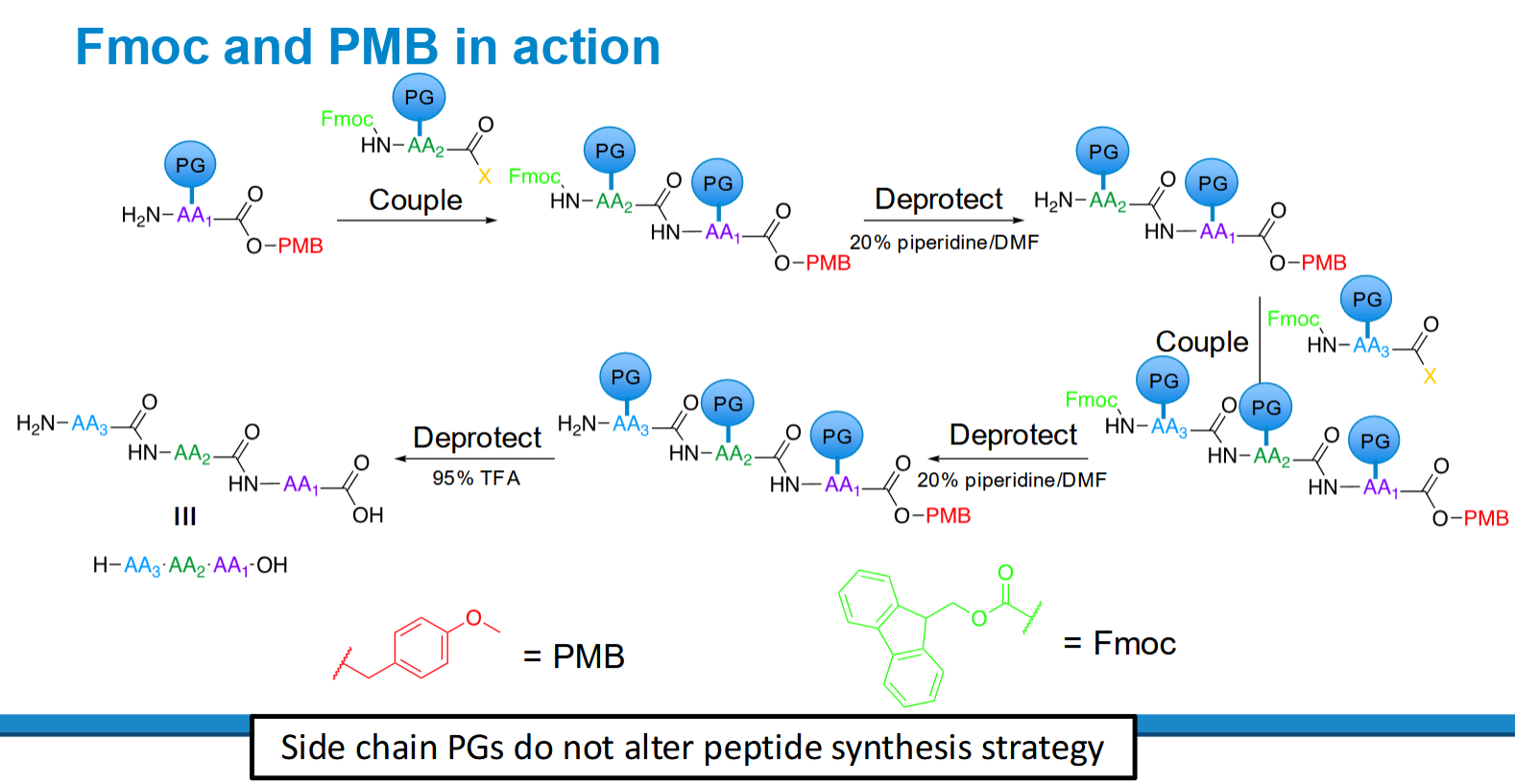
permanent and temporary protecting groups in peptide synthesis
The protecting group for the C-terminus stays but the group on the N terminus shifts every coupling step
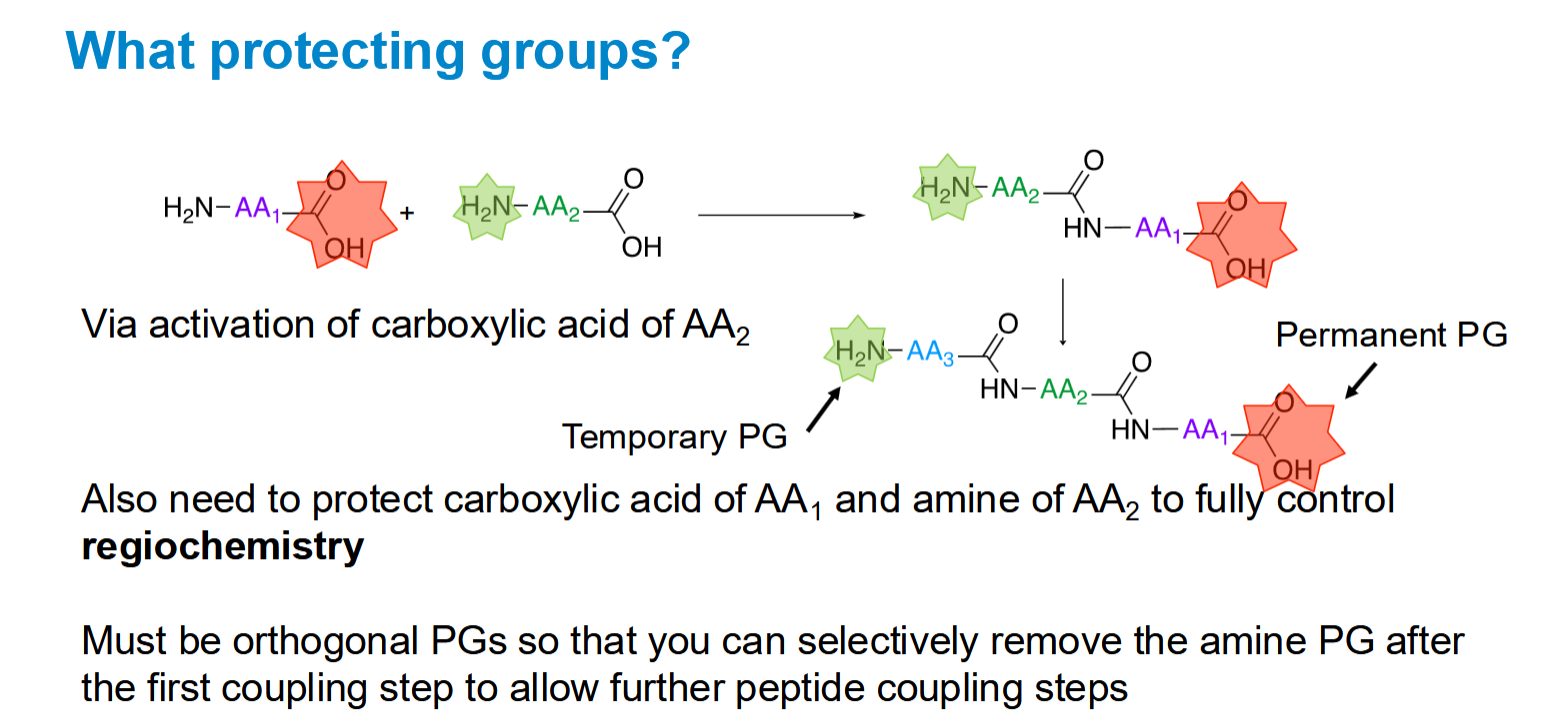
What protecting groups are typically used
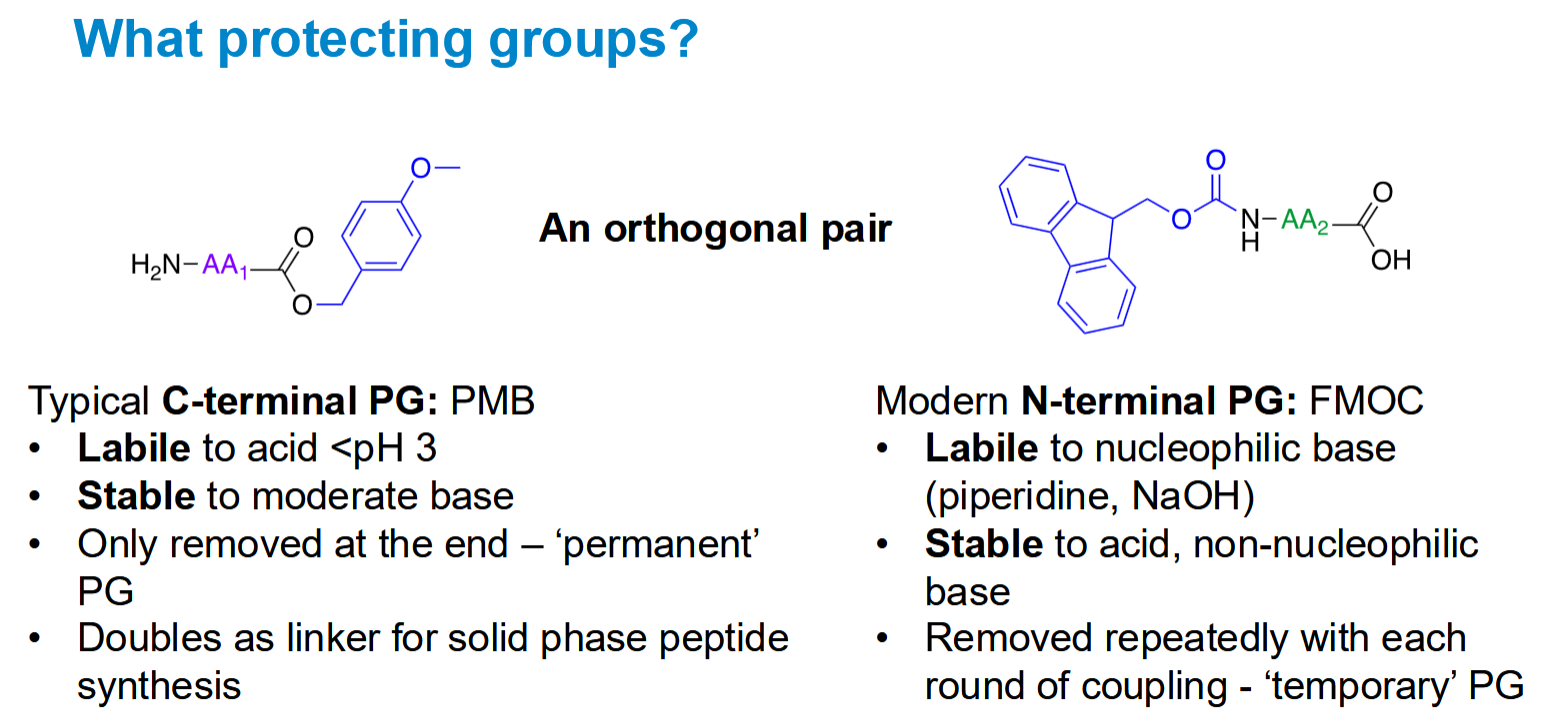
Solid phase peptide synthesis
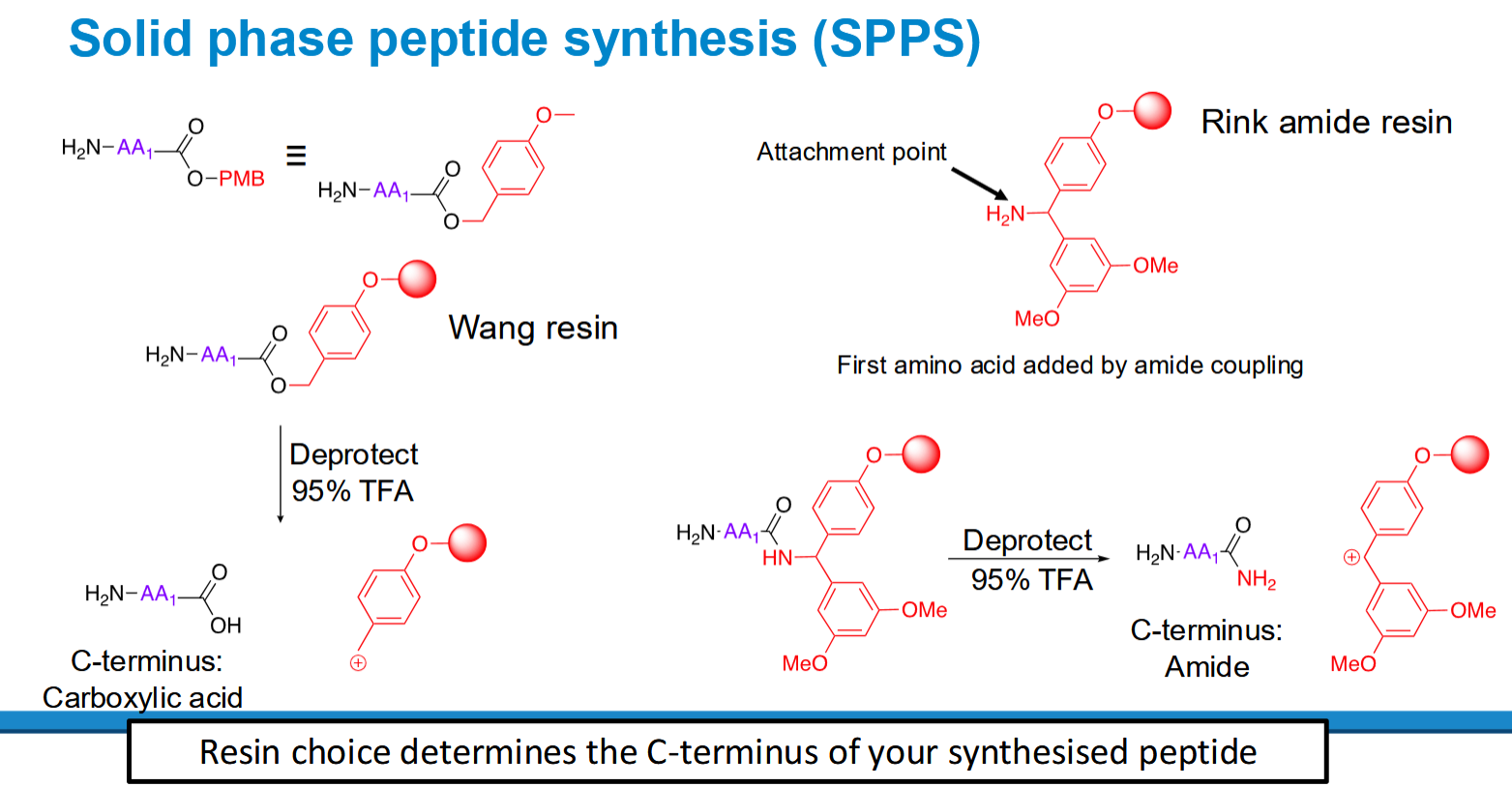
Side chain protection
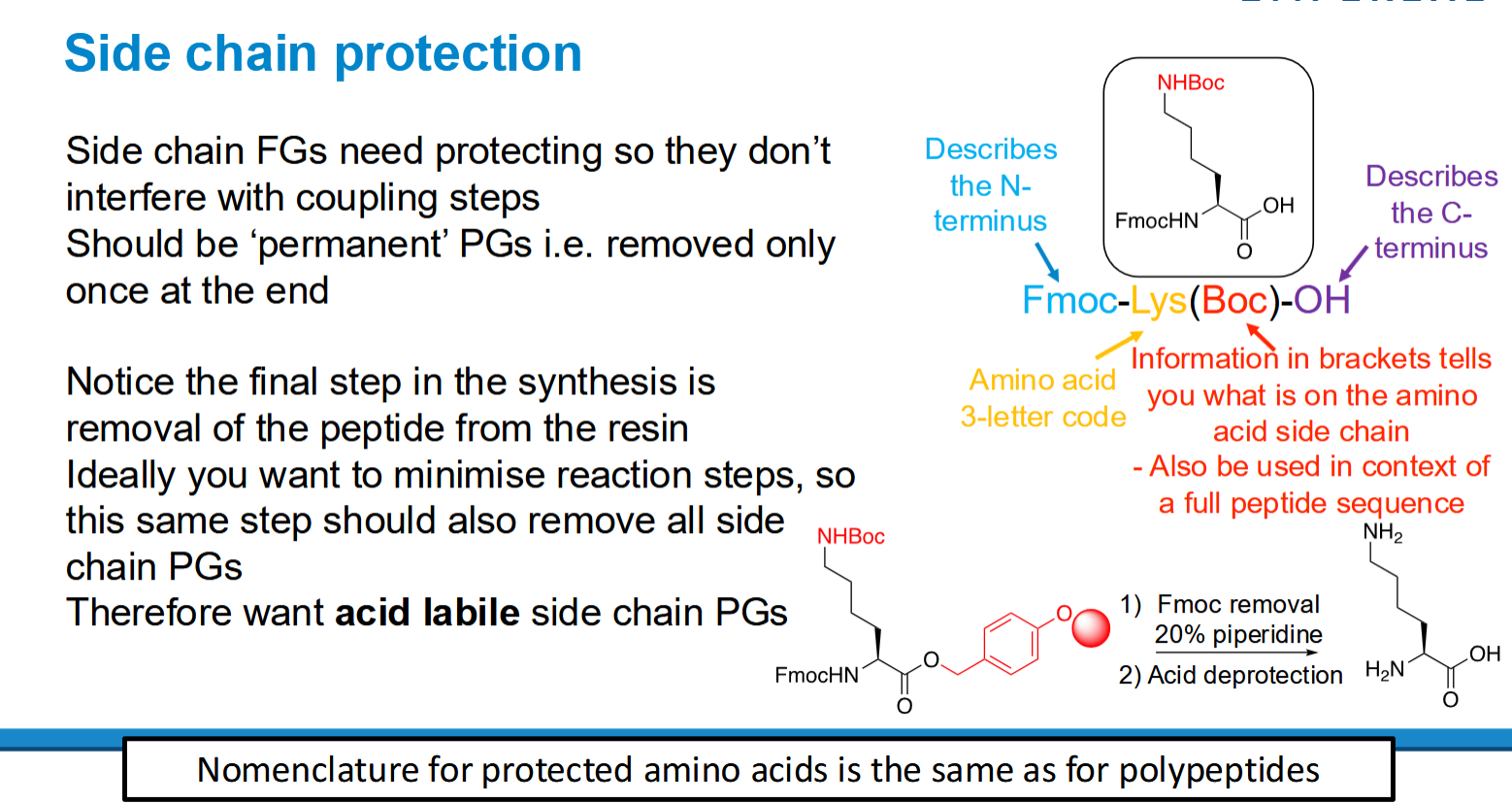
Protecting groups in action during coupling
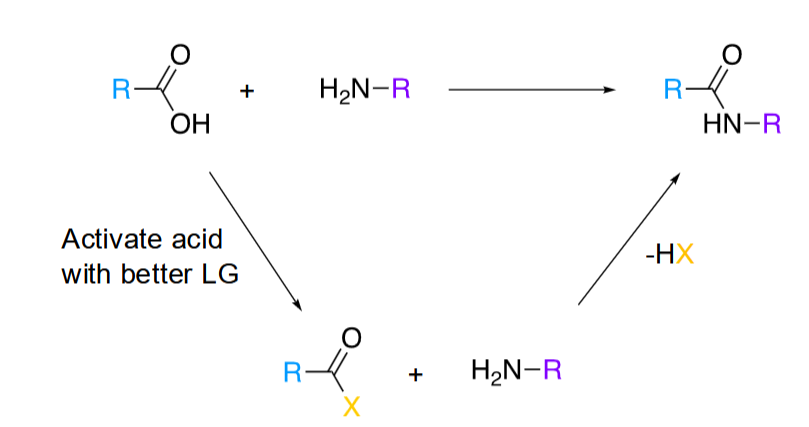
Why are acyl chlorides not ideal for forming amide bonds
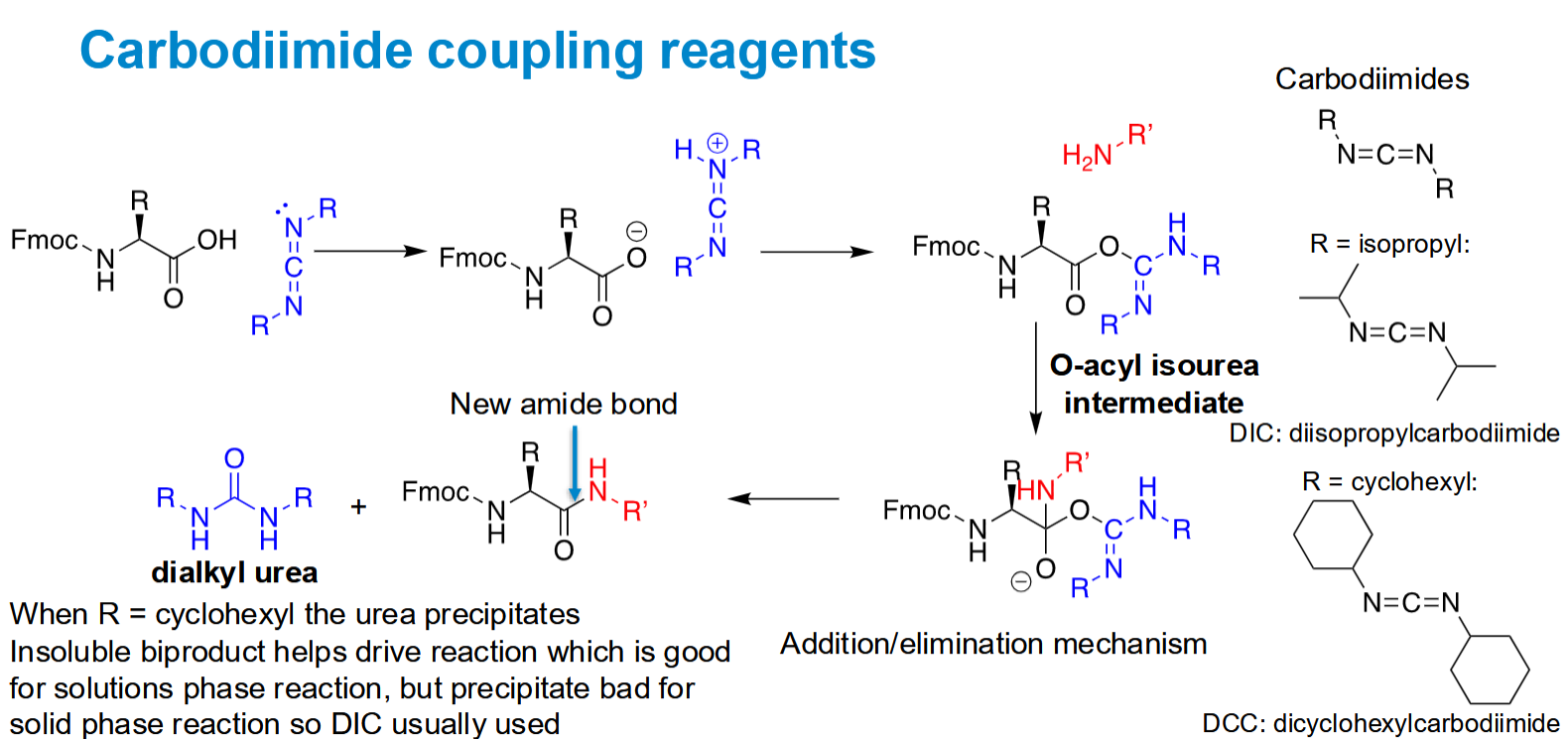
Carbodiimide coupling reagents: when might you use DIC vs DCC
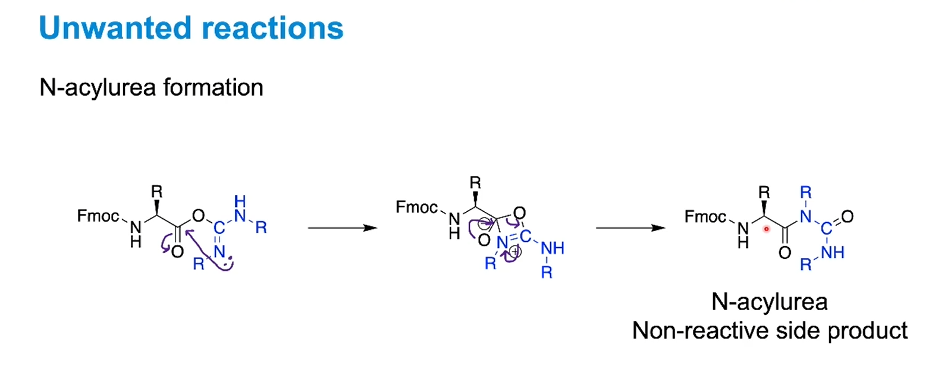
Unwanted reactions: N-acylurea formation
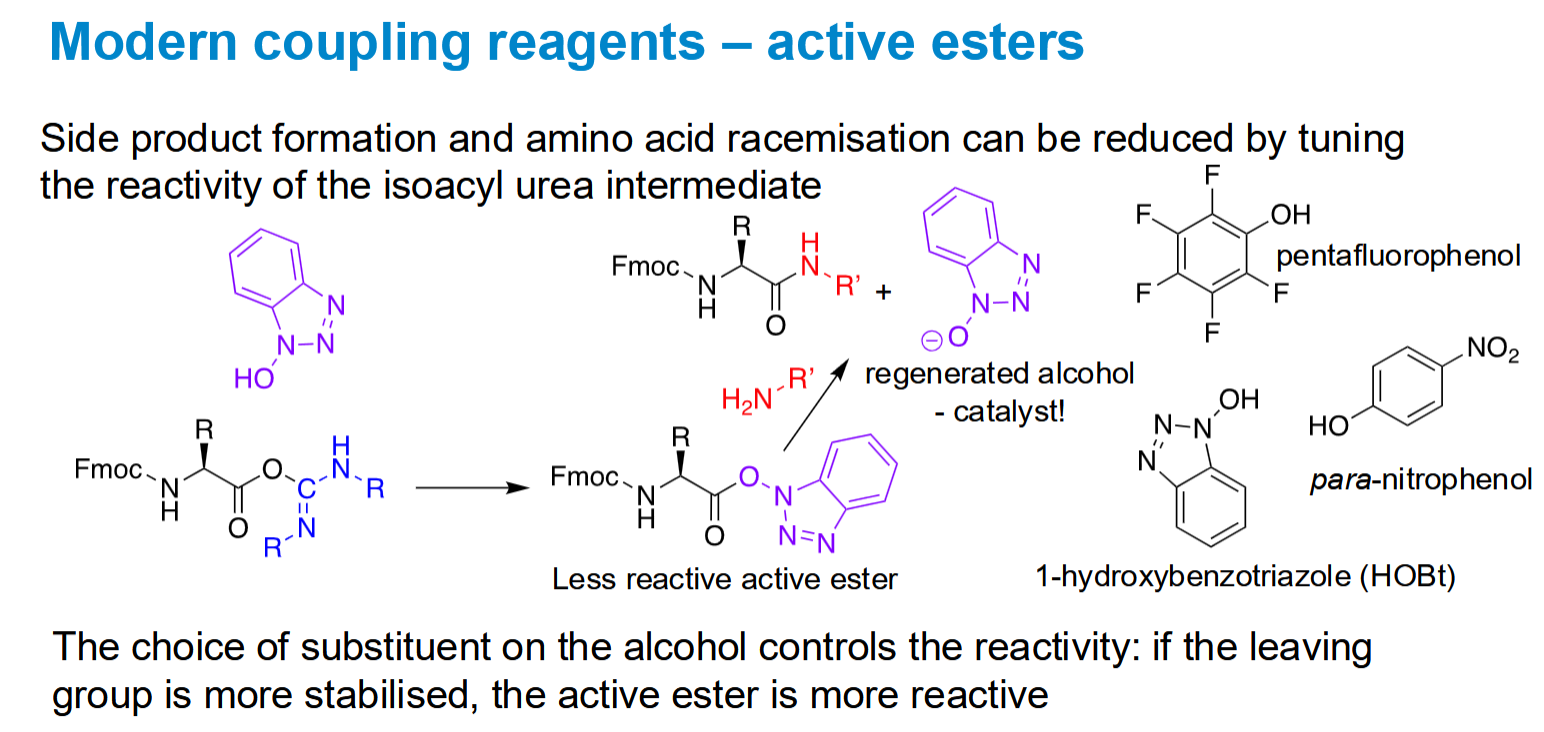
Modern coupling reagents – active esters
Catlytic alcohols can help reduce side product formation
Fmoc vs Boc
Fmoc is temporary and is used on the terminal N. Boc is permanent and is used on side chain amines.