2026 Electricity
 Call Kai
 Learn
Learn Practice Test
 Spaced Repetition
 Match
Match Flashcards
 Knowt Play
1/42

There's no tags or description
Looks like no tags are added yet.
Name | Mastery | Learn | Test | Matching | Spaced | Call with Kai | Chat |
|---|
No analytics yet
Send a link to your students to track their progress
43 Terms
State the 3 sub-atomic particles, their charge, relative mass and their location within the atom?
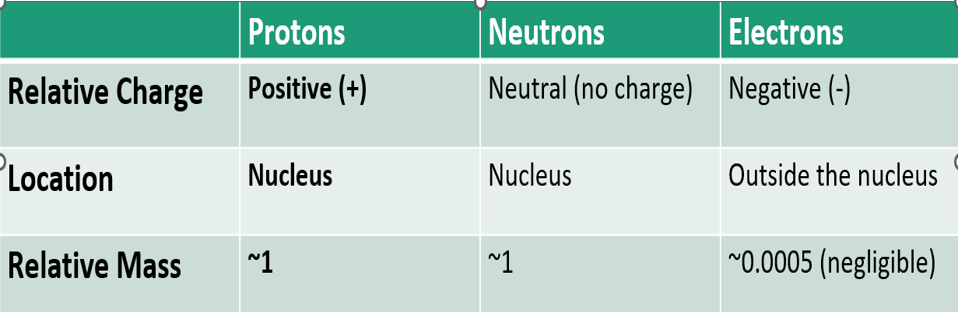
Note: Electrons orbit the nucleus in energy shells.
Why are electrons held in place in the atom?
Electrons are held in place by the electrostatic attraction to oppositely charged protons.
What is a Cation and Anion and why are they created?
Atoms may lose or gain electrons to form positively charged cations (electron/s have been lost) or negatively charged anions (electron/s have been gained).
The reason that these atoms may gain or lose electrons, is because atoms tend to want a full outer shell (Bohr’s Diagram), and so to achieve this they may lose or gain electrons.
What are the Bohr’s Diagram rules for the first 20 elements?
Remember the following rules
1)The 1st Shell hold 2 electrons, 2nd Shell holds 8 electrons, 3rd Shell holds 8 electrons and the 4th shell holds 32 electrons.
2)The outer most shell can only hold 8 electrons as a maximum, except the 1st shell which will only hold 2 electrons.
What is electricity?
Electricity is a form of energy that can accumulate or flow from one place to another. When it builds up in one
location, it's called static electricity; when it flows, it’s known as current electricity.
Explain how charges can be rubbed from one object onto another making both objects carry an overall charge? (Static Electricity)
When certain insulating materials are rubbed against each other they become electrically charged
This is called charging by friction
This makes an electric charge build up
The charges remain on the insulators and cannot immediately flow away
One gains a net positive charge and the other gains a net negative charge
An example of this is an acetate plastic rod being charged by rubbing it with a cloth
Both the rod and cloth are insulating materials
For example
rubbing a balloon on a woolen jumper transfers an electric charge, making the balloon stick to the jumper due to their opposite charges.
What is Current Electricity?
Current electricity is the movement of electrons that carry energy from one location to another. This type of electricity powers our everyday devices like washing machines, phones, and light bulbs.
Electrical appliances use wires, such as copper cables, to carry electric current. The plastic coating on these cables protects you from electric shock. Current electricity is similar to kinetic energy because it represents energy in motion.
For instance, when you turn on a flashlight, energy from the battery flows to the lamp, allowing it to emit light until the battery runs out of energy.
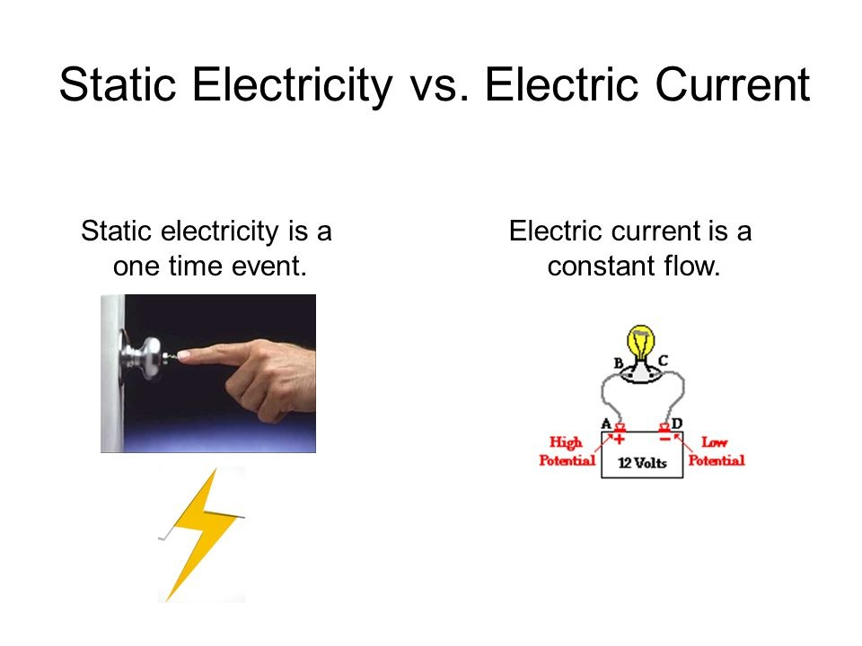
Contrast current electricity with static electricity.
•Static electricity is an imbalance of electric charge at rest
•Electrical current is the continuous movement of electric charge through a conductor
•Both Static electricity and current electricity involve electrons
What is a conductor?
•Conductors allow electricity to easily flow through them
•Metals are good electrical conductors
•In conductive materials, valence electrons in each atom can easily come or go and are called free electrons
•Different conductors may produce heat or light as a result of the flow of electricity
e.g. Heater, light bulb filament
What is an insulator?
•Insulators don’t allow electricity to flow through them
•In insulating materials, the outer electrons are not so free to move.
•Most non-metals are insulators. One exception is carbon in the form of graphite.
•Note that for safety reasons, please understand that with enough electrical energy, even insulators will not be safe and will allow the flow of electricity
•Semi-conductors have a conductivity between conductors and insulators. They are important in industry
Discuss how different conductors cause electrons to lose their energy as heat and/or light.
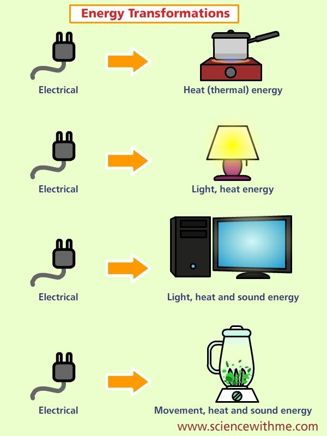
•The flow of electricity in a conductor can produce heat and light
•This is used by humans for example the filament in a light bulb produces light, and the heating bars on a heater produce heat.
•Sometimes this by-product is unwanted, for example in machines, so steps are taken to cool down the immediate environment or even to reduce the light.
Discuss how an electric circuit is formed and its components.
A basic electrical circuit consists of three main components, a source of voltage, a load, and conductors.
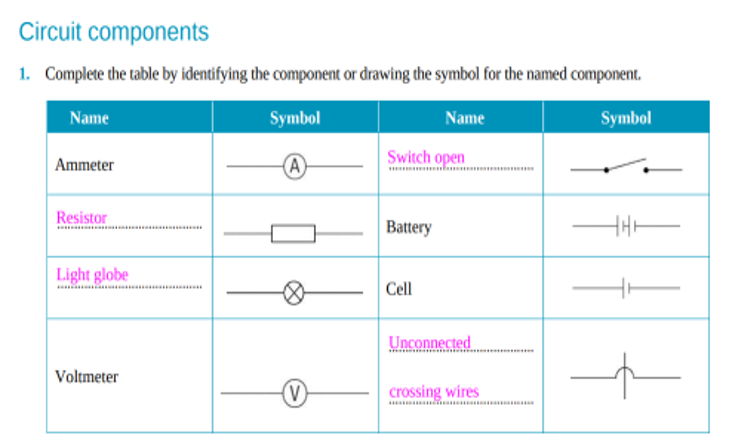
What are the symbols used to draw a circuit diagram.
What is a series circuit?
•A series circuit is a type of electric circuit where components are connected one after another in a single path. The current has only one path to flow through all components. This arrangement creates unique characteristics:
•The same current flows through all components.
•The voltage divides among the components based on their individual resistances.
•If any component fails, the entire circuit stops working.
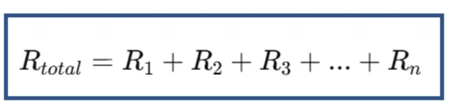
What is the formula that shows the total resistance in a series circuit?
What is a parallel circuit?
•A parallel circuit is a type of electric circuit where components are connected one after another in more than one path. The current has more than one path to flow through all components. This arrangement creates unique characteristics:
•Voltage is the same across all components.
•Current divides among branches.
•Resistance decreases as more branches are added
•Failure of one component does not affect others.
What formula shows the total current in a parallel circuit?

What formula shows the total resistance in a parallel circuit?

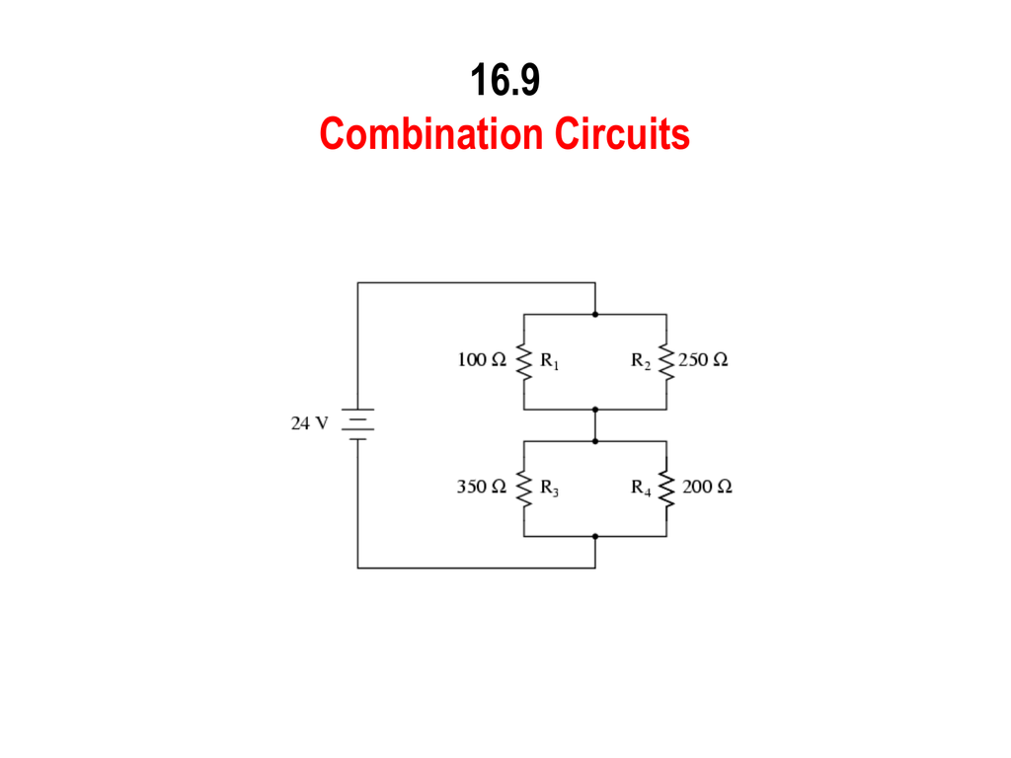
Can circuits be a combination of series and parallel?
Yes e.g
What is a current?
Electric current is the stream of charged particles—like electrons or ions—moving through a conductor or space. It measures how fast electric charge flows through a medium over time.
What is the electric current symbol?
•Electric current symbol = I
What are the units for electrical current?
•Unit for current is the ampere (A)
What instrument measures current?
•An ammeter (or a multimeter) is the instrument used to measure current
•The term amperage is sometimes used, but is not technically correct
What is another name for voltage?
•Voltage - (also known as the potential energy)
Define voltage
•Voltage - (also known as the potential energy) = difference per unit charge between two points in an electrical field.
What can voltage be compared to as?
•For reference: Voltage can be likened to water pressure in a hose, where higher pressure pushes water through that hose, similar to voltage pushing electrons through a circuit.
What is the symbol for voltage?
•Voltage symbol = V
What are the units for voltage?
•Unit for voltage is the Volt (V)
Which instrument measures voltage?
•A voltmeter (or a multimeter) is the instrument used to measure voltage
What is resistance?
•Resistance is the opposition to the flow of electric current.
•It determines how much a material resists the movement of electrons.
What are the factors affecting resistance?
•Factors Affecting Resistance:
a)Material: Conductors like copper have low resistance, while insulators like rubber have high resistance
b)Length of wire: Longer wires have more resistance
c)Thickness of wire: Thicker wires have less resistance
d)Temperature: Higher temperatures increase resistance in most materials.
What is an analogy to visualise resistance?
•Resistance is like a narrow section in a water pipe—it slows down the flow of water (electricity).
•The higher the resistance, the harder it is for current to flow.
What is resistance measured in?
•Resistance is measured in Ohms (Ω)
What is used to measure resistance?
•Resistance is measured using an ohmmeter
What does AC stand for?
•Alternating Current (AC)
What does DC stand for?
•Direct Current (DC)
What is DC Current?
•Direct Current (DC): Flows in one direction (e.g., batteries, USB power).
What is AC Current?
•Alternating Current (AC): Changes direction periodically (e.g., household electricity).
What is the Ohm’s Law?
•The relationship between voltage, current, and resistance is defined by Ohm’s Law
V = I × R
•Where: V = Voltage (volts), I = Current (amperes) R = Resistance (ohms)
How does the Ohm’s Law work?
•How Ohm’s Law Works:
a) If you increase the voltage, the current will increase (if resistance stays the same).
b) If you increase the resistance, the current will decrease (if voltage stays the same).
What are the power formulas in DC Circuits?
•Power Formulas in DC Circuits
•P = V × I
•Units for Power = Watt (W)
•Large quantities use typical mathematical prefixes, so you will hear about kiloWatts
•Also: P = V2/R and P = I2R Electric Power Formula
•And:

Why are houses wired in parallel?
Houses are wired in parallel because series circuits are unsuitable for homes, while parallel circuits allow appliances to work safely, reliably and at full power.
Series circuits do not work well for homes because one fault stops everything — In a series circuit, all components are connected in one continuous path. If one light bulb burns out, one appliance is turned off, or one device fails, the whole circuit is interrupted. This means every other connected appliance would also stop working, which would be impractical in a house.
Series circuits increase resistance when more devices are added — When multiple appliances are connected in series, the total resistance of the circuit increases. This causes the voltage across each individual appliance to drop. As a result, lights may become dim and appliances may operate below their intended power, or may not function properly at all.
Each appliance receives the full voltage in a parallel circuit — In a parallel circuit, each appliance or light is connected across the same two points of the power source. This means each device receives the full voltage from the supply, allowing lights to stay bright and appliances to operate at their intended performance level.
Appliances can operate independently — In parallel wiring, each appliance has its own separate branch or path for current. This means one appliance can be turned on or off without affecting the others. Homeowners can use different devices at the same time without one appliance impacting another.
If one appliance breaks or is switched off, the others still work — Because parallel circuits have multiple paths for electricity, the electrical flow to other appliances remains unaffected if one branch is interrupted. This makes household wiring more convenient and reliable.
Parallel wiring needs safety devices such as fuses and circuit breakers — Because parallel circuits create multiple current paths, there is a risk of overloads or short circuits if too much current flows. Circuit breakers and fuses automatically interrupt the electricity when excessive current occurs, preventing wires from overheating and reducing the risk of appliance damage or electrical fires.
Why do houses need an earth wire on household appliances?
Some appliances need an earth wire for safety — An earth wire is not the reason houses are wired in parallel, but it is an important household safety feature. If a live wire touches the metal case of an appliance, the case could become dangerous. The earth wire provides a safe path for fault current to travel to the ground, reducing the risk of electric shock and helping safety devices cut off the electricity.