Lipid Dosing Types of Formulas & Calculations
 Call Kai
 Learn
Learn Practice Test
 Spaced Repetition
 Match
Match Flashcards
 Knowt Play
1/33

There's no tags or description
Looks like no tags are added yet.
Name | Mastery | Learn | Test | Matching | Spaced | Call with Kai | Chat |
|---|
No analytics yet
Send a link to your students to track their progress
34 Terms
name of 4 oil emulsion
SMOFlipid
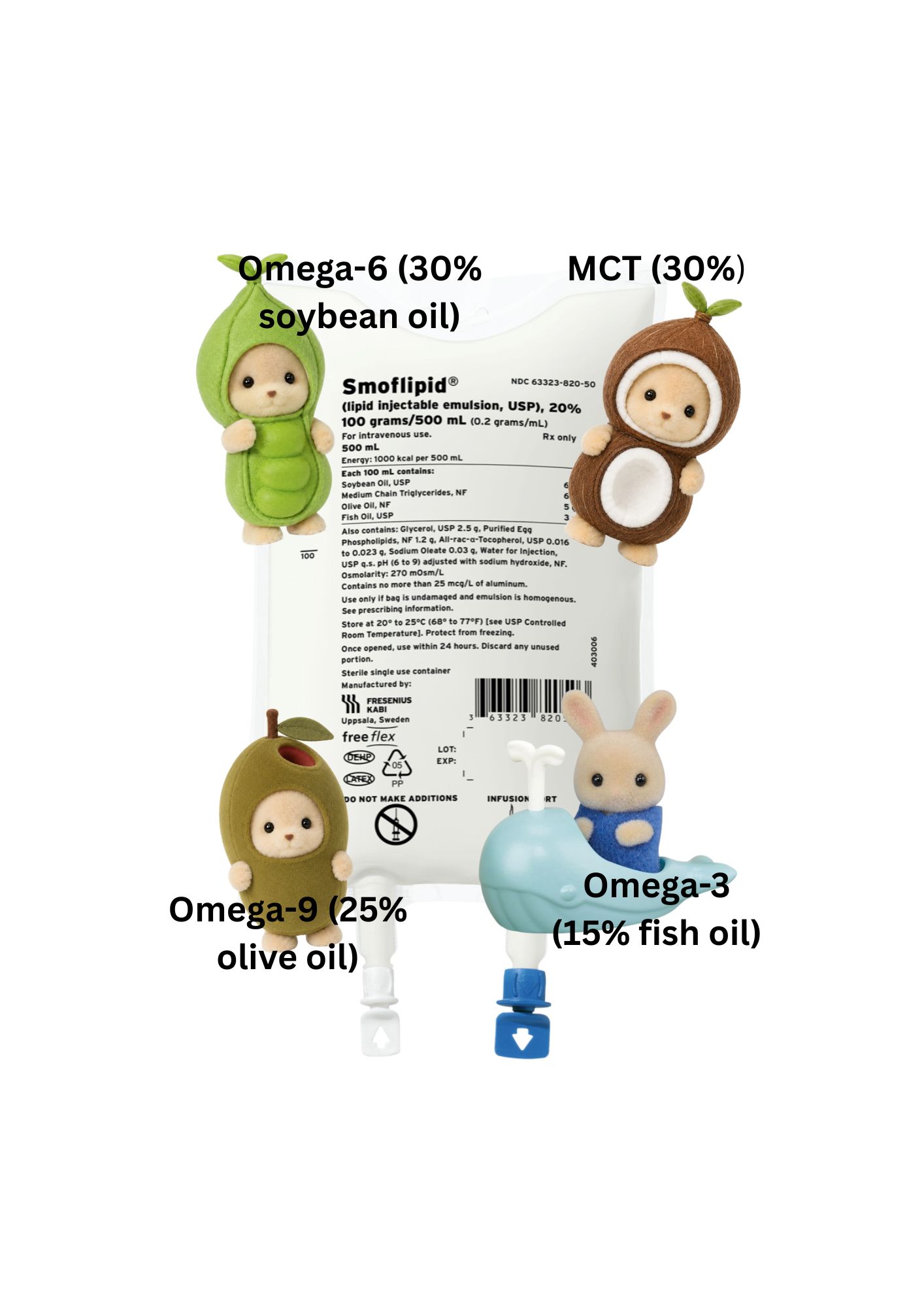
SMOFlipid components and function
S = Soybean oil (30%)
M = Medium-chain triglycerides (MCTs) (30%)
O = Olive oil (25%)
F = Fish oil (15%)
30% soybean oil
Provides essential fatty acids (linoleic acid, α-linolenic acid)
30% medium-chain triglycerides (MCTs)
Rapidly oxidized for energy
Less likely to accumulate
25% olive oil
Rich in monounsaturated fats (oleic acid)
Relatively neutral inflammatory profile
15% fish oil
EPA
DHA
Anti-inflammatory effects
1 oil emulsions
Intralipid and Omegaven
SMOFlipid omega-3 content
Contains EPA & DHA
Contains 15% omega-3 fatty acids from fish oil, providing essential fatty acids that support various physiological processes.
does intralipid have omega-3s
No, intralipid does not contain omega-3 fatty acids. It's primarily composed of soybean oil and lacks the specific omega-3 supplements found in products like Omegaven.
does intralipid have MCTs
no
does SMOFlipid have MCTs
yes
which has higher phytosterol content intralipid or smoflipid?
intralipid
which has higher Vitamin E content intralipid or SMOFlipid?
SMOFlipid
which has higher pro-inflammatory potential intralipid or SMOFlipid?
Intralipid has a higher pro-inflammatory potential compared to SMOFlipid. High omega-6 content in intralipid leads to increased production of arachidonic acid-derived eicosanoids, which tend to promote inflammation. Lower omega-6 plus fish oil in SMOFlipid shifts eicosanoid production toward a less inflammatory profile.
which is higher in omega-6 content intralipid or SMOFlipid?
intralipid
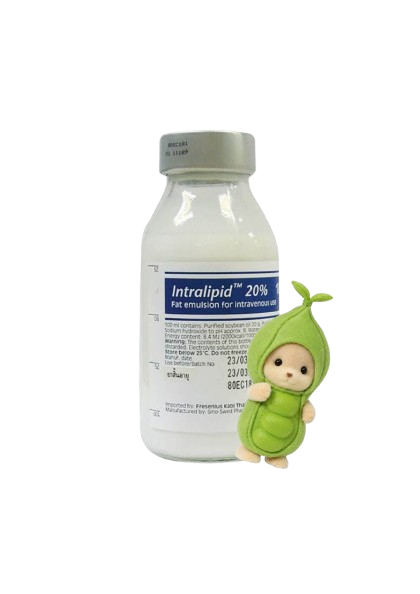
intralipid content and functions
100% soybean oil
Rich in:
Linoleic acid (omega-6)
Some α-linolenic acid (omega-3 precursor)
Does not provide meaningful amounts of EPA or DHA.
standard lipid concentration for intralipid and smoflipid for calculations
20%
volume relationship for calculations for intralipid or SMOFlipid
5 mL/g lipid
energy density in kcal/mL for intralipid/SMOFlipid
2 kcal/mL
energy density in kcal/g for intralipid/SMOFlipid
10 kcal/g
omegaven lipid concentration
10%
omegaven volume relationship mL/g lipid
10 mL/g lipid
omegaven kcal/mL
1.1 kcal/mL
omegaven in kcal/g
11 kcal/g
MCT oil kcal/mL
7.7 kcal/mL
lipid in g/d formula
lipid in g/d = dose in g/kg/d x weight in kg
lipid in mL/d formula
lipid in mL/d = lipid g/d x mL/g
lipid kcal/d
lipid kcal/d = lipid mL/d x kcal/mL
lipid infusion rate
(lipid mL/d)/ infusion hours
A 20% lipid emulsion means how many grams lipid per mL
20 g lipid per 100 mL
A 10% lipid emulsion means how many grams lipid per mL
10 g lipid per 100 mL
what % of total kcal should be avoided in lipid dosing and why?
60% of total kcal due to risk of ketosis
what is the maximum infusion rate and why should this cap be followed?
Do not exceed infusion rate >0.15 gm/kg/hr. To avoid ketosis
why does ketosis happen secondary to excessive lipid administration
triglycerides are hydrolyzed
Fatty acids undergo β-oxidation
The TCA cycle becomes limited
For acetyl-CoA to enter the TCA cycle, it must combine with oxaloacetate.
Acetyl-CoA + Oxaloacetate → Citrate
However, if oxaloacetate is relatively unavailable, acetyl-CoA accumulates.
This occurs when:
Carbohydrate intake is inadequate
Insulin levels are low
Gluconeogenesis consumes oxaloacetate
The liver receives an excessive fatty acid load relative to its oxidative capacity
Excess acetyl-CoA is diverted to ketogenesis
When acetyl-CoA accumulates:
2 Acetyl-CoA
↓
Acetoacetyl-CoA
↓
HMG-CoA
↓
Acetoacetate
↓
β-hydroxybutyrate + acetoneThese are the ketone bodies.
Does excessive lipid alone cause ketosis?
Usually no, especially in patients receiving adequate dextrose.
In PN, sufficient dextrose stimulates insulin, which:
suppresses lipolysis,
promotes carbohydrate oxidation,
maintains oxaloacetate availability, and
reduces hepatic ketogenesis.
Therefore, excessive lipid administration by itself does not commonly produce clinically significant ketosis if carbohydrate provision is adequate.
When can lipid administration contribute to ketosis?
It is more likely when excessive lipid administration occurs along with:
inadequate dextrose intake,
prolonged fasting,
insulin deficiency (e.g., diabetes),
severe illness or stress with increased counter-regulatory hormones,
inborn errors of carbohydrate metabolism.
In these settings, the liver receives a large fatty acid supply while carbohydrate oxidation is insufficient, favoring ketone production.
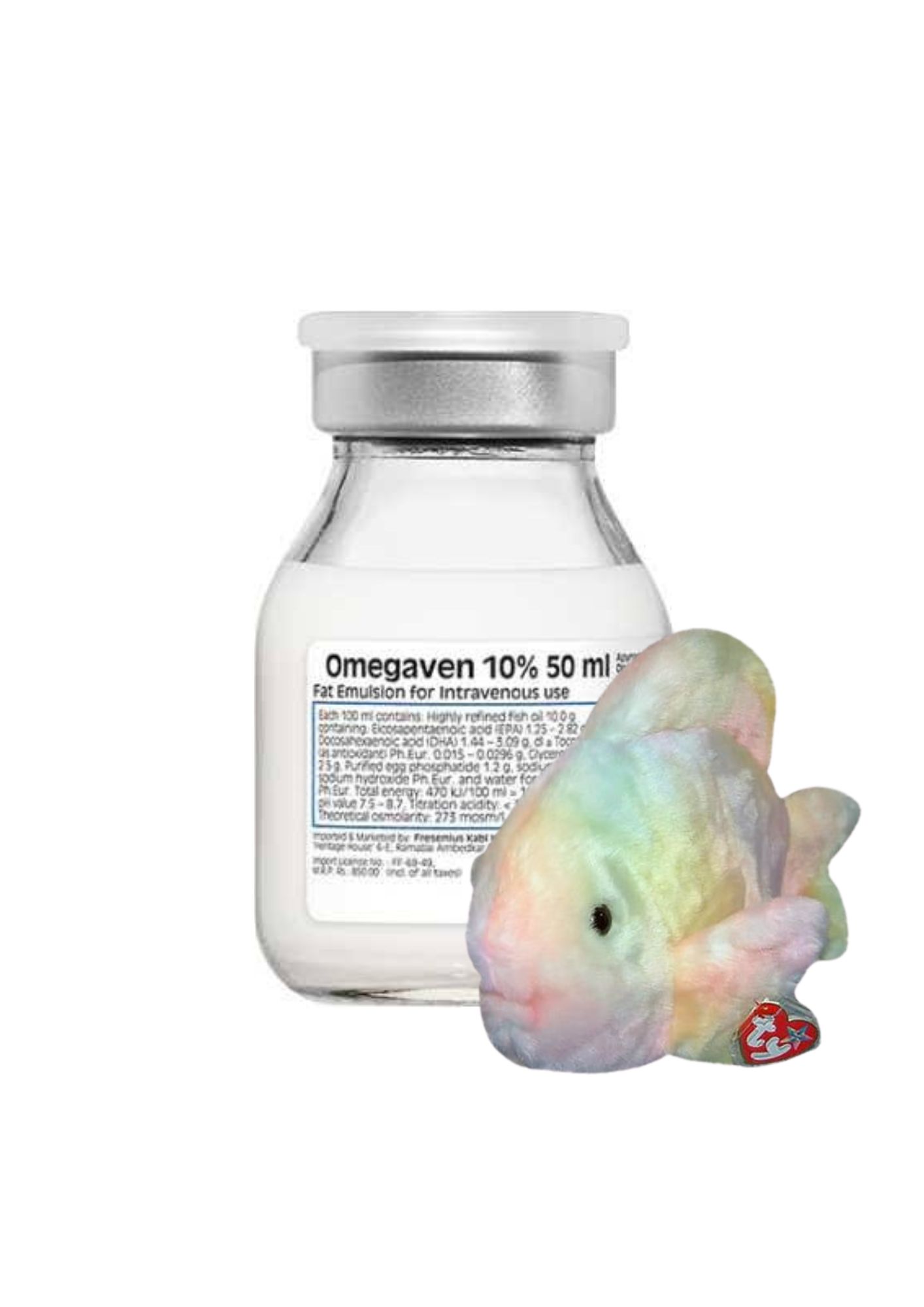
Omegaven content
highly purified fish oil triglycerides, rich in omega-3s EPA & DHA, added in tocopherol
Omegaven indication
consider if SBS or IF and PN expected > 4 weeks
PNAC in absence of other etiologies for cholestasis
cautionary use for transient cholestasis
not indicated for PNAC prevention