5.7 Fossils and Cladograms
 View linked note
 Call Kai
 Learn
Learn Practice Test
 Spaced Repetition
 Match
Match Flashcards
 Knowt Play
1/16

Name | Mastery | Learn | Test | Matching | Spaced | Call with Kai | Chat |
|---|
No analytics yet
Send a link to your students to track their progress
17 Terms
Define Fossil. Tell me about them.
preserved remains of an organism or its activity
Vast majority of fossils are made of rock and contain no organic material
Rarely an organism’s actual tissue is preserved
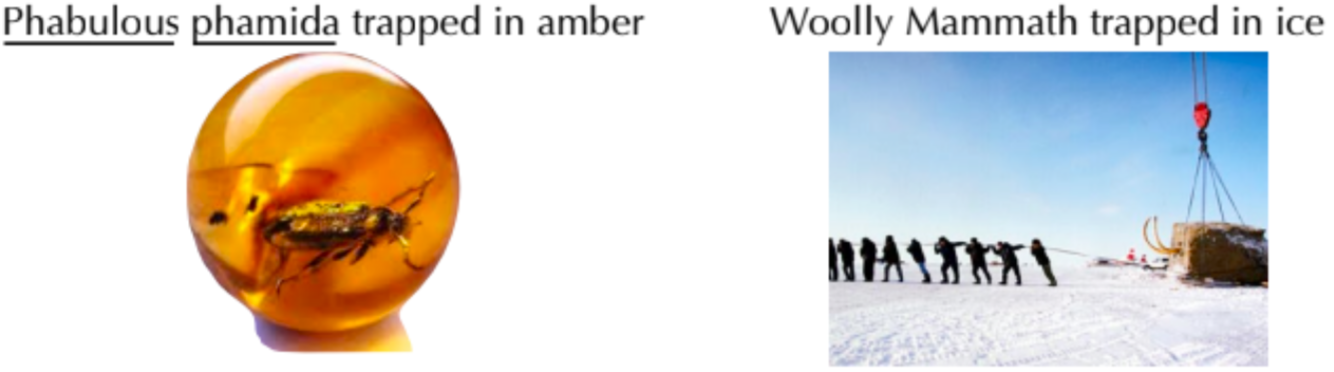
What are examples of exceptions to the fossils not retaining organic material?
amber
ice
What is the 1st Step of Fossilization?
Organism Dies and Its Body Tissue Decomposes
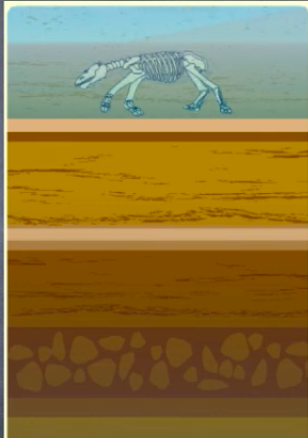
What is the 2nd Step of Fossilization?
Remains are Covered with Layers of Sediment
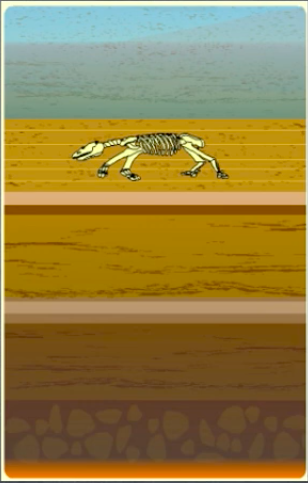
What is the 3rd Step of Fossilization?
Sedimentation Continues, Compressing Remains under Pressure
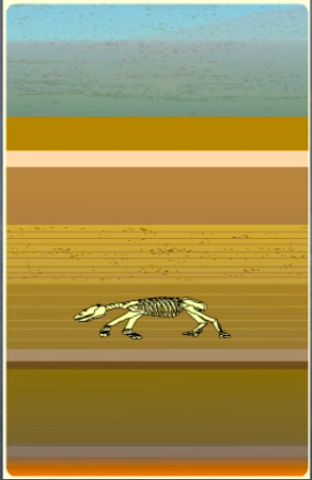
What is the 4th Step of Fossilization?
Water Percolates through Remains, Causing All Organic Tissue to be Replaced by Minerals
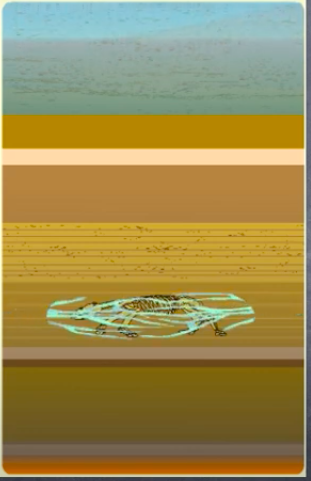
What is the 5th Step of Fossilization?
Geological Uplift and Erosion Bring Fossil to Surface where it Must be Discovered before It is Destroyed by Weather
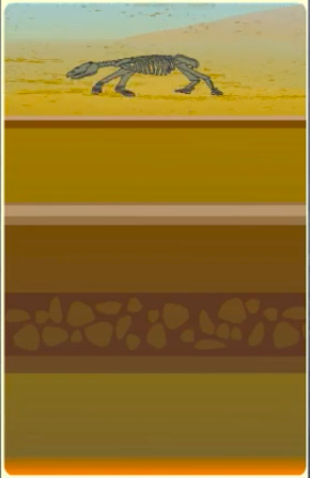
What are the Limitations of Fossilization?
Fossilization is an Extremely Rare Event
Fossils Have to be Uncovered
Fossils are Rarely Found Complete
Soft Body Parts are Rarely Fossilized
Fossilization is an Extremely Rare Event
most dead organisms are eaten or broken down by decomposers
remains have to be quickly covered by sediment to fossilize; if not, weathering processes will destroy them
Fossils Have to be Uncovered
“weathering” reveals fossils and palaeontologists have to be lucky to find them before they are destroyed
there may be billions of fossils that are never discovered
Fossils are Rarely Found Complete
most organisms are reconstructed from only a few fossilized bones or bone fragments
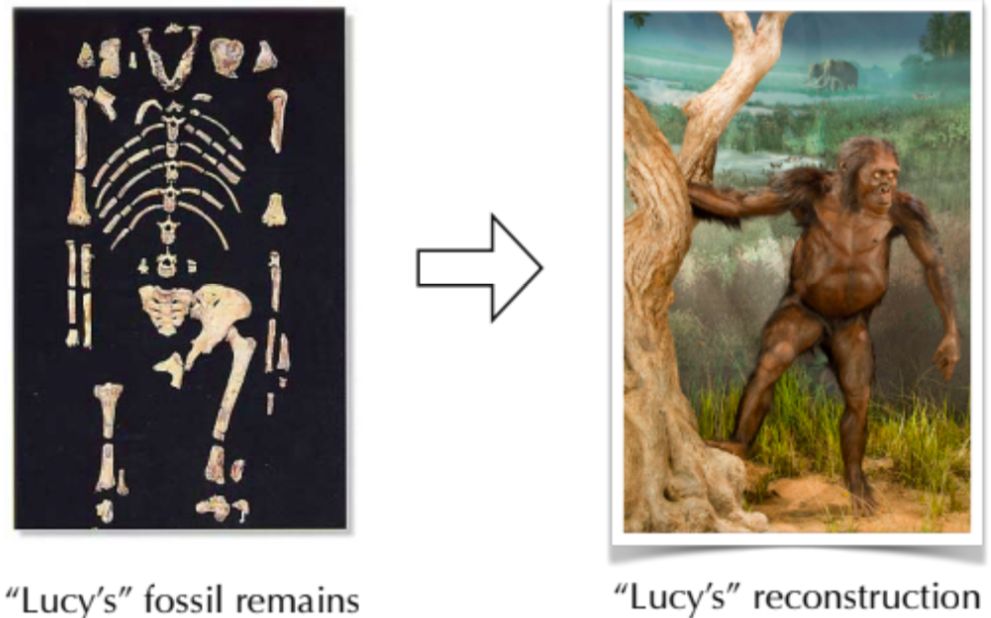
Soft Body Parts are Rarely Fossilized
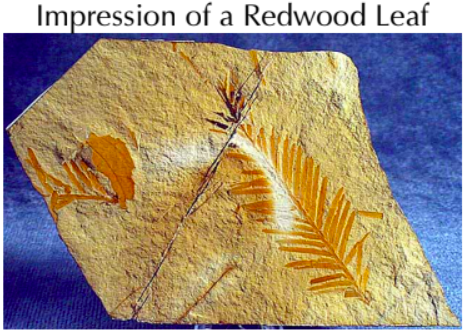
plants and invertebrates lack a bony skeleton so don’t tend to fossilize
impressions of these organisms may be found
Define Comparative Anatomy
fossil record used to determine evolutionary relationship between extant (living) and extinct (no longer living) species
Define Cladograms
shows change in morphology over time
Evolutionary trees (cladograms) can be constructed with…
available fossil evidence
Explain Gradualism
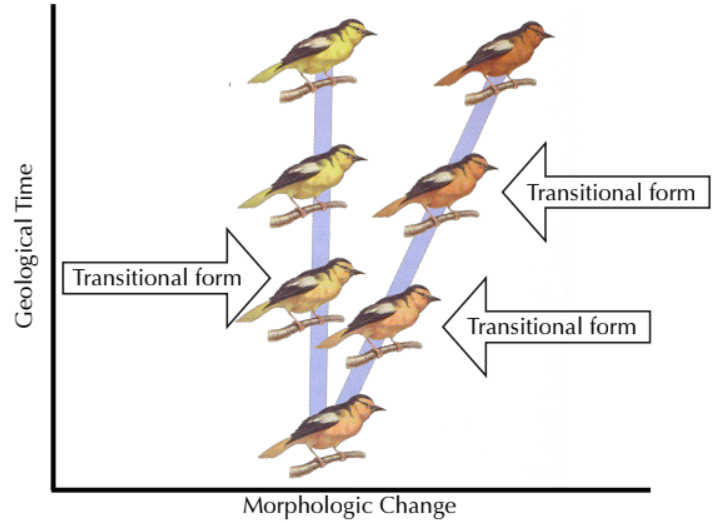
Gradualism - change occurs very slowly and steadily over a long period of time
Since change is slow, theory of gradualism predicts existence of transitional forms in fossil record
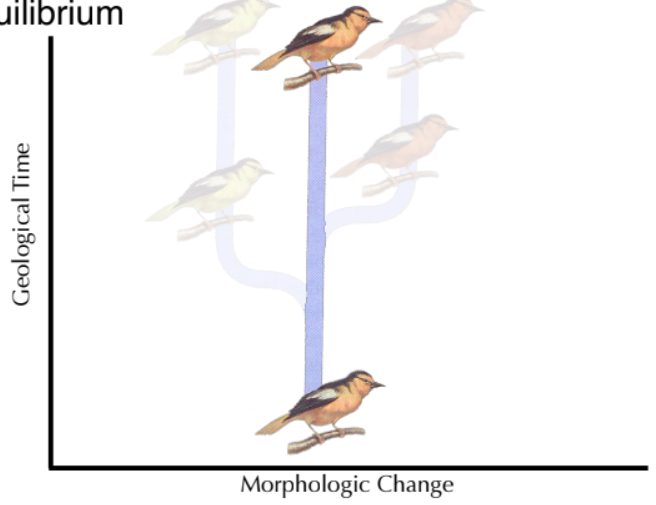
Explain Punctuated Equilibrium
Punctuated Equilibrium - species do not change much over long periods of time
When change does occur, it is rapid and followed by a new equilibrium