Lab 2
 Call Kai
 Learn
Learn Practice Test
 Spaced Repetition
 Match
Match Flashcards
 Knowt Play
1/83

There's no tags or description
Looks like no tags are added yet.
Name | Mastery | Learn | Test | Matching | Spaced | Call with Kai | Chat |
|---|
No analytics yet
Send a link to your students to track their progress
84 Terms
What are the steps of the scientific method?
Observation
Hypothesis
Prediction
Experiment
Statistical analysis
Conclusion
Repeat/refine hypothesis
Observation
Notice a trend or a phenomenon
What is a null hypothesis?
States there is no difference/similarity between groups and any observed relationship is due to random chance or experimental error.
What is an alternative hypothesis?
A proposed explanation for an observation; what you think is actually causing the result.
Prediction
testable statement of what will happen in experiment if the alternative hypothesis is true
How should a prediction be written?
IF [alternative hypothesis is true], THEN [X should be the result of Y]”.
has some mention of dependent variable(s) collected
What is the independent (explanatory) variable?
The variable that is manipulated by the experimenter.
What is the dependent (response) variable?
The variable that is measured.
What is the purpose of a control group?
group of experimental subjects not exposed to the treatment being investigated so that it can be compared with experimental groups that are exposed to the treatment
standard for comparison
Why is replication important?
repetition of an experimental condition so that the variability associated with the phenomenon can be estimated
accounts for natural variation and makes results more reliable
What question was the class experiment investigating?
How do different fertilizer concentrations affect radish growth and development?
What were the three fertilizer treatments?
¼× recommended concentration
1× recommended concentration
10× recommended concentration
In the radish fertilizer experiment, what is the independent (explanatory) variable?
Fertilizer concentration.
In the radish fertilizer experiment, what is the dependent (response) variable?
Plant growth (height, biomass, etc.).
Is the seed or pot our replicate?
The pot (containing one radish seed/plant) is the experimental unit and replicate. Since there is only one seed per pot, each pot represents one independent replicate
Pooling data across the class increases the total number of replicates and improves the reliability of the results.
Which fertilizer concentration served as the control?
The 1× recommended concentration because it represents normal growing conditions.
Why are multiple fertilizer treatments used?
To compare how different fertilizer concentrations affect plant growth.
Why is replication important in this experiment?
It accounts for natural variation among plants and makes the results more reliable.
Why must all plants be treated the same except for fertilizer concentration?
So fertilizer concentration is the only variable affecting growth.
What variables should remain constant?
Plant species (radish)
Soil/peat pod
Pot size
Water
Light
Temperature
Time grown
Give a possible alternative hypothesis for this experiment.
Fertilizer concentration affects radish growth.
Give the null hypothesis.
Fertilizer concentration has no effect on radish growth.
Give a prediction using the proper format.
If fertilizer concentration affects plant growth, then radishes grown under different fertilizer concentrations will show different amounts of growth.
What is a limiting factor?
An environmental factor that restricts plant growth or survival.
What is the major limiting factor in an arid environment?
Water availability.
Name two adaptations of desert plants.
Thick waxy cuticle
Reduced leaves/spines
Succulent stems
Deep or widespread roots
Why do desert plants have a waxy cuticle?
To reduce water loss.
Why do desert plants have reduced leaves?
To reduce transpiration.
What is the major limiting factor in tropical lowland forests?
Light availability (especially beneath the canopy).
Name adaptations of tropical rainforest plants.
Large broad leaves
Drip tips
Rapid growth toward light
Why do rainforest plants have drip tips?
To shed excess water and reduce fungal growth.
What is the major limiting factor in cloud forests?
Low light and cool, constantly moist conditions.
Name adaptations of cloud forest plants.
Mosses and epiphytes
Broad leaves
High moisture tolerance
What is a cotydelon?
the first leaf (or pair of leaves) to emerge from a germinating seed
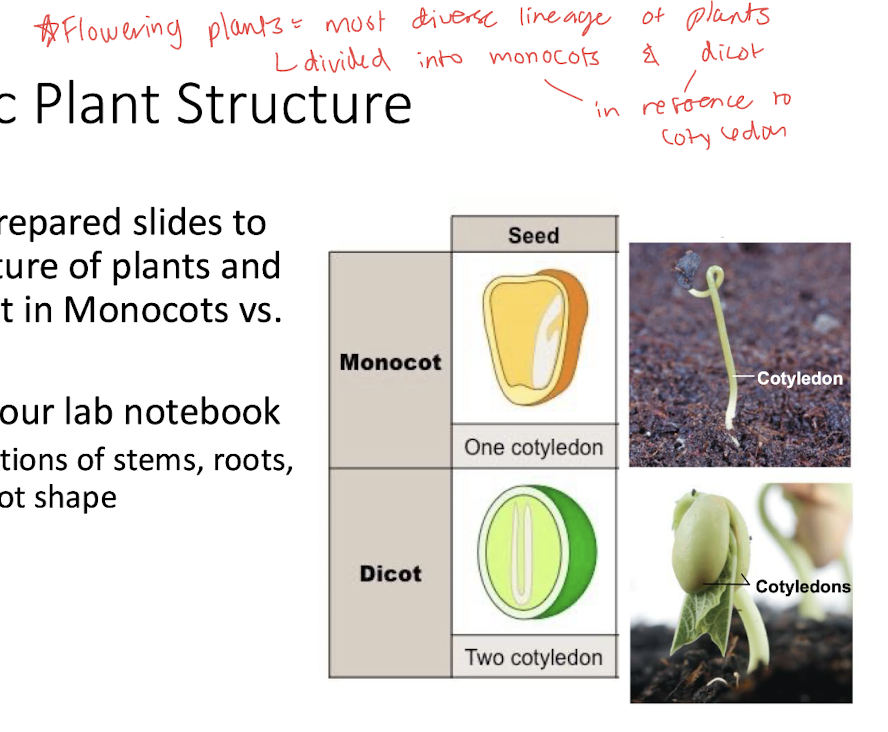
How many cotyledons do monocots have?
One
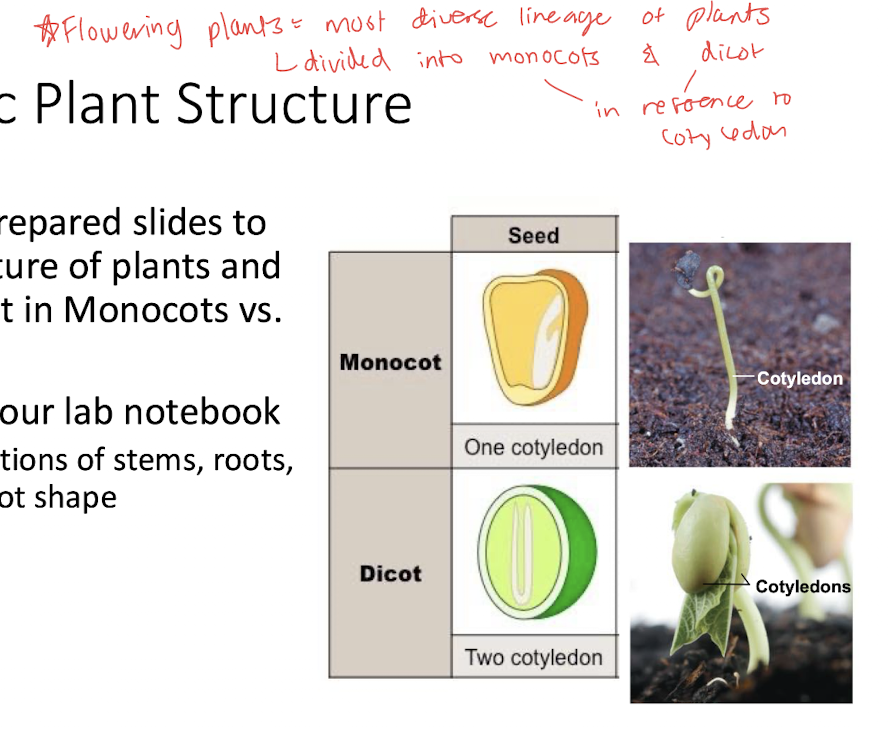
How many cotyledons do dicots have?
Two
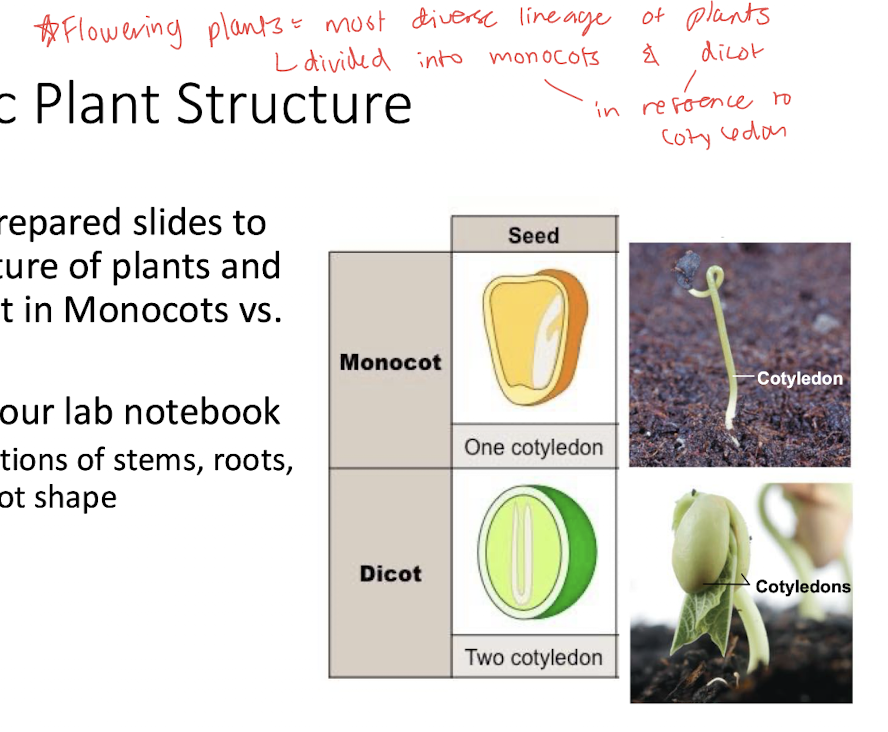
What type of leaf venation do monocots have?
Parallel veins.
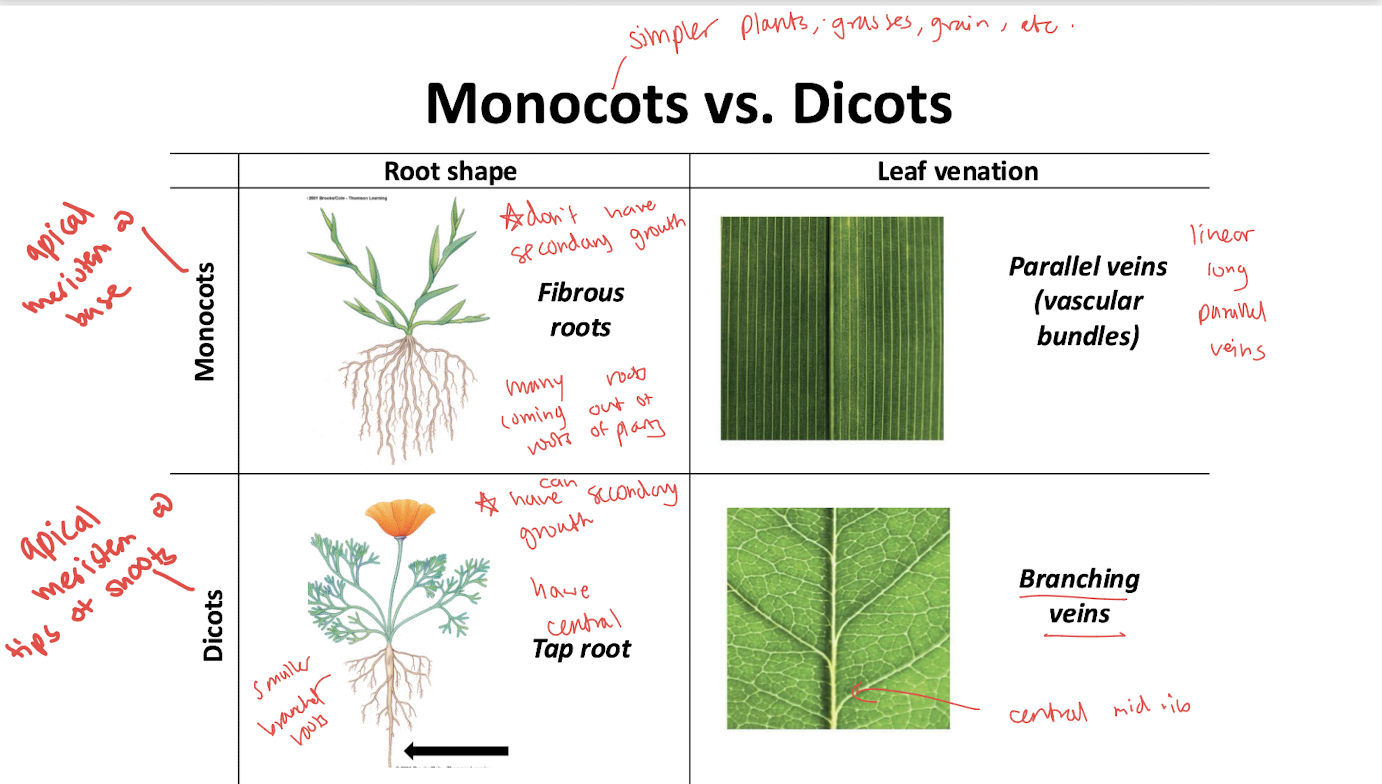
What type of leaf venation do dicots have?
Netted (branching) veins.
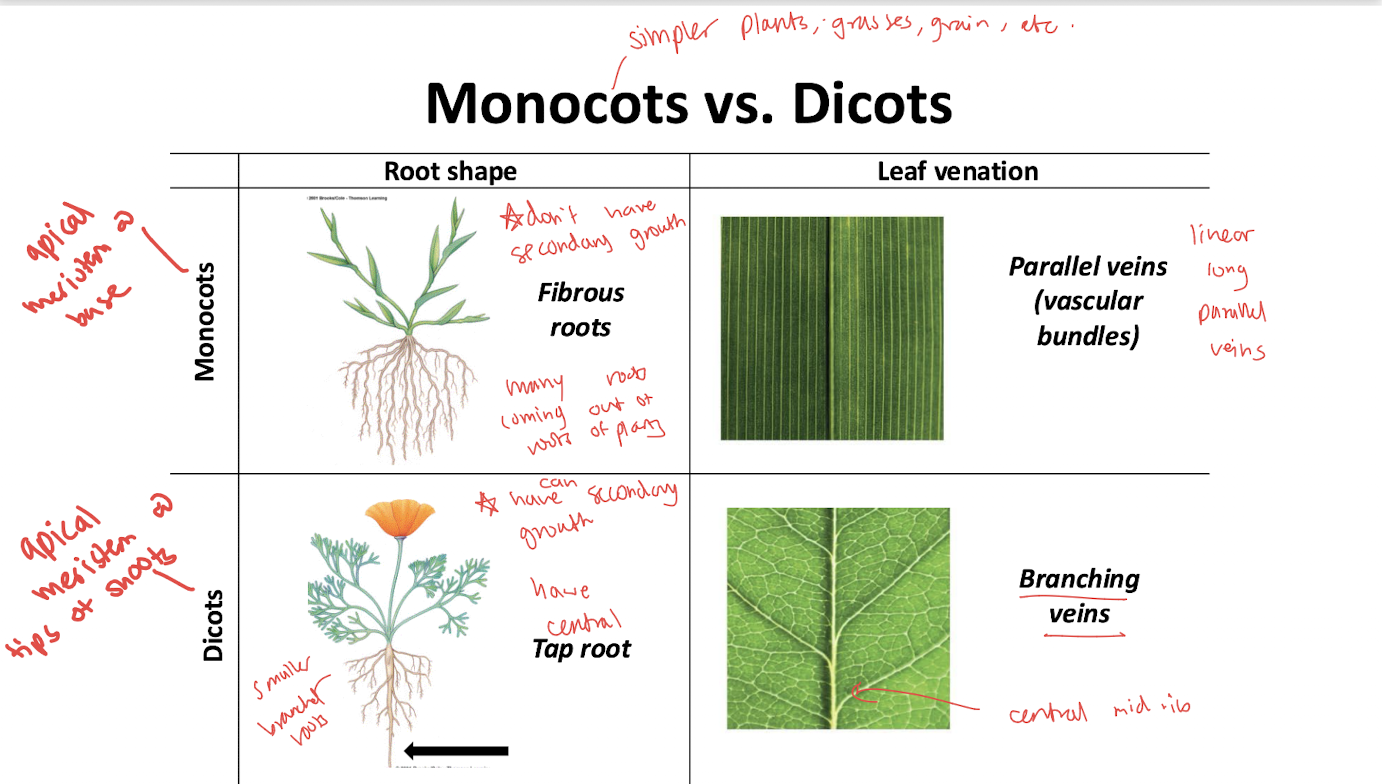
What type of root system do monocots usually have?
fibrous roots
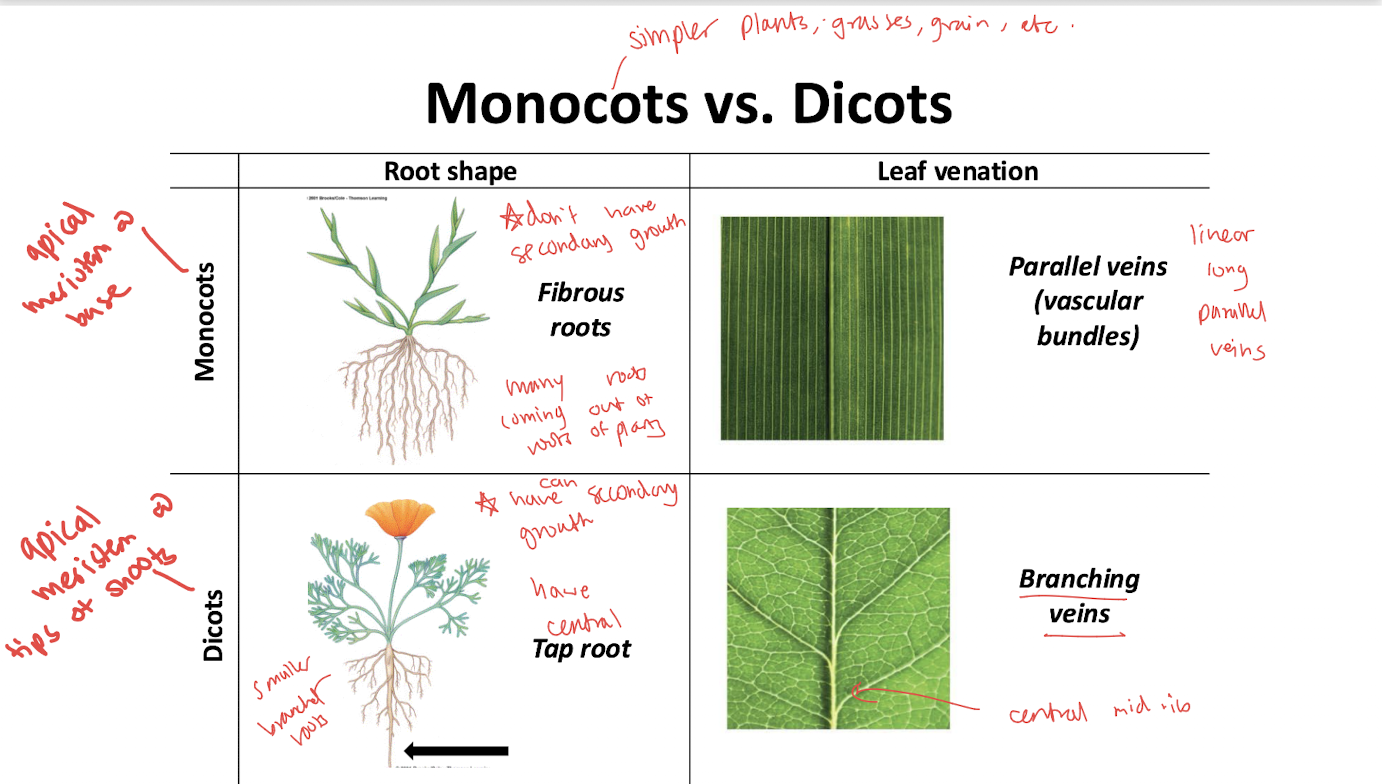
What type of root system do dicots usually have?
Taproot
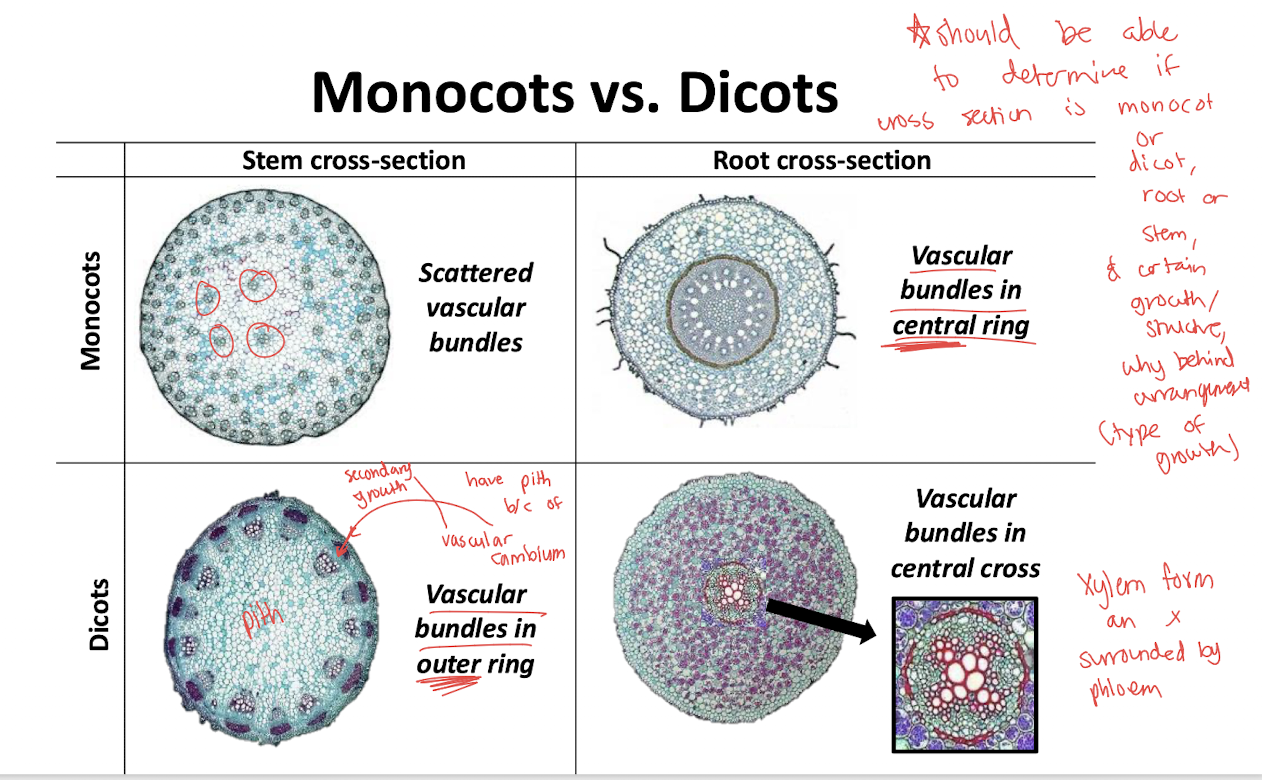
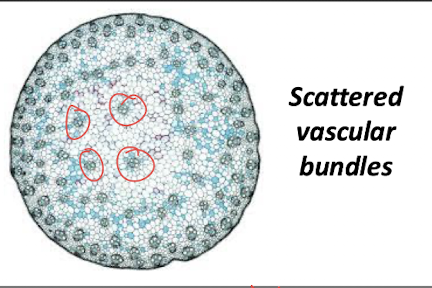
How do you identify a monocot stem cross section?
Vascular bundles scattered throughout
No ring
Little/no secondary growth
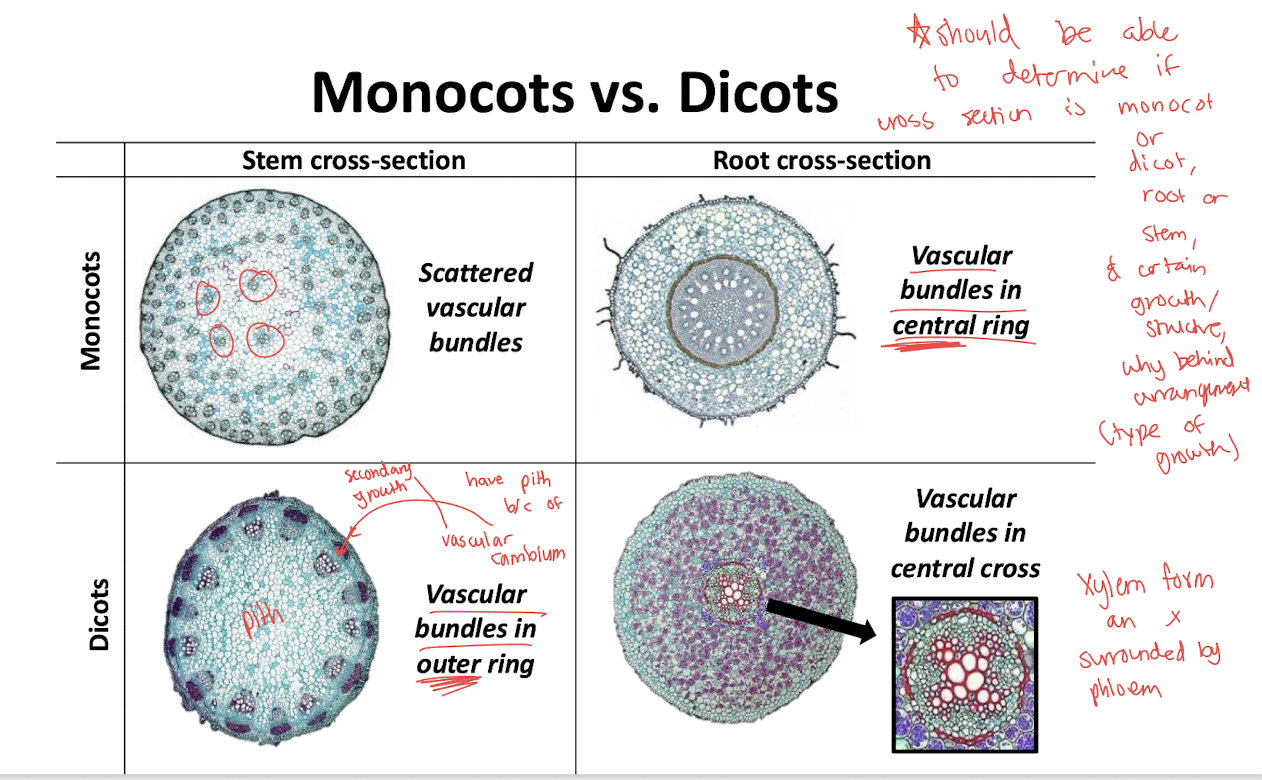
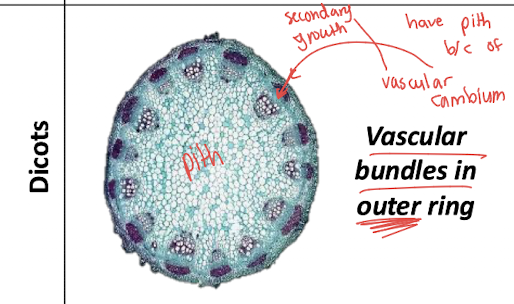
How do you identify a dicot stem cross section?
Vascular bundles arranged in a ring
Large central pith
Can undergo secondary growth
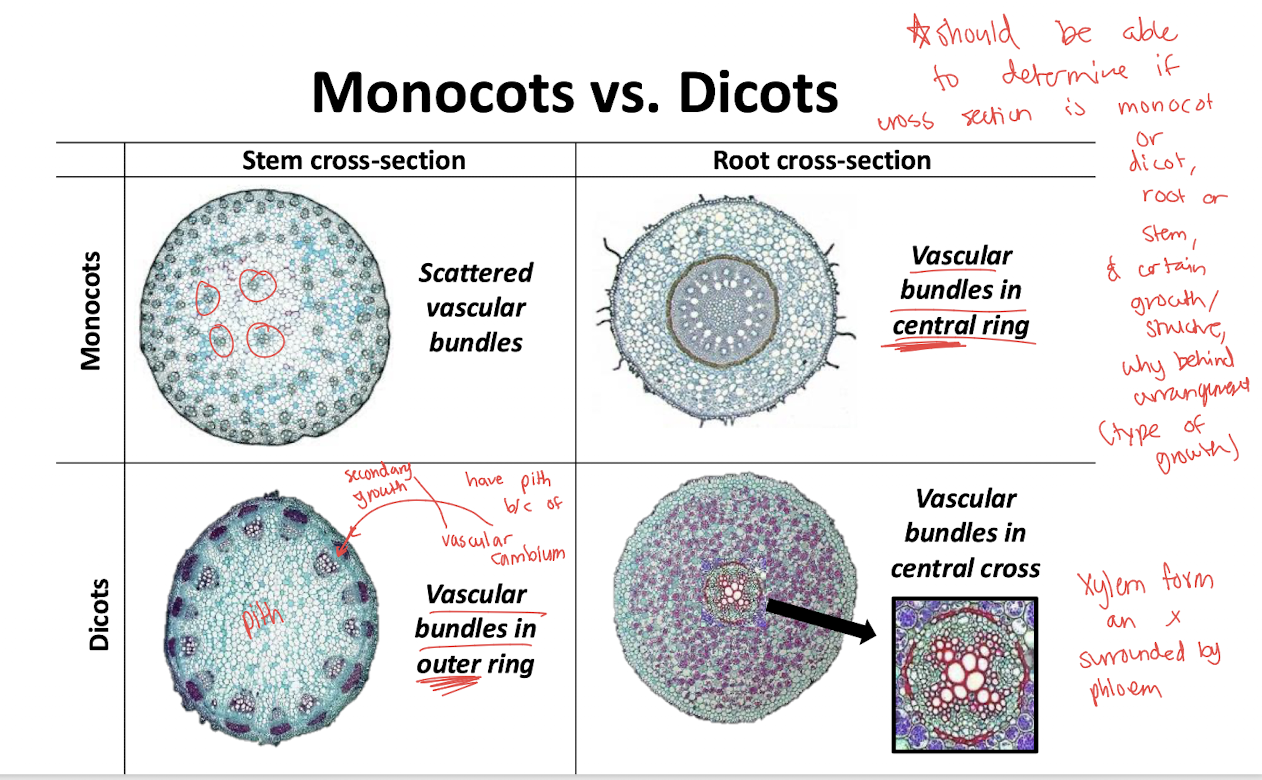
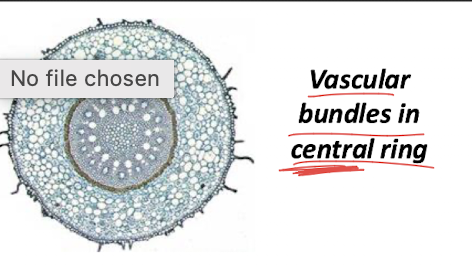
How do you identify a monocot root cross section?
Vascular tissue forms a ring around a central pith
Xylem and phloem arranged in a circle
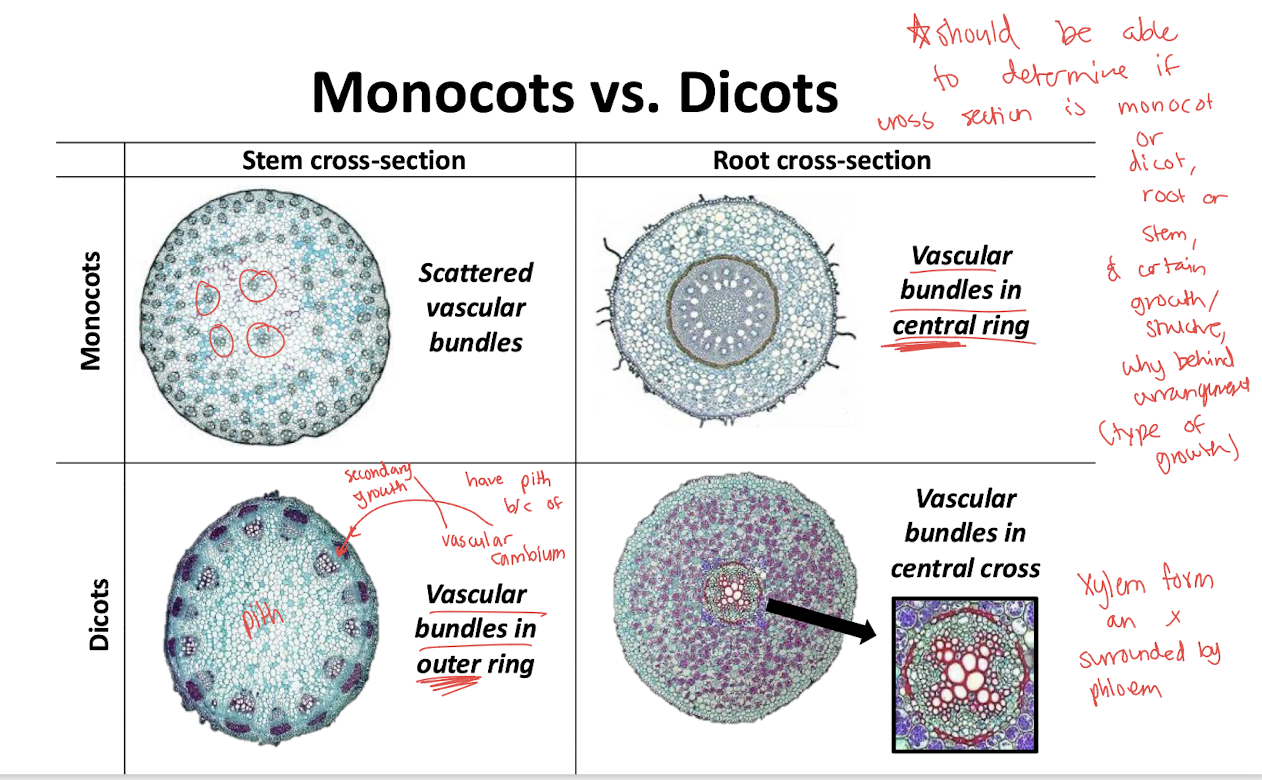
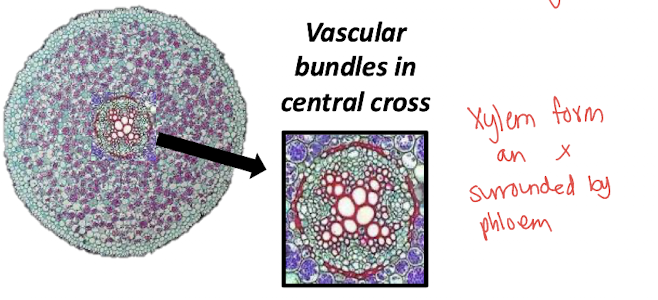
How do you identify a dicot root cross section?
Xylem forms a central X (or star)
Phloem located between the arms of the X
Little or no central pith
Why are vascular bundles scattered in monocot stems?
Monocots generally do not undergo secondary growth, so scattered bundles provide support without requiring a vascular cambium.
mechanical support without thickening
Why are vascular bundles arranged in a ring in dicot stems?
The ring allows formation of a vascular cambium, enabling secondary growth (wood and bark).
Why do dicot roots have an X-shaped xylem?
It provides efficient transport and structural support from the center of the root.
Why do monocot roots have a central pith?
The pith stores water and nutrients while the surrounding vascular ring transports water and sugars.
Monocot stem
vascular bundles scattered
Monocot root
vascular bundles in a central ring
Dicot Stem
vascular bundles in outer ring
Dicot Root
vascular bundles in central cross
Which plants usually undergo secondary growth?
Dicots
Which plants generally do not undergo secondary growth?
Monocots
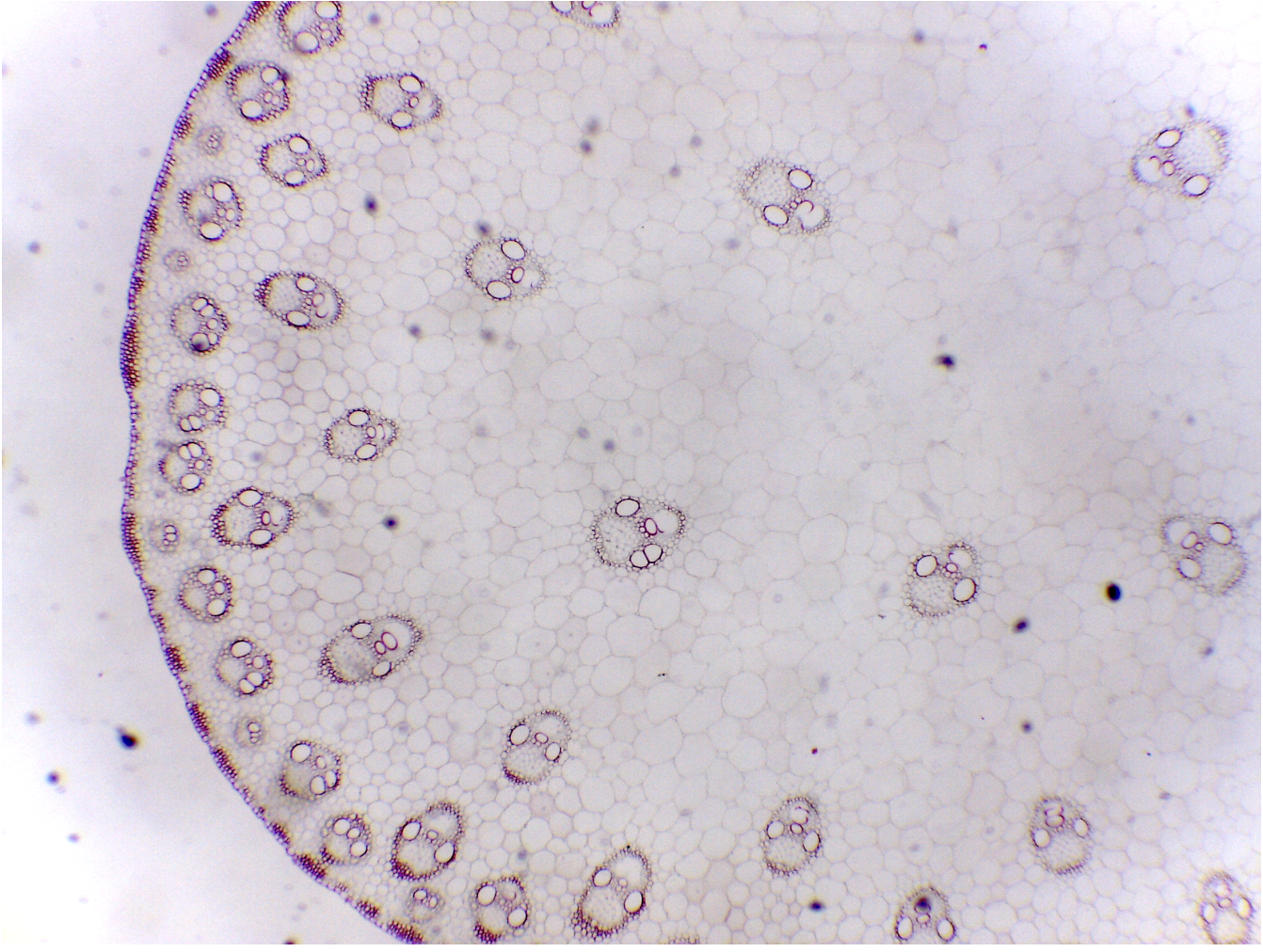
See Image: A cross section has scattered vascular bundles. What is it?
this is a monocot stem
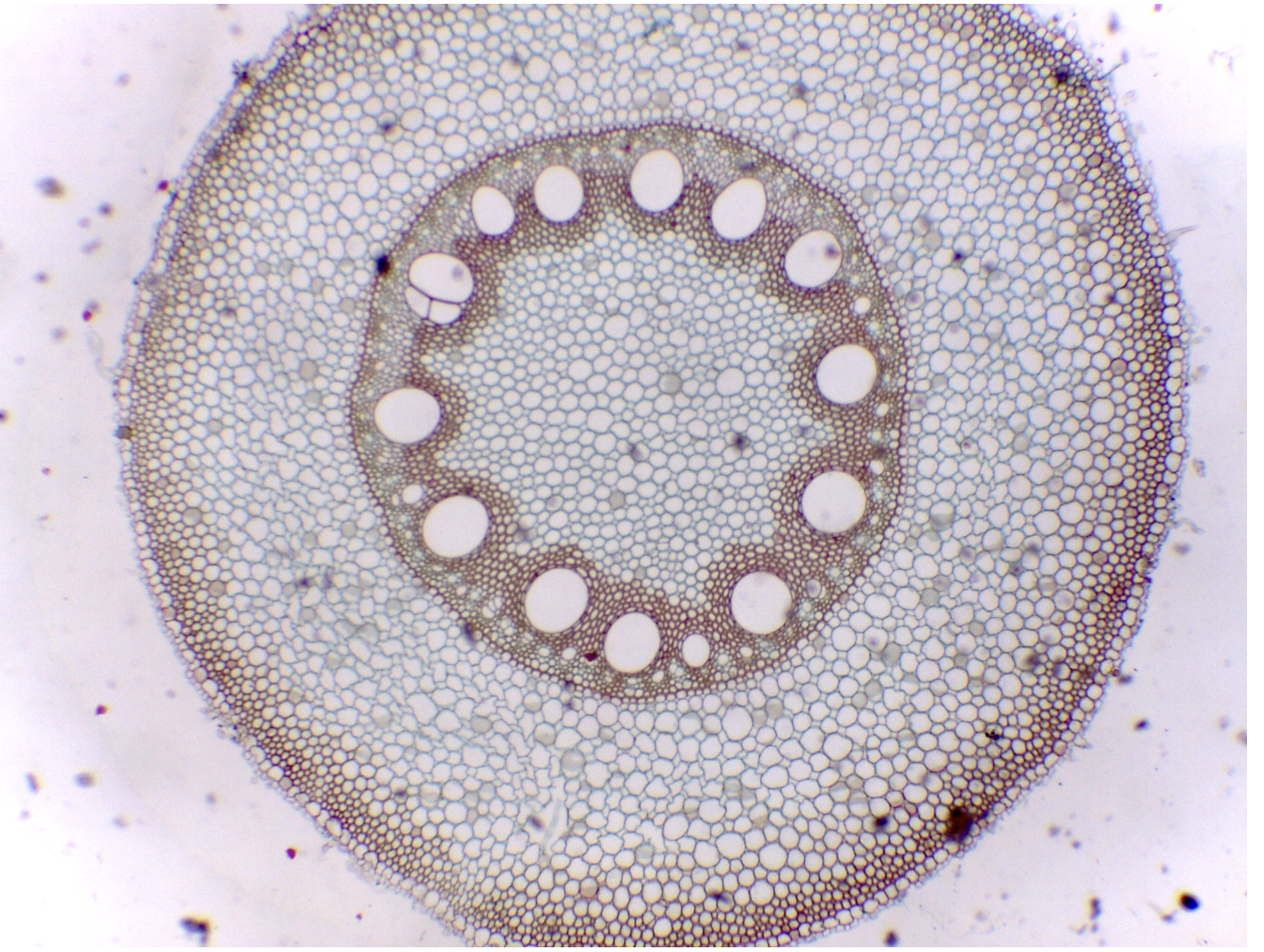
See Image: A cross section has vascular tissue surrounding a central pith. What is it?
This is a monocot root
CENTRAL RING
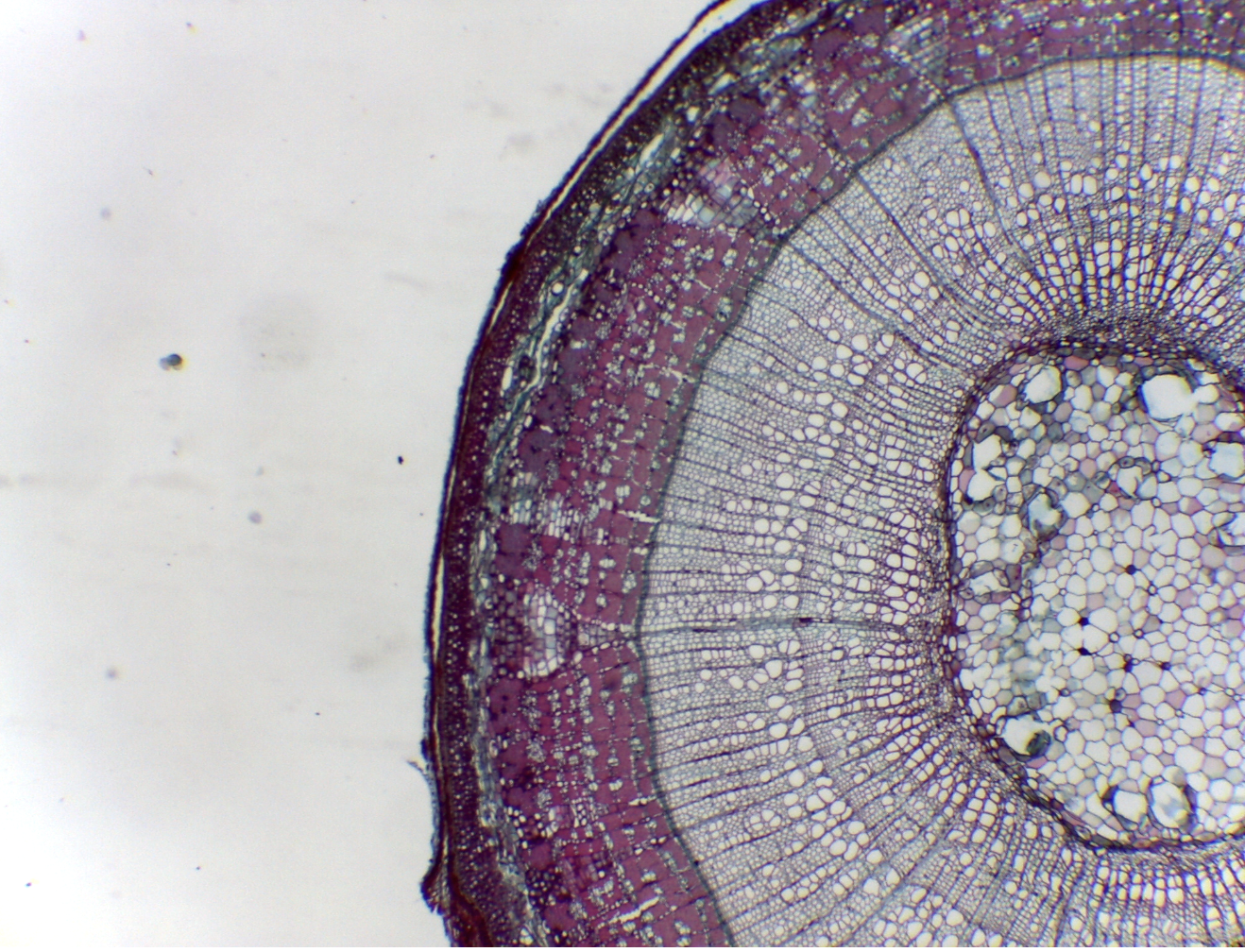
See Image: A cross section has vascular bundles arranged in a ring around a pith. What is it?
This is a dicot stem
OUTER ring
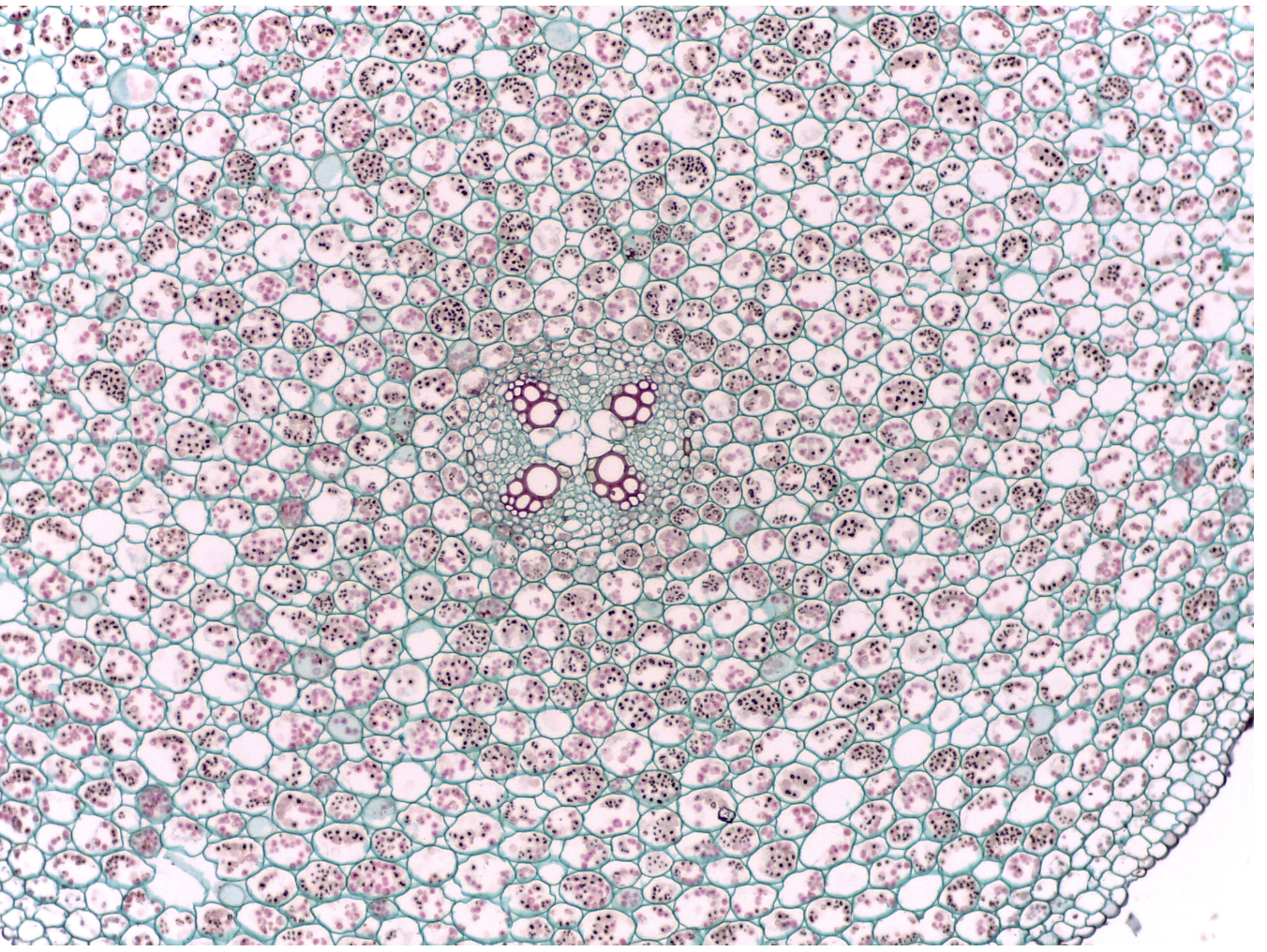
See Image: A cross section has an X-shaped xylem. What is it?
This is a dicot root
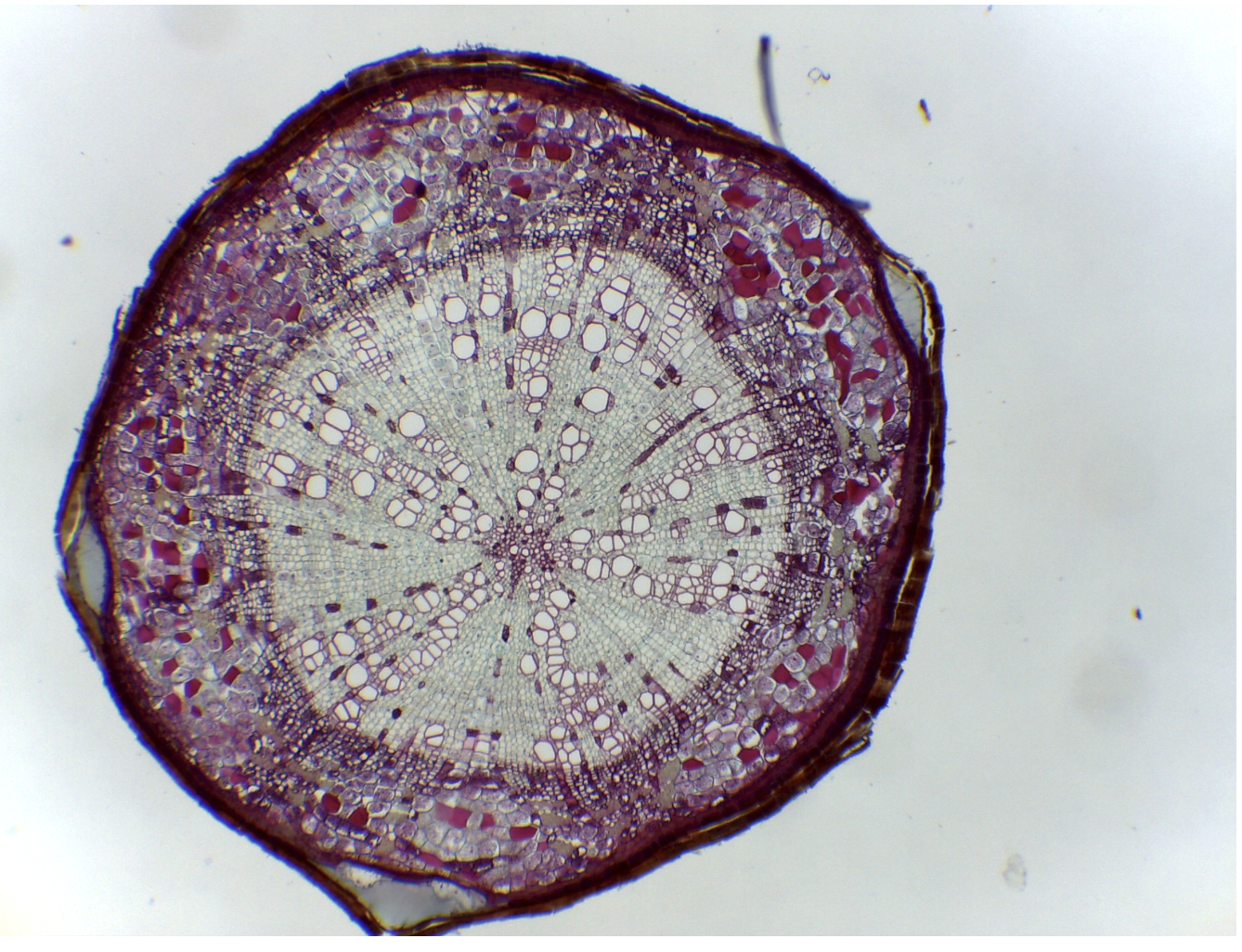
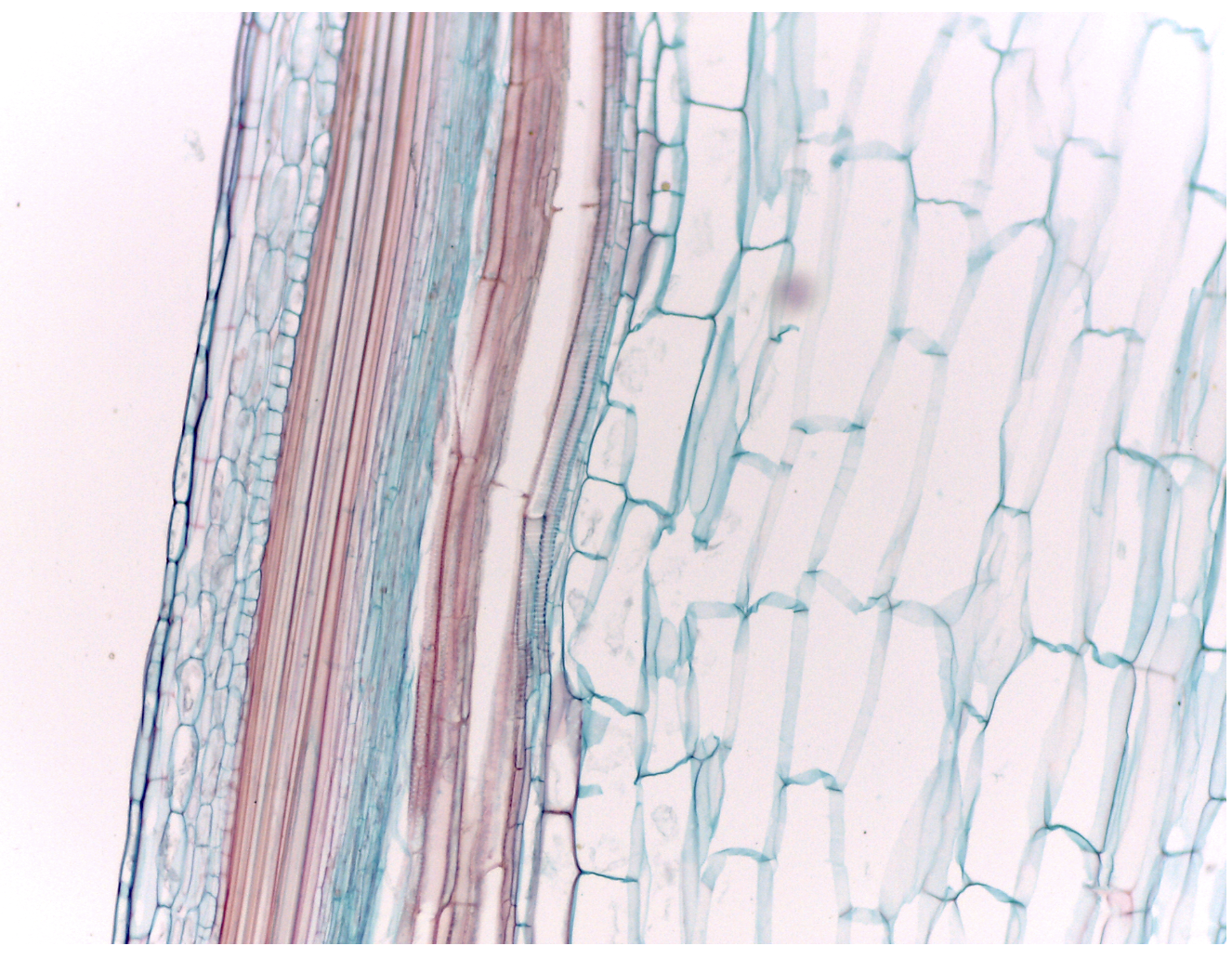
This is
a dicot stem
A plant has fibrous roots and parallel veins. Monocot or dicot?
Monocot
A plant has a taproot and branching veins. Monocot or dicot?
dicot
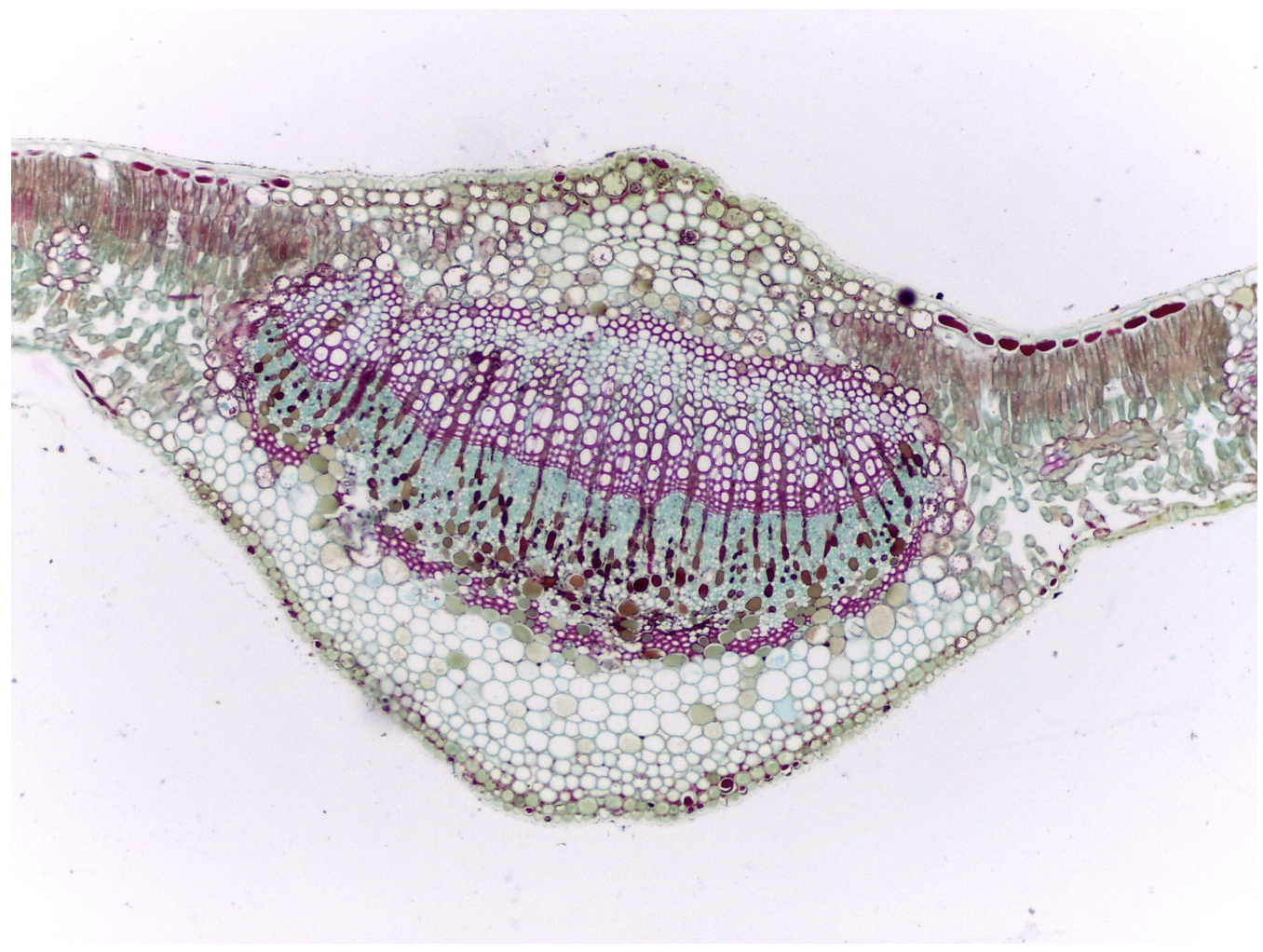
This is a
dicot leaf
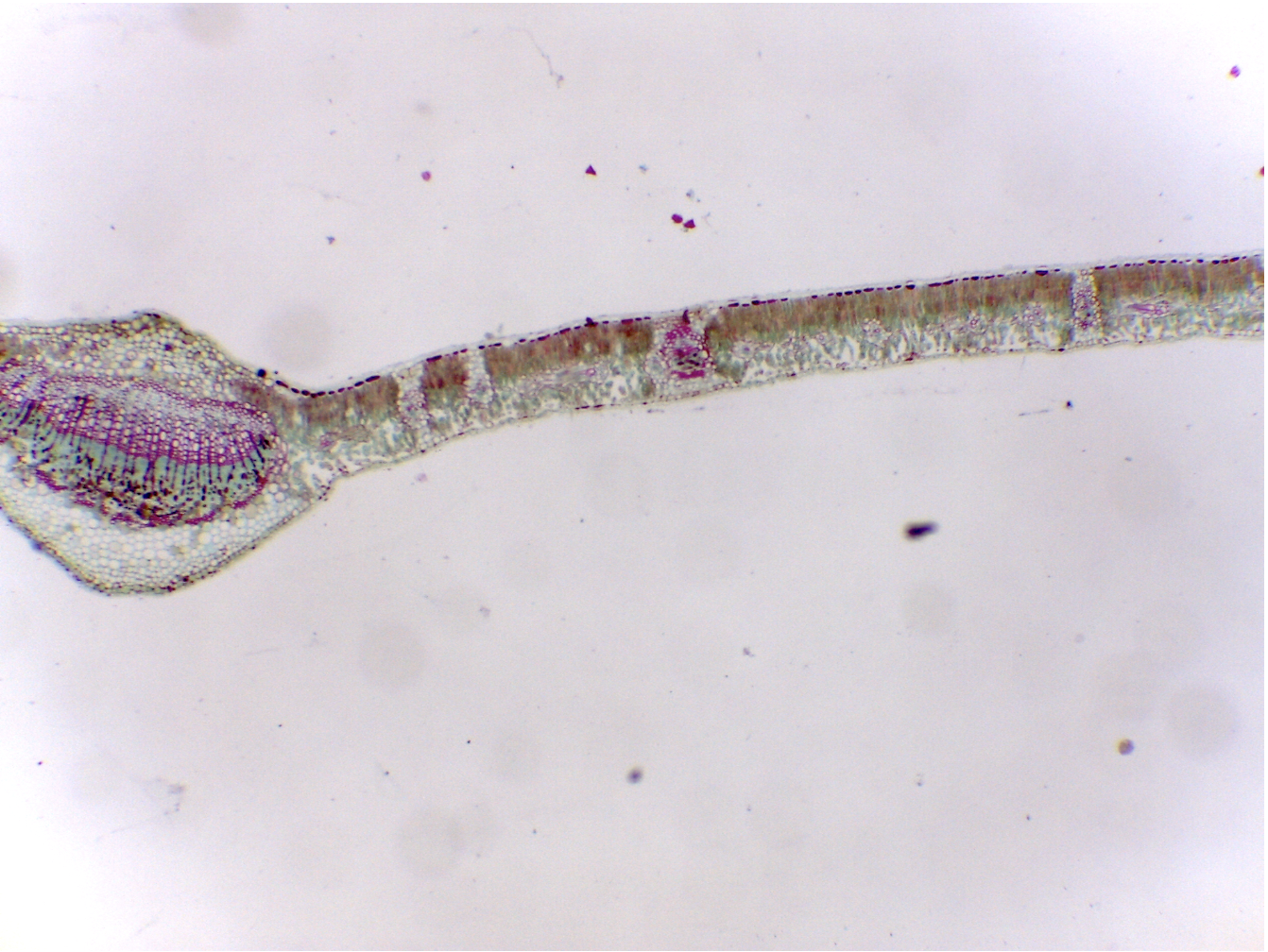
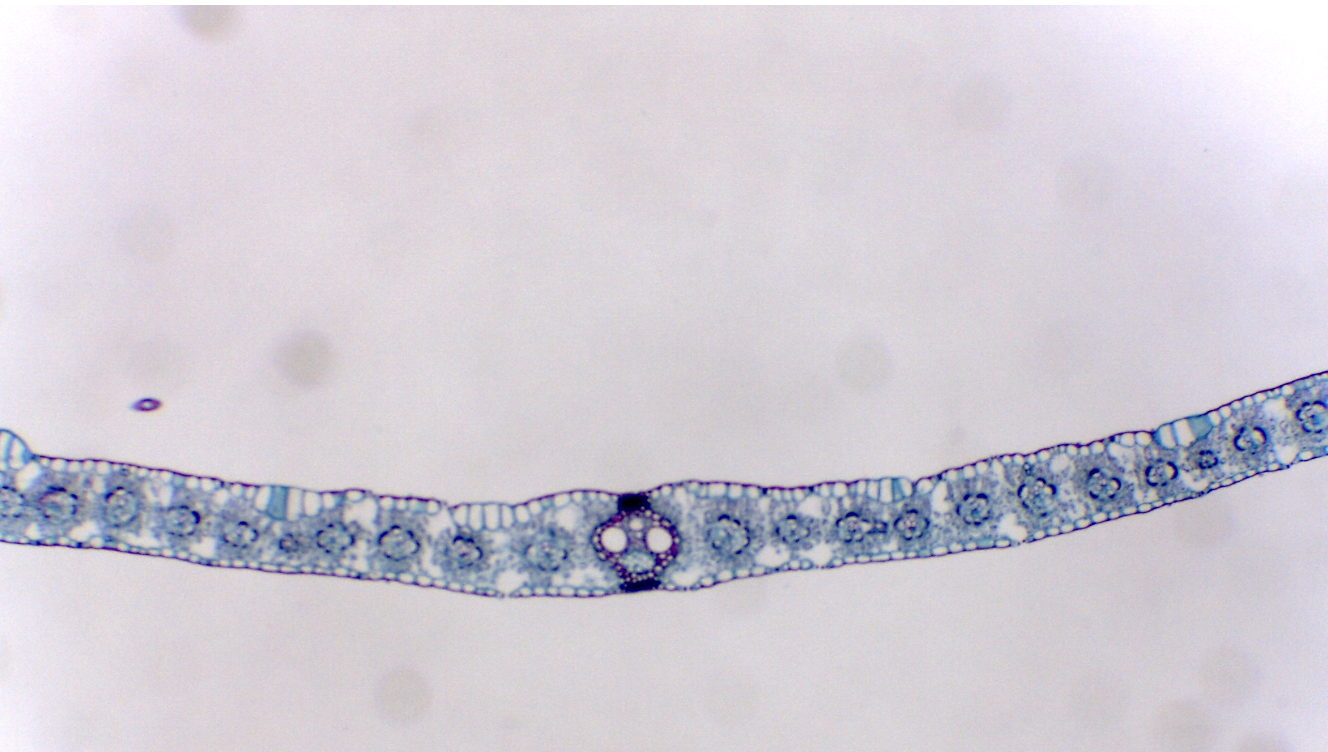
This is a
monocot leaf
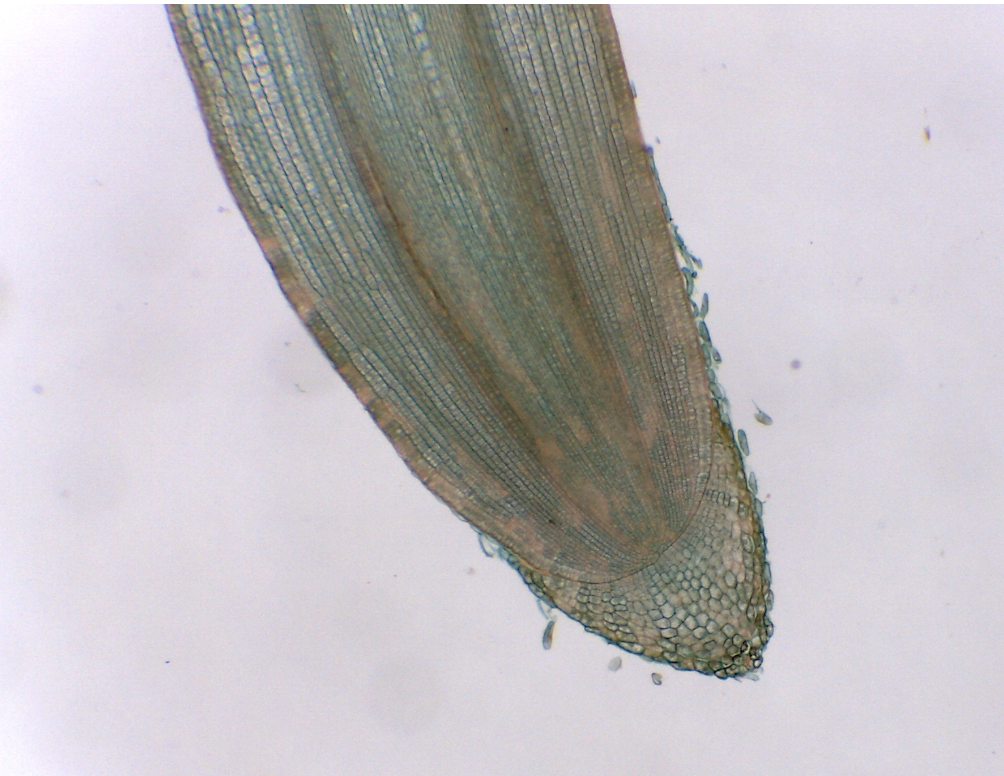
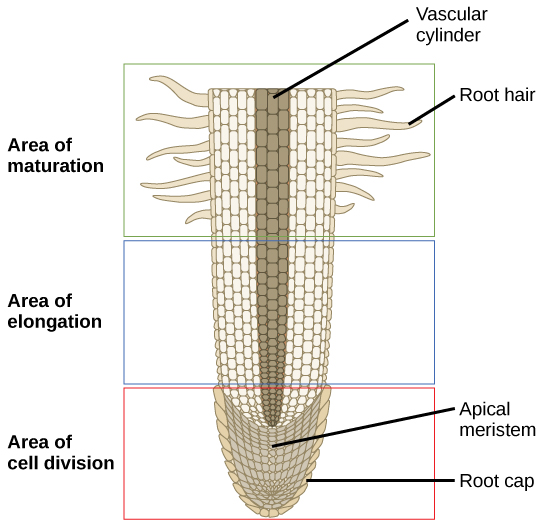
This is
monocot root tip
What is an eco-physiological adaptation?
A structural or physiological trait that helps a plant survive in its environment.
Why do desert plants often have reduced leaf surface area?
To reduce water loss through transpiration.
Why do some desert plants have waxy leaf coatings?
To reduce water loss and reflect sunlight.
xerophytes
Why do rainforest plants often have large leaves?
To maximize light capture in shaded environments.
Why are carnivorous plants found in nutrient-poor soils?
They obtain nutrients like nitrogen and phosphorus from insects instead of the soil.
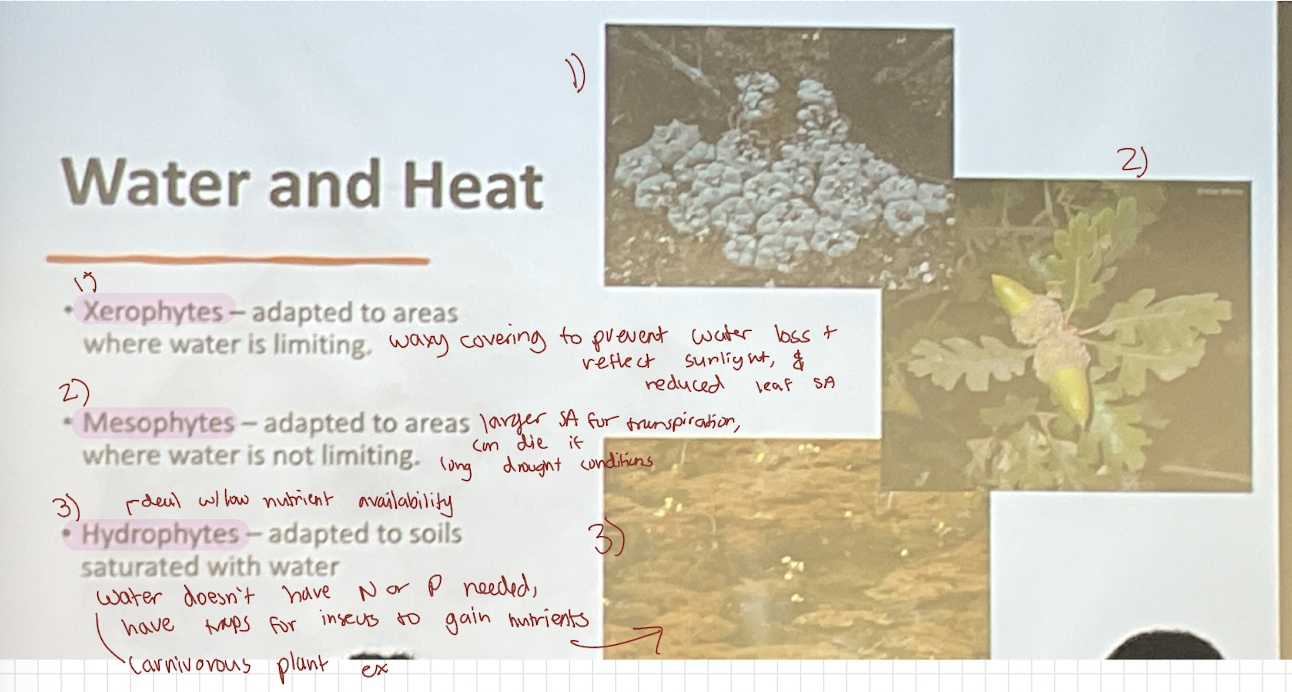
Xerophytes
adapted to areas where water is limiting
see image
waxy coating to prevent water loss + reflect sunlight & reduced leaf SA
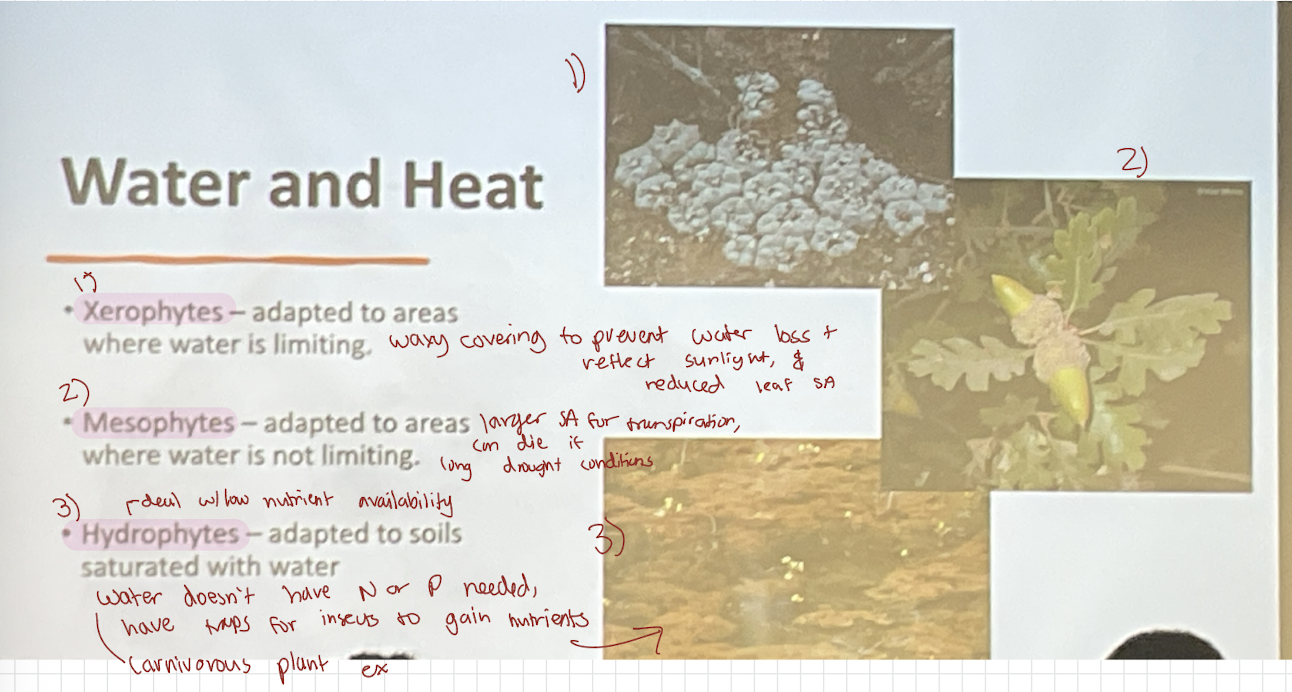
Mesophytes
adapted to areas where water is not limiting
see image
larger SA
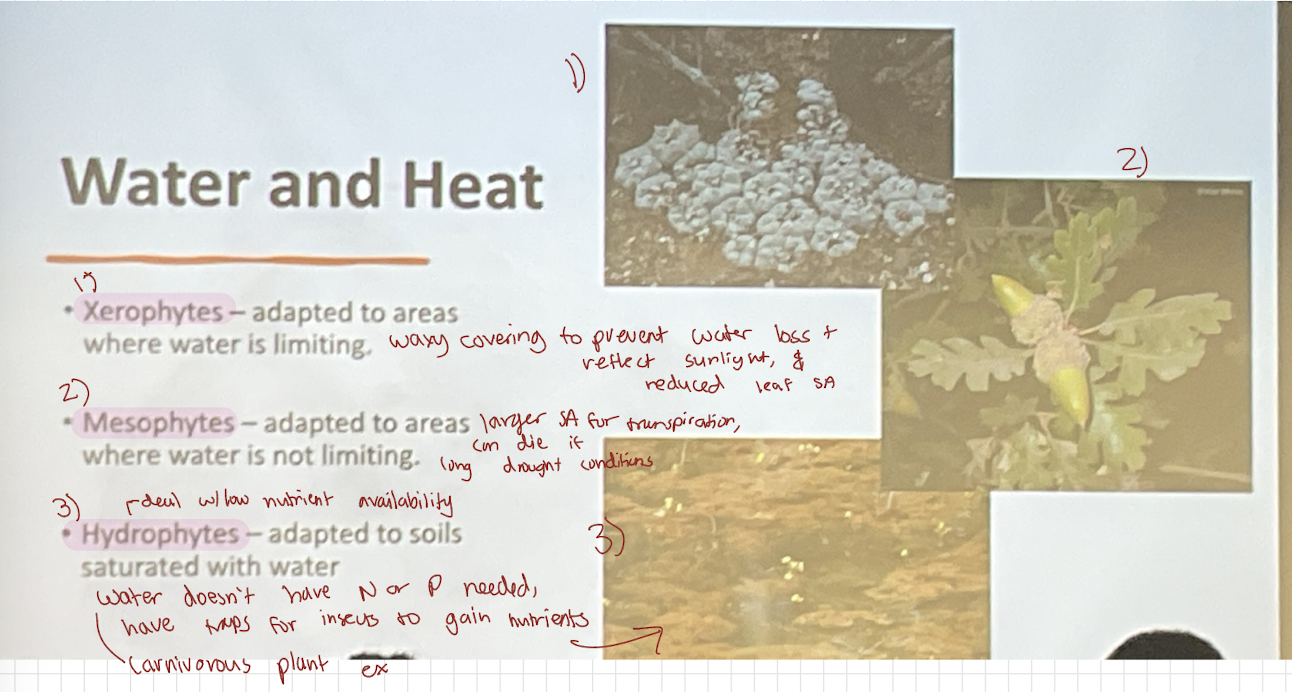
Hydrophytes
adapted to soils saturated with water
see image
water doesn’t have N or P needed
traps for insects
Why are monocots typically more successful as weeds?
Fibrous root systems quickly absorb water and nutrients: widespread fibrous roots that tightly bind to the soil. This makes them incredibly difficult to fully dig up or remove without leaving fragments that can resprout
Basal Growth Meristems: The growing points (meristems) on monocots are located at the base of the plant rather than the tips. This means if they are mowed, grazed, or broken, they can quickly regenerate from the bottom without dying
They do not invest energy in secondary growth (wood), allowing faster growth.
Monocot memory trick
Monocots = fast-growing grasses = common weeds.
What is tree bark composed of?
The bark consists of:
Inner bark (secondary phloem): transports sugars.
Outer bark (cork): dead protective tissue that reduces water loss and protects against injury, insects, and pathogens.
cork cambium too (produces cork)
What are the functions of bark?
Protects the tree from physical damage.
Prevents water loss.
Protects against pathogens and insects.
Inner bark transports sugars throughout the tree.
What is the vascular cambium?
A lateral meristem that produces:
Secondary xylem (wood) toward the inside.
Secondary phloem (inner bark) toward the outside.
Which plants have a vascular cambium?
Most dicots (and gymnosperms), but not most monocots.
What is secondary growth?
Growth that increases the diameter (thickness) of stems and roots through the activity of the vascular cambium.
Why can removing the bark and vascular cambium in a complete ring (girdling) kill a tree?
Removing the bark and vascular cambium:
Stops the phloem from transporting sugars from the leaves to the roots.
Prevents the vascular cambium from producing new xylem and phloem.
The roots eventually starve and die, followed by the rest of the tree.
Why doesn't water transport immediately stop when a tree is girdled?
The xylem is still intact initially, so water can still move upward. The tree dies because sugars can no longer move downward to feed the roots.
Why do dicots undergo secondary growth but monocots usually do not?
Dicots have a vascular cambium, which produces secondary xylem and phloem. Most monocots lack a vascular cambium.
Why are vascular bundles arranged in a ring in dicot stems?
The ring allows the vascular cambium to form a continuous cylinder for secondary growth.
Why are vascular bundles scattered in monocot stems?
Scattered bundles mean there is no continuous vascular cambium, so most monocots cannot undergo secondary growth.