CHAPTER 4: Birth Process and Development in the First Three Years
 Call Kai
 Learn
Learn Practice Test
 Spaced Repetition
 Match
Match Flashcards
 Knowt Play
1/41

There's no tags or description
Looks like no tags are added yet.
Name | Mastery | Learn | Test | Matching | Spaced | Call with Kai | Chat |
|---|
No analytics yet
Send a link to your students to track their progress
42 Terms
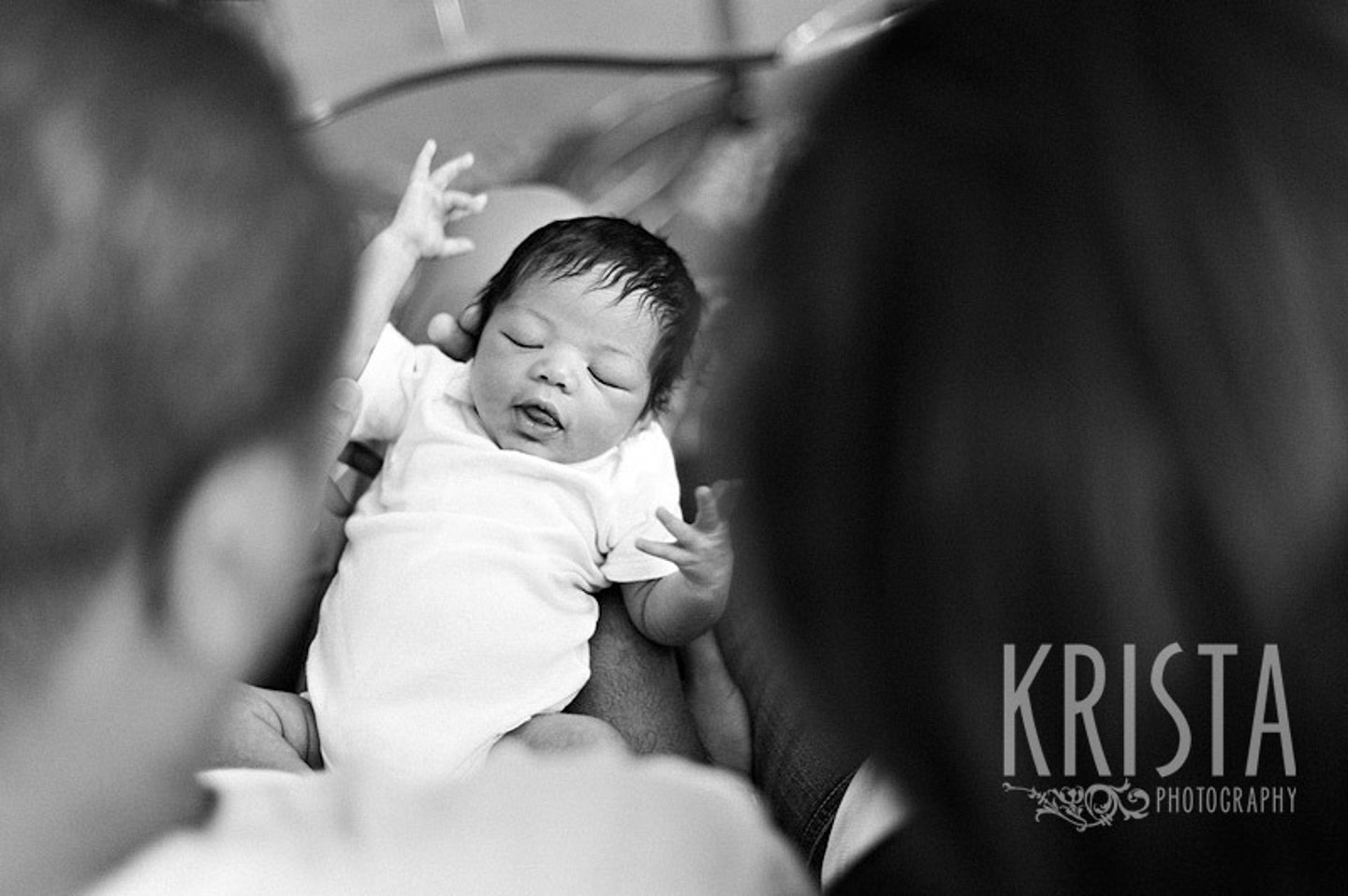
Neonatal Period
- First four weeks of life, a time of transition from intrauterine dependency to independent existence.
- lose as much as 10 percent of their body
weight because of fluids.
- This temporary molding occurs due to infant's skull bones not yet fused. (They will be completely joined for 18 mos)
Body Systems
Before birth:
- Blood circulation
- Respiration
- Nourishment
- Elimination of waste
- Temperature regulation
After birth
- All baby's systems & functions must operate.
- Occurs during the first four to six hours of delivery.
Blood pressure
does not stabilize until about ten days after delivery.

anoxia
- (lack of oxygen)
- If breathing has not begun within about five minutes, the baby may suffer permanent brain injury
hypoxia
- (reduced oxygen supply)
- If breathing has not begun within about five minutes, the baby may suffer permanent brain injury
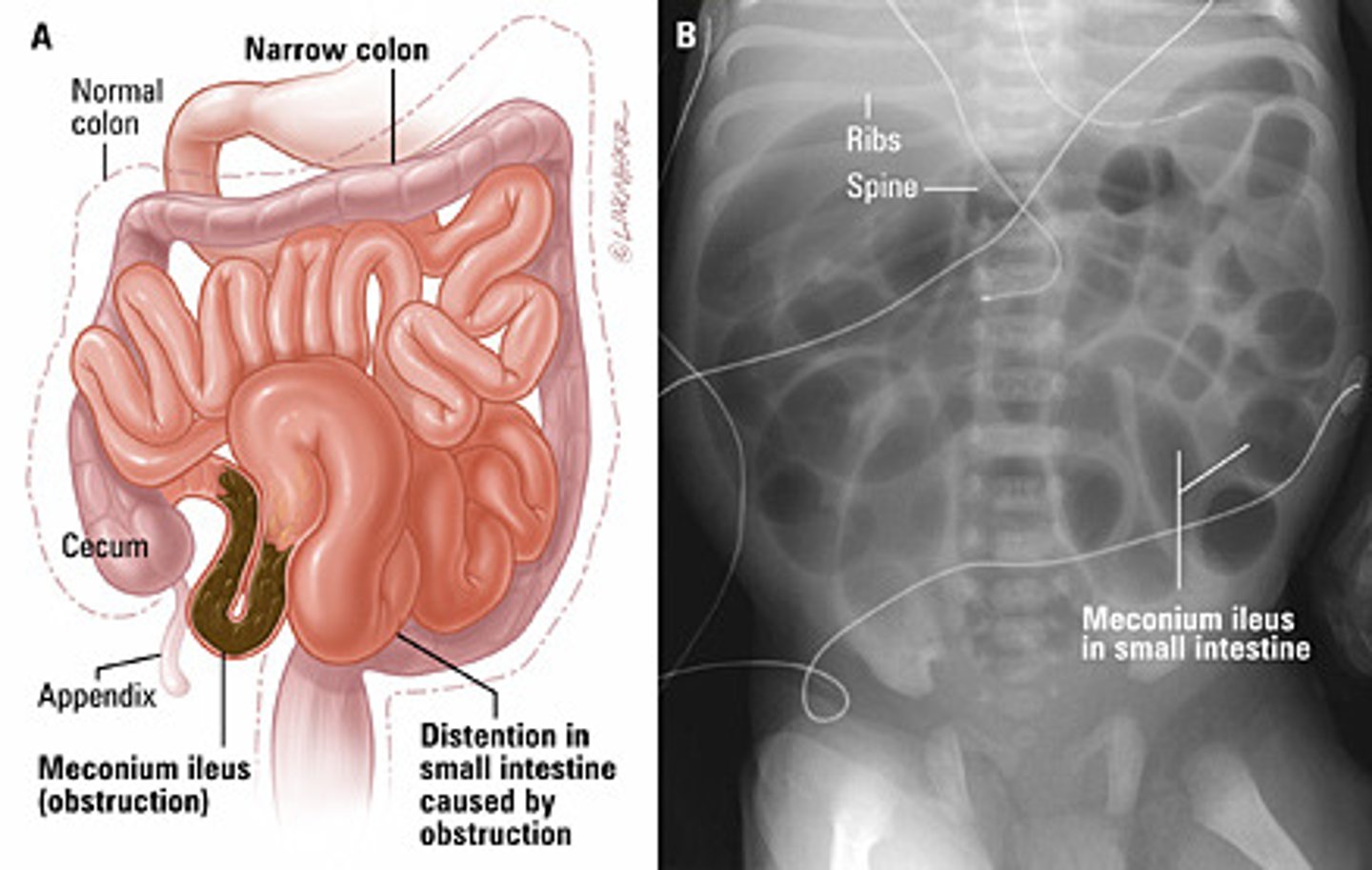
Meconium
a stringy, greenish-black waste matter,formed in the fetal intestinal fact.
- (first poop).
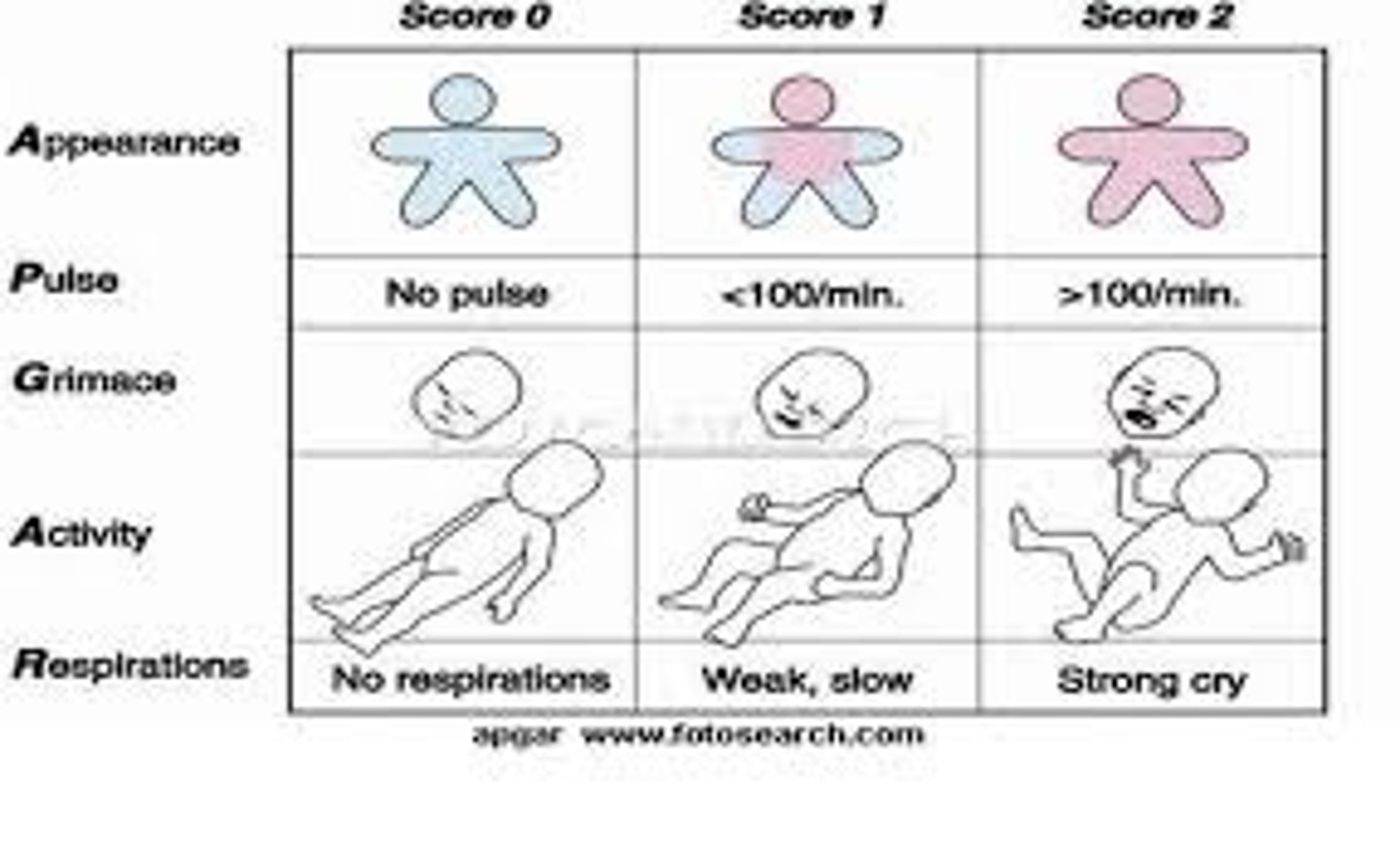
APGAR Scale
- standard measurement of a newborn's condition.
- It assesses appearance, pulse, grimace, activity, and respiration.
- Newborn is rated for a maximum of 10.
- Below 7 (needs help establishing breathing)
- Below 4 (needs immediate lifesaving treatment)
Brazelton Neonatal Behavioral Assessment
Scale (NBAS)
- Assesses motor organization
- Measure neonate's responses to the environment
- NBAS takes about 30 minutes
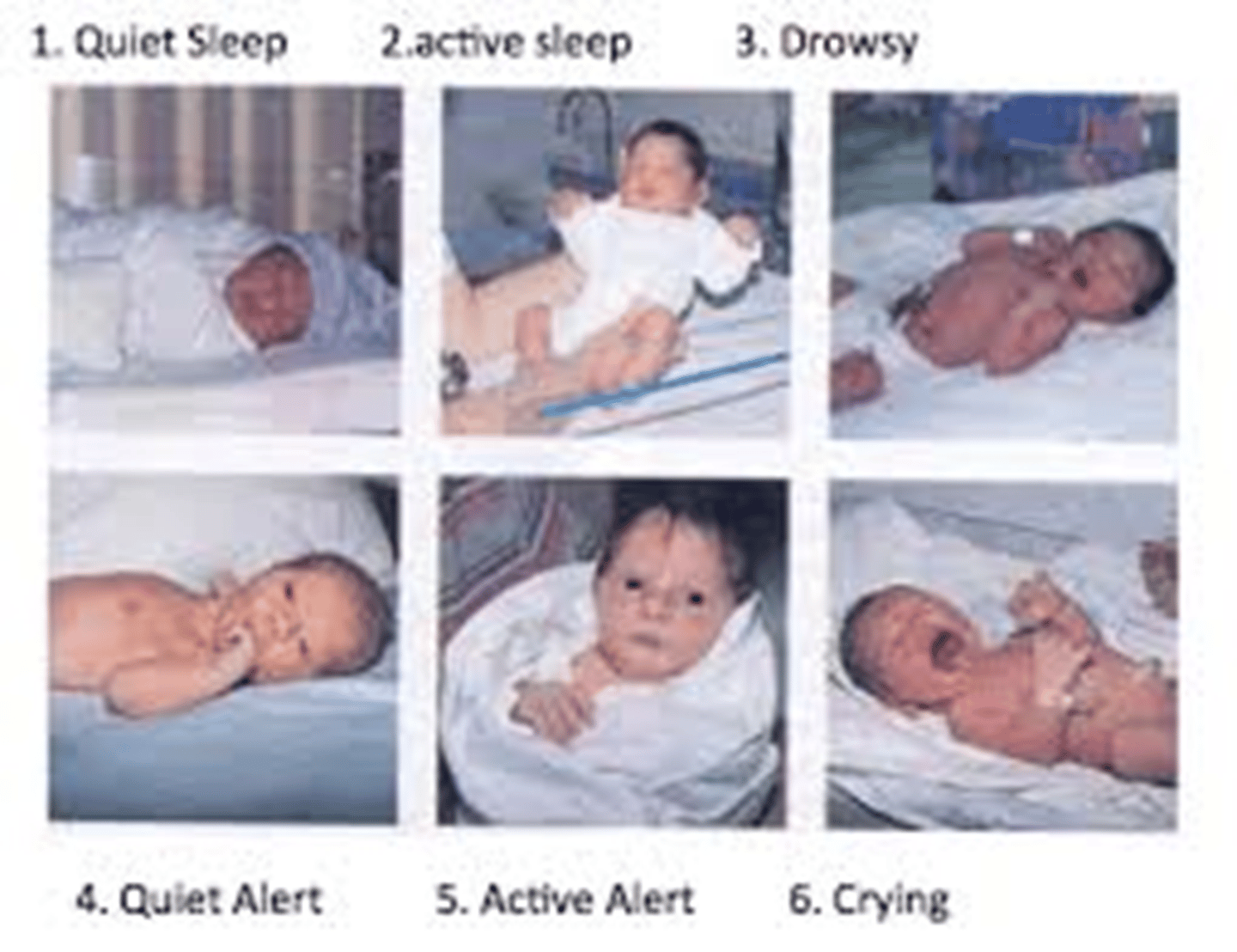
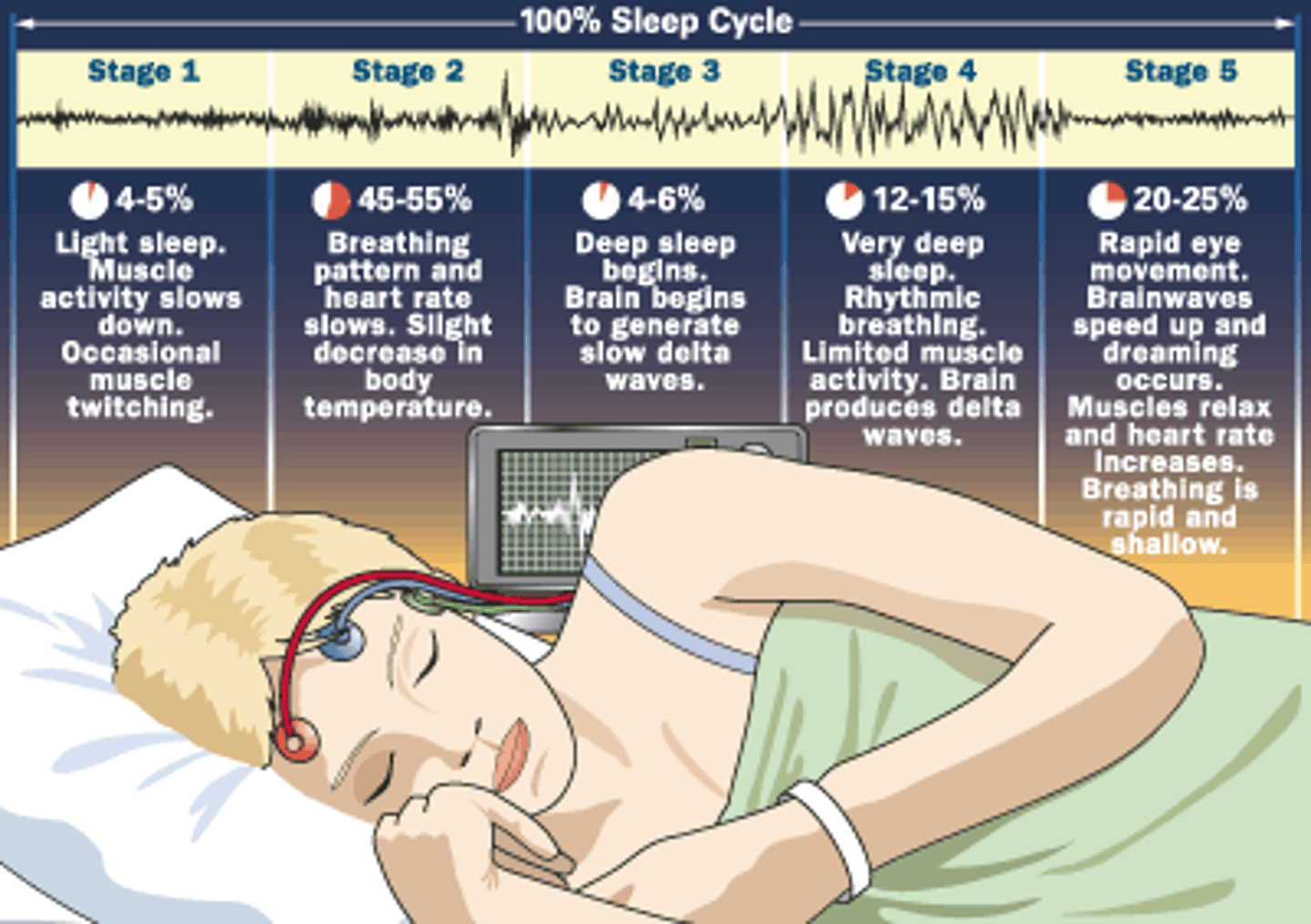
Active sleep
- equivalent of rapid eye movement (REM) sleep
- declines by age 3 and continues to decrease steadily throughout life
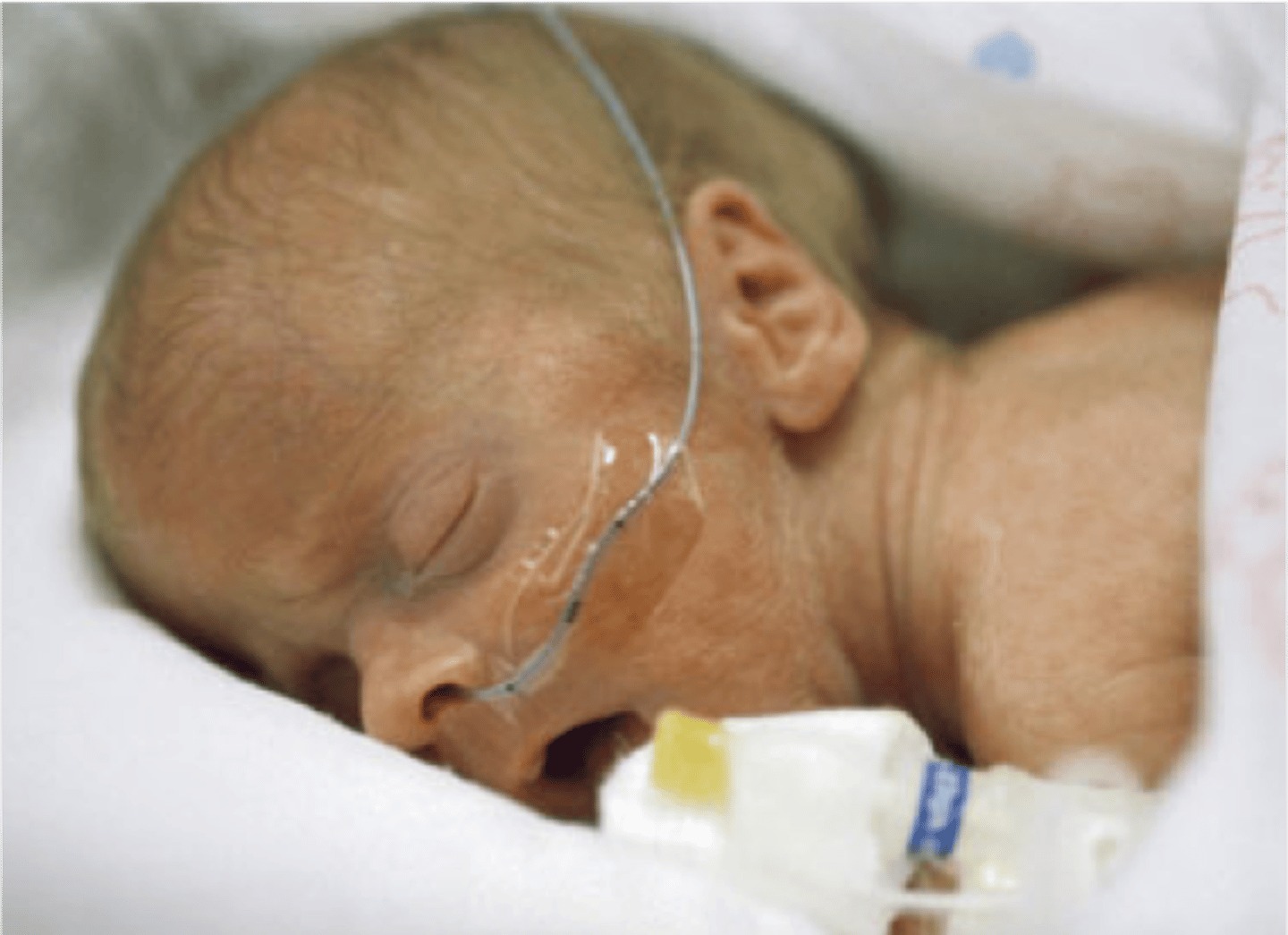
Preterm
- infants born before completing 37th week of gestation.
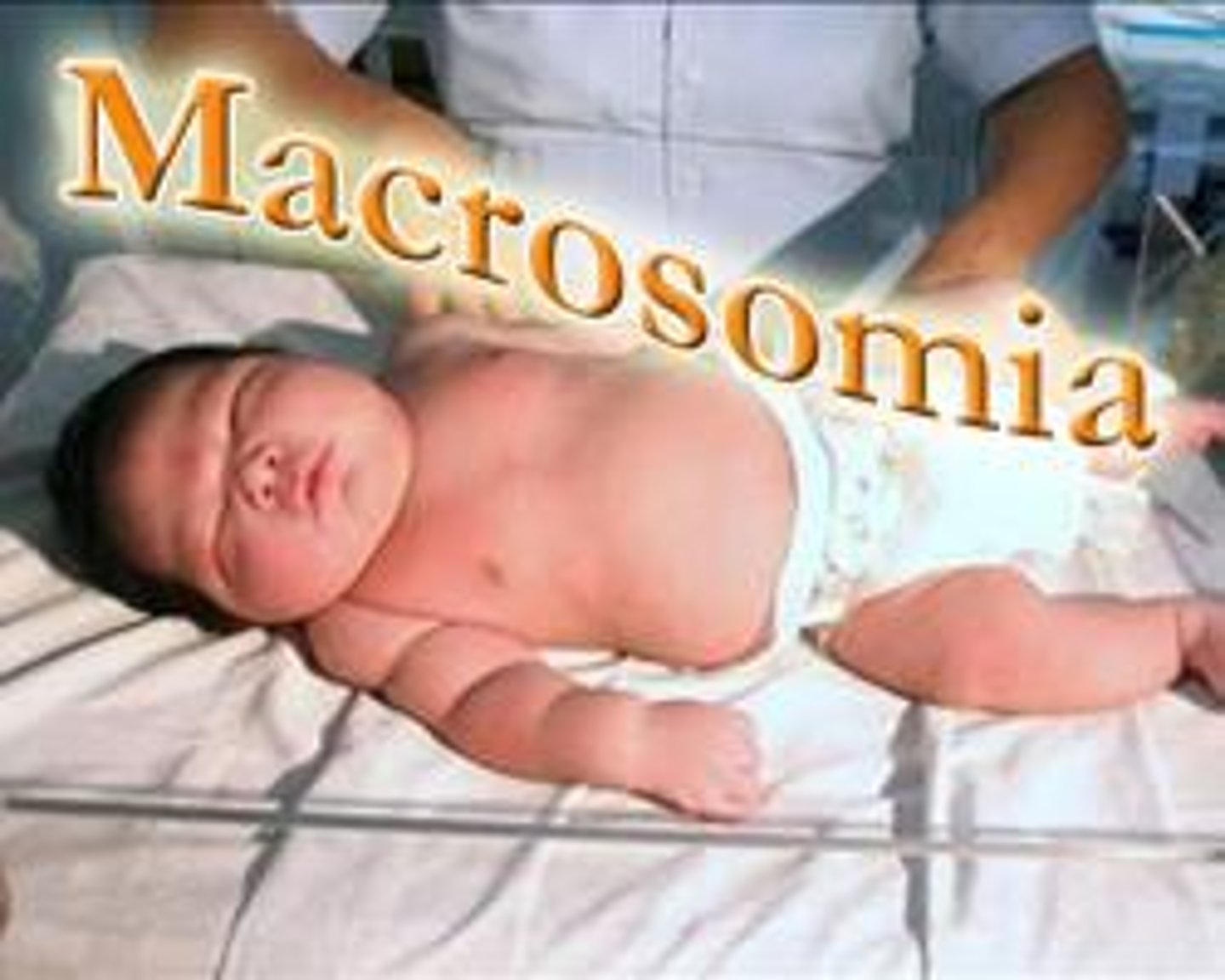
Small-for-date infants
- whose birth weight is less than of 90 percent of babies (result of slow fetal growth)
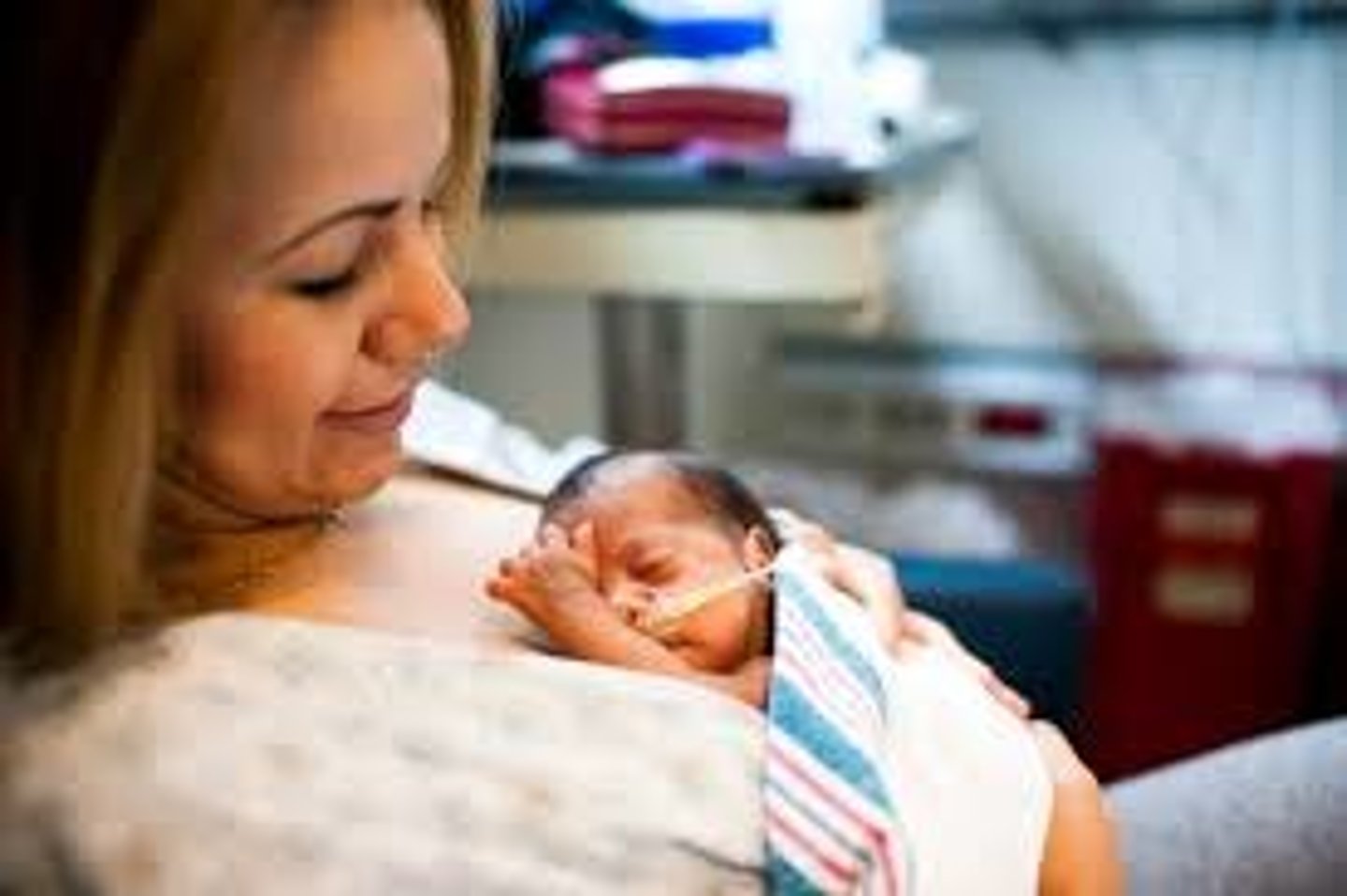
Kangaroo care
- method of skin-to-skin contact w/c a newborn is laid face down b/n the mother's breasts for an hour or so at a time after birth.
Postmaturity
Referring to a fetus not yet born as of 2 weeks after the due date or 42 weeks after the mother's last menstrual period.
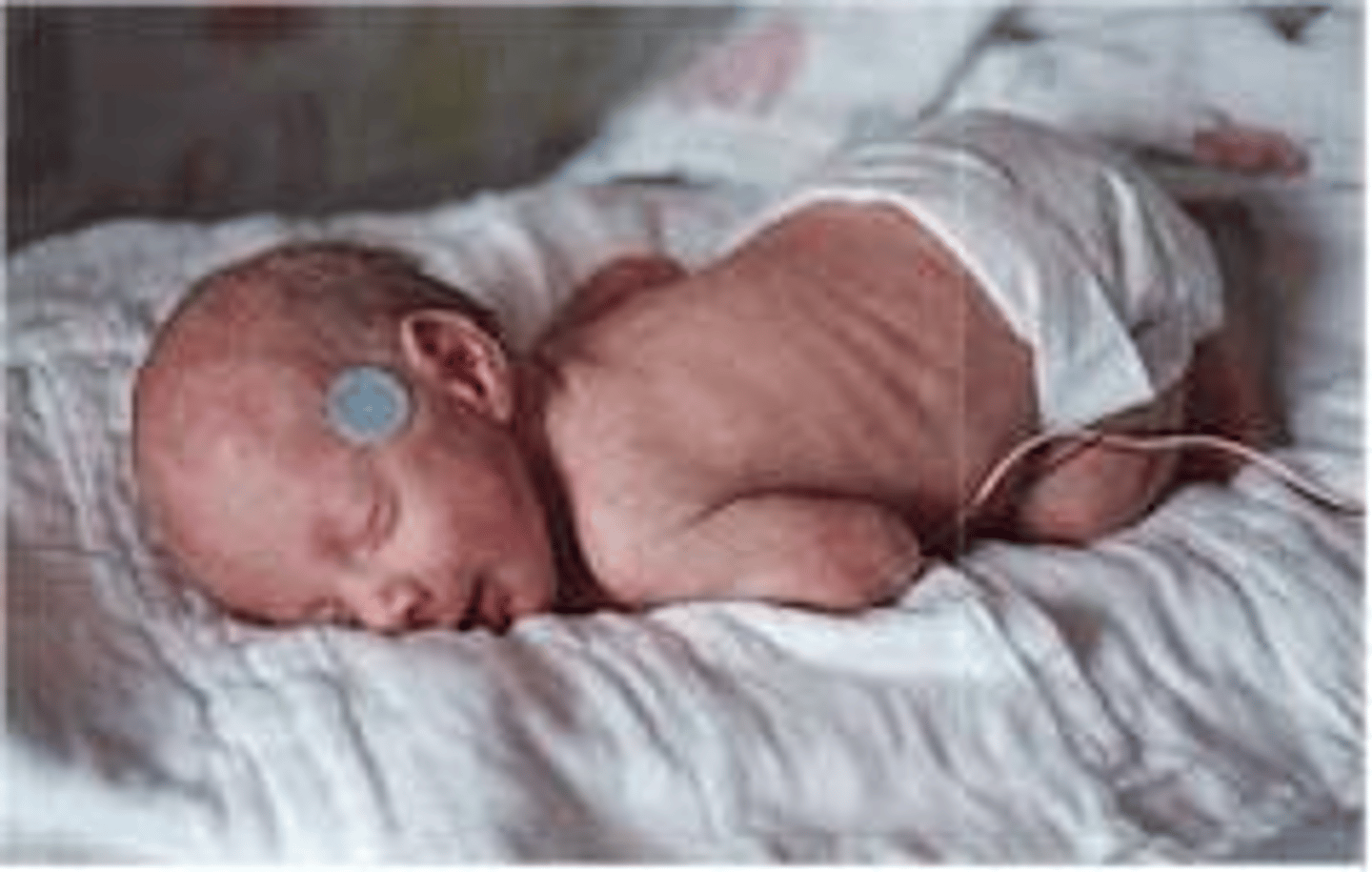
Stillbirth
- Locomotor reflexes (waling and swimming) do not appear until months after the reflexes have disappeared.
Touch
Smell
Hearing
Sight
(4) Early Sensory Capacities
Touch
(first sense to develop)
Smell
(also begin to develop in the womb; flavors and odors of foods a mother consumes may be transmitted to the fetus through the amniotic fluid)

Hearing
Functional before birth, fetuses respond to sounds and seem to learn to recognize them.
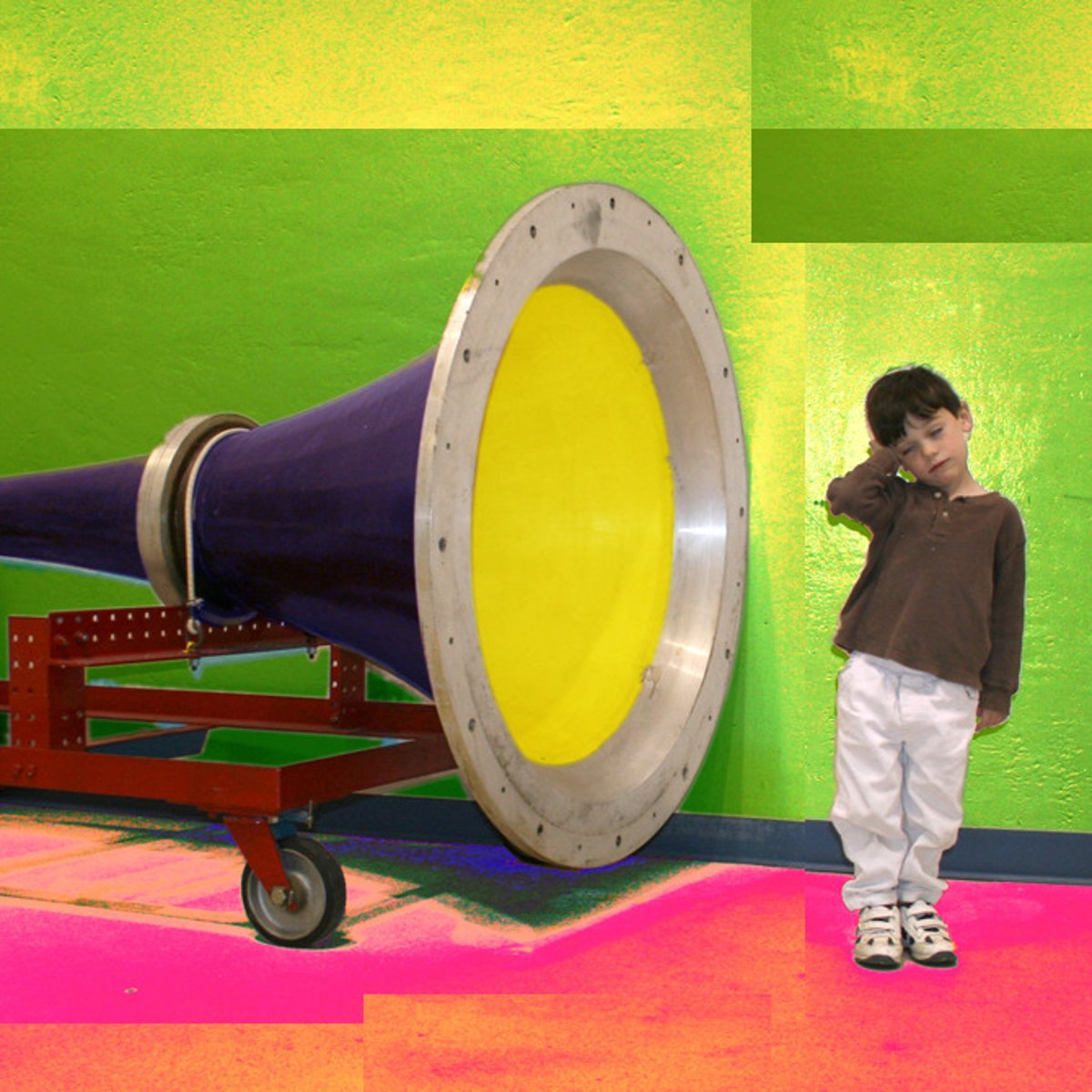
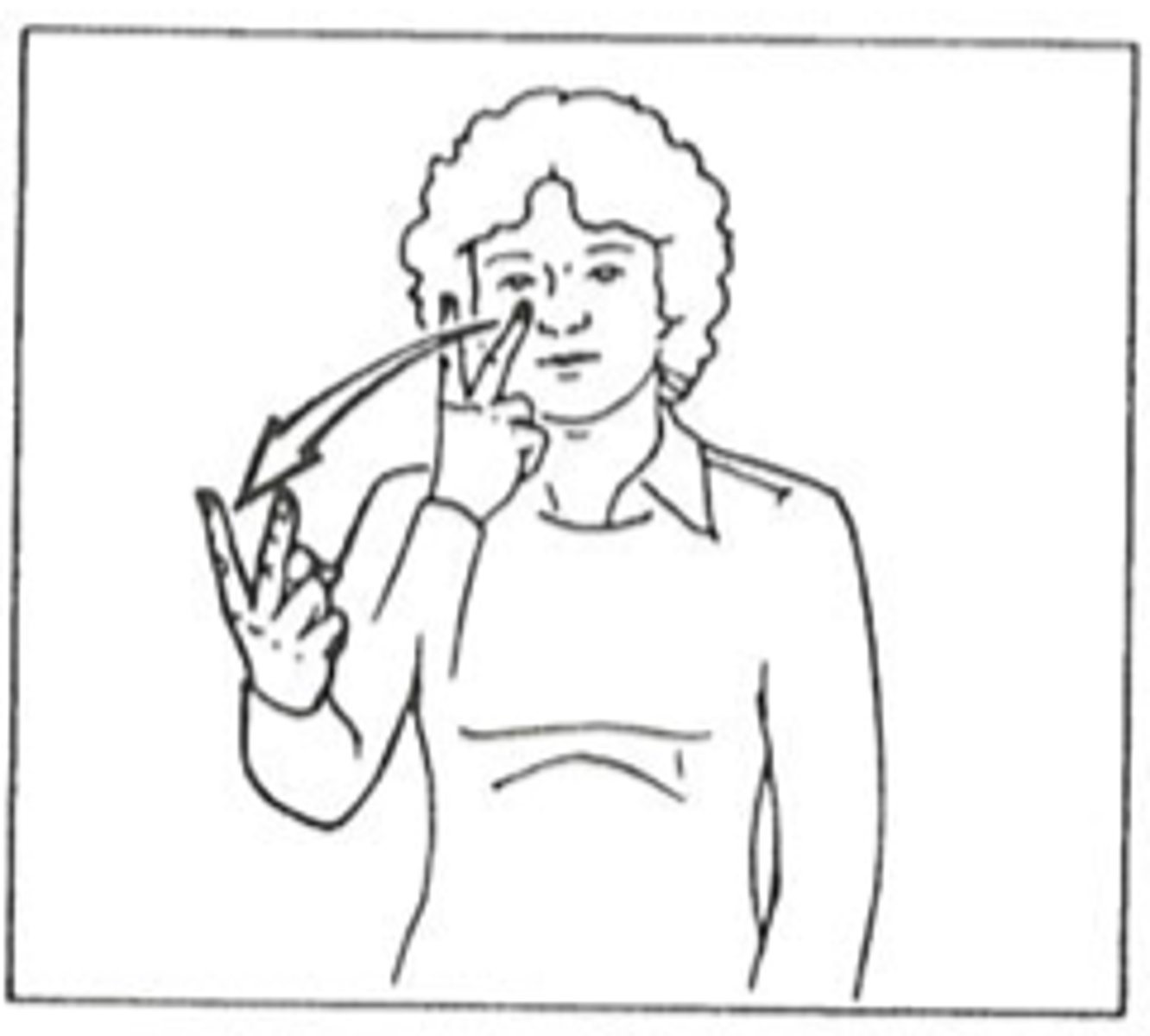
Sight
(the least developed)
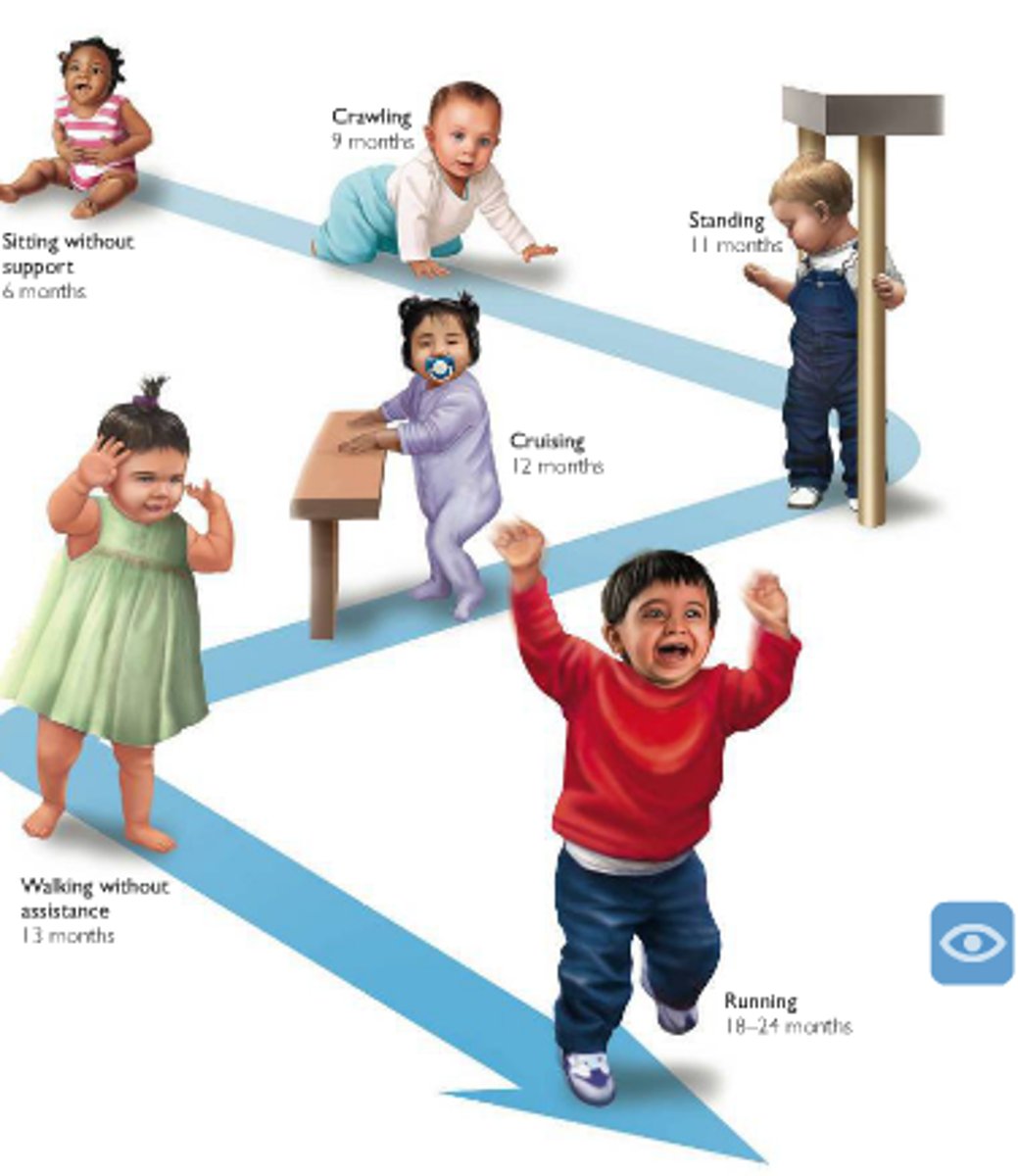
Gross motor skills
- involve the large muscles
e.g. rolling, catching a ball
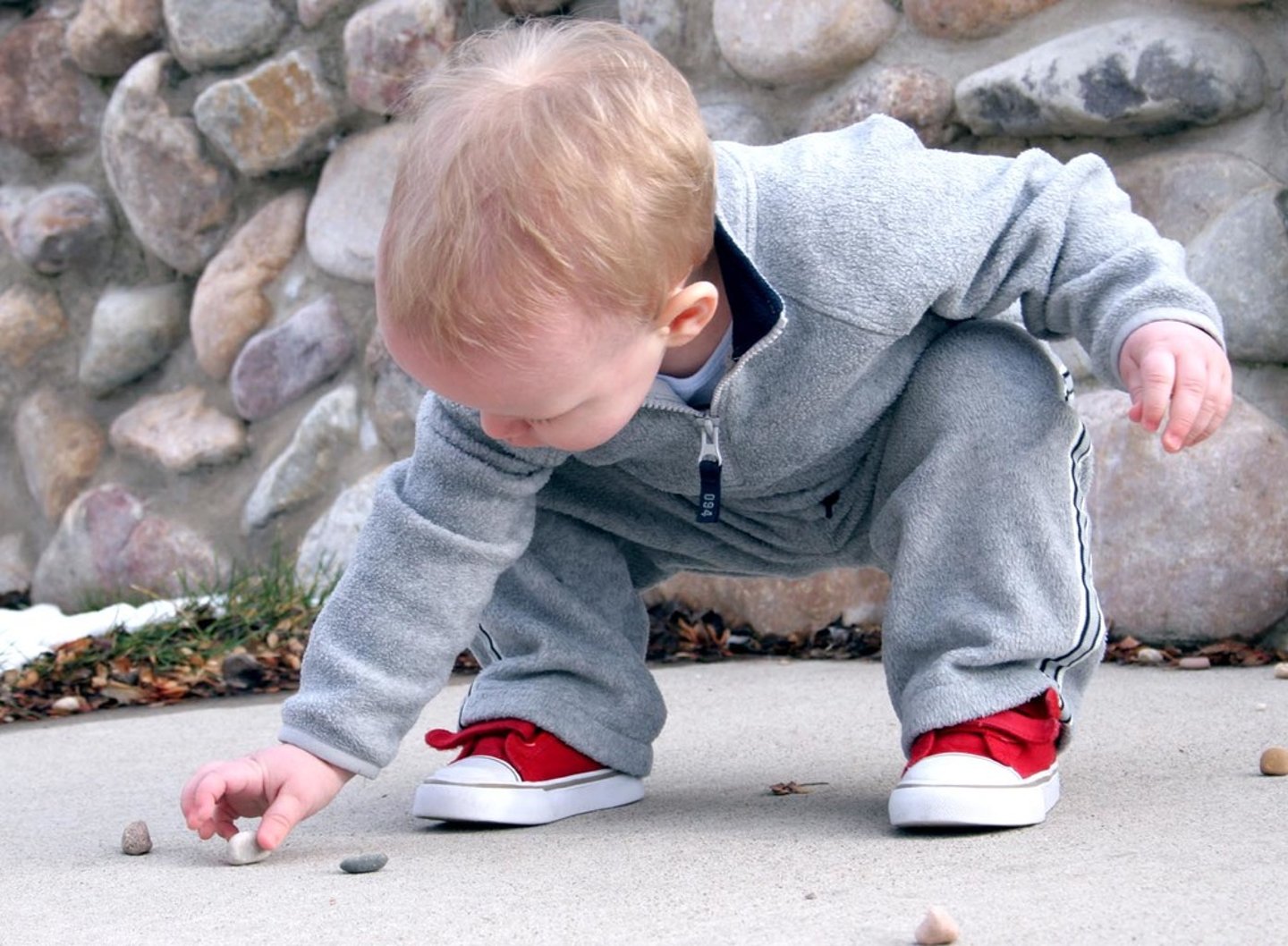
Fine motor skills
involve the small muscles and eye-hand coordination
e.g. grasping
Raising Head
Rolling Over
Propped Up
Sitting Up
Crawling
Walking
(6)Six Motor Milestones:
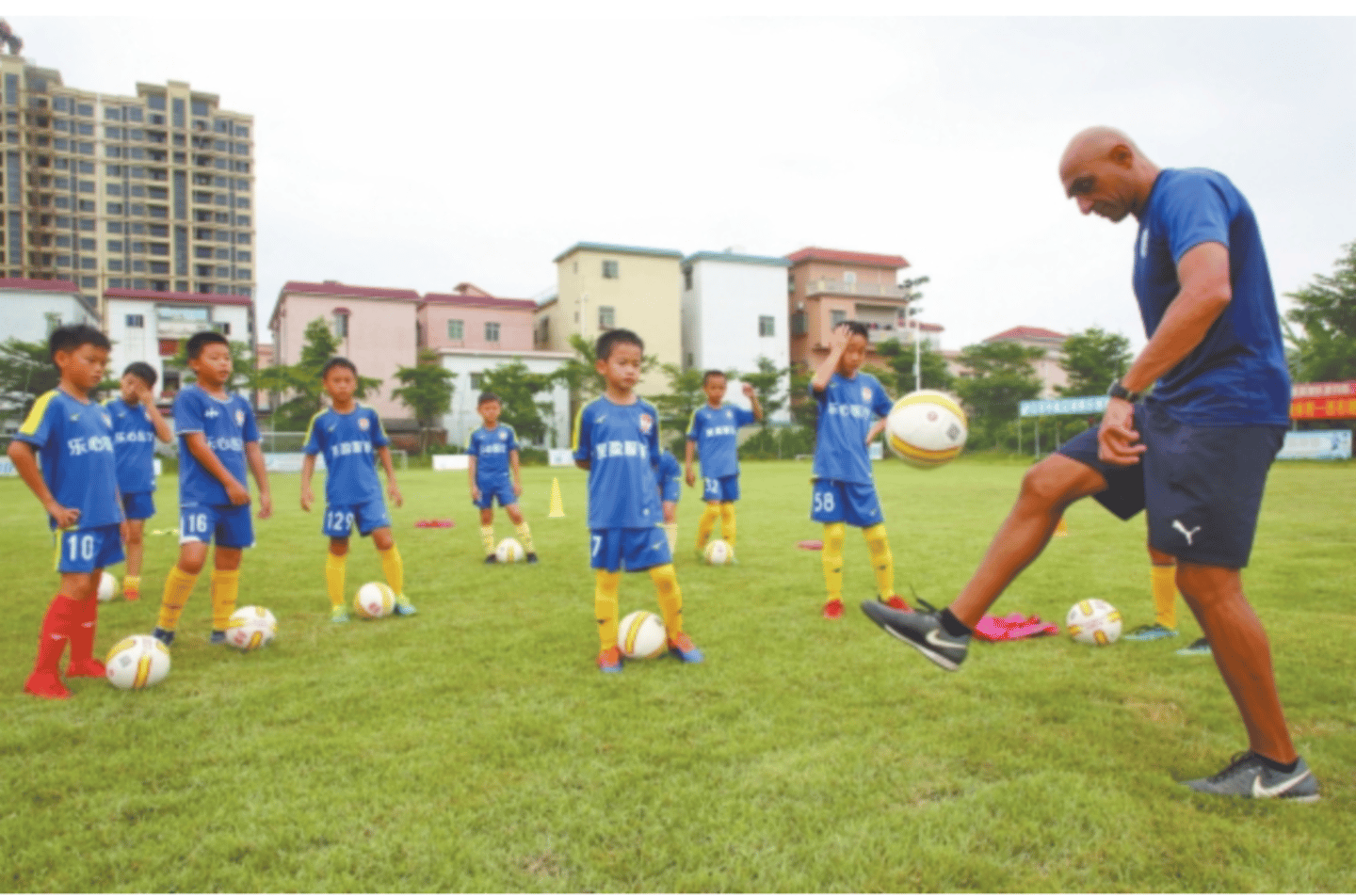
Visual Guidance
- the use of the eyes to guide the movement of the hands or other parts of the body.
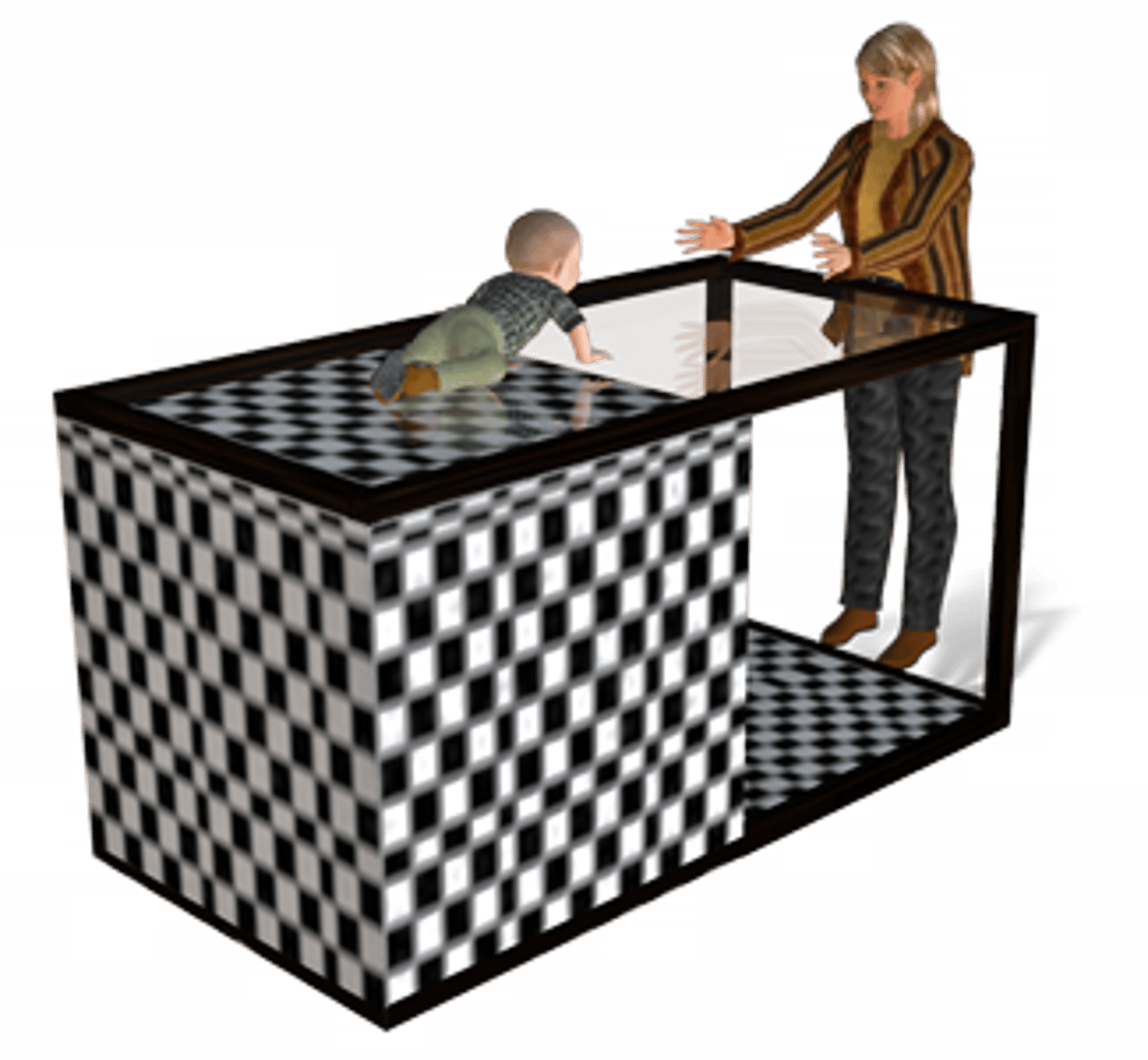
Visual Cliff
- apparatus designed to give an illusion of depth.
Depth Perception
- ability to perceive objects and surfaces three-dimensionally

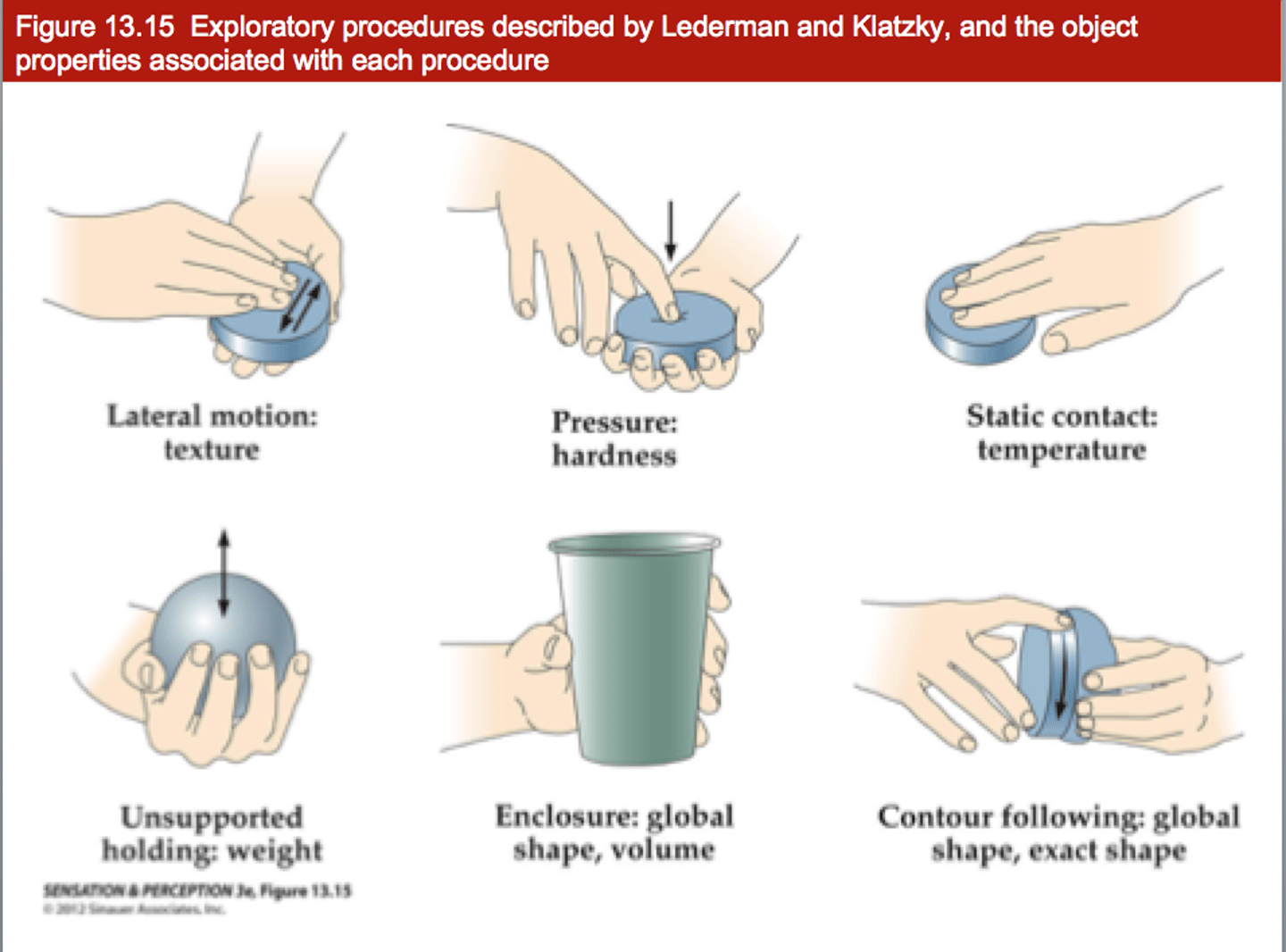
Haptic Perception
- ability to acquire information about properties of objects (e.g. size, weight) by handling/touching them.
Cephalocaudal principle
Proximodistal principle
(2) Early Physical Development
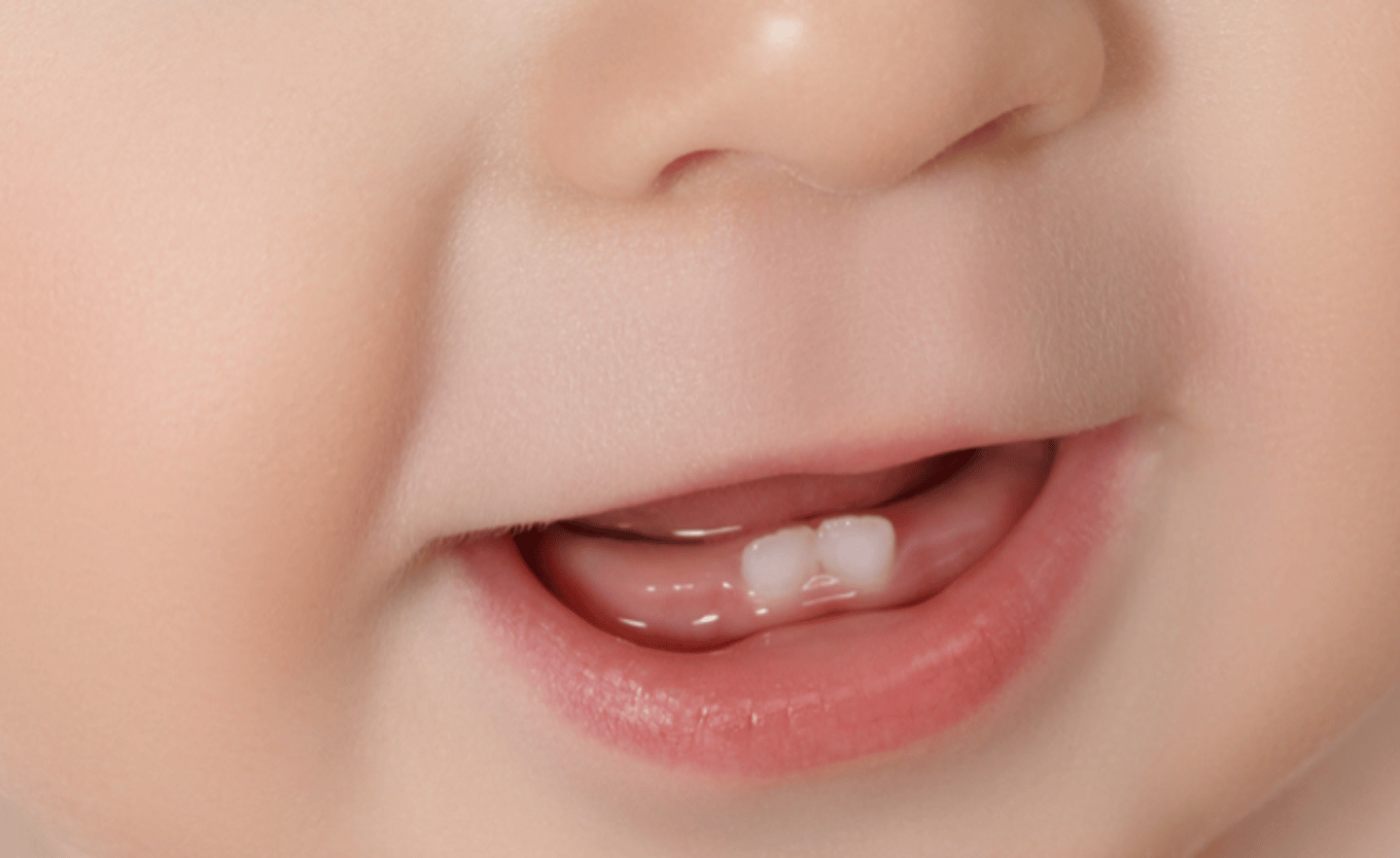
Teething
- usually begins around age 3 or 4 months
- By the first birthday, babies have generally have six to eight teeth.
hindbrain
forebrain
pruning
cerebellum
cerebrum
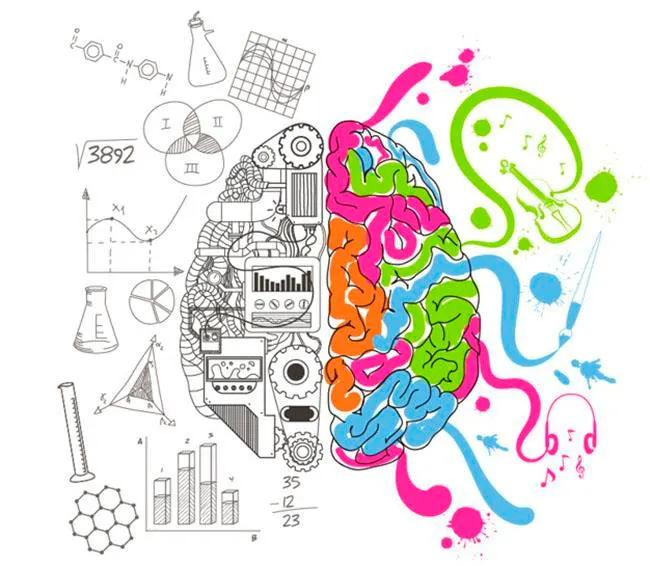
laterization
left hemisphere
right hemisphere
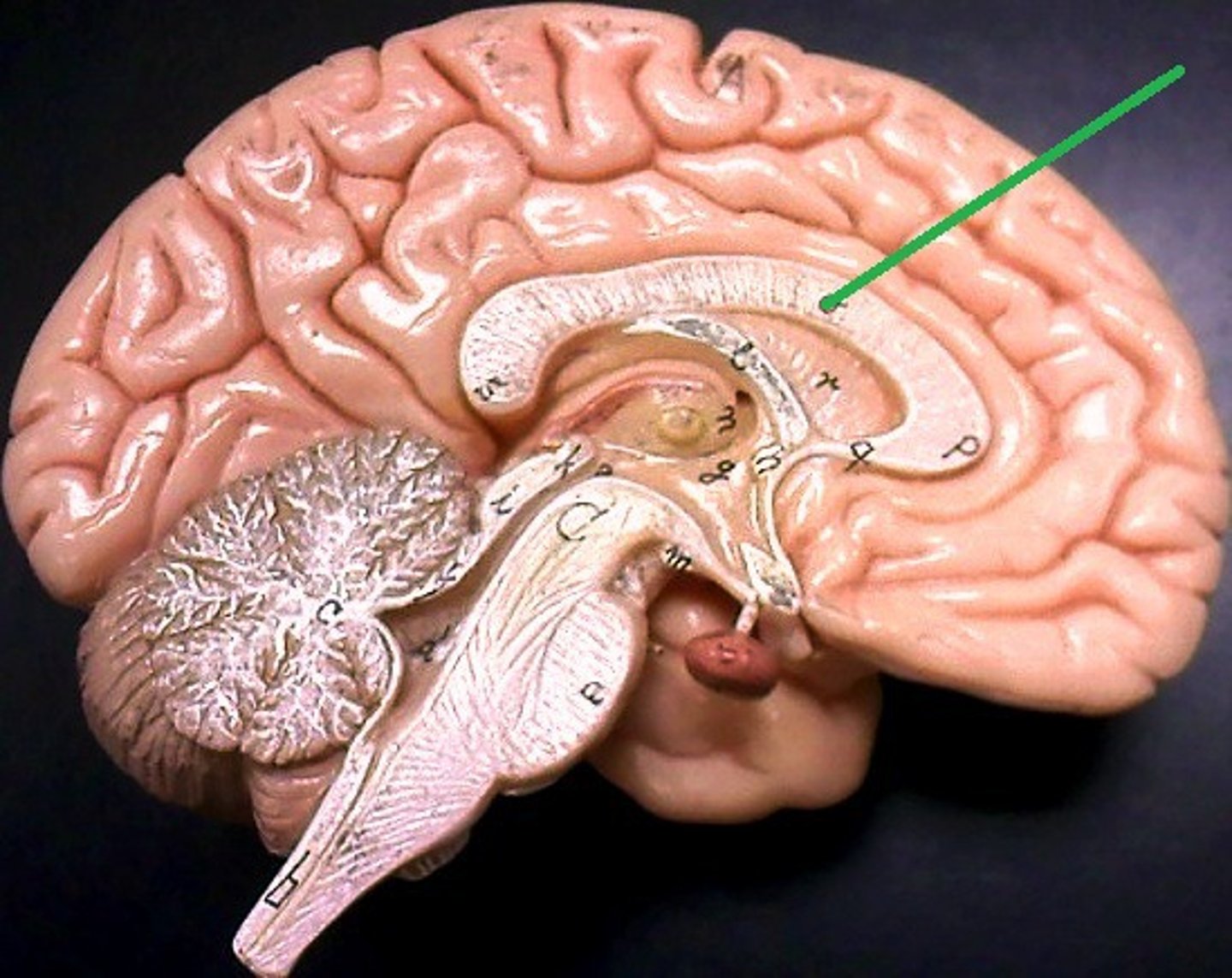
corpus callosum
(9) Major Parts of the Brain
Occipital
Parietal
Temporal
Frontal
(4) lobes:
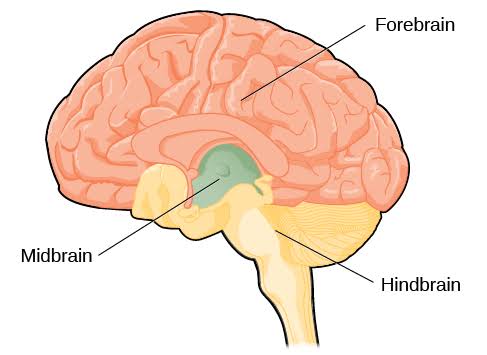
Hindbrain
(oldest, survival)
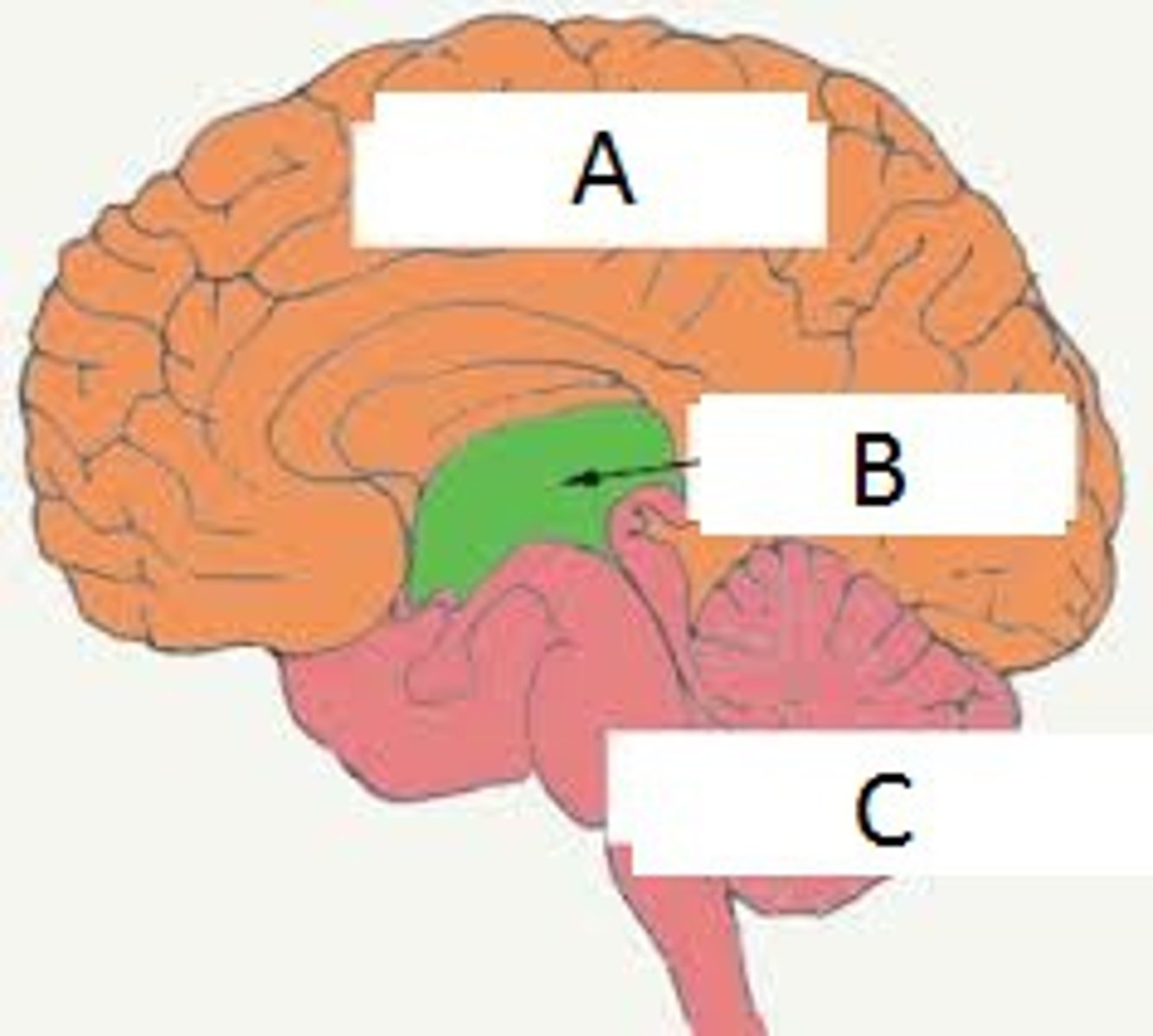
Forebrain
(youngest, higher cognitive function)
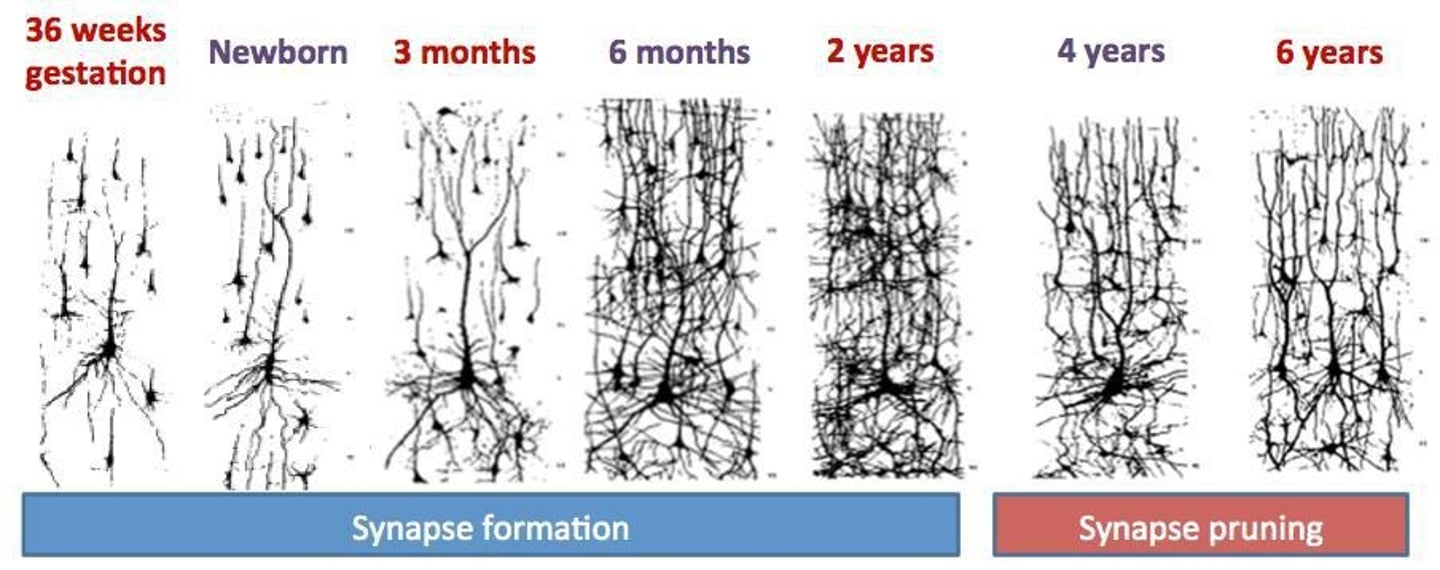
Pruning
(unused paths in the brain are eliminated)
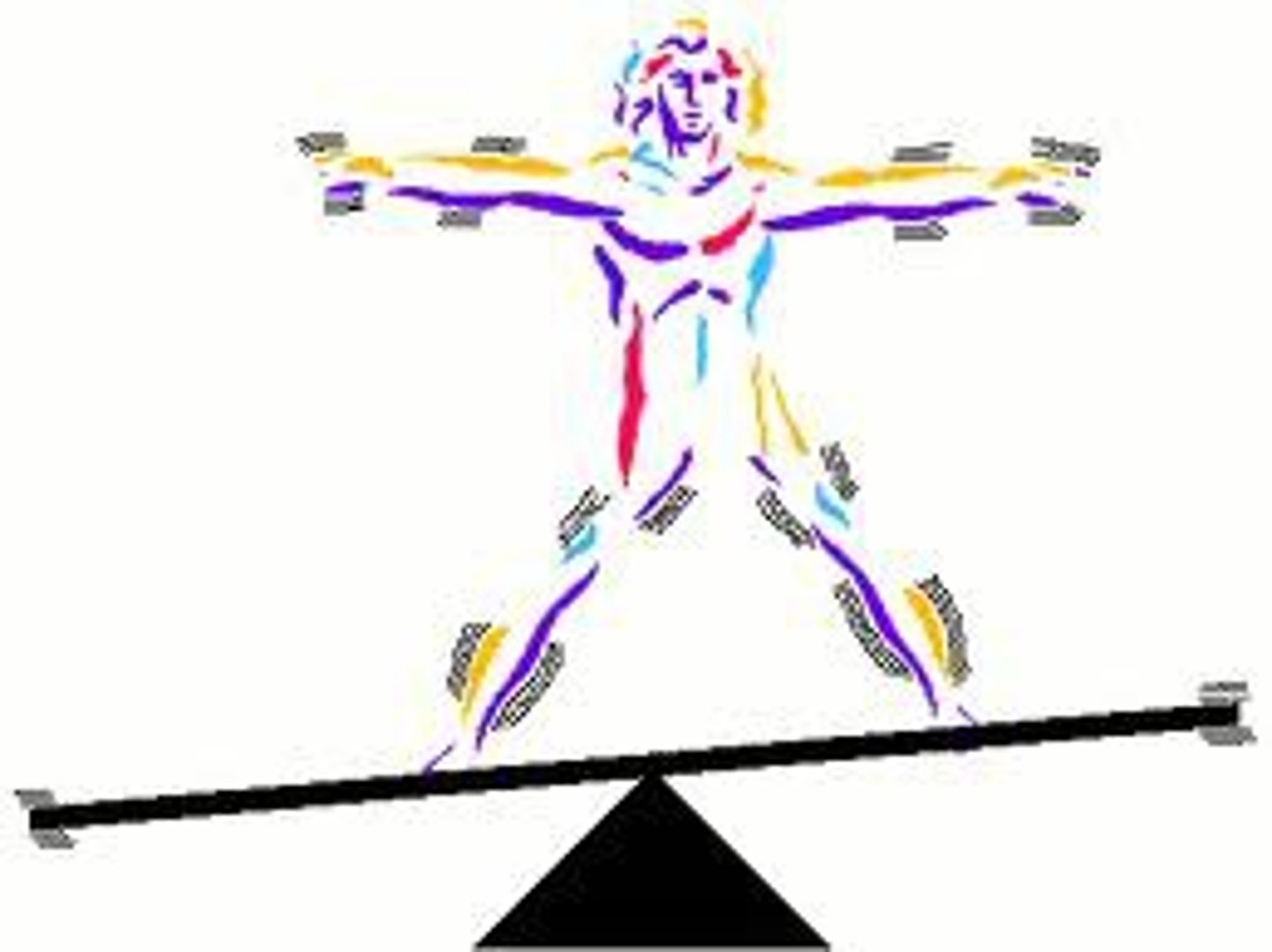
Cerebellum
- part of the brain that maintains balance & motor coordination
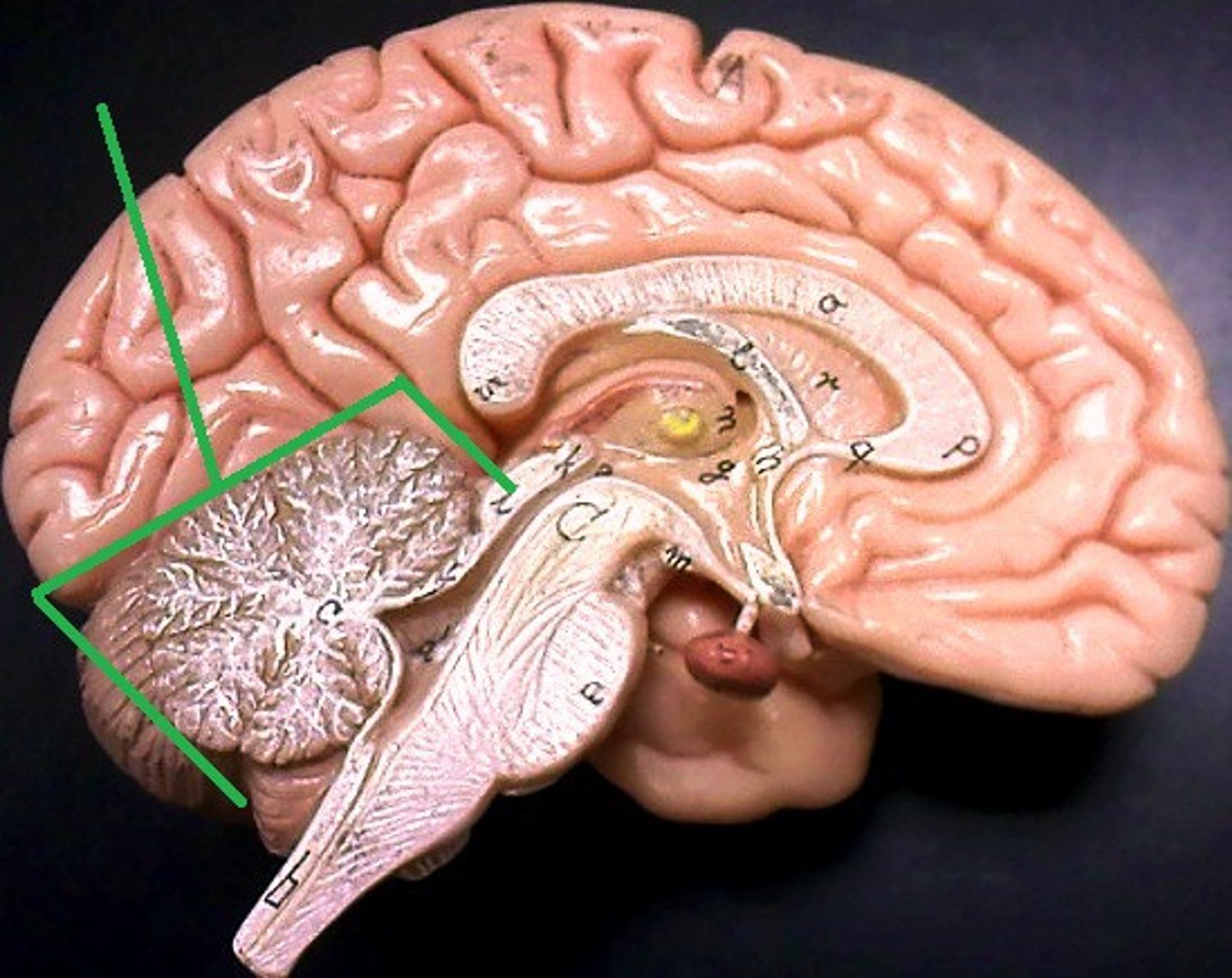
Cerebrum
- largest part of the brain, divided into right and left halves, or hemispheres

Lateralization
- tendency of each of the brain's hemispheres to have specialized functions.
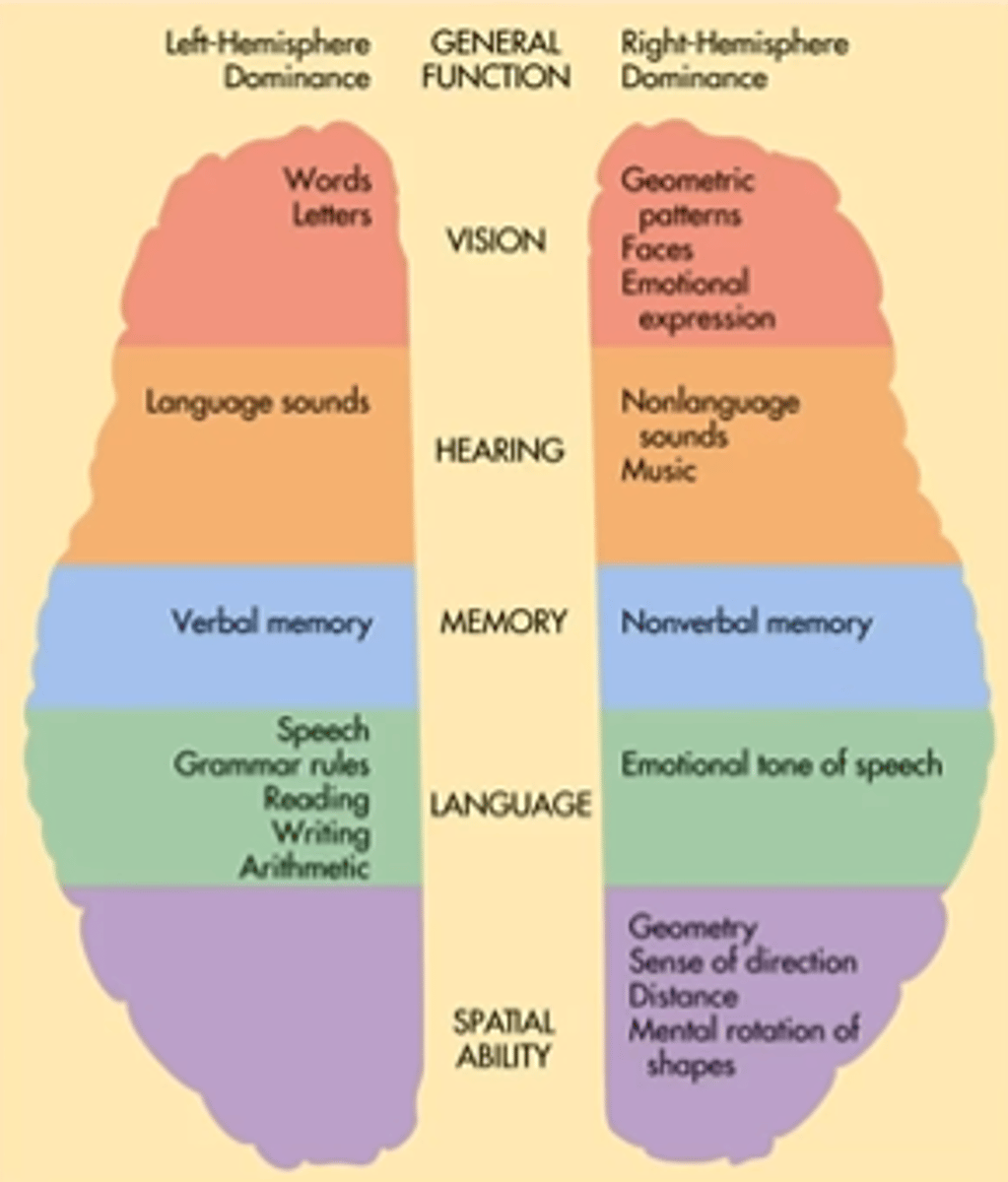
Left Hemisphere
- language & logical thinking
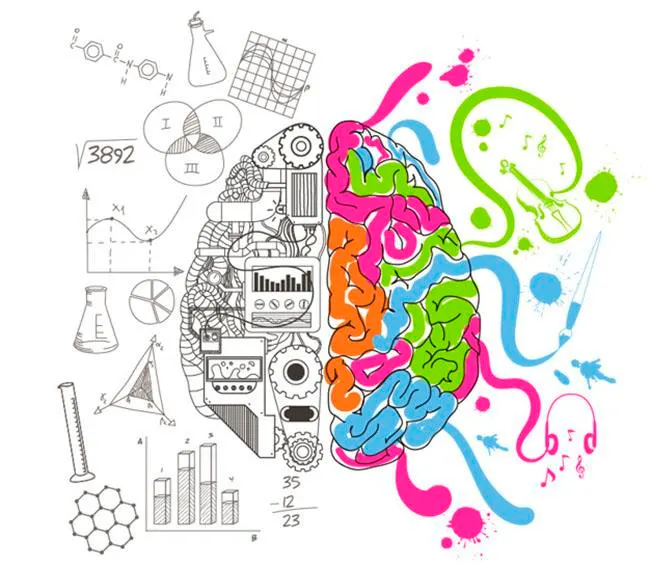
Right Hemisphere
- visual & spatial functions
Corpus Callosum
- joining the two hemispheres
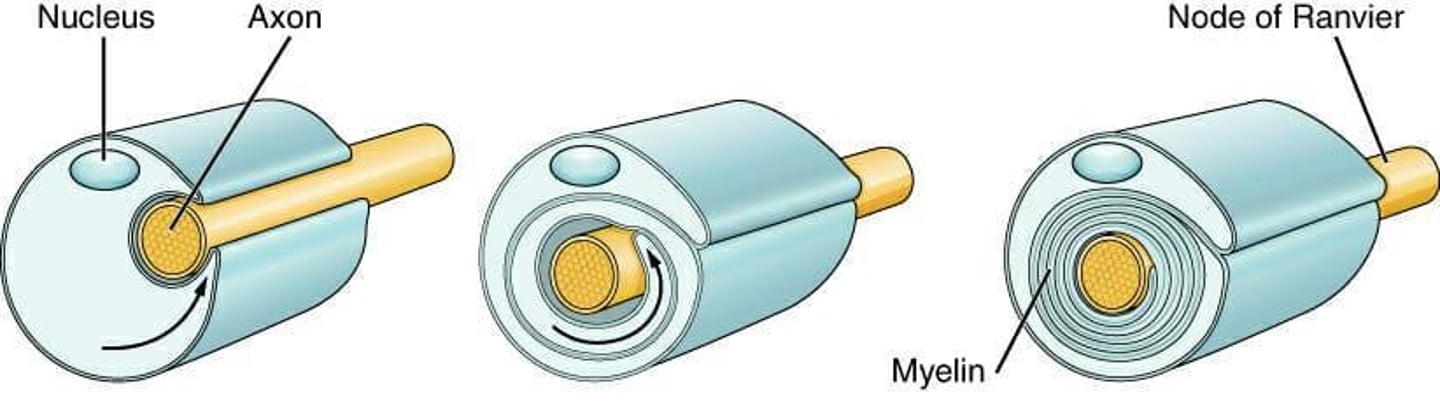
Myelination
- Enables signal to travel faster and more smoothly, permitting achievement of mature functioning.
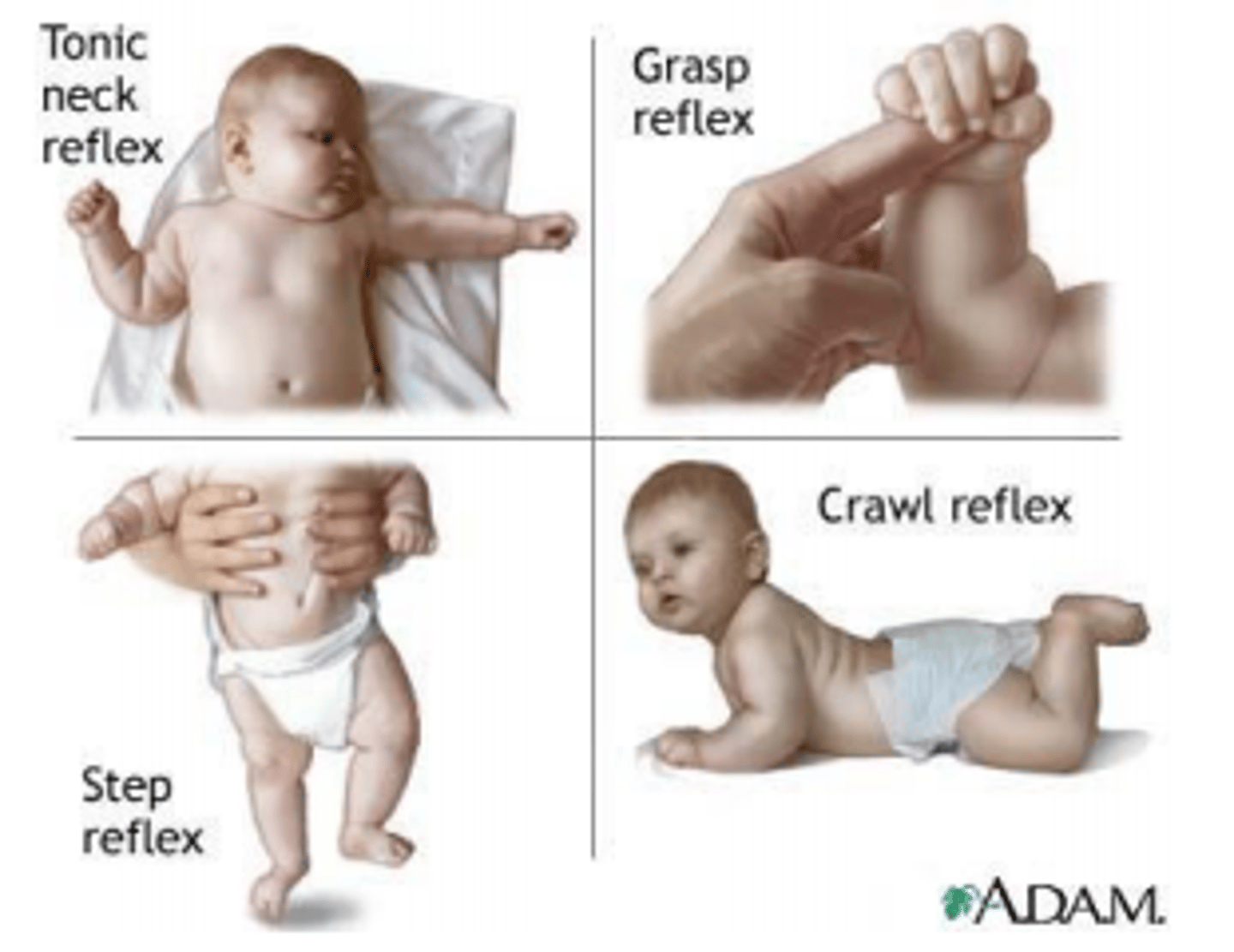
Reflexive Behaviors
- Automatic, innate response
- Human infants have an estimated 27 major reflexes