Organic Chemistry 2 Creating Alcohols
 Call Kai
 Learn
Learn Practice Test
 Spaced Repetition
 Match
Match Flashcards
 Knowt Play
1/23

There's no tags or description
Looks like no tags are added yet.
Name | Mastery | Learn | Test | Matching | Spaced | Call with Kai | Chat |
|---|
No analytics yet
Send a link to your students to track their progress
24 Terms
What is an alcohol?
a compound with a hydroxyl group attached

Primary alcohol
has 2 attached H groups, one attached R group

Secondary alcohol
has one attached H group and 2 attached R groups
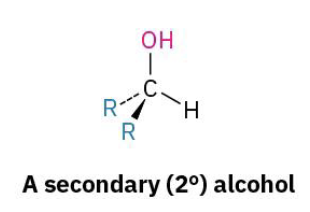
Tertiary alcohol
Has 3 attached R groups and no H groups

generic reaction
R-OH → RO- + H+
strong base
has a negative charge localized on a heteroatom
ex. C,N,O
more acidic compounds
have multiple resonance structures

Alcohols can be made from
alkyl halide, ester, carboxylic acid, alkene, ketone, aldehyde, ether
Reducing a carbonyl compound to an alcohol
occurs with nucleophilic addition

electrons from H go to C, e- from double bond go to O
O has negative charge, takes H from H3O+
ketones reduce to

a secondary alcohol
aldehydes reduce to
a primary alcohol

What can reduce aldehydes and ketones?
NaBH4, LiAlH4
breaking a pie bond to make a more stable sigma bond
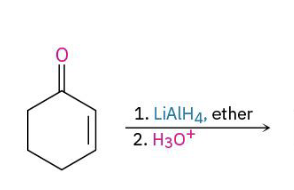
Example ketone reduction
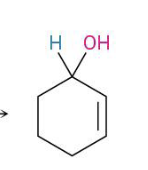
1.) H- bond attacks C in carbonyl, add H to C, break pie bond, e- up to O, O negatively charged
2.) -O grabs H from H3O+, forming secondary alcohol
Example Aldehyde reduction
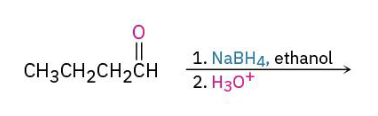
1.) H bond attacks C, add H group to C in carbonyl, break pie bond, e- up to O, O negatively charged
2.) -O takes H from H3O+, makes primary alcohol
Reducing Carboxylic Acids and Esters
Results in a primary alcohol
2 steps - reduce to carbonyl, ten to alcohol
LiALH4 can reduce carboxylic acid and esters, NaBH4 cannot reduce carb acids or esters
Ester reduction example

1.) H bond from LiAlH4 attacks C, break pie bond, move e- up to O
2.) O- reforms pie bond and kicks off -OCH3 LG
3.) LiAlH4 attacks, re-break pie bond, O- again
4.) react with H3O+ to make OH group

end result = added 2 H groups and one OH
Carboxylic Acid Reduction Example
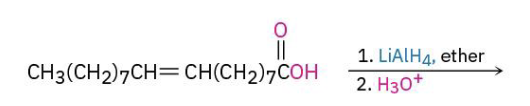
1.) H attacks -OH part, make pie bond with O, break other pie bond, become O-
2.) O- attacks Al-H3, makes bond, then H from Al-H3 attacks C
3.) OAlH4 groups leaves, H bond forms there instead
4.) react with AlH3 again, H- attacks C, break pie bond with other O, becomes negative charge
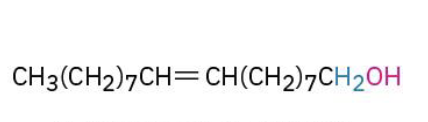
5.) O- takes H3O+, becomes OH
Grignard Reagents
charged C group
R-MgX
acts as a strong base, does nucleophilic addition of R group
Mechanism of Grignard Reagent
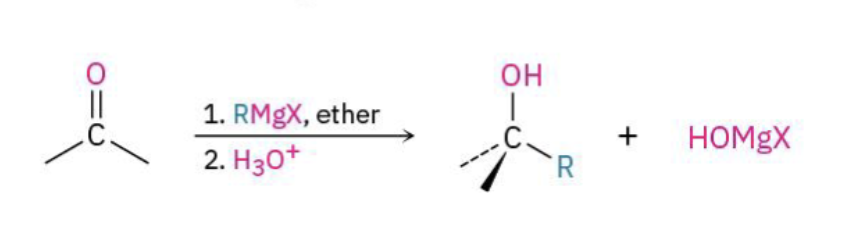

Example ketone reaction using grignard reagent

R group attacks C where =O is attached
break pie bond, O becomes (-) charged, takes H from H30+

limitations of Grignard reagent
if H is weakly acidic and added to grignard, no rxn will occur
some groups (-CtripleN, -NO2, -SO2R) won’t allow rxn to occur because they will react with girgnard
Turning alcohols into alkyl halides
3’ alcohols will use SN1 reaction
1’ or 2’ alcohols will use SN2 reactions
Sn1 reactions turning alcohols into alkyl halides
C-O bond breaks, H from HX attached to OH to make H20, good LG
create carbocation, methyl RAR possible
-X reacts with carbocation to yield alkyl halide

SN2 reaction to form alkyl halide
PBr3 or SOCl2 (with ether)
backside attack of Br- or Cl- to C, opposite of O LG, rest of molecule attached to O, forms good LG
inverts stereochemistry
