hormonal control
 Studied by 0 people
 Call Kai
 Learn
Learn Practice Test
 Spaced Repetition
 Match
Match Flashcards
 Knowt Play
1/54

There's no tags or description
Looks like no tags are added yet.
Name | Mastery | Learn | Test | Matching | Spaced |
|---|
No study sessions yet.
55 Terms
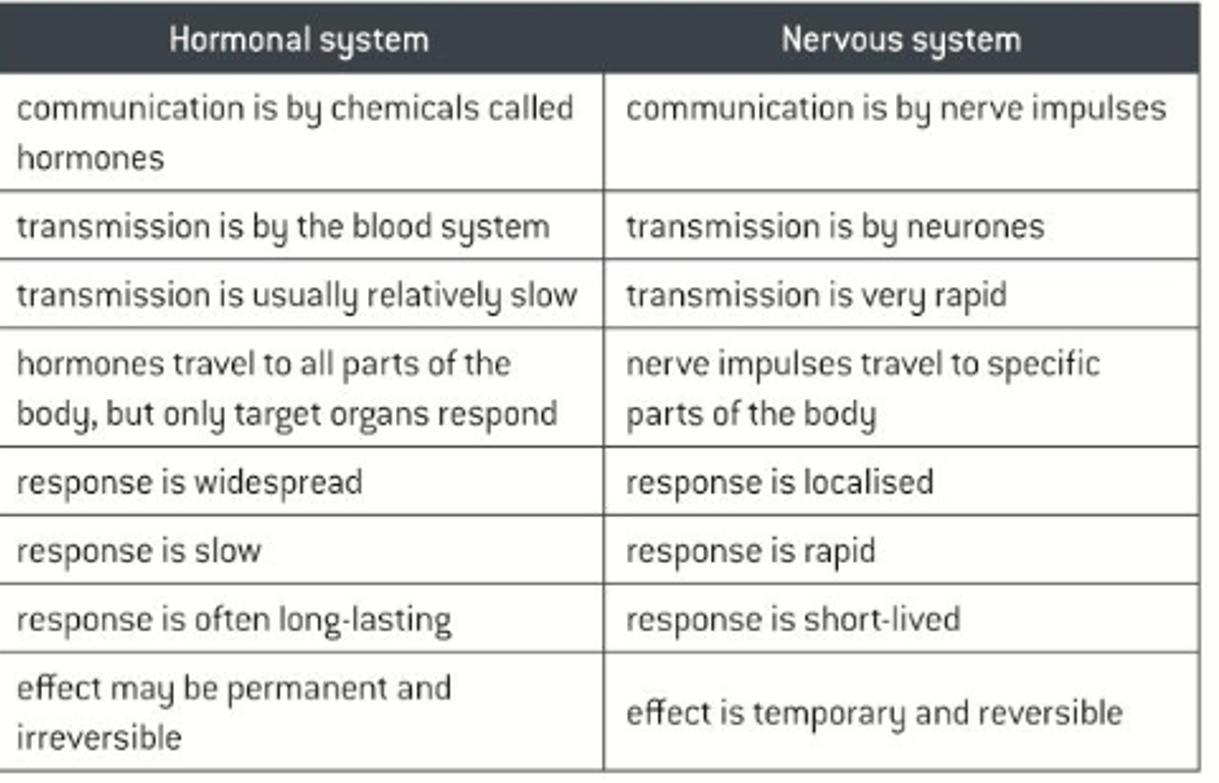
What’s the difference between the nervous and hormonal system?
What are hormones and the main types of hormones?
Hormones - chemical messengers secreted directly into blood stream,
Main types
Amino acid derravitives eg melatonin
Peptide hormones eg oxytocin
Steroid or lipid derravitives - can pass through membranes eg oestrogen
What do non steroid hormones bind to?
Receptors found on the cell surface
What are examples of peptide and steroid hormones?

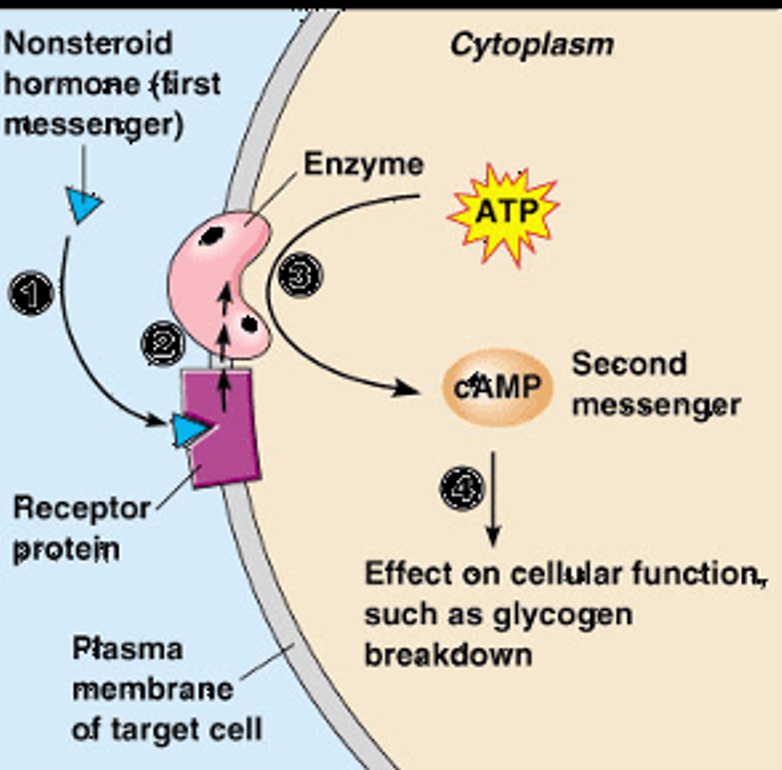
What are the first messengers and second messengers?
First messengers - hormone that brings info or signal from endocrine
Second messengers - non steroid hormones don’t enter the cell they bind to receptors on cell surface membrane
What are non steroid hormones and their functions?
hydrophilic - cannot pass through membranes
Bind to receptors on cell surface membranes
Triggers cascade reaction medicated by second messengers eg glucagon - phosphorylation breaks into glycogen
What are steroid hormones and there functions?
Lipid soluble
Pass thru lipid component of cell membrane and bind to receptors
Form hormone receptor complexes which acts as a transcription factor which in turn facilitates or inhibits transcription of a particular gene eg progesterone
What two parts are adrenal glands made up of?
Adrenal cortex - outer region of the gland that produces hormones eg cortisol and aldosterone - steroid hormones
Adrenal medulla - inner region that produces non essential hormones eg adrenaline
What 3 main types of hormones is the adrenal cortex controlled by?
Glucocorticoids and Corticosterone
Mineralcorticoids
Androgens
What do glucocorticoids and corticosterone do?
Glucocorticoids - cortisol = regulate metabolism by controlling how body converts fats and proteins and carbs to energy - regulates blood pressure and response to stress. - cortisol
Corticosterone = works with cortisol to regulate immune system and surpress inflammatory actions
What do mineralcorticoids do?
Mineralcorticoids - aldosterone - controlling BP by balancing salt and water concentrations - release medicated by signals triggered by kidneys
Eg aldosterone
What do androgens do?
Androgens - small amounts of make and female sex hormones are realsed, plays a bigger role after menopause
What’s adrenalines role in the adrenal medulla?
Adrenaline - increases heart rate blood glucose and breathing rates
What’s noradrenalines role in the adrenal medulla?
Noradrenaline - works with adrenaline to increase heart rate widen pupils and widen lung passages
Pancreas - what do the exocrine glands do?
Produce enzymes and release them via a duct into the duodenum
What enzymes are released from the acinar cells?
Amylases
Proteases
Lipases
What do acinar cells do?
Produce and release enzymes
What enzymes are released from the acinar cells?
Amylases
Proteases
Lipases
Where are islets of langerhans found and what are they responsible for?
Within the exocrine tissue
They are responsible for producing insulin and glucagon
What cells are within the islets of langerhans?
Alpha and beta cells
What do alpha cells do?
Alpha cells - produce and secrete glucagon, larger and more numerous
What do beta cells do?
Produce and secrete insulin
What does glyconeogenesis mean?
Formation of new glucose
What is glycogenolysis?
Glycogen is broken down into glucose
What is glycogenesis?
Production of glycogen
What is hypoglycaemia?
LOW GLUCOSE LEVELS
What is hyperglycaemia?
HIGH GLUCOSE LEVELS
What increases blood glucose?
Diet
Glycogenolysis
Gluconeogenesis
What can decrease blood glucose?
Respiration
Glycogenesis
Give an example of negative feedback?
Insulin - too high
Glucagon - too low
What is insulin produced by?
Beta cells of the islets of langerhans
What are the 5 things insulin does?
Increases rate of glucose by absorption by cells
Increases rate of glycogenesis
Increases rate of glucose to fat conversion
Increases respiratory rate of cells
Inhibits the release of glucagon from the alpha cells of the islets of langerhans
What is insulin broken down by and what is the result of that?
broken down by enzymes in liver cells
As a result insulin has to be constantly secreted and fluctuates depending on the food eaten
What happens when glucose falls below a set level and what is that an example of?
Beta cells reduce their secretion
This is an example of negative feedback
What is glucagon produced by?
Alpha cells
What happens when glucose - too low?
Cells detect the fall and respond by secreting glucagon directly into blood stream
Which cells have glucagon receptors?
Liver and fat cells
What is the process of insulin secretion in beta cells?
Membrane of b cells = open potassium channels + closed calcium channels
Normal BG = K+ channels = open and diffuses out of cell - inside cell - 70mv
Blood glucose = rise glucose enters via glucose transporter
Glucose metabolised in mitochondria = ATP created
ATP binds to K+ channels and closes them
K+ ions can’t diffuse out + P.D rises to -30mv so depolarisation occurs
Depolarisation causes voltage gated calcium channels to open
Calcium ions enter cell and cause secretory vesicles to realease insulin by exocytosis
What is the process of the insulin response pathway?
Insulin binds to target cell
Activates enzyme tyrosine kinase
Causes phosphorylation of inactive enzymes in cell
= converts glucose to glycogen + fats are used up in respiration
Extra glucose can now move into cell out of blood stream
What is the process of glucagon release?
Hypoglycaemia = trigger - when blood sugar = low= less glucose entering alpha cells
So cellular energy changes - reduced glucose intakes leads to decrease in ATP within alpha cells
Low ATP = some potassium channels to close = prevents potassium from leaving the cell - buildup of positive charge inside the cell
Positive charge opens voltage gated calcium channels - ca2+ rushes into cell
Influx of calcium triggers glucagon filled vesicles to fuse with cell membrane and release glucagon into blood stream via exocytosis
What is the glucagon response pathway?
Glucagon binds to receptor on hepatocytes
Stimulating G protein inside membrane
Activating adenylyl cyclase inside cell
This converts ATP - cAMP
Which triggers series of enzyme controlled reactions
What happens after glucagons response?
1. Glycogenolysis - liver breaks down glycogen into glucose
More fatty acids used in respiration
Increasing gluconeogenesis - increasing conversion of amino acids and glycerol in liver
What are the common symptoms of diabetes?
high blood glucose
Glucose in use in
Excessive need to urinate
Excessive thirst
Constant hunger
Weight loss
Blurred vision
Tiredness
What is type 1 diabetes?
unable to produce insulin As beta cells don’t produce it
Cause isn’t known
Condition - autoimmune response - the immune system attacks the beta cells
What is type 2 diabetes?
cannot effectively use insulin
Beta or body cells dont respond to insulin as glycoprotein receptor on cell membrane doesnt work
What is the treatment for type 1 diabetes?
insulin injections - increase blood glucose absorbed by cells and causes glycogenesis - lowers blood glucose levels
test blood Glucose by pricking finger
What is the problem with insulin injections?
too little insulin injected they may experience hypoglycaemia - low BG so unconsciousness may occur
Too much - hyperglycaemia - high BG
What are the treatments for type 2?
regulate carb intake through diet and excersise
Lose weight
Drugs to stimulate insulin production
How did insulin use to be obtained to put in our bodies?
Use to be obtained from pancreas of cows and pigs - difficult and expensive
How is insulin now obtained and why is it better?
1955 structure of human insulin was identified and now made by genetically modified bacteria
Human insulin better :
Pure form and less likely to have allergic reactions
Higher quantities can be produced
Production costs are cheaper
Religious or ethical issues are overcome
What are ways that have been tested to treat diabetes?
Pancreatic transplants - after 1 year 80% =0.0253 years no symptoms
Injected with pancreatic cells - less then 8% successful
What is the stem cells treatment used to treat diabetes?
Totipotent stem cells have potential to grow into any cells
Research focused on converting them into beta cells either once in patient or in the lab
Requires embryonic stem cells
Alternative - using umbilical cord stem cells
What are the advantages of stem cells treatment used treatment?
donor availability not an issue - unlimited amount of cells can be produced
Reduces likelihood of rejection
No need for insulin injections
What is a disadvantage of stem cells treatment?
controlling growth and differentiation of stem cells is limited - may cause growth of tumor
What are three target cells of adrenaline?
smooth muscle
Cardiac muscle
Hepatocyte