Organismal Lab practical 1
 Call Kai
 Learn
Learn Practice Test
 Spaced Repetition
 Match
Match Flashcards
 Knowt Play
1/64

There's no tags or description
Looks like no tags are added yet.
Name | Mastery | Learn | Test | Matching | Spaced | Call with Kai | Chat |
|---|
No analytics yet
Send a link to your students to track their progress
65 Terms
The three characteristics green algae share with land plants are:
the pigments chlorophyll A&B, and carotenoids
Glucose as the carbohydrate storage material
Cell walls made of cellulose
Characteristics of green algae
domain eukarya, supergroup archaeplastida, kingdom plantae, phylum chlorophyta
Can be unicellular, filamentous, colonial, and multicellular
Can produce sexually and asexually
Goes through alt of gen
Phylum chlorophyta Class chloropsida
Unicellular ex: genus Micrasterias, genus Acetabularia
Filamentous ex: genus Spriogyra
Colonial ex: genus Volvox
Multicellular ex: Ulva
Phylum Chlorophyta Class Charopsida
ex: genus Chara
(Multicellular)
Nonvascular Plants
Phylum Hepatocophyta, Phylum Anthocerotophyta, Phylum Bryophyta
Phylum Hepatocophyta
Ex: genus Marchantia
Phylum Anthocerotophyta
Ex: genus Anthoceros
Phylum Bryophyta
Ex: genus Mnium, genus Polytrichum, genus Sphagum

identify
Genus Micrasterias
Phylum Chlorophyta, Class Chloropsida

identify
Genus Micrasterias

identify
Genus Acetabularia
can get up to 10 cm long

identify
Genus Spirogyra
(filamentous phylum chorophyta, class chloropsida)
identify: cells walls, conjugation tubes, zygotes, chloroplasts, mature filaments, and single cell

identify
Genus: Spirogyra
what does each arrow point to?
life cycle of Spirogyra


identify
Genus: Volvox
identify parent colony, daughter colony, vegetative cells

identify and describe what numbers are
Genus: Volvox
zygotes
vegetative cells
eggs
know Volvox life cycle


identify
Genus Ulva

identify
Genus Ulva

identi
Class Charopsida Genus: Chara
find oogonium, antheridium, and sperm producing cells (filaments)

identify specimen and label each
Class: Charopsida Genus: Chara
oogonium
antheridium
oogonium
egg
antheridium
sperm producing cells (filaments)

identify
Class: Charopsida
Genus: Chara

identify
Phylum: Hepatocophyta
Genus: Marchantia
identify the thallus, and gemmae cups

Identify and name numbers
Phylum Hepatocophyta, Genus Marcantia
male antheridial receptacles
gametophyte thallus
(right 1) female archegonial receptacles
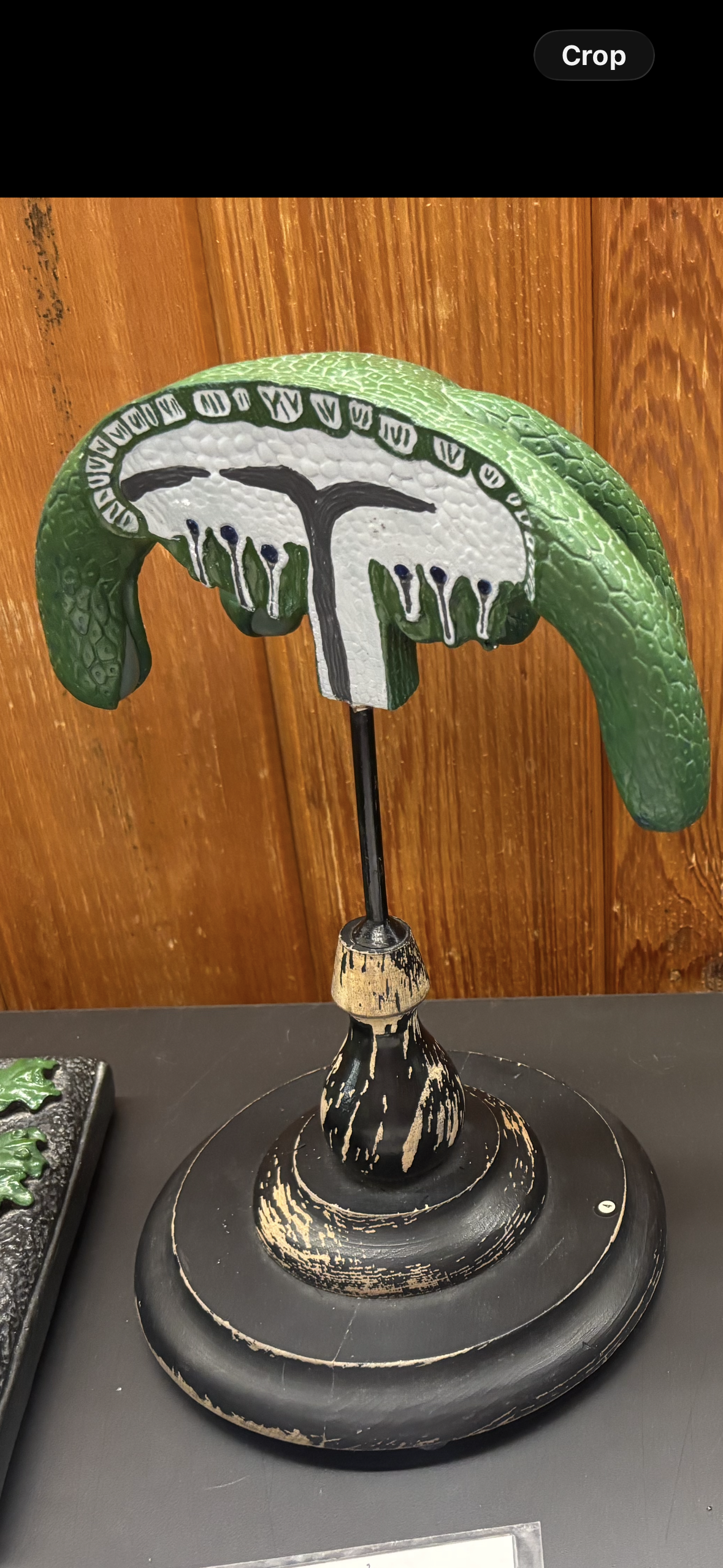
identify
archagoniophore of genus Marchantia

identify
archegonium of genus Marchantia (phylum hepatocophyta)
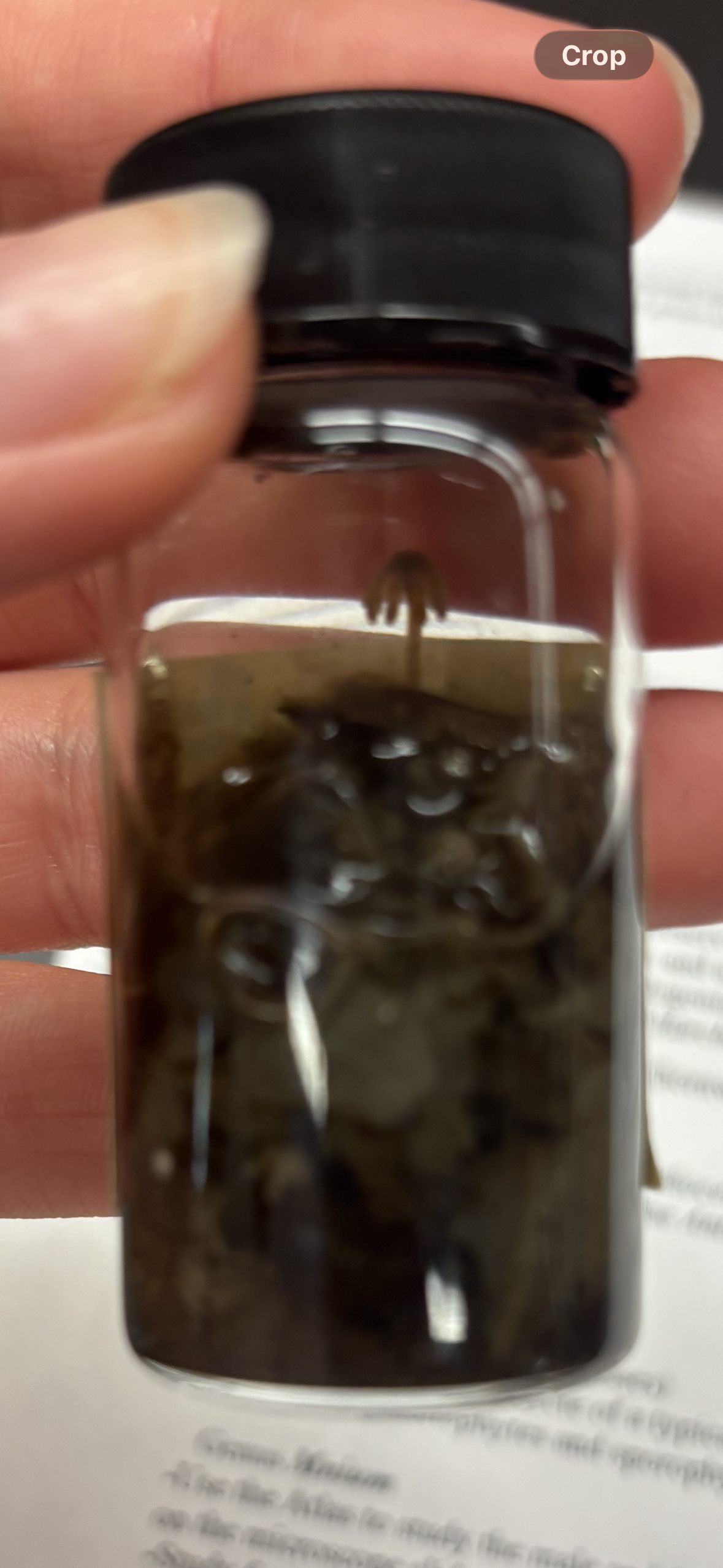
identify
archegonia of Marchantia
(phylum hepatocophyta)
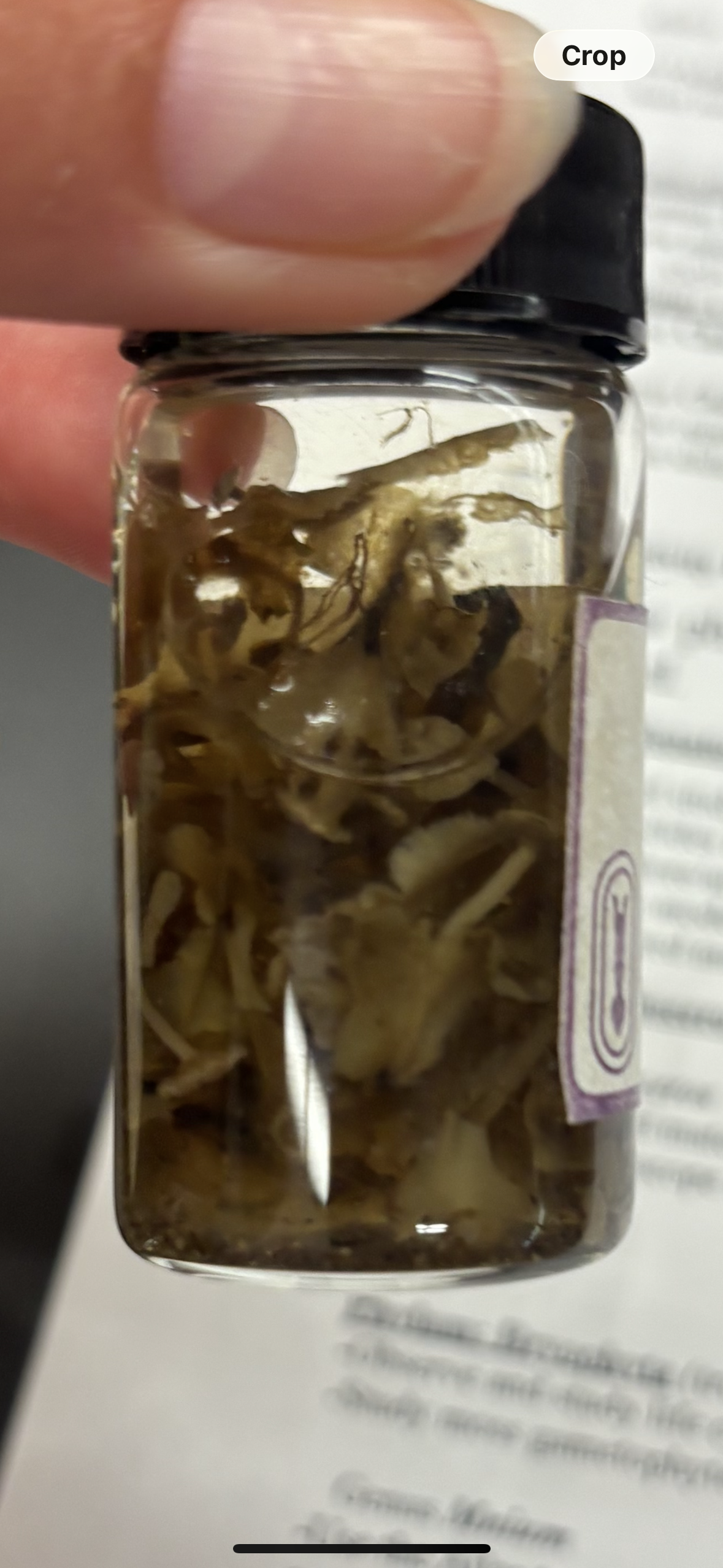
identify
antheridia of Marchantia
(phylum hepatocophyta)
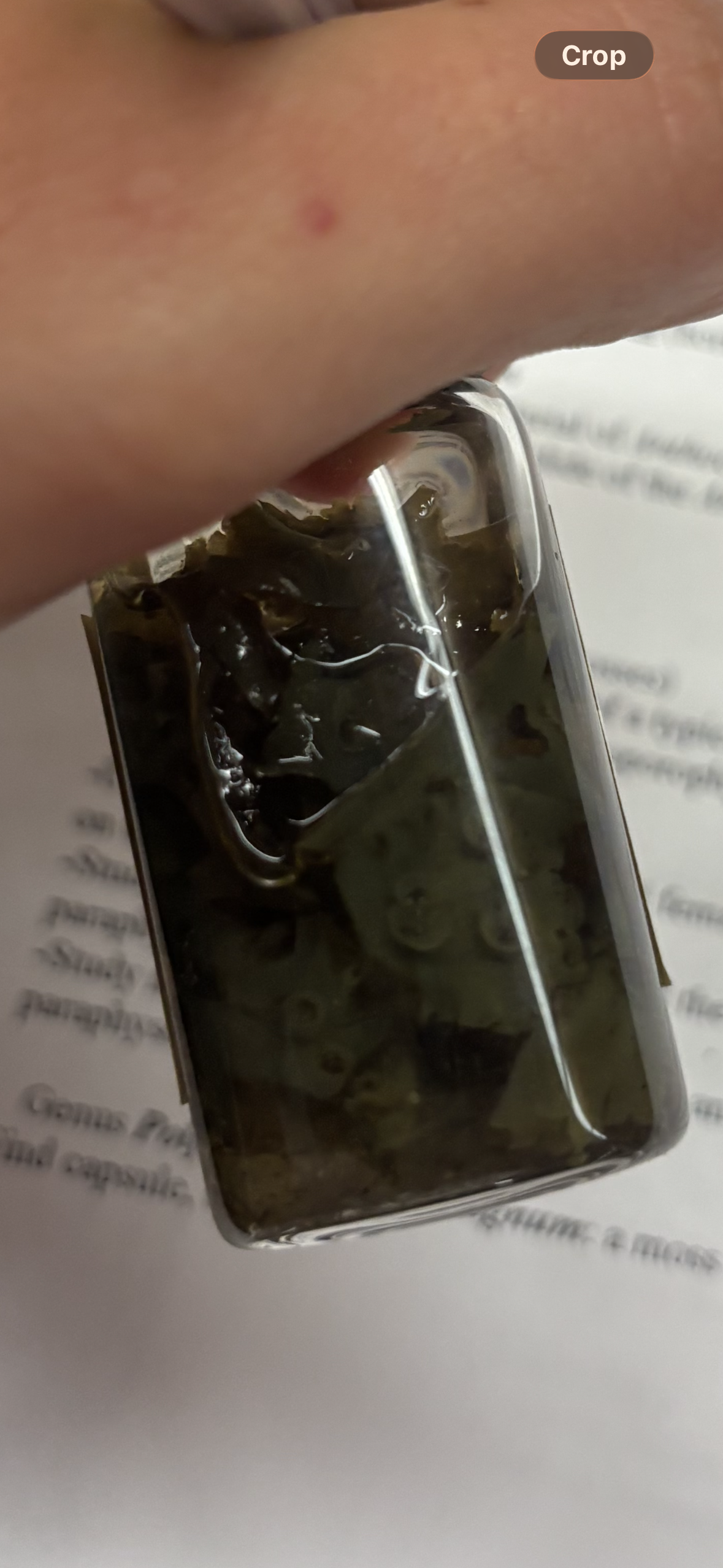
identify
gemmae cups of Marchantia
(phylum hepatocophyta)

identify
archegonial receptacle of Phylum Hepatocophyta, Genus Marchantia
archegonial receptacle
eggs
neck of archegonium
base of archegonium
egg
venter of archegonium
neck canal
neck of archegonium

identify
male receptacle with antheridia of phylum hepatocophyta Genus Marchantia
Antheridia
spermatogenous tissue
Antheridium
know life cycle of Phylum Hepatocophyta


identify
Phylum: Anthocerotophyta
Genus: Anthoceros
red is sporophytes, gametophytes on blue outer area
know life cycle of phylum bryophyta (moss)


identify
Phylum Bryophyta, Genus Mnium

identify/label
archegonial head of moss Mnium
egg
neck
paraphyses
venter
stalk

identify and label
antheridial head of moss Mnium
soermatogenous tissue
sterile jacket layer
stalk
male gametophyte
paraphyses
antheridium

identify and label
Mnium
antheridium
spermatogenous tissue
stalk
paraphyses

identify
Phylum: Bryophyta
Genus: Polytrichum

identify/label
Phylum: Bryophyte
Genus: Sphagum
sporophyte
pseudopodium (don’t need)
gametophyte

identify and label
calyptera
capsule of sporophyte
stalk (seta)
gametophyte
right pic
operculum
capsule of sporophyte w no calypetra
stalk (seta)

identify each
phylum bryophyta
left to right: antheridia, archegonia, sporophyte

identify/label
Phylum: Lycophyta
Genus: Lycopodium
Strobilus
Stem

identify/label
Phylum: Lycophyta
Genus: Lycopodium
Sporangium
Sporophyll
sporangium
sporophyll
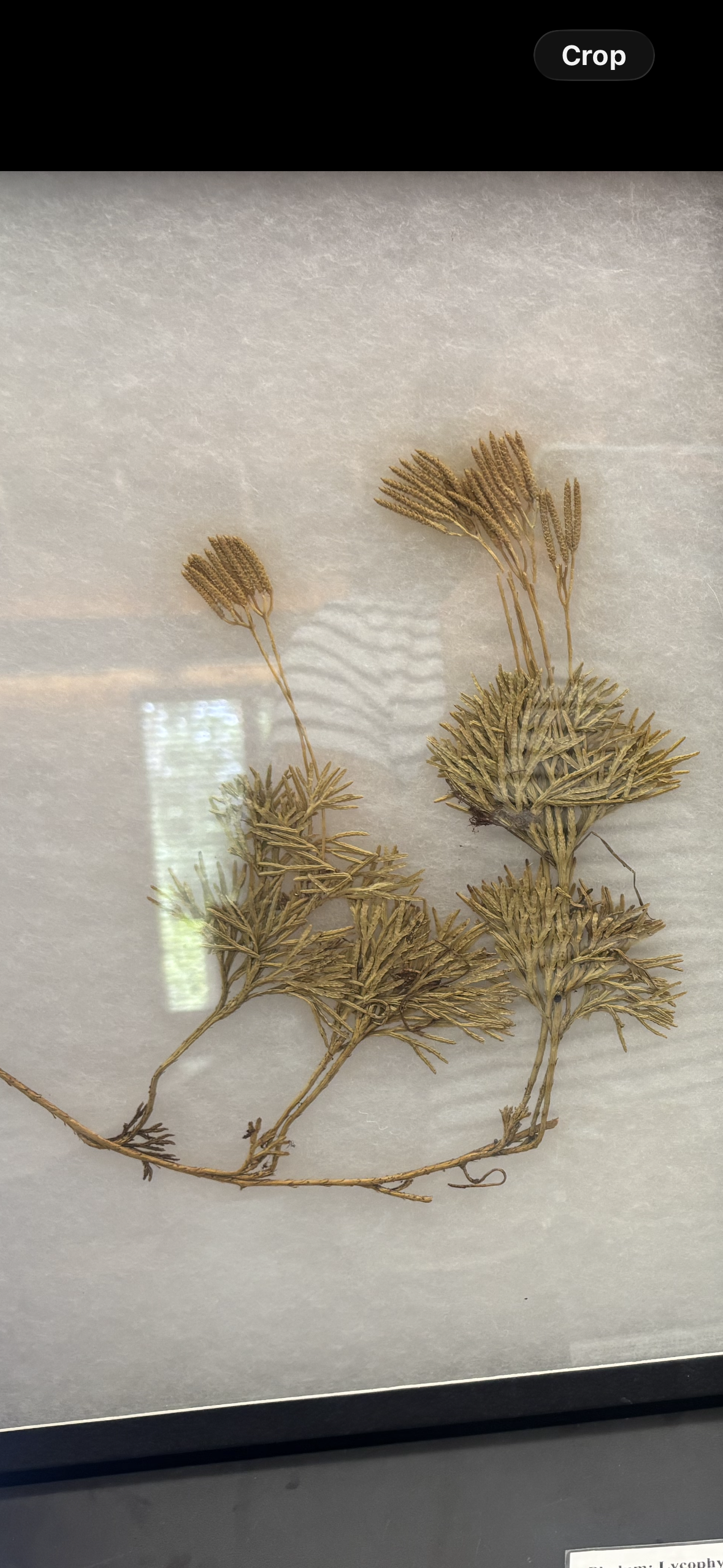
identify
Phylum: Lycophyta
Genus: Lycopodium
note strobili and rhizome

identify
Phylum: Lycophyta
Genus: Lycopodium

identify and label
Genus: Lycopodium
Phylum Lycophyta
Sporangia
Sporophyll
Sporangium
Sporophyll

identify
Phylum: Lycophyta
Genus: Selaginella

identify and label sporangium and spores
Phylum: Lycophyta
Genus: Selaginella
megasporophyll
megasporangium
megaspore
microsporophyll
microsporangium
microspore
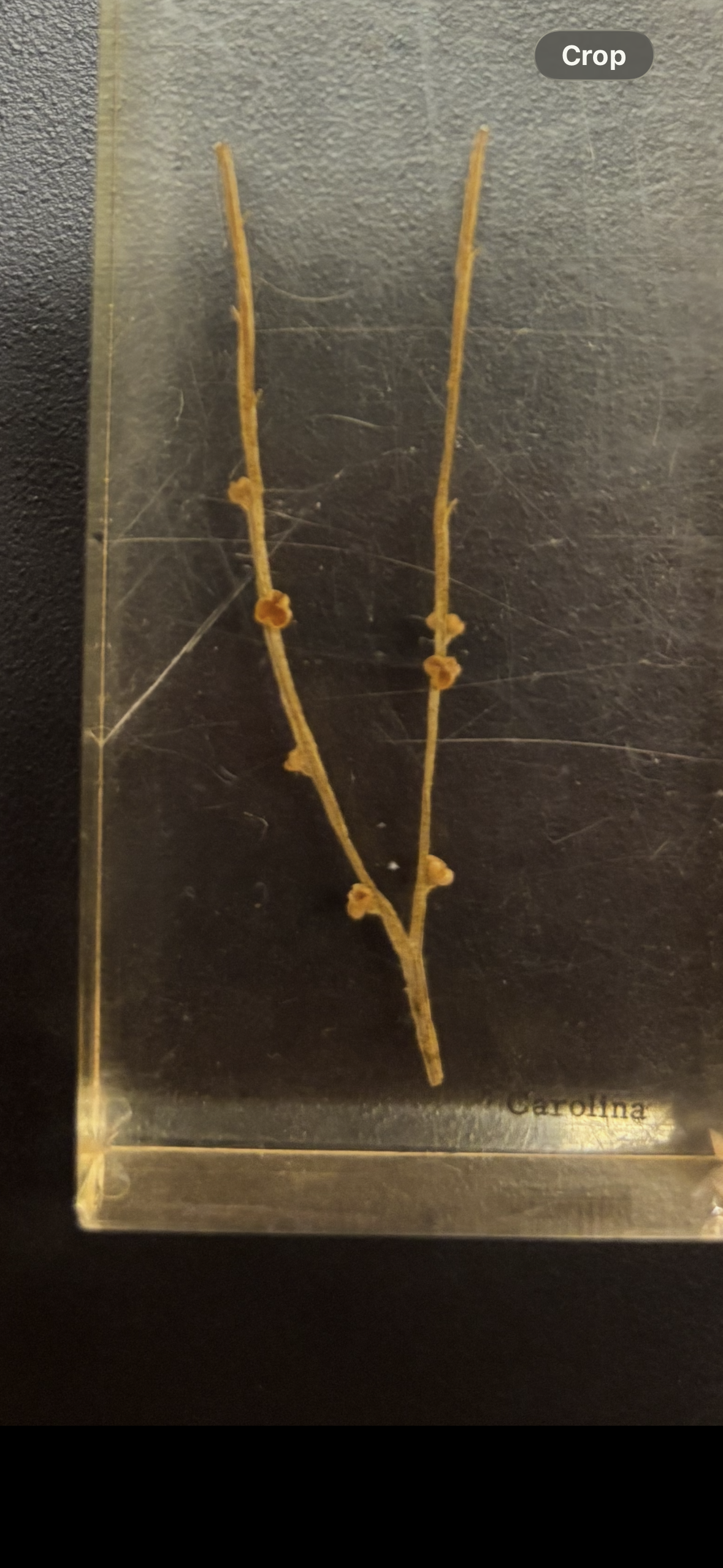
identify and label stems, sporangia and scales
Phylum: Pteridophyta
Subphylum: Psilophyta
Genus: Psilotum

Identify
Phylum: Pteridophyta
Subphylum: Psilophyta
Genus: Psilotum
axis
sporangia
spores inside sporangia
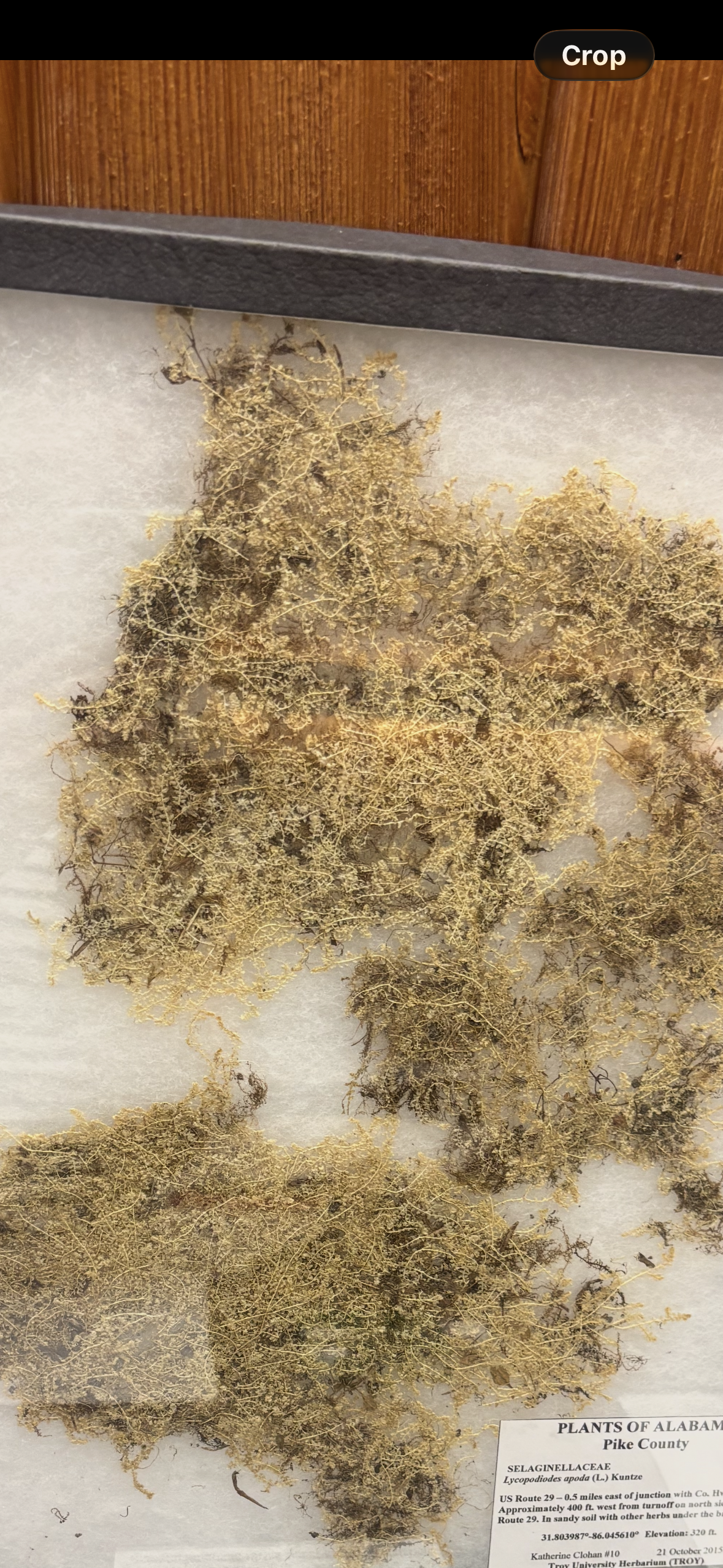
identify
Phylum: Lycophyta
Genus: Selanginella

Identify
Phylum: Pteridophyta
Subphylum: Equisetophyta
Genus: Equisetum
(scouring rushes and horsetails)
identify sporangia and sporangiophores

identify
Phylum: Pteridophyta
Subphylum: Equisetophyta
Genus: Equisetum
Scouring rush
locate microphylls, strobili, and sporangiophores

identify
Horsetail
Phylum: Pteridophyta
Subphylum: Equisetophyta
Genus: Equisetum
locate microphylls

identify
Phylum: Pteridophyta
Subphylum: Equisetophyta
Genus: Equisetum
identify strobilus, microphylls
sporangiophores
know life cycle of Equisetum


identify
Phylum: Pteridophyta
Subphylum: Polypodiophyta
identify: blade, stalk, pinnae, any sori? indusium?

identify
Phylum: Pteridophyta
Subphylum: Polypodiophyta
identify: blade, stalk, pinnae, any sori? indusium?
know life cycle of ferns
identify sporophyte, gametophyte, sori, portals, archegonium, antheridium


identify
sori (clusters of sporangia)
sporangium contain spores
Phylum: Pteridophyta
Subphylum: Polydiophyta

identify
archegonia in gametophyte (prothallus)
Phylum: Pteridophyta
Subphylum: Polypodiophyta

identify
Indusium (covers sporangia)
Phylum: Pteridophyta
Subphylum: Polydiophyta

identify
antheridia in gametophyte
Phylum: Pteridophyta
Subphylum: Polydiophyta

identify
water ferns