LU 3.2 Medical Management of Cancer
 Call Kai
 Learn
Learn Practice Test
 Spaced Repetition
 Match
Match Flashcards
 Knowt Play
1/20

There's no tags or description
Looks like no tags are added yet.
Name | Mastery | Learn | Test | Matching | Spaced | Call with Kai | Chat |
|---|
No analytics yet
Send a link to your students to track their progress
21 Terms
What is chemotherapy ?
a form of cancer treatment that uses chemical substances, particularly cytotoxic drugs, to destroy cancer cells
What are the goals of chemotherapy ?
for curative
to control the growth and spread of cancer
as adjuvant therapy
as neoadjuvant therapy
palliative care to relieve symptoms
What are the pre chemotherapy assessment ?
physical assessment
previous concurrent medical/ surgical illness
presence of prior cancer therapy toxicities (radiation and chemotherapy)
laboratory parameter (complete blood cell count)
clinical parameter (ECG and Chest xray to exclude any cardiac or lung problems)
psychosocial assessment of patient and family members
What are the classification of chemotherapy drugs ?
Alkylating agents
Nitrosoureas
Antimetabolites
Anti-tumor antibiotics
Plan alkaloids
Topoisomerase inhibitors
Miscellaneous agents
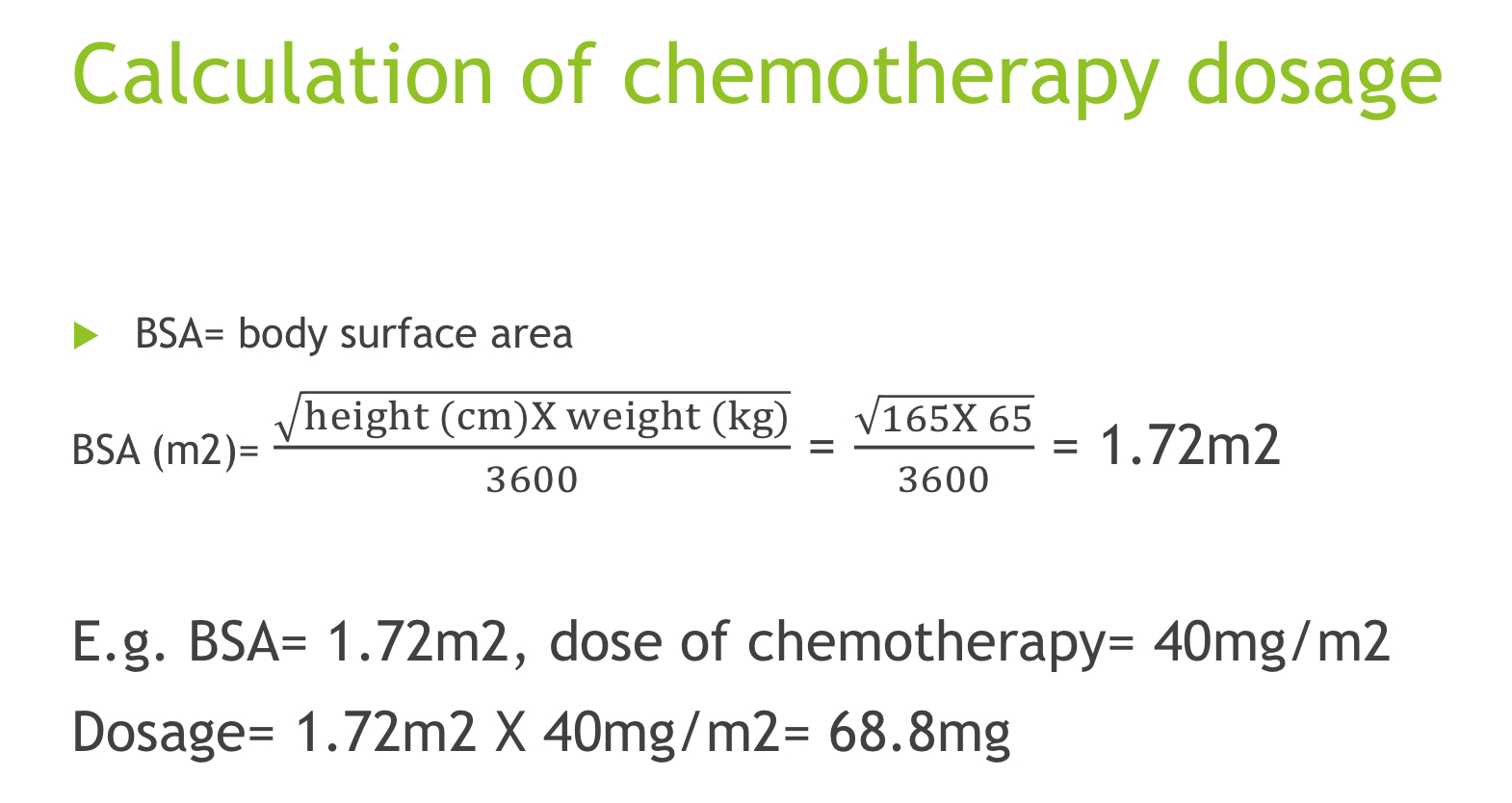
What is the calculation of chemotherapy dosage ?
Briefly describe alkylating agents in terms of
function
side effect
drug example
to treat which cancer
function : damage the DNA by preventing from replicate
side effect : bone marrow suppression, nausea, vomiting
example : Carboplatin, Busulfan, Cisplatin
to treat hematology cancer, lung, breast, ovary cancer
Briefly describe antimetabolites in terms of
function
side effect
drug example
to treat which cancer
function : interfere with DNA and RNA synthesis
side effects : nausea, vomiting, diarrhea
example : Capecitabine (Xeloda), Gemcitabine (Gemzar)
to treat leukemia, breast, ovary, intestinal tract cancer
Briefly describe anti-tumor antibiotics in terms of
function
side effect
drug example
to treat which cancer
function : bind to DNA to prevent RNA synthesis and cell growth
side effect : nausea, vomiting, bone marrow suppression
example : Daunorubicin, Epirubicin, Bleomycin
to treat breast, lymphoma and leukemia
Briefly describe plant alkaloids in terms of
function
drug example
function : block the ability of cancer cells to divide
two types and example : vinca alkaloids (vinblastine, vinorelbine), taxanes (paclitaxel, docetaxel)
Briefly describe topoisomerase inhibitors in terms of
function
side effect
drug example
to treat which cancer
classified as Topoisomerase I or II
function :inhibit the enzyme topoisomerase that help to unwind DNA replication
side effects : diarrhea, nausea, vomiting
example : Topoisomerase I (Topotecan), Topoisomerase II (Etoposide (VP16))
to treat leukemia, lung cancer, ovarian cancer, GI cancer
Briefly describe miscellaneous agents in terms of
side effect
drug example
to treat which cancer
side effects : fever, chills, nausea, vomiting
example : L-asparaginase (Elspar)
to treat leukemia (AML, ALL)
Briefly describe Nitrosoureas in terms of
function
side effect
drug example
to treat which cancer
function : inhibit synthesis of DNA and RNA
side effect : thrombocytopenia, nausea, vomiting
example : carmustine, semustine
to treat brain tumor
What are the issues with chemotherapy ?
toxicity and side effects
cancer cells can develop resistance to chemotherapy drugs
immunosuppression
psychosocial impact
long term effects such as heart problems
financial burden
adherence issues due to severity of side effects
What is radiotherapy ?
treatment method that uses high-energy radiation from x-rays, gamma rays, electrons to destroy cancer cells
What are the goals of radiotherapy ?
as a curative
as adjuvant therapy
as neoadjuvant therapy
as palliative radiotherapy to relieve symptoms
as prophylactic radiotherapy to prevent spread of cancer
What are the radiotherapy treatment planning process ?
Consultation and assessment
Simulation
Treatment planning
Treatment delivery
Monitoring and adjustments
What are the types of radiation therapy ?
External Beam Radiation Therapy (EBRT) : uses high-energy x-rays delivered from outside the body to target the tumor
Brachytherapy (Internal Radiation Therapy) : placing radioactive sources directly inside or near tumor
Systemic Radiation Therapy : giving radioactive substances orally or via injection to target specific cancer cells
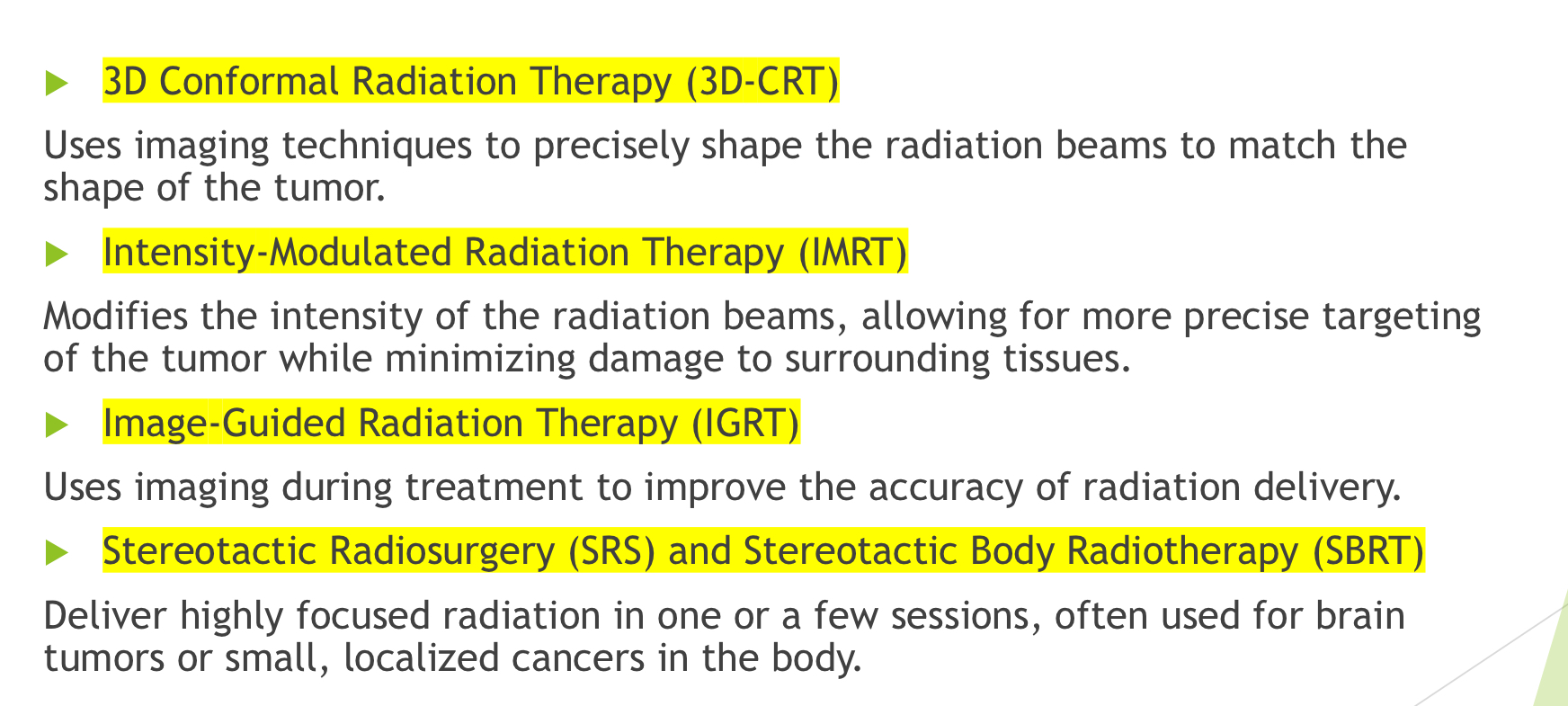
What are the examples of External Beam Radiation Therapy (ERBT) ?
What are the example of brachytherapy (internal radiation therapy) ?
Low-Dose Rate (LDR) Brachytherapy : Involves placing radioactive seeds in or near the tumor, which emit radiation over a long period.
High-Dose Rate (HDR) Brachytherapy : Involves the temporary placement of a higher-intensity radiation source for a short period.
What are the types of internal radiation therapy ?
interstitial radiation
intracavitary radiation
What are the issues with radiotherapy ?
acute side effects such as skin reactions, fatigue
late side effects such as fibrosis
Physical side effects (men: erectile dysfunction, women : vaginal dryness)
some cancer cells develop resistance to radiation
emotional impact such as anxiety