BU Part 2.2
 Call Kai
 Learn
Learn Practice Test
 Spaced Repetition
 Match
Match Flashcards
 Knowt Play
1/112

There's no tags or description
Looks like no tags are added yet.
Name | Mastery | Learn | Test | Matching | Spaced | Call with Kai | Chat |
|---|
No analytics yet
Send a link to your students to track their progress
113 Terms
Admittance
The reciprocal of impedance.
Air Blast Transformer
A transformer cooled by forced circulation of air through its core and coils.
Air Circuit Breaker
A circuit breaker in which the interruption occurs in air.
Air Switch
A switch in which the interruption of the circuit occurs in air.
Alternating Current
A periodic current, the average value of which over a period is zero.
Single Phase Power
Type of Electric Power:Residential Projects
Two Phase Power
Type of Electric Power: Medium Scale Projects
Three Phase Power
Type of Electric Power: Large Scale Commercial and Industrial Projects
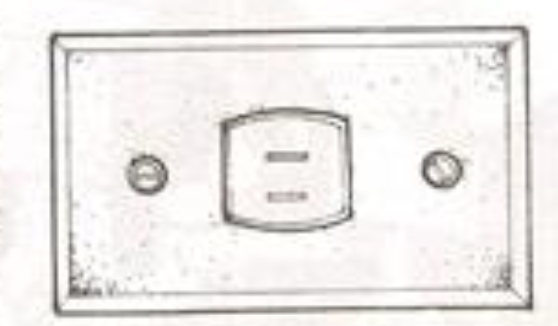
Receptacles
Identified by number of poles and wires and whether not the device for connection of separated grounding wire.
2 Pole 3 Wire (Single Outlet)
Alternator (Synchronous Generator)
That changes mechanical power into electrical power
Ammeter
An instrument for measuring electric current.
Ampacity
The current, in amperes, that a conductor can carry continuously under the conditions of use without exceeding its temperature rating.
Ampere
A charge flow of one coulomb per second.
Askarel
A synthetic non-flammable insulating liquid which, when decomposed by electric arc, evolves only non- flammable gaseous mixture
Automatic Transfer Equipment
A device used to transfer load from one power source to another e.g. transfer switch, switchboard assembly, etc.
Autotransformer
A transformer in which part of the winding is common to both the primary and secondary circuits
Auxiliary
A device or equipment which aids the main device
Ballast
A device used with fluorescent and high-intensity discharge lamps to provide the necessary circuit condition for starting and operating the lamp.
Branch Circuit
The circuit conductors between the final overcurrent device protecting the circuit and the outlet(s).
Buna
A synthetic rubber insulation used on wires, cables and other electrical apparatus.
Bus
A conductor or group of conductors that serves as a common connection for three or more circuits in a switchgear assembly.
Cable Sheath
The protective covering such as non-metallic materials as plastic, applied over a cable.
Circuit Breaker
To open the circuit automatically on a predetermined over-current without damage to itself when properly applied within its rating.
Circuit Homerun
In a wiring diagram, an arrow having circuit number designating the point at which such branch circuit will be connected.
Circular Mil
A unit for measuring the cross-sectional area of a conductor (used in MCM conductors)
Conductance
A measure of permissiveness to charge flow; the reciprocal of resistance.
Bare Conductor
A conductor having no covering or electrical insulation whatsoever.
Covered Conductor
A conductor encased within material of composition or thickness that is not recognized by code as electrical insulation.
Insulated Conductor
A conductor encased within material of
composition and thickness that is recognized by
code.
Conduit
A duct or tube for enclosing wires or cables; commonly formed from iron pipe or plastic tubing.
Conduit Fittings
Accessories used to complete a conduit system, such as boxes, bushings and access fitting.
Condulet
A device installed at intermediate points usually at turns to facilitate easy pull through of wires and provide junction of wires
Copper-clad Aluminum Conductor
Conductors drawn from a copper-clad aluminum rod with the copper metallurgically bonded to an aluminum core.
Coulomb
An electric charge of 6.28 x 10¹⁸ electrons. One coulomb is transferred when a current of 1 ampere continues past a point for 1 second.
Current
The rate of charge flow. A current of 1 ampere is equal to a flow rate of 1 coulomb per second.
Direct Current
A unidirectional current with a constant value.
Electric Circuit
A conducting path through which electric charges may flow.
DC circuit
A _____ is a closed path for a charge flow
AC circuit
An _____ is not necessarily closed, and may conduct in part by means of an electric field.
Electromagnetic Induction
A process of emf (electromotive force) generation induced by movement of magnetic flux which cuts an electrical conductor; used in generators to produce current.
Electromotive Force (EMF)
An energy-charge relation that results in electric pressure, which produces or tends to produce charge flow
Farad
A unit of capacitance defined by the production of one volt across the capacitor terminals when a charge of one coulomb is stored.
Flashover
A disruptive electrical discharge around or over (but not through) an insulator.
Flexible Conduit
Non-rigid metallic or non-metallic conduit into which conductors may be drawn.
Frequency
The number of periods occurring in unit time of a periodic process such as in the flow of electric charge.
Galvanometer
An instrument for indicating or measuring comparatively small currents.
Fire exit staircase
Where does the standpipe commonly installed?
Generator
A machine that converts mechanical energy into electrical energy utilizing electromagnetic induction principle.
AC Generator
Also known as Alternator A generator that produces alternating current.
DC generator
A generator that produces direct current
Greenfield
Flexible metal conduit which resembles an armored cable in appearance but is more adaptable than armored cable
Ground-Fault Circuit Interrupter (GFCI)
A device installed in circuits where current leakage can be especially dangerous, such as outdoor or bathroom circuits
Grounding Conductor
Used to connect equipment or the grounded circuit of a wiring system to a grounding electrode or electrodes
Henry
A unit of inductance; it permits current increase at the rate of 1 ampere per second when 1 volt is applied across the inductor terminals.
Individual Branch Circuit
A branch circuit that supplies only one utilization equipment.
Insulated
Separated from other conducting surfaces by dielectric permanently offering high resistance to the passage of current and to disruptive discharge.
Insulator
A material or substance that does not allow the flow of electricity through it.
Inverter
A device that converts direct current (dc) to alternating current (ac).
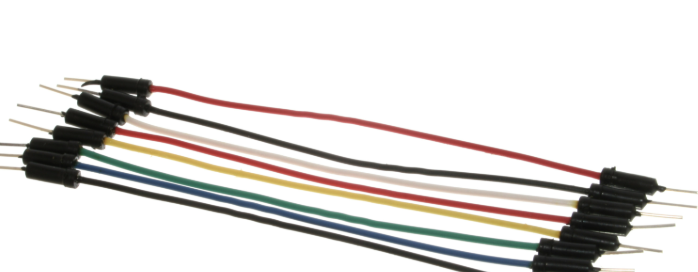
Jumper
A short length of conductor used to make a connection between terminals, and temporary connection.
Lug
Copper or brass fitting to which electrical wires can be soldered or otherwise connected.
Ohm (symbol: Ω)
The unit of resistance; a resistance of one ohm sustains a current of 1 ampere when 1 volt
Outlet
A point in a wiring system from which current is taken for supply of fixtures, lamps, heaters, etc.
Overcurrent
Any current in excess of the rated current of the equipment or the ampacity of the conductor
Panelboard
A single or group of panel units designed for assembly in the form of a single panel; including buses, automatic overcurrent devices
Pull Box
A metal or a plastic box with a blank cover for insertion into a conduit run, raceway, or metallic
Rectifier
A device that converts alternating current (ac) to direct current (dc).
Resistor
A device designed to introduce resistance into an electric circuit
Series Circuit
A circuit that provides a complete path for current and has its components connected end-to-end.
Service Entrance Conductors (Overhead System)
The service conductors between the terminals of the service equipment and a point usually outside the building
Service-Entrance Conductors (Underground System)
The service conductors between the terminals of the service equipment and the point of connection to the service lateral.
Standby Generator
A generator for providing emergency power during power outage; sometimes called Emergency Generator.
Switch Bank
In switch installation, a place or a point in a building where group of switches used to control group of lamps may be located.
Switchboard
A large single panel, frame or assembly of panels on which are mounted, on the face or back
Switchgear
A general term which covers switching and interrupting devices or apparatus.
Transformer
A static alternating current (ac) device used to change voltage by increasing or reducing it;
Step-up Transformer
A type of transformer used for increasing voltage, e.g. 110 v. to 220 v.
Step-down Transformer
A type of transformer used for decreasing voltage, e.g. 220 v. to 110 v.
Transformer Vault
A fire-rated room containing a transformer and auxiliary equipment for a large building
Tripping
A term denoting interruption or disconnection of contact in devices such as circuit breaker
Volt
The unit of emf (Electromotive Force); 1 volt produces a current of 1 ampere in a resistance of 1 ohm.
Watt
The unit of electrical power, equal to the product of 1 volt and 1 ampere in DC values, or in rms AC values.
André-Marie Ampère (1775 – 1835)
A French physicist who laid the foundations for the science of electrodynamics through his demonstration of the magnetic fields produced by electric currents
Heinrich Hertz (1857 – 1894)
A German physicist who was among the first to demonstrate the existence of electric waves
James Clerk Maxwell (1831 – 1879)
One of the finest mathematicians in history, magnetic fields acting together could produce a new kind of energy called radiant energy
Nikola Tesla (1856 – 1943)
He is best known for developing the alternating current (AC) power system, which revolutionized electricity distribution
Dynamic Electricity (Electrodynamics)
Electricity that flows through a substance or over its surface in the form of an electric current.
Natural Magnets
Iron ores called magnetite.
Insulation - Class A
What type of Insulation:
(1) Cotton, silk, paper and materials of paper
composition impregnated or immersed in an
insulating
(2) Molded/laminated materials with cellulose
filler, phenolic resin, or similar resins
(3) Films/sheets of cellulose acetate or similar
cellulose products
(4) Varnishes or enamel applied to conductors
Insulation - Class B
What type of Insulation:
Consists of mica, asbestos, or fiberglass; all with a binder.
Insulation - Class C
Consists entirely of mica, porcelain, glass, quartz, or similar materials.
Stranded Wire
Consists of a group of wires twisted to form metallic string
Solid Wire
Consist of a one piece of wire on its entire cross section.
Bus, Busbar
A rigid electric conductor, usually a metal bar, hollow tube, or rod
American Wire Gauge (AWG)
A U.S. standard set of non-ferrous wire conductor sizes
Open Wiring on Insulators
An exposed wiring method using cleats, knobs, tubes, and flexible tubing for the protection and support of single insulated conductors
Arrmored Cable (Type AC)
A fabricated assembly of insulated conductors in a flexible metal enclosure.
Flat Cable Assemblies (Type FC)
An assembly of parallel conductors formed integrally with an insulating material web
Flat Conductor Cable (Type FCC)
Consists of three or more flat copper conductors placed edge-to-edge and separated
Rigid Nonmetallic Conduit
A type of conduit and fittings of suitable nonmetallic material that is resistant to moisture