U3 - Epidermis and Intro to Integumentary System
 Call Kai
 Learn
Learn Practice Test
 Spaced Repetition
 Match
Match Flashcards
 Knowt Play
1/25

There's no tags or description
Looks like no tags are added yet.
Name | Mastery | Learn | Test | Matching | Spaced | Call with Kai | Chat |
|---|
No analytics yet
Send a link to your students to track their progress
26 Terms
integumentary system
- skin and its appendages
- largest organ of the body is skin
- two (maybe three) layers of this system: epidermis, dermis, hypodermis
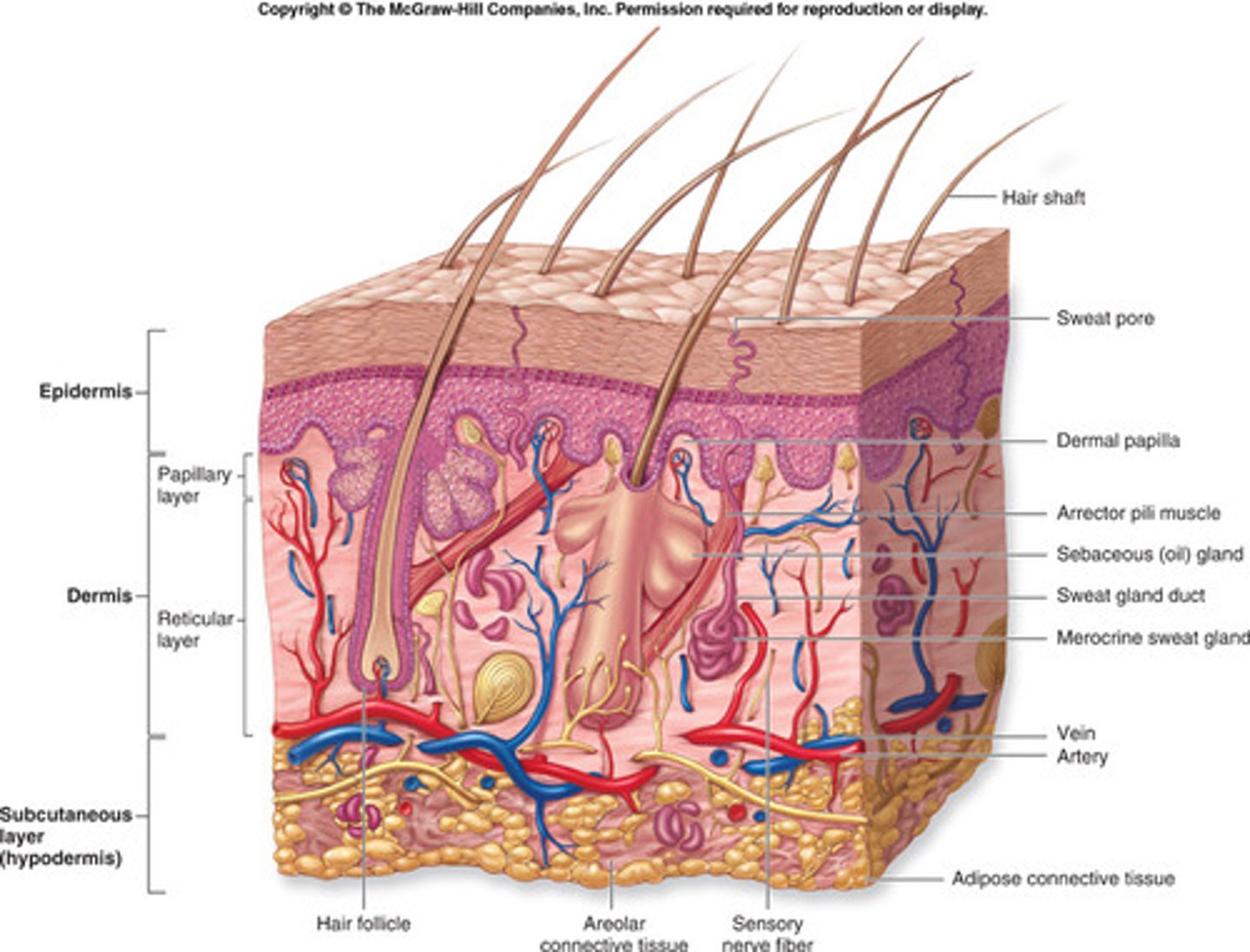
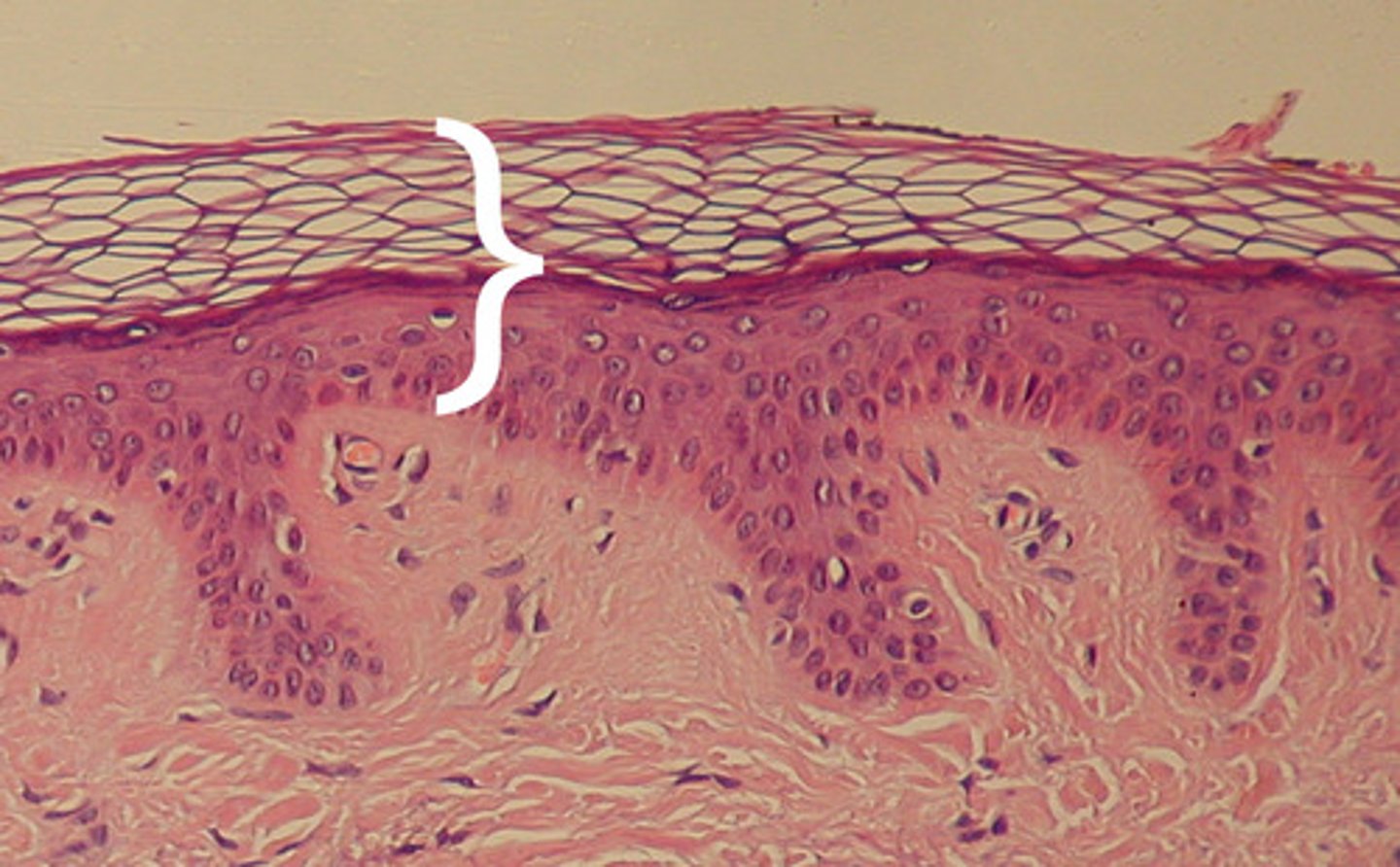
epidermis
keratinized stratified squamous epithelium
cells: keratinocytes, melanocytes, merkel cells, Langerhans cells
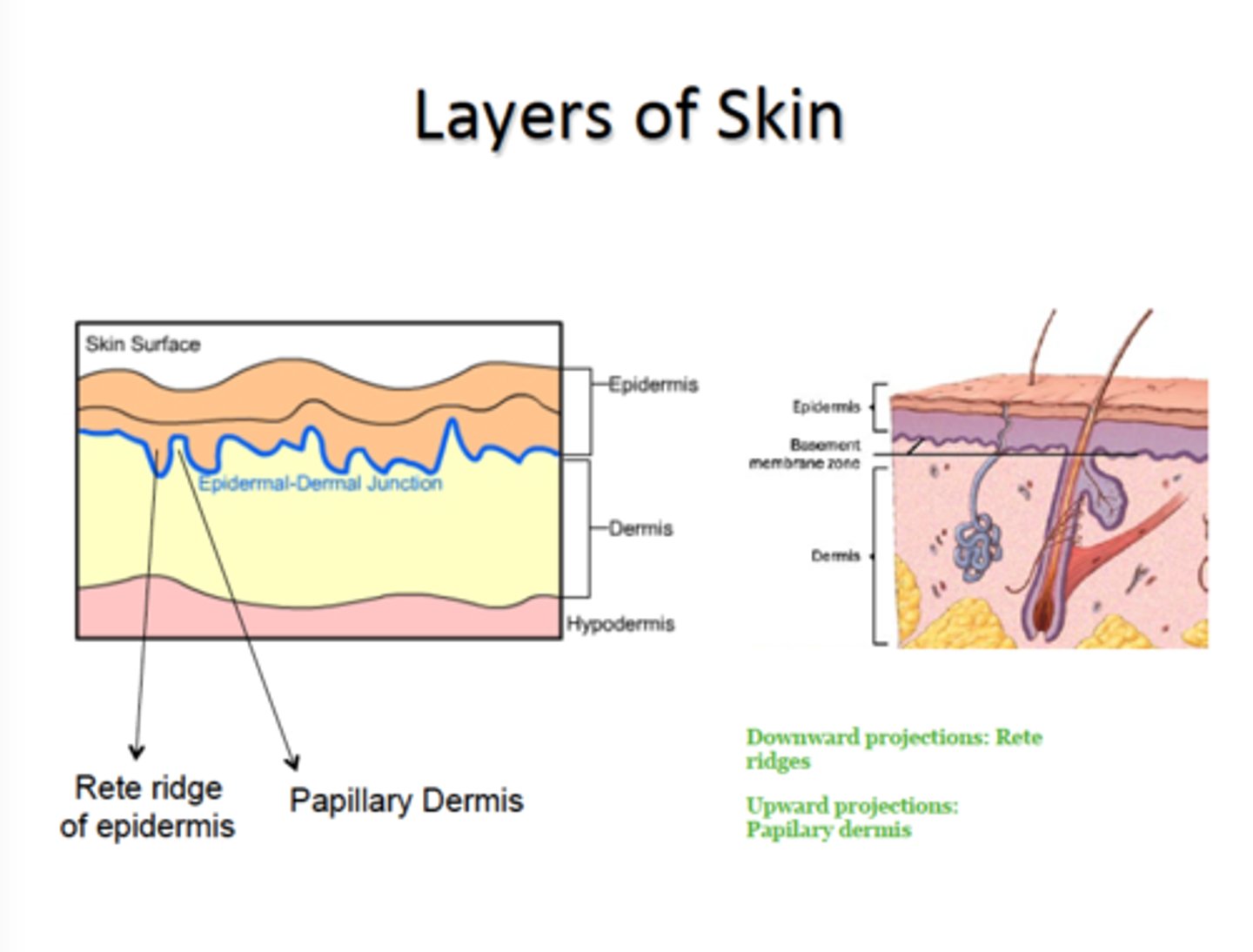
dermal-epidermal junction
- separates dermis and epidermis
- glue-like layer
- basement membrane
dermis
- made of dense (fibrous) CT
- contains blood vessels, nerves
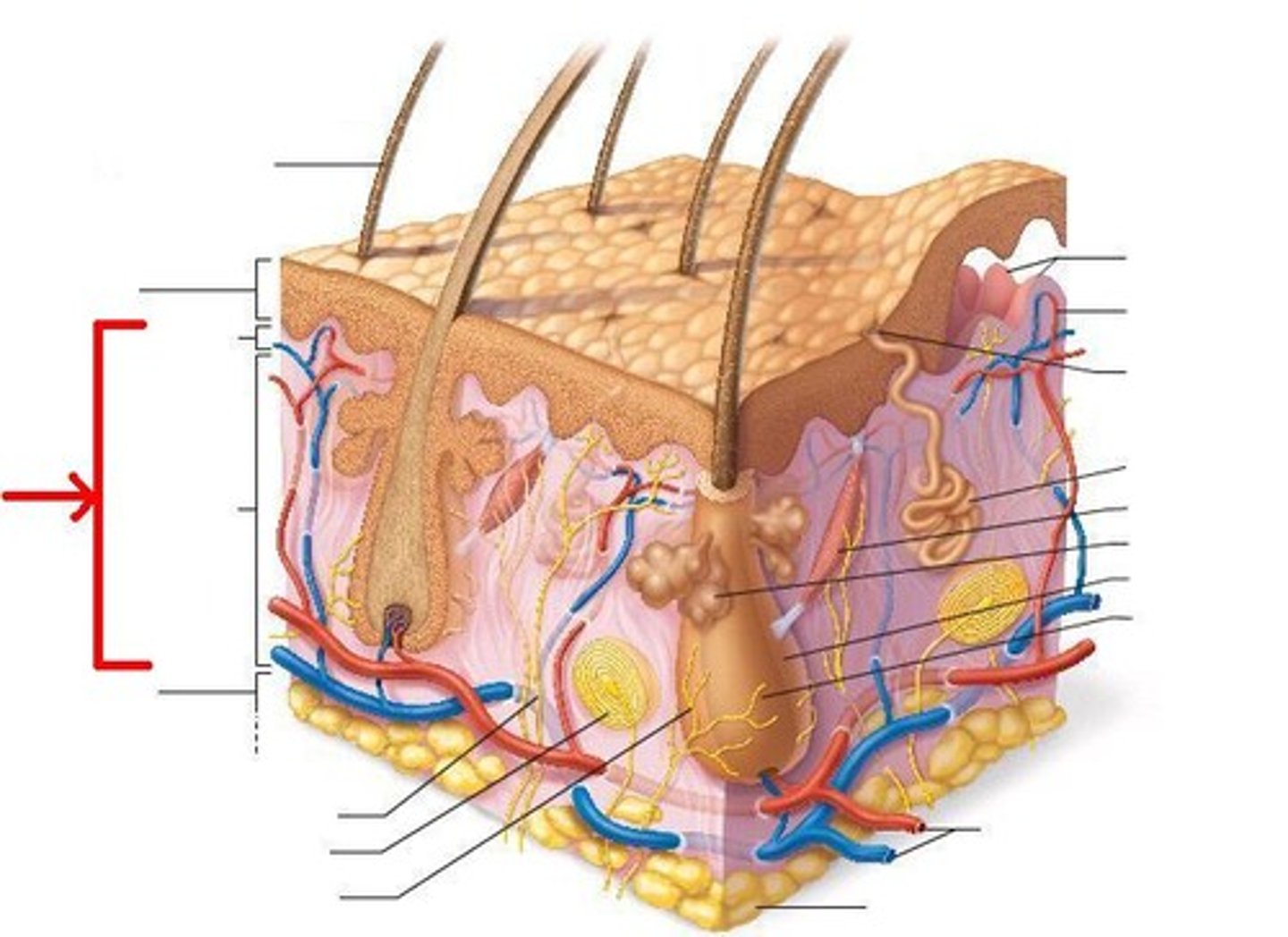
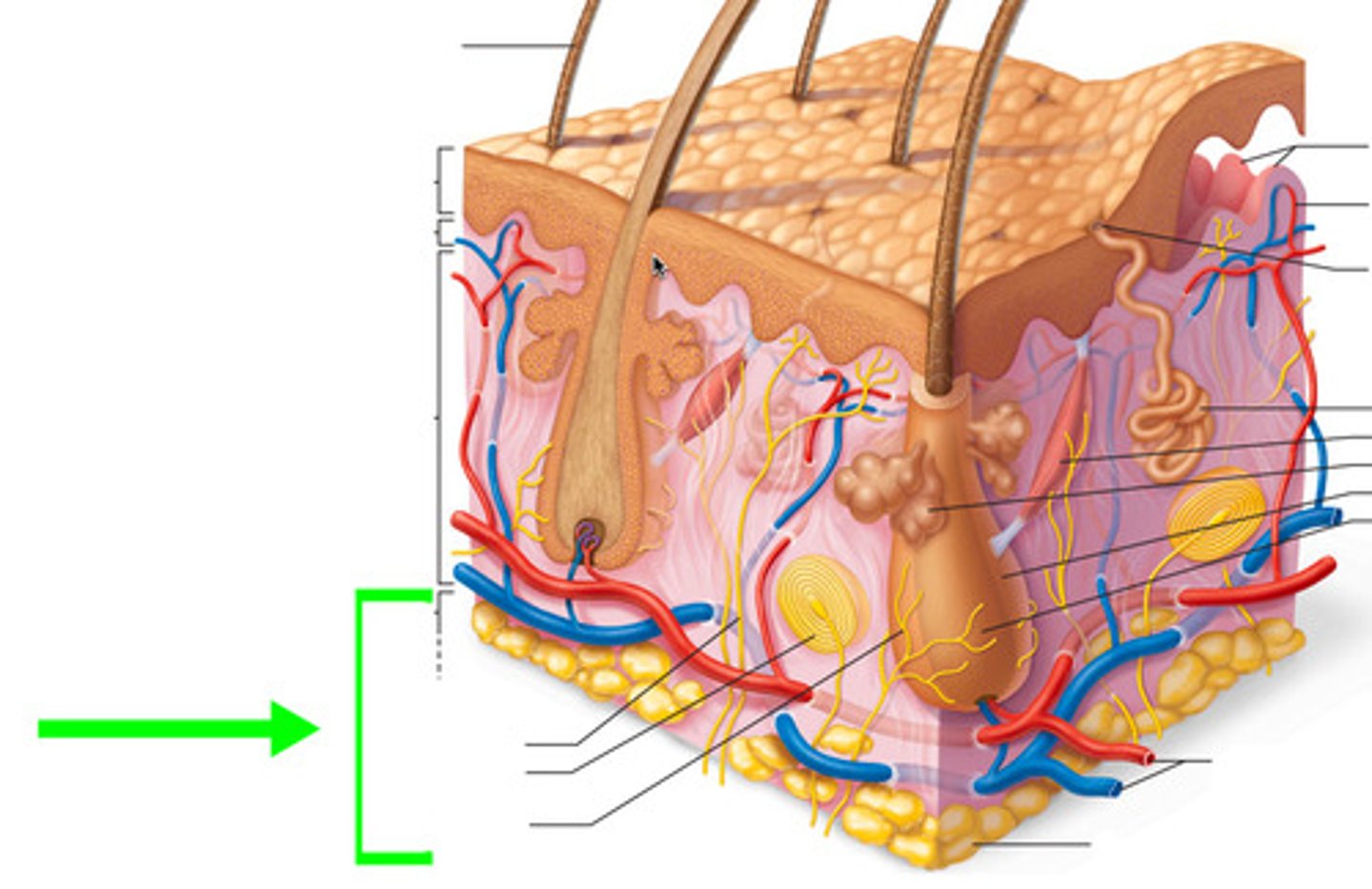
hypodermis
- areolar and adipose tissue
-> superficial fascia
-> subcutaneous tissue
protection function
waterproof (retention); impermeable to chemicals, heat, cold, bacteria; screens UV
synthesis function
creates Vitamin D with UV light
regulation function
___________ body temperature
excretion function
just small amounts of wastes in sweat
sensory reception
the skin contains nerve endings
immune system
contains cells from this system that help with fighting off bacteria
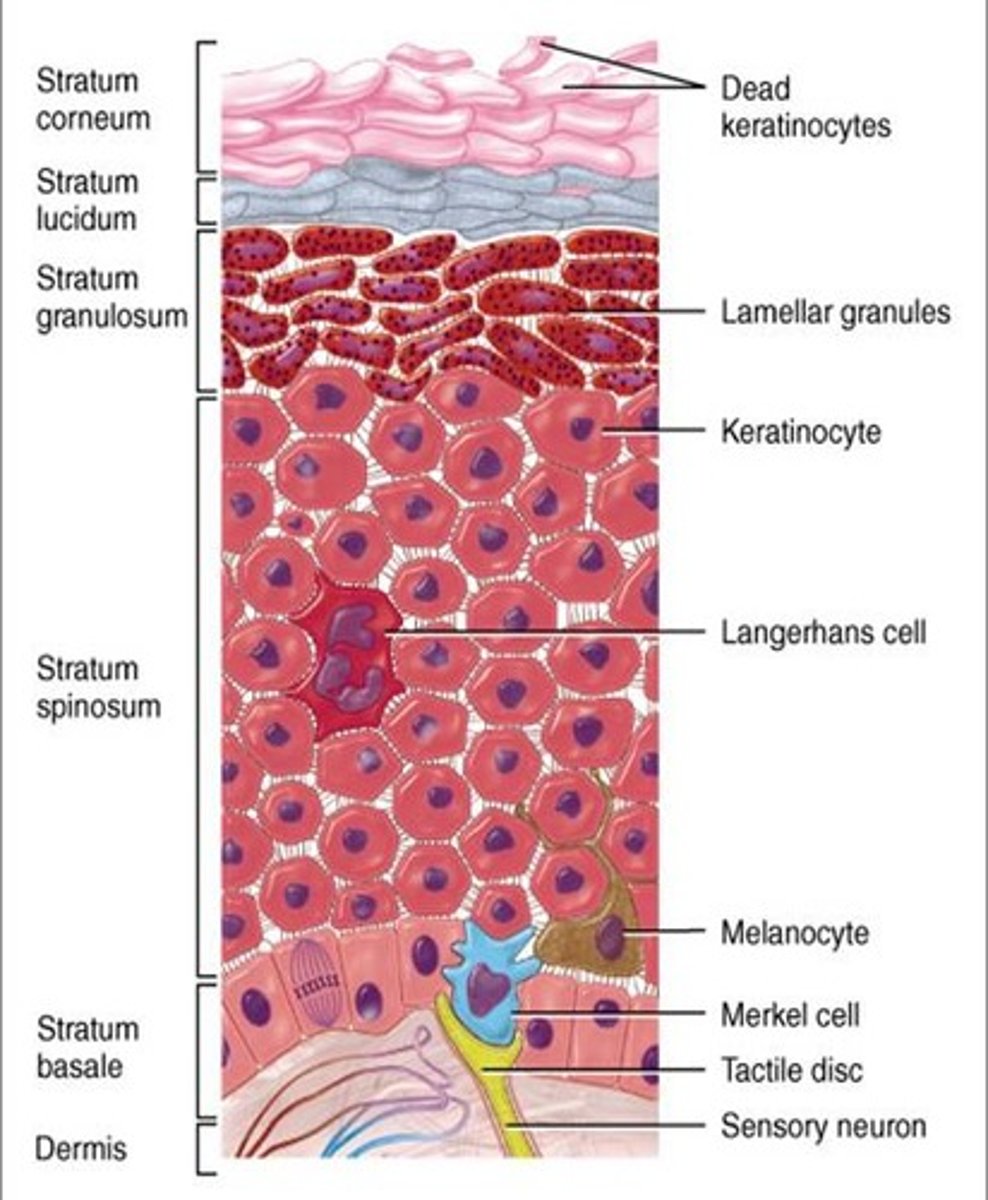
keratinocytes
most abundant type of cell in the epidermis; produce tough, fibrous protein called keratin
melanocytes
make the dark skin pigment, melanin in the epidermis
every person has the same number of melanocytes - it is the ACTIVITY LEVEL of the melanocytes
Merkel cells
cells in the epidermis associated with sensory nerve endings
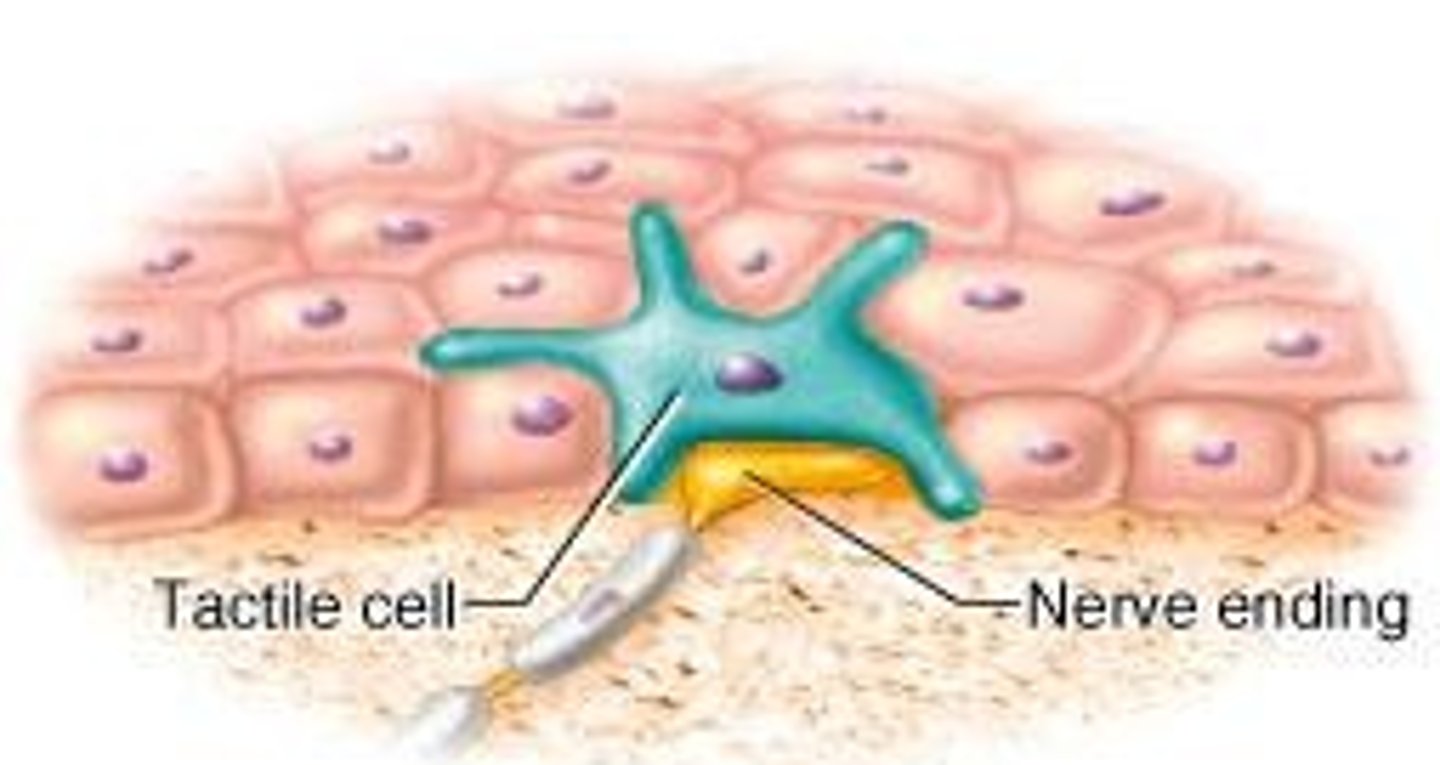
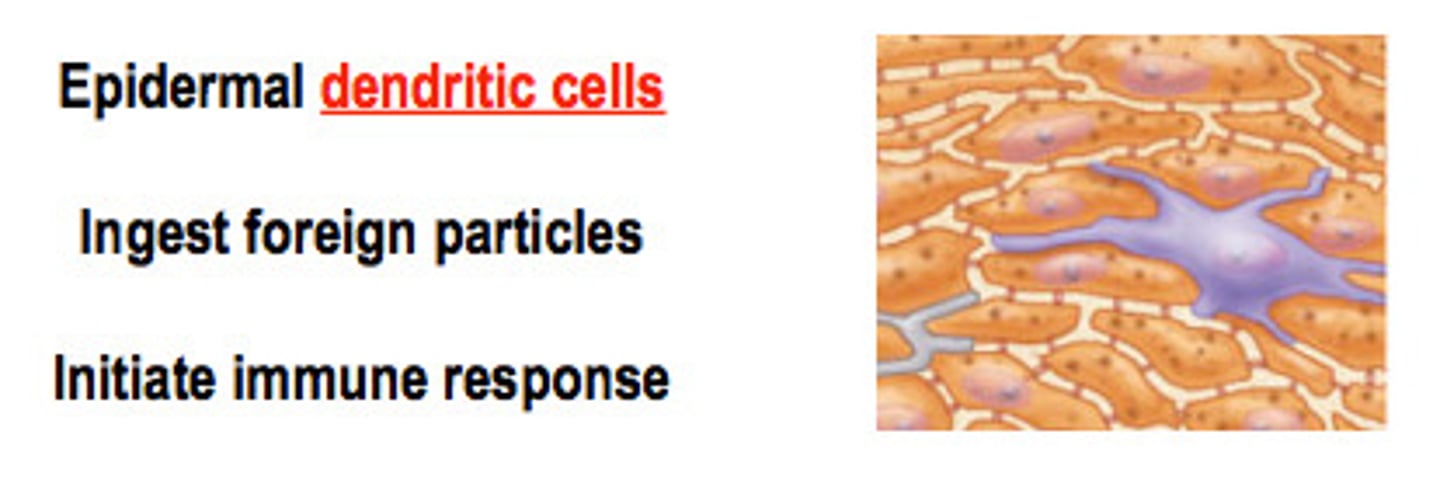
Langerhans cells
macrophage-like dendritic (branching) cells in the epidermis
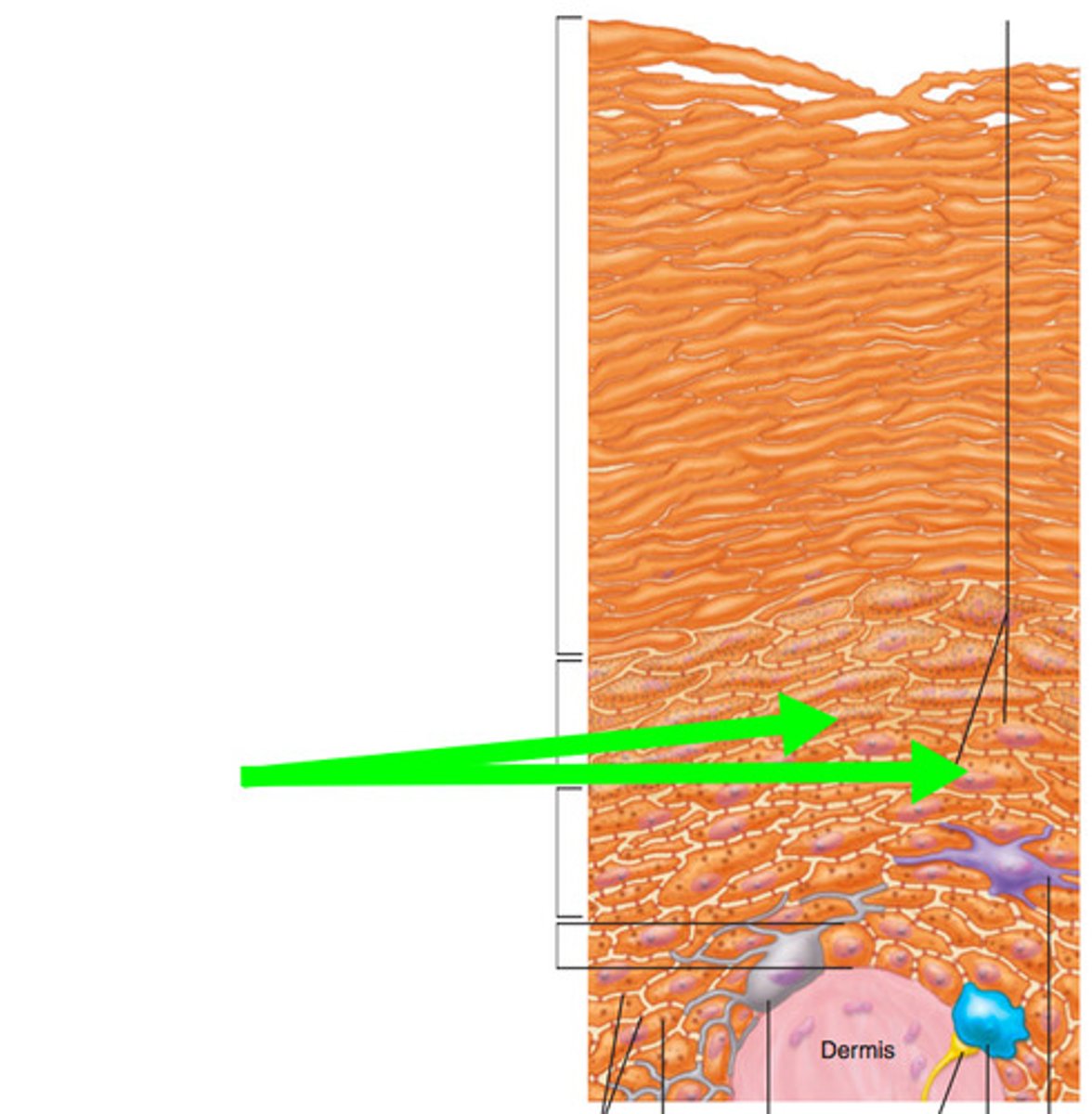
stratum basale (germinativum)
deepest layer of epidermis; single row attached to the dermis, contains the youngest cells
- close to the blood supply in the dermis
-> only stratum healthy enough to reproduce
-> daughter cells here are pushed upward as more cells are produced and eventually die
-> will be hardened with keratin as they make their way to the top
Britney
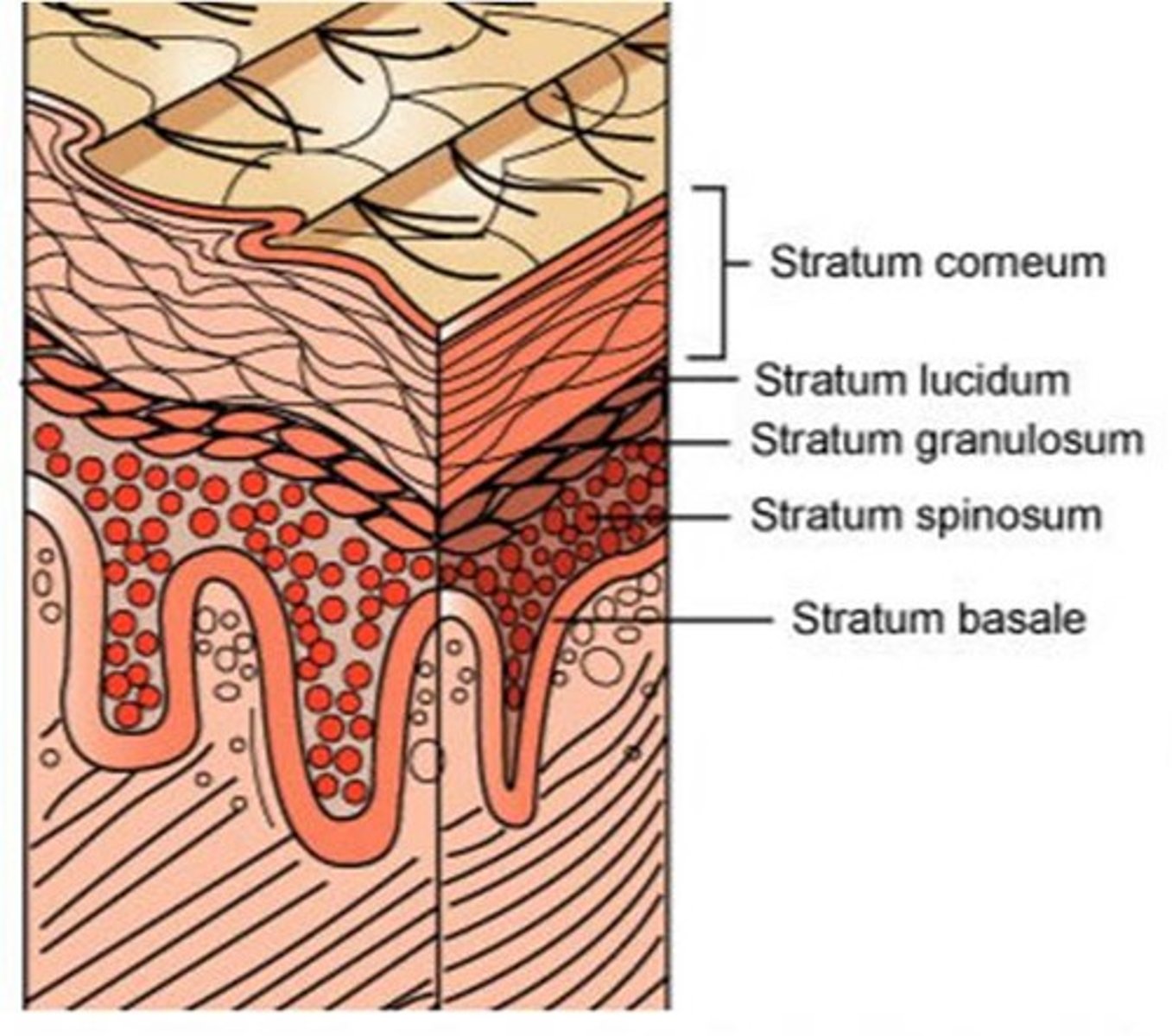
stratum spinosum
second deepest layer of epidermis; includes tonofilaments (help with flexibility)
Spears
stratum granulosum
flattened keratinocytes; one of the middle layers of the epidermis (either middle or second most superficial)
Grows
stratum lucidum
layer of epidermis found ONLY in the thick skin of palms, soles, and fingers (second most superficial if present)
Like
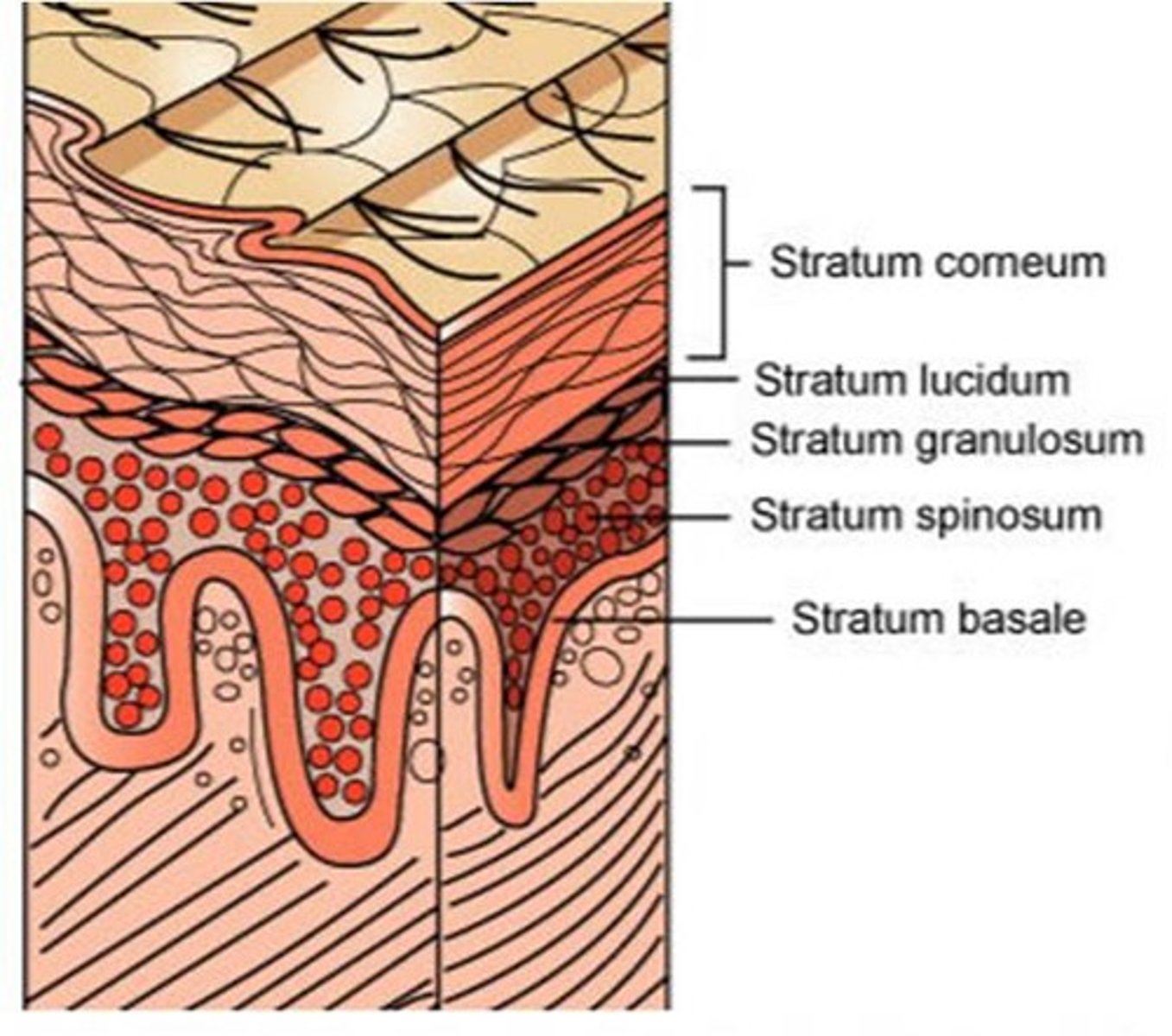
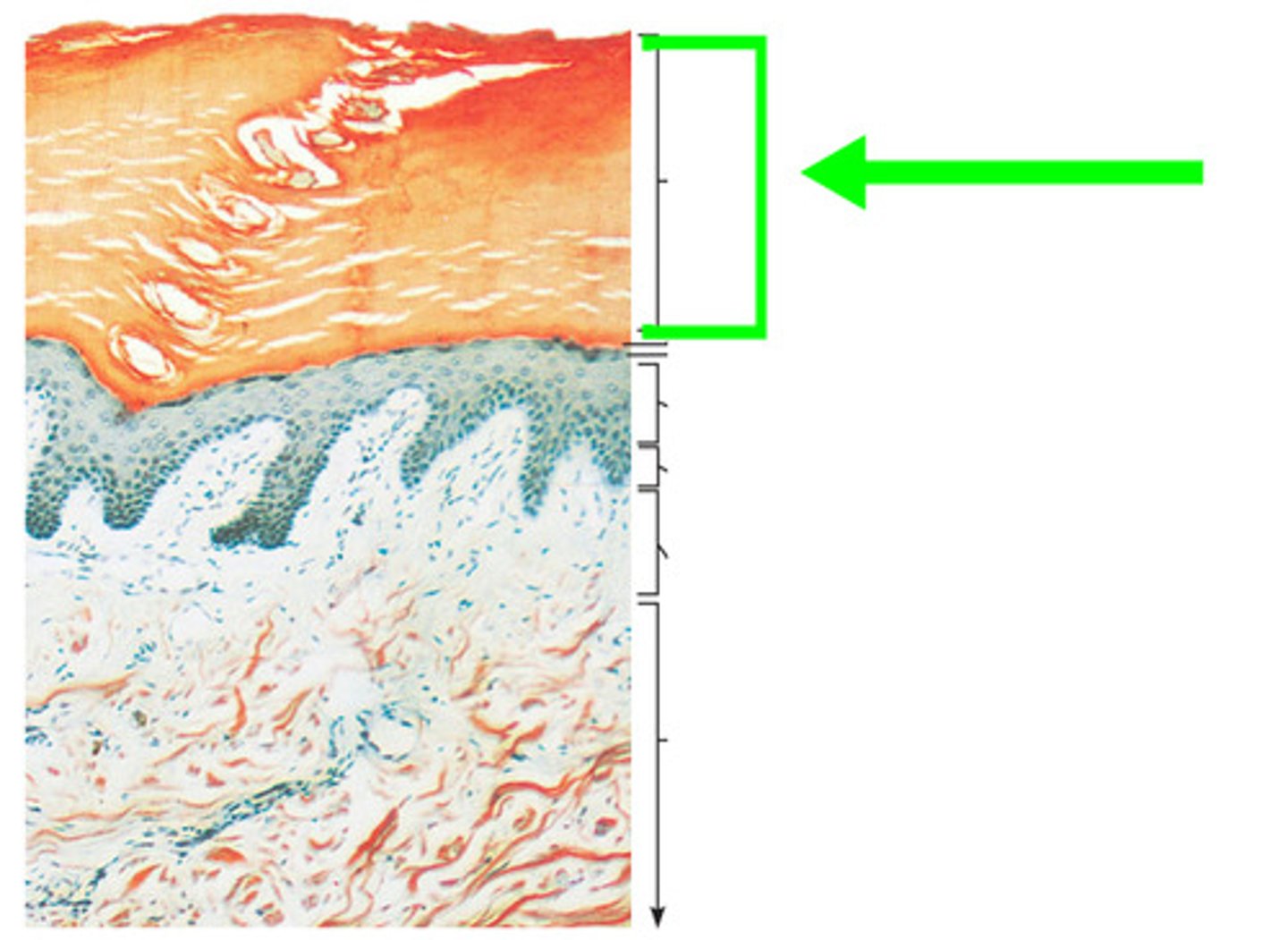
stratum corneum
most superficial layer of the epidermis consisting of dead cells; many layers thick
Candy
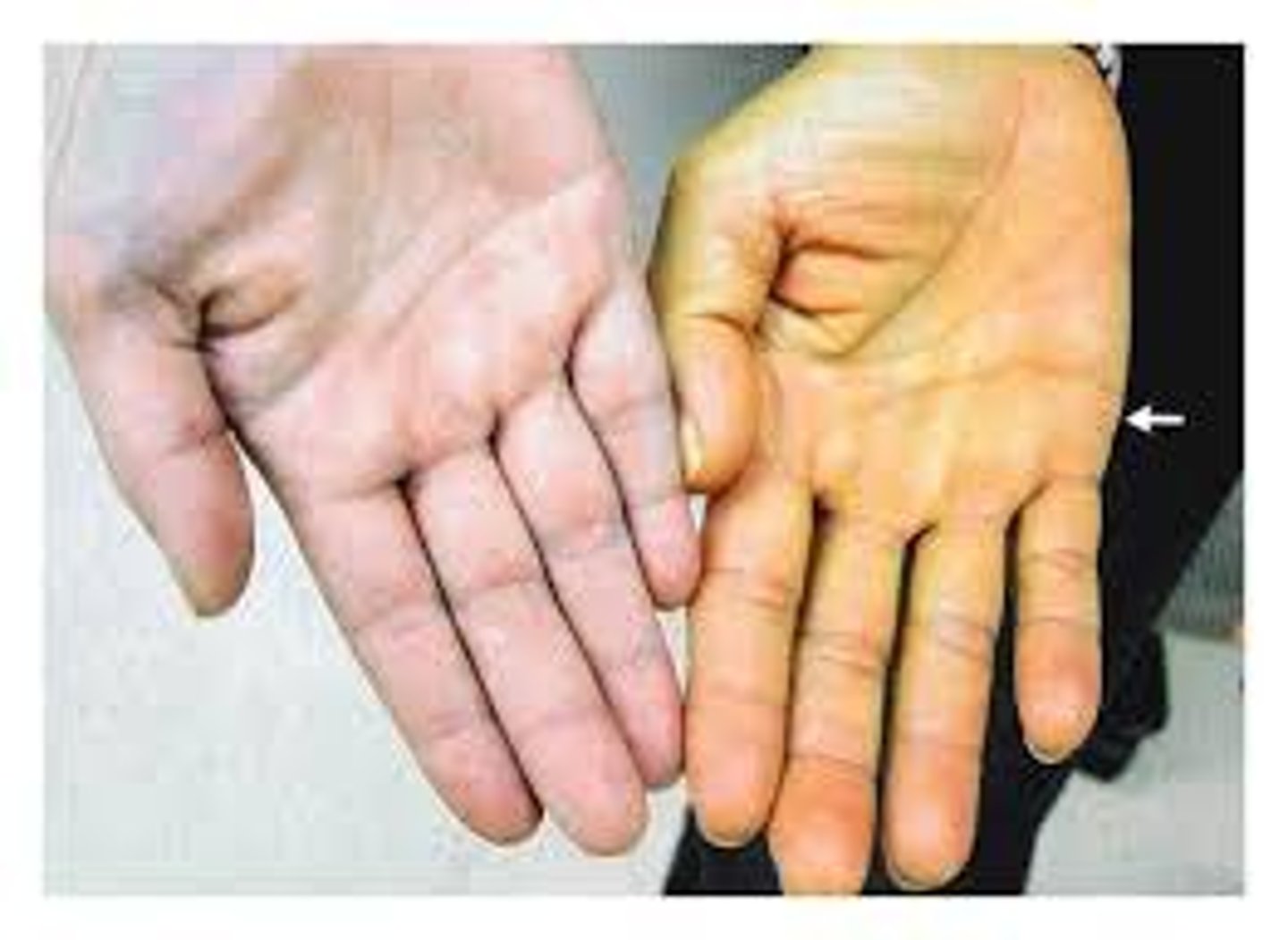
carotene
yellow-orange pigment used in skin color, derived from carrots and yellow veggies
hemoglobin
oxygen carrying pigment, refers to the pink of light skin
melanin
most important type of skin pigment
-> more active melanocytes = more melanin in keratinocytes = darker skin
Two Different Types: eumelanin & pheomelanin
Production Determined By:
- UV exposure
- genetic makeup (polygenic inheritance & multiple alleles)
- size of melanocytes
- disease conditions
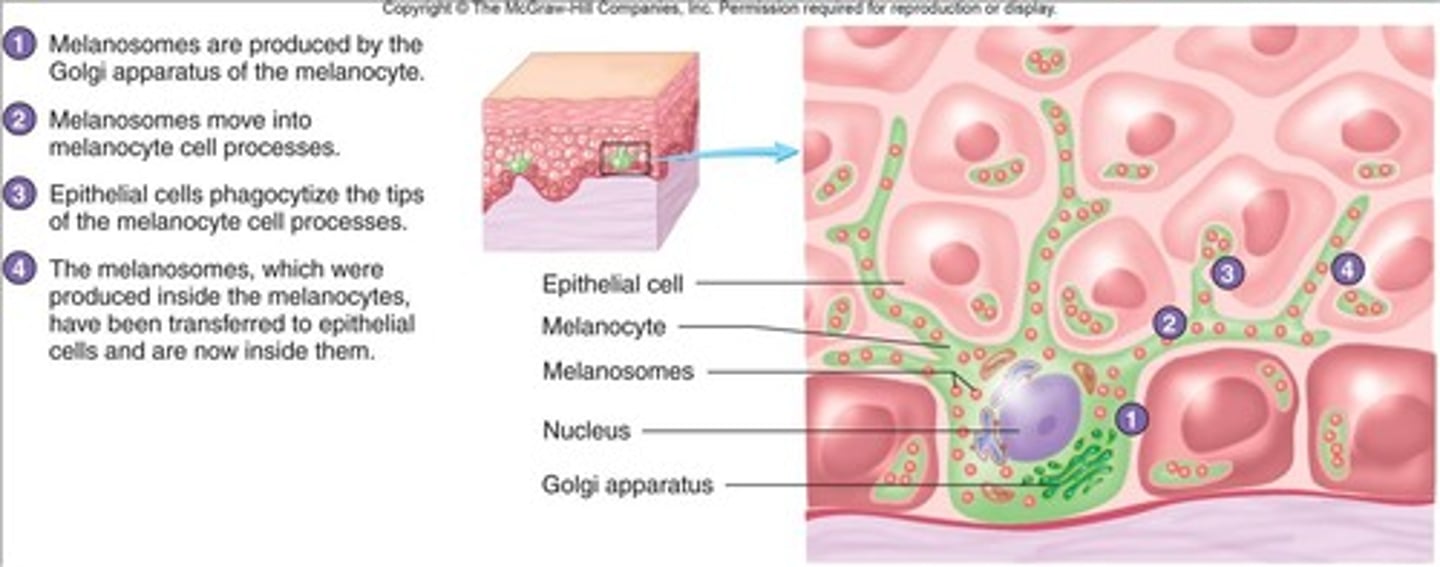
eumelanin
the most common form of melanin; brownish in color
pheomelanin
reddish-brown color often associated with freckles and red hair
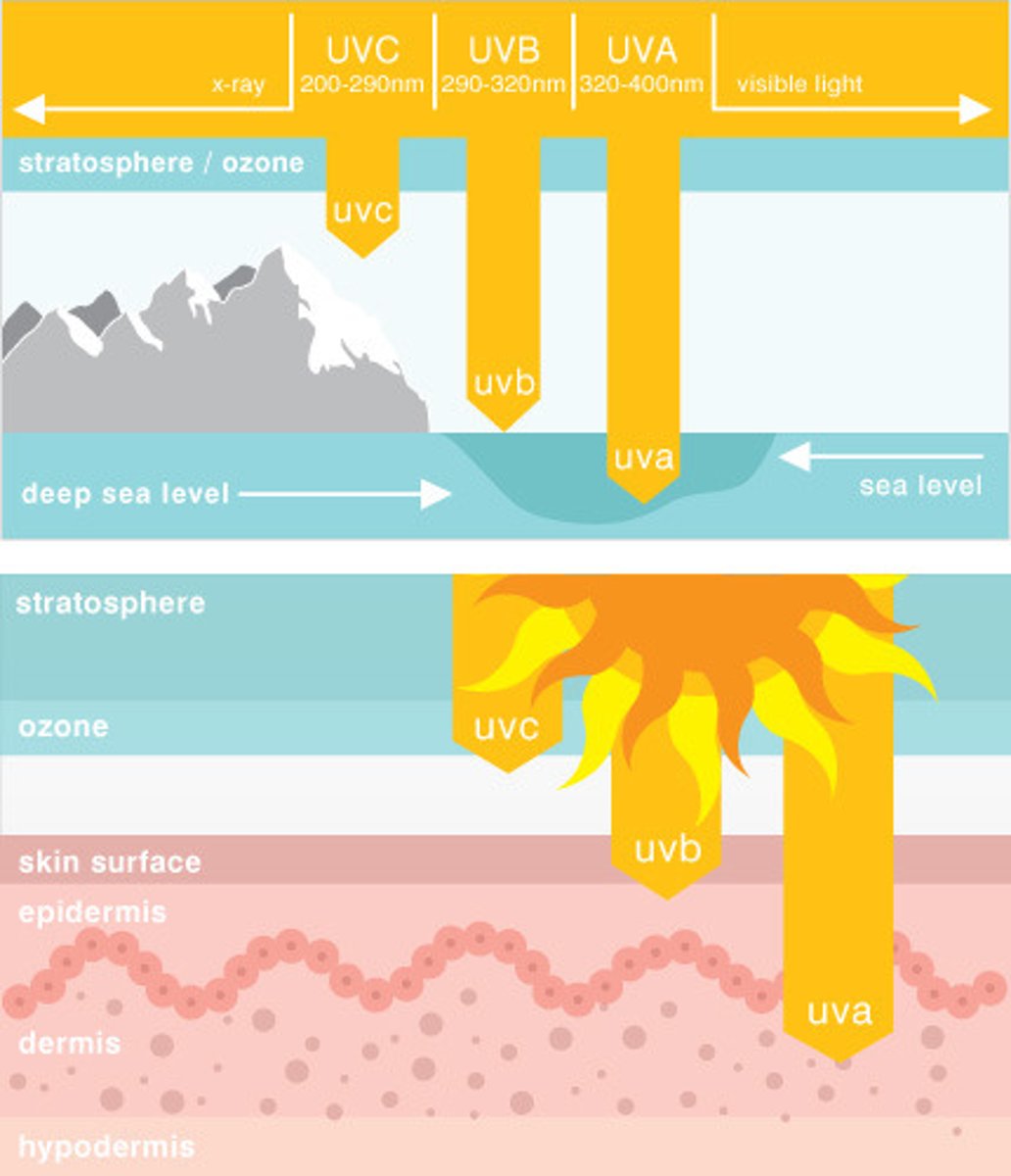
UV radiation
- destroys / mutates DNA
- promotes cancer
- destroys folate
+ permits Vitamin D production
Three Different Types in the Picture