History and Historiography: Understanding Eras, Sources, and Perspectives
 Studied by 0 people
 Call with Kai
 Learn
Learn Practice Test
 Spaced Repetition
 Match
Match Flashcards
 Knowt Play
1/21

There's no tags or description
Looks like no tags are added yet.
Name | Mastery | Learn | Test | Matching | Spaced | Call with Kai |
|---|
No study sessions yet.
22 Terms
What is the primary purpose of studying history?
To understand how society and nations change or remain the same.
What do historians use to measure time?
Historians divide history into blocks of time known as eras or periods.
What are the terms used to denote years before and after the birth of Jesus?
Years before Jesus are known as B.C.E. (Before Common Era), and years after are called C.E. (Common Era).
What is chronology in the context of history?
Chronology is the order of dates in which events happened.
What is a timeline?
A timeline is a diagram that shows the order of events within a period of time.
What is historiography?
Historiography is the study of how interpretations of history change over time.
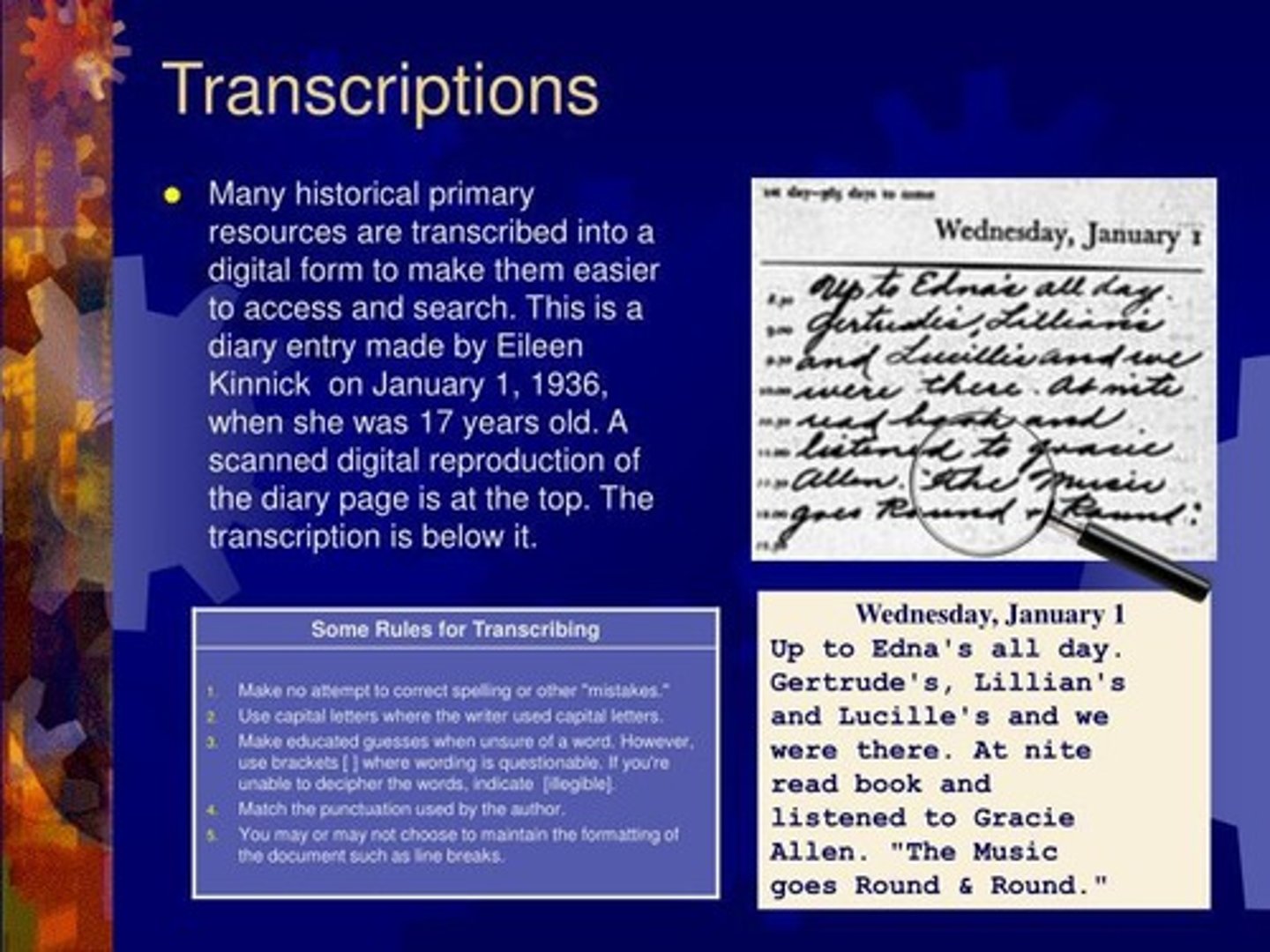
What are primary sources?
Primary sources are first-hand pieces of evidence created by people who experienced the events described.
What are secondary sources?
Secondary sources are created after the event by people who were not part of the historical event.
What is a frame of reference in historical analysis?
A frame of reference includes the experiences and historical and cultural factors that influence a person or group at a specific time.
What is bias in historical writing?
Bias is an unreasoned judgment about people and events, often expressed as a one-sided view.
Why do historians consider multiple perspectives?
Historians check new sources and their own ideas against trustworthy sources to be aware of bias.
What is the difference between cause and effect?
A cause is what makes an event happen, while an effect is the result of that cause.
What do historians study in terms of continuity and change?
Historians study the differences and similarities of events, focusing on how events differ and how traditions link people over time.
What does it mean to make an inference in historical analysis?
To make an inference means to read between the lines to understand something not stated directly.
What are economic indicators?
Economic indicators are statistics that reveal how well an economy is performing and predict its future performance.
What questions do historians ask when examining evidence?
Historians ask if there is supporting evidence for the events and interpretations they study.
How do historians approach different interpretations of the same event?
Historians recognize that different interpretations can arise and analyze them critically.
What role does geography play in history?
Geography studies Earth's physical features and the living things, including humans, that inhabit it.
What is the significance of understanding the past?
Understanding the past helps individuals gauge present conditions and make informed decisions.
What is the importance of asking 'What might have happened if...?'
This question encourages historians to consider alternative outcomes and the implications of historical events.
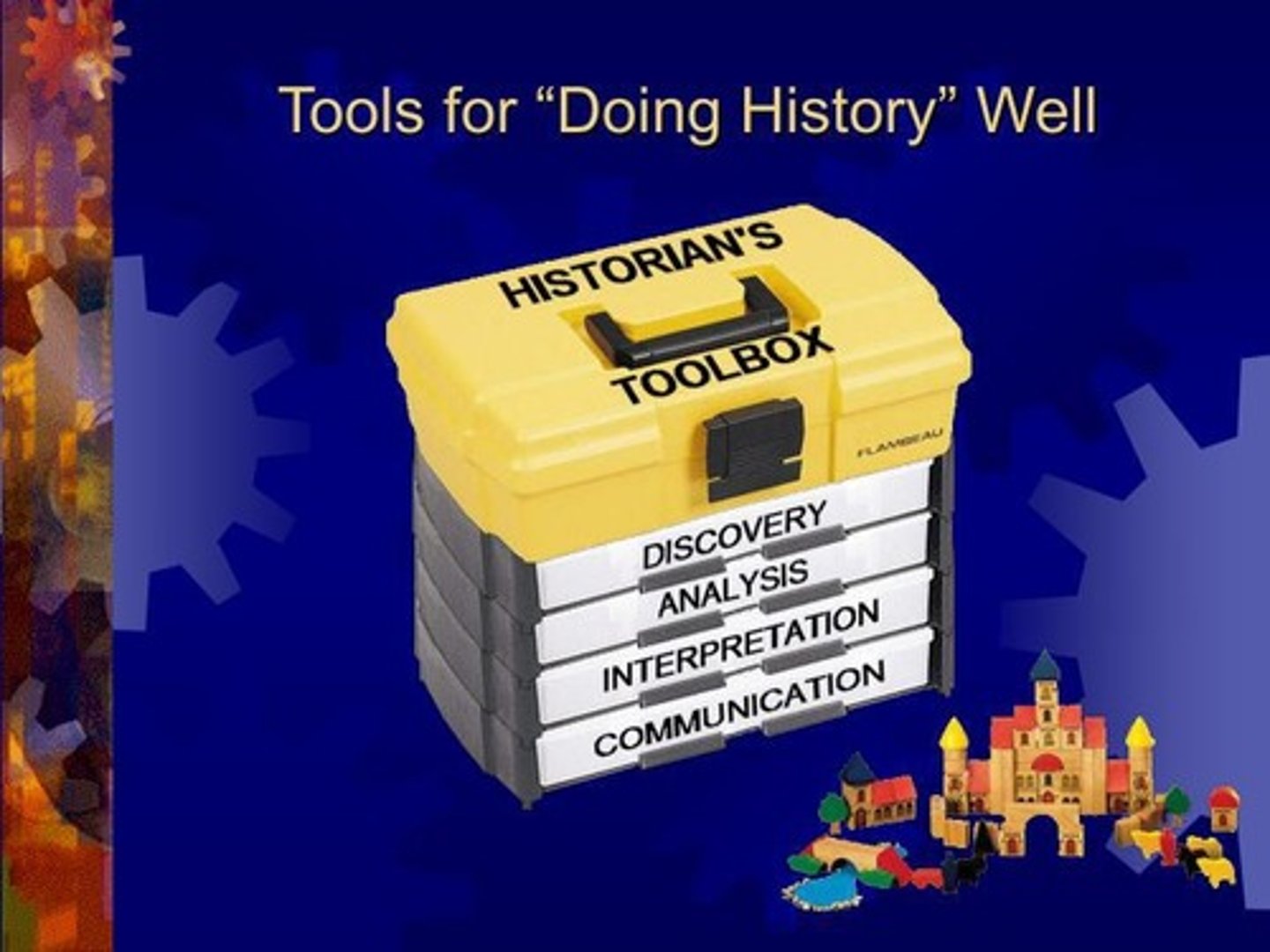
What tools do historians use to analyze historical events?
Historians use various tools, including primary and secondary sources, timelines, and statistical data.
What is the relationship between history and informed decision-making?
The more people know about history, the better they can make informed decisions about their opinions and actions.