L4 - Postmortem Changes and Non-Lesions
 Call Kai
 Learn
Learn Practice Test
 Spaced Repetition
 Match
Match Flashcards
 Knowt Play
1/48

There's no tags or description
Looks like no tags are added yet.
Name | Mastery | Learn | Test | Matching | Spaced | Call with Kai | Chat |
|---|
No analytics yet
Send a link to your students to track their progress
49 Terms
What do postmortem changes result from?
Autolysis
Are postmortem changes considered lesions?
No
What are decompositions?
Dead organic substances that are broken down
What are the two mechanisms of decompostion?
Putrefaction
Autolysis
What is putrefaction?
State of decomposition where microorganisms cause dissolution of tissues into gases, liquids and simpler molecules
What is autolysis?
Destruction of cells/tissues by their own enzymes (self-digestion)
What tissues die faster than others? How long do they take?
Neurons: 3-4 minutes
What is the difference between autolysis and necrosis?
Autolysis occurs in dead tissue, involves the entire body and there is no inflammation
Necrosis occurs in live tissue in local/regional areas and inflammation is present
Autolysis begins in ______ of the last heartbeat and involves physical and chemical changes that are ______ and ______.
minutes, irreversible, unavoidable
What is the general process of autolysis beginning from the last hearbeat?
Last heartbeat → Hypoxia → CO2 accumulation → Drop in tissue pH → Rupture of cytosolic lysosomes → Lysosomal enzymes enter cytosol and cause autolysis
Postmortem autolysis can mask what?
Antemortem lesions
What does autolysis look histologically?
Lack of cellular architecture and detail. Saprophytic bacteria.

What is rigor mortis?
Muscle stiffening that occurs 2-36 hours postmortem
What position does rigor mortis leave muscles?
Hyperextension
How does rigor mortis occur?
Muscles are flaccid at death. Sarcoplasmic reticulum degrades and releases calcium, which floods the sarcomere and binds actin and myosin. No ATP to disengage, so body can’t relax.
What is livor mortis?
Purple tissue discoloration postmortem due to intravascular blood pooling due to gravitational pull
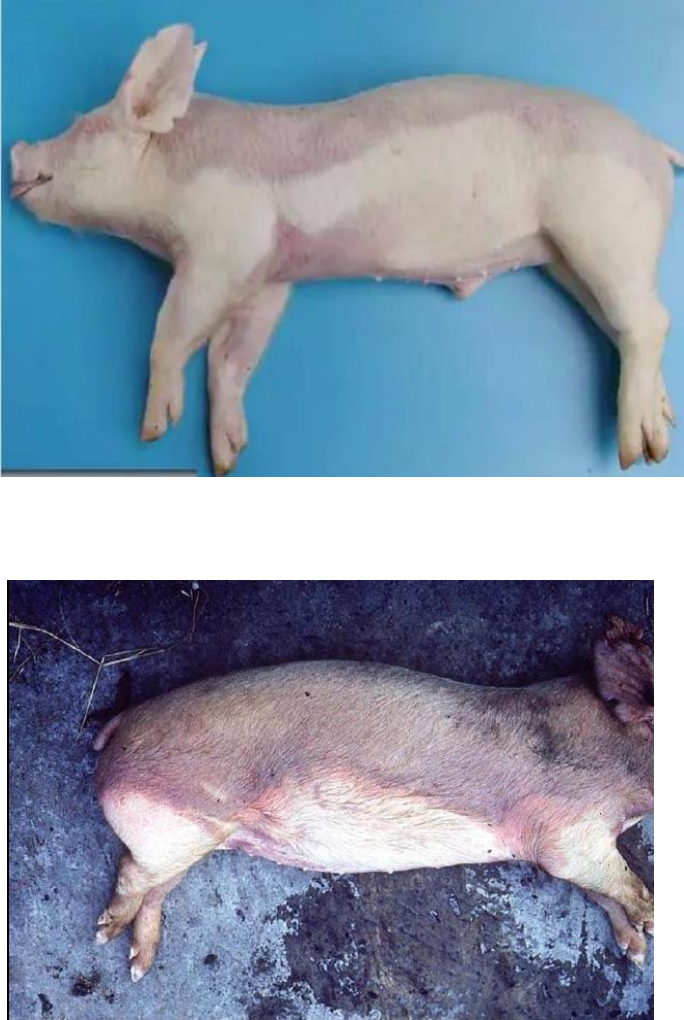
What is another word for intravascular pooling?
Hypostatic congestion
How does livor mortis occur?
Hypoxic capillaries dilate, causing blood to accumulate in skin and organs
How long after death does livor mortis develop?
30 minutes to 2 hours
How long after death does livor mortis become fixed?
8-12 hours
What is algor mortis?
Body cooling postmortem to match environment
Which is faster: external cooling or internal cooling?
External cooling
What characteristics allow a body to autolyze more rapidly?
Animals with thick fur or that are hyperthermic
What is hemoglobin imbibition?
Staining of tissues by free hemoglobin, causing a red discoloration to tissues
What is bile imbibition?
Staining of tissues near the gallbladder/ducts by bile, causing yellow/green discoloration
What is pseudomelanosis?
Putrefactive bacteria rapidly diffuse through tissues and react with iron in hemoglobin to create iron sulfide, causing black discoloration to tissues

Where does pseudomelanosis mostly occur?
GIT
What makes the black discoloration associated with pseudomelanosis?
Reaction of the iron in hemoglobin with putrefactive bacteria that grows on the organ post-mortem to create iron sulfide
Does pseudomelanosis an antemortem or postmortem reaction?
Postmortem
What is melanosis?
Normal melanin pigment that causes black discoloration to tissues in dark colored animals. Typically occurs in focal or multifocal spots.

How do postmortem clots appear?
Blood is stagnant and separates. RBCs stick towards the ground while plasma and platelets remain on top. AKA “chicken fat clot”
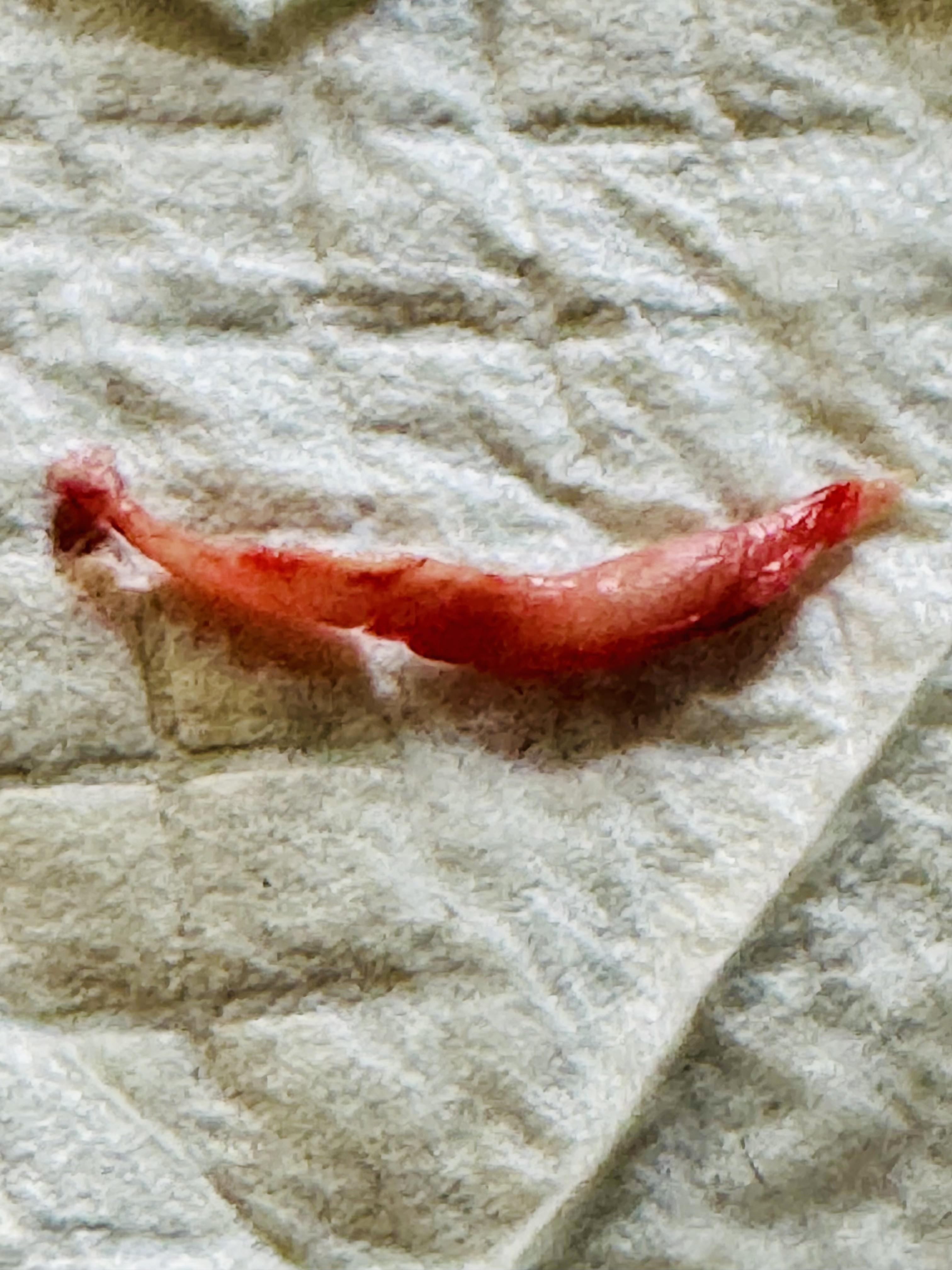
How long after dead do postmortem clots resolve?
2 hours
What causes postmortem clots to dissolve?
Fibrinolysin is released from endothelium and prevents clots from forming
What causes an antemortem clot?
Any element of Virchow’s trid (ex. hypercoagulability, endothelial damage, turbulent blood flow)
What are the characteristics of an antemortem clot?
Rough
Difficult to remove (friable, falls apart, loosely adhered to endothelial wall)
Red and uniform in color

What are the characteristics of a postmortem clot?
Smooth and shiny
Simple to remove
“Chicken Fat” appearance and feel

You’re doing a necropsy on an animal and notice pink coloration to the teeth. Is this a postmortem autolysis or pathology?
Postmortem autolysis → Hemoglobin imbibition

Is this considered an antemortem or postmortem clot? Why?
Antemortem → rough, uniform red color, no separation of RBCs and plasma

Pathology or non-lesion? Why?
Non-lesion. Pseudomelanosis, which occurs in GIT and is a postmortem condition (Putrefactive bacteria = putrefaction!)

Pathology or non-lesion? Why?
Non-lesion. Hemoglobin imbibition, results from free hemoglobin, but a pathological condition

Pathology or non-lesion? Why?
Non-lesion. Livor mortis, occurs post-mortem not due to pathology.

Pathology or non-lesion? Why?
Non-lesion. Bile imbibition due to GB/duct leakage, not pathological.
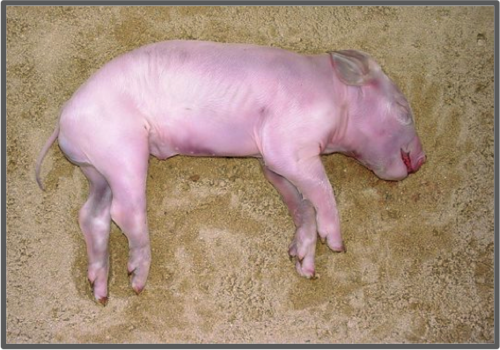
Livor mortis
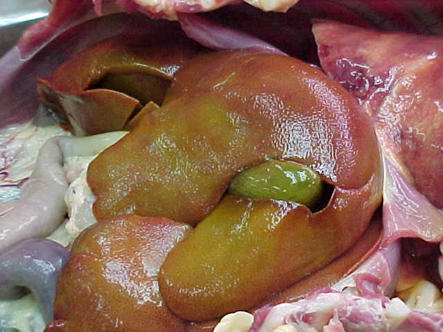
Bile imbibition
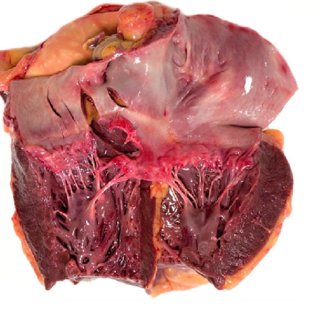
Hemoglobin imbibition
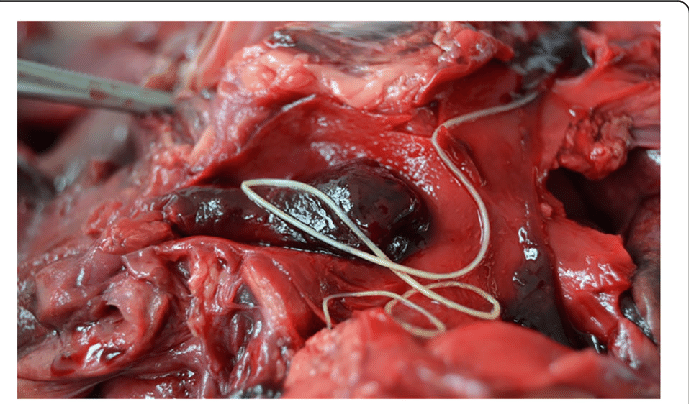
Antemortem clot with heartworm
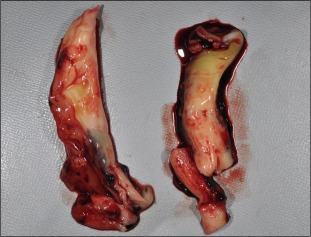
Postmortem clots
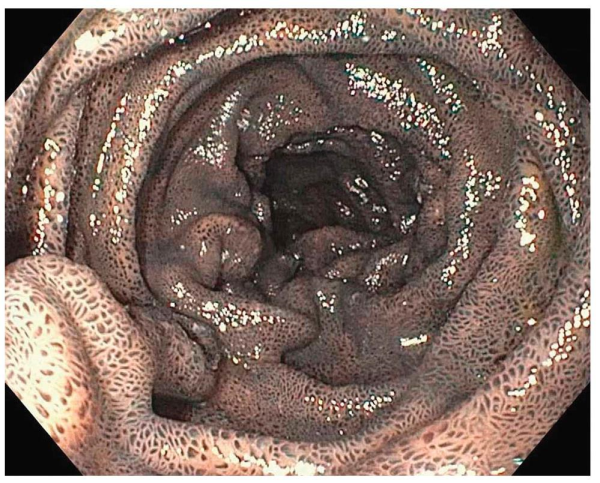
Pseudomelanosis
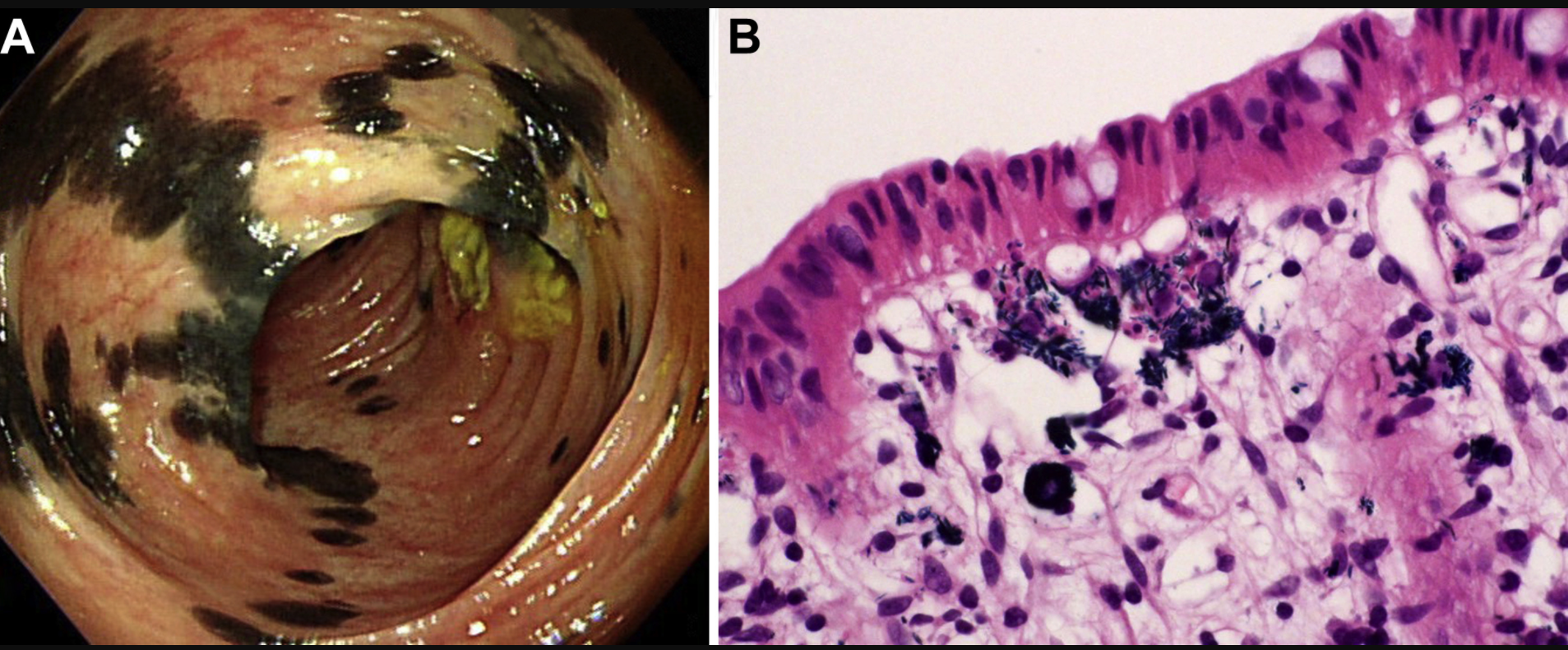
Pseudomelanosis