Prokaryotes
 Call Kai
 Learn
Learn Practice Test
 Spaced Repetition
 Match
Match Flashcards
 Knowt Play
1/35

Earn XP
Description and Tags
Bio 2 exam
Name | Mastery | Learn | Test | Matching | Spaced | Call with Kai | Chat |
|---|
No analytics yet
Send a link to your students to track their progress
36 Terms
Prokaryotes
Include kingdomes Archaea and Bacteria which have no nuclei and membrane bound organelles.
Eukaryotes
Have membrane bound organelles, nuclei, and can be multicellular.
Prokaryotic Genome
A ring of DNA that does not have a membrane holding it together and is located in the nucleoid region.
Most of the genome consists of circular chromosomes
Has less DNA than a eukaryotic genome
Plasmids
Common in some species of bacteria, they are small rings of DNA floating around the cell
Archaea
A domain that consists of single-celled prokaryotic organisms that thrive in extreme environments. Linked together by lipids in their cell membranes
Prokaryotic Size and Abundance
Prokaryotes inhabit diverse environments from soil, water, and extreme conditions.
There are around 4-6×10³0 cells around the world
Typically measure 0.5-5 um in diameter and are smaller than eukaryotic cells
Prokaryotic cell walls
Cell walls maintains the structure of the cell while also providing physical protection and prevents bursting in hypotonic environments
Bacterial cell walls are made of peptidoglycan
Peptidoglycan
A network of sugar polymers cross-linked by polypeptides found in bacterial cell walls
Prokaryotic cell structure

Capsule
A polysaccharide/protein layers covers many prokaryotes
Fimbriae/ Pili
Long hair like tendrils that allow prokaryotes to sick to others or surfaces
Shorter pili are known as s3x pili and allow prokaryotes to exchange DNA by conjugation
Gram Staining
A test that scientists use to see if a bacterial species is toxic by testing the cell wall compostition
Gram-negative bacteria= less peptidoglycan and an outer membrane that is toxic and antibiotic resistant
Gram-positive bacteria= more peptidoglycan and aren’t antibiotic resistant
Antibiotics target cell walls and break them down causing cell lysis
Motility
Bacteria propel themselves by a flagella that is different from eukaryotic flagellas
In heterogeneous environments many bacteria exhibit taxis
Taxis is the ability to move towards or away from stimuli
Internal Organization of Prokaryotes
Prokaryotes lack complex compartmentalization, but some do have specialized membranes that perform metabolic functions
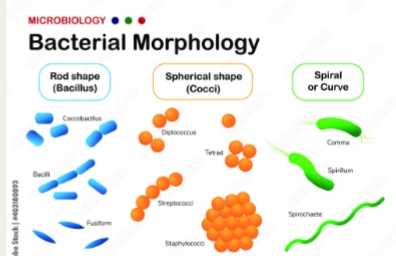
Bacterial shapes
Three shapes:
Coccus/Cocci: spherical
Bacillus= Rod shapes
Spirillum= spiral or curved
Heterotrophic
Require organic carbon sources
Autotrophic
Synthesize organic compounds from CO2
Chemosynthetic
Gain energy from oxidizing inorganic compounds
Photosynthetic
Use light energy to synthesize organic compounds
Asexual reproduction in prokaryotes
Mainly through binary fission which is simple cell division
Horizontal Gene Transfer
Transformation is the uptake of naked DNA

Horizontal Gene Transfer Transduction
Transfer of DNA by a virus

Horizontal Gene Transfer Conjugation
The transfer of DNA through direct contact

Life History of Prokaryotes
Prokaryotes have rapid reproduction rates which lead to high mutation rates and genetic diversity
Life Cycle:
Lag Phase: Adaptation to environment
Log Phase: Exponential growth
Stationary Phase: Growth rate equals death rate
Death Phase: Nutrient depletion and waste accumulation
Ecological Significance of Prokaryotes
Nutrient Cycling: Decomposition and nutrient recycling in ecosystems
Nitrogen Fixation: Cyanobacteria convert atmospheric nitrogen into usable forms for plants
Symbiotic relationships: lots of relationships with plants that benefit both parties
Ex) Nostoc with hornworts and animals
Bioremediation: Use of bacteria to clean up environmental pollutants
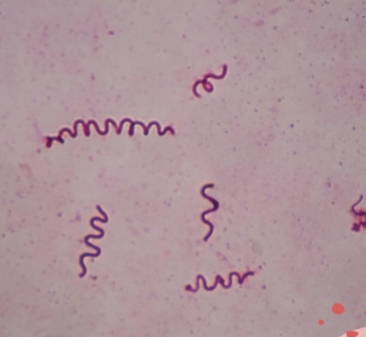
Spirillum Volutans
A large helical bacterium commonly found in stagnant freshwater environments
Known for its spiral shape and its role in its habitat.
Plays a role in decomposition and indicates water quality. Its presence suggests low oxygen conditions and high organic matter content
5-8 um in diameter
Has a bipolar flagellum which allows it to move in a corkscrew motion
Gram negative with a cell wall with an outer membrane
Helps with food production, preservation, health benefits
Bacterial fermentation
A metabolic process that converts sugars to acids, gases, or alcohol in the absence of oxygen
Lactic acid bacteria and yeast are key players in fermentation
Lactic Acid Fermentation
Carried out by lactic acid bacteria called Lactobacillus converts glucose into lactic acid
Alcoholic Fermentation
Converts glucose into ethanol and carbon dioxide
Cyanobacteria
Photoautotrophs using photosynthesis to generate oxygen
Contain chlorophyll and can fix atmospheric nitrogen important to plant
specialized cells like heterocyst and akinetes aid in nitrogen fixation and survival
Cyanobacteria and Their Importance
Photoautotrophic: Generate oxygen through photosynthesis and contains pigments with phycocyanin and chlorophyll
Heterocysts
Nitrogen fixation
Akinetes
Allows for survival in adverse conditions
Gloeocapsa
Genus of cyanobacteria known and blue green algae found in aquatic habitats and moist terrestrial locations known for its gelatinous sheath and colonial organization.
Spherical and often form colonies with gelatinous sheath which provides protection and helps the cells adhere to each other.
Reproduce asexually through binary fission
Communally found in freshwater and marine environments as well as wet stony surfaces
Plays a role in nitrogen fixation which is crucial for nutrient cycling in ecosystems
Gelatinous Sheath function protects from desiccation and UV radiation while adhering to surfaces
Photosynthesis occurs in thylakoids which are disperse throughout the cytoplasm
Contributes to primary production in aquatic ecosystems and is involved in nitrogen fixation making nitrogen available

Oscillatoria
A genus of filamentous cyanobacteria
named for oscillating movement
found in a variety of aquatic and moist terrestrial environments
Forms long unbranched filaments
Made of a series of cells that slide back and forth
Reproduces asexually by fragmentation filaments break down into smaller pieces each one can grow into a new filament
Freshwater, ponds, lakes, and streams found on wet soil and rocks
Plays a role in primary production and nutrient cycling in its habitats
Movement helps organism to find optimal light conditions for photosynthesis
Uses photosynthesis using chlorophyll A and phycobiliproteins
Photosynthetic pigments are located thylakoids which are evenly distributed within the cell
Helps with oxygenation of water bodies through photosynthesis
Nostoc
Cyanobacteria known for filamentous cells and colonies
Symbiotic relationships with plants and fungi
Forms of bead-like chains called trichomes within a gelatinous sheath spherical or oval
Reproduction by binary fission and fragmentation
Forms specialized cells called heterocyst for nitrogen fixation
Found in freshwater lakes ponds moist soils and symbiotic relationships with plants
Important for primary production and nitrogen cycling
Chlorophyll A and phycobiliproteins for photosynthesis Thylakoids distributed throughout the cell for light absorption