Nervous Tissue
 Call Kai
 Learn
Learn Practice Test
 Spaced Repetition
 Match
Match Flashcards
 Knowt Play
1/129

There's no tags or description
Looks like no tags are added yet.
Name | Mastery | Learn | Test | Matching | Spaced | Call with Kai | Chat |
|---|
No analytics yet
Send a link to your students to track their progress
130 Terms
1. sensory input
2. integration
3. Homeostasis
4.mental activity
5.output
5 functions of the nervous system
Sensory (afferent) neurons
Detect changes in body and external environment
information transmitted into brain or spinal cord
Interneurons
-lie between sensory and motor pathways in CNS
-90% of our neurons are interneurons
-process, store and retrieve information
motor (efferent) neurons
-send signals out to muscles and gland cells
-organs that carry out responses called effectors
CNS and PNS
What are the 2 major anatomical subdivisions of the nervous system?
PNS
The ______ has cranial nerves: originate from the brain; 12 pairs and
Spinal nerves: originate from spinal cord; 31 pairs
Dendrites, axons, cell body
Structures of a neuron
Axon hillock
Where does an axon originate?
Multi-polar
_______ neuron is the most common (brain and spinal cord) and has many dendrites + one axon
Bipolar
________ neuron has olfactory, retina, ear and 1 dendrite + one axon
Unipolar
______ neuron is sensory from skin/organs to spinal cord and only has a single process leading out of soma
anaxonic
_______ neuron deals with visual processes, perception and has many dendrites + no axon
Unipolar
______ neuron deals with quick sensory reflexes such as pulling your hand back on a hot stove
Many proteins made in soma must be transported to axon and axon terminal
What is axonal transport?
Important for repairing axolemmas, gated ion channels protein passageway
Why is there axonal transport?
Anterograde
Movement of proteins away from soma down the axon
Retrograde
Movement of proteins toward the soma up the axon
Kinesin
Motor protein for anterograde transport
Dynein
Motor protein for retrograde transport
Fast and slow
Two types of axonal transport
Anterograde and retrograde
Fast axonal transport has ______ transport
Anterograde
Slow axonal transport has ______ transport
6
There are ______ types of neuorglia
No
Do neurons outnumber neuroglia?
Central Nervous System (4)
Oligodendrocytes
Microglia
Ependymal cells
Astrocytes
Peripheral Nervous System (2)
Schwann cells
Satellite cells
Which neuroglia are in the CNS and which are in the PNS?
Oligodendrocytes
form myelin sheaths to insulate the nerve fiber
Microglia
-Respond to inflammation
-Phagocytize necrotic nervous tissue, microorganisms, and foreign substances that invade the CNS
Macrophages
Microglia are considered specialized _______
Secrete cerebrospinal fluid
ependymal cells function
ependymal cells
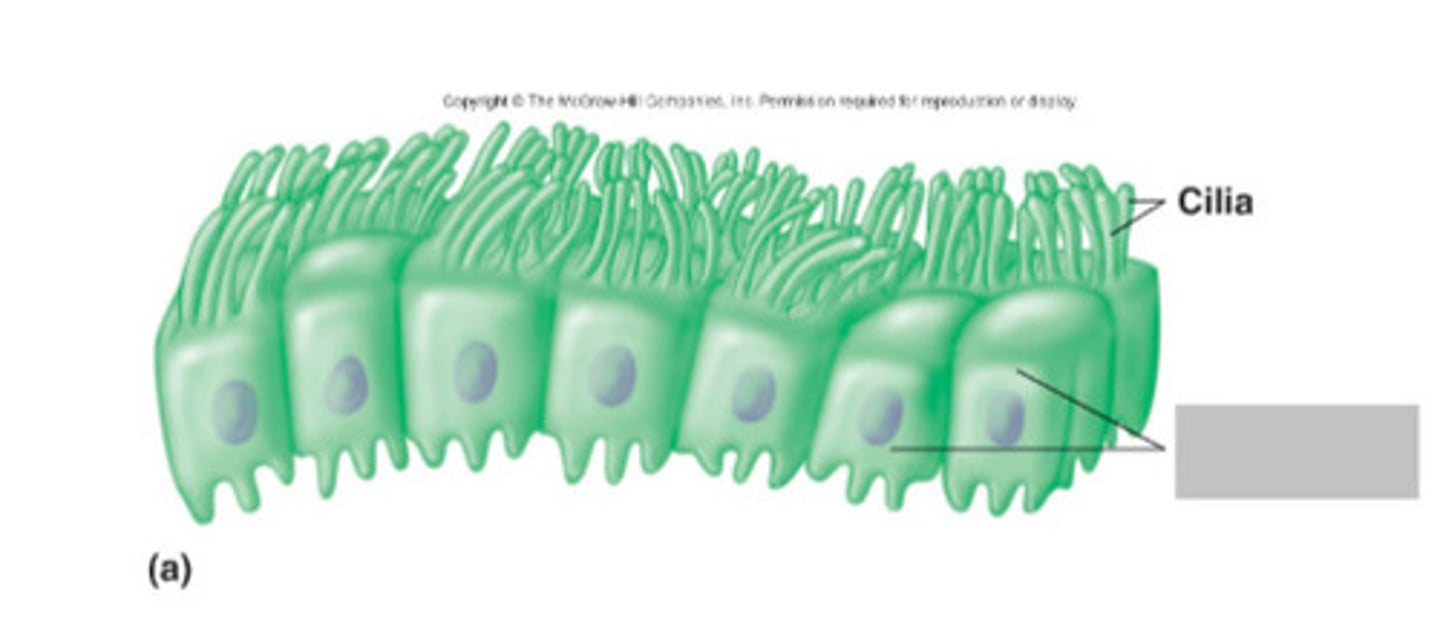
Astrocytes
Tightly seals blood brain barrier, stimulates vasoconstriction/vasodilation, most abundant cell in CNS
Astrocyte
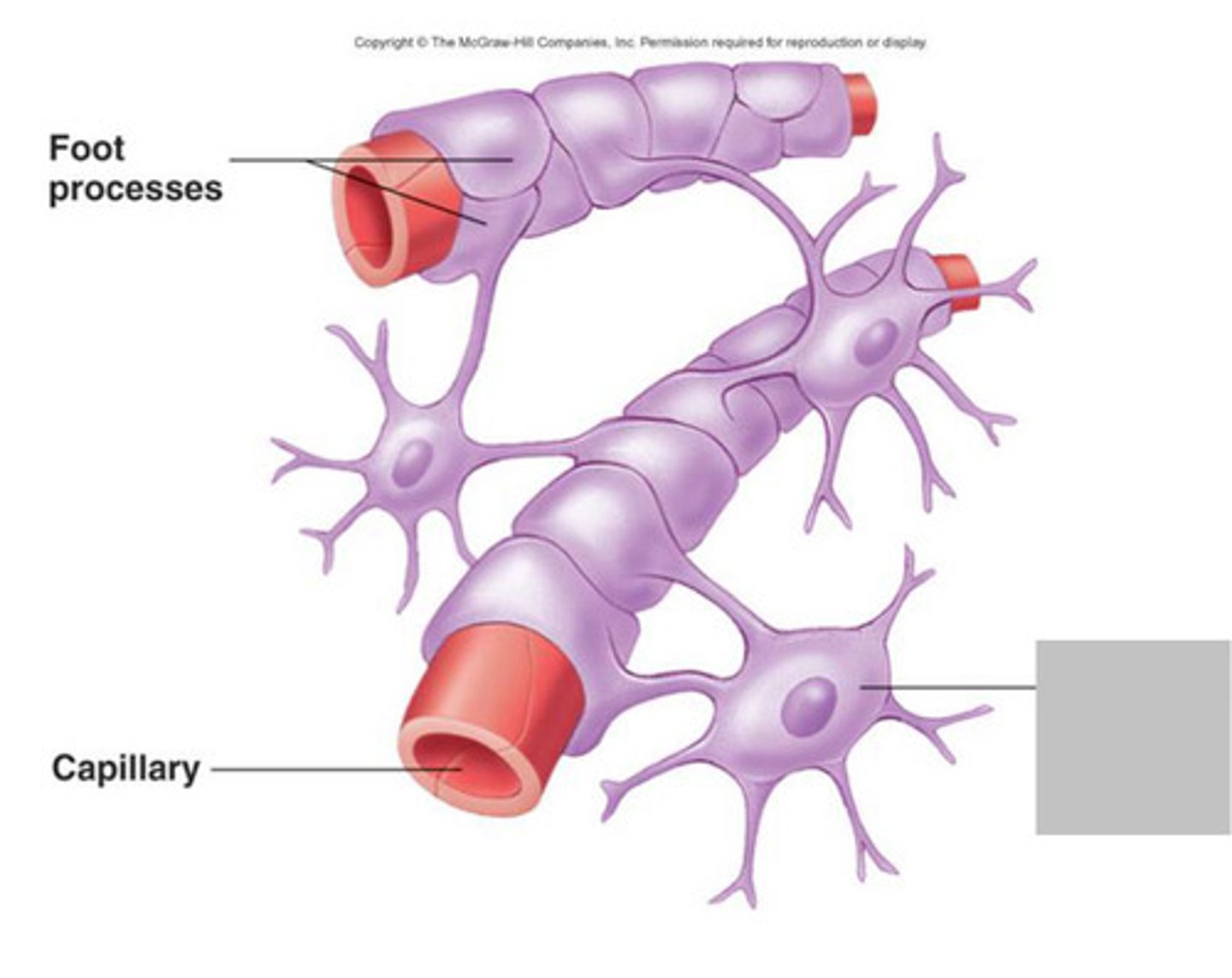
Astrocytosis
_______ is the process of forming hardened scar tissue to fill in dead space in damaged neurons
Schwann cells
-wrap repeatedly around portion of only one axon to form myelin
-Can assist in regeneration of damaged nerve fibers
Satellite cells
surround neuron cell bodies in ganglia, provide support and nutrients
Myelin sheath
The ________ is a spiral layer of insulation around a nerve fiber
Endoneurium
loose connective tissue that encloses axons and their myelin sheaths
Neurilemma
the outermost coil in schwann cell known as the ________
Cannot, segments
Because nerve fibers are so long...a single Schwann cell ______ wrap around it and _____ are formed
Internodal segments
myelin-covered segments from node to node
Initial segment
section of nerve between axon hillock and first glial cell
Trigger
the axon hillock + initial segment is known as the ______ zone
Axon aka trigger zone
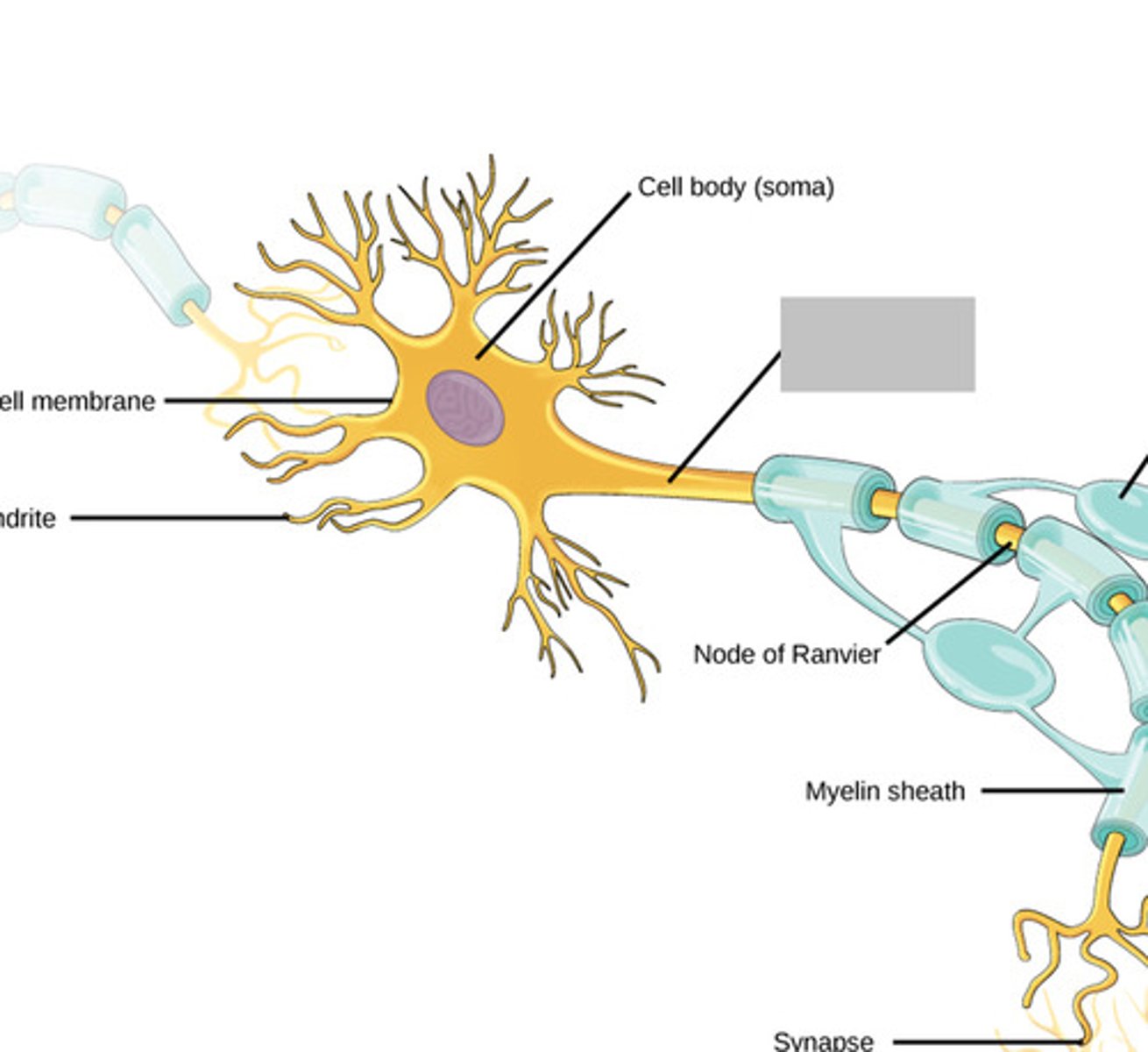
Myelinated
_________ axon protects and insulates axons from one another, speeds transmission, functions in repair of axons. White matter
Unmyelinated
______ axons are not wrapped around the axon; gray matter
Myelinated
White matter = _____ axons
Unmyelinated
Gray matter = _______ axons
Diameter and myelination
The speed of a nerve signal depends on two things: _______ and ________
More
Larger fibers have (more/less) surface area
Quickly
Myelination should happen slowly/quickly
unmyelinated
Digestion is an example of myelinated/Unmyelinated
Yes
Soma must be intact and some neurilemma remains
Is regeneration possible in the PNS? How?
Atrophy, degeneration in the distal end
An injured peripheral nerve presents with
1. Healthy neuron and muscle fibers are normal.
2. Nerve injury causes distal axon and Schwann cell degeneration; macrophages clear debris.
3. Soma swells and axon sprouts form; denervated muscles atrophy.
4. Schwann cells create a regeneration tube that guides one axon sprout.
5. The axon reconnects with target cells and restores synapses.
6. Neuron and muscle fibers recover toward normal structure and function.
Describe the steps of regeneration of a nerve fiber
Action potentials
Cells produce electrical signals called ________
Electrical potentials
___________ are different concentrations of charged particles in different parts of the cell.. This can produce a current!
Electrical current
_______ is a flow of charged particles from one point to another within the cell
-70mV
What is the resting membrane potential of a cell
Neural
____________ communication is based on electrophysiology - cellular mechanisms for producing electrical potentials and currents.
Unequal, RMP
_________ electrolyte distribution between ECF/ICF creates ______.
1. Diffusion of ions down their concentration gradients
2. Selective permeability of plasma membrane
3. Electrical attraction of cations and anions
Resting membrane potential results from combined effects of which 3 factors
Sodium
The orange channel is the sodium/potassium channel
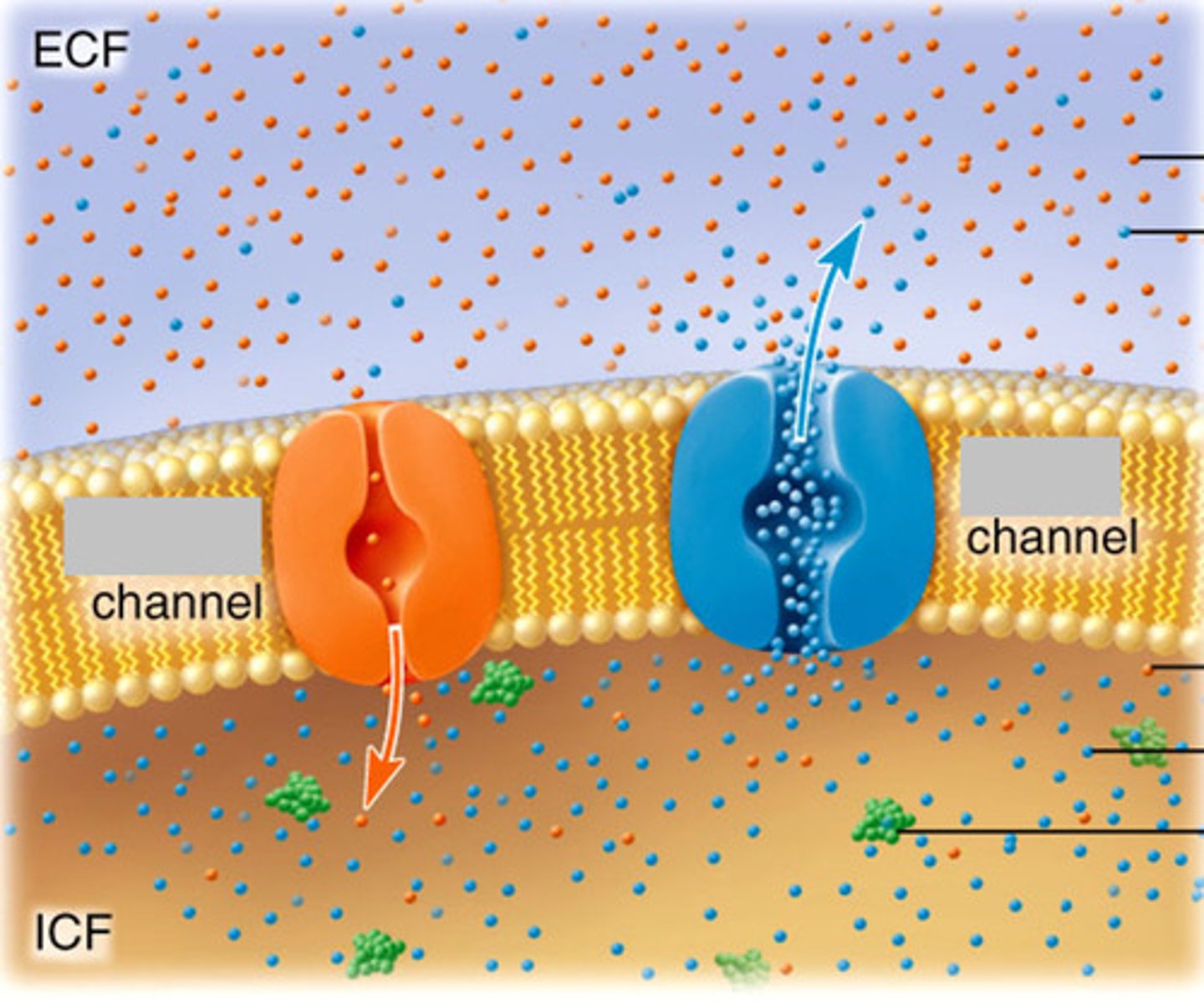
Potassium
The blue channel is the sodium/potassium channel
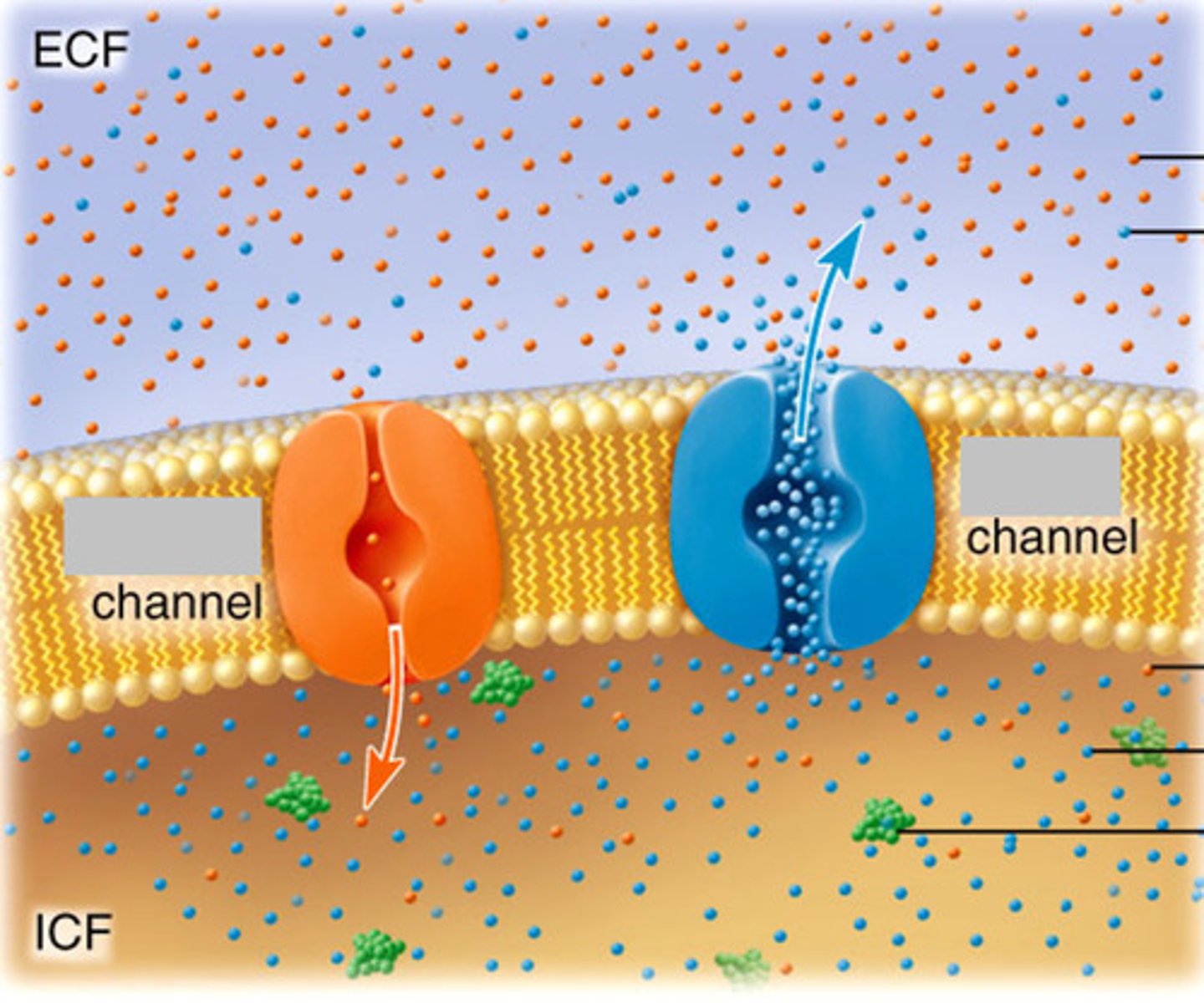
potassium
The plasma membrane is very permeable to ______
Less
The plasma membrane is ______ permeable to sodium
no action potential is being generated
the neuron is waiting for stimulation
When does the resting membrane potential occur?
Local potential
A ____________ is a small, short-distance change in membrane potential that occurs when a neuron or muscle cell is stimulated.
Local
________ potentials are graded
Local, potassium
________ potentials are reversible because ______ leaks out of the cell
Local potential
The more sodium the enters the cell....the larger the ________
Positive, negative
Local potentials can make a resting membrane more _______ or more _______
Action
A ________ potential is a more dramatic change in the plasma membrane produced where there is a high density of voltage-gated ion channels.
1. Voltage gated sodium channels open
2. Sodium enters -> depolarization
3. Potassium gates fully open
4. Potassium leaves->repolarization
If a threshold potential of -55mV is reached what will happen?
Repolarization
(depolarization/repolarization) makes the inside of a cell more negative
Depolarization
(depolarization/repolarization) makes the inside of a cell more positive
Local potential
Purple box
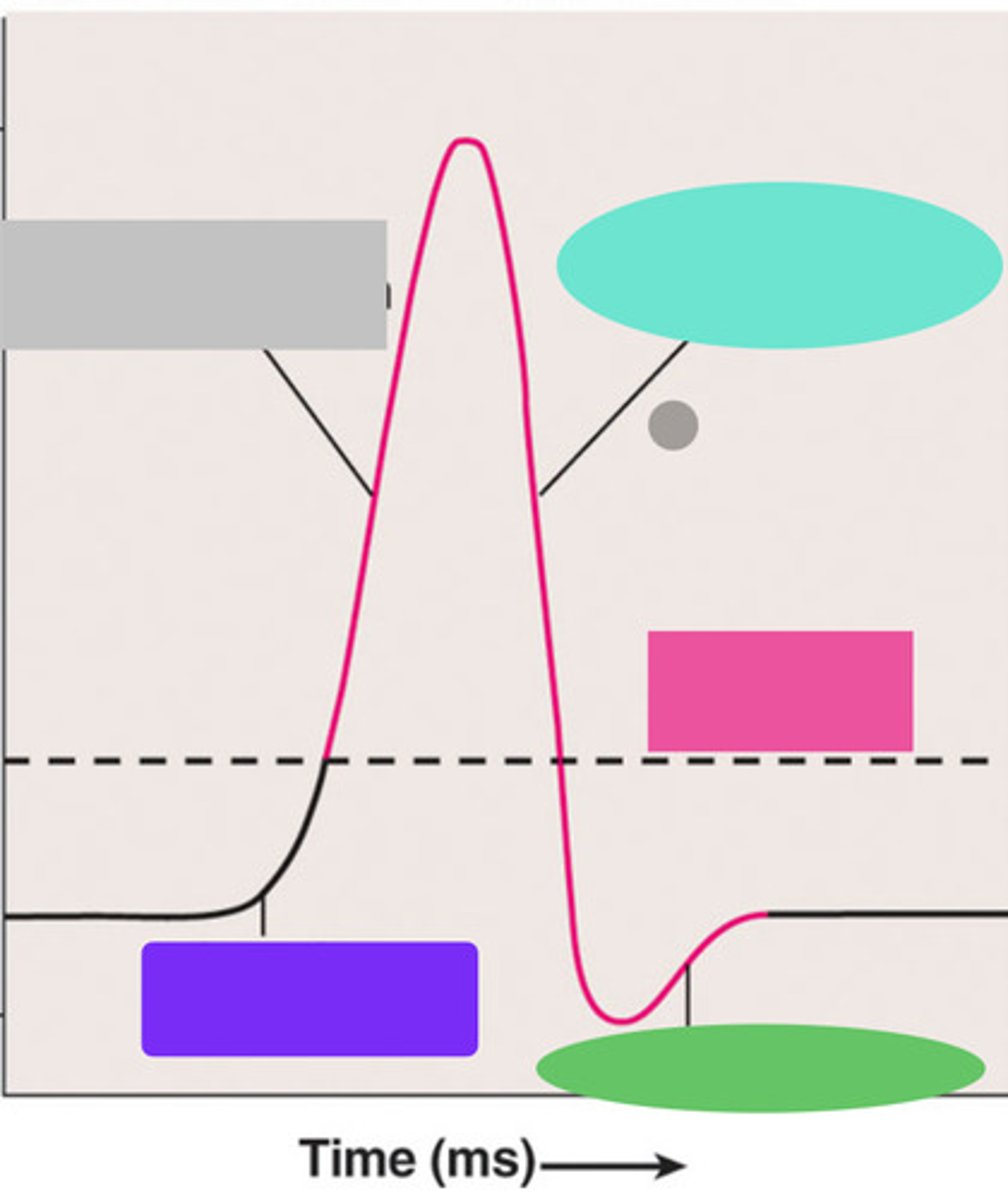
Depolarization
Gray box
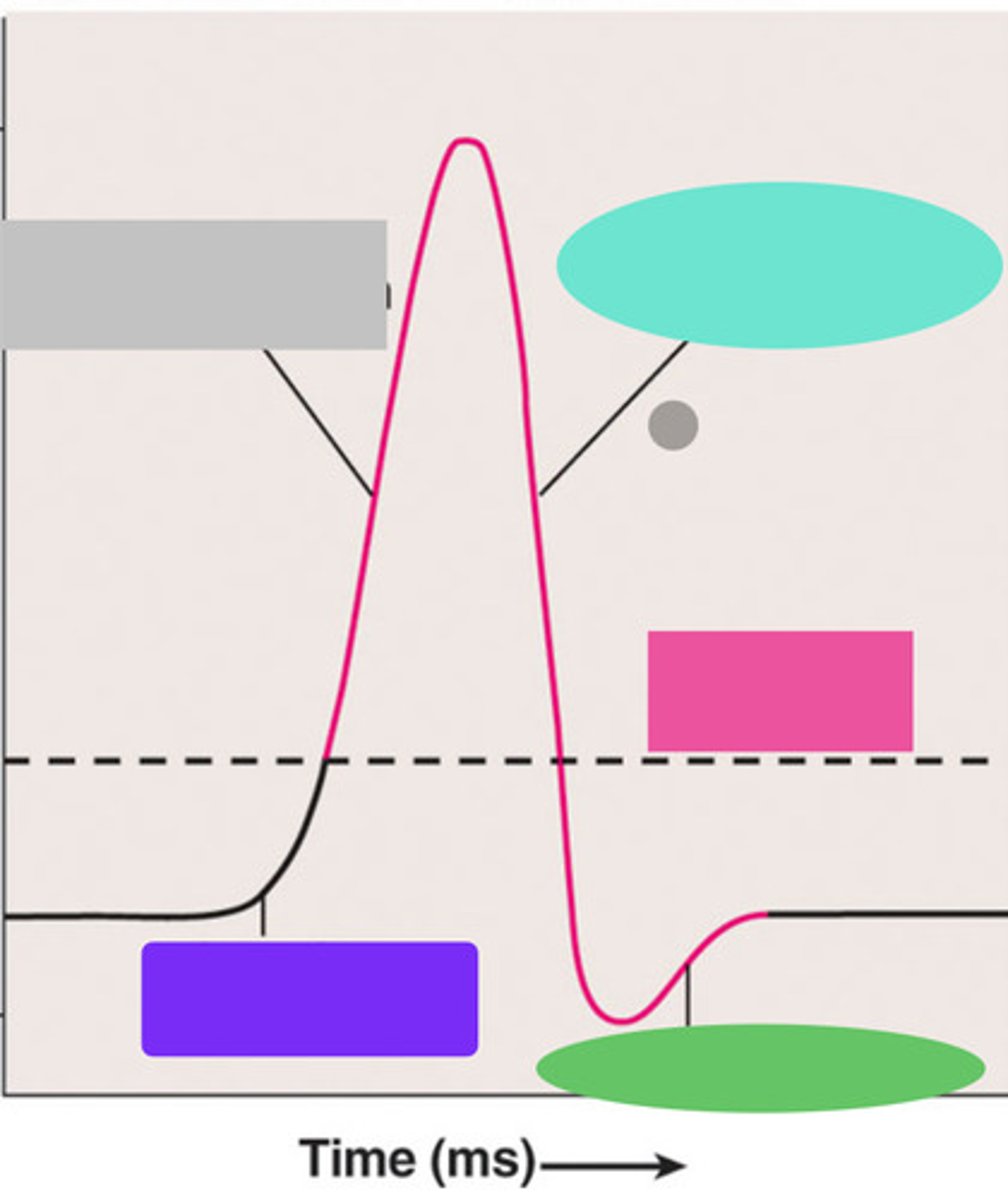
Repolarization
Turquoise box
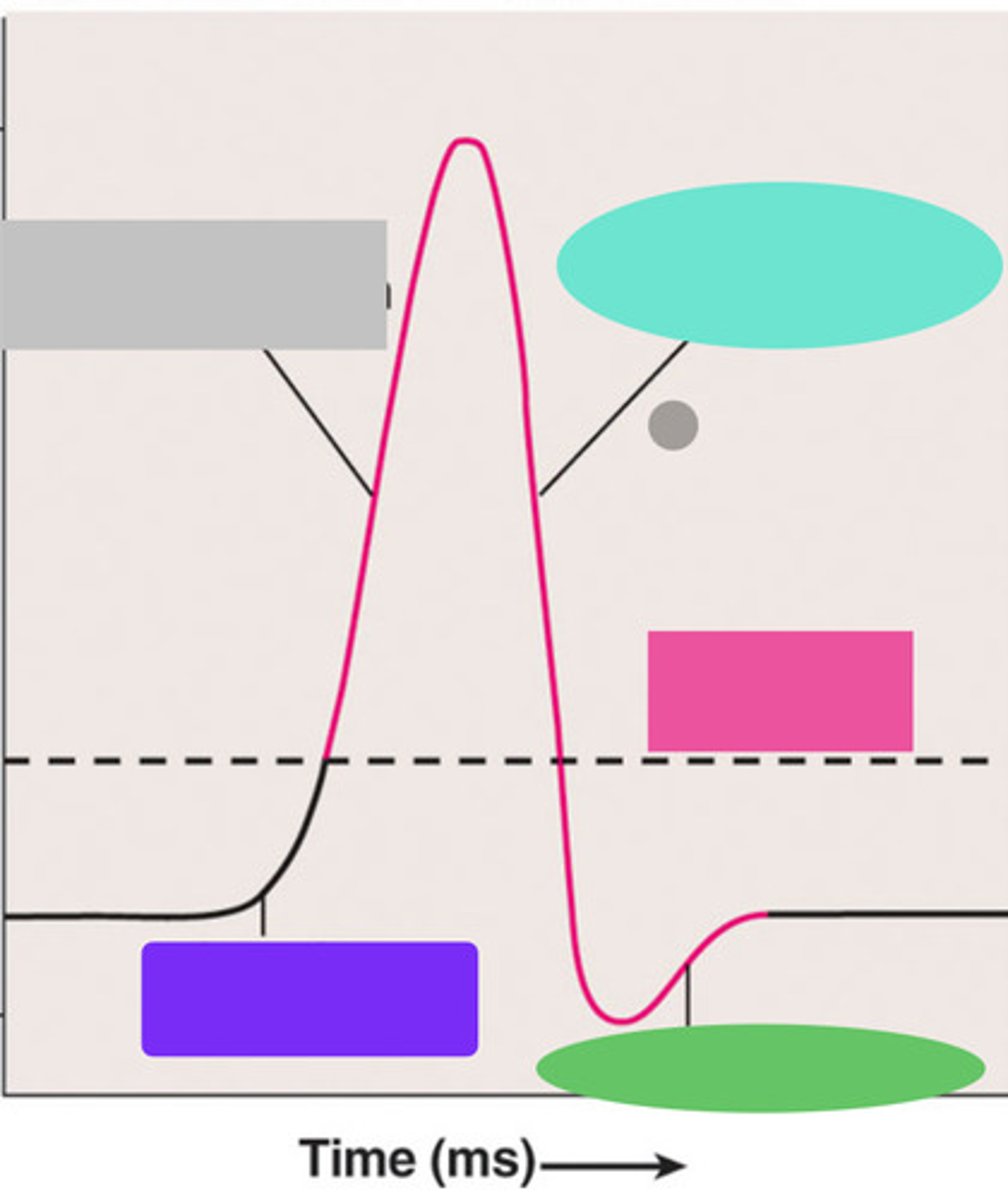
Threshold
Pink box
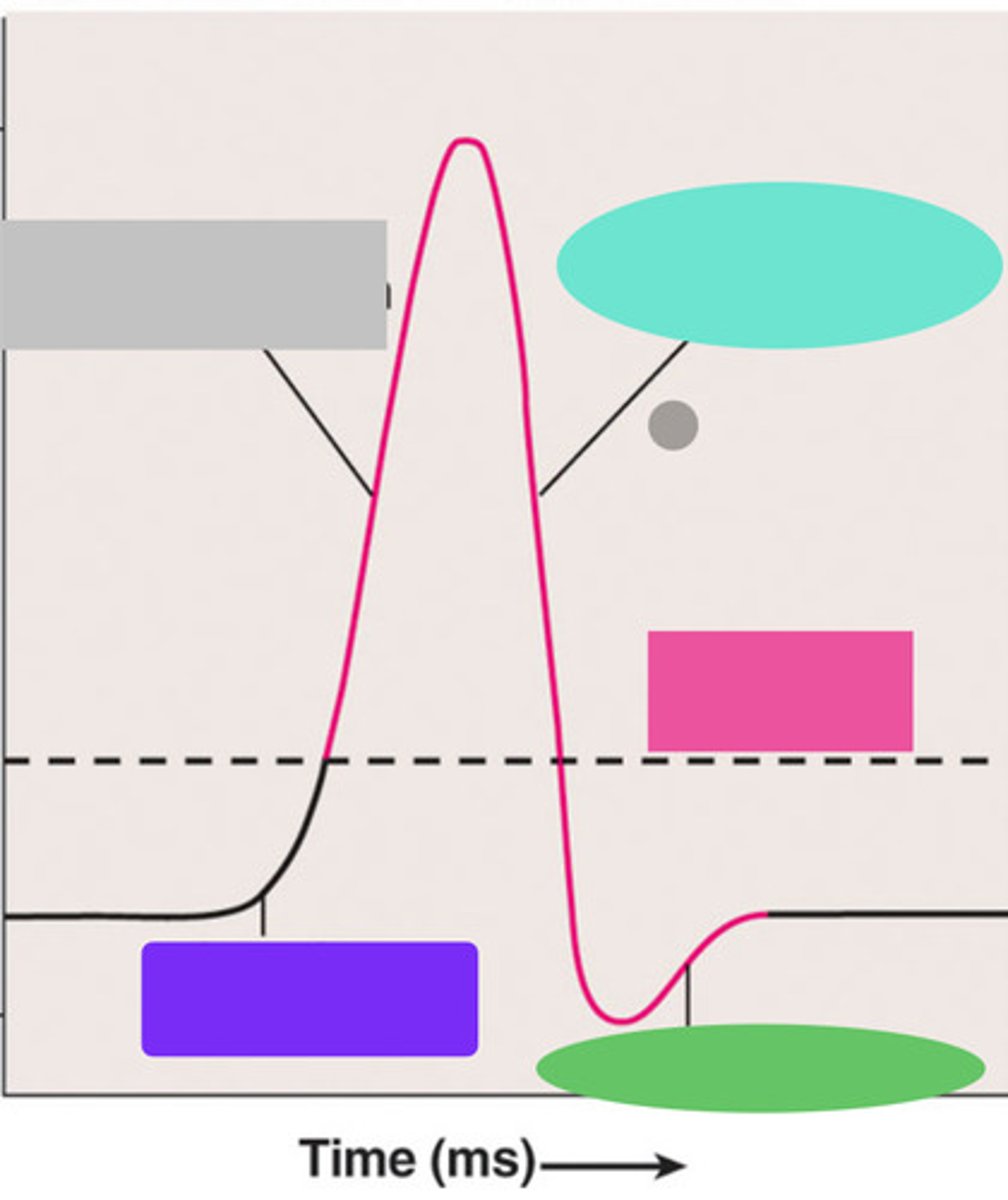
Action
________ potentials are all or nothing
Afterpotential
Green box
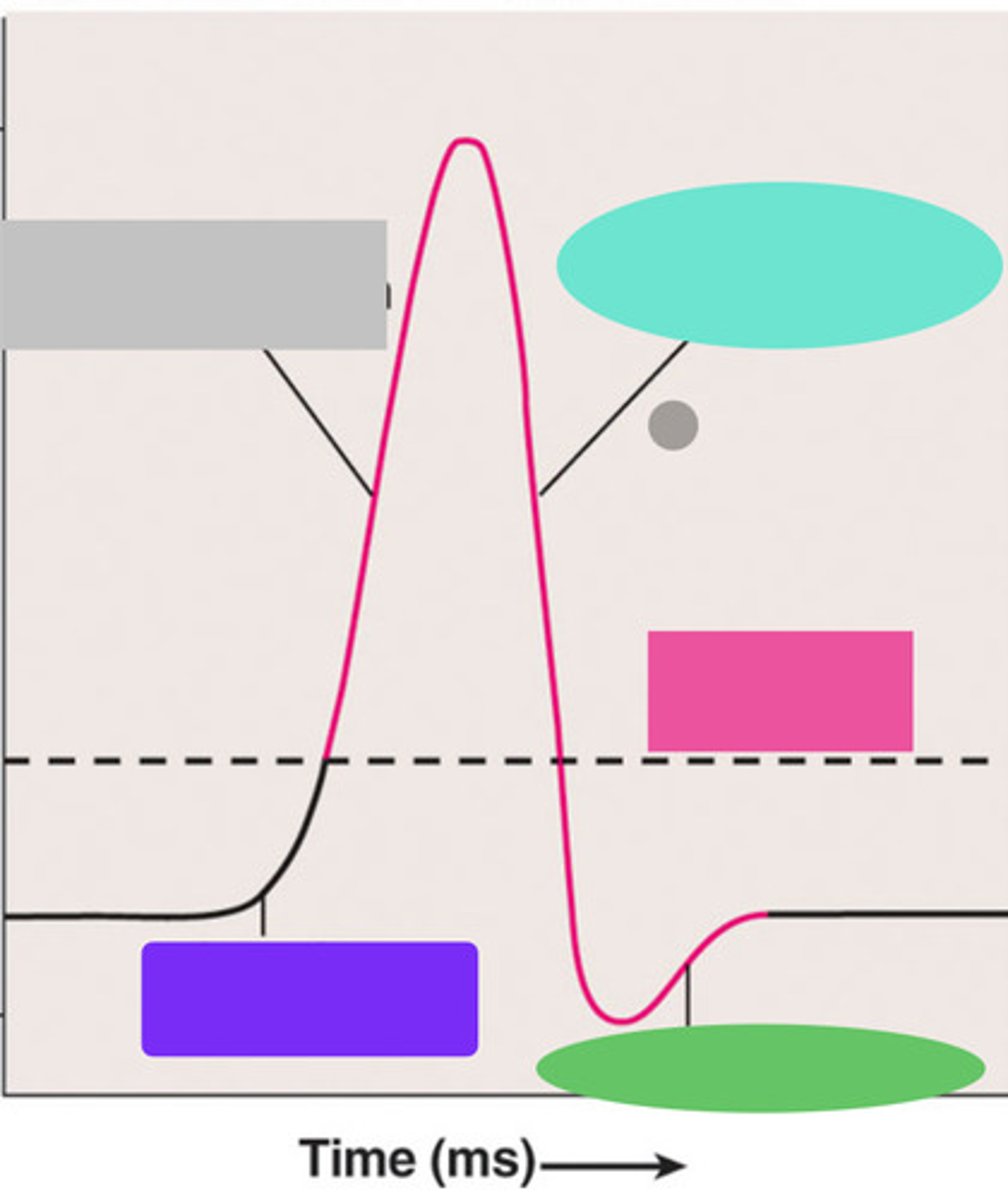
Local
_______ potentials are produced by gated channels on dendrites and soma
Local
________ potentials may be positive or negative voltage changes
Local
________ potentials are graded
Local
_______ potentials are reversible and return to RMP if stimulation ceases before threshold is reached
Local
_______ potential has effects for only a short distance
Local
________ potentials have signals that grow weaker with distance
Action
________ potentials are produced by voltage gated channels on teh trigger zone and axon
Action
_______ potentials always begin with depolarization
Irreversible
Action potentials are (reversible/irreversible)
Action
________ potentials are self-propogating
Action
_________ potentials have effects of great distances
Sodium, potassium, closed
In resting membrane potential, voltage gated ______ and _____ are (open/closed)
Sodium, Open
Voltage gated (sodium/potassium) channels are (open/closed) in depolarization
Potassium, open
Voltage gated (sodium/potassium) channels are (open/closed) in repolarization
Refractory period
The period of resistance to restimulation is the __________
Absolute refractory period, relative refractory period
What are the 2 stages of the refractory period?
Absolute
(Absolute/relative refractory period) involves NO stimulus of ANY strength can trigger a new AP
Relative
(Absolute/relative refractory period) involves an unusually strong stimulus COULD trigger an AP, but this is unlikely
Unmyelinated
An (unmyelinated/myelinated) fiber has voltage-gated channels along its entire length.