4.4 - Psychodynamic and Humanistic Theories of Personality
 Studied by 0 people
 Call Kai
 Learn
Learn Practice Test
 Spaced Repetition
 Match
Match Flashcards
 Knowt Play
1/26

There's no tags or description
Looks like no tags are added yet.
Name | Mastery | Learn | Test | Matching | Spaced | Call with Kai |
|---|
No analytics yet
Send a link to your students to track their progress
27 Terms
Personality
individuals unique and relatively stable patterns of behavior
Psychodynamic theory of persona
assumes unconscious forces determine behavior and influence personality
Consciousness
refers to the small portion of our mental processes that we are actively aware of
Preconscious
where we can bring thoughts to conscious awareness with minimal effort
Unconscious
stores all the thoughts, memories, and feelings that are disturbing or traumatic
Id
exists at birth and contains all the instincts and energy
Pleasure principle
the instinctive seeking of pleasure and avoiding of pain
Ego
mediates between the conscious and unconscious, and is responsible for reality testing and a sense of personal identity
Reality principle
the segment of personality based on logical decisions to preserve the safety of an individual
Superego
ethical component of the personality and provides the moral standards by which the ego operates
Morality principle
internalized need to comply with parental and other authority
Repression
reducing anxiety by blocking impulses or memories from consciousness
Regression
when the ego seeks to reduce anxiety by reverting to an earlier period of psychological development
Displacement
when aggressive urges are shifted toward a recipient other than the one who caused the feelings
Projection
when anxiety-producing feeling are repressed and then placed onto another person
Denial
refusal of the ego to accept the reality of a situation, because doing so would produce unbearable anxiety.
Reaction-formation
defends against anxiety-producing thoughts or impulses by transforming the unacceptable urge into its opposite
Rationalization
when excuses are created to justify or excuse an unacceptable impulse or behavior
Sublimation
when a person channels an unacceptable urge into something with social value
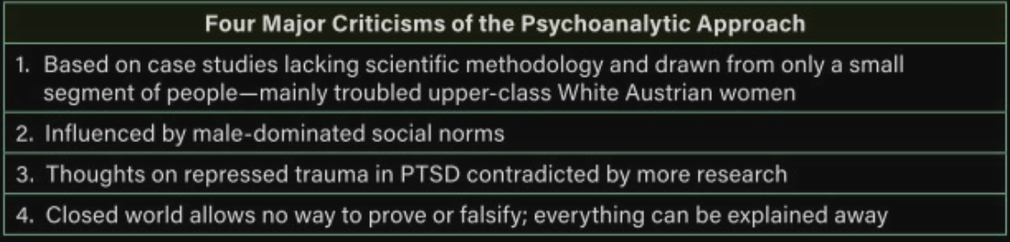
Criticisms of Psychoanalytic Theory
Projective test
a personality test in which subjects are shown ambiguous images or given situations and asked to interpret them
Inkblot test
Participants are shown a series of inkblots, usually 10 in total, and asked to describe what they see in each one.
Thematic Appreception Test (TAT)
where individuals are shown ambiguous pictures and asked to create stories about them, which are then analyzed by a psychologist to reveal underlying motives, concerns, and personality traits based on the story
Unconditional regard
accepting and respecting others as they are without judgment or evaluation
Carl Rogers
approach within humanistic psychology, where he believed that individuals have an inherent drive towards self-actualization and can reach their full potential with the support of a therapist who provides unconditional positive regard, empathy, and genuineness in the therapeutic relationship.
Abraham Maslow
known for his "Hierarchy of Needs" theory, which proposes that humans are motivated to fulfill a hierarchy of needs starting with basic physiological needs like food and water, progressing to higher needs like safety, love, esteem, and finally self-actualization, where one reaches their full potential; essentially, lower needs must be met before moving on to higher ones
Self-Actualizing tendency
the drive to fulfill one's full potential, reach personal growth, and become the best version of oneself
 Note
Note  Flashcards (82)