18: SA Roundworm
 Call Kai
 Learn
Learn Practice Test
 Spaced Repetition
 Match
Match Flashcards
 Knowt Play
1/50

There's no tags or description
Looks like no tags are added yet.
Name | Mastery | Learn | Test | Matching | Spaced | Call with Kai | Chat |
|---|
No analytics yet
Send a link to your students to track their progress
51 Terms
Best way to prevent infection with intestinal helminths
Pick up after your cat and dog
Life cycle of ascarids
Direct
SA roundworm species of importance
Toxocara canis
Toxocara cati
Toxascaris leonina
Baylisascaris procyonis
Roundworms that infect dogs
T. canis, T. leonina, and B. procyonis
Roundworms that infect cats
T. cati and T. leonina
Additional host in roundworm life cycles
Paratenic host
Where do SA roundworms set up shop
Small intestine
Heptatotracheal migration
Mammary tissue
Somatic sequestering
When and in who does T. canis arrest and sequester in tissues
Before it gets to the small intestines in older dogs
T/F: T. canis is zoonotic
Yes :(
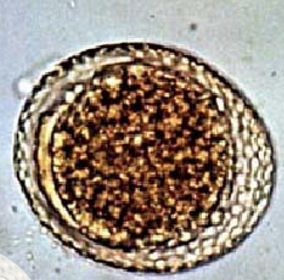
Morphologic features of T. canis eggs
LARGE egg with golf ball type pitting of wall
Morphologic features of T. canis adults
One of the largest SA intestinal parasites; big round white worm with narrow cervical alae and 3 lips
T. canis infectious stage
Larvated egg
Routes of T. canis infection in order of likelihood
Transplacental
Ingestion of eggs
Ingestion of PH
Transmammary
PPP of T. canis
2-4 weeks, closer to 2 weeks if transplacental
Demographic most likely to be diagnosed with T. canis
Puppies
In which patients is somatic sequestration of T. canis a dead end for the worm
Males and spayed females
CS associated with T. canis
Poor doing puppy
GIT signs ± obstruction
Blocked bile ducts
Resp signs! Migration!
Primary diagnostic for T. canis
Really any fecal testing
Most sensitive diagnostic for T. canis
Fecal Ag test
Key differences between T. cati and T. canis transmission
No age cut off for shedding vs somatic sequestration - even adult cats shed eggs!
No transplacental transmission
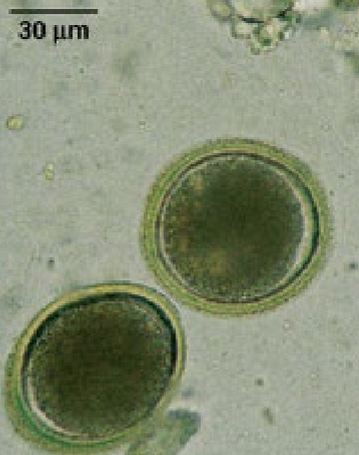
Morphologic features of T. cati egg
Similar to T. canis, just smaller
Morphologic features of T. cati adults
Larger feline nematode with broad cervical alae and 3 lips
Infectious stage of T. cati
Larvated egg
Routes of T. cati transmission in order of likelihood
Ingestion of PH
Ingestion of larvated egg
Transmammary
PPP of T. cati
8 weeks
CS associated with T. cati
Pot bellied
Vomiting and diarrhea
Respiratory signs → migration!
Primary diagnostic for T. cati
Like T. canis basically any fecal test works
Other SA parasites that can cause respiratory disease
Lungworms and hookworms!
Regional/situation distribution of T. leonina
More northern distribution and more in captive animal situations (zoos and catteries)
How is the life cycle of T. leonina different than that of T. canis/cati
No hepatotracheal migration, so it stays entirely in the GIT
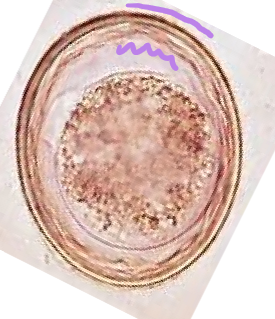
Morphologic features of T. leonina eggs
Smooth outer shell with ruffled inner membrane
Routes of T. leonina infection
Ingestion of eggs or PH
CS associated with T. leonina
Not often pathogenic
Diagnostics used for T. leonina
Basically any fecal test
Go-to treatment for SA roundworms
Pyrantel
Other parasiticides for SA roundworms and associated uses
Fenbendazole: pregnant animals
MCL (+ pyrantel): prevention
Management principles for SA roundworms
Clean up poop
Limit wildlife
Prevent predation
Routine deworming → especially for pregnant mamas
Primary host of B. procyonis
Racoons
How do dogs fit into the life cycle of B. procyonis
Dogs can act as a DH, PH, or transport host
When is it really bad if a dog is infected with B. procyonis
If it is the PH
Routes of B. procyonis infection
Ingestion of eggs or PH
What does B. procyonis do in the dog as a DH
Dog is has intestinal infection, and it actively sheds eggs
What does B. procyonis do in the dog as a transport host
The dog ate non-infectious eggs that pass through before they become infectious and get deposited somewhere else
What does B. procyonis do in the dog as a PH
Larva migrans → systemic disease
CS associated with B. procyonis in the dog
Generally none, occasionally neurologic signs due to aberrant migration
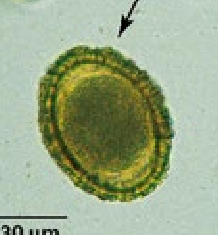
Morphologic features of B. procyonis eggs
Small, dark egg with a thick proteinaceous coating
Morphologic features of B. procyonis adults
Similar to other roundworms but with no obvious cervical alae
Diagnostics for B. procyonis
Fecal float, Ag, or PCR
Treatment for B. procyonis
Anything with RW efficacy
SA RW most commonly transmitted to humans
T. canis
SA RW that causes the most severe disease in humans
B. procyonis → visceral, ocular, and neural larval migrans